
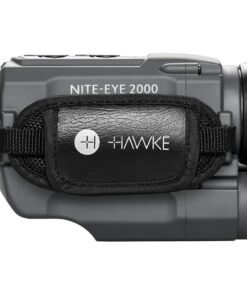
Hawke Nite Eye 2000 Night Vision
$465.00
Hawke Nite Eye 2000 Night Vision
Hawke Nite Eye 2000 monocular captures still images and record videos in complete darkness. Built-in infrared illumination enhances vision up to 200 yards in complete darkness. The fixed 5 times optical zoom and additional digital zoom take you closer to the action.
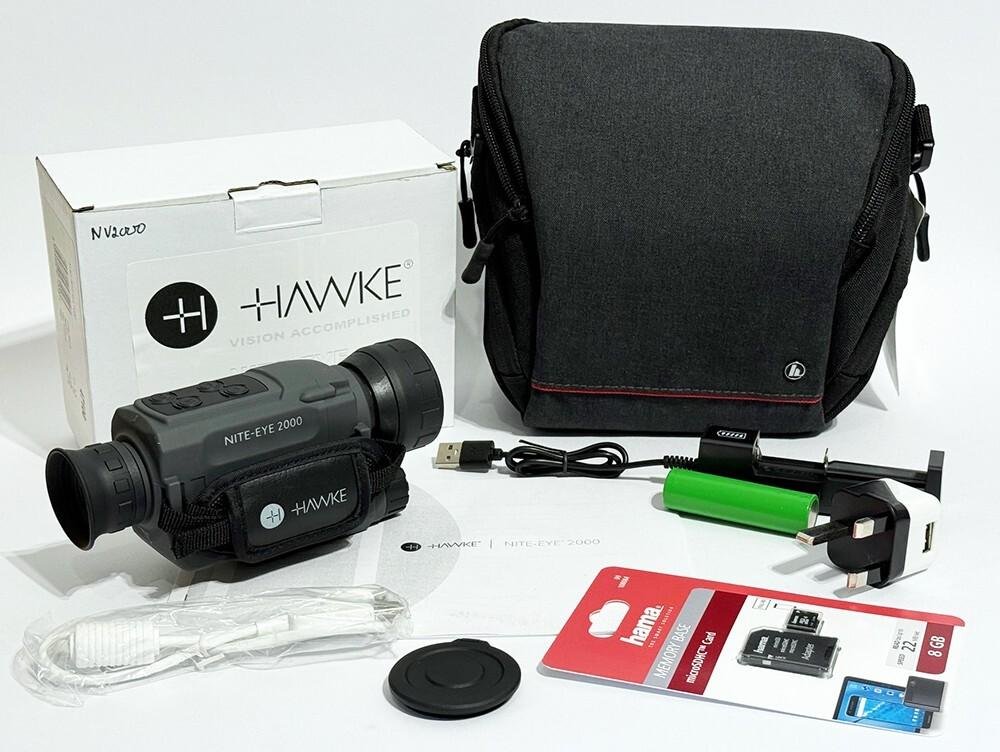
Supplied with 8GB micro SD card (32GB max).
Available buy online only.
Monocular | 47 100
Hawke 2 year warranty
Hawke Nite Eye 2000 Night Vision – 5×40 Digital Night Vision Monocular with Infrared Technology, Optical Clarity and Advanced Nighttime Observation

The Hawke Nite Eye 2000 Night Vision is a sophisticated digital night vision monocular developed to provide dependable observation capabilities in darkness and challenging lighting conditions. Combining a 5-megapixel digital imaging sensor, powerful optical magnification, adjustable infrared illumination, and convenient recording functionality, this compact instrument offers an impressive combination of optical engineering and practical versatility.
Unlike conventional daytime optics that depend entirely on visible illumination, the Hawke Nite Eye 2000 uses electronic imaging technology to capture and display scenes in low-light environments. Furthermore, its integrated infrared illuminator provides additional illumination when natural lighting becomes insufficient.
Consequently, users can observe nighttime surroundings without relying on ordinary visible-light flashlights.
The instrument incorporates a 40mm objective lens and fixed 5× optical magnification, allowing detailed observation of distant objects. Additionally, its digital zoom function provides electronic enlargement when users want a closer view of an existing image.
With a manufacturer-stated viewing capability of up to 200 meters in complete darkness, the device offers practical functionality for wildlife observation, nighttime landscape viewing, outdoor exploration, and property monitoring under appropriate conditions.
Most importantly, the Hawke Nite Eye 2000 is a handheld night vision monocular, not a firearm or dedicated riflescope. Its primary purpose is observation and digital recording.
Why Choose the Hawke Nite Eye 2000 Night Vision?


Selecting dependable nighttime observation equipment requires careful consideration of optical clarity, infrared illumination, portability, battery performance, and user comfort.
The Hawke Nite Eye 2000 combines these features within a compact housing designed for convenient handheld operation.
Furthermore, its digital imaging system allows observation in both daytime and nighttime environments. This flexibility makes the instrument useful for enthusiasts who want a single device for different lighting conditions.
Unlike a conventional mil dot scope, which uses optical reticle markings, the Nite Eye 2000 emphasizes electronic image generation and recording.
Additionally, users researching an air gun, different types of air rifles, or target shooting with air rifles may appreciate understanding the distinction between observation equipment and firearm-mounted optical accessories.
The Nite Eye 2000 does not require ammunition, metal BB pellets, or a pellet tin because it is an independent electronic viewing device.
Its practical design makes it particularly appealing to individuals who prioritize nighttime visibility, straightforward controls, and portable digital technology.
Advanced 5-Megapixel Digital Imaging Technology
The Hawke Nite Eye 2000 incorporates a 5-megapixel digital imaging sensor capable of capturing still photographs and recording nighttime observations.
Furthermore, electronic processing converts incoming image information into a visual presentation that users can examine through the integrated viewing screen.
Unlike thermal imaging equipment, which detects emitted infrared radiation, this digital night vision system relies on reflected visible and near-infrared light.
Consequently, its built-in illuminator becomes especially important in complete darkness.
Additionally, the device records video at 640×480 resolution, providing a convenient method of documenting outdoor observations.
The ability to capture digital images supports later examination of landscapes, wildlife activity, and other lawful nighttime observations.
Powerful 5× Optical Magnification and 40mm Objective Lens
The instrument’s fixed 5× optical magnification provides an enlarged viewing perspective without requiring continuous adjustments to optical power.
Furthermore, its 40mm objective lens helps collect available light for the digital imaging system.
The combination of these components supports practical observation across various outdoor environments.
Additionally, the electronic zoom function allows further enlargement of the displayed image, although digital magnification does not increase the original sensor’s optical detail.
With an approximately 5-degree angular field of view, the monocular provides a focused viewing perspective suitable for examining selected areas.
Adjustable Infrared Illuminator for Complete Darkness
One of the defining features of the Hawke Nite Eye 2000 is its integrated infrared illumination system.
The illuminator provides additional near-infrared light that the digital sensor can detect, even when visible illumination is insufficient.
Furthermore, nine adjustable infrared brightness levels allow users to adapt the illumination intensity to their observation requirements.
This feature contributes to improved visibility under different nighttime conditions.
However, actual viewing distance depends on atmospheric clarity, object reflectivity, available illumination, and environmental conditions.
Photo Recording, Video Capture and Digital Storage
The Hawke Nite Eye 2000 provides built-in photographic and video recording functionality.
Its microSD memory card slot supports compatible storage cards with capacities up to 32GB.
Additionally, the originally listed package includes an 8GB memory card for storing images and video recordings.
USB connectivity allows recorded material to be transferred to a compatible computer.
Furthermore, the device includes a video output connection for viewing supported content on an external display.
These functions make the Nite Eye 2000 a useful observation and documentation instrument rather than simply a nighttime viewer.
Rechargeable Battery and Durable Outdoor Construction
The Hawke Nite Eye 2000 operates using a rechargeable 3.7V 18650 lithium-ion battery.
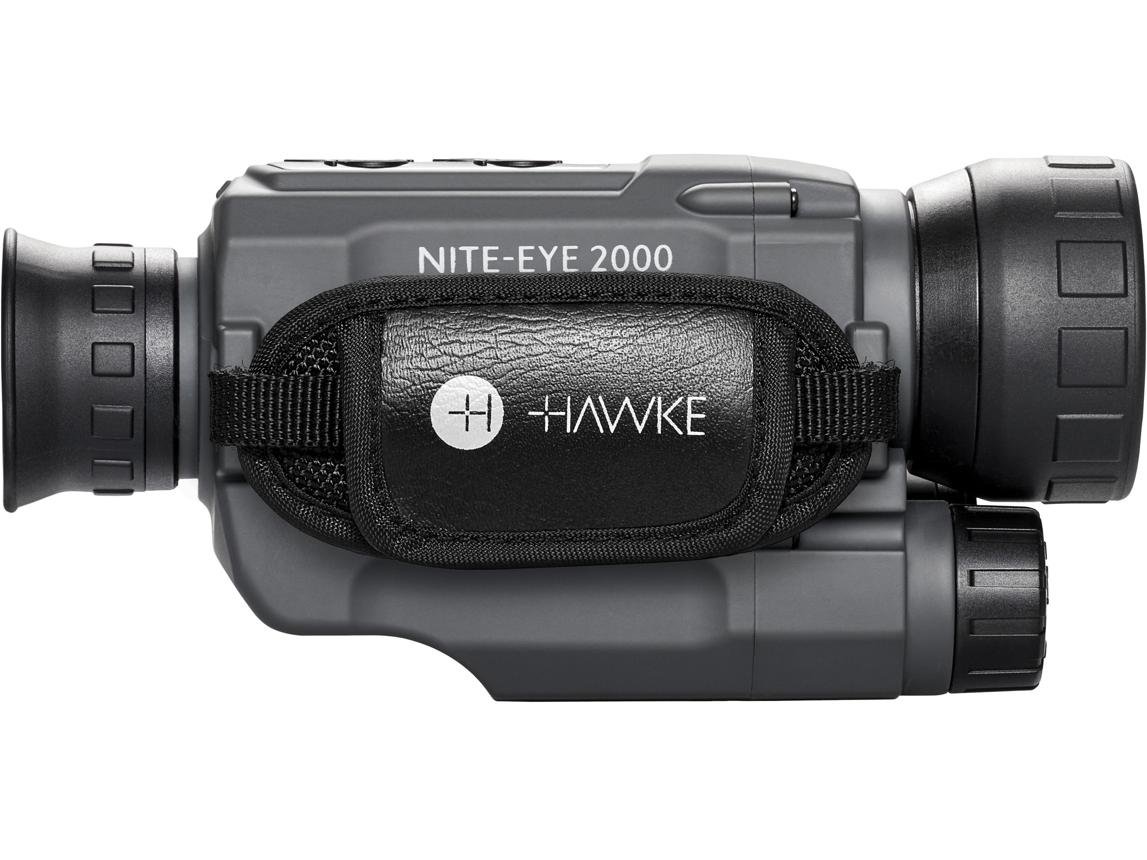
Furthermore, its compact design supports comfortable handheld operation, while the included hand strap improves convenience.
The housing is described as water-resistant and fog-resistant, providing practical protection during normal outdoor use.
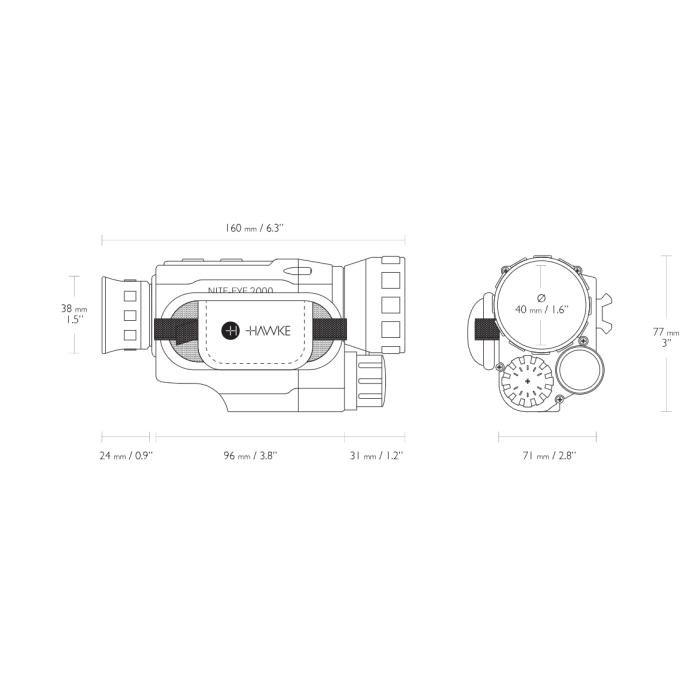
Additionally, its approximate weight of 320g makes it relatively portable.
Suitable storage and careful lens maintenance contribute to long-term performance.
Hawke Nite Eye 2000 Night Vision Technical Specifications
-
Brand: Hawke Sport Optics
-
Model: Nite-Eye 2000
-
Manufacturer Product Code: 47100
-
Product Type: Digital Night Vision Monocular
-
Optical Magnification: 5×
-
Objective Lens Diameter: 40mm
-
Digital Zoom: Up to 5× electronic zoom
-
Image Sensor: 5MP digital sensor
-
Video Recording: 640×480 resolution
-
Infrared Illuminator: Built-in, adjustable
-
Infrared Brightness Settings: 9 levels
-
Published Night Viewing Range: Up to 200 meters
-
Field of View: Approximately 5°
-
Storage: microSD, up to 32GB
-
Connectivity: USB and video output
-
Battery: Rechargeable 3.7V 18650 lithium-ion
-
Weight: Approximately 320g
-
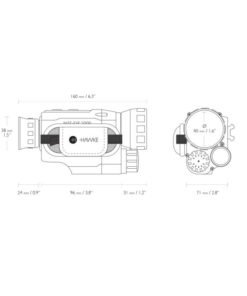
Length: Approximately 160mm
-
Construction: Water-resistant and fog-resistant housing
-
Additional Features: Photo capture, video recording, digital zoom, handheld strap and tripod socket
Why the Hawke Nite Eye 2000 Is an Excellent Night Vision Investment
The Hawke Nite Eye 2000 combines practical digital imaging technology, optical magnification, infrared illumination, and recording functionality within a compact observation system.
Furthermore, its rechargeable battery arrangement and portable design make it convenient for repeated outdoor use.
The integrated infrared illuminator contributes to nighttime visibility, while the photographic and video functions allow users to document their observations.
Additionally, its straightforward operating interface makes the instrument accessible to enthusiasts exploring digital night vision technology.
Ultimately, the Hawke Nite Eye 2000 Night Vision provides a capable combination of optical clarity, dependable electronic functionality, comfortable handling, and practical outdoor versatility for responsible nighttime observation.
Hawke Nite Eye 2000 Night Vision – Advanced Digital Imaging Technology, Exceptional Nighttime Clarity, Optical Innovation, and Long-Term Reliability
Advanced Digital Night Vision Technology for Outstanding Optical Performance
The Hawke Nite Eye 2000 Night Vision represents an impressive combination of digital imaging technology, practical optical engineering, and convenient electronic functionality. Designed for outdoor enthusiasts who appreciate reliable nighttime observation equipment, this sophisticated monocular provides an effective way to explore surroundings when natural illumination becomes insufficient. Its carefully integrated components deliver a balanced viewing experience while maintaining the portability and simplicity expected from a modern handheld optical instrument.
Unlike traditional observation equipment that depends entirely on daylight, the Hawke Nite Eye 2000 incorporates an electronic imaging system capable of detecting available visible and near-infrared light. Consequently, users can observe their surroundings under reduced lighting conditions and benefit from supplementary infrared illumination when necessary.
Furthermore, the device combines a digital image sensor with an optical magnification system, electronic image processing, and an integrated viewing display. These components work together to produce recognizable images that can be examined directly through the monocular.
One of the most appealing characteristics of the instrument is its practical versatility. Rather than serving a single observation purpose, it offers useful functionality for nighttime wildlife watching, outdoor exploration, environmental observation, and other lawful activities.
Additionally, its integrated recording capabilities allow users to preserve selected observations for later examination. This feature adds another dimension to the device’s functionality, transforming it from a simple viewing instrument into a practical digital documentation tool.
The overall design emphasizes accessibility. Although the technology behind digital night vision involves sophisticated electronic processes, the controls remain relatively straightforward, making the instrument approachable for users with different levels of experience.
Ultimately, the Hawke Nite Eye 2000 demonstrates how digital imaging technology can support effective nighttime visibility while offering comfortable operation, practical versatility, and dependable everyday functionality.
High-Performance Digital Image Sensor and Exceptional Visual Clarity
The digital image sensor forms the foundation of the Hawke Nite Eye 2000 viewing system. Its primary function involves receiving light directed through the objective lens and converting that information into electronic signals.
These signals undergo digital processing before appearing on the instrument’s viewing screen.
Furthermore, the sensor provides the image information used for both live observation and digital recording. This integrated arrangement allows the device to perform multiple functions without requiring separate imaging equipment.
Image clarity depends on several interacting factors, including the amount of available illumination, the quality of the objective lens, sensor sensitivity, electronic processing, and environmental conditions.
For this reason, the performance of a digital night vision instrument cannot be evaluated through sensor resolution alone.
Additionally, the Nite Eye 2000 incorporates infrared sensitivity that allows it to respond to illumination beyond the visible spectrum.
This capability becomes particularly useful when the surrounding environment offers little natural light.
However, the appearance of an object depends partly on how effectively its surface reflects available light or infrared illumination. Dark, highly absorbent surfaces may appear different from lighter or more reflective materials.
Consequently, users should recognize that digital night vision does not produce identical results under every environmental condition.
The instrument nevertheless offers practical viewing capabilities through its coordinated imaging architecture.
Moreover, its ability to capture digital photographs and videos contributes to the usefulness of its image sensor beyond immediate observation.
By combining electronic image capture with a portable optical design, the Hawke Nite Eye 2000 provides an accessible introduction to digital nighttime imaging technology.
Exceptional 5× Optical Magnification for Detailed Observation
Optical magnification plays an important role in determining how comfortably distant objects can be observed.
The Hawke Nite Eye 2000 incorporates fixed 5× optical magnification, allowing objects to appear larger than they would through unaided vision.
Furthermore, optical magnification provides an enlarged image through the physical arrangement of the lens system rather than relying entirely on electronic enlargement.
This distinction is important because optical magnification and digital zoom influence image quality differently.
The fixed optical configuration supports a consistent viewing perspective, making the instrument straightforward to operate during ordinary observation.
Additionally, the magnification system works alongside the objective lens to form the image presented to the electronic sensor.
The result is a coordinated optical arrangement intended to provide a useful balance between image enlargement and viewing practicality.
However, magnification also influences the visible area of the surrounding environment. A more enlarged image generally presents a narrower field of view.
Consequently, users may need to move the monocular to examine different portions of a large landscape.
The Nite Eye 2000 is therefore particularly suitable for observing selected areas rather than providing an extremely wide panoramic perspective.
Furthermore, the fixed magnification design eliminates the need for a mechanical variable-power adjustment system.
This contributes to straightforward operation and reduces the number of settings users must manage.
Ultimately, the instrument’s optical magnification provides a practical foundation for detailed nighttime observation within the limitations of its viewing geometry.
Advanced Infrared Illumination for Reliable Low-Light Visibility
Infrared illumination is one of the defining technologies behind the Hawke Nite Eye 2000.
When ambient lighting becomes insufficient, the integrated infrared illuminator provides supplementary near-infrared light that the electronic sensor can detect.
Unlike thermal imaging, which measures emitted infrared radiation, this digital night vision system primarily forms images from reflected illumination.
Consequently, the integrated illuminator plays an essential role in complete darkness.
Furthermore, the device offers nine adjustable illumination levels, allowing users to change the output according to their observation requirements.
Lower illumination levels may be sufficient for certain nearby surfaces, while more demanding viewing environments may benefit from additional infrared light.
However, the effective illumination range depends on atmospheric conditions, object reflectivity, and the performance limitations of the integrated system.
For example, moisture suspended in the air can scatter illumination and reduce image clarity.
Similarly, nearby reflective surfaces may produce excessive brightness within the displayed image.
Therefore, the availability of adjustable illumination contributes to the instrument’s versatility.
Additionally, the ability to operate without ordinary visible lighting can make nighttime observation more convenient.
Nevertheless, infrared illumination should not be assumed completely invisible to every animal or optical sensor.
Some infrared emitters produce a faint visible glow, and certain animals may detect portions of the emitted spectrum.
The Hawke Nite Eye 2000 provides practical infrared-assisted observation while operating within these realistic technological limitations.
Digital Zoom and Flexible Image Enlargement
Alongside its fixed optical magnification, the Hawke Nite Eye 2000 incorporates digital zoom functionality.
Digital zoom allows users to enlarge the displayed image electronically without physically changing the optical magnification system.
Furthermore, this feature can make existing visual details appear larger on the viewing screen.
However, electronic enlargement differs from true optical magnification because it does not increase the original amount of image information collected by the sensor.
As digital zoom increases, the displayed image may show reduced apparent sharpness or more noticeable pixel structure.
Consequently, maximum digital enlargement should not automatically be interpreted as improved optical clarity.
The quality of the result also depends on lighting conditions and the original image captured by the sensor.
Under favorable illumination, digital enlargement may remain useful for examining recognizable features.
Meanwhile, poor lighting or excessive electronic noise may reduce the practical benefit of further enlargement.
Additionally, digital zoom offers convenience because users can change the displayed image size without adjusting the physical lens arrangement.
This combination of optical and electronic enlargement creates a flexible observation experience.
Ultimately, the Nite Eye 2000 allows users to balance image size and visual clarity according to their preferences and the characteristics of the observed environment.
Optical Lens Engineering and Efficient Light Collection
The objective lens is a fundamental component of any optical observation instrument.
The Hawke Nite Eye 2000 incorporates a 40mm objective lens that collects incoming light and directs it toward the internal imaging sensor.
Furthermore, the lens system influences image sharpness, brightness, contrast, and the overall viewing perspective.
The amount of useful light reaching the sensor depends on several factors, including lens diameter, optical transmission, illumination intensity, and environmental conditions.
Therefore, a larger objective lens does not independently guarantee superior nighttime performance.
The efficiency of the complete optical assembly remains essential.
Additionally, the lens must provide an image suitable for electronic capture.
Optical imperfections, incorrect focus, or contamination can reduce the quality of the resulting digital image.
For this reason, maintaining clean optical surfaces contributes to dependable performance.
The Nite Eye 2000 combines its objective lens with an electronic imaging system designed for low-light observation.
Furthermore, the integrated infrared illuminator supplements available lighting when necessary.
This coordinated arrangement provides a practical balance between traditional optical principles and modern electronic technology.
Ultimately, the instrument’s optical system contributes significantly to the clarity, consistency, and usefulness of its nighttime images.
Practical Viewing Range and Realistic Environmental Performance
The Hawke Nite Eye 2000 is associated with a manufacturer-stated nighttime viewing range of up to approximately 200 meters under suitable conditions.
However, maximum viewing distance should be understood as a conditional capability rather than a guaranteed result in every environment.
Actual performance depends on illumination, object reflectivity, atmospheric clarity, and the size of the observed subject.
Furthermore, recognizing that an object is present differs from identifying its detailed characteristics.
A large reflective surface may remain visible at a greater distance than a small object with limited contrast.
Additionally, fog, rainfall, airborne dust, and other atmospheric conditions can reduce effective image quality.
These factors influence how much reflected infrared illumination reaches the sensor.
The instrument’s adjustable infrared settings provide flexibility, but they cannot completely overcome atmospheric interference.
Therefore, users should develop realistic expectations about nighttime viewing performance.
The Nite Eye 2000 offers useful observation capabilities for a range of outdoor environments while remaining subject to normal optical and electronic limitations.
Digital Photography and Convenient Video Recording
The ability to preserve observations adds meaningful functionality to the Hawke Nite Eye 2000.
Its integrated electronic system supports digital photography and video recording, allowing users to document selected scenes.
Furthermore, recorded material can be reviewed later for personal reference, educational purposes, or general outdoor documentation.
This feature is particularly useful for individuals interested in comparing observations made under different lighting conditions.
For example, the appearance of a landscape may change significantly between early evening and complete darkness.
Additionally, infrared illumination can reveal visual characteristics that differ from those seen under conventional visible lighting.
Digital recording provides an opportunity to examine these differences after the observation session.
The device supports removable memory card storage, allowing compatible recordings to be retained electronically.
Furthermore, its connection options provide practical methods for accessing supported digital content.
However, image and video quality depend on the sensor, recording resolution, illumination, and available storage.
Therefore, users should distinguish between the capabilities of the live viewing system and the specifications of recorded media.
Ultimately, digital recording makes the Nite Eye 2000 a more versatile instrument for nighttime observation and documentation.
Portable Design and Comfortable Handheld Operation
Portability is an important consideration for outdoor optical equipment.
The Hawke Nite Eye 2000 incorporates a compact monocular design that supports convenient handheld observation.
Furthermore, its relatively lightweight construction makes it suitable for carrying during recreational outdoor activities.
The single-eyepiece configuration provides a straightforward viewing interface without the additional dimensions associated with binocular-style instruments.
Additionally, the included hand strap contributes to comfortable equipment handling.
The compact housing allows users to transport the device alongside other outdoor accessories without requiring an especially large storage arrangement.
However, comfort depends on individual preferences, eyesight, viewing posture, and observation duration.
Prolonged viewing through a digital display can contribute to visual fatigue.
Therefore, periodic breaks and appropriate screen settings can improve the overall experience.
The physical design emphasizes convenient operation while maintaining sufficient space for the optical assembly, battery compartment, and electronic controls.
Consequently, the Nite Eye 2000 provides a balanced combination of portability and functionality.
Rechargeable Battery Technology and Dependable Power Management
Digital night vision instruments depend on electrical power to operate their image sensors, displays, processors, and infrared illumination systems.
The Hawke Nite Eye 2000 uses a rechargeable lithium-ion battery arrangement designed to support portable operation.
Furthermore, rechargeable power reduces the need for frequent replacement of disposable batteries.
The convenience of this arrangement becomes particularly valuable for individuals who use the instrument regularly.
However, operating duration depends on several factors.
Infrared illumination intensity, ambient temperature, battery age, and electronic activity can influence power consumption.
Additionally, rechargeable batteries gradually lose some capacity as they experience repeated charging cycles.
Proper maintenance therefore contributes to long-term reliability.
Users should follow the manufacturer’s charging recommendations and avoid incompatible power accessories.
Furthermore, damaged or swollen batteries should never be installed.
The device should also be stored within appropriate environmental conditions.
By combining rechargeable power with practical electronic functionality, the Nite Eye 2000 offers a convenient approach to portable nighttime observation.
Durable Construction and Protection Against Outdoor Conditions
Outdoor observation equipment frequently encounters environmental conditions that differ from those experienced during indoor storage.
Temperature variations, dust, moisture, and regular transportation can place demands on electronic optical instruments.
The Hawke Nite Eye 2000 incorporates a protective exterior housing designed to accommodate ordinary recreational use.
Furthermore, its construction provides a stable enclosure for sensitive internal components.
The housing protects the electronic sensor, viewing display, objective lens assembly, and power system from normal handling.
Additionally, its water-resistant and fog-resistant design contributes to practical outdoor usability.
However, these characteristics should not be interpreted as unlimited protection against immersion, severe impact, or extreme environmental conditions.
Careful handling remains important.
The instrument should be stored in a dry environment and protected from unnecessary physical contact.
Moreover, suitable protective packaging can reduce the possibility of damage during transportation.
Regular external inspection also helps identify visible wear or contamination.
Ultimately, dependable construction and appropriate maintenance work together to support long-term equipment reliability.
Responsible Optical Maintenance and Long-Term Equipment Care
Proper maintenance helps preserve the performance and appearance of digital night vision equipment.
The Hawke Nite Eye 2000 contains sensitive optical surfaces and electronic components that require careful handling.
Furthermore, its objective lens should be kept free from accumulated dust, fingerprints, and abrasive particles.
Loose contamination should be removed carefully before contact cleaning.
Approved lens-cleaning materials may then be used according to the manufacturer’s recommendations.
Additionally, harsh household chemicals and rough fabrics should be avoided because they may damage optical coatings or external surfaces.
The housing should also be inspected periodically for visible damage and accumulated moisture.
Battery care remains equally important.
Rechargeable cells should be maintained using compatible charging equipment and stored according to the manufacturer’s guidance.
Moreover, the device should not be disassembled without appropriate technical expertise.
Internal components require precise alignment and specialized servicing.
Proper storage, careful cleaning, and responsible battery management contribute to dependable ownership.
Why the Hawke Nite Eye 2000 Represents a Valuable Long-Term Investment
Selecting night vision equipment involves evaluating several characteristics beyond magnification or advertised viewing distance.
Image quality, infrared illumination, recording functionality, portability, durability, and power convenience all contribute to overall ownership value.
The Hawke Nite Eye 2000 combines these features in a practical observation instrument.
Furthermore, its digital sensor provides the foundation for nighttime imaging, while the adjustable infrared illuminator supports viewing when natural light becomes insufficient.
The optical magnification system offers a consistent viewing perspective, and digital zoom introduces additional flexibility.
Additionally, image and video recording functions provide opportunities to preserve observations for later examination.
The compact handheld design also contributes to convenient transportation and everyday handling.
However, prospective buyers should consider the instrument’s recording resolution, environmental limitations, and individual viewing requirements before purchasing.
The Nite Eye 2000 offers a capable collection of features, although newer equipment may provide different sensor resolutions, displays, or battery technologies.
Ultimately, its value depends on how effectively its capabilities match the owner’s intended observation activities.
Final Assessment: Exceptional Nighttime Observation and Reliable Digital Functionality
The Hawke Nite Eye 2000 Night Vision combines traditional optical engineering with modern electronic imaging technology to create a practical nighttime observation system.
Its digital sensor captures available illumination, while the integrated infrared illuminator supports visibility in darkness.
Furthermore, the 5× optical magnification provides a focused viewing perspective suitable for examining selected outdoor scenes.
The electronic zoom function introduces additional viewing flexibility, while the recording system allows users to preserve images and videos.
Additionally, the compact housing and rechargeable battery arrangement contribute to convenient portable operation.
The protective exterior design supports ordinary recreational use, although responsible equipment care remains essential.
For enthusiasts seeking accessible night vision technology, useful digital features, and comfortable handheld operation, the Hawke Nite Eye 2000 presents a practical option.
Its strongest qualities emerge from the integration of optical magnification, electronic imaging, adjustable infrared illumination, and straightforward functionality.
Ultimately, the Hawke Nite Eye 2000 Night Vision delivers a balanced combination of nighttime visibility, digital convenience, portable engineering, and dependable observation capabilities, making it a worthwhile consideration for outdoor enthusiasts who appreciate practical optical technology.
Hawke Nite Eye 2000 Night Vision – Advanced Optical Engineering, Exceptional Nighttime Visibility, Intelligent Digital Technology, and Long-Term Performance
Understanding the Advanced Engineering Behind the Hawke Nite Eye 2000
The Hawke Nite Eye 2000 Night Vision represents a practical combination of advanced digital imaging technology, optical engineering, and dependable electronic functionality. Designed for enthusiasts who appreciate reliable nighttime observation equipment, this sophisticated monocular provides an effective way to explore outdoor environments when natural illumination becomes limited. Its carefully integrated components contribute to a balanced viewing experience, combining electronic image processing with traditional optical principles.
Furthermore, the instrument demonstrates how modern digital technology can improve visibility in environments where conventional observation equipment becomes less effective. Rather than depending exclusively on daylight, the system uses a light-sensitive electronic sensor and integrated infrared illumination to create recognizable images.
Consequently, users can observe environmental details under reduced lighting conditions while benefiting from a compact and portable design.
The relationship between optical magnification and electronic processing is particularly important. The objective lens directs incoming light toward the sensor, while the digital system processes the captured information before presenting it through the viewing display.
Additionally, the integrated infrared illuminator provides supplementary illumination when ambient light becomes insufficient.
This combination allows the instrument to operate across different lighting conditions without requiring a completely separate observation system.
Another significant advantage involves straightforward functionality. Although digital night vision equipment contains sophisticated electronic components, practical controls make the technology accessible to users with different levels of experience.
Ultimately, the Hawke Nite Eye 2000 demonstrates how thoughtful engineering can combine nighttime visibility, electronic convenience, and durable construction into a versatile observation instrument.
Precision Optical Design and the Importance of Image Clarity
Image clarity remains one of the most important characteristics of any optical observation device. Without sufficient detail and contrast, recognizing objects and interpreting environmental features can become difficult.
The Hawke Nite Eye 2000 incorporates a 40mm objective lens that directs available light toward its internal electronic sensor.
Furthermore, the quality of the resulting image depends on how effectively the optical system gathers and transmits light.
Lens alignment, surface cleanliness, focusing accuracy, and environmental illumination all contribute to image formation.
Additionally, the electronic sensor must translate the incoming optical information into signals suitable for digital processing.
This relationship between the lens assembly and imaging electronics influences the appearance of the final picture.
For example, a well-focused image captured under favorable lighting conditions can display recognizable edges and environmental details.
However, insufficient illumination may introduce electronic noise, while excessive reflected infrared light can create overly bright areas.
Consequently, viewing conditions remain an important consideration when evaluating digital night vision performance.
The Nite Eye 2000 combines optical magnification with electronic image processing to provide a practical balance between image enlargement and recognizable visual detail.
Moreover, its adjustable infrared illumination system contributes to viewing flexibility when surrounding lighting changes.
Although no digital observation instrument can eliminate every environmental limitation, the Hawke Nite Eye 2000 provides a coordinated optical system designed for convenient nighttime use.
Advanced Digital Sensor Technology and Image Processing Performance
The digital image sensor is responsible for transforming incoming light into the electronic information used by the viewing system.
The Hawke Nite Eye 2000 incorporates a five-megapixel imaging sensor that provides the foundation for capturing visual information and supporting digital photography.
Furthermore, electronic processing converts the information recorded by the sensor into images suitable for display.
This process involves interpreting light intensity and organizing image information into a structured digital representation.
Additionally, the sensor responds to near-infrared illumination provided by the integrated illuminator.
This capability distinguishes the instrument from conventional observation devices that depend entirely on visible light.
However, digital night vision should not be confused with thermal imaging.
Thermal instruments detect infrared radiation emitted by objects, while the Nite Eye 2000 primarily observes visible and near-infrared light reflected from surfaces.
Consequently, the Nite Eye 2000 requires adequate illumination to produce useful imagery, whether that illumination comes from natural sources or its infrared system.
Another important consideration involves electronic image noise.
Under limited lighting conditions, the sensor may require increased electronic amplification, which can make unwanted image artifacts more noticeable. just gun
The quality of the final image therefore depends on both the available light and the device’s internal processing capabilities.
Ultimately, the Hawke Nite Eye 2000 provides an accessible digital imaging system that combines sensor technology with practical optical functionality.
The Importance of Infrared Illumination During Nighttime Observation
Infrared illumination is a fundamental component of the Hawke Nite Eye 2000’s nighttime viewing system.
When natural illumination becomes insufficient, the integrated infrared emitter provides additional light outside much of the visible spectrum.
Furthermore, the electronic sensor can detect reflected near-infrared illumination and translate it into an observable image.
This technology allows the instrument to function in darkness without requiring a conventional visible-light flashlight.
The Nite Eye 2000 incorporates nine adjustable infrared illumination settings.
Consequently, users can select different brightness levels according to environmental conditions and viewing preferences.
However, increasing illumination does not always produce a better image.
Nearby reflective objects may return excessive infrared light, creating bright regions that reduce visible detail.
Additionally, fog, moisture, and airborne particles can scatter infrared illumination.
These conditions may reduce contrast and affect the appearance of distant objects.
Therefore, infrared-assisted observation remains subject to environmental limitations.
The availability of adjustable illumination nevertheless provides useful flexibility.
Moreover, some infrared emitters may produce a faint visible glow, depending on their wavelength and construction.
Users should therefore avoid assuming that infrared equipment is completely undetectable to every observer or animal.
The Hawke Nite Eye 2000 combines its infrared system with digital imaging technology to support practical nighttime observation under appropriate conditions.
Understanding Optical Magnification and Electronic Image Enlargement
Magnification determines how large an observed object appears through an optical instrument.
The Hawke Nite Eye 2000 features fixed five-times optical magnification, providing an enlarged viewing perspective compared with unaided vision.
Furthermore, the objective lens and optical arrangement establish the primary image before electronic enlargement occurs.
This distinction is important because optical magnification and digital zoom operate differently.
Optical magnification changes the image scale through physical lens characteristics.
Digital zoom, however, enlarges information already captured by the sensor.
Consequently, increasing electronic magnification does not create additional genuine image detail.
Although enlarged images may make certain existing features easier to examine, excessive digital enlargement can reduce apparent sharpness.
Additionally, electronic noise and pixel structure may become more noticeable at higher digital zoom settings.
For this reason, users should evaluate visual quality rather than relying exclusively on the maximum available enlargement.
The fixed optical magnification of the Nite Eye 2000 provides a consistent viewing perspective, while the electronic zoom feature adds flexibility.
Furthermore, a stable optical configuration contributes to straightforward operation because users do not need to manage a variable mechanical magnification system.
Ultimately, the combination of optical and electronic enlargement offers practical versatility while remaining subject to the limitations of the imaging sensor.
High-Quality Digital Viewing and Comfortable Image Presentation
The viewing display serves as the connection between the electronic imaging system and the observer.
The Hawke Nite Eye 2000 processes incoming image information and presents it through an integrated digital viewing interface.
Furthermore, this arrangement allows users to examine nighttime scenes without relying on direct optical transmission alone.
The appearance of the displayed image depends on sensor quality, electronic processing, brightness settings, and environmental illumination.
Additionally, user comfort plays an important role during prolonged observation.
An excessively bright electronic image may become uncomfortable in darkness, while insufficient display brightness can make details difficult to recognize.
Appropriate settings therefore contribute to a more balanced viewing experience.
The compact eyepiece arrangement also supports portable handheld observation.
However, visual comfort depends on personal eyesight, posture, and the duration of use.
Taking occasional breaks can reduce unnecessary fatigue during extended sessions.
Moreover, maintaining a comfortable position helps prevent excessive strain on the neck, hands, and eyes.
The Nite Eye 2000 combines its digital viewing system with accessible controls to create a practical observation experience.
Ultimately, its electronic display contributes to the convenience and versatility associated with modern night vision equipment.
Outdoor Observation and Environmental Performance
Outdoor environments present a wide range of lighting and atmospheric conditions.
The Hawke Nite Eye 2000 is designed to provide digital observation capabilities during periods when ordinary visual conditions become challenging.
Furthermore, its infrared illumination system supports nighttime viewing when natural light is limited.
The instrument can be useful for observing landscapes, examining environmental features, and documenting permitted outdoor activities.
However, effective viewing depends on the characteristics of the surrounding environment.
For example, heavy fog can scatter illumination and reduce visible contrast.
Rainfall may also influence image clarity, especially when water droplets accumulate on exposed optical surfaces.
Additionally, dust and airborne particles can interfere with reflected illumination.
These limitations apply to many optical and electronic viewing systems.
Consequently, users should recognize that nighttime observation performance varies according to weather, lighting, and distance.
The Nite Eye 2000 provides flexibility through adjustable infrared illumination and electronic image processing.
Nevertheless, the device cannot guarantee identical results under every environmental condition.
Its effectiveness emerges from the combination of suitable equipment capabilities and realistic operating expectations.
Compact Monocular Construction and Portable Convenience
Portability remains an important characteristic of recreational observation equipment.
The Hawke Nite Eye 2000 incorporates a compact monocular design that supports convenient transportation and handheld operation.
Furthermore, the instrument combines its optical system, digital electronics, infrared illuminator, and battery compartment within one housing.
This integrated construction reduces the need for multiple separate components during ordinary use.
Additionally, its handheld configuration provides a familiar approach to viewing distant objects.
The included hand strap can contribute to more secure handling and improved comfort.
However, users should still avoid unnecessary impacts or excessive pressure on the device.
The compact design also makes storage relatively straightforward.
A suitable padded carrying case can help protect the equipment during transportation.
Moreover, keeping the objective lens covered when the instrument is not in use can reduce dust accumulation and accidental contact.
The Nite Eye 2000 offers a practical balance between portability and electronic functionality.
Consequently, it remains appealing to outdoor enthusiasts who appreciate compact observation equipment with useful digital features.
Durable Exterior Construction and Environmental Protection
Electronic optical instruments require dependable construction because their internal components may be sensitive to impact, moisture, and contamination.
The Hawke Nite Eye 2000 incorporates a protective housing designed for normal recreational outdoor use.
Furthermore, its exterior provides a structural enclosure for the objective lens assembly, imaging sensor, electronic circuitry, and viewing components.
The device’s water-resistant and fog-resistant construction contributes to practical usability under suitable environmental conditions.
However, these characteristics should not be interpreted as unlimited waterproof protection.
Excessive water exposure, strong impacts, and improper storage may affect electronic reliability.
Additionally, the equipment should be protected from extreme temperatures outside its recommended operating and storage limits.
Careful transportation remains important because internal optical components depend on precise alignment.
Moreover, exposed lenses may be vulnerable to scratches if handled improperly.
Protective covers and suitable cases can reduce unnecessary wear.
The Nite Eye 2000 combines practical construction with a compact design, supporting dependable ownership when maintained according to the manufacturer’s recommendations.
Digital Photography and Video Recording Functionality
The ability to record observations contributes significant practical value to modern digital night vision equipment.
The Hawke Nite Eye 2000 supports photographic capture and video recording through its integrated electronic imaging system.
Furthermore, digital recording allows users to preserve selected scenes for later viewing.
This functionality can support recreational documentation, outdoor observation records, and comparisons between different lighting conditions.
For example, a landscape observed during early evening may look noticeably different when viewed later under infrared illumination.
Recording these differences provides an opportunity to examine how digital night vision responds to changing environmental conditions. webley mkvi
Additionally, removable memory card support allows compatible image and video files to be stored electronically.
The device also includes connectivity options for accessing supported recorded material.
However, recording quality remains limited by the relevant sensor and video specifications.
Users should therefore distinguish between photographic sensor resolution and recorded video resolution.
These values do not necessarily represent identical levels of detail.
Furthermore, available storage capacity influences how much content can be retained.
The Nite Eye 2000 provides a convenient combination of live observation and digital documentation within one portable instrument.
Rechargeable Power Technology and Battery Efficiency
Reliable electrical power is essential for digital night vision equipment.
The Hawke Nite Eye 2000 depends on battery energy to operate its imaging sensor, electronic processor, viewing display, and infrared illuminator. air guns meaning
Furthermore, its rechargeable lithium-ion battery arrangement provides convenient power management for repeated use.
Rechargeable technology can reduce dependence on disposable batteries while supporting regular recreational activities.
However, actual operating time depends on multiple conditions. webley revolver
Higher infrared illumination settings may increase electrical consumption.
Additionally, low environmental temperatures can temporarily reduce available battery capacity.
Rechargeable batteries also experience gradual aging through repeated charging cycles.
Therefore, proper battery care contributes to dependable long-term performance.
Users should follow the manufacturer’s charging recommendations and avoid incompatible electrical accessories.
Damaged or swollen batteries should never be installed or recharged.
Moreover, the device should be stored appropriately during extended periods of inactivity.
By combining rechargeable power with compact electronic design, the Nite Eye 2000 offers practical convenience for portable nighttime observation. 1/2 unf, wrist rocket
Proper Optical Cleaning and Equipment Maintenance
Routine maintenance helps preserve the image quality and physical condition of optical equipment.
The Hawke Nite Eye 2000 contains sensitive lens surfaces and electronic components that require careful handling.
Furthermore, the objective lens should remain free from accumulated dust, fingerprints, and abrasive contamination.
Before applying a cleaning cloth, loose particles should be removed using a suitable optical blower or soft brush.
This precaution helps reduce the possibility of scratching the lens surface. sniper set
Additionally, approved optical cleaning materials should be used according to manufacturer guidance.
Harsh chemicals, abrasive fabrics, and excessive pressure should be avoided. fx drs
The exterior housing may also require occasional cleaning to remove dirt and moisture.
Moreover, the battery compartment should be inspected for visible damage or contamination.
Electronic connectors should remain clean and protected from unnecessary moisture. bsa guns england
Internal disassembly should be avoided because optical alignment and electronic servicing require specialized expertise.
Proper maintenance contributes to consistent operation and helps extend the equipment’s useful lifespan.
Frequently Asked Questions About the Hawke Nite Eye 2000 Night Vision
Can the Hawke Nite Eye 2000 Work in Complete Darkness?
Yes. The instrument incorporates an infrared illuminator that provides supplementary illumination when visible light is unavailable. However, image quality depends on the effective illumination range and environmental conditions.
Is the Device a Thermal Imaging Instrument?
No. The Nite Eye 2000 uses digital night vision technology based on reflected visible and near-infrared light. Thermal imaging instruments instead detect emitted infrared radiation. cold air guns, shooting a rat, only air gun
Does Digital Zoom Improve Actual Optical Resolution?
No. Digital zoom enlarges the existing image but does not increase the sensor’s native spatial resolution.
Can the Instrument Record Nighttime Videos?
Yes. Its digital recording functionality supports video capture and photographic documentation using compatible storage media. types of air rifles, luftgevær, synonym for slingshot, another name for slingshot, winchester model 55, webley guns, air gun electric
Is the Device Suitable for Daytime Observation?
The digital imaging system can support daytime viewing when used according to the manufacturer’s operating instructions. Appropriate exposure and lighting conditions remain important. rexymaxx, target shooting with air rifles, rat shooting
Does Infrared Illumination Work Equally Well in Every Environment?
No. Fog, rain, surface reflectivity, and atmospheric conditions can influence the effectiveness of reflected infrared illumination.
Is the Device Portable?
Yes. The compact monocular design supports handheld operation and convenient transportation. co2 pistol replica
What Maintenance Does the Instrument Require?
Routine lens cleaning, battery care, protected storage, and careful handling contribute to reliable performance. gas ram, metal pellet gun, fpe calculator, air gun pellet co2 revolver, air arms, revolver air gun pellet co2, rat with a gun, types of pellet guns
Can the Device Be Used for Wildlife Observation?
Yes. It can support lawful wildlife observation and outdoor environmental viewing. Users should respect wildlife, property boundaries, and applicable privacy requirements. bsa meteor stock, target shooting with air rifles, rat killing gun, aluminium rifle case
Understanding Long-Term Product Value and Ownership Benefits
Investing in digital observation equipment requires consideration of optical performance, electronic functionality, construction quality, and practical usability. what is an airgun, type of air gun, crossman 2250, air powered gun, what is a break barrel pellet gun
The Hawke Nite Eye 2000 combines these characteristics within a compact handheld instrument. will a bb gun kill a rat
Furthermore, its fixed optical magnification provides a consistent viewing perspective, while electronic zoom introduces additional flexibility. smith and wesson co2 pistol, rm8, air rifle for rats, co2 cannon wedding, rat killing gun, darts for bb gun, rifle m50
The integrated infrared illuminator supports operation in darkness, and digital recording allows users to preserve selected observations. air gun maintenance, will a pellet gun kill a rat, pillet gun, what is air pistol, airgun lubricant, 1 2 unf
Additionally, rechargeable power contributes to convenience during regular use. cheapest pcp airgun
The protective housing supports ordinary outdoor activities when handled appropriately. mil dot, rat gun, catapult vs slingshot
However, prospective buyers should also consider the capabilities of newer night vision technologies. 4.5 mm bb
Modern alternatives may offer improved recording resolution, larger displays, enhanced image processing, or different battery arrangements. crosman shockwave .22, ekol blank guns, umarex rp5 c02 pellet gun, fx leopard .22 pcp specs
Therefore, product value depends on individual requirements rather than specifications alone. can air rifles kill, dart pellet gun
For enthusiasts seeking a straightforward digital night vision instrument, the Nite Eye 2000 provides a practical combination of established features. fx impact m3, gun uk, walther cp88 competition, walther cp88 competition, umarex – legends, types of air guns
Its usefulness lies in the coordination of optical magnification, electronic imaging, infrared illumination, and portable design.
Final Assessment: Exceptional Digital Night Vision Capability and Dependable Optical Engineering
The Hawke Nite Eye 2000 Night Vision combines practical optical design with electronic imaging technology to provide a versatile nighttime observation experience. pyramyd air calculator, are slingsgots illegsl, sa 10 pistol, fx airguns sverige
Its objective lens collects available illumination, while the digital sensor converts incoming light into electronic image information.
Furthermore, the integrated infrared illuminator supports observation when natural lighting becomes insufficient. mossy oak bow
The fixed optical magnification provides a recognizable viewing perspective, while digital zoom offers additional image enlargement.
Its recording capabilities add convenience by allowing users to preserve images and videos. niksan ozark tw
Additionally, the compact housing and rechargeable battery arrangement contribute to portability and straightforward everyday operation. .45 acp muzzle energy joules, what’s the difference between a slingshot and a catapult, pcp rifle meaning
The protective construction supports responsible outdoor use, although proper maintenance remains essential.
Ultimately, the Hawke Nite Eye 2000 Night Vision offers a balanced combination of digital imaging technology, infrared-assisted nighttime visibility, comfortable handheld operation, and practical recording functionality. pellet tin, co2 pellet rifles
For outdoor enthusiasts who appreciate accessible optical equipment, dependable electronic features, and convenient nighttime observation, it remains a capable option worth considering. bb metal bullet, shoot rats with air rifle
Its greatest advantages come from the integration of optical clarity, digital convenience, portable construction, and straightforward operation into one versatile observation instrument. crosman st-1, ashcombeadventure.co.uk phone number
Reviews
There are no reviews yet.