


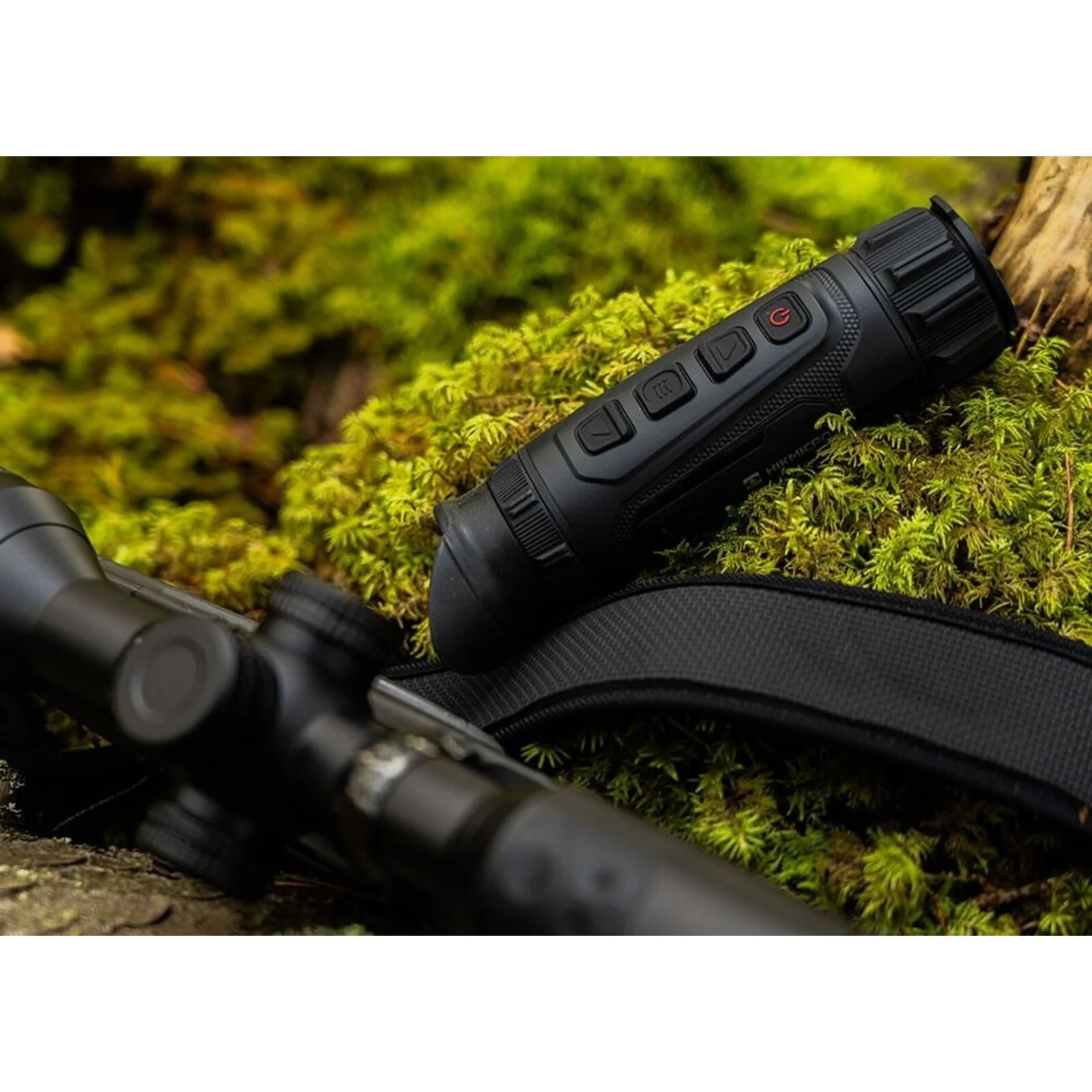


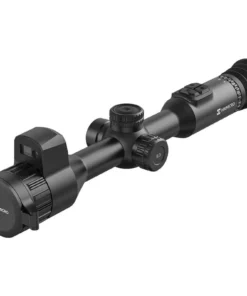
Thermal spotter Lynx 3.0 LH19
€650.00
| Article number: | Lynx 3.0 LH19 |
| Availability: | In stock |
The HikMicro Lynx 3.0 LH19 is an ultra-compact thermal imaging monocular equipped with high-end technology and smart features for professional nature and wildlife observation.
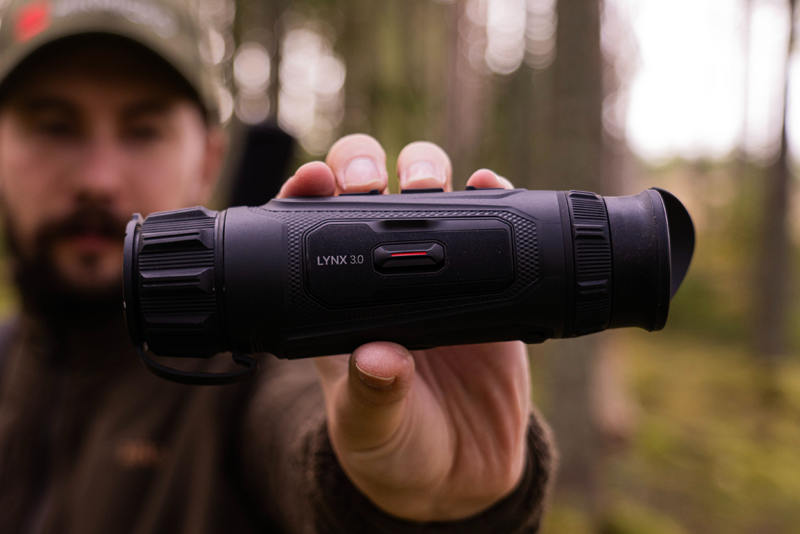
Despite its powerful performance, this lightweight monocular fits easily into your jacket’s pocket, allowing you to enjoy top-quality thermal imaging technology wherever you go.
With a 900-meter detection range, 1.9–15.2x magnification, and an extremely sensitive <15 mK sensor, the LH19 is a true all-rounder for hunters, wildlife managers, pest control professionals, and search & rescue teams—both in dense forests and open fields.
The improved Lynx 3.0 series offers higher image quality, a more compact design, and AI-driven Image Pro 3.0 algorithms that deliver sharp, detailed images even at maximum zoom or in poor weather conditions.
Thanks to the shutterless HSIS system, you can enjoy smooth, uninterrupted viewing. The bright 1920×1080 AMOLED display, six color palettes, faster startup time, and soft-touch controls all contribute to optimal user comfort.
The LH19 includes 64GB of internal storage for photos and videos (with or without audio).
Through Wi-Fi and the HikMicro Sight app, you can view and share footage directly on your smartphone.
Technically, the LH19 features a 384×288 sensor with 12µm pixel pitch, a 13.8°×8.4° field of view, and a 50 Hz refresh rate for smooth, natural-looking imagery.
With the PIP mode, you can display zoomed-in details without losing situational awareness.
Our experience with the HikMicro Lynx spotters
The Lynx series has been a popular choice for hunting and pest control for years.
Thanks to the lightweight and compact design of the Lynx spotters, long periods of scanning and observing are no problem.
And when you’re ready to take the shot, you can easily slip it into your pocket or let it hang from the wrist strap.
This Lynx 3.0 LH19 offers a good sensor resolution and viewing angle for detecting and observing.
In short: a great all-rounder with excellent ease of use!
Thermal Spotter Lynx 3.0 LH19 Review: Compact Thermal Imaging Performance

Modern thermal imaging technology continues to transform hunting, wildlife observation, security monitoring, search-and-rescue operations, and outdoor exploration. Among today’s most capable compact thermal monoculars, the Thermal Spotter Lynx 3.0 LH19 attracts significant attention because it combines advanced thermal detection, lightweight construction, intuitive controls, and exceptional image processing in one portable package.
When evaluating thermal optics, users frequently seek equipment that balances performance, portability, reliability, and affordability. Consequently, the Thermal Spotter Lynx 3.0 LH19 emerges as an appealing solution for hunters, wildlife enthusiasts, landowners, professional security personnel, and outdoor adventurers.
Unlike bulky thermal devices that become cumbersome during extended use, the Lynx 3.0 LH19 emphasizes mobility without sacrificing thermal detection capabilities. As a result, users can confidently scan large environments while maintaining comfort throughout long observation sessions.
Why Thermal Imaging Has Become Essential
Traditional optics depend on ambient light. Therefore, darkness, fog, smoke, vegetation, and adverse weather conditions often limit visibility.
Thermal imaging functions differently. Instead of relying on visible light, thermal optics detect heat signatures emitted by living creatures, vehicles, structures, and objects.
Because of this capability, thermal technology offers significant advantages:
Key Benefits of Thermal Detection
- Detect animals hidden in vegetation
- Observe wildlife after sunset
- Improve nighttime situational awareness
- Locate heat-producing equipment
- Enhance property surveillance
- Identify intruders in darkness
- Assist search-and-rescue operations
- Improve tracking efficiency
- Reduce missed observations
- Increase confidence during field operations
Consequently, thermal optics have become indispensable tools for professionals and recreational users alike. Thermal monocular for night hunting
Introducing the Thermal Spotter Lynx 3.0 LH19
The Lynx 3.0 LH19 represents a modern generation of thermal imaging technology engineered for portability and performance.
Rather than focusing exclusively on maximum range, the device prioritizes practical field usability. Therefore, users receive a highly capable thermal monocular that excels in real-world applications. Thermal monocular for search and rescue
Core Features at a Glance
- High-sensitivity thermal sensor
- Advanced image enhancement algorithms
- Lightweight ergonomic housing
- Compact pocket-sized design
- Long operating time
- Multiple color palettes
- High-quality OLED display
- Rugged weather-resistant construction
- Digital zoom functionality
- Video recording capability
- Wireless connectivity support
- User-friendly interface
As a result, the device appeals to beginners and experienced thermal users alike. Best compact thermal imaging monocular 2026
Compact Thermal Imaging Performance Explained
One of the most discussed aspects in any Thermal Spotter Lynx 3.0 LH19 Review: Compact Thermal Imaging Performance analysis involves understanding what makes compact thermal optics unique.
Many users mistakenly assume that smaller devices produce lower performance. However, modern thermal engineering allows manufacturers to integrate powerful sensors and processors into remarkably compact platforms.
Consequently, the Lynx 3.0 LH19 demonstrates how size and performance can coexist effectively.
Advanced Thermal Sensor Technology
The heart of every thermal monocular is its thermal sensor.
The Lynx 3.0 LH19 utilizes advanced thermal detection technology capable of identifying minute temperature differences across a scene.
As a result, users experience:
- Improved target separation
- Better environmental detail
- Enhanced animal detection
- Increased image clarity
- Faster target recognition
Furthermore, modern thermal processing helps maintain image consistency even when weather conditions become challenging. Professional thermal spotter
Superior Heat Signature Detection
Animals often blend perfectly into natural environments during daylight hours.
However, thermal imaging changes the equation entirely.
Because living creatures emit heat, the Lynx 3.0 LH19 allows users to identify:
Common Detectable Targets
- Deer
- Wild boar
- Coyotes
- Foxes
- Rabbits
- Livestock
- Birds
- Human subjects
- Vehicles
- Machinery
Therefore, users gain a significant advantage when scanning large areas.
Exceptional Image Processing Performance
Thermal performance depends on more than sensor quality alone.
Advanced image processing software plays an equally important role.
Consequently, the Lynx 3.0 LH19 incorporates sophisticated processing algorithms designed to:
- Reduce image noise
- Improve contrast
- Enhance object boundaries
- Increase visual sharpness
- Improve target recognition
As a result, observations become more informative and easier to interpret. Hunting thermal monocular review
Ergonomic Design and Field Comfort
A thermal monocular becomes far more valuable when users can comfortably carry it throughout extended outings.
Fortunately, portability remains one of the strongest advantages of the Lynx 3.0 LH19. Thermal Spotter Lynx 3.0 LH19 image quality
Benefits of the Compact Form Factor
- Easy transportation
- Reduced fatigue
- Faster deployment
- Convenient storage
- Improved one-handed operation
- Better mobility in dense terrain
Consequently, users remain comfortable during prolonged observation sessions. Thermal imaging monocular for wildlife observation
Lightweight Construction
Weight directly affects usability.
Heavy optics often create discomfort during extended hunts or patrols.
Therefore, the lightweight engineering of the Lynx 3.0 LH19 provides meaningful advantages.
Field Advantages
- Less wrist strain
- Reduced arm fatigue
- Faster scanning
- Greater maneuverability
- Enhanced portability
As a result, the device remains practical for everyday use. Thermal Spotter LH19, Thermal Spotter Lynx 3.0 LH19 battery life
Hunting Applications
Hunters represent one of the largest groups of thermal optic users.
Accordingly, the Lynx 3.0 LH19 offers numerous advantages for hunting activities.
Locating Game Efficiently
Game animals frequently remain concealed within:
- Tall grass
- Dense brush
- Forest edges
- Agricultural fields
- Shadowed terrain
Thermal detection enables hunters to identify heat signatures quickly.
Consequently, less time is spent searching while more time is dedicated to effective observation. Thermal scanner for hunting
Tracking Animals After Movement
Animals often relocate before visual confirmation occurs.
Thermal technology helps users maintain awareness of movement patterns. Thermal spotter for coyote hunting
Therefore, hunters can continue tracking animals even when visual conditions become difficult. Best thermal monocular for hunting
Improving Ethical Hunting Practices
Thermal imaging contributes to responsible hunting.
Because hunters can identify animals more clearly, they can make informed decisions regarding target selection.
As a result:
- Identification improves
- Observation quality increases
- Uncertainty decreases
- Shot placement planning improves
Therefore, thermal optics support ethical field practices. Thermal monocular with long battery life
Wildlife Observation Benefits
Not every thermal user is a hunter.
Many enthusiasts use thermal optics exclusively for wildlife observation.
Consequently, the Lynx 3.0 LH19 excels as a nature observation tool.
Observing Nocturnal Wildlife
Numerous animals remain active after sunset.
Examples include:
- Owls
- Raccoons
- Foxes
- Badgers
- Wild boar
- Deer
Because thermal imaging does not require artificial illumination, wildlife behavior remains less disturbed. Thermal Spotter Lynx 3.0 LH19 thermal sensor performance
Therefore, users enjoy more natural observations. Lynx LH19 Thermal Camera, Compact thermal monocular review, Lightweight thermal monocular
Monitoring Habitat Activity
Wildlife researchers and outdoor enthusiasts frequently study habitat activity patterns.
Thermal technology allows users to:
- Detect animal movement
- Identify feeding areas
- Monitor migration routes
- Observe social interactions
As a result, environmental understanding improves significantly. Is the Thermal Spotter Lynx 3.0 LH19 worth buying, Thermal imaging for game detection
Security and Surveillance Applications
Beyond recreation, thermal technology serves important security functions.
Consequently, the Lynx 3.0 LH19 proves useful for property monitoring and surveillance.
Perimeter Monitoring
Property owners often need visibility in complete darkness.
Thermal imaging enables rapid detection of:
- Intruders
- Vehicles
- Animals
- Unauthorized activity
Therefore, users gain enhanced situational awareness. Compact Thermal Imaging Monocular, Buy Lynx 3.0 LH19, Best thermal spotter for predator hunting
Building and Facility Observation
Thermal optics can assist with monitoring:
- Warehouses
- Farms
- Industrial facilities
- Remote properties
- Ranches
Because thermal signatures remain visible in darkness, observation effectiveness improves considerably. Thermal Spotter Lynx 3.0,Thermal Spotter Lynx 3.0 LH19 vs competitors, Thermal Spotter Lynx review comparison
OLED Display Technology
The display serves as the user’s connection to thermal data.
Therefore, display quality directly influences the viewing experience.
The Lynx 3.0 LH19 incorporates an advanced OLED display designed to provide:
- High contrast
- Rich image detail
- Fast response times
- Enhanced viewing comfort
- Improved thermal interpretation
As a result, users enjoy a more immersive thermal imaging experience. Lynx 3.0 Thermal Imaging Monocular, Thermal Spotter Lynx 3.0 LH19 for sale
Multiple Color Palettes
Different environments benefit from different thermal display modes. LH19 Thermal Imaging Device
Consequently, the Lynx 3.0 LH19 offers multiple color palettes. Thermal monocular for deer hunting
Common options include:
- White Hot
- Black Hot
- Red Hot
- Fusion
- Rainbow
Therefore, users can select the display style that best matches their environment and observation goals. Lynx 3.0 LH19 Thermal Monocular, Thermal Spotter Lynx 3.0 LH19 specifications, Thermal optic for surveillance and security, Night vision vs thermal monocular
Why the Thermal Spotter Lynx 3.0 LH19 Stands Out

Several factors contribute to the popularity of this thermal monocular.
Major Strengths
- Compact size
- Advanced thermal sensor
- Excellent image quality
- Comfortable handling
- Reliable construction
- User-friendly operation
- Long battery performance
- Versatile applications
- Strong detection capabilities
- Excellent portability
Consequently, the Lynx 3.0 LH19 remains a compelling choice for users seeking high-performance thermal imaging in a lightweight package. Thermal Spotter Lynx 3.0 LH19 Review, Thermal scanner for wild boar hunting
Continue to Part 2 for Detection Range, Battery Life, Recording Functions, Wireless Connectivity, Thermal Accuracy, Environmental Performance, Professional Applications, and Advanced Feature Analysis. Lynx 3.0 LH19 Review
The Lynx 3.0 LH19 has a detection range of up to 900 meters. That means it can detect a heat signature, such as a person, animal, or warm object, from as far as 900 m in suitable conditions. HIKMICRO lists the LH19 3.0 with a 19 mm F1.0 lens, 384 × 288 thermal sensor, 13.8° field of view, and 900 m detection range. Thermal Spotter Lynx 3.0 LH19 vs AGM thermal monocular, Top thermal monoculars for hunting
What This Detection Range Really Means
Detection does not always mean perfect identification. At long distance, the Lynx 3.0 LH19 may show that something warm is present, but you may not clearly know whether it is a deer, fox, person, or another object. Best compact thermal monocular comparison, Is the Lynx 3.0 LH19 suitable for hunting?
In simple terms:
Detection range: You can notice a heat source.
Recognition range: You can understand the general shape.
Identification range: You can confidently know what the target is.
So, at 900 m, the device can detect heat, but clear identification usually happens at shorter distances. Best thermal monocular under $1500
Why the 900 m Range Is Good
The Lynx 3.0 LH19 is designed as a compact thermal spotter, not a heavy long-range thermal scope. Its 900 m detection range is strong because it gives users a useful balance between distance, field of view, and portability. Lynx 3.0 LH19 vs ThermTec Cyclops, LH19 thermal monocular alternatives
The 13.8° field of view, equal to about 24.2 m at 100 m, helps users scan wider areas quickly. This is useful for hunting, wildlife observation, farm security, and outdoor patrol because you can cover more ground without moving the device too much. Lynx 3.0 LH19 vs Axion 2
Best Uses for This Range
The 900 m detection range makes the Lynx 3.0 LH19 suitable for:
- Deer and wild boar spotting
- Coyote and predator scanning
- Wildlife observation
- Farm and property security
- Woodland and open-field use
- Night patrol and outdoor exploration
- Search-and-rescue spotting
What is the detection range of the Lynx 3.0 LH19?
The Thermal Spotter Lynx 3.0 LH19 offers a detection range of up to 900 meters, making it a powerful compact thermal monocular for hunters, wildlife observers, landowners, and outdoor professionals. This range allows users to detect heat signatures from animals, people, vehicles, and warm objects across open fields, woodland edges, farms, and low-light environments. Lynx 3.0 LH19 vs LH25, Does the Lynx 3.0 LH19 have WiFi?
Because the Lynx 3.0 LH19 uses a 384 × 288 thermal sensor with a 19 mm F1.0 lens, it delivers a strong balance between long-distance heat detection and wide-area scanning. Therefore, users can quickly locate movement, observe activity, and improve nighttime awareness without depending on visible light. Thermal observation device
However, detection range should be understood correctly. At maximum distance, the device may detect that a heat source is present, but detailed recognition and positive identification are usually achieved at closer ranges. Even so, the 900 m detection capability gives the Lynx 3.0 LH19 excellent real-world value for compact thermal imaging performance. Wildlife tracking thermal monocular
For users who need a lightweight thermal spotter with dependable reach, wide field visibility, and practical outdoor performance, the Lynx 3.0 LH19 provides a highly effective thermal detection solution. Thermal hunting optic
How good is the Thermal Spotter Lynx 3.0 LH19?
The Thermal Spotter Lynx 3.0 LH19 is very good for a compact thermal monocular, especially for hunting, wildlife observation, farm security, and general night scanning. It is not the longest-range model in the Lynx 3.0 series, but it gives an excellent balance of image clarity, portability, detection range, field of view, and price.
The LH19 3.0 uses a 384 × 288 thermal sensor, 19 mm F1.0 lens, less than 15 mK NETD thermal sensitivity, 50 Hz refresh rate, and offers around 900 m detection range. It also has 1.9x to 15.2x magnification, 64 GB storage, video recording, snapshot capture, Wi-Fi hotspot, and IP67 weather protection.
The Thermal Spotter Lynx 3.0 LH19 is a strong compact thermal imaging device because it gives users clear heat detection without requiring a large or heavy optic. For hunters, this makes it useful when scanning fields, forest edges, farms, and open land at night. For wildlife observers, it helps reveal animals that would normally stay hidden in darkness, grass, brush, or shadows.
Its biggest strength is the less than 15 mK thermal sensitivity. This means the device can detect very small temperature differences, so animals, people, and warm objects appear more clearly against cooler backgrounds. Therefore, the image looks sharper, cleaner, and easier to understand in real field conditions.
The 900 m detection range is also impressive for a compact thermal spotter. It allows users to detect heat signatures from a long distance, although clear recognition and identification happen at shorter ranges. In practical use, this means the Lynx 3.0 LH19 is excellent for locating movement first, then moving closer or using zoom to study the target more carefully.
Another reason the Lynx 3.0 LH19 is good is its comfortable field of view. The 13.8° × 8.4° view gives about 24.2 m × 14.7 m at 100 m, which helps users scan wider areas quickly. This is important for hunting and security because a narrow view can make it harder to find moving targets.
For portability, the LH19 performs very well. It weighs about 331 g with battery and has a compact body, making it easy to carry in a jacket pocket, bag, or field kit. This makes it practical for long hunting trips, night patrols, and outdoor use where heavy equipment becomes tiring.
Is it worth buying?
Yes, the Thermal Spotter Lynx 3.0 LH19 is worth buying if you want a compact thermal monocular with strong image quality, reliable detection range, and practical outdoor features. It is especially good for users who want better performance than entry-level thermal spotters but do not need the larger lens and higher price of long-range models like the LH25 or LH35. How accurate is the Lynx 3.0 LH19 thermal sensor?
Best For
- Night hunting
- Airgun shooting and pest control
- Wildlife observation
- Farm and land security
- Search and rescue scanning
- Outdoor surveillance
- Compact thermal detection
Final Verdict
The Lynx 3.0 LH19 is a high-performing compact thermal spotter with excellent sensitivity, clear imaging, useful recording features, and strong field performance. It is best for users who want a lightweight thermal monocular that can detect heat at long distance while still remaining easy to carry and simple to use.
Is the Lynx 3.0 LH19 suitable for hunting?
Yes, the Lynx 3.0 LH19 is suitable for hunting, especially for hunters who need a compact thermal spotter for scanning fields, woodland edges, farms, trails, and open ground. It is designed to help detect heat signatures from animals in darkness, fog, light rain, grass, brush, and other low-visibility conditions.
The main advantage is that it helps hunters find animals before they are visible to the naked eye. Instead of depending on moonlight, lamps, or standard optics, the Lynx 3.0 LH19 detects body heat. Therefore, deer, wild boar, coyotes, foxes, rabbits, and other game can be spotted more easily at night or early morning.
Why the Lynx 3.0 LH19 works well for hunting
The 384 × 288 thermal sensor gives enough image detail for serious field use. It helps separate warm animals from cooler backgrounds, which is very useful when scanning grassland, forest edges, crop fields, and uneven terrain.
The 19 mm lens gives a practical balance between range and field of view. This means hunters can scan a wider area without feeling too zoomed in. For hunting, that is important because animals often move quickly, and a wider view helps you locate movement faster.
Its up to 900 m detection range is strong for a compact monocular. At long distance, you may only detect that a heat source is present. However, at closer hunting distances, the device can help you recognize the shape, movement, and behavior of the animal more clearly. Which thermal monocular is best for beginners?
Hunting situations where it is useful
The Lynx 3.0 LH19 is useful for:
- Night hunting and early-morning scouting
- Deer spotting in fields and woodland edges
- Wild boar detection around farms and crops
- Predator scanning for coyotes and foxes
- Pest control with air rifles
- Checking field edges before entering an area
- Tracking movement after sunset
- Locating animals hidden in grass or brush
Why hunters like compact thermal spotters
A hunting thermal device must be easy to carry. The Lynx 3.0 LH19 is lightweight and portable, so it does not become tiring during long trips. You can carry it in a jacket pocket, backpack, or field pouch and use it quickly when needed. Is the Lynx 3.0 LH19 good for wildlife observation?
This makes it especially useful for hunters who move frequently, stalk quietly, or scan from different positions.
Important hunting limitation
The Lynx 3.0 LH19 is mainly a thermal spotter, not a replacement for safe target identification. It can detect heat very well, but hunters should still confirm the target clearly before making any shooting decision. What makes the Lynx 3.0 LH19 different?
Detection means the device sees heat. Recognition means you understand the shape. Identification means you are sure what the target is. For ethical hunting, identification is always the most important step. Is the Lynx 3.0 LH19 waterproof?
Final answer
The Lynx 3.0 LH19 is a very good thermal spotter for hunting because it is compact, easy to carry, clear enough for practical field scanning, and powerful enough to detect heat signatures at long distance. It is best for hunters who want a lightweight thermal monocular for locating animals, scanning wide areas, improving night visibility, and increasing confidence in the field. Can the Lynx 3.0 LH19 record video?
Be the first to review “Thermal spotter Lynx 3.0 LH19”
Related products

FROM HIKMICRO


FROM HIKMICRO


FROM HIKMICRO
Reviews
There are no reviews yet.