

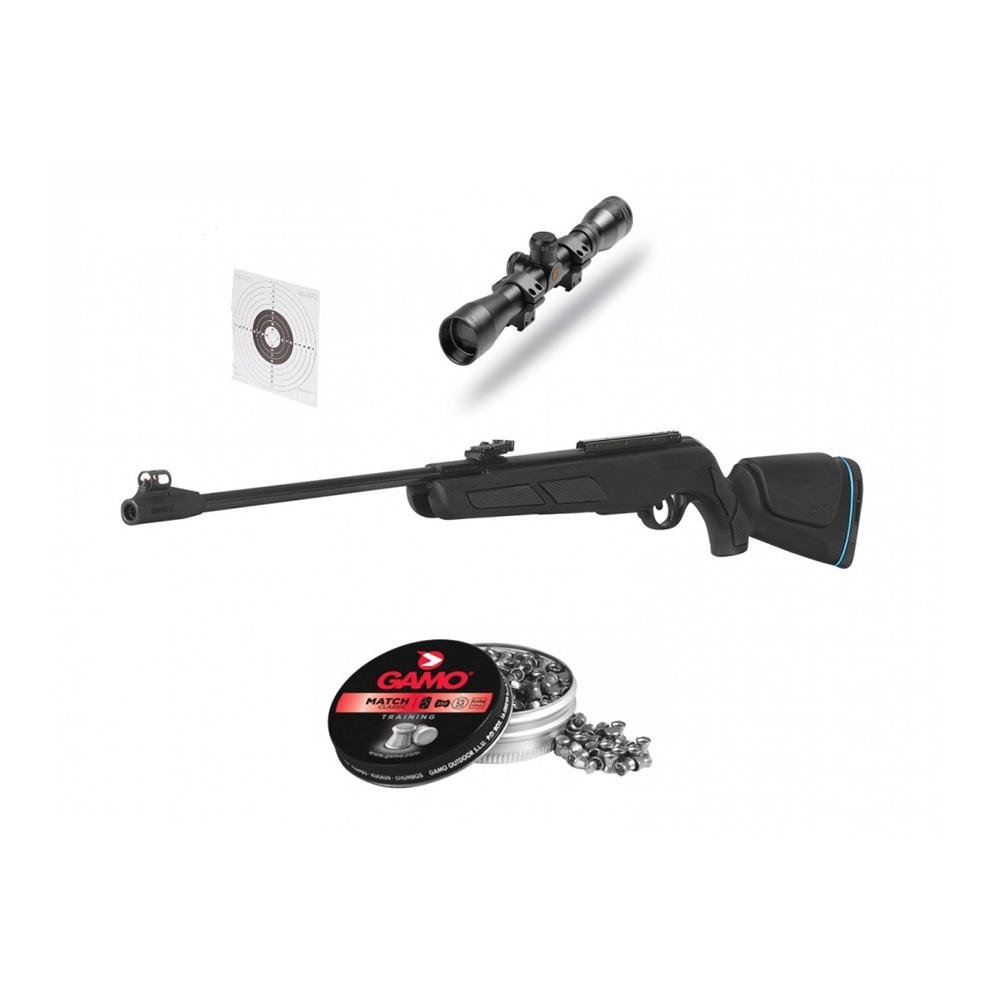
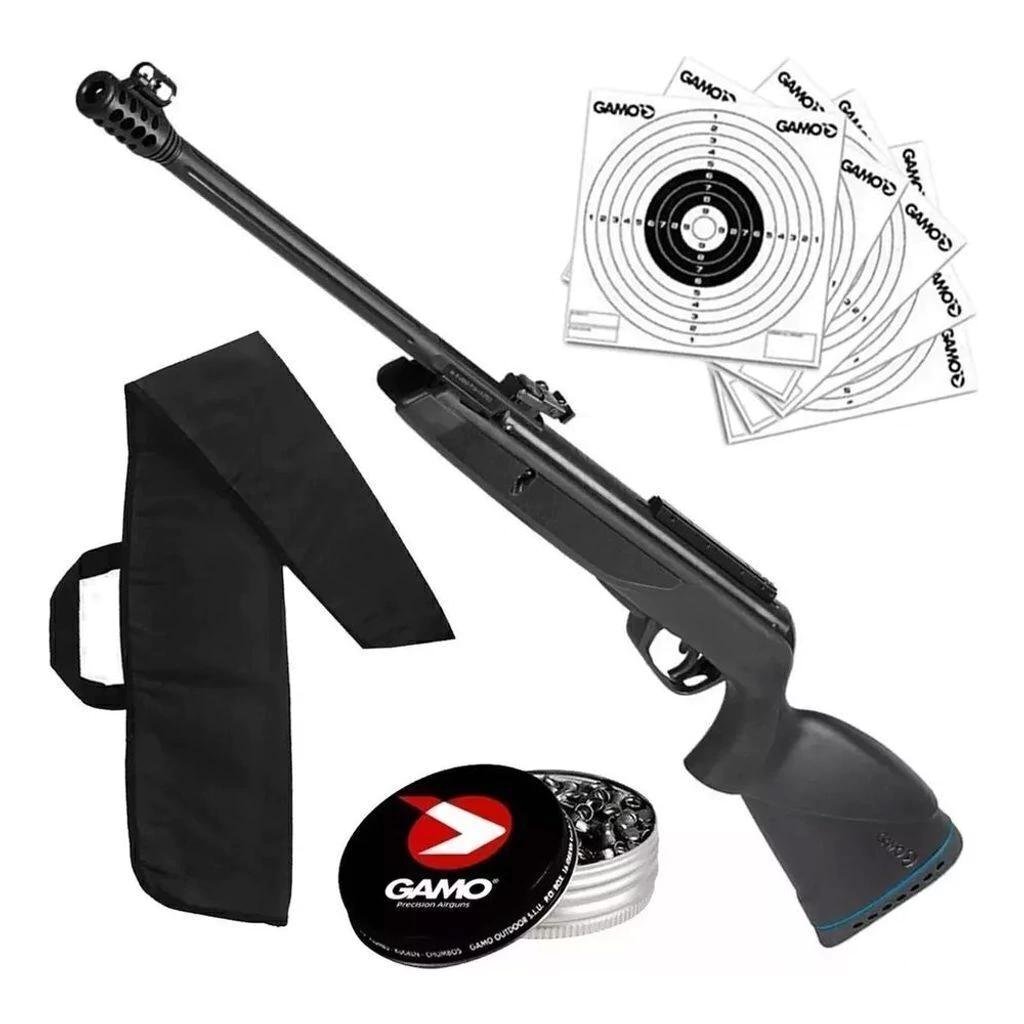
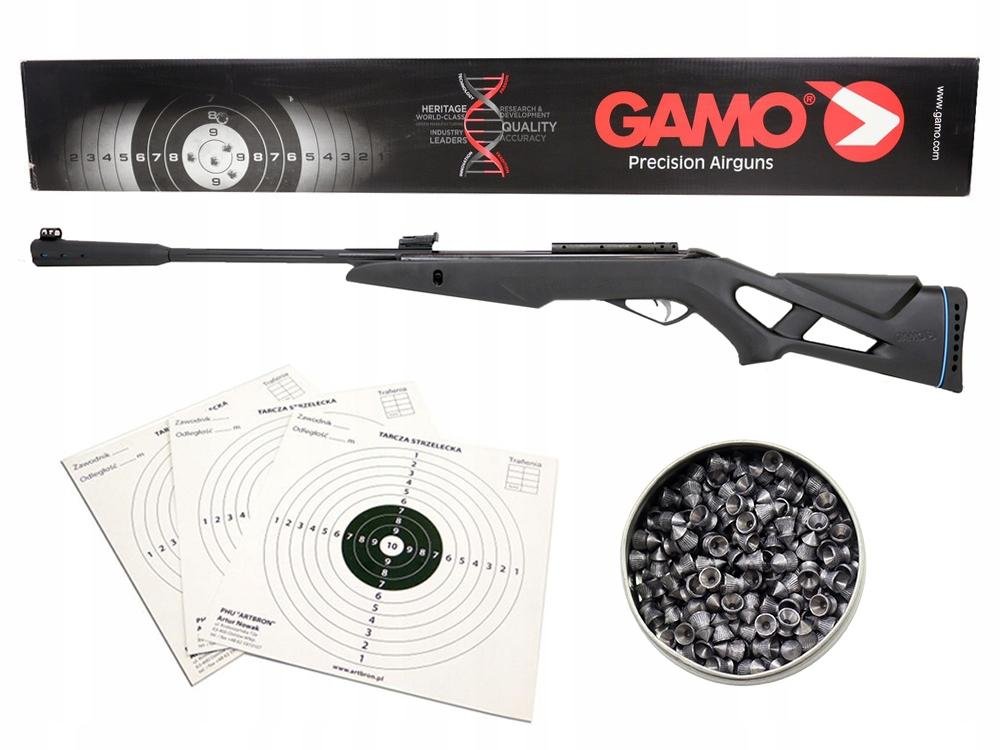


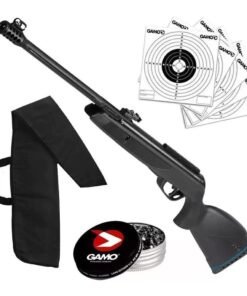

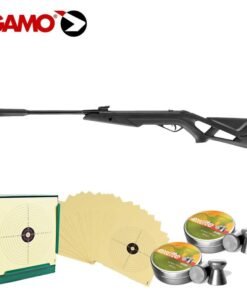
Gamo Target Shooting Kit – .177 Pellet Air Rifle
$180.00
Remember we deliver air rifles & pistols straight to your door!
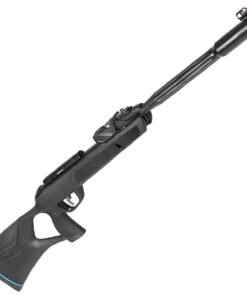
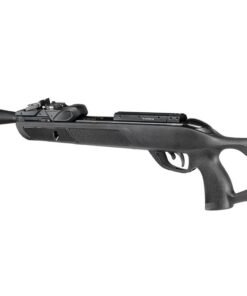
The Gamo Whisper Sting is a newly introduced rifle in Gamo’s Whisper series, delivering excellent performance at a great price. It features a durable black tactical stock designed for reliable use in all weather conditions, while the break-barrel system ensures strong, consistent power with every shot.

Equipped with integrated whisper technology at the muzzle, the rifle significantly reduces noise, making it a great choice for beginners and intermediate shooters alike, designed with target shooting in mind the .177 calibre provides a flatter trajectory for accurate target practice shot after shot.
This Kit includes:
– Gamo Whisper Sting air rifle
– 3-9×40 scope
– Padded rifle & scope bag
– Tin of target pellets
– Pack of practice targets
Frequently Asked Questions
Is this suitable for beginners? Yes the break-barrel action is simple, reliable, and requires no charging equipment, making it ideal for first-time buyers.
Why choose .177 calibre? .177 offers a flatter trajectory, making target shooting easier and improving precision for regular practice.
Is the scope included? Yes this kit includes a 3–9×40 scope, padded rifle bag, pellets, and targets.
Buying these items separately would cost you $250 but we have put these items together into this awesome kit for ONLY $180 !
Specification
Calibre – .177
Stock – Black Tactical
Action type – Break Barrel
Approx power – 11.5 ft/lbs
Barrel Thread – N/a
Stock – Synthetic
Overall Length – 110.50cm
Barrel Length – 45.72cm
Weight – 2.4kg
Sights – Adjustable Rear with fibre optic front sight & 3-9×40 scope included
Safety – Automatic Safety
Gamo Target Shooting Kit – .177 Pellet Air Rifle


Accuracy, enjoyment, and dependable performance are brought together in the Gamo Target Shooting Kit – .177 Pellet Air Rifle. Designed for recreational target practice, this convenient package can be enjoyed by new airgun users, experienced target shooters, and families seeking a structured outdoor activity. Instead of several essential items being purchased separately, a practical foundation for target shooting is provided in one accessible kit.
Because the popular .177 calibre is used, a balanced shooting experience is delivered. Flat trajectories, manageable pellets, and economical practice sessions are supported by this widely available calibre. Consequently, skills such as sight alignment, breathing control, trigger discipline, and consistent positioning can be developed gradually.
Reliable Gamo engineering is also represented throughout the rifle’s construction. Moreover, comfort and control are prioritised so that every properly supervised user can practise with greater confidence. Whether paper targets are being used at an approved range or a safe home target area is being prepared where local laws permit, rewarding practice sessions can be created with this versatile kit.
A Complete Kit Designed for Target Practice
Everything about the Gamo Target Shooting Kit – .177 Pellet Air Rifle has been arranged around convenience and progressive skill development. Rather than a complicated platform being introduced, a straightforward air rifle is supplied for recreational practice. Therefore, more attention can be given to accuracy, consistency, and safe handling.
Depending on the retailer’s exact package configuration, target-shooting accessories may also be supplied. Included contents should always be confirmed from the product listing or packaging before an order is placed. Nevertheless, the central advantage remains unchanged: a dependable .177 pellet air rifle is provided as the foundation of the kit.
Through regular practice, repeatable shooting habits can be encouraged. For example, grip pressure can be controlled, stable positions can be learned, and smoother trigger operation can be developed. As a result, the kit can be appreciated not only as recreational equipment but also as a practical introduction to precision air-rifle shooting.
Product Highlights
- Popular .177 pellet calibre is provided for recreational target shooting and organised practice.
- User-friendly handling is supported for a broad range of responsible adult shooters.
- Consistent aiming practice can be developed through repeated target sessions.
- Durable Gamo construction is used to support dependable long-term ownership.
- Comfortable control is promoted through a practical, shooter-focused design.
- A convenient kit format is offered to simplify preparation for target practice.
- Affordable training sessions can be enjoyed because .177 pellets are widely available.
- Right- or left-handed use may be accommodated, depending on the stock configuration supplied.
- Safe recreational shooting can be encouraged when suitable supervision and backstops are provided.
- Easy storage and maintenance can be supported through a simple air-rifle platform.
Why the .177 Calibre Is Preferred for Target Shooting
For recreational accuracy work, the .177 pellet has long been regarded as a practical choice. Because a smaller and lighter projectile is used, a relatively flat trajectory can be achieved across common target-practice distances. Consequently, aiming corrections can be understood more easily, particularly when basic marksmanship is being learned.
Furthermore, .177 pellets are offered in many shapes and weights. Wadcutters are commonly selected for paper targets because clean, visible holes can be produced. Domed pellets, meanwhile, may be chosen for general practice. Since every rifle can respond differently to pellet designs, several suitable options should be tested before a preferred match is selected.
Economical practice is also made possible by the calibre. Larger quantities of pellets can often be purchased without excessive expense, and longer training sessions can therefore be planned. Most importantly, every pellet must still be treated responsibly. Although firearm ammunition is not being used, serious injury or property damage can still be caused by an air rifle.
Built for More Consistent Shooting
A stable shooting experience is encouraged by the rifle’s practical design. Once a comfortable position has been established, the sights can be aligned, breathing can be controlled, and the trigger can be pressed smoothly. Through repetition, inconsistent movement can be reduced and tighter groups can gradually be produced.
Instead of speed being treated as the only measure of performance, accuracy should be prioritised. Pellet quality, target distance, weather conditions, shooter technique, and sight adjustment will all influence results. Therefore, the best performance will be achieved when the rifle is tested carefully under controlled conditions.
Before use, the supplied manual should be read completely. Additionally, all sights or optics should be mounted and adjusted according to the manufacturer’s instructions. A secure pellet-rated backstop must always be installed, while people, animals, roads, windows, and neighbouring property must remain outside the shooting direction.
Comfortable Design and Everyday Durability
Longer target sessions can be enjoyed when an air rifle is comfortably supported. For that reason, a balanced profile and practical gripping areas are generally preferred. Secure control can be maintained, while unnecessary strain may be reduced through correct posture and shooting technique.
Durable materials are typically selected for modern Gamo air rifles so that regular recreational use can be supported. Nevertheless, careful ownership must still be maintained. After every session, the rifle should be checked, unloaded, cleaned as recommended, and stored securely. Excess moisture should be removed, while manufacturer-approved products should be used for maintenance.
Dry firing should not be attempted unless it is specifically permitted in the official manual. Likewise, unauthorised modifications should never be performed. By the original operating condition being preserved, reliability, safety, and service life can all be better protected.
Suitable for New and Experienced Target Shooters
New shooters can be introduced to basic marksmanship through a clear and controlled practice routine. At first, larger targets can be positioned at a suitable distance. Afterwards, smaller scoring areas can be introduced as confidence and consistency are improved.
Experienced users, however, can use the kit for informal practice, group-size testing, or technique refinement. Different approved shooting positions may be explored, while personal progress can be measured with dated paper targets. Thus, a simple practice session can be transformed into a motivating training programme.
Inclusive participation can also be encouraged. Target shooting can be enjoyed by people from different backgrounds and experience levels when safe instruction, suitable equipment, and respectful supervision are provided. However, age restrictions and local airgun laws must always be followed.
Why Choose the Gamo Target Shooting Kit?
Recognised airgun experience is associated with the Gamo name, while practical recreational performance is emphasised by this target-focused package. More importantly, a clear route into organised target practice is provided without unnecessary complexity.
Confidence can be developed, accuracy can be measured, and enjoyable outdoor time can be shared. Furthermore, the accessible .177 calibre allows regular practice to be continued without specialised ammunition being required. For buyers seeking a practical combination of usability, value, and recognised design, the Gamo Target Shooting Kit – .177 Pellet Air Rifle can be considered a compelling choice.
Before purchase, the exact included accessories, power rating, dimensions, sighting system, and regional specifications should be confirmed with the retailer. Airgun laws can differ considerably between locations; therefore, licensing, age, transportation, use, and secure-storage requirements must be verified locally.
Order the Gamo Target Shooting Kit Today
Better target sessions can be started with equipment designed around simplicity and repeatable practice. With the Gamo Target Shooting Kit – .177 Pellet Air Rifle, dependable recreational performance, convenient preparation, and skill-building potential are combined in one appealing package.
Order today from an authorised retailer and begin developing greater consistency through responsible target practice. Eye protection must always be worn, a reliable pellet-rated backstop must always be provided, and the rifle must always be stored unloaded and inaccessible to unauthorised users.
Calibre, FAC Status, Power and Accessories
A practical combination of accuracy, manageable performance, and affordable shooting is offered by the Gamo Target Shooting Kit – .177 Pellet Air Rifle. However, calibre, muzzle energy, legal classification, and included accessories should all be understood before the rifle is purchased. Because specifications can be changed for different markets, the information printed on the rifle, packaging, and authorised retailer listing must always be checked.
.177 Calibre Performance
The Gamo Target Shooting Kit is chambered for .177 calibre pellets, which are also identified as 4.5 mm pellets. This calibre is widely selected for recreational target shooting because a relatively flat trajectory can be produced. Therefore, aiming points can be learned more easily across typical practice distances.
Paper targets are particularly well suited to .177 pellets. When flat-headed wadcutter pellets are used, clean and easily measured holes can be created. As a result, group sizes and scoring can be assessed without difficulty. Domed pellets may also be used for general practice, although the most accurate pellet must be identified through responsible testing.
Several pellet weights are available in .177 calibre. Lighter pellets may be driven at higher velocities, whereas heavier pellets may retain stability differently and can produce lower advertised speeds. Consequently, velocity figures should never be considered without the pellet’s weight and construction being examined.
Only correctly manufactured .177 airgun pellets should be loaded. Steel BBs, airsoft ammunition, darts, damaged pellets, or incorrectly sized projectiles must not be used unless their compatibility has been expressly confirmed by Gamo. The barrel can be damaged and accuracy can be reduced when unsuitable ammunition is inserted.
Power and Muzzle Energy
Power is commonly expressed in foot-pounds of energy or joules. Meanwhile, velocity is normally shown in feet per second or metres per second. Although these measurements are related, they are not interchangeable. Muzzle energy is determined by both pellet weight and velocity; therefore, the highest velocity does not automatically produce the best target accuracy.
A market-specific power configuration may be supplied with the Gamo Target Shooting Kit – .177 Pellet Air Rifle. In some countries, reduced-power models are distributed to comply with national or regional laws. Elsewhere, higher-output versions may be offered. For this reason, one universal power figure should not be assigned to every rifle sold under this product title.
The exact output should be confirmed from the manufacturer’s label or retailer specification before purchase. Moreover, the rifle should be tested only by a qualified dealer or competent professional when legal compliance needs to be verified. Unauthorised adjustments must not be performed to increase power, as the rifle’s safety, warranty, reliability, and legal classification could be affected.
For target shooting, controllable and consistent power is usually considered more useful than extreme velocity. When a suitable pellet is selected, tighter groups may be achieved and the shooting experience may be made more predictable. Accordingly, accuracy, pellet compatibility, and proper sight adjustment should be prioritised over headline speed.
FAC and UK Legal Classification
“FAC” means Firearm Certificate in the United Kingdom. In England and Wales, an air rifle with muzzle energy exceeding 12 foot-pounds is classed as a firearm that must be held on a valid Firearm Certificate. A rifle producing 12 foot-pounds or less is generally referred to as a non-FAC or sub-12 ft-lb air rifle, although age, purchasing, transportation, storage, and use restrictions still apply.
The actual muzzle energy of this Gamo rifle must be verified before its FAC status is advertised. If a UK-market example has been officially limited to no more than 12 foot-pounds, it may usually be owned in England and Wales without an FAC by an eligible person. However, if more than 12 foot-pounds can be produced, the appropriate certificate must be obtained before possession is taken.
Different requirements are applied in Scotland. An Air Weapon Certificate, permit, or recognised exemption is generally required to use, possess, purchase, or acquire an air weapon there. Northern Ireland is also governed by separate firearms legislation. Therefore, customers should not assume that rules applying in England and Wales will apply throughout the United Kingdom.
Local legislation must always be checked before the rifle is ordered, transported, stored, or used. Furthermore, advice should be requested from the relevant police firearms-licensing department when any doubt remains. Legal compliance remains the buyer’s responsibility, and descriptions supplied by online retailers should not be treated as legal advice.
Recommended Target-Shooting Accessories
A useful selection of accessories can be paired with the Gamo Target Shooting Kit – .177 Pellet Air Rifle. Nevertheless, only items compatible with the rifle’s exact model, action, dimensions, and mounting system should be selected.
- Quality .177 pellets: Wadcutters can be chosen for paper targets, while different pellet weights can be tested to determine the most consistent option.
- Pellet-rated target holder: Paper targets can be supported securely and replaced easily during organised practice.
- Reliable pellet trap: Pellets and fragments can be captured more safely when a correctly rated trap is used according to its instructions.
- Substantial backstop: An appropriate secondary backstop must be installed behind the target area to contain missed shots.
- Protective shooting glasses: Eye protection should be worn by every shooter and observer throughout each session.
- Suitable scope or sight: If the rifle is supplied without an optic, a recoil-rated air-rifle scope and compatible mounts may be considered.
- Padded rifle case: Safe transportation and protection from scratches, dust, and moisture can be supported by a correctly sized case.
- Cleaning equipment: A .177-compatible cleaning system and Gamo-approved maintenance products can be used as directed in the manual.
- Target sheets: Scoring targets, sighting targets, and grouping cards can be used to measure progress.
- Secure storage equipment: A locked cabinet, safe, or other legally compliant storage solution should be provided to prevent unauthorised access.
Choosing the Correct Accessories
Before a scope is purchased, the rifle’s mounting rail and recoil characteristics must be confirmed. Break-barrel air rifles can create a distinctive two-direction recoil impulse; consequently, optics and mounts designed for suitable air-rifle use should be selected. The correct eye relief must also be maintained.
Cleaning products intended for ordinary firearms should not automatically be applied to air rifles. Certain oils can damage seals or create unsafe operating conditions. Therefore, maintenance must be completed only with products and methods approved for the rifle.
Finally, all supplied accessories should be inspected before use. Loose mounts should be secured according to the manufacturer’s instructions, damaged pellets should be discarded, and worn target equipment should be replaced. When the correct calibre, lawful power level, safe accessories, and responsible operating practices are combined, dependable target sessions can be enjoyed with the Gamo Target Shooting Kit – .177 Pellet Air Rifle.
Frequently Asked Questions
What is included in the Gamo Target Shooting Kit?
The exact contents can differ according to the retailer, country, and package version being offered. Generally, the kit is centred on a .177-calibre Gamo pellet air rifle and may be supplied with targets, pellets, a scope, or other basic shooting accessories. However, every included item should be confirmed from the retailer’s description before an order is completed.
Product photographs may occasionally show accessories that are available separately. Therefore, the written contents list should always be treated as the most reliable reference. Upon delivery, every component should also be checked against the packaging information before the rifle is prepared for use.
Is this air rifle suitable for beginners?
Yes, this rifle can provide an accessible introduction to recreational target shooting when responsible adult supervision and proper instruction are provided. The .177 calibre is widely used for target practice because manageable pellets, relatively flat trajectories, and affordable training sessions are supported. Nevertheless, the rifle must never be treated as a toy.
Before shooting begins, the operating manual should be read, the controls should be understood, and a safe target area should be established. Eye protection must be worn, while an appropriate pellet trap and substantial backstop should be positioned behind every target. Local age and ownership requirements must also be observed.
What type of ammunition should be used?
Only correctly sized .177-calibre or 4.5 mm airgun pellets should be used. Paper-target shooting is commonly completed with flat-headed wadcutter pellets because clean and visible holes can be produced. Alternatively, domed pellets may be selected for general recreational practice.
Since barrels can show different pellet preferences, several reputable pellet types and weights may be tested to identify the most consistent option. Damaged, deformed, dirty, or incorrectly sized pellets should be discarded. Steel BBs, plastic airsoft BBs, darts, and other projectiles must not be loaded unless their compatibility has been expressly confirmed by the manufacturer.
How powerful is the rifle?
The precise muzzle energy and velocity depend on the version supplied in a particular market. Different power configurations may be distributed to comply with regional legislation. Additionally, measured velocity can be influenced by pellet weight, pellet composition, temperature, rifle condition, and testing methods. Therefore, one universal figure should not be assumed for every kit carrying this product name.
The specification printed on the packaging or supplied by an authorised retailer should be checked. For target shooting, consistent energy and predictable accuracy should be valued more highly than maximum advertised velocity. No unauthorised power modifications should be made.
Does the rifle require an FAC in the United Kingdom?
In England and Wales, an air rifle capable of producing muzzle energy above 12 foot-pounds must be held on a valid Firearm Certificate. A rifle producing no more than 12 foot-pounds is commonly described as a sub-12 ft-lb or non-FAC air rifle, although other legal restrictions still apply.
The exact output of the individual rifle must be confirmed before its legal status is determined. Scotland generally requires an Air Weapon Certificate, permit, or applicable exemption, while separate legislation is applied in Northern Ireland. Because laws can change, current guidance should be obtained from the relevant police firearms-licensing department before purchase or possession.
Is the kit intended only for target shooting?
The package is primarily presented as a recreational target-shooting solution. Paper targets, suitable reactive targets, and organised range practice can all be enjoyed where their use is lawful and safely controlled. However, the rifle must be operated only for legal purposes. Wildlife and pest-control rules differ significantly between locations, and an animal must never be shot merely for entertainment.
Permission, lawful authority, suitable competence, and an appropriate airgun would all be required before any pest-control application could even be considered. Buyers seeking a straightforward practice rifle should keep the product focused on responsible target use at approved ranges or properly prepared private facilities.
Can a scope be fitted to the rifle?
A compatible air-rifle scope may be fitted if the exact model includes a suitable mounting rail. Before an optic is purchased, the rail type, mount size, available clearance, and rifle action should be confirmed. If a break-barrel mechanism is used, a scope rated for its distinctive recoil pattern should be selected. Ordinary scopes that are not designed for air-rifle recoil may lose zero or become damaged. Mounting should be completed according to the scope and rifle instructions, while screws should be checked periodically. Correct eye relief must be maintained so that the sight picture can be viewed comfortably and safely.
How accurate is the Gamo air rifle?
Accuracy is influenced by far more than the rifle alone. Pellet selection, sight adjustment, target distance, wind, shooting position, grip pressure, trigger control, and follow-through will all affect group size. When a compatible pellet is selected and consistent technique is applied, the rifle can be used effectively for recreational target practice. New users should begin at a sensible distance with a large, clearly visible target. Once consistent groups are produced, smaller scoring areas or longer distances may gradually be introduced. Rather than individual lucky hits being measured, groups of several shots should be compared to evaluate genuine improvement.
What distance is suitable for target practice?
No single distance will suit every user or target area. Beginners are generally better served by starting at a short, controlled range where the target can be seen clearly and every pellet can be safely contained. As accuracy and confidence are developed, the distance may be increased gradually. The rifle’s power, sighting system, pellet choice, weather conditions, and size of the safe shooting area must all be considered. Most importantly, a correctly rated pellet trap and dependable backstop must remain effective at the selected distance. Shooting should never be directed toward open land, roads, buildings, animals, or neighbouring property.
Can the rifle be used by left-handed shooters?
Left-handed suitability depends on the shape of the stock and the controls fitted to the exact rifle version. Many synthetic air-rifle stocks are designed with practical or ambidextrous features, allowing them to be shouldered from either side. However, this should be confirmed from the product photographs and official specifications before purchase. Comfort can be influenced by cheek-piece shape, trigger reach, grip angle, and eye dominance. Where possible, the rifle should be handled safely at an authorised retailer before it is selected. Regardless of the shooting side used, the muzzle must always remain pointed in a safe direction.
What safety equipment is required?
Protective shooting glasses should be worn by the shooter and every nearby observer. A pellet-rated target trap should also be used, while a substantial secondary backstop should be installed to contain missed shots and fragments. Targets must be positioned so that hard surfaces cannot cause ricochets. Suitable hearing protection may be considered where range rules or local conditions require it. Secure footwear, a clear shooting line, and careful supervision can provide additional protection. Before each session, the surrounding area should be inspected. People, pets, vehicles, windows, roads, and neighbouring property must never be located within the direction of fire.
How should the rifle be stored?
The rifle should be unloaded, uncocked, protected from moisture, and secured against unauthorised access. Pellets should be stored separately where required by local law or safe-storage practice. A locked cabinet, approved safe, or another legally compliant storage system should be selected according to the buyer’s location. Access must not be available to children, visitors, or anyone who is not authorised to handle the rifle. Before storage, the chamber should be checked carefully and the safety procedures in the manual should be followed. A padded case may protect the finish during transport, but it should not automatically replace secure long-term storage.
How should the air rifle be maintained?
Maintenance should be completed according to the official Gamo manual supplied with the rifle. Exterior metal surfaces can be kept clean and dry, while dust and moisture should be removed after use. Only airgun-compatible lubricants should be applied, and excessive oiling should be avoided. Products intended for conventional firearms may not be suitable for air-rifle seals or internal components.
The barrel should not be cleaned aggressively or with an incorrectly sized rod. Screws, sights, and scope mounts may be inspected periodically for looseness. If damage, unusual noise, loss of power, or inconsistent operation is noticed, professional inspection should be arranged.
Should the rifle ever be dry-fired?
Dry firing should be avoided unless the manufacturer’s instructions specifically state that it is permitted for the exact model. In many spring-powered air rifles, the mechanism can be damaged when it is released without a pellet providing normal resistance. Unnecessary wear may be caused, while seals or internal parts could also be affected. A loaded rifle must never be fired merely to clear it without an appropriate target and safe backstop being available. If a pellet becomes lodged or the rifle cannot be unloaded safely, the manual should be consulted and assistance should be requested from an authorised airgun technician.
Why do different pellets produce different results?
Pellets vary in weight, head size, skirt shape, material, and overall design. Consequently, they can interact differently with the barrel and power system. A pellet that performs well in one rifle may produce wider groups in another rifle of the same calibre. Lighter pellets may create higher velocity readings, whereas heavier pellets may behave differently in changing weather conditions.
For paper targets, wadcutters are often preferred because clearly defined holes can be created. Several high-quality options can be tested from a stable position, and results can be recorded. The pellet producing the smallest repeatable groups should generally be selected.
Is a pellet trap still required when a paper target is used?
Yes. A paper target does not stop a pellet; it merely provides an aiming and scoring surface. A pellet-rated trap or other suitable containment system must be positioned behind it. In addition, a dependable secondary backstop should be provided in case the target or trap is missed. The equipment must be rated for the rifle’s energy and used according to its manufacturer’s directions. Hard, angled, damaged, or improvised surfaces can increase the risk of ricochets and fragments. Before shooting begins, the complete target area should be inspected, and practice should be stopped immediately if anyone enters the controlled zone.
Can the power be increased at home?
No unauthorised attempt should be made to increase the rifle’s power. Internal changes can affect mechanical reliability, safe operation, accuracy, warranty coverage, and legal classification. In the United Kingdom, a modification that causes an air rifle to exceed the applicable legal threshold could create serious licensing consequences. Similar restrictions may be enforced in other countries.
If performance appears to have declined, the rifle should be inspected by an authorised service centre or qualified airgun technician. Correct maintenance, appropriate pellets, properly secured sights, and consistent shooting technique should be considered before any mechanical fault is assumed.
What should be checked when the kit is delivered?
The package should first be inspected for obvious transit damage. Afterwards, the rifle’s serial details, calibre marking, manual, accessories, and retailer-listed contents should be verified. The muzzle must remain pointed in a safe direction throughout the inspection, and the rifle must be treated as though it could be loaded.
Any protective packaging should be removed carefully. Damage, missing parts, or incorrect accessories should be reported to the retailer before the rifle is used. The trigger, sights, barrel, stock, and safety mechanism should not be altered during the inspection. Warranty documentation and proof of purchase should also be retained.
Is this a good choice for regular practice?
The combination of .177-calibre ammunition, accessible handling, and target-focused presentation can make this kit a practical option for regular recreational shooting. Because .177 pellets are commonly available, repeat practice sessions can be arranged without unusually expensive ammunition. Progress can be measured by keeping dated targets, recording pellet types, and comparing group sizes under similar conditions.
However, productive practice should always be prioritised over rapid or careless shooting. A stable position, controlled breathing, smooth trigger operation, and consistent follow-through should be developed gradually. With lawful use, secure storage, and proper maintenance, dependable long-term enjoyment can be supported.
What should be confirmed before purchasing?
Before an order is placed, the exact model, power level, action type, supplied sights, mounting rail, stock configuration, warranty, and included accessories should be confirmed. The rifle’s legal status in the buyer’s location must also be checked. Age restrictions, identity requirements, delivery rules, transportation conditions, storage obligations, and permitted shooting locations can vary considerably.
Product images should not be relied upon as the only source of information because optional accessories may sometimes be displayed. When the retailer’s listing appears unclear, written confirmation should be requested. By these details being verified in advance, the correct and lawful product can be selected with greater confidence.
Practical Use Scenario: A Structured Day of Recreational Target Shooting
A quiet weekend afternoon has been selected for a carefully organised target-shooting session. The weather is dry, strong winds are absent, and enough daylight remains for the activity to be completed without being rushed. Before any equipment is handled, the location is inspected and permission to shoot there is confirmed.
A private outdoor target area is available, but its suitability is not simply assumed. Nearby roads, public paths, neighbouring properties, livestock areas, vehicles, windows, and buildings are identified first. Because none of these should ever be placed within the direction of fire, the safest possible orientation is chosen. Local laws and property boundaries have also been checked beforehand.
Although recreational enjoyment is expected, safety is treated as the foundation of the entire session. Therefore, every person present is informed that the rifle must never be handled casually. The air rifle is kept unloaded and pointed in a safe direction while the target area is being prepared.
Preparing a Safe Target Area
A commercially manufactured pellet trap is positioned at an appropriate practice distance. Behind it, a broad and substantial secondary backstop is installed. Its width and height are chosen so that pellets can still be contained if the paper target or pellet trap is missed.
The target is not attached to a tree, fence, wall, metal sheet, or hard stone surface. Such improvised surfaces could allow pellets or fragments to rebound unpredictably. Instead, equipment specifically designed for air-rifle target shooting is used according to the manufacturer’s instructions.
Fresh paper targets are secured inside the pellet trap. Large scoring circles are selected for the beginning of the session because technique, rather than difficulty, is being prioritised. A clearly marked firing point is then established. Nobody is permitted to move in front of that line while the range is active.
A table is placed behind the firing position so that unopened pellet containers, replacement targets, and other accessories can be organised. Protective glasses are provided for the shooter and all observers. Meanwhile, the rifle remains secured in its case until every part of the target area has been checked.
Once preparation has been completed, a simple range procedure is explained. When shooting is about to begin, the range will be declared active. When targets need to be changed, the rifle will be unloaded and secured before the range is declared safe. This routine prevents uncertainty and allows everyone to understand what is happening.
Inspecting the Rifle and Equipment
The carrying case is opened only at the established firing point. Immediately, the muzzle is kept directed toward the prepared backstop. The rifle’s general condition is inspected, while the stock, barrel, sights, trigger area, and safety mechanism are checked for visible damage.
No attempt is made to modify the power system or trigger. Furthermore, unfamiliar controls are not operated until the manufacturer’s manual has been consulted. If unusual resistance, damage, or missing parts were to be found, the session would be stopped and professional assistance would be requested.
The calibre marking is confirmed before the pellet container is opened. Only clean, undamaged .177 pellets are selected. Although several types may be available, one reliable target pellet is used during the first part of the session so that unnecessary variables are reduced.
If a scope has been fitted, the mounts are inspected for looseness. Eye relief is also checked from a safe, unloaded position. The optic is not adjusted randomly; instead, its starting setting is recorded so that controlled corrections can be made later.
Protective glasses are put on before loading begins. Anyone observing is asked to remain behind the firing line. Phones and other distractions are set aside because full attention must be maintained whenever the rifle is handled.
Beginning with a Controlled Shooting Position
A supported position is chosen for the first target. The objective is not to fire quickly but to establish a consistent group. The rifle is held securely without excessive grip pressure, and a comfortable cheek position is found.
Before each shot is taken, the target and backstop are checked again. The rifle is loaded exactly as described in its manual. Fingers are kept away from the trigger until the sights have been aligned and the decision to shoot has been made.
A natural breathing rhythm is maintained. As the sights settle over the centre of the target, the trigger is pressed smoothly rather than pulled abruptly. After the pellet has been released, the position is held briefly. This follow-through allows the rifle’s movement to remain consistent.
The same routine is repeated for a small group of shots. Each pellet is loaded individually, while the muzzle remains safely directed downrange. No effort is made to chase every previous pellet hole by constantly changing the point of aim.
Once the planned group has been completed, the rifle is unloaded and placed safely at the firing point. The range is then declared safe. Only after its condition has been confirmed does anyone approach the target.
Evaluating the First Target
The first group is examined without unrealistic expectations. A few pellets may have landed close together, while another may have been pulled slightly away from the centre. Instead of the rifle being blamed immediately, the shooter’s technique is considered.
The position of the group in relation to the target centre is also examined. If the pellets are closely grouped but positioned consistently to one side, a small sight correction may be needed. However, adjustments are not made after every individual shot.
Notes are recorded beside the target. The distance, pellet type, shooting position, weather conditions, and sight setting are written down. By this information being preserved, later results can be compared fairly.
The target is dated and retained. Consequently, improvement can be measured over several sessions instead of being judged from memory. A replacement target is fitted, the area is cleared, and everyone returns behind the firing line before the range is activated again.
Making Careful Sight Adjustments
A second group is fired using the same pellet and shooting position. If the point of impact remains consistent, a measured adjustment is made according to the sight manufacturer’s instructions. Windage is used for horizontal correction, while elevation is used for vertical correction.
Only one controlled change is introduced at a time. Therefore, the effect of each adjustment can be identified. Large or repeated changes are avoided because they can create confusion and make the original setting difficult to recover.
After the correction has been made, another group is fired. The centre of the group has now moved closer to the intended aiming point. Rather than perfect accuracy being expected immediately, steady progress is recognised.
During this stage, another participant may be tempted to adjust the scope further. However, the planned process is maintained. The rifle, pellet, distance, and support remain unchanged until a repeatable result has been produced.
Introducing an Adult Beginner
Later, an adult beginner is invited to participate. Before the rifle is handed over, the safety rules are explained clearly. The location of the safety mechanism is demonstrated from an unloaded condition, and the requirement to keep the muzzle directed toward the backstop is emphasised.
The beginner is shown how the rifle should be supported and how a stable position can be established. No assumptions are made about prior knowledge. Questions are encouraged, and the session is allowed to proceed at a comfortable pace.
Loading is completed only after the instructions have been understood. Close supervision is maintained, but the learner is not rushed or criticised. The first objective is simply to follow the correct procedure and place pellets safely into the target area.
A large paper target is used. The shooting distance remains moderate, and a supported position is provided. As confidence is developed, improvements in sight alignment and trigger control are gently introduced.
After several shots, a visible group begins to form. The result is encouraging because it demonstrates that consistency is being learned. More importantly, the rifle has been handled safely throughout the exercise.
A short break is then taken. The rifle is unloaded and secured before anyone leaves the firing point. Fatigue is not ignored because tiredness can reduce concentration and lead to mistakes.
Comparing Suitable Target Pellets
Once the beginner’s practice has ended, a careful pellet comparison is conducted by the more experienced user. Two or three reputable .177 target pellets are available, and separate paper targets are prepared for each type.
An equal number of shots is fired with every pellet. The same distance, support, aiming point, and shooting routine are maintained. Wind conditions are also observed so that an unfair comparison is not created.
The first pellet produces a reasonably tight group. However, the second creates a slightly smaller and more rounded pattern. The third pellet performs adequately but appears less consistent in this particular rifle.
No conclusion is based on a single shot. Instead, multiple groups are considered. The pellet that repeatedly produces the most consistent results is selected for future target sessions.
The fastest-looking pellet is not automatically chosen. Accuracy, reliable fit, and repeatability are treated as more important than advertised velocity. This simple test demonstrates why ammunition selection can influence the performance of a .177 air rifle.
Moving from Supported to Standing Practice
After dependable groups have been achieved from the supported position, a standing exercise is introduced. The target remains large, and the distance is not increased. Because less physical support is available, greater movement is expected.
The shooter’s feet are positioned comfortably, while the body is balanced without excessive tension. The rifle is raised smoothly and supported without being gripped too tightly. Breathing is controlled, and each shot is taken only when the sight picture becomes acceptably stable.
Smaller groups are not expected immediately. Instead, safe handling and consistent movement are prioritised. After a few shots, the rifle is lowered and a brief rest is taken.
Gradually, a more repeatable standing position is found. Although the group remains wider than the supported group, most pellets are placed within the central scoring area. Improvement is therefore recognised without the session being turned into unnecessary pressure or competition.
Creating a Friendly Scoring Exercise
To finish the active portion of the session, a simple scoring challenge is arranged. Identical paper targets are used, and each participant is given the same limited number of shots. The purpose is to encourage concentration and enjoyment rather than reckless speed.
Every shot is completed individually. The rifle is not passed directly from one person to another while loaded. Instead, it is unloaded, made safe, and transferred only under controlled conditions at the firing line.
Points are recorded after each complete round, not while the rifle is being handled. Encouragement is offered to every participant, regardless of experience. Because an inclusive atmosphere is maintained, confidence can be developed without embarrassment.
The beginner achieves a respectable score, while the experienced user produces a tighter group. Nevertheless, safe procedure is considered the most important result. A well-centred pellet is not praised if it was produced through careless handling.
Responding to an Interruption
During the final round, movement is noticed near the wider property boundary. Although the person is not directly within the target area, shooting is stopped immediately. The rifle is unloaded, secured, and pointed safely toward the backstop.
No shot is taken merely because the target appears clear. The full environment must remain controlled. Once the reason for the movement has been identified and the area has been confirmed safe again, the session may continue.
This interruption provides a valuable practical lesson. Target shooting requires continuous awareness, not just attention during loading and firing. Whenever uncertainty is introduced, the safest response is for shooting to be stopped.
Ending the Session Responsibly
When the final target has been completed, the range is declared safe. The rifle is unloaded according to the manufacturer’s instructions, and its condition is checked. Pellets are returned to their container, while loose ammunition is collected from the table.
Used paper targets are removed, and the pellet trap is examined. Trapped pellets and fragments are handled carefully and disposed of according to local requirements. No debris is left at the shooting location.
The rifle’s exterior is wiped with a suitable cloth. Moisture, dust, and fingerprints are removed, while aggressive chemicals are avoided. Only manufacturer-approved maintenance products are considered, and unnecessary lubrication is not applied.
Before storage, the rifle is confirmed to be unloaded and uncocked. It is placed inside a protective case for transportation. However, the case is not treated as permanent security. At home, the rifle is transferred to a locked and legally compliant storage location where unauthorised users cannot gain access.
Pellets and accessories are organised separately. The retained targets and written notes are reviewed, and the best-performing pellet is recorded for the next session. Any sight adjustments are also documented.
Through careful preparation, the session has been made enjoyable, measurable, and safe. Accuracy has been improved, an adult beginner has been introduced responsibly, and equipment performance has been evaluated without unsafe experimentation.
Most importantly, every stage has been controlled. A suitable location has been selected, legal requirements have been considered, protective equipment has been worn, and a reliable backstop has been used. By the same structured approach being followed during future practice, consistent skills and responsible air-rifle habits can continue to be developed.
Why This Rifle Is a Better Choice for Target Shooting
Choosing the right air rifle can make recreational target practice more enjoyable, consistent, and rewarding. A suitable rifle should not be selected only because a high velocity has been advertised. Instead, handling, accuracy, ammunition availability, durability, maintenance needs, safety, and long-term value should all be considered.
This target-shooting package provides a practical balance of these qualities. A straightforward platform is offered for people who want to develop their accuracy without being overwhelmed by unnecessary complexity. Furthermore, its popular pellet calibre makes regular practice more accessible to both new and experienced users.
A Practical Introduction to Target Shooting
A complicated rifle can make the learning process unnecessarily difficult. When numerous adjustments and unfamiliar controls are presented immediately, attention can be taken away from the basic principles of marksmanship. With this rifle, a more direct shooting experience is provided.
Fundamental skills such as sight alignment, breathing control, trigger discipline, posture, and follow-through can therefore be developed progressively. Instead of attention being focused on complicated equipment, greater concentration can be placed on producing consistent groups.
New users can begin from a supported position with large paper targets. Afterwards, smaller scoring areas or different approved shooting positions can be introduced. This gradual learning process can help confidence and good habits to be established without the shooter being rushed.
The .177 Calibre Is Well Suited to Practice
One of the most important reasons for choosing this rifle is its .177-calibre configuration. This calibre has been widely accepted for recreational and competitive target shooting because a relatively flat trajectory can be produced across common practice distances.
Additionally, .177 pellets are generally easy to find. Several weights, shapes, and price levels are offered, allowing a suitable option to be selected for different targets and budgets. Consequently, regular practice can be continued without specialised ammunition being difficult to obtain.
Flat-headed wadcutter pellets can produce clean holes in paper targets. Scoring and group measurement can therefore be completed more easily. Domed pellets may also be tested for general use, although the pellet producing the most consistent groups should be preferred.
Because ammunition is relatively affordable, longer practice sessions can often be arranged. Rather than only a few shots being fired occasionally, a structured routine can be developed. Consistent practice is essential when greater accuracy is being pursued.
Accuracy Is Prioritised Over Unnecessary Power
High velocity is often used to attract attention, but speed alone does not guarantee accuracy. A lighter pellet may produce a faster reading, while a heavier or differently shaped pellet may provide better consistency. Therefore, the rifle should be judged by repeatable group performance rather than a single advertised number.
For target shooting, controllable and consistent energy is usually more useful than excessive power. Reduced movement, predictable pellet behaviour, and comfortable handling can all contribute to a better practice experience.
When the correct pellet, sight setting, and shooting technique are combined, meaningful improvements can be measured. Targets can be dated and saved, while group sizes can be compared over time. As a result, progress can be demonstrated clearly instead of being based only on personal impressions.
A Convenient Package Is Provided
Another reason for considering this option is the convenience offered by the kit format. Depending on the exact retailer package, useful items such as pellets, targets, sights, or other shooting accessories may be supplied.
Preparing for an initial target session can therefore be made easier. Several individual products may not need to be researched and purchased separately. Nevertheless, the written list of included contents should always be checked because accessories can vary between markets and retailers.
Even when additional equipment must be purchased, the rifle provides a dependable foundation around which a complete target setup can be created. Protective glasses, a pellet trap, a substantial backstop, suitable targets, a secure case, and approved maintenance supplies can all be added according to individual requirements.
Comfortable Handling Supports Better Technique
A rifle that feels awkward can make consistency difficult. Grip pressure may change, the cheek position may move, and the trigger may be approached differently during every shot. Conversely, a practical and balanced design can help the same shooting position to be repeated.
Comfortable handling is therefore an important advantage. When the rifle can be supported correctly, unnecessary muscle tension may be reduced. The sights can be aligned more naturally, while smoother trigger control can be encouraged.
People have different body sizes, dominant hands, and levels of experience. Accordingly, suitability should be confirmed before purchase whenever possible. Stock shape, trigger reach, cheek-piece design, and overall weight should all be considered. A rifle that fits the intended user properly will generally provide a more enjoyable practice experience.
Dependable Construction Offers Long-Term Value
A target rifle should not be regarded as a short-term purchase. When responsible maintenance and secure storage are provided, it should continue to perform across many practice sessions.
Gamo has established broad recognition within the airgun industry, and its rifles are supported by widely available pellets, accessories, and maintenance information. Consequently, compatible equipment and professional support may be easier to locate than they would be for an unfamiliar platform.
Durable construction can also make the rifle suitable for regular recreational use. However, long service life still depends on responsible ownership. The rifle should be kept dry, cleaned only as recommended, and protected from corrosion or accidental damage.
No unauthorised internal modifications should be performed. If a fault is suspected, the rifle should be inspected by an approved service provider or competent airgun technician. Through correct care, its reliability, warranty coverage, and legal classification can be better protected.
Suitable for Individual or Shared Activities
Target shooting can be enjoyed as an individual practice activity or as a carefully supervised group experience. Personal concentration can be developed when targets are used to measure accuracy over time. Alternatively, a friendly scoring exercise can be arranged among responsible adult participants.
People from different backgrounds and experience levels can take part when patient instruction and suitable equipment are provided. No participant should be pressured to shoot, and nobody should be permitted to handle the rifle without understanding the safety rules.
When beginners are introduced, larger targets and shorter controlled distances can be used. More experienced users may practise supported, standing, or other approved positions. Therefore, the same rifle can remain useful as confidence and ability are gradually developed.
Simple Operation Encourages Consistency
A straightforward air-rifle platform can encourage a deliberate shooting rhythm. Each shot can be prepared carefully, the sights can be checked, and proper follow-through can be maintained.
Fast or careless shooting is not encouraged. Instead, every pellet can be treated as a separate opportunity to practise correct technique. This slower and more purposeful approach often provides greater training value.
The rifle can also be used to compare pellet performance. Equal groups can be fired with several reputable .177 pellet types while the distance and shooting position remain unchanged. Through this process, the ammunition most suited to the individual barrel can be identified.
Better Value Is Delivered Through Regular Use
Value should not be measured only by the original purchase price. A rifle becomes more valuable when it can be used regularly, maintained without unnecessary difficulty, and paired with widely available ammunition.
Because .177 pellets are commonly sold in economical quantities, repeated practice can be made more affordable. Meanwhile, targets can be printed or purchased in bulk, and reusable pellet traps can support many controlled sessions.
The kit may also reduce initial setup costs if useful accessories are included. Buyers should compare the complete package rather than looking only at the rifle’s individual price. Warranty support, retailer reputation, replacement-part availability, and after-sales assistance should also be included in the decision.
Responsible Use Can Be Supported
The rifle is best suited to people who are prepared to create a safe and lawful shooting environment. Protective glasses, a correctly rated pellet trap, and a substantial secondary backstop must always be used.
The target area should be positioned away from roads, paths, buildings, animals, vehicles, windows, and neighbouring property. Moreover, the rifle must be stored unloaded and secured against unauthorised access after every session.
Local regulations must be checked before purchase or use. Power limits, age restrictions, delivery requirements, storage rules, and permitted shooting locations can vary between countries and regions. The rifle’s exact market-specific output should also be confirmed.
A Balanced Choice for Developing Accuracy
Ultimately, this rifle is worth considering because a useful balance is provided. Accessible ammunition, practical handling, target-focused performance, recognised construction, and kit convenience are brought together without unnecessary complication.
A beginner can use it to establish safe and consistent habits. Meanwhile, a more experienced recreational shooter can use it to refine technique, compare pellets, test group sizes, and enjoy informal scoring sessions.
It should not be selected merely because it can propel a pellet at speed. Instead, it should be chosen because structured practice, measurable progress, and long-term enjoyment can be supported.
When it is used lawfully, maintained correctly, and paired with suitable safety equipment, a dependable target-shooting experience can be created. For buyers seeking an accessible .177 air rifle that can support regular training and inclusive recreational use, this package represents a convincing and practical option.
Gamo Target Shooting Kit – .177 Pellet Air Rifle
Accuracy, accessibility, and dependable recreational performance are combined in the Gamo Target Shooting Kit – .177 Pellet Air Rifle. Designed for responsible target practice, this convenient package provides a straightforward introduction to air-rifle shooting without unnecessary complexity. Whether basic marksmanship is being learned or existing technique is being refined, controlled and enjoyable practice can be supported.
When shoppers ask what is an airgun, a simple explanation can be provided: a projectile is propelled by compressed gas, a spring-piston mechanism, or another pneumatic power system rather than conventional firearm ammunition. Therefore, air guns meaning should not be confused with firearm classification. Likewise, an air powered gun must never be treated as a toy because serious injury and property damage can still be caused.
Why Choose This .177 Target Rifle?
This kit is chambered for widely available .177 or 4.5 mm pellets. Consequently, regular practice can be arranged affordably, while relatively flat trajectories can support consistent aiming. Searches such as target shooting with air rifles, type of air gun, types of air rifles, and types of air guns often lead buyers toward .177 break-barrel models because their operation is straightforward.
Those asking what is a break barrel pellet gun are usually describing a rifle in which the barrel is moved to cock the action and expose the loading point. Once a compatible pellet has been inserted and the barrel has been returned securely, the rifle can be aimed and fired according to its manual.
The Gamo kit should be used with compatible .177 pellets—not metal bb pellets, a 4.5 mm bb, a bb metal bullet, darts for bb gun, or ammunition intended for a dart pellet gun unless manufacturer approval has been provided. Although search terms such as metal pellet, metal pellet gun, pillet gun, and types of pellet guns are frequently used, ammunition compatibility must always be confirmed.
Product Highlights
- .177-calibre configuration for recreational paper-target practice
- Accessible handling for responsible adult beginners and experienced users
- Affordable pellet availability for regular training sessions
- Practical design created around accuracy and repeatability
- Compatible with suitable targets, pellet traps, and protective equipment
- Straightforward maintenance when official instructions are followed
- Secure storage and lawful use strongly recommended
Understanding Different Airgun Platforms
Not every airgun operates like this Gamo rifle. A gas ram rifle uses a sealed gas strut, whereas co2 pellet rifles and a co2 pistol replica are powered by replaceable CO₂ capsules. An air gun electric platform may use a battery-driven mechanism, while PCP equipment stores compressed air inside a reservoir.
The pcp rifle meaning refers to a pre-charged pneumatic rifle. Popular PCP-related searches include cheapest pcp airgun, fx drs, fx impact m3, fx leopard .22 pcp specs, fx airguns sverige, AEA 22, AEA airgun, AEA challenger, and AEA element max. These products are separate from this target kit and must not be presented as included features.
Other model searches, including crossman 2250, crosman shockwave .22, crosman st-1, rm8, rexymaxx, niksan ozark tw, rifle m50, and winchester model 55, represent different specifications or product families. Similarly, air arms, BSA guns England, and BSA Meteor stock relate to other manufacturers or replacement components.
The term luftgevær is commonly used in parts of Europe when an air rifle is being described. Meanwhile, searches such as airgu, only air gun, just gun, gun UK, and cold air guns may be incomplete or informal phrases. Product type, calibre, power source, and legal classification should therefore be verified instead of assumptions being made from a search phrase.
Air Pistols, Revolvers and Replica Searches
An air rifle should not be confused with an air pistol. Anyone asking what is air pistol should understand that a shorter airgun platform is being described and that different power limits may apply. Examples searched online include Webley revolver, Webley MKVI, Webley guns, revolver air gun pellet co2, air gun pellet co2 revolver, Smith and Wesson CO2 pistol, Walther CP88 Competition, Umarex RP5 C02 pellet gun, SA 10 pistol, and Umarex – Legends.
Likewise, Ekol blank guns are not pellet air rifles and should not be used as substitutes. Blank-firing products can be governed by separate laws. Every buyer should confirm local ownership, transportation, storage, and use requirements before ordering any airgun or replica.
Sights, Cases and Useful Accessories
A suitable optic can support accurate target practice when it is mounted correctly. A mil dot scope uses a reticle containing measured reference points, while mil dot information may be used for carefully understood aiming corrections. Optics must be rated for the rifle’s recoil characteristics.
A correctly sized aluminium rifle case or padded case can protect the rifle during lawful transportation. However, a carrying case should not automatically be treated as secure permanent storage. Other useful products include protective glasses, paper targets, a pellet-rated trap, a substantial backstop, a suitable pellet tin, and manufacturer-approved airgun lubricant.
Correct air gun maintenance should be completed according to the official manual. Unsuitable oils, excessive lubrication, dry firing, and unauthorised modifications should be avoided. Thread searches such as 1 2 UNF and 1/2 UNF often relate to muzzle accessories, but no threaded component should be attached unless the rifle’s specifications and local laws allow it.
A sniper set may be used as an informal retail phrase for a rifle-and-optic package, yet this Gamo product is better described as a recreational target kit. Accurate descriptions create stronger buyer confidence and prevent optional equipment from being mistaken for included accessories.
Slingshots, Catapults and Air Rifles
A wrist rocket, mossy oak bow, catapult, and pellet rifle are separate product categories. Searches for catapult vs slingshot, what’s the difference between a slingshot and a catapult, another name for slingshot, and synonym for slingshot should therefore not be used to describe this rifle.
Questions such as are slingsgots illegsl cannot be answered universally because laws differ by location. The same caution must be applied to air rifles. Ownership may be lawful in one region but licensed or restricted in another.
Power, Energy and Responsible Use
An FPE calculator, sometimes searched as the Pyramyd Air calculator, can be used to understand the relationship between pellet weight and measured velocity. Nevertheless, advertised velocity should not be treated as the only sign of quality. Consistency, pellet suitability, handling, and group size are more meaningful for target shooting.
Searches such as .45 ACP muzzle energy joules relate to conventional firearm ammunition and are not relevant comparisons for this .177 target rifle. Likewise, large-bore products such as AEA Harpoon 12 gauge, AA Harpoon, AEA Zeus 95 cal, AEA 50 caliber, AEA Megalodon 45 cal, AEA Megalodon 50 caliber, and a .72 cal air rifle belong to entirely different categories and power levels.
A CO2 cannon wedding product is also unrelated and may be designed for visual-event effects rather than projectile shooting. Product categories must never be mixed merely because similar gas terminology is used.
Questions About Pest Control
Online searches frequently include air rifle for rats, rat gun, rat killing gun, shoot rats with air rifle, shooting a rat, will a BB gun kill a rat, will a pellet gun kill a rat, and can air rifles kill. Phrases such as rat with a gun and rat shooting may also describe novelty images rather than genuine equipment advice.
This Gamo kit is promoted primarily for responsible target practice. No animal should be shot for entertainment. Where pest control is being considered, local wildlife laws, landowner permission, humane standards, appropriate equipment, safe surroundings, and professional competence must all be addressed. A licensed pest-control professional should be contacted whenever legality or humane capability is uncertain.
A Dependable Target-Shooting Choice
For buyers seeking a practical .177 rifle, the Gamo Target Shooting Kit offers an appealing balance of manageable operation, affordable practice, and recognised airgun design. Unlike unrelated PCP, CO₂, big-bore, revolver, or catapult products, it is focused on accessible recreational accuracy.
With compatible pellets, protective glasses, a properly rated trap, a substantial backstop, and secure storage, structured practice can be enjoyed responsibly. Before purchase, the exact package contents, power rating, local legal status, and included accessories should always be confirmed with the authorised retailer.
Be the first to review “Gamo Target Shooting Kit – .177 Pellet Air Rifle”
Related products
Daystate Air Rifle
Air Rifles
PCP Air Rifles
Air Rifles
Air Rifles
Air Rifles
Air Rifles
Reviews
There are no reviews yet.