
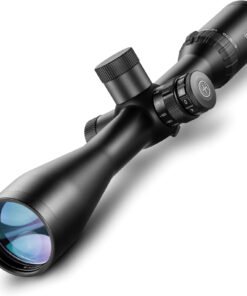
Airmax 30 WA SF 8-32×50 AMX IR
$450.00
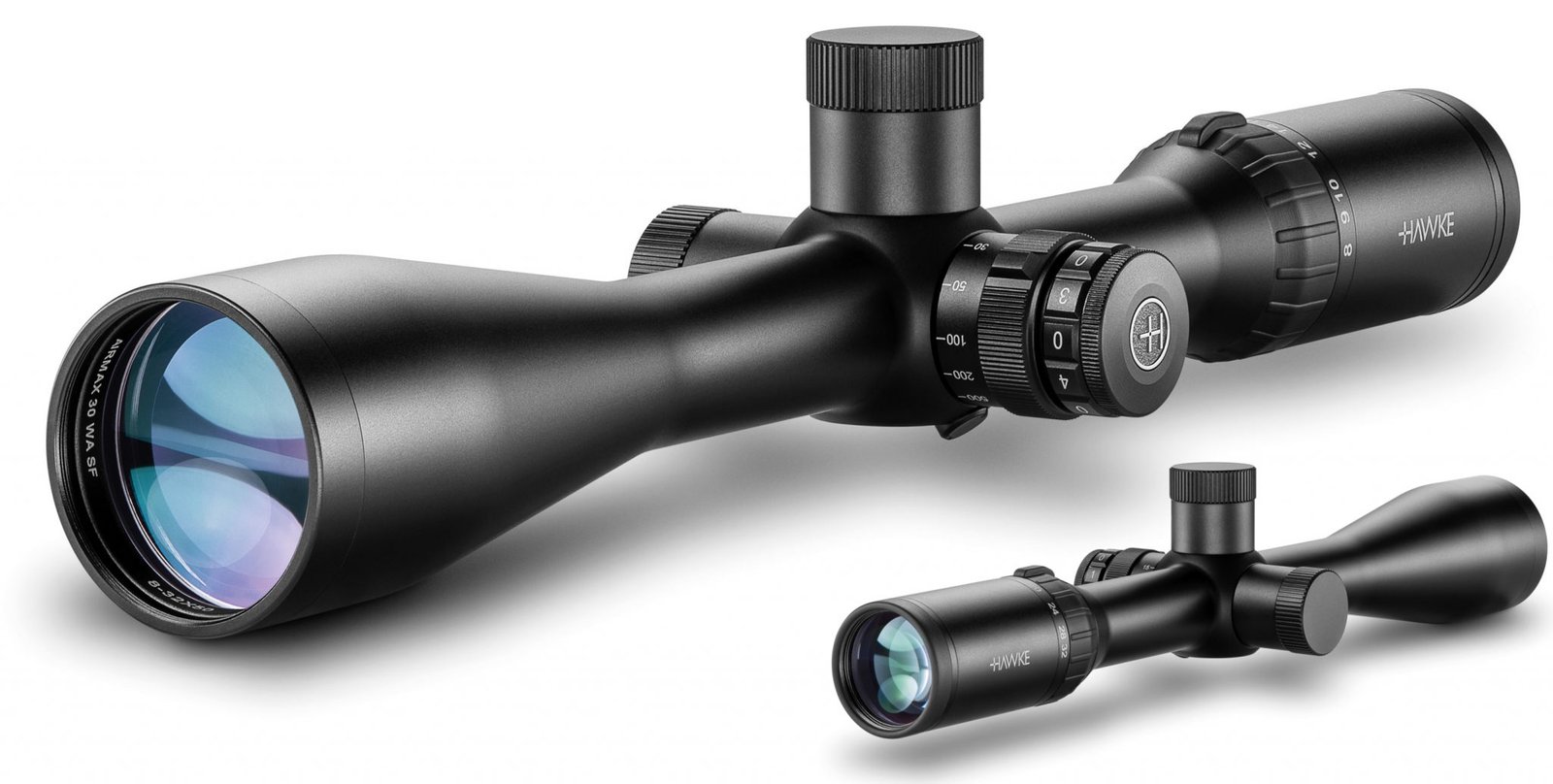
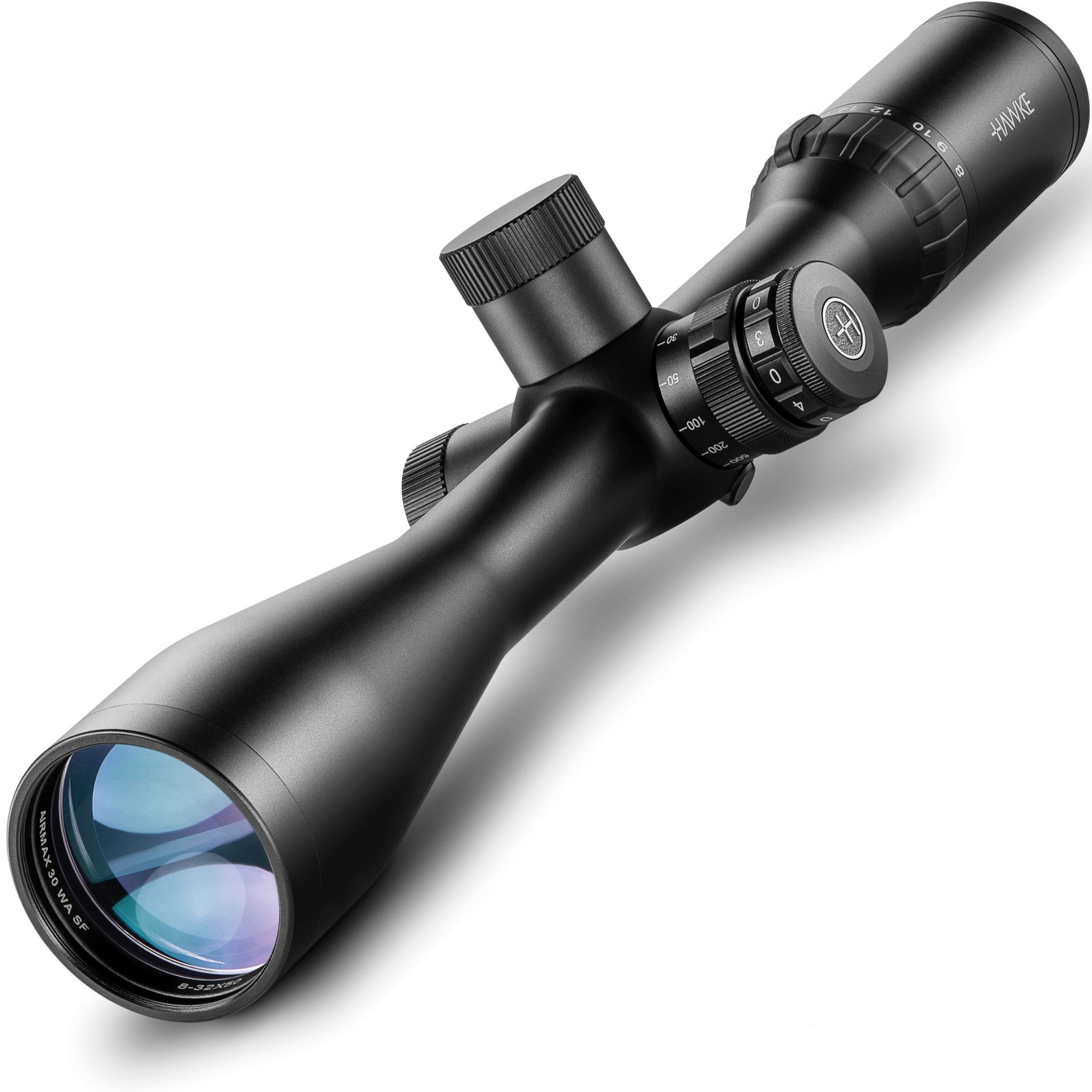
Hawke Airmax 30 WA SF 8-32×50 AMX IR
Specialist scopes designed by air-gunners for air-gunners!
Wide angle, 30mm mono-tube chassis, illuminated, side focus, fast focus eyeball, 16 layer fully multi-coated lenses with AMX reticle designed for airguns. Shockproof, waterproof and fog proof.


Hawke Airmax 30 WA SF 8-32×50 AMX IR – Premium Illuminated Air Rifle Scope, Wide-Angle Optics, Precision Side Focus and Advanced Targeting Clarity

The Hawke Airmax 30 WA SF 8-32×50 AMX IR is a premium variable-magnification riflescope designed for airgun enthusiasts who value exceptional optical clarity, precise adjustment, reliable construction, and advanced sporting optics.
Developed by Hawke Sport Optics, this sophisticated sighting system combines an 8–32× magnification range with a large 50mm objective lens, advanced H2 optical technology, and a specialized illuminated AMX reticle.
Unlike basic fixed-magnification optics, its adjustable magnification provides flexibility for different authorized target-shooting activities. Furthermore, the wide-angle optical design supports comfortable target observation across its available magnification range.
The 30mm one-piece aluminum main tube provides a robust structural foundation, while its matte-black finish complements a broad selection of sporting air rifles.
Additionally, the scope incorporates side-focus parallax adjustment, capped target turrets, and a fast-focus eyepiece.
These features create a refined optical system suitable for enthusiasts who appreciate sophisticated target-viewing equipment.
Importantly, this product is a riflescope rather than a complete air rifle. Its performance depends on the optical system and compatible mounting equipment.
Advanced H2 Optical System – Why Image Clarity Matters
The Hawke Airmax incorporates the manufacturer’s H2 optical system with 16-layer fully multi-coated lenses.
These coatings help improve light transmission and reduce unwanted reflections across optical surfaces.
Consequently, users can enjoy clear target images under suitable lighting conditions.
The 50mm objective lens gathers incoming light, while the variable magnification system determines the apparent size of the viewed target.
However, maximum magnification does not necessarily produce the brightest image. At 32×, the exit pupil becomes smaller, making viewing conditions and consistent eye position more important.
Therefore, the broad magnification range provides flexibility rather than identical optical brightness at every setting.
8–32× Magnification – Flexible Target Observation
The variable magnification system provides considerable flexibility for recreational target observation.
At 8× magnification, the optic offers a relatively wider field of view.
Meanwhile, higher magnification allows smaller target details to appear larger within the sight picture.
The field of view ranges from approximately 16.1 feet to 4.0 feet at 100 yards, depending on magnification.
Furthermore, the high-torque zoom ring provides a tactile external control.
Actual image quality also depends on environmental conditions, illumination, and optical adjustment.
AMX IR Illuminated Reticle – Advanced Optical Reference Design
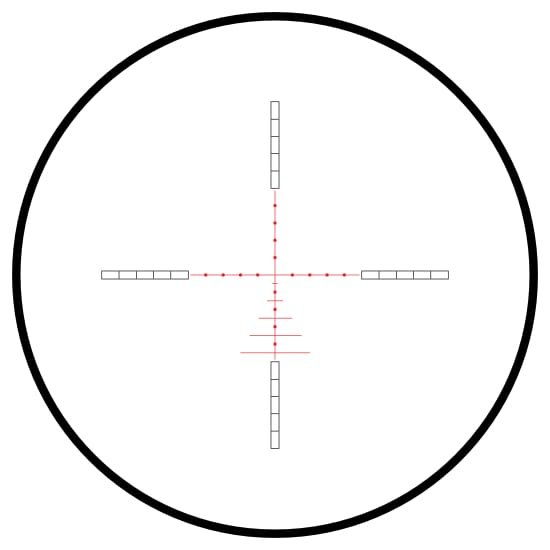
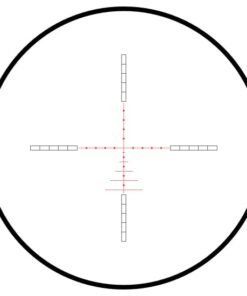
The glass-etched AMX IR reticle represents an important feature of this premium optical system.
Designed for airgun applications, it incorporates multiple visual reference markings based on a mil-dot-style arrangement.
Additionally, its red illumination offers six brightness settings, with off positions between illumination levels.
This allows users to select an appropriate reticle appearance according to lighting conditions.
The reticle operates in the second focal plane. Consequently, its apparent size remains consistent as magnification changes, while the angular values represented by its markings depend on the designated calibration magnification.
The illuminated design contributes to visibility but does not provide night vision or thermal imaging capabilities.
Side Focus Parallax Adjustment – Precision Optical Control
The side-focus system provides adjustment from approximately 10 yards to infinity.
Parallax is an optical phenomenon in which the apparent position of a reticle against the target can shift when the observer’s eye position changes.
A correctly functioning parallax adjustment helps minimize this apparent movement at the selected viewing distance.
Furthermore, the side-mounted control offers convenient access without requiring adjustment of the objective housing.
This design is particularly relevant for airgun optics because recreational target activities may involve comparatively short viewing distances.
30mm Mono-Tube Chassis and Reliable Exterior Construction
The scope incorporates a one-piece 30mm aluminum chassis designed for strength and structural consistency.
Its approximately 388mm overall length and 778–780g weight provide a substantial optical platform.
Furthermore, the manufacturer describes the optic as nitrogen-purged, waterproof, shockproof, and fogproof.
These protective characteristics support dependable use under normal environmental conditions.
However, owners should still avoid unnecessary impacts, prolonged exposure to extreme conditions, and unsuitable cleaning products.
The optic also features capped target turrets with 0.1 MRAD adjustment increments.
Related Airgun Products, Accessories, and Search Comparisons
The following search terms belong to broader airgun markets and should be treated as separate products or categories rather than features of this optical sight.
Compact and tactical equipment: bintac t9, bintac t9 price, bintac t9 full auto, bintac s45, bintac t50, aea bintac t50 extreme, bintac mcar, bintec m50, b&w m50, m50 vs evanix viper for sale usa, mp30, tac 9, tac-9, mordax venom, airgun tactical, air gun tactical, air tactical, tactical air guns, tactical air rifle, air ordnance smg 22, smg 22, full auto pellet gun.
Large-calibre alternatives: zeus mk2 .72cal air rifle, zeus mk2 .72 cal air rifle, zeus air rifle, 72 caliber aea zeus, aea zeus air rifle, aea zeus 72 cal, aea zeus 72 caliber, aea zeus 72, aea zeus mk2, aea zues, zeus air gun, zeus mk2, zeus 72 cal air rifle, zeus 72 cal air rifle price, aea zeus tactical, 72 caliber air rifle, .72 cal air rifle, 50 cal air rifle, 50 caliber air rifle, 50 cal air pistol, 9mm air rifle, 9mm air gun, 9mm pellet gun, 9mm air pistol.
Other pneumatic products: aea megalodon, aea megalodon 50 cal, aea megalodon .58 cal, aea megalodon air rifle, aea megalodon 50 cal price, aea megalodon 50 caliber, megalodon air rifle, aea terminator, aea harpoon, aa harpoon, aea harpoon price, aea harpoon magnum, aea harpoon gun, aea harpoon for sale, aea harpoon shotgun, harpoon air gun, western rattler bullpup, umarex notos, notos airgun, huben gk1 price in usa, barra 250z europe, tex rex, slug hammer.
Alternative categories and accessories: air shotgun, air powered shotgun, airgun shotgun, air shot gun, double barrel air gun, air crossbow, pneumatic crossbow, pellet gun, pneumatic air gun, pcp air rifle, high powered air gun, only air gun, air gun suppressor, solofish laser light combo, solofish, fx drs tactical accessories.
Personal-defense search terminology: self defense air gun, self defense air pistol, self defense air guns, air gun for self defense, airgun for self defense, aea defender lethal airgun, x68, x68 pistol, x68 pistelle, pistelle x68, pistelle x 68, pistelle x 68 for sale, pistelle x 68 kaufen, pistolé.
These terms are not recommended as product tags for this particular scope because they refer to different products or unrelated search intentions.
Why Choose the Hawke Airmax 30 WA SF 8-32×50 AMX IR?
This premium optic combines substantial magnification flexibility with specialized airgun-oriented optical engineering.
Its wide-angle viewing characteristics, illuminated reticle, parallax adjustment, and multi-coated optical elements distinguish it from more basic sporting scopes.
Furthermore, its durable aluminum construction and weather-resistant design contribute to practical ownership confidence.
The second-focal-plane reticle, precise turret system, and side-focus arrangement demonstrate the manufacturer’s attention to optical functionality.
For enthusiasts who value clear observation, reliable construction, and a broad magnification range, the Airmax offers a sophisticated approach to sporting optics.
Ultimately, its primary strengths lie in optical refinement, versatile magnification, robust manufacturing, and practical target-viewing features.
Advanced Optical Engineering, Exceptional Image Clarity, Precision Glass Technology, Comfortable Viewing, and Long-Term Reliability
Understanding the Importance of Premium Optical Engineering
A premium riflescope should provide much more than an impressive magnification range or attractive exterior construction. Its real value comes from optical clarity, mechanical consistency, reliable adjustment controls, comfortable viewing characteristics, and the ability to maintain dependable performance throughout years of responsible recreational use.
Modern sporting optics have developed considerably through improvements in glass manufacturing, specialized lens coatings, precision machining, and advanced reticle design. Consequently, contemporary optical systems can provide detailed target images while incorporating sophisticated mechanical components within relatively compact housings.
One of the most important characteristics of a high-quality optical instrument is the relationship between its individual elements. The objective lens, internal erector assembly, reticle, eyepiece, magnification mechanism, and adjustment controls must function together according to carefully established specifications. Although each component performs a different task, the overall viewing experience depends on their coordinated operation.
Furthermore, thoughtful optical engineering helps reduce distractions that may interfere with comfortable observation. Unwanted reflections, image distortion, inconsistent focus, and poorly designed adjustment controls can diminish the usefulness of an otherwise impressive product.
A carefully developed optical system addresses these concerns through appropriate lens selection, accurate assembly, suitable internal alignment, and dependable mechanical construction.
Another important consideration involves long-term durability. Sporting optics may encounter changing temperatures, moisture, dust, and ordinary transportation-related movement. Therefore, quality construction should protect sensitive internal components while preserving the manufacturer’s intended optical characteristics.
Ultimately, advanced engineering creates value through dependable image quality, practical convenience, comfortable viewing, and the satisfaction associated with using a carefully manufactured precision instrument.
Why Superior Glass Quality Matters for Clear Target Observation
Optical glass quality plays a fundamental role in determining the viewing characteristics of a sophisticated riflescope.
Light entering the objective lens passes through several optical elements before reaching the observer’s eye. During this process, the glass must transmit light while controlling unwanted optical effects.
Different glass formulations possess different refractive properties. Consequently, manufacturers select materials according to the requirements of their optical designs.
Furthermore, carefully manufactured lenses help preserve image detail and support consistent focus across the intended viewing range.
However, glass quality cannot be evaluated through one specification alone. Lens geometry, optical coatings, internal alignment, and overall system design also influence image quality.
A large objective lens may collect substantial light, but the usefulness of that light depends on how effectively the complete optical system transmits it.
Similarly, high magnification does not automatically guarantee superior clarity.
Poorly controlled optical imperfections can become more noticeable as magnification increases.
Therefore, premium optical engineering must balance several characteristics rather than concentrating exclusively on magnification or objective diameter.
Color reproduction also contributes to the viewing experience. An appropriately designed optical system should present natural-looking colors without excessive unwanted color fringing.
Ultimately, high-quality glass supports comfortable observation by providing a clear, detailed image within the limitations established by lighting conditions and optical design.
Understanding the Benefits of Advanced Multi-Coated Lenses
Lens coatings represent one of the most important developments in modern optical technology.
Whenever light passes between air and glass, a portion can reflect from the surface. Multiple reflections may reduce image contrast and contribute to unwanted glare.
Specialized optical coatings help control these reflections.
Furthermore, carefully designed coating systems can improve the amount of useful light transmitted through the optical assembly.
Multi-layer coatings employ combinations of thin optical materials intended to influence how different wavelengths interact with lens surfaces.
Consequently, the complete system can provide improved image contrast and reduced unwanted reflections compared with less sophisticated designs.
However, coating quality depends on more than the number of layers.
Material selection, manufacturing precision, and coating uniformity all contribute to performance.
Another benefit involves color balance. Well-developed coatings help preserve a natural-looking image by managing light transmission across the visible spectrum.
Nevertheless, no coating system can eliminate every optical limitation.
Extremely bright lighting, strong reflections, atmospheric conditions, and contamination on external lenses may still influence the image.
For this reason, routine exterior care remains important.
Owners should use suitable optical-cleaning materials and avoid aggressive products that might damage delicate surfaces.
Advanced multi-coating technology ultimately contributes to optical refinement by supporting improved light transmission, image contrast, and viewing comfort.
How Variable Magnification Enhances Optical Versatility
Variable magnification allows an optical instrument to provide different apparent image sizes without requiring a completely different sighting system.
This flexibility represents an important advantage for enthusiasts who participate in various controlled recreational target activities.
At lower magnification, the optical system generally provides a wider field of view. Consequently, observers can see more of the surrounding target area.
As magnification increases, smaller details appear larger within the visible image.
However, this increase in apparent size comes with certain trade-offs.
Higher magnification typically produces a narrower field of view and smaller exit pupil.
Furthermore, apparent image movement may become more noticeable at elevated magnification settings.
Atmospheric distortion can also influence clarity.
For example, rising warm air may create visible shimmering that becomes more apparent through a high-magnification optical system.
Therefore, greater magnification should not automatically be considered superior under every viewing condition.
The most practical optical design provides a useful range of magnification options while maintaining appropriate image quality.
Smooth mechanical operation of the magnification ring also contributes to convenience.
A properly manufactured adjustment mechanism should move consistently throughout its intended range.
Ultimately, variable magnification provides versatility by accommodating different observation requirements within one carefully engineered optical instrument.
The Importance of a Large Objective Lens
The objective lens forms the front optical element responsible for gathering incoming light.
Its diameter influences the amount of light available to the internal optical system.
A larger objective can provide useful optical advantages, particularly when combined with appropriate glass materials and effective coatings.
However, objective diameter alone does not determine perceived brightness.
Magnification, light transmission, exit-pupil diameter, and environmental illumination also influence the viewing experience.
Furthermore, a larger objective introduces practical considerations.
It may increase overall weight and external dimensions compared with a smaller optical design.
Consequently, manufacturers must balance light-gathering characteristics against mechanical size and structural requirements.
The relationship between objective diameter and magnification is especially important.
As magnification increases, the exit pupil becomes smaller when objective diameter remains unchanged.
This can affect viewing comfort, particularly under reduced lighting conditions.
Therefore, an optical system should be evaluated as a complete assembly rather than through objective diameter alone.
A well-designed objective contributes to image quality when supported by precise manufacturing, suitable coatings, and appropriate internal alignment. Airmax 30 WA SF 8-32×50 AMX IR
Why Wide-Angle Optical Design Matters
Field of view describes the width of the scene visible through an optical instrument at a particular distance.
Wide-angle optical design seeks to provide a useful visible area while maintaining appropriate image quality.
This characteristic can contribute to comfortable target observation because the viewer receives more surrounding visual information.
Furthermore, a wider field of view may make the image feel less restrictive at comparable magnification levels.
However, optical engineers must carefully control distortion and image quality across the visible field.
The central portion of an image may appear exceptionally clear while the outer regions display different optical characteristics.
Consequently, edge-to-edge performance depends on lens design, manufacturing quality, and optical alignment.
Another consideration involves eye position.
The apparent viewing area may change when the observer’s eye is not positioned appropriately behind the eyepiece.
Therefore, comfortable eye relief and suitable optical alignment contribute to the overall experience.
Wide-angle construction represents a meaningful design characteristic when it provides practical viewing comfort without introducing excessive distortion.
Ultimately, the benefit lies in the relationship between field of view, image clarity, and ergonomic convenience.
Understanding the Engineering Behind an Illuminated Reticle
An illuminated reticle provides a visible reference pattern within an optical image.
Unlike a conventional non-illuminated arrangement, it incorporates an internal lighting system designed to improve the visibility of selected reticle elements.
This can provide practical advantages under certain lighting conditions.
For example, a dark reticle may become difficult to distinguish against a similarly colored background.
Illumination can help maintain visual separation between the reference pattern and the image.
Furthermore, adjustable illumination allows users to select an appropriate brightness level.
However, excessive brightness may reduce viewing comfort or create unwanted visual distraction.
Therefore, illumination should be considered a visibility feature rather than a substitute for good optical quality.
Reticle construction also matters.
A carefully manufactured glass-etched pattern can provide consistent visual geometry and appropriate structural stability.
Nevertheless, illumination does not transform a conventional riflescope into a thermal-imaging or night-vision device.
The system still depends on available light and the characteristics of its optical assembly.
Battery condition also influences operation.
Consequently, owners should follow manufacturer instructions concerning battery replacement, storage, and electrical maintenance.
A well-developed illuminated reticle contributes to optical versatility while preserving the essential characteristics of a precision viewing instrument.
The Importance of Second-Focal-Plane Reticle Design
Modern variable-magnification riflescopes may position their reticles within different parts of the optical system.
A second-focal-plane arrangement maintains a consistent apparent reticle size as magnification changes.
Consequently, the reference pattern occupies approximately the same visual proportions within the viewed image.
This characteristic can contribute to a familiar viewing experience across the magnification range.
However, the angular relationship between reticle markings and the viewed scene changes with magnification.
Therefore, numerical subtension specifications apply according to the manufacturer’s designated calibration conditions.
Understanding this distinction is important when interpreting technical documentation.
Furthermore, reticle clarity depends on manufacturing quality, eyepiece adjustment, and the condition of the optical system.
A precisely etched pattern provides a consistent visual reference, but the overall usefulness of the reticle also depends on the quality of the image behind it.
The choice between focal-plane arrangements reflects different optical design priorities.
Neither system is automatically superior for every sporting application.
Ultimately, second-focal-plane construction offers a particular combination of visual consistency and variable-magnification behavior.
How Side-Focus Parallax Adjustment Supports Clear Observation
Parallax represents an optical effect in which the apparent relationship between a reticle and the viewed target can change when the observer’s eye moves.
This effect becomes relevant when the target image and reticle are not optically aligned within the intended focal relationship.
A side-focus mechanism allows the optical system to accommodate different viewing distances.
Furthermore, the side-mounted control provides convenient access to the focusing system without requiring movement of the objective housing.
However, parallax adjustment should not be confused with ordinary eyepiece focusing.
The eyepiece primarily influences the apparent sharpness of the reticle, while the side-focus system addresses the target image and parallax relationship.
These functions operate within the same optical instrument but serve different purposes.
Manufacturing precision remains essential because the focusing mechanism must move internal elements according to the intended design.
Unexpected stiffness or irregular movement may indicate mechanical concerns.
Consequently, owners should avoid forcing adjustment controls and seek appropriate assistance if problems arise.
A carefully engineered parallax system contributes to optical refinement by supporting clear observation at different distances.
Why Eye Relief and Exit Pupil Matter for Viewing Comfort
Eye relief describes the approximate distance between the eyepiece and the observer’s eye at which the intended field of view can be seen.
This characteristic influences comfort and the relationship between the user and the optical instrument.
Appropriate eye relief allows the observer to view the image without unnecessary strain.
Furthermore, consistent eye positioning helps preserve the intended visible field.
Exit pupil is another important optical characteristic.
It describes the diameter of the light beam emerging from the eyepiece.
For a given objective diameter, exit-pupil size decreases as magnification increases.
Consequently, the viewing experience may become more sensitive to eye position at higher magnification.
This is a normal optical relationship rather than an indication of defective equipment.
Another consideration involves personal differences.
Individuals vary in facial proportions, eyesight, and preferred viewing comfort.
Therefore, equipment suitability should be evaluated according to individual requirements.
Eye relief and exit-pupil characteristics demonstrate why optical performance involves more than magnification and lens diameter.
Comfortable observation depends on how effectively the complete system accommodates the viewer.
Precision-Machined Turrets and Reliable Adjustment Mechanisms
Adjustment turrets represent an important mechanical feature of modern sporting optics.
Their purpose is to control precisely manufactured internal assemblies according to the specifications established by the manufacturer.
A high-quality adjustment system should provide predictable movement and appropriate mechanical feedback.
Furthermore, accurately machined components contribute to the reliability of the complete optical instrument.
However, external controls remain subject to wear and accidental damage.
Unexpected resistance, inconsistent movement, or visible deterioration may indicate a need for inspection.
Consequently, owners should avoid applying excessive force to adjustment mechanisms.
Protective turret caps also contribute to everyday convenience.
They help reduce unnecessary contact with controls during ordinary handling and transportation.
However, protective caps do not make the instrument immune to damage.
Proper storage and careful handling remain essential.
The value of precision-machined controls ultimately lies in dependable construction, appropriate tactile response, and preservation of the manufacturer’s intended mechanical characteristics.
Durable Aluminum Construction and Structural Integrity
The housing of a premium riflescope protects sensitive optical and mechanical components.
A one-piece aluminum tube provides structural support while maintaining manageable weight.
Furthermore, carefully manufactured housing components contribute to the alignment of internal optical assemblies.
The choice of aluminum reflects several practical considerations.
Suitable alloys offer an appealing combination of strength, machinability, and relatively low density.
However, structural quality depends on more than material selection.
Wall thickness, manufacturing tolerances, protective finishes, and assembly methods also influence durability.
A matte exterior finish can reduce certain unwanted surface reflections while providing a professional appearance.
Nevertheless, exterior finishes remain susceptible to scratches, chemical damage, and significant impacts.
Consequently, owners should handle the optic carefully and use appropriate protective equipment during storage or lawful transportation.
Another important consideration involves mounting compatibility.
The main-tube diameter must match suitable mounting equipment, and installation should follow the applicable manufacturer’s requirements.
A strong housing ultimately protects the optical system while contributing to long-term reliability and ownership confidence.
Understanding Waterproof, Fogproof, and Shock-Resistant Construction
Environmental protection is an important characteristic of sporting optics.
Moisture, temperature changes, and physical movement can affect sensitive optical equipment when protective measures are inadequate.
Manufacturers therefore employ sealing systems and specialized assembly procedures to improve environmental resistance.
Water-resistant construction helps reduce unwanted moisture entry under specified conditions.
Furthermore, internal gas purging can reduce the likelihood of condensation forming inside the optical assembly.
However, fogproof construction does not prevent condensation from appearing on external lenses.
When a cold optical instrument enters a warmer, humid environment, exterior fogging may still occur.
Shock-resistant construction provides another form of protection.
It reflects the manufacturer’s intention to accommodate normal mechanical stresses within established design limits.
Nevertheless, no optical instrument is indestructible.
Severe impacts, improper installation, or unauthorized disassembly can cause damage.
Owners should therefore treat protective specifications as engineering safeguards rather than permission for careless handling.
Appropriate maintenance and storage remain important even when the product incorporates advanced environmental protection.
How Optical Quality Influences Extended Viewing Comfort
Viewing comfort becomes increasingly important during lengthy recreational observation sessions.
An optical system with appropriate clarity, contrast, and ergonomic characteristics can help reduce unnecessary visual distractions.
Furthermore, consistent focus and a clearly defined reticle contribute to a more pleasant viewing experience.
However, visual comfort depends on several factors beyond the instrument itself.
Lighting conditions, eyesight, posture, and viewing duration can influence individual experience.
High magnification may also make slight movements and atmospheric distortion more noticeable.
Consequently, comfortable observation requires realistic expectations regarding the capabilities of the optical system.
Another consideration involves eye fatigue.
Prolonged concentration on detailed images may become tiring, particularly when lighting conditions are poor.
Appropriate breaks and comfortable viewing conditions can support a more enjoyable experience.
The quality of an optical instrument should therefore be assessed through a combination of technical specifications and practical comfort.
A refined design provides value by supporting clear, consistent observation without unnecessary visual complexity.
Routine Lens Care and Optical Surface Preservation
Proper lens care helps preserve the performance and appearance of premium optical equipment.
External lenses can accumulate dust, fingerprints, moisture, and other contaminants during ordinary use.
However, optical coatings require appropriate handling because unsuitable cleaning methods may damage delicate surfaces.
Owners should follow manufacturer-approved cleaning procedures and use materials intended for coated optical glass.
Furthermore, unnecessary pressure or aggressive rubbing should be avoided.
Abrasive particles can cause scratches when moved across lens surfaces.
Consequently, careful cleaning is preferable to frequent, forceful treatment.
Protective lens covers may help reduce contamination during storage and transportation.
However, covers should remain clean and free from materials that might contact the lens abrasively.
Another important consideration involves chemical compatibility.
Household cleaning products may contain substances unsuitable for specialized optical coatings.
Therefore, only appropriate products should be used.
Responsible lens care contributes to image quality, cosmetic preservation, and long-term ownership satisfaction.
Environmental Conditions and Their Influence on Optical Performance
Environmental conditions can affect both the viewed image and the physical condition of an optical instrument.
Temperature changes may influence external condensation, material dimensions, and certain mechanical characteristics.
Humidity can contribute to moisture accumulation on exposed surfaces.
Furthermore, atmospheric conditions can affect the appearance of distant objects through magnified optics.
For example, temperature differences in the air may produce visible shimmering that reduces apparent image detail.
This effect can become especially noticeable at higher magnification.
Consequently, reduced clarity does not always indicate a problem with the optical system.
Rain and dust introduce additional maintenance considerations.
Although protective sealing helps safeguard internal components, external surfaces still require appropriate care.
Extreme temperatures should also be avoided when they exceed manufacturer recommendations.
Safe storage in a suitable environment helps preserve mechanical and optical condition.
Understanding environmental influences contributes to realistic expectations concerning premium optical performance.
Long-Term Durability and the Benefits of Professional Servicing
Even carefully manufactured optical equipment may require inspection or servicing during its useful life.
Adjustment mechanisms, seals, exterior finishes, and other components can experience ordinary wear.
Furthermore, accidental impacts or inappropriate handling may affect internal alignment.
Owners should remain attentive to unexpected changes in image quality, focusing behavior, or mechanical operation.
Unusual symptoms should prompt appropriate inspection rather than unauthorized disassembly.
Professional technicians possess specialized knowledge and equipment for assessing complex optical assemblies.
Consequently, internal repairs are generally best handled by authorized service providers.
Manufacturer support also provides practical benefits.
Access to suitable documentation and replacement components can improve the long-term ownership experience.
Maintaining purchase records and service documentation may assist with warranty inquiries.
Ultimately, durable construction and professional servicing work together to preserve the intended characteristics of premium optical equipment.
Evaluating the Complete Ownership Experience
The value of a sophisticated riflescope extends beyond its initial purchase price.
Optical clarity, comfortable viewing, mechanical reliability, environmental protection, and manufacturer support all contribute to long-term satisfaction.
Furthermore, compatible mounting equipment, protective accessories, and suitable maintenance supplies may involve additional ownership costs.
Prospective owners should therefore evaluate the complete requirements associated with the instrument.
Personal suitability also matters.
An optical system offering extensive magnification may be appealing, but its size, weight, and viewing characteristics should match the intended recreational activity.
Consequently, the most suitable optic is not necessarily the one with the largest specifications.
Instead, appropriate selection depends on balancing technical capability with practical comfort and realistic expectations.
Another consideration involves long-term condition.
Carefully maintained optical equipment may retain greater resale appeal than neglected examples, although actual value depends on age, condition, and market demand.
Ultimately, informed ownership provides greater satisfaction than purchasing solely because of promotional claims.
Final Assessment of Optical Precision and Engineering Excellence
Premium sporting optics demonstrate how sophisticated glass technology, precision mechanical construction, and thoughtful ergonomic design can complement one another.
Advanced lens coatings support image clarity, while variable magnification provides flexibility across different observation conditions.
Furthermore, carefully developed reticle systems, parallax adjustment, and precision-machined controls contribute to the overall refinement of the optical instrument.
Durable housing construction and environmental protection also support practical ownership.
However, technical sophistication should always be accompanied by responsible care.
Appropriate cleaning, careful storage, compatible accessories, and professional servicing help preserve the manufacturer’s intended optical characteristics.
For enthusiasts who appreciate detailed target observation, comfortable viewing, and sophisticated optical engineering, this type of instrument represents a compelling combination of technical innovation and practical convenience.
Ultimately, lasting satisfaction comes from dependable image quality, consistent mechanical operation, suitable ergonomics, and informed maintenance.
When these qualities are supported by responsible ownership, a carefully manufactured optical instrument can provide many years of enjoyable recreational use while demonstrating the enduring importance of precision engineering and thoughtful design.
Exceptional Optical Clarity, Advanced Lens Performance, Comfortable Viewing, Precision Construction, and Long-Term Reliability
Understanding the Importance of High-Quality Optics in Modern Sporting Equipment
The quality of a sophisticated optical instrument becomes apparent through its ability to deliver clear images, dependable mechanical operation, comfortable observation, and reliable performance under different environmental conditions. Although impressive technical specifications attract attention, the overall viewing experience depends on how effectively the optical and mechanical components function together.
Modern sporting optics have evolved considerably through improvements in glass manufacturing, lens coatings, mechanical engineering, and protective construction. Consequently, enthusiasts can appreciate instruments that combine advanced optical technology with practical features intended to support recreational target observation.
One of the most important considerations involves image quality. A well-developed optical system should provide appropriate clarity, natural color reproduction, and sufficient contrast to distinguish details within the observed scene.
Furthermore, comfortable viewing depends on several interconnected characteristics. Eye relief, exit-pupil diameter, magnification, field of view, and eyepiece design all influence how naturally the observer can see the image.
Mechanical quality remains equally significant. The magnification ring, focusing mechanism, adjustment controls, and internal optical assemblies must operate according to the manufacturer’s intended specifications.
Additionally, suitable housing materials help protect sensitive components from ordinary environmental exposure.
However, sophisticated construction cannot eliminate every source of optical variation. Atmospheric conditions, external lighting, eyesight differences, and normal mechanical wear can influence the ownership experience.
Therefore, careful handling, appropriate maintenance, and realistic performance expectations remain essential.
Ultimately, premium optical engineering creates value by combining dependable image quality, practical controls, comfortable observation, and long-term durability.
Why Lens Manufacturing Precision Matters for Image Quality
Precision lens manufacturing forms the foundation of a high-quality optical system.
Every optical element must satisfy carefully established requirements concerning curvature, thickness, material properties, and surface quality. These characteristics determine how light travels through the complete instrument.
Furthermore, manufacturers must control the relationship between individual lenses.
Even a carefully manufactured element may not perform as intended if the complete assembly lacks suitable alignment.
Modern production techniques allow optical manufacturers to create smooth surfaces and consistent geometries.
However, optical quality depends on more than surface appearance.
Different glass materials possess specific refractive properties that influence how light bends when passing through the instrument.
Consequently, engineers select materials according to their intended optical characteristics.
Another consideration involves unwanted optical effects.
Chromatic aberration can produce colored fringes around high-contrast details, while other distortions may affect image geometry.
Carefully developed optical designs seek to manage these effects within the product’s intended performance requirements.
Nevertheless, no practical optical instrument eliminates every imperfection under all viewing conditions.
Manufacturing quality therefore establishes a foundation for dependable image reproduction rather than guaranteeing flawless performance.
A carefully developed lens system contributes to clear observation, natural image characteristics, and lasting user satisfaction.
How Advanced Optical Coatings Improve Viewing Comfort
Optical coatings play an important role in managing the interaction between incoming light and glass surfaces.
Whenever light reaches the boundary between two materials, a portion may reflect rather than pass through.
In an optical instrument containing multiple glass elements, these reflections can influence image contrast and overall transmission.
Specialized coatings help reduce unwanted reflections.
Furthermore, multi-layer coating systems can be designed to manage different wavelengths of visible light.
Consequently, the complete optical assembly may provide improved contrast and reduced internal glare compared with a less sophisticated arrangement.
However, coating quality cannot be determined exclusively by counting the number of layers.
Material selection, application consistency, surface preparation, and overall optical design also matter.
Another advantage involves color reproduction.
A carefully developed coating system can help preserve natural-looking image characteristics across the visible spectrum.
Nevertheless, coatings remain susceptible to physical damage when handled improperly.
Abrasive cleaning materials, unsuitable chemicals, and excessive pressure can affect delicate optical surfaces.
Therefore, owners should follow manufacturer guidance concerning lens care.
High-quality coatings contribute to long-term satisfaction by supporting clear images and dependable optical performance when properly maintained.
Understanding the Relationship Between Magnification and Image Detail
Magnification determines how large an observed object appears through an optical instrument relative to ordinary unaided viewing.
A variable-magnification system provides flexibility because the apparent image size can change within the instrument’s intended range.
This characteristic is valuable during controlled recreational observation.
At relatively low magnification, the observer generally sees a wider portion of the surrounding scene.
As magnification increases, smaller details become more visually prominent.
However, higher magnification introduces several practical limitations.
The visible field becomes narrower, while the exit pupil generally decreases when objective diameter remains unchanged.
Furthermore, slight movements and atmospheric disturbances may become more noticeable.
For example, warm air rising from the ground can create visible shimmering that reduces the apparent sharpness of distant details.
Consequently, increasing magnification does not automatically improve useful image clarity.
The viewing experience depends on the relationship between magnification, lighting conditions, optical quality, and environmental influences.
A sophisticated variable-magnification system provides flexibility by allowing different viewing characteristics within the same instrument.
Ultimately, the benefit lies in versatility rather than simply achieving the highest possible magnification figure.
Why Field of View Is Important for Comfortable Observation
Field of view describes the width of the scene visible through an optical instrument at a specified distance.
This characteristic influences how much visual information appears within the image.
A wider field of view can provide a more spacious viewing experience, especially at lower magnification.
Furthermore, the ability to observe a broader scene may reduce the impression of looking through a restrictive optical opening.
However, optical engineers must carefully balance field width against other performance characteristics.
Wide-angle designs require appropriate control of distortion, image curvature, and edge quality.
Consequently, a broad viewing field does not automatically guarantee consistent clarity across every portion of the image.
Another important consideration involves eye position.
The intended field of view may not appear completely visible when the observer’s eye is positioned incorrectly relative to the eyepiece.
Comfortable eye relief and suitable optical geometry therefore contribute to the viewing experience.
Different people may also perceive viewing comfort differently because of eyesight and facial characteristics.
The importance of field of view becomes clearer when considered alongside magnification and optical quality.
A well-developed system balances these characteristics to provide practical and enjoyable observation.
The Benefits of a Carefully Designed Eyepiece
The eyepiece represents the final optical assembly through which the observer views the image.
Its design influences apparent clarity, viewing comfort, and the relationship between the reticle and the user’s eyesight.
A carefully manufactured eyepiece should maintain appropriate optical alignment while providing a clear viewing experience.
Furthermore, adjustable eyepiece systems allow the instrument to accommodate differences in individual vision within their intended adjustment range.
However, eyepiece adjustment serves a different purpose from target-image focusing.
The eyepiece primarily affects the appearance of the reticle, while other optical mechanisms address the viewed scene.
Understanding this distinction helps explain why modern optical systems incorporate multiple adjustment controls.
Another consideration involves physical comfort.
The eyepiece must provide appropriate dimensions and eye relief for the intended application.
An unsuitable viewing position may create visual discomfort or prevent the complete field of view from appearing.
Consequently, optical quality should be considered alongside ergonomic requirements.
A refined eyepiece contributes to long-term satisfaction because it connects the internal optical system with the observer’s visual experience.
Understanding Eye Relief and Exit-Pupil Characteristics
Eye relief and exit pupil influence how comfortably an optical instrument can be viewed.
Eye relief describes the approximate distance between the eyepiece and the observer’s eye at which the intended image can be seen.
A suitable distance contributes to comfortable observation without requiring unnecessary strain.
Furthermore, consistent eye positioning helps preserve the visible field.
Exit pupil refers to the diameter of the light beam emerging from the eyepiece.
Its size depends partly on the relationship between objective diameter and magnification.
Consequently, higher magnification generally produces a smaller exit pupil within a fixed-objective system.
This characteristic can make the viewing experience more sensitive to eye position.
However, a small exit pupil does not automatically indicate poor optical quality.
It reflects a fundamental relationship between magnification and objective diameter.
Lighting conditions also influence how comfortable the resulting image appears.
Therefore, eye relief and exit-pupil specifications should be evaluated alongside the observer’s individual requirements.
A thoughtfully engineered optical system seeks to balance these characteristics within its intended range of operation.
How Reticle Visibility Contributes to Optical Refinement
The reticle provides a visual reference pattern within the optical image.
Its construction influences clarity, visual consistency, and the overall appearance of the viewed scene.
Modern glass-etched reticles allow manufacturers to create precise reference patterns using specialized production methods.
Furthermore, carefully manufactured markings can remain consistent across the intended optical field.
However, reticle visibility depends on several factors.
Background color, illumination, contrast, and individual eyesight can affect how clearly the pattern appears.
An illuminated arrangement can improve visibility under certain lighting conditions.
Nevertheless, excessive illumination may produce unnecessary visual distraction.
Consequently, brightness flexibility represents a useful convenience feature rather than a substitute for high-quality glass.
Another important consideration involves the reticle’s focal-plane position.
Different designs produce different apparent behavior when magnification changes.
Understanding the manufacturer’s specifications helps users interpret these characteristics correctly.
The value of a refined reticle lies in its clear presentation, consistent manufacturing, and appropriate integration with the overall optical system.
Why Parallax Management Matters in Precision Optical Instruments
Parallax occurs when the apparent relationship between the reticle and the viewed object changes because of differences in optical alignment.
This effect can become noticeable when the observer’s eye position changes.
A properly developed focusing mechanism helps manage the relationship between the target image and reticle.
Furthermore, modern side-mounted focusing systems provide an accessible external control without requiring adjustment of the front objective housing.
However, parallax correction should not be confused with ordinary eyepiece focusing.
These mechanisms perform different optical functions.
The eyepiece influences the appearance of the reticle, while the target-focus system affects the viewed image and its relationship to the reticle.
Mechanical quality also matters.
The focusing mechanism must move internal components according to the manufacturer’s intended design.
Unexpected resistance or irregular movement may indicate mechanical concerns.
Consequently, owners should avoid forcing adjustment controls.
Professional inspection may be necessary when an optical mechanism no longer functions normally.
Effective parallax management contributes to optical refinement by supporting clear and consistent observation at different viewing distances.
Understanding the Importance of Precision Adjustment Mechanisms
Mechanical adjustment systems contribute significantly to the quality of sophisticated sporting optics.
These mechanisms interact with internal components that require carefully controlled movement.
Precision machining helps establish suitable dimensional tolerances and predictable mechanical response.
Furthermore, appropriately designed controls should provide consistent tactile characteristics throughout their intended range.
However, mechanical controls remain susceptible to wear and damage.
Accidental impacts, contamination, or excessive force may affect their operation.
Consequently, owners should avoid unnecessary adjustments and follow manufacturer instructions.
Protective caps can help reduce accidental contact with certain controls during storage or transportation.
Nevertheless, external protection does not guarantee immunity from mechanical damage.
Another consideration involves component alignment.
A damaged housing or internal assembly may affect the intended mechanical relationships.
Therefore, equipment that has experienced a significant impact should receive appropriate inspection when necessary.
Dependable adjustment mechanisms contribute to ownership confidence through precise manufacturing and reliable construction.
Durable Housing Materials and Structural Protection
The housing of an optical instrument protects its sensitive internal components.
A carefully manufactured aluminum tube provides structural support while maintaining practical weight characteristics.
Furthermore, a one-piece housing can contribute to mechanical rigidity and consistent component alignment.
The choice of material reflects several engineering considerations.
Suitable aluminum alloys provide strength, machinability, and relatively low density compared with certain alternative metals.
However, durability depends on more than material selection.
Wall thickness, manufacturing precision, assembly quality, and protective finishes influence structural performance.
A matte-black exterior can provide an understated appearance while reducing certain unwanted surface reflections.
Nevertheless, protective finishes may still become scratched or damaged.
Consequently, careful handling remains important.
Compatible mounting equipment also deserves attention because unsuitable mounting arrangements can place inappropriate stress on the housing.
Installation should follow manufacturer guidance and be performed by qualified personnel where necessary.
A durable housing contributes to long-term reliability by protecting the optical assembly from ordinary environmental and mechanical exposure.
Why Environmental Sealing Supports Dependable Performance
Environmental sealing represents an important characteristic of sophisticated optical equipment.
Moisture, dust, and changing temperatures can affect sensitive internal components if the housing lacks suitable protection.
Manufacturers therefore incorporate sealing systems intended to reduce unwanted environmental entry.
Furthermore, internal gas purging can help reduce the likelihood of condensation forming inside the optical assembly.
However, protective sealing does not eliminate every environmental concern.
Condensation may still appear on external lenses when temperature and humidity conditions change.
Likewise, significant physical damage can compromise protective seals.
Consequently, environmental resistance should not be interpreted as permission for careless handling.
Owners should avoid unnecessary exposure to extreme conditions.
After outdoor use, appropriate cleaning and drying help preserve external surfaces.
Another important consideration involves storage.
A suitable environment can reduce moisture accumulation and protect the instrument from prolonged temperature extremes.
Environmental sealing supports durability, but responsible care remains essential throughout ownership.
Understanding the Difference Between Optical Brightness and Clarity
Brightness and clarity are related optical characteristics, but they describe different aspects of image quality.
Brightness concerns the amount of light reaching the observer’s eye.
Clarity involves the ability to distinguish details within the viewed image.
A bright image does not necessarily provide excellent detail if optical imperfections reduce contrast or sharpness.
Similarly, a high-quality optical system may deliver impressive detail under suitable lighting while appearing less bright at very high magnification.
Furthermore, the relationship between objective diameter, magnification, and exit pupil influences perceived brightness.
Lens coatings also contribute by helping manage light transmission.
However, actual viewing conditions remain important.
Low ambient illumination, atmospheric haze, and external reflections can affect the image.
Consequently, optical performance should be evaluated through a combination of characteristics rather than one advertised specification.
The most satisfying viewing experience balances useful brightness, natural contrast, suitable magnification, and comfortable ergonomics. Airmax 30 WA SF 8-32×50 AMX IR
How Color Reproduction Influences Image Quality
Color reproduction contributes to the natural appearance of an optical image.
When light passes through multiple optical elements, different wavelengths may behave differently.
Carefully developed lens systems seek to manage these effects while maintaining suitable image fidelity.
Furthermore, high-quality optical coatings can contribute to balanced transmission across the visible spectrum.
However, different optical designs may produce slightly different color characteristics.
Some images may appear warmer or cooler depending on glass properties and coating design.
These variations do not necessarily indicate defective equipment.
Another consideration involves contrast.
An optical system that preserves appropriate contrast can make subtle visual differences easier to distinguish.
Nevertheless, environmental lighting strongly influences perceived colors.
Objects may appear different under bright sunlight, cloud cover, or artificial illumination.
Consequently, color reproduction should be evaluated in the context of actual viewing conditions.
A refined optical system aims to present a natural-looking image while controlling unwanted color fringing and maintaining appropriate clarity. Airmax 30 WA SF 8-32×50 AMX IR
The Importance of Mechanical Reliability During Regular Use
Mechanical reliability contributes to the overall ownership experience of premium optical equipment.
A carefully manufactured instrument should maintain its intended operation through normal handling and responsible recreational use. Airmax 30 WA SF 8-32×50 AMX IR
Furthermore, reliable controls help preserve the relationship between the optical and mechanical assemblies.
However, no mechanism remains completely unaffected by wear.
Moving components may experience gradual deterioration, while significant impacts can affect internal alignment.
Consequently, owners should remain attentive to unexpected changes in optical behavior.
Unusual focusing resistance, inconsistent magnification movement, or visible housing damage may indicate that inspection is necessary.
Unauthorized disassembly should be avoided because complex optical assemblies require specialized tools and knowledge.
Professional technicians can assess potential problems while preserving the manufacturer’s intended specifications.
Reliable mechanical construction provides confidence when supported by appropriate maintenance and careful handling.
Practical Benefits During Organized Recreational Target Observation
An established recreational shooting facility provides an appropriate environment for appreciating precision optical equipment.
Controlled facilities typically offer suitable target areas, defined operating procedures, and safety requirements intended to support responsible participation.
Furthermore, clear optical images can contribute to the enjoyment of viewing approved targets under appropriate conditions.
However, the choice of optical equipment should reflect the requirements of the facility and the individual’s visual preferences.
Different ranges may establish restrictions concerning equipment and activities.
Consequently, owners should confirm applicable rules before participating.
Another consideration involves physical comfort.
An optical instrument with suitable eye relief, manageable weight, and predictable controls can provide a pleasant observation experience.
Nevertheless, sophisticated optics do not replace responsible handling practices.
All equipment must be used according to applicable laws and established safety procedures.
The practical value of advanced optical technology becomes most apparent when enjoyed in lawful, controlled recreational settings.
Routine Exterior Cleaning and Lens Preservation
Appropriate maintenance helps preserve optical quality and exterior appearance.
Dust, fingerprints, moisture, and other contaminants may accumulate on external surfaces during normal use.
However, optical lenses require careful treatment because coatings can be damaged by unsuitable cleaning methods.
Owners should use manufacturer-approved materials intended for coated optical glass.
Furthermore, abrasive particles should be removed carefully rather than rubbed across the surface.
Harsh household cleaning products may contain substances unsuitable for specialized coatings.
Consequently, product compatibility should be confirmed before use.
The exterior housing also benefits from routine inspection.
Visible scratches, damage to protective caps, or unusual mechanical changes may indicate a need for further attention.
Protective covers can reduce contamination during storage and transportation.
Nevertheless, covers themselves should remain clean to avoid unnecessary contact with abrasive materials.
Responsible cleaning contributes to clear images, cosmetic preservation, and long-term satisfaction.
Secure Storage and Environmental Protection
Appropriate storage helps preserve the condition of sophisticated optical equipment.
A suitable protective case can reduce accidental scratches and physical damage during lawful transportation.
Furthermore, a controlled storage environment helps limit exposure to excessive moisture, dust, and temperature changes.
High humidity may encourage deterioration of susceptible external components.
Extreme heat can also affect certain materials and finishes.
Consequently, owners should avoid unsuitable storage locations whenever possible.
Another important consideration involves prolonged storage.
Protective equipment should remain clean and dry, while the optical instrument should be inspected periodically.
Battery-powered illumination systems may have specific storage recommendations.
Therefore, owners should consult the manufacturer’s documentation concerning battery care and extended periods of inactivity.
Responsible storage supports both mechanical reliability and long-term optical performance.
Professional Servicing and Manufacturer Support
Access to qualified technical support contributes significantly to ownership confidence.
Even carefully manufactured optical instruments may eventually require inspection.
Mechanical wear, physical impacts, or environmental damage can affect internal components.
Furthermore, certain repairs require specialized equipment and technical knowledge.
Professional service providers can assess the instrument without introducing unnecessary risks associated with unsupported disassembly.
Manufacturer documentation also provides valuable information concerning care, warranty conditions, and approved servicing procedures.
Consequently, owners should retain purchase records and relevant product information.
Unauthorized repairs or modifications may affect warranty eligibility.
Another advantage of professional servicing involves accurate fault diagnosis.
A perceived optical problem may originate from environmental conditions, external contamination, or a genuine mechanical defect.
Qualified assessment helps distinguish these possibilities.
Reliable technical support therefore contributes to long-term usability and preservation of the product’s intended characteristics.
Evaluating Long-Term Ownership Value
The value of premium optical equipment extends beyond its initial purchase price.
Glass quality, mechanical reliability, environmental protection, comfortable viewing, and manufacturer support all contribute to long-term satisfaction.
Furthermore, appropriate protective accessories and maintenance supplies may introduce additional ownership costs.
Prospective owners should therefore consider their complete requirements before purchasing.
An instrument with extensive magnification may be appealing, but its size, weight, and optical characteristics should match the intended recreational application.
Consequently, the most suitable choice depends on practical needs rather than technical figures alone.
Resale value may also matter.
Well-maintained optical equipment with original documentation may attract greater interest than neglected examples.
However, actual prices depend on age, condition, demand, and market availability.
Ultimately, genuine value comes from the relationship between optical quality, mechanical durability, practical comfort, and responsible ownership.
Final Assessment of Advanced Optics and Lasting Performance
A sophisticated optical instrument demonstrates how precision glass manufacturing, advanced coatings, carefully developed mechanical systems, and durable construction can work together.
Its optical elements provide the foundation for image clarity, while variable magnification offers flexibility across different viewing conditions.
Furthermore, thoughtful eyepiece design, reticle construction, and focusing mechanisms contribute to a refined observation experience.
Protective housing materials and environmental sealing also support long-term reliability.
However, advanced technology requires appropriate care.
Routine cleaning, careful storage, compatible accessories, and professional servicing help preserve the manufacturer’s intended performance characteristics.
For enthusiasts who appreciate clear target observation, sophisticated optical engineering, and comfortable viewing, premium sporting optics provide an engaging combination of technical refinement and practical convenience.
Ultimately, long-term satisfaction depends on consistent image quality, reliable mechanical operation, appropriate ergonomics, and informed maintenance.
When these qualities are supported by responsible ownership, a carefully manufactured optical instrument can remain a valued part of recreational sporting equipment for many years.
Advanced Optical Performance, Superior Image Clarity, Precision Engineering, Exceptional Viewing Comfort, and Long-Term Reliability
Understanding the Importance of Premium Optical Quality in Modern Sporting Equipment
The true value of a premium optical instrument becomes apparent through its image clarity, mechanical refinement, comfortable viewing characteristics, and dependable construction. Although technical specifications provide important information, the overall experience depends on how effectively individual components work together to deliver consistent optical performance.
Modern sporting optics incorporate sophisticated glass manufacturing, advanced lens coatings, precise mechanical assemblies, and durable exterior materials. Consequently, manufacturers can develop instruments that combine detailed observation with practical handling and reliable construction.
One important characteristic of advanced optical engineering is the relationship between the objective lens, internal optical elements, reticle, magnification system, and eyepiece. Each component performs a particular function, yet the complete system determines the quality of the final image.
Furthermore, carefully manufactured components help maintain appropriate alignment and reduce unwanted optical irregularities. This contributes to clarity, natural color reproduction, and comfortable viewing under suitable conditions.
Mechanical construction remains equally important. Focusing controls, magnification mechanisms, and protective housing components must operate according to the manufacturer’s intended specifications.
However, exceptional optical equipment cannot eliminate every environmental influence. Temperature variations, atmospheric distortion, external moisture, and individual eyesight may affect the viewing experience.
Therefore, premium optics should be evaluated through realistic expectations rather than exaggerated performance claims.
Ultimately, the greatest benefits come from dependable image quality, thoughtful design, comfortable observation, and long-term reliability.
Why Precision Lens Manufacturing Matters for Exceptional Image Clarity
Precision lens manufacturing provides the foundation for sophisticated optical performance.
Every lens must satisfy carefully established requirements concerning curvature, thickness, material composition, and surface quality. These properties influence how light travels through the complete optical system.
Furthermore, manufacturers must maintain appropriate alignment between individual elements.
Even a precisely manufactured lens may perform poorly if the complete assembly lacks suitable optical alignment.
Modern production techniques allow manufacturers to create surfaces with extremely consistent geometries. Consequently, optical designers can achieve carefully controlled refractive characteristics.
Another important consideration involves glass composition.
Different optical materials possess distinct refractive properties that influence image formation, color reproduction, and the management of optical imperfections.
However, material quality alone cannot guarantee exceptional performance.
Lens coatings, mechanical stability, internal spacing, and overall optical design also contribute to the viewing experience.
The most effective optical systems combine these elements within a carefully coordinated assembly.
Ultimately, precision lens manufacturing supports clear image reproduction while providing a foundation for reliable long-term performance.
How Advanced Multi-Layer Coatings Improve Optical Performance
Optical coatings represent an important development in modern viewing technology.
Whenever light passes from air into glass, a portion may reflect from the surface. Multiple reflections can reduce contrast and introduce unwanted glare.
Specialized coatings help manage these reflections and improve useful light transmission.
Furthermore, multi-layer coating systems can influence how different wavelengths interact with optical surfaces.
Consequently, a carefully developed coating arrangement can contribute to brighter-looking images and improved contrast under suitable lighting conditions.
However, the number of coating layers does not automatically establish superior quality.
Manufacturing consistency, coating materials, and the relationship between individual optical elements remain important.
Another benefit involves color reproduction.
Appropriate coatings help manage the transmission of visible wavelengths, supporting more natural-looking images.
Nevertheless, optical coatings remain vulnerable to inappropriate cleaning.
Abrasive particles, harsh chemicals, and excessive pressure may damage sensitive surfaces.
Therefore, owners should follow manufacturer-approved lens-care procedures.
Advanced coatings offer lasting benefits when combined with suitable glass materials and responsible maintenance.
Understanding Magnification and Its Influence on Viewing Comfort
Magnification determines how large an observed subject appears through an optical instrument.
A variable system provides flexibility by offering different apparent image sizes within its intended operating range.
At lower magnification, observers generally benefit from a wider field of view.
Furthermore, the larger exit pupil typically associated with lower magnification can provide a more forgiving viewing experience.
Higher magnification makes smaller details appear larger.
However, greater magnification introduces practical limitations.
The visible field becomes narrower, apparent movement becomes more noticeable, and environmental distortion may appear more pronounced.
Consequently, maximum magnification does not necessarily provide the clearest practical image.
Atmospheric conditions also influence the result.
Heat shimmer, haze, and changing illumination can affect apparent detail even when the optical instrument performs correctly.
Therefore, magnification should be understood as one aspect of overall optical versatility.
A carefully developed system balances magnification, image clarity, and comfortable observation.
Ultimately, useful optical performance depends on how effectively the instrument meets the viewing requirements of its intended application.
Why Objective Lens Construction Is Essential for Optical Efficiency
The objective lens forms the front optical assembly responsible for collecting incoming light.
Its diameter influences the amount of light available to the internal optical system.
A large objective can provide useful light-gathering characteristics when combined with effective coatings and suitable glass.
Furthermore, objective quality influences image clarity and the control of optical imperfections.
However, diameter alone does not determine performance.
Magnification, exit-pupil size, transmission efficiency, and environmental lighting all contribute to perceived brightness.
Another consideration involves physical dimensions.
A larger objective generally requires a substantial supporting housing and may increase overall weight.
Consequently, manufacturers must balance optical performance against structural and ergonomic requirements.
Precision alignment also matters.
The objective must remain correctly positioned relative to the other optical components.
Physical damage or improper assembly can affect this relationship.
A carefully manufactured objective contributes to optical refinement through appropriate light collection, dependable construction, and effective integration with the complete system.
The Importance of Wide-Angle Viewing Characteristics
Wide-angle optical design can provide a more spacious viewing experience by increasing the visible field at a given magnification.
This characteristic allows observers to see a broader portion of the surrounding scene.
Furthermore, a wider field may reduce the impression of looking through a narrow optical opening.
However, developing a wide-angle system involves significant optical challenges.
Manufacturers must manage distortion, image curvature, and differences in clarity across the visible field.
Consequently, field width should not be evaluated independently of image quality.
A broad field offers limited benefit if the outer regions display excessive distortion.
Another consideration involves eye position.
The complete viewing field may not appear visible when the observer’s eye is positioned outside the intended area.
Therefore, eye relief and eyepiece design contribute to the usefulness of wide-angle construction.
Ultimately, a well-developed system combines visual coverage with suitable clarity and comfortable observation.
How Reticle Design Influences the Viewing Experience
The reticle provides a visual reference pattern within the optical system.
Its design influences the appearance of the image and the visibility of reference markings.
Modern glass-etched construction allows manufacturers to create precise patterns using specialized production techniques.
Furthermore, carefully controlled manufacturing helps maintain consistent marking geometry.
However, a complicated pattern is not necessarily better than a simple one.
The usefulness of a reticle depends on clarity, visibility, and suitability for the intended recreational application.
Illumination can provide additional flexibility.
A visible illuminated pattern may offer practical advantages against certain backgrounds or under reduced lighting.
Nevertheless, excessive brightness can become distracting.
Consequently, adjustable illumination represents a useful convenience feature.
Reticle focal-plane position also influences apparent behavior across a variable magnification range.
Manufacturer documentation should be consulted for the relevant optical characteristics.
A refined reticle contributes to overall quality through clear presentation and dependable manufacturing.
Why Eye Relief and Exit Pupil Are Important
Eye relief and exit pupil influence how comfortably an observer can view an optical image.
Eye relief describes the approximate distance between the eyepiece and the observer’s eye at which the intended viewing field becomes visible.
Suitable eye relief contributes to comfortable observation without unnecessary strain.
Furthermore, consistent eye positioning helps maintain the complete visible field.
Exit pupil describes the diameter of the light beam emerging from the eyepiece.
Its size depends on the relationship between objective diameter and magnification.
Consequently, increasing magnification generally reduces exit-pupil diameter when the objective remains unchanged.
This can make viewing more sensitive to eye position.
However, a smaller exit pupil does not necessarily indicate defective equipment.
It reflects a normal optical relationship.
Individual eyesight and viewing preferences also influence comfort.
Therefore, optical specifications should be evaluated according to personal requirements.
A carefully engineered system seeks to provide useful viewing characteristics throughout its intended operating range.
Understanding the Benefits of Precision Focus Mechanisms
Accurate focusing contributes to a clear and comfortable optical image.
Modern viewing instruments may incorporate separate controls for reticle clarity and target-image focus.
These systems perform different functions within the optical assembly.
The eyepiece influences the apparent sharpness of the reticle, while other focusing mechanisms manage the viewed image.
Furthermore, certain designs incorporate adjustments intended to address parallax effects.
Parallax can cause an apparent shift in the relationship between the reticle and the viewed scene when eye position changes.
A properly engineered focusing mechanism helps manage this optical effect.
However, focusing controls depend on precise mechanical construction.
Internal components must move according to carefully established requirements.
Unexpected resistance or unusual operation may indicate a mechanical concern.
Consequently, owners should avoid forcing controls and seek professional assistance when necessary.
Dependable focusing systems contribute to optical refinement by supporting clear observation and predictable mechanical behavior.
Durable Housing Construction and Mechanical Stability
The exterior housing protects the optical and mechanical components of a sophisticated viewing instrument.
A carefully manufactured metal tube provides structural support while helping preserve internal alignment.
Furthermore, appropriate material selection contributes to strength and manageable weight.
Aluminum alloys are frequently selected because they combine useful mechanical properties with favorable manufacturing characteristics.
However, durability depends on more than material alone.
Wall thickness, assembly precision, protective finishes, and component design influence overall structural reliability.
A matte exterior finish can reduce certain unwanted reflections while maintaining a professional appearance.
Nevertheless, the housing remains susceptible to scratches and physical damage.
Consequently, careful handling and suitable protective storage are important.
Another consideration involves mounting compatibility.
Unsuitable mounting equipment may place unwanted mechanical stress on the housing.
Therefore, installation should follow manufacturer specifications.
A durable chassis supports long-term reliability by protecting sensitive internal components during normal use.
The Importance of Reliable Mechanical Adjustment Controls
Adjustment mechanisms contribute significantly to the overall refinement of premium optical equipment.
Their construction requires precisely manufactured components capable of predictable movement.
Furthermore, suitable assembly helps maintain appropriate mechanical feedback.
A quality adjustment system should function according to the manufacturer’s intended specifications.
However, mechanical components remain vulnerable to excessive force, contamination, and accidental impacts.
Consequently, unusual resistance or irregular movement should not be ignored.
Protective covers can reduce unnecessary contact with certain controls.
Nevertheless, protective accessories cannot prevent every form of damage.
Professional inspection may become necessary if the mechanism no longer functions normally.
Owners should avoid unauthorized internal repairs because optical assemblies often require specialized tools.
Dependable controls contribute to ownership confidence through consistent mechanical construction and appropriate long-term reliability.
Environmental Protection and Weather-Resistant Engineering
Environmental resistance represents an important feature of quality sporting optics.
Moisture, dust, and temperature changes may affect sensitive components when adequate protective measures are absent.
Manufacturers therefore incorporate seals and specialized assembly procedures.
Furthermore, internal gas purging can help reduce the likelihood of condensation forming within the optical assembly.
However, environmental protection has limitations.
External lenses may still develop condensation during rapid temperature changes.
Similarly, severe physical damage can compromise protective seals.
Consequently, protective specifications should not be interpreted as guarantees against every possible condition.
Owners should avoid unnecessary exposure to extreme environments.
After outdoor use, appropriate cleaning and drying help preserve exterior surfaces.
Suitable storage conditions also contribute to long-term durability.
Weather-resistant engineering provides valuable protection when supported by responsible equipment care.
How Atmospheric Conditions Affect Image Clarity
Atmospheric conditions can influence the appearance of objects viewed through magnified optics.
Temperature differences may create variations in air density, producing visible distortion.
Furthermore, haze, humidity, and airborne particles can reduce apparent contrast.
These effects may become more noticeable at higher magnification.
Consequently, reduced image clarity does not always indicate a problem with the instrument.
Available light also matters.
Bright sunlight, cloud cover, and changing illumination can influence perceived color and detail.
Another consideration involves reflections.
Strong light entering the optical system from unfavorable directions may create unwanted visual effects.
Although sophisticated coatings help manage internal reflections, they cannot eliminate every external influence.
Therefore, premium optical performance should be evaluated under realistic conditions.
Understanding atmospheric limitations helps owners distinguish environmental effects from mechanical concerns.
Why Image Contrast Matters for Detailed Observation
Image contrast describes the visible difference between lighter and darker areas within a scene.
This characteristic contributes significantly to the ability to distinguish fine details.
An image may appear large through high magnification while lacking sufficient contrast for comfortable observation.
Consequently, magnification alone cannot establish superior image quality.
Advanced lens coatings and carefully selected glass materials help preserve useful contrast.
Furthermore, precise internal alignment contributes to consistent image characteristics.
However, environmental conditions remain important.
Atmospheric haze, external glare, and reduced illumination may affect perceived contrast.
Color reproduction also plays a role.
An optical system that presents natural-looking colors can contribute to a more comfortable viewing experience.
Ultimately, premium image quality depends on the combined effects of brightness, contrast, clarity, and magnification.
Comfortable Viewing During Extended Recreational Sessions
Viewing comfort becomes especially important during longer periods of recreational observation.
A high-quality optical instrument should provide appropriate image clarity without unnecessary visual distractions.
Furthermore, suitable eye relief and ergonomic design contribute to comfortable use.
However, individual eyesight and viewing conditions influence the experience.
Prolonged concentration can become tiring, particularly under poor lighting or demanding magnification settings.
Consequently, comfortable viewing conditions and appropriate breaks remain useful.
Another consideration involves equipment weight.
A substantial optical instrument may influence the balance of supporting equipment.
Therefore, compatibility and overall ergonomics should be considered.
The most satisfying viewing experience combines clear images, practical controls, and comfortable positioning.
Advanced optical technology provides the foundation, while responsible use supports long-term enjoyment.
Routine Lens Cleaning and Surface Protection
Regular lens care helps preserve image quality and the appearance of optical equipment.
External surfaces may accumulate fingerprints, moisture, dust, and other contaminants.
However, specialized coatings require gentle treatment.
Abrasive materials and unsuitable chemicals can damage sensitive optical surfaces.
Consequently, owners should use manufacturer-approved cleaning products.
Furthermore, unnecessary pressure should be avoided.
Protective lens covers can help reduce contamination during storage and transportation.
Nevertheless, covers should remain clean to prevent abrasive contact.
Another important consideration involves cleaning frequency.
Excessive cleaning may increase the risk of accidental surface damage.
Therefore, maintenance should be appropriate to actual conditions.
Responsible lens care helps preserve clarity and contributes to long-term ownership satisfaction.
Secure Storage and Long-Term Equipment Preservation
Appropriate storage protects optical equipment from environmental exposure and accidental damage.
A suitable protective case can reduce the likelihood of scratches during lawful transportation.
Furthermore, controlled storage conditions help limit moisture and excessive temperature changes.
High humidity may contribute to deterioration of susceptible exterior components.
Similarly, prolonged heat exposure can affect certain materials and finishes.
Consequently, owners should avoid unsuitable storage locations.
Battery-powered illumination systems may require additional attention during extended storage.
Manufacturer instructions should guide battery maintenance and replacement.
Periodic inspection also remains useful.
Equipment that remains unused for long periods can still experience environmental deterioration.
Responsible storage supports mechanical reliability, optical preservation, and long-term value.
Professional Servicing and Technical Support
Access to qualified technical assistance contributes to confidence in premium optical equipment.
Even carefully manufactured instruments may eventually require inspection.
Physical impacts, component wear, or deterioration of protective seals can affect normal performance.
Furthermore, internal optical assemblies often require specialized servicing procedures.
Unauthorized disassembly may disturb precise alignment or introduce contamination.
Consequently, professional maintenance is preferable to unsupported internal repairs.
Manufacturer documentation provides important information concerning product care and warranty conditions.
Owners should retain purchase records and relevant technical information.
These materials can support future service inquiries.
Reliable technical support contributes to long-term satisfaction by helping preserve the manufacturer’s intended optical characteristics.
Evaluating Overall Ownership Value
The value of premium sporting optics extends beyond the initial purchase price.
Image clarity, comfortable viewing, durable construction, dependable controls, and manufacturer support all influence long-term satisfaction.
Furthermore, protective accessories, suitable mounting components, and maintenance supplies may involve additional expenses.
Prospective owners should therefore consider the complete ownership requirements.
Personal suitability also matters.
An optical instrument offering extensive magnification may be appealing, but its size, weight, and viewing characteristics should match the intended recreational application.
Consequently, the most expensive option is not automatically the most suitable.
Resale value may also influence purchasing decisions.
Well-maintained equipment with original documentation may attract greater buyer interest.
However, actual value depends on condition, age, availability, and market demand.
Ultimately, ownership value reflects the relationship between optical performance, mechanical reliability, practical comfort, and responsible maintenance.
Final Assessment of Precision Optics and Long-Term Reliability
Premium optical equipment demonstrates how advanced glass technology, sophisticated coatings, precise mechanical engineering, and durable construction can work together.
Carefully manufactured lenses provide the foundation for image clarity, while variable magnification offers flexibility across different observation conditions.
Furthermore, refined focusing mechanisms, clear reticle construction, and dependable adjustment controls contribute to the overall viewing experience.
Protective housing materials and environmental sealing support practical durability.
However, sophisticated engineering should always be accompanied by responsible maintenance.
Appropriate cleaning, careful storage, compatible accessories, and professional servicing help preserve the instrument’s intended characteristics. self defense air guns
For enthusiasts who appreciate clear observation, optical refinement, and dependable mechanical construction, this category of equipment offers an engaging combination of advanced technology and practical convenience.
Ultimately, lasting satisfaction comes from clear image reproduction, comfortable ergonomics, predictable mechanical operation, and thoughtful ownership. self defense air guns
With appropriate care and realistic expectations, a carefully manufactured optical instrument can provide many years of dependable recreational use while demonstrating the enduring value of precision engineering.
Reviews
There are no reviews yet.