


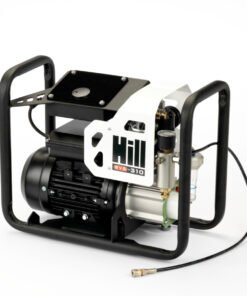
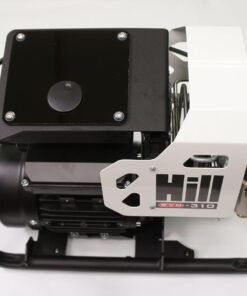
Hill Evo 310 Electric Compressor
Price range: $1,000.00 through $1,225.00
Hill Evo 310 Electric Compressor
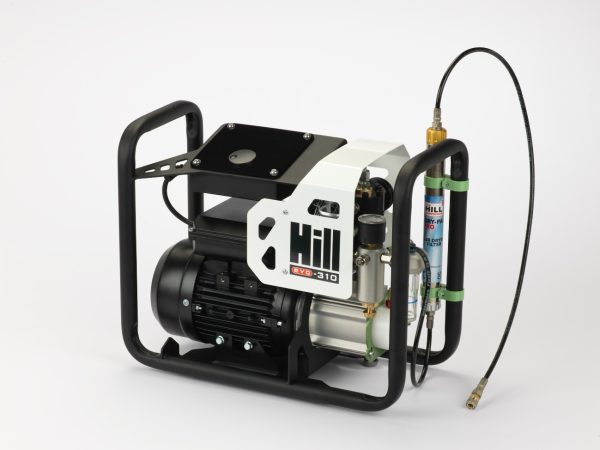
Hill compressor latest Evo 310 electric compressor for airguns made by Hill of Sheffield. Hill’s latest evolutionary electric compressor for recharging PCP airguns and pre-charged air rifles and pistols. Designed manufactured and build in Sheffield United Kingdom.
The new Hill Evo 310 electric compressor features a number of changes and improvements, making the Hill compressor even more reliable durable and with a better user experience. This new Evo 310 compressor is extremely simple to use, service and maintain
In the new Evo 310 compressor Hill have built a new highly accurate digital pressure sensor with an additional analogue gauge, this is extremely accurate meaning the Evo 310 can be set as low as 50 bar (755 psi) and up to 310 bar (4500 psi)
Hill Evo 310 Electric Compressor – Professional 4500 PSI High-Pressure PCP Air Compressor with Automatic Shut-Off and Advanced Cooling Technology

The Hill Evo 310 Electric Compressor delivers advanced compressed-air technology, reliable pressure management and convenient operation for enthusiasts seeking a professional-quality pneumatic filling solution.
Designed, manufactured and assembled in Sheffield, England, this sophisticated electric compressor combines British engineering expertise with modern electronic controls and practical automatic functions.
Unlike traditional hand-operated pumps, the Hill Evo 310 produces high-pressure compressed air through an electrically powered compression mechanism. Consequently, users can refill compatible pneumatic equipment without the physical effort associated with manual pumping.
Furthermore, its automatic pressure monitoring and cooling functions support consistent operation during approved filling sessions.
The compressor offers adjustable pressure settings from approximately 50 bar to 310 bar, making it suitable for various compatible high-pressure applications.
2. Advanced Technical Specifications and Performance Features
Why the Engineering Makes a Difference
Precision engineering remains central to the compressor’s dependable operation.
Its electronic controls monitor filling pressure, while the automatic shut-off mechanism stops compression when the selected pressure is reached.
Important product features include:
- Maximum output pressure: 310 bar / approximately 4,500 PSI.
- Adjustable pressure range: Approximately 50–310 bar.
- Automatic shut-off: Stops filling at the selected pressure.
- Automatic air purge: Releases residual compression pressure during designated operating cycles.
- Cooling system: Air-cooled design with automated cooling intervals.
- Digital interface: Displays pressure and operating information.
- Pressure measurement: Digital sensor supported by an analogue gauge.
- Pressure units: Selectable bar, PSI and MPa.
- Noise rating: Approximately 75 dB under specified test conditions.
- Construction: Robust metal-frame design.
- Country of manufacture: England.
- Power supply: Region-specific mains-electric versions.
Consequently, the compressor provides an appealing combination of controlled pressure delivery, practical maintenance and convenient operation.
3. Compatibility With Modern Sporting Pneumatic Equipment
Understanding Tactical Platforms and Their Filling Requirements
Modern airgun tactical, air gun tactical, air tactical, tactical air guns, and tactical air rifle equipment includes numerous designs with different reservoir capacities and filling requirements.
Popular examples include umarex notos, notos airgun, western rattler bullpup, mp30, mordax venom, barra 250z europe, tex rex, and slug hammer.
Additional research terms include bintac t9, bintac t9 price, bintac t9 full auto, bintac s45, bintac t50, aea bintac t50 extreme, bintac mcar, bintec m50, b&w m50, tac 9, and tac-9.
Similarly, buyers researching m50 vs evanix viper for sale usa, air ordnance smg 22, smg 22, full auto pellet gun, and huben gk1 price in usa should evaluate individual filling requirements.
Not every pneumatic platform is automatically compatible with the same compressor connection.
4. Large-Calibre Pneumatic Systems and Pressure Requirements
Understanding High-Air-Demand Equipment
Research into large-calibre technology frequently includes aea zeus air rifle, aea zues, zeus air rifle, zeus air gun, aea zeus mk2, zeus mk2, aea zeus tactical, zeus mk2 .72cal air rifle, and zeus mk2 .72 cal air rifle.
Related searches include 72 caliber aea zeus, 72 caliber air rifle, .72 cal air rifle, aea zeus 72 cal, aea zeus 72 caliber, aea zeus 72, zeus 72 cal air rifle, and zeus 72 cal air rifle price.
Furthermore, aea megalodon, aea megalodon air rifle, megalodon air rifle, aea megalodon 50 cal, aea megalodon 50 caliber, aea megalodon .58 cal, and aea megalodon 50 cal price represent another specialized category.
Other terms include 50 cal air rifle, 50 caliber air rifle, 50 cal air pistol, 9mm air rifle, 9mm air gun, 9mm pellet gun, 9mm air pistol, and high powered air gun.
These platforms vary in reservoir size and rated filling pressure. Therefore, compatibility must be confirmed independently.
5. Specialized Pneumatic Equipment and Accessories
Different Designs, Different Air Supply Requirements
Specialized products include aea harpoon, aea harpoon magnum, aea harpoon shotgun, aea harpoon gun, aea harpoon price, aea harpoon for sale, aa harpoon, and harpoon air gun.
Related categories include air shotgun, airgun shotgun, air shot gun, air powered shotgun, double barrel air gun, air crossbow, and pneumatic crossbow.
Other searches involve x68, x68 pistol, x68 pistelle, pistelle x68, pistelle x 68, pistelle x 68 for sale, pistelle x 68 kaufen, and pistolé.
Meanwhile, aea terminator, aea defender lethal airgun, pellet gun, pneumatic air gun, and only air gun describe differing equipment types.
Search phrases such as self defense air gun, self defense air pistol, self defense air guns, air gun for self defense, and airgun for self defense refer to other intended applications and do not establish compressor compatibility.
Likewise, air gun suppressor, solofish, solofish laser light combo, and fx drs tactical accessories concern accessories rather than filling-system specifications.
6. Automatic Pressure Management and Convenient Operation
The automatic air-purge function is a particularly valuable engineering feature.
When the compressor enters a cooling cycle or completes a filling operation, the system can release residual pressure from the compression circuit.
Consequently, the motor experiences less resistance during subsequent starts.
Furthermore, automated cooling helps manage operating temperatures and reduces the need for constant manual intervention.
The digital interface provides clear pressure information, while the analogue gauge offers an additional visual reference.
7. Why Choose the Hill Evo 310 Electric Compressor?
The Hill Evo 310 offers an excellent combination of British manufacturing, electronically controlled pressure delivery, convenient automation and practical servicing support.
Its adjustable output accommodates different approved pressure requirements, while its integrated cooling and purge functions support controlled operation.
Additionally, the robust design makes it a compelling choice for enthusiasts who regularly maintain compatible pneumatic sporting equipment.
Ultimately, the Hill Evo 310 Electric Compressor combines advanced engineering, precise electronic pressure control and dependable filling convenience in a professional-quality high-pressure compression system.
Advanced Compression Engineering, Precision Pressure Control, Intelligent Cooling Technology and Long-Term Performance
1. Understanding the Engineering Behind Modern Electric Air Compression
Modern electric air compression technology has transformed how enthusiasts maintain compressed-air supplies for recreational pneumatic equipment. Through advanced mechanical engineering, intelligent electronic controls and improved temperature management, modern compressors offer greater convenience than traditional manually operated filling systems.
A professionally engineered compressor must perform several demanding functions simultaneously. Its motor must provide dependable mechanical power, while the compression assembly increases air pressure within the manufacturer’s specified operating limits. Meanwhile, the cooling system must manage the heat generated during compression, and electronic controls must maintain accurate pressure monitoring.
Consequently, the quality of the entire machine depends on how effectively these components work together.
Furthermore, modern compressor technology emphasizes controlled operation rather than maximum output alone. A machine that produces substantial pressure but lacks suitable temperature management or reliable pressure monitoring may not provide the same practical advantages as a carefully integrated design.
Why Precision Engineering Matters
Precision manufacturing contributes to the reliability of moving components, pressure-containing assemblies and electronic monitoring systems.
During operation, internal components experience repeated mechanical movement and temperature changes. Therefore, appropriate materials, manufacturing tolerances and lubrication arrangements are essential.
Additionally, properly designed seals must maintain their intended performance under demanding conditions.
When these elements function correctly, the compressor can provide consistent operation throughout normal filling cycles.
However, mechanical quality does not eliminate the need for maintenance. Regular inspection and adherence to manufacturer instructions remain necessary for dependable long-term service.
2. High-Pressure Compression Technology and Efficient Operation
How Electric Compression Systems Work
An electrically powered compressor converts motor energy into mechanical movement that increases the pressure of incoming air.
Unlike a manual filling pump, which depends on repeated physical effort, the electric motor provides the energy needed to operate the compression mechanism.
Furthermore, a multistage compression arrangement allows air pressure to increase progressively through the machine.
This approach helps manage the mechanical demands associated with producing high-pressure air.
As compression occurs, the equipment must also manage heat and maintain suitable operating conditions.
Consequently, cooling and pressure-monitoring components play important supporting roles.
Why Controlled Compression Is Important
Compressed air contains stored energy, making pressure management essential.
The compressor must operate within the limits established for its internal components and the connected equipment.
Additionally, appropriate pressure monitoring helps prevent operation beyond the selected filling pressure.
However, a compressor’s maximum pressure capability does not mean that every connected reservoir can safely accept that pressure.
The pressure rating of the receiving equipment must always determine its permissible filling limit.
Reliable operation therefore depends on compatibility, appropriate settings and adherence to approved procedures.
3. Digital Pressure Monitoring and Accurate Electronic Control
The Advantages of Modern Digital Technology
Digital pressure monitoring provides an important advantage during high-pressure filling operations.
An electronic sensor measures pressure and communicates information to the control system.
Consequently, the user can observe operating conditions through the display without depending exclusively on a traditional mechanical gauge.
Furthermore, electronic monitoring supports automated functions that improve convenience.
When the selected pressure is reached, the control system can stop the compression process according to its programmed operation.
This functionality reduces the need for continuous manual control during normal filling cycles.
Nevertheless, automatic operation does not eliminate the importance of supervision or safe equipment handling.
Why Measurement Accuracy Matters
Pressure accuracy is important because receiving reservoirs have defined operating limits.
A reliable measuring system helps users monitor the progress of a filling cycle.
Additionally, clear display information makes it easier to recognize unusual behavior.
However, electronic sensors and measuring instruments may require professional inspection if their readings become inconsistent.
A digital display should never serve as justification for exceeding manufacturer pressure limits.
The correct operating range must remain the foundation of every filling activity.
4. Automatic Shut-Off Technology and Convenient Pressure Management
Why Automatic Operation Improves Practicality
Automatic shut-off technology contributes significantly to the convenience of modern compression equipment.
Once the selected pressure is reached, the control system stops the compressor according to its programmed sequence.
Consequently, the operator does not need to depend entirely on manually stopping the machine at the intended pressure.
Furthermore, automated control can support repeatable filling procedures when equipment remains properly connected and maintained.
This feature becomes particularly valuable for enthusiasts who regularly maintain compatible compressed-air reservoirs.
However, automatic shut-off is not a substitute for checking equipment ratings and connection integrity before operation.
Understanding the Importance of Reliable Controls
Electronic controls must respond consistently to pressure information and operating conditions.
When the system functions correctly, its automated features help maintain predictable behavior throughout normal use.
Additionally, clear controls improve familiarity with the equipment.
However, any unexpected response should prompt the operator to discontinue use and consult the manufacturer’s instructions.
Professional servicing may become necessary when control components behave abnormally.
Reliable automation depends on proper maintenance and responsible operation.
5. Advanced Cooling Technology and Temperature Management
Why Compression Generates Heat
Compressing air increases its pressure and temperature.
Consequently, high-pressure compressors generate heat during operation, making effective thermal management essential.
A cooling system helps remove heat from designated components and supports operation within the manufacturer’s intended temperature limits.
Furthermore, adequate airflow reduces unnecessary thermal stress on surrounding assemblies.
Modern equipment may incorporate fans, heat-dissipating structures and programmed cooling intervals.
Together, these features support controlled operating conditions.
Benefits of Intelligent Cooling
Automatic cooling functions offer practical convenience by managing temperature-related operating intervals.
Instead of relying exclusively on the operator to determine when cooling is necessary, the machine can follow its programmed thermal-management sequence.
Additionally, suitable cooling supports the condition of seals, mechanical components and electronic assemblies.
However, cooling systems cannot compensate for blocked ventilation, unsuitable ambient conditions or operation outside the manufacturer’s limits.
The compressor requires adequate surrounding airflow and appropriate placement during use.
Why Operating Temperature Matters
Excessive temperatures can affect lubrication, sealing performance and the condition of electrical components.
Therefore, temperature management contributes directly to equipment reliability.
Furthermore, unusually high operating temperatures may indicate a problem with airflow or internal components.
Owners should follow the manufacturer’s recommended operating intervals and environmental requirements.
These practices support dependable operation without unnecessarily stressing the machine.
6. Automatic Air Purging and Mechanical Efficiency
Understanding Residual Pressure
High-pressure compression systems can retain pressure within portions of their internal circuits after active compression stops.
Residual pressure may create additional mechanical resistance during a subsequent startup.
Consequently, automatic purging provides an important engineering advantage.
The system can release pressure from designated internal passages as part of its programmed operating sequence.
This helps prepare the compression mechanism for appropriate restarting conditions.
Why Automatic Purging Matters
Automatic purging reduces the need for certain manual pressure-release actions during normal programmed operation.
Furthermore, it supports smoother transitions between compression and cooling cycles.
However, internal purging does not necessarily remove pressure from every connected component.
The receiving reservoir may remain pressurized, and the filling hose may require a separate approved depressurization procedure.
Therefore, owners must understand the distinction between automatic internal pressure management and complete system depressurization.
Manufacturer instructions should always determine the correct procedure.
7. Motor Engineering and Dependable Mechanical Power
Why Motor Quality Influences Performance
The electric motor provides the mechanical energy necessary for compression.
Its design influences operating stability, electrical demand and long-term durability.
Furthermore, the motor must operate in coordination with the compressor’s internal mechanical assemblies.
A properly matched motor contributes to consistent operation throughout approved filling cycles.
However, electrical motors can experience deterioration through overheating, unsuitable power supplies and excessive mechanical loading.
Consequently, correct electrical compatibility remains essential.
Understanding Electrical Requirements
Electrical equipment must match the voltage and frequency specified for the particular regional version.
A unit designed for one electrical supply should not automatically be connected to another.
Furthermore, unsuitable extension cables or electrical connections may create additional risks.
The power supply should satisfy the manufacturer’s requirements.
Additionally, users should protect electrical components from moisture and inappropriate environmental exposure.
Reliable electrical operation supports the performance of the complete compressor.
8. Compact Construction and Practical Everyday Handling
Benefits of a Manageable Design
Compact equipment offers practical advantages for enthusiasts who have limited workshop or storage space.
A manageable compressor can fit more conveniently into an appropriate working environment.
Furthermore, integrated controls and organized external components contribute to ease of use.
However, compact construction should not compromise ventilation requirements.
The machine still requires sufficient surrounding space for cooling airflow.
Why Placement Matters
Suitable placement influences both operating convenience and reliability.
A stable surface helps prevent unnecessary movement during compression.
Additionally, adequate ventilation allows the cooling system to function effectively.
The surrounding area should remain clean and free from materials that could obstruct airflow.
Furthermore, the machine should be protected from moisture and unsuitable temperature conditions.
Proper placement helps maintain predictable operation throughout normal use.
9. Noise Management and User Comfort
Understanding Compressor Noise
Electric compressors generate sound through motor operation, mechanical movement and airflow.
Consequently, some operating noise is normal.
The actual sound level depends on machine design, surrounding surfaces and the measurement conditions.
Furthermore, perceived noise can vary considerably between indoor and outdoor environments.
A compressor operating inside a reflective room may sound louder than the same machine in a more open environment.
Why Noise Awareness Matters
Noise characteristics can influence where equipment is most conveniently used.
Owners should select a suitable location that complies with facility rules and provides appropriate ventilation.
Additionally, prolonged exposure to elevated sound levels may require hearing protection.
However, users should never enclose the compressor in an improvised soundproof container that restricts cooling airflow.
Any noise-control arrangement must preserve the manufacturer’s ventilation and electrical safety requirements.
10. Air Quality and the Importance of Clean Compression
Why Incoming Air Quality Matters
Air quality influences the condition of pneumatic equipment.
Moisture, oil contamination and airborne particles can create problems when introduced into unsuitable pressure systems.
Consequently, the compressor’s approved filtration and maintenance arrangements are important.
Furthermore, operating conditions can influence moisture content in incoming air.
High humidity may increase the demands placed on suitable air-treatment components.
Protecting Connected Equipment
Receiving reservoirs and internal pneumatic components require air that meets their manufacturer’s specifications.
Therefore, owners must understand the compressor’s intended air-quality capabilities.
The presence of an intake filter does not automatically make the output suitable for breathing applications.
Similarly, ordinary high-pressure compressors should never be assumed capable of producing certified breathing air.
Suitable filtration, approved operating procedures and correct maintenance remain essential.
11. Maintenance Requirements and Long-Term Serviceability
Why Routine Inspection Is Important
Mechanical equipment requires periodic attention to preserve reliable operation.
The compressor contains moving components, seals and pressure-containing assemblies that may experience wear over time.
Consequently, routine inspection helps identify potential problems.
Furthermore, visible damage to electrical connections, hoses or external components should receive attention before operation.
Any unexpected mechanical behavior may indicate that professional servicing is necessary.
The Importance of Manufacturer-Approved Maintenance
Maintenance should follow the manufacturer’s instructions for the particular version.
Recommended procedures may include inspection, cleaning and servicing of designated components.
However, pressure-containing assemblies and electrical systems can present significant hazards.
Therefore, unauthorized disassembly should be avoided.
Qualified technicians should perform repairs that require specialized knowledge or equipment.
This approach supports long-term reliability while preserving the intended safety characteristics.
12. Reliable Hose Connections and Filling Accessories
Why Connection Quality Matters
The filling connection forms an essential interface between the compressor and compatible pneumatic equipment.
Its components must withstand the intended pressure and remain suitable for the specified application.
Furthermore, the connection profile must match the receiving equipment.
A fitting that appears similar to another may still be incompatible.
Therefore, users should verify technical specifications before connecting accessories.
Understanding Pressure-Rated Components
Hoses, connectors and associated fittings must have appropriate pressure ratings.
Additionally, their condition should be checked according to manufacturer guidance.
Damaged hoses or unsuitable connections can create serious hazards.
Consequently, improvised repairs and unapproved adapters should never be used.
Correct equipment selection provides a dependable foundation for controlled filling operations.
13. Understanding Practical Filling Efficiency
Why Filling Performance Varies
Actual filling time depends on several factors.
These include receiving-reservoir capacity, starting pressure, selected final pressure and operating conditions.
Furthermore, cooling intervals may influence the overall duration of a filling session.
Consequently, a universal filling-time estimate cannot accurately describe every situation.
Performance expectations should reflect the particular configuration and its approved operating limits.
Benefits of Consistent Operation
A well-maintained compressor provides predictable mechanical behavior during normal filling cycles.
Furthermore, automated pressure monitoring helps maintain consistent control.
However, operating efficiency should never come at the expense of thermal management or pressure safety.
A controlled filling process provides greater practical value than attempting to maximize speed beyond the manufacturer’s recommendations.
14. Practical Applications in Recreational Shooting Environments
Home Equipment Maintenance
A suitable electric compressor can offer convenience to enthusiasts who maintain compatible pneumatic equipment at home.
Instead of relying exclusively on external filling services, owners may have access to an approved local compressed-air source.
Furthermore, electronic controls help simplify routine operation.
However, the working environment must provide suitable electrical power, ventilation and protection against unauthorized access.
Organized Shooting Facilities
Recreational clubs and authorized sporting facilities may benefit from appropriate compressed-air equipment.
A reliable filling arrangement can support equipment maintenance where facility policies permit.
Furthermore, designated operating areas help maintain clear safety procedures.
However, compatibility and duty-cycle limitations must be considered before assuming that a compact compressor is suitable for frequent shared use.
Workshop Applications
A suitable workshop provides stable placement and convenient access for maintenance.
Additionally, organized storage helps protect hoses, connectors and electrical components.
However, the compressor should only serve applications approved by its manufacturer.
Its high maximum pressure does not automatically qualify it for filling large external storage cylinders or unrelated industrial equipment.
15. Understanding Mechanical Durability and Product Longevity
Why Material Selection Matters
The durability of a compressor depends partly on the materials used in its mechanical and structural components.
Appropriate metals, seals and protective housings contribute to the equipment’s resistance to normal operating demands.
Furthermore, carefully manufactured components help maintain intended mechanical alignment.
However, material quality alone cannot guarantee indefinite operation.
Maintenance, ambient conditions and operating frequency also influence service life.
Protecting the Compressor During Storage
Suitable storage helps preserve the equipment when it is not in use.
The machine should remain in a clean, dry environment protected from excessive heat and moisture.
Furthermore, electrical cables and accessories should be stored without unnecessary strain.
Owners should follow manufacturer instructions concerning cooling and pressure release before storage.
Correct handling contributes to long-term reliability.
16. The Importance of Genuine Components and Professional Support
Why Approved Replacement Parts Matter
Mechanical components must remain compatible with the manufacturer’s design.
Using inappropriate replacement parts can affect pressure containment, electrical operation or cooling performance.
Consequently, approved components provide the preferred solution when servicing becomes necessary.
Furthermore, manufacturer documentation helps technicians identify the correct replacement specifications.
Benefits of Qualified Service
Professional technicians possess the knowledge required to evaluate electrical and high-pressure mechanical systems.
They can identify worn components, abnormal operation and potential safety concerns.
Additionally, authorized servicing helps preserve the equipment’s intended performance characteristics.
Improvised repairs should never replace professional assessment when internal pressure systems or electrical assemblies require attention.
17. Why Automated Technology Improves Everyday Convenience
Reducing Manual Workload
One of the principal advantages of electric compression is the reduction of physical effort associated with manual filling.
The motor performs the mechanical compression process, while electronic controls manage selected operating functions.
Furthermore, automatic shut-off and cooling intervals contribute to convenient operation.
However, automation should not encourage unattended use when the manufacturer’s instructions require supervision.
Improving Operating Consistency
Automated controls provide a repeatable framework for pressure monitoring and normal operating sequences.
Additionally, digital displays make important information more accessible.
Nevertheless, operator responsibility remains essential.
The receiving equipment’s limits, connection compatibility and machine condition must be verified before each filling operation.
Reliable automation works best when combined with responsible handling.
18. Long-Term Ownership Value and Practical Cost Considerations
Understanding Total Ownership Costs
The purchase price represents only one aspect of compressor ownership.
Electricity, periodic maintenance, replacement components and professional servicing may create additional expenses.
Furthermore, the machine’s duty-cycle limitations influence its suitability for particular usage patterns.
Consequently, buyers should consider operating requirements before selecting equipment.
Why Dependability Matters More Than Maximum Output
A compressor that offers controlled operation and suitable service support may provide greater long-term satisfaction than equipment chosen exclusively for advertised pressure or speed.
Furthermore, clear manufacturer documentation helps owners understand maintenance responsibilities.
The availability of approved replacement parts also contributes to serviceability.
A balanced design provides practical value through reliability, convenience and appropriate operating capabilities.
19. Responsible Ownership and Essential Safety Practices
Why High-Pressure Awareness Is Important
Compressed-air systems contain significant stored energy.
Therefore, operating limits must receive strict attention.
The pressure rating of the receiving equipment should never be exceeded.
Furthermore, hoses and connectors must remain compatible with the intended application.
Any suspected leakage or mechanical damage should prompt discontinuation of use.
Electrical and Environmental Safety
The compressor must operate using an appropriate electrical supply.
Additionally, moisture and unsuitable environmental conditions should be avoided.
Cooling airflow must remain unobstructed.
The equipment should also be kept away from children and unauthorized users.
Responsible ownership protects both the machine and its surrounding environment.
Final Assessment of Compression Quality, Convenience and Engineering Excellence
The Relationship Between Performance and Reliability
A successful electric compression system combines dependable mechanical power with accurate pressure monitoring and effective cooling.
Furthermore, automated operating functions contribute to practical convenience.
However, genuine performance quality depends on how effectively these features interact.
Maximum pressure alone cannot establish the suitability of a compressor for every application.
The complete system must remain compatible with its intended receiving equipment.
Why Intelligent Design Provides Long-Term Benefits
Modern electronic controls help users monitor pressure and manage normal operating sequences.
Meanwhile, cooling technology contributes to thermal stability.
Automatic shut-off and internal purging add further convenience when operating according to manufacturer instructions.
Together, these characteristics provide a practical foundation for controlled high-pressure compression.
Nevertheless, regular maintenance and professional servicing remain necessary throughout ownership.
Overall Engineering and Ownership Assessment
Modern electric compression technology offers substantial advantages for users seeking convenient and dependable compressed-air generation.
The combination of mechanical engineering, electronic monitoring and temperature management supports predictable performance during approved filling operations.
Furthermore, compact construction and accessible controls improve everyday usability.
However, the equipment’s capabilities must always remain within its specified pressure, electrical and duty-cycle limits.
Suitable air quality, compatible connections and responsible handling are equally important.
A properly maintained compressor can provide lasting practical value when used for applications approved by its manufacturer.
Ultimately, the greatest advantages come from precise pressure monitoring, reliable automatic controls, effective cooling and dependable mechanical construction.
These features work together to support efficient operation without introducing unnecessary complexity.
For enthusiasts who appreciate professional engineering, convenient maintenance and practical automation, the overall design offers a compelling balance of functionality and reliability.
Its long-term value depends on proper equipment selection, manufacturer-approved maintenance and responsible ownership.
When these requirements are respected, a high-quality electric compressor provides a dependable solution for maintaining compatible pneumatic equipment while supporting safe, consistent and convenient air-management practices.
Advanced Mechanical Durability, Intelligent Operating Systems, Efficient Air Management and Exceptional Long-Term Reliability
1. Understanding the Importance of Advanced Engineering in Electric Compression Systems
Modern electric compression equipment represents a sophisticated combination of mechanical engineering, electronic technology and practical design. Every major component contributes to the overall functionality of the machine, from the electric motor and compression mechanism to the pressure sensors, cooling system and protective housing.
Reliable performance requires these components to operate together under demanding conditions. During normal use, the motor generates mechanical energy, the compression mechanism increases air pressure, and the electronic control system monitors essential operating parameters.
Furthermore, integrated cooling technology helps manage the heat produced during compression. As a result, the equipment can maintain more controlled operating conditions throughout manufacturer-approved filling cycles.
The effectiveness of this arrangement depends on engineering precision, material quality and consistent manufacturing standards.
Why Integrated Engineering Matters
A compressor cannot deliver dependable performance through mechanical power alone. Its internal components must maintain the correct relationship between pressure generation, temperature control and electrical operation.
Additionally, the quality of the seals, connecting components and structural assemblies influences reliability.
When these elements function correctly, users benefit from predictable mechanical behavior and convenient operation.
However, even sophisticated equipment requires appropriate maintenance and responsible handling.
Long-term reliability depends on following manufacturer instructions and recognizing the limitations of high-pressure mechanical systems.
2. The Role of Mechanical Precision in Reliable Compression
How Internal Components Work Together
A compression mechanism relies on carefully coordinated mechanical movement to increase air pressure.
The motor supplies energy to the operating assembly, while internal components perform the compression process.
Consequently, manufacturing precision plays an important role in maintaining reliable mechanical interaction.
Appropriate clearances, suitable materials and correctly designed sealing components help the system perform within its intended specifications.
Furthermore, smooth mechanical operation can reduce unnecessary vibration and wear.
However, internal components still experience mechanical loading during normal use.
Therefore, periodic inspection and manufacturer-approved maintenance remain important.
Why Manufacturing Tolerances Matter
Mechanical tolerances determine how closely components conform to their intended dimensions.
Excessive variation can affect alignment, friction and sealing effectiveness.
Consequently, precision manufacturing supports consistent operation and long-term durability.
Additionally, appropriate quality-control procedures help identify manufacturing inconsistencies.
A carefully assembled machine offers greater confidence when its components operate according to established specifications.
Nevertheless, normal wear develops over time.
Professional servicing may become necessary when mechanical performance changes unexpectedly.
3. Electric Motor Performance and Efficient Energy Conversion
Understanding the Motor’s Primary Function
The electric motor provides the mechanical energy required to operate the compression system.
Its performance influences the machine’s operating stability, electrical consumption and ability to complete approved filling cycles.
Furthermore, the motor must remain compatible with the mechanical demands of the compressor.
A properly designed system balances electrical input with the energy required for compression.
However, higher electrical power does not automatically indicate greater practical efficiency.
Cooling requirements, mechanical design and operating conditions also influence overall performance.
Why Electrical Compatibility Is Essential
Electrical equipment must operate using the supply specified by its manufacturer.
Different regional versions may require different voltages and electrical arrangements.
Consequently, the supply requirements should always be confirmed before operation.
Furthermore, damaged electrical cables or unsuitable connections can create serious hazards.
The equipment should remain protected against moisture and excessive environmental exposure.
Correct electrical installation contributes to dependable operation and long-term component protection.
4. Intelligent Pressure Monitoring and Digital Control Technology
The Advantages of Electronic Pressure Measurement
Electronic pressure monitoring provides a convenient way to observe operating conditions during compression.
A digital sensor measures pressure and communicates the information to the control system.
Consequently, the machine can display pressure readings and manage selected automated functions.
Furthermore, electronic monitoring supports more consistent operation by reducing dependence on manual observation alone.
However, pressure readings must remain within the limits established for the connected equipment.
A compressor’s maximum pressure capability does not determine the safe filling pressure of every receiving reservoir.
Why Digital Accuracy Matters
Accurate pressure measurement contributes to controlled operation.
A reliable measuring system helps the user understand when the intended pressure has been reached.
Additionally, clear information reduces uncertainty during normal filling activities.
However, sensors may experience faults or require professional attention.
Unexpected readings should prompt inspection rather than continued operation based on assumptions.
The manufacturer’s operating instructions should always determine the appropriate response.
5. Automatic Shut-Off Technology and Operational Convenience
How Automated Control Improves Usability
Automatic shut-off technology provides a valuable convenience feature by allowing the machine to stop compression when the selected pressure is reached.
Consequently, the operator does not need to depend exclusively on manual timing.
Furthermore, automated operation supports a repeatable filling process when the equipment remains correctly configured.
This functionality can make regular equipment maintenance more convenient.
However, automatic shut-off does not eliminate the need for responsible supervision.
The operator must still verify pressure limits, connection compatibility and equipment condition.
Understanding the Limits of Automation
Electronic controls operate according to programmed conditions and sensor information.
Although these systems improve convenience, they cannot compensate for every possible equipment problem.
For example, an unsuitable receiving reservoir remains unsafe even when the compressor operates correctly.
Similarly, damaged hoses or incompatible fittings can create hazards unrelated to the automatic shut-off system.
Therefore, automation should support established safety procedures rather than replace them.
6. Advanced Cooling Technology and Temperature Regulation
Why Compression Produces Heat
Air compression increases the energy of the gas, producing a rise in temperature.
As pressure increases, the mechanical system must manage the heat generated during operation.
Consequently, effective cooling contributes to dependable performance.
Cooling components help transfer heat away from designated areas of the machine.
Furthermore, programmed cooling intervals may support temperature management during approved operating cycles.
However, cooling performance depends on adequate ventilation and appropriate environmental conditions.
The Importance of Airflow
A compressor requires sufficient airflow around its cooling components.
Obstructed ventilation can reduce heat dissipation and increase operating temperatures.
Consequently, the equipment should remain in a suitable location with adequate clearance.
Additionally, dust accumulation can interfere with normal cooling performance.
Routine exterior cleaning and inspection help preserve airflow.
However, maintenance should follow manufacturer guidance and should never involve unauthorized access to electrical or pressurized assemblies.
Why Temperature Management Supports Durability
Excessive heat can influence seals, lubricants and electrical components.
Therefore, effective temperature management contributes to long-term reliability.
Furthermore, appropriate cooling helps reduce unnecessary thermal stress.
However, even advanced cooling systems have operating limitations.
Users should respect recommended duty cycles and any automatic cooling periods.
The most reliable approach combines integrated cooling technology with suitable placement and responsible operation.
7. Automatic Pressure Purging and Controlled Mechanical Operation
Understanding Residual Internal Pressure
High-pressure compression equipment can retain compressed air within portions of its internal system after active compression stops.
Residual pressure may increase the resistance encountered during subsequent operation.
Consequently, controlled internal purging can provide practical advantages.
An automatic purge mechanism releases pressure from designated internal passages during programmed operating sequences.
This helps prepare the compression assembly for appropriate restarting conditions.
Why Purging Improves Convenience
Automatic purging can reduce the need for certain manual interventions.
Furthermore, it supports smoother transitions between compression and cooling cycles.
However, internal purging should not be confused with complete depressurization.
A connected reservoir may remain under pressure after the compressor stops.
Similarly, the filling hose may require a separate approved procedure before disconnection.
Therefore, operators must follow the manufacturer’s instructions and avoid assuming that every component becomes depressurized automatically.
8. The Importance of High-Quality Sealing Components
Why Seals Are Essential
Seals play an important role in maintaining pressure containment within the compression mechanism.
They must perform under demanding mechanical and temperature conditions.
Consequently, material selection and manufacturing quality influence their effectiveness.
Furthermore, appropriate sealing arrangements help reduce unintended air loss.
However, seals experience wear during normal operation.
Their service life depends on operating conditions, material characteristics and maintenance practices.
Recognizing Changes in Sealing Performance
Unexpected pressure loss or changes in compression behavior may indicate that inspection is necessary.
However, these symptoms can have several causes.
Consequently, the equipment should receive appropriate assessment rather than unnecessary component replacement.
Only manufacturer-approved parts should be used.
Additionally, internal servicing should remain the responsibility of qualified personnel.
This approach protects the integrity of the pressure-containing system.
9. Understanding Practical Filling Performance
Why Filling Times Can Vary
Filling performance depends on several important variables.
The capacity of the receiving reservoir influences the amount of compressed air required.
Furthermore, starting pressure and selected final pressure affect the duration of the compression cycle.
Ambient temperature and cooling intervals can also influence the overall process.
Consequently, a single filling-time estimate cannot accurately describe every situation.
Actual performance should be evaluated according to the manufacturer’s specifications and approved operating conditions.
Why Consistency Matters More Than Speed
A dependable compressor should provide predictable operation within its intended limits.
Although filling speed can influence convenience, it should not take priority over pressure safety or thermal management.
Furthermore, excessive operation outside approved duty cycles may increase mechanical stress.
A controlled process offers greater long-term value than attempting to achieve the shortest possible filling time.
Reliable performance depends on balancing efficiency with appropriate operating conditions.
10. Air Quality and the Importance of Internal Cleanliness
Understanding Air Contamination
Incoming air may contain moisture, dust and other airborne substances.
These contaminants can affect the condition of pneumatic equipment when suitable filtration is absent.
Consequently, air-quality management represents an important consideration.
Furthermore, compression can concentrate certain contaminants, making approved filtration and maintenance requirements essential.
The compressor should operate only in environments permitted by its manufacturer.
Why Suitable Air Quality Protects Equipment
Clean compressed air helps preserve the condition of compatible receiving systems.
Excessive moisture may contribute to corrosion, while particulate contamination can affect seals and valves.
Additionally, inappropriate oils or gases may create hazards.
Therefore, users should never assume that a compressor intended for recreational equipment produces certified breathing air.
The machine must remain within its approved applications.
Appropriate maintenance helps protect both the compressor and connected equipment.
11. Structural Construction and Mechanical Stability
Why a Robust Housing Matters
The external structure provides support for the internal compression components.
A carefully designed frame helps maintain mechanical alignment and protects essential assemblies.
Furthermore, stable construction contributes to predictable operation.
However, the housing must also accommodate ventilation and maintenance access.
Excessive enclosure or unsuitable modifications can interfere with cooling performance.
Therefore, owners should preserve the manufacturer’s intended structural arrangement.
The Importance of Stable Placement
The compressor should operate on a suitable stable surface.
An unstable platform may increase vibration or create unnecessary movement.
Furthermore, sufficient clearance is necessary for airflow.
The working area should remain free from excessive dust, moisture and other unsuitable conditions.
Correct placement contributes to both operating convenience and mechanical protection.
12. Noise Characteristics and Everyday Comfort
Understanding Normal Operating Noise
Electric compression equipment produces sound through motor operation, internal mechanical movement and cooling airflow.
Consequently, some noise is expected during normal use.
The perceived sound level depends on the machine and its surroundings.
Hard surfaces may reflect sound, while more open environments can produce different acoustic conditions.
Furthermore, changes in normal operating noise may indicate a developing mechanical concern.
Why Noise Awareness Is Important
Owners should consider surrounding conditions when selecting an operating location.
Additionally, hearing protection may be appropriate when exposure levels warrant it.
However, sound reduction should never involve restricting ventilation.
Enclosing the compressor inside an unsuitable cabinet can interfere with cooling and create overheating risks.
Any acoustic treatment must preserve safe operating conditions.
13. Maintenance Requirements for Long-Term Reliability
Why Preventive Maintenance Matters
Routine maintenance helps preserve mechanical condition and supports reliable performance.
The compressor contains components that experience friction, pressure changes and temperature variations.
Consequently, inspection and servicing are important throughout ownership.
Furthermore, external hoses and electrical connections should remain in suitable condition.
Unexpected wear or visible damage should receive attention before continued use.
The Benefits of Manufacturer-Approved Servicing
Manufacturer guidance establishes appropriate maintenance procedures and intervals.
Following these recommendations helps owners avoid unsuitable cleaning products or unauthorized modifications.
Furthermore, genuine replacement components support correct mechanical compatibility.
Professional servicing is particularly important when internal pressure assemblies or electrical systems require attention.
Improvised repairs can compromise reliability and safety.
14. Understanding Component Wear and Service Life
How Normal Operation Affects Mechanical Parts
Moving components gradually experience wear during regular operation.
The rate of deterioration depends on frequency of use, operating conditions and maintenance quality.
Furthermore, temperature and mechanical loading can influence the condition of seals and other components.
Consequently, no compressor should be considered permanently maintenance-free.
Appropriate servicing helps preserve intended performance.
Recognizing When Professional Inspection Is Needed
Changes in normal operation may indicate a need for assessment.
Unusual vibration, inconsistent pressure readings, unexpected shutdowns or abnormal sounds deserve attention.
Furthermore, visible damage to hoses or electrical components should prompt discontinuation of use.
Qualified technicians can determine whether servicing or replacement is necessary.
Responsible owners should avoid continuing operation when equipment behavior becomes uncertain.
15. Compact Design and Convenient Equipment Management
Benefits of an Organized Working Environment
Compact equipment can provide convenience where available working space is limited.
A manageable machine may fit more easily into a designated maintenance area.
Furthermore, accessible controls contribute to straightforward operation.
However, adequate ventilation remains essential.
The machine should never operate in an environment that restricts cooling airflow.
Protecting Accessories and Electrical Components
Hoses, power cables and other accessories require appropriate storage.
Unnecessary bending, crushing or abrasion may damage components.
Consequently, accessories should remain organized and protected when not in use.
Furthermore, connectors should be kept clean according to manufacturer recommendations.
Proper storage supports convenient setup and helps preserve equipment condition.
16. Electrical Safety and Responsible Operation
Why Correct Power Supply Matters
The compressor must receive electrical power consistent with its rated requirements.
Using an unsuitable supply may damage components or create hazards.
Furthermore, electrical connections should remain protected from moisture.
Owners should inspect visible cables and plugs for damage before use.
If a defect appears, the equipment should remain disconnected until qualified personnel assess it.
The Importance of Safe Operating Conditions
High-pressure electrical equipment requires careful attention during use.
The surrounding area should remain clear, stable and adequately ventilated.
Additionally, children and unauthorized individuals should not operate the machine.
The compressor should not remain unattended when the manufacturer’s instructions require supervision.
Safe operation depends on respecting both electrical and pressure-related requirements.
17. Practical Applications and Everyday Ownership Benefits
Convenient Home Equipment Maintenance
An appropriately selected compressor can provide convenient access to compressed air for compatible equipment.
This may reduce dependence on external filling services.
Furthermore, electronic controls simplify routine pressure monitoring.
However, the machine should only serve applications approved by its manufacturer.
The presence of a high maximum pressure rating does not establish compatibility with every reservoir.
Use in Organized Recreational Facilities
Authorized sporting facilities may benefit from suitable electric compression equipment.
A controlled filling arrangement can support routine maintenance where facility policies permit.
Furthermore, designated operating areas help maintain clear safety procedures.
However, the machine’s duty cycle and intended workload must match the anticipated level of use.
Compact equipment should not automatically be treated as a substitute for industrial filling installations.
18. Long-Term Ownership Value and Operating Costs
Why Purchase Price Is Only One Consideration
The initial purchase price represents only part of the investment.
Electricity, maintenance, replacement components and professional servicing may create additional expenses.
Furthermore, the machine’s operating limitations influence its suitability for different users.
Consequently, purchasing decisions should consider anticipated usage rather than focusing exclusively on advertised output.
The Importance of Reliable Manufacturer Support
Clear documentation helps owners understand operating requirements and maintenance responsibilities.
Additionally, access to approved replacement parts improves serviceability.
Qualified technicians can provide assistance when internal components require attention.
These benefits contribute to long-term value and ownership confidence.
19. Why Intelligent Design Improves the Overall Experience
Combining Automation With Mechanical Reliability
Modern compressor engineering brings together electronic monitoring, automatic controls and carefully manufactured mechanical components.
Each feature contributes to the overall operation.
Digital pressure monitoring provides clear information, while automatic shut-off supports controlled filling.
Furthermore, cooling technology helps maintain acceptable operating temperatures.
Automatic internal purging adds convenience during designated operating sequences.
However, these features must function within the manufacturer’s specified limits.
Reducing Unnecessary Complexity
A successful design should provide useful automation without making normal operation unnecessarily complicated.
Accessible controls and clear operating information help users understand the machine.
Furthermore, dependable construction supports consistent mechanical behavior.
However, convenience should never encourage unauthorized modification.
The original design must remain intact to preserve intended safety and performance characteristics.
20. Final Assessment of Mechanical Performance and Engineering Quality
Why Balanced Engineering Matters
A dependable electric compressor requires more than substantial pressure capability.
Mechanical durability, cooling performance, electronic control accuracy and suitable pressure connections are equally important.
Furthermore, the equipment must remain appropriate for the intended application.
Maximum advertised pressure cannot determine compatibility by itself.
Every receiving reservoir and connecting component must satisfy the relevant specifications.
Long-Term Reliability Through Proper Care
Regular maintenance supports the condition of moving components, seals and pressure-containing assemblies.
Furthermore, suitable placement helps preserve cooling performance.
Appropriate electrical connections reduce unnecessary operating risks.
When unusual mechanical behavior occurs, professional inspection provides the correct response.
Responsible care contributes to dependable service throughout the machine’s useful life.
Understanding the Complete Ownership Experience
Modern electric compression equipment provides a practical combination of automated control and mechanical engineering.
Its greatest advantages emerge when pressure monitoring, cooling and compression functions operate together.
Furthermore, convenient controls and compact construction can simplify routine equipment maintenance.
However, these benefits depend on correct operation.
The compressor must remain within its approved electrical, pressure and thermal limitations.
Additionally, the receiving equipment must be suitable for the intended filling arrangement.
Qualified servicing and manufacturer-approved replacement components help preserve long-term reliability.
Overall Performance and Practical Value
The strongest electric compression systems provide a balance between reliable performance, convenient operation and manageable maintenance requirements.
A well-engineered motor supports consistent mechanical power, while an effective compression assembly produces the required pressure within approved limits.
Furthermore, electronic monitoring supports controlled operation.
Automatic shut-off contributes to convenience, and cooling technology helps manage operating temperatures.
Together, these characteristics create a capable and practical machine for approved high-pressure applications.
Nevertheless, no automatic feature can replace responsible handling or correct equipment compatibility.
Safe operation requires attention to pressure limits, connection integrity, ventilation and maintenance.
Ultimately, the value of advanced electric compression technology lies in its ability to combine dependable mechanical performance, intelligent pressure management and practical operating convenience.
When correctly maintained and used according to manufacturer instructions, a quality compressor can provide reliable service while reducing the physical demands associated with manual air compression.
Its long-term advantages arise from precision engineering, appropriate operating conditions and professional maintenance support.
By prioritizing reliable construction, controlled pressure delivery and responsible ownership, users can enjoy the convenience of modern electric compression technology while preserving the safety and dependability expected from professionally engineered equipment
Exceptional Operating Reliability, Intelligent Pressure Management, Advanced Cooling Performance and Long-Term Ownership Excellence
1. Understanding the Importance of Reliable Compression Technology
Modern electric compression equipment represents an important development in the management of high-pressure compressed air. By combining mechanical engineering, electronic monitoring and intelligent operating functions, these machines provide a convenient alternative to traditional manual filling methods.
A well-designed compression system must perform several functions simultaneously. Its electric motor supplies the necessary mechanical energy, while internal components increase air pressure according to the equipment’s operating specifications. Meanwhile, electronic sensors monitor pressure, and the cooling system manages the heat generated during operation.
Furthermore, dependable performance requires these components to work together without unnecessary mechanical interference. Consistent manufacturing tolerances, appropriate materials and reliable electrical connections all contribute to the overall quality of the machine.
Consequently, selecting suitable equipment involves more than comparing maximum pressure ratings. The effectiveness of the complete system depends on operating consistency, cooling capability, serviceability and adherence to established safety requirements.
Why Engineering Quality Matters
Engineering quality influences how effectively a machine maintains its intended performance throughout regular use.
Carefully manufactured components help reduce excessive friction, while properly designed seals maintain pressure within designated compression pathways.
Additionally, robust structural construction supports mechanical alignment and protects sensitive components.
However, even advanced manufacturing cannot eliminate normal mechanical wear. Moving parts, seals and electrical assemblies may require professional attention during the equipment’s service life.
Therefore, responsible maintenance remains essential for preserving dependable operation.
2. Advanced Mechanical Construction and Long-Term Durability
How Internal Components Support Reliable Performance
A compression mechanism depends on carefully coordinated mechanical movement. The electric motor provides rotational energy, which the internal assembly converts into the movement necessary to compress incoming air.
Consequently, the quality of the moving components has a direct influence on operating consistency.
Suitable materials help components withstand repeated loading, while appropriate surface finishes reduce unnecessary wear.
Furthermore, precise manufacturing supports correct alignment between interacting parts.
However, mechanical assemblies remain subject to normal deterioration. Their condition depends on operating frequency, maintenance practices and environmental exposure.
Why Structural Strength Matters
The external frame and internal supports contribute to mechanical stability.
A rigid structure helps maintain component alignment and protects important assemblies from unnecessary movement.
Additionally, a well-organized design provides space for cooling airflow and suitable access to designated maintenance points.
Nevertheless, structural strength should not encourage rough handling.
Substantial impacts or unsuitable transportation may damage electrical connections or mechanical components.
Careful handling therefore contributes to long-term durability.
3. Understanding the Benefits of Electronic Pressure Control
How Digital Monitoring Improves Convenience
Electronic pressure monitoring provides clear operating information through an integrated display.
During compression, a sensor measures pressure and communicates the information to the control system.
Consequently, the operator can observe changes in operating conditions and monitor progress toward the selected pressure.
Furthermore, electronic monitoring supports automated functions that simplify normal filling activities.
These features can reduce unnecessary manual intervention while maintaining a predictable operating sequence.
However, electronic control does not remove the responsibility to verify the specifications of connected equipment.
Why Accurate Pressure Information Matters
Receiving reservoirs have defined maximum working pressures.
Therefore, accurate pressure information contributes to responsible operation.
A dependable sensor allows the control system to respond according to its programmed settings.
Additionally, clear readings help operators recognize unusual behavior.
Nevertheless, electronic components may experience faults or calibration-related problems.
Unexpected readings should prompt inspection rather than continued operation based on assumptions.
The equipment must always remain within the manufacturer’s approved operating limits.
4. Automatic Shut-Off and Convenient Operating Control
Why Automated Stopping Is Valuable
Automatic shut-off technology provides an important convenience feature during approved filling operations.
When the selected pressure is reached, the control system stops compression according to its programmed sequence.
Consequently, the operator does not need to depend exclusively on manual observation to stop the machine.
Furthermore, automated stopping supports repeatable operation under appropriate conditions.
However, the system cannot independently determine whether an unsuitable receiving reservoir has the correct pressure rating.
Therefore, compatibility must be confirmed before operation.
Understanding the Limits of Automation
Automatic functions improve convenience but do not eliminate all operating risks.
A damaged hose, incompatible fitting or unsuitable electrical supply can create hazards independently of the control system.
Additionally, electronic sensors may experience faults.
For these reasons, users must continue following the manufacturer’s instructions.
The machine should not operate unattended when supervision is required.
Responsible handling remains essential regardless of how advanced the automated controls become.
5. Advanced Cooling and Effective Temperature Management
Why Compression Produces Heat
Compressing air increases its pressure and temperature.
Consequently, the mechanical system generates substantial heat during operation.
An effective cooling arrangement helps remove heat from designated components and supports appropriate operating temperatures.
Furthermore, programmed cooling intervals may allow the machine to manage thermal conditions during normal filling cycles.
These functions contribute to dependable performance.
However, cooling effectiveness depends on suitable ventilation and environmental conditions.
How Cooling Protects Internal Components
Excessive temperatures can influence seals, lubricants and electronic assemblies.
Therefore, temperature management contributes to mechanical durability.
Additionally, effective heat dissipation helps reduce unnecessary thermal stress.
Nevertheless, even an advanced cooling system has operating limitations.
The machine must remain within its approved duty cycle and ambient temperature range.
Users should never obstruct ventilation openings or place the equipment inside unsuitable enclosed spaces.
Why Ventilation Matters
Adequate airflow allows heat to escape from the compressor.
Dust accumulation or restricted air passages may reduce cooling efficiency.
Consequently, the surrounding workspace should remain clean and appropriately ventilated.
Furthermore, regular exterior inspection can help identify obstructions.
Any maintenance involving internal cooling components should follow manufacturer-approved procedures.
6. Automatic Air Purging and Mechanical Convenience
Understanding Residual Compression Pressure
After active compression stops, portions of the internal system may retain compressed air.
This residual pressure can introduce mechanical resistance during a subsequent startup.
Consequently, an automatic purging mechanism provides a practical advantage.
During designated operating sequences, the machine releases pressure from selected internal passages.
This helps prepare the compression assembly for normal restarting conditions.
Why Internal Purging Supports Reliability
Automatic purging reduces certain manual pressure-management tasks.
Furthermore, it supports smoother transitions between operating and cooling periods.
However, internal pressure release does not necessarily depressurize the entire filling arrangement.
A connected receiving reservoir may remain pressurized after compression stops.
Similarly, the filling hose may require a separate approved pressure-release procedure.
Therefore, operators must follow the manufacturer’s instructions before disconnecting equipment.
7. Electric Motor Efficiency and Dependable Performance
Why Motor Quality Influences Operation
The motor supplies the energy required to drive the internal compression mechanism.
Its design influences mechanical stability, electrical demand and overall operating characteristics.
Furthermore, the motor must remain properly matched to the compressor’s mechanical requirements.
A suitable arrangement supports predictable operation during approved filling cycles.
However, excessive heat and inappropriate electrical supplies can affect motor performance.
Consequently, electrical compatibility represents an essential ownership consideration.
Protecting Electrical Components
Electrical cables, plugs and internal assemblies require suitable protection.
Moisture, physical damage and unsuitable connections may create hazards.
Therefore, owners should inspect accessible electrical components for visible deterioration.
Furthermore, the machine should operate only with the voltage and frequency specified for its particular version.
An unsuitable supply may damage components or create unsafe conditions.
Qualified personnel should assess electrical faults.
8. High-Quality Seals and Reliable Pressure Retention
Why Sealing Components Matter
Seals perform an important function within the compression system.
They help maintain pressure within designated internal passages while accommodating the mechanical and temperature conditions associated with operation.
Consequently, appropriate material selection influences reliability.
Furthermore, correctly manufactured sealing surfaces reduce unintended air loss.
However, seals experience normal wear.
Their condition may change with operating frequency, temperature exposure and maintenance quality.
Understanding Seal Maintenance
Unexpected changes in compression performance can indicate that inspection is necessary.
However, pressure-related problems may have several possible causes.
Therefore, owners should avoid attempting unauthorized repairs.
Qualified technicians can assess the system and determine whether replacement components are required.
Manufacturer-approved parts help preserve the intended mechanical characteristics.
Improvised seals or unsuitable lubricants may create additional problems.
9. Understanding Practical Filling Efficiency
Why Filling Times Differ
Filling duration depends on several factors.
The receiving reservoir’s capacity influences the quantity of air required.
Additionally, starting pressure and selected final pressure affect the compression cycle.
Ambient temperature and automatic cooling intervals may also influence overall operating time.
Consequently, a single filling-time estimate cannot accurately describe every application.
Performance expectations should reflect the manufacturer’s specifications.
Why Controlled Operation Matters
Reliable filling requires appropriate pressure management rather than unnecessary speed.
Furthermore, operating within approved limits helps reduce mechanical stress.
Attempting to exceed duty-cycle restrictions may affect component condition.
Therefore, consistent controlled operation provides greater long-term value than pursuing the shortest possible filling duration.
The most suitable approach balances convenience, temperature management and correct pressure limits.
10. Compact Construction and Practical Workspace Organization
Benefits of a Manageable Design
A compact compressor can provide convenience where available working space is limited.
Its manageable dimensions may allow placement in a suitable workshop or designated maintenance area.
Furthermore, accessible controls make normal operation more straightforward.
However, compact construction should not encourage unsuitable installation.
The equipment still requires adequate ventilation and stable support.
Why Proper Placement Matters
A stable operating surface helps reduce unnecessary movement and vibration.
Additionally, appropriate clearance supports cooling airflow.
The surrounding environment should remain dry and free from excessive dust.
Furthermore, the equipment should remain protected against accidental contact with liquids.
Correct placement contributes to mechanical protection and operating reliability.
11. Noise Characteristics and Operating Comfort
Understanding Normal Mechanical Sound
Electric compressors generate sound through motor movement, internal compression and cooling airflow.
Consequently, operating noise is expected.
The perceived sound level depends on the environment and surrounding surfaces.
Hard walls and floors may reflect sound, while open areas can produce different acoustic conditions.
Furthermore, unusual changes in noise may indicate a mechanical concern.
Maintaining a Comfortable Operating Environment
Owners should choose an appropriate location that satisfies ventilation and electrical requirements.
Additionally, hearing protection may be necessary depending on exposure conditions.
However, improvised soundproof enclosures can obstruct cooling airflow.
Therefore, noise-reduction measures must preserve safe operating conditions.
Practical comfort should complement mechanical reliability rather than compromise it.
12. Air Quality and Protection of Pneumatic Components
Why Clean Air Matters
Incoming air may contain moisture, dust and other airborne contaminants.
During compression, these substances can affect the condition of connected components.
Consequently, appropriate filtration and maintenance are important.
Furthermore, excessive moisture may contribute to corrosion within vulnerable pneumatic systems.
The compressor should operate only in environments permitted by its manufacturer.
Understanding Air-Quality Requirements
Different applications require different air-quality standards.
Equipment intended for pneumatic sporting use should not automatically be regarded as suitable for breathing-air applications.
Furthermore, ordinary intake filtration does not independently establish compliance with specialized breathing-air standards.
Users must follow the manufacturer’s approved applications.
Suitable air-quality management supports dependable operation and helps preserve connected equipment.
13. Maintenance Requirements and Long-Term Serviceability
Why Preventive Maintenance Is Essential
Mechanical equipment requires regular attention to maintain its intended performance.
Moving parts experience friction, while seals and pressure-containing components operate under demanding conditions.
Consequently, preventive inspection helps identify developing problems.
Furthermore, hoses, connectors and electrical cables should remain in suitable condition.
Visible damage or unexpected mechanical behavior should prompt appropriate assessment.
Following Approved Maintenance Procedures
The manufacturer establishes the appropriate maintenance requirements.
These may include inspection, cleaning and periodic replacement of designated components.
However, pressure-containing assemblies and electrical systems can present significant hazards.
Therefore, unauthorized disassembly should be avoided.
Qualified technicians should perform repairs requiring specialized knowledge.
This approach preserves the equipment’s intended safety and performance characteristics.
14. Component Durability and Resistance to Normal Wear
Understanding Mechanical Wear
Repeated operation gradually affects moving components.
The rate of wear depends on manufacturing quality, operating conditions and maintenance practices.
Furthermore, temperature changes and mechanical loading can influence service life.
Consequently, no compressor should be considered permanently maintenance-free.
Routine servicing helps preserve dependable operation.
Why Genuine Replacement Parts Matter
Replacement components must remain compatible with the original design.
Improvised parts can affect sealing performance, mechanical alignment or electrical operation.
Therefore, manufacturer-approved replacements should be preferred.
Additionally, qualified servicing supports correct installation.
Using suitable components contributes to long-term reliability while maintaining the intended operating characteristics.
15. Hose Construction and Connection Integrity
Why Pressure-Rated Accessories Are Important
The filling hose provides the connection between the compressor and compatible receiving equipment.
Its construction must withstand the intended operating pressure.
Furthermore, the connection interfaces must match the appropriate specifications.
A fitting should never be considered suitable solely because it appears physically compatible.
Verified pressure ratings and manufacturer approval remain essential.
Protecting Accessories During Ownership
Hoses and connectors can experience wear through repeated handling.
Abrasion, crushing and unnecessary bending may damage components.
Consequently, accessories should be stored appropriately when not in use.
Furthermore, damaged components should not remain in service.
Approved replacements support reliable pressure containment.
16. Practical Convenience During Home Equipment Maintenance
Reducing Dependence on Manual Filling
Electric compression reduces the physical effort associated with manually generating high-pressure air.
The motor supplies the mechanical energy required for compression.
Furthermore, electronic monitoring simplifies observation during normal operation.
These advantages can improve convenience for owners of compatible pneumatic equipment.
However, the machine should serve only applications approved by its manufacturer.
Creating an Organized Maintenance Area
A suitable workspace contributes to efficient and responsible equipment management.
The compressor should remain on a stable surface with adequate ventilation.
Furthermore, accessories should remain clean and organized.
Electrical connections require protection against moisture and damage.
These practices help preserve equipment condition and improve everyday usability.
17. Organized Recreational Applications and Responsible Use
Supporting Approved Equipment Maintenance
Suitable electric compression equipment can provide convenient air management at authorized recreational facilities.
Furthermore, automated pressure monitoring supports controlled operation.
However, facility policies and equipment limitations must be respected.
The compressor’s workload should remain within the manufacturer’s recommendations.
Compact machines should not automatically be considered suitable for intensive commercial applications.
Why Operator Knowledge Matters
High-pressure equipment requires an understanding of operating limits and connection compatibility.
Authorized operators should recognize normal operating behavior and understand the relevant safety procedures.
Furthermore, unexpected performance changes must receive appropriate attention.
Manufacturer documentation provides the foundation for responsible operation.
Automation supports convenience but cannot replace operator awareness.
18. Storage and Transportation Considerations
Protecting the Machine During Storage
Appropriate storage helps preserve electrical and mechanical components.
A clean, dry location reduces unnecessary exposure to environmental contaminants.
Furthermore, the machine should remain protected against substantial impacts.
Owners should follow manufacturer instructions concerning cooling and residual pressure before storage.
Careful Transportation
Transportation can expose equipment to vibration and accidental movement.
Consequently, the compressor should remain appropriately secured.
Power cables, hoses and connectors also require protection.
Furthermore, unnecessary strain on external fittings should be avoided.
Careful handling contributes to long-term durability.
19. Evaluating Long-Term Ownership Value
Why Initial Price Is Only One Consideration
The purchase price represents only part of the overall ownership cost.
Electricity, maintenance and replacement components may create additional expenses.
Furthermore, professional servicing may become necessary as the machine ages.
Consequently, buyers should consider anticipated use and available technical support.
The Importance of Dependable Manufacturer Support
Clear documentation helps owners understand operating requirements.
Additionally, access to approved components simplifies future servicing.
Qualified technicians can address mechanical and electrical concerns.
These factors contribute to long-term value beyond maximum pressure specifications.
A dependable product should offer practical performance supported by manageable maintenance requirements.
20. The Benefits of Intelligent Automation
How Automatic Features Improve Convenience
Electronic controls manage selected operating functions without requiring constant manual adjustment.
Automatic shut-off supports controlled pressure management.
Furthermore, cooling and purging features contribute to convenient operating sequences.
However, these functions depend on correct equipment configuration.
The operator must verify compatibility before beginning any filling activity.
Why Automation Supports Consistency
A programmed control system provides predictable operating behavior under suitable conditions.
Additionally, digital pressure information improves visibility.
However, automated features cannot compensate for damaged equipment or unsuitable connections.
Responsible supervision and maintenance remain essential.
21. Final Assessment of Engineering Quality and Practical Performance
Understanding the Complete Compression System
A dependable electric compressor combines mechanical power, accurate pressure monitoring and effective temperature management.
The motor drives the compression mechanism, while electronic controls support appropriate operation.
Furthermore, automated cooling helps manage the heat generated during compression.
Pressure-purging functions provide additional convenience during designated operating sequences.
However, every component must remain within its intended limitations.
Why Durability Depends on Responsible Maintenance
Precision manufacturing establishes a foundation for reliable performance.
Nevertheless, moving components experience normal wear.
Consequently, routine inspection and professional servicing help preserve mechanical condition.
Furthermore, suitable storage protects electrical and external components.
Correct handling contributes to serviceability throughout ownership.
Evaluating Practical Efficiency
Maximum pressure output should not be the only consideration when evaluating compressor performance.
Cooling capability, operating consistency, electrical compatibility and maintenance requirements are equally important.
Furthermore, the machine must match the intended receiving equipment.
A carefully balanced design offers practical convenience without unnecessary complexity.
Overall Ownership Benefits
Modern electric compression technology provides a useful combination of automation, mechanical engineering and practical functionality.
Digital monitoring allows users to observe pressure conditions, while automatic shut-off supports controlled operating cycles.
Furthermore, effective cooling contributes to temperature management.
A dependable motor and carefully manufactured compression assembly support consistent operation within approved limits.
However, these advantages remain dependent on correct use.
The equipment must receive appropriate electrical power, sufficient ventilation and regular maintenance.
Additionally, connected hoses and reservoirs must satisfy the required pressure specifications.
Responsible ownership includes recognizing the manufacturer’s duty-cycle limitations and responding appropriately to unusual mechanical behavior.
Ultimately, the strongest advantages of modern electric compression equipment come from reliable mechanical construction, intelligent operating controls, effective cooling and convenient pressure management.
When maintained correctly, a professionally engineered compressor can provide dependable service for compatible pneumatic equipment.
Its practical value extends beyond advertised performance figures to include operating comfort, serviceability and long-term durability.
Furthermore, approved replacement components and qualified maintenance support help preserve the machine’s intended characteristics.
Rather than relying solely on maximum pressure capability, buyers should prioritize a balanced combination of reliability, ease of use and appropriate safety features.
This approach creates a more dependable ownership experience.
A carefully maintained compression system offers convenience while reducing the physical effort associated with manual filling.
Its enduring value reflects the relationship between precision engineering, controlled operation and responsible maintenance.
For enthusiasts who appreciate quality manufacturing and practical automation, these characteristics provide a strong foundation for long-term satisfaction.
By respecting the equipment’s intended limitations and following manufacturer guidance, users can enjoy reliable compressed-air generation while maintaining the safety and dependability expected from advanced mechanical technology.
| VERSION | No buddle Compressor only, UK Dry-Pac Pro Bundle |
|---|
Be the first to review “Hill Evo 310 Electric Compressor”
Related products
AirGun Scope
Reviews
There are no reviews yet.