

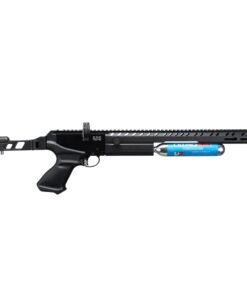
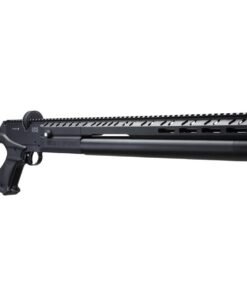
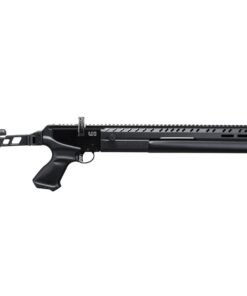
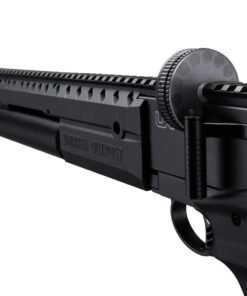
Umarex Outpost
$350.00
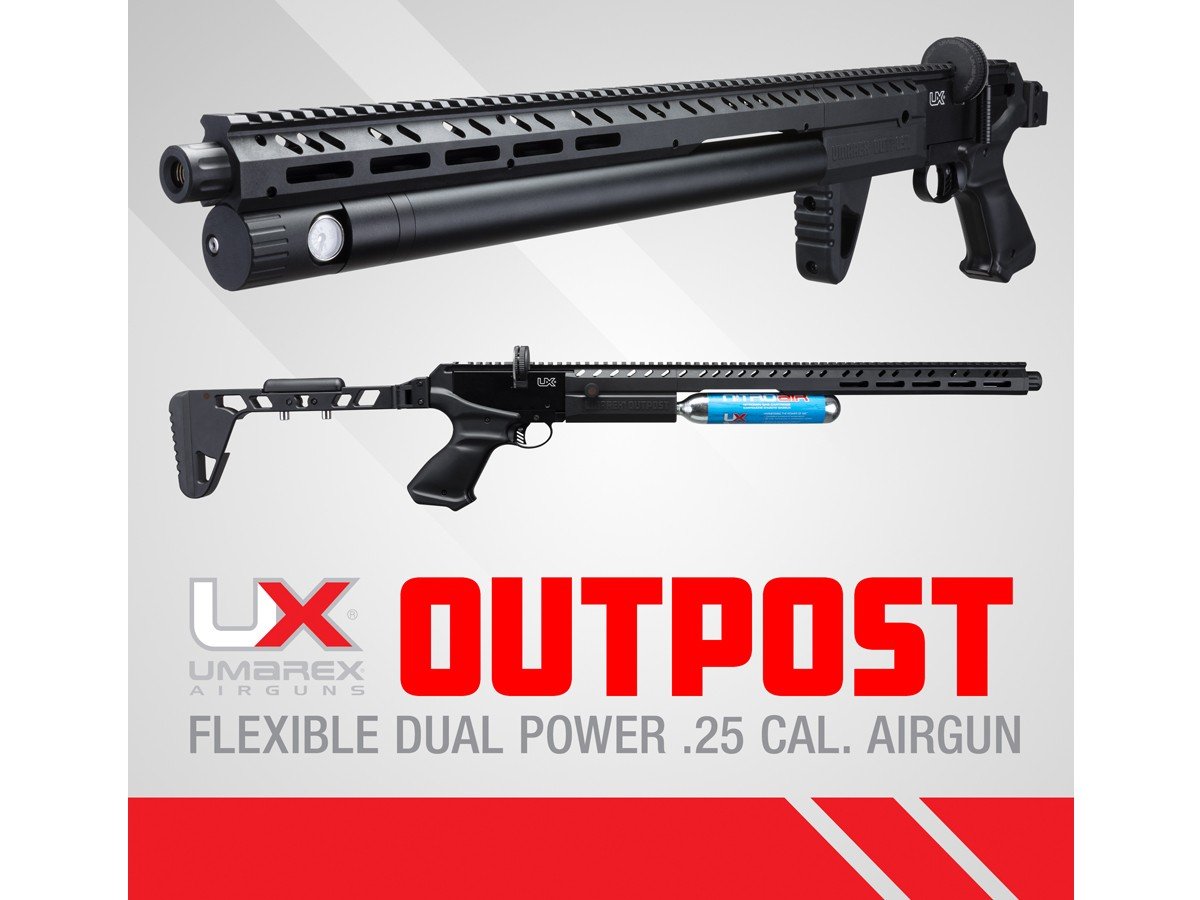
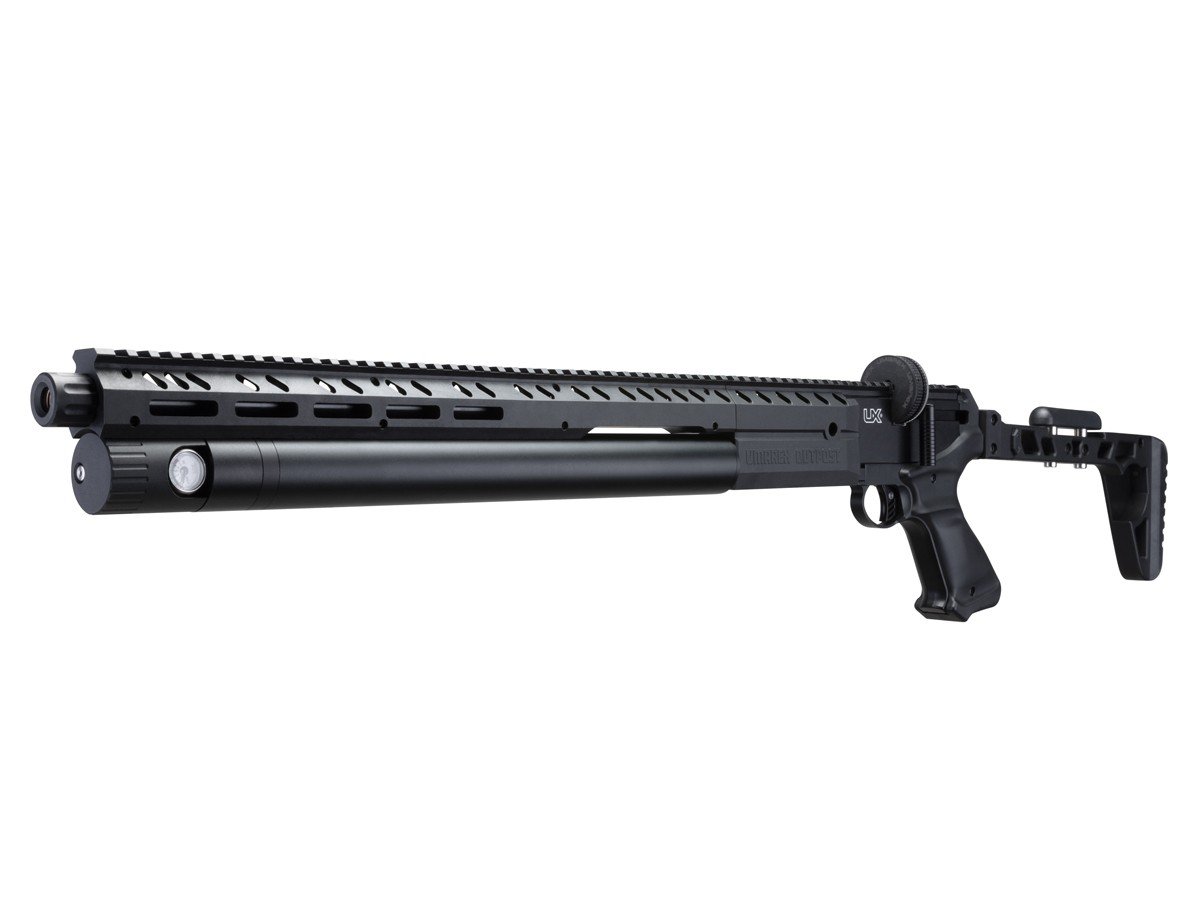
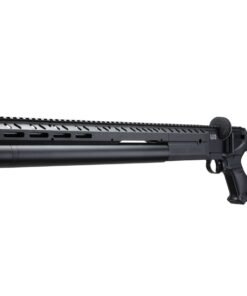
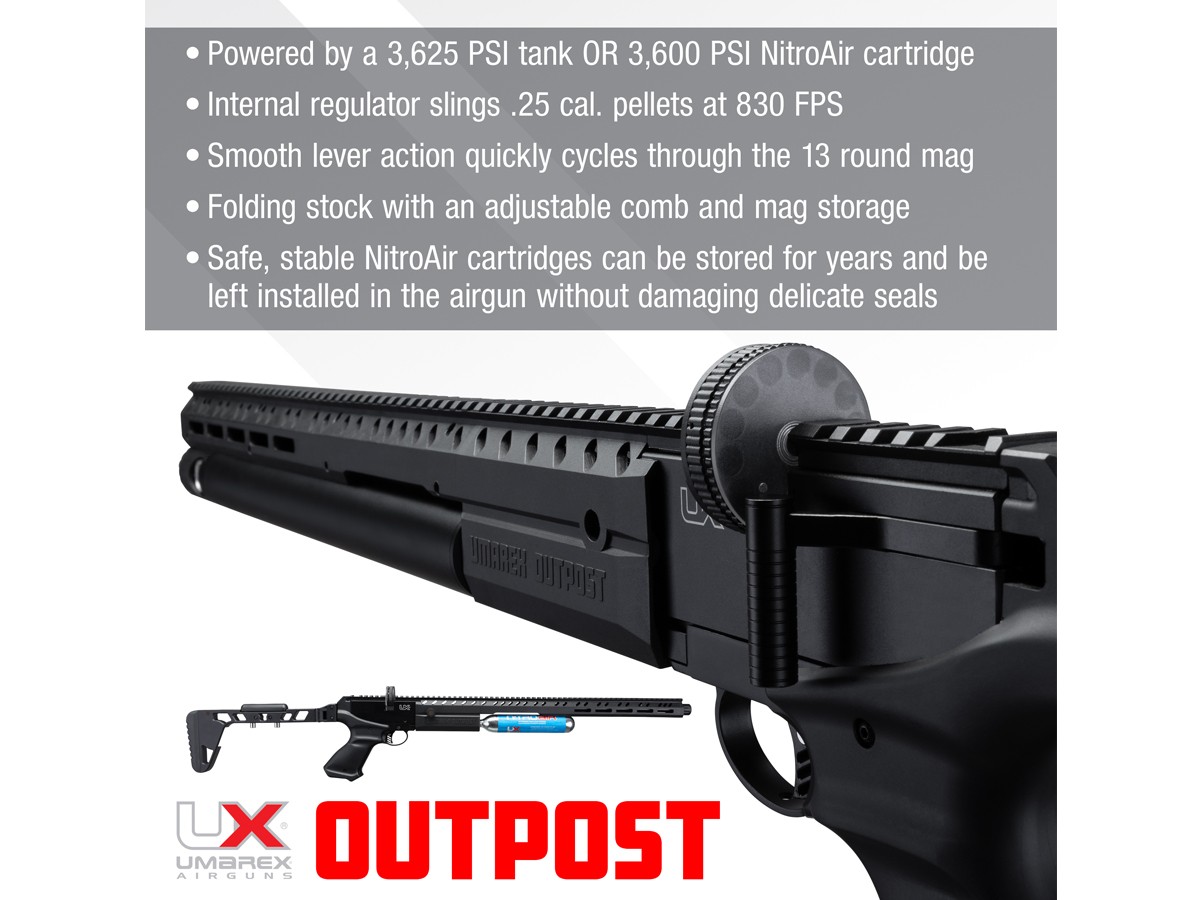
The Umarex Outpost gives you a NitroAir PCP air rifle that’s easy to maneuver, with smart features focused on convenience and high performance. You’ll like that you get speeds up to 830 fps and power up to 38 fpe, both with 24 grain pellets, which gives you the performance you need for pesting, plinking, and small game hunting.
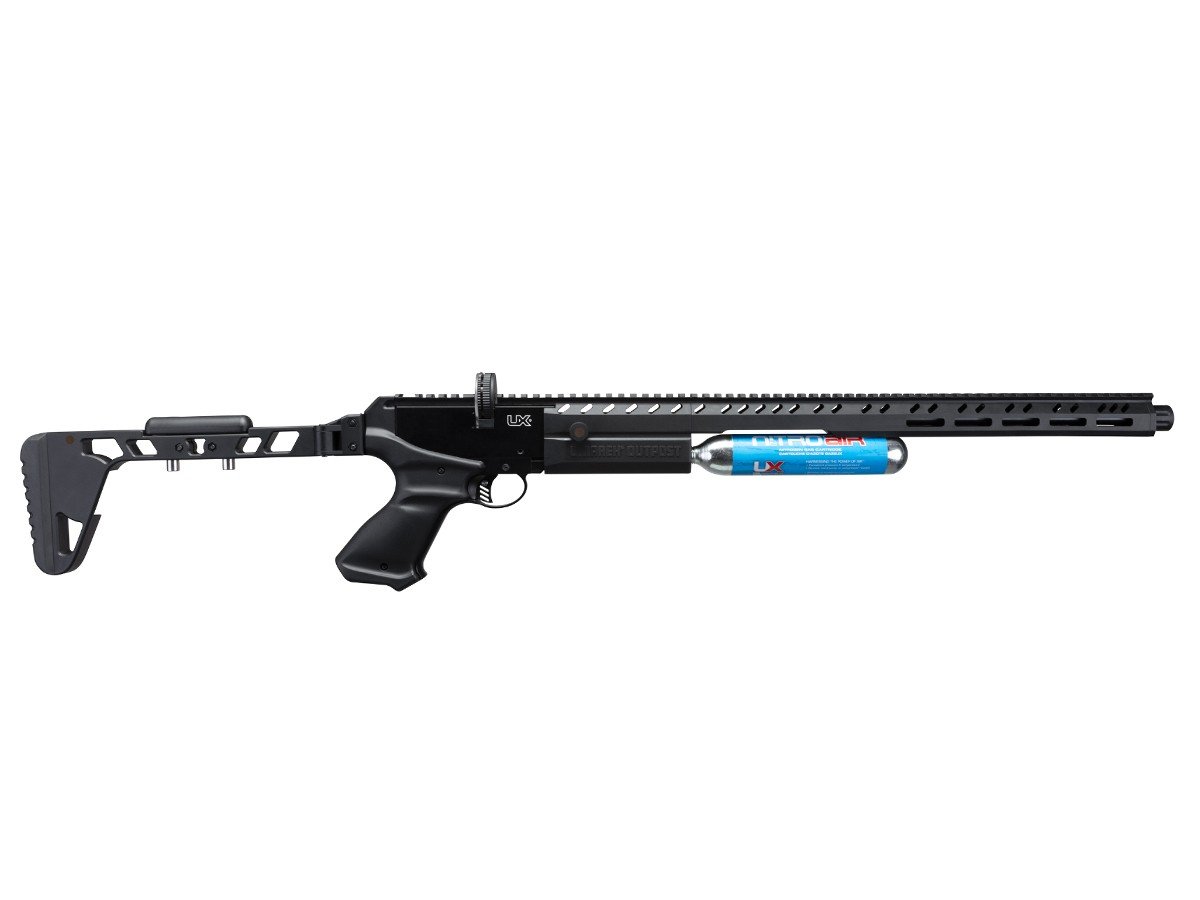
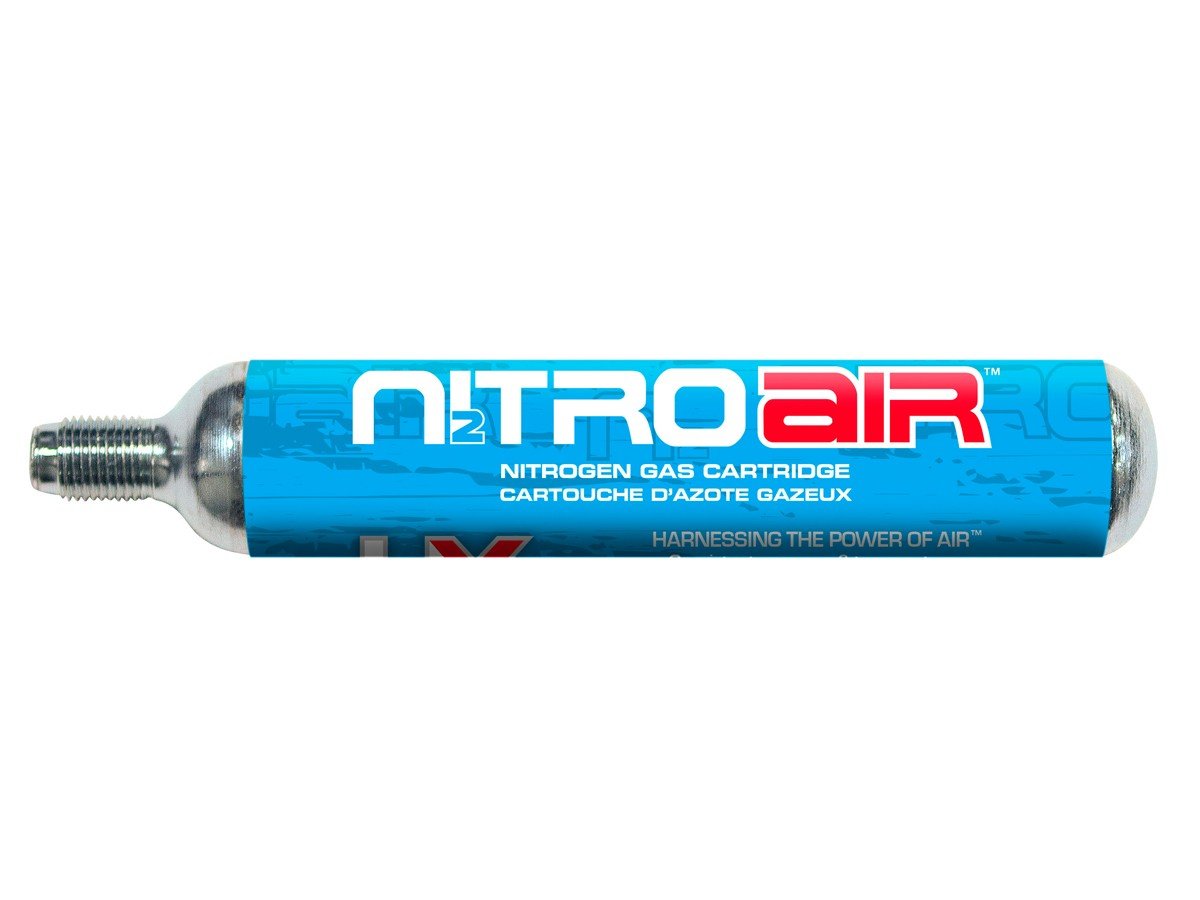
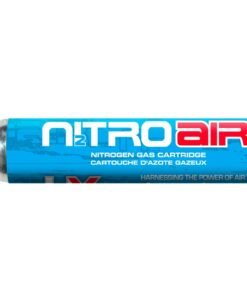
You’ll appreciate that you can use either the included innovative NCR NitroAir nitrogen cartridges to get performance you can count on in any weather because it’s not affected by temperature as much as CO2, or the included 250cc PCP tank that fills to 3,625 psi to give you the same experience and performance as a standard PCP air rifle. You’ll also enjoy that each shot leaves the barrel with the same predictable performance, thanks to the steady speeds produced by the internal regulator set to 1,800 psi.
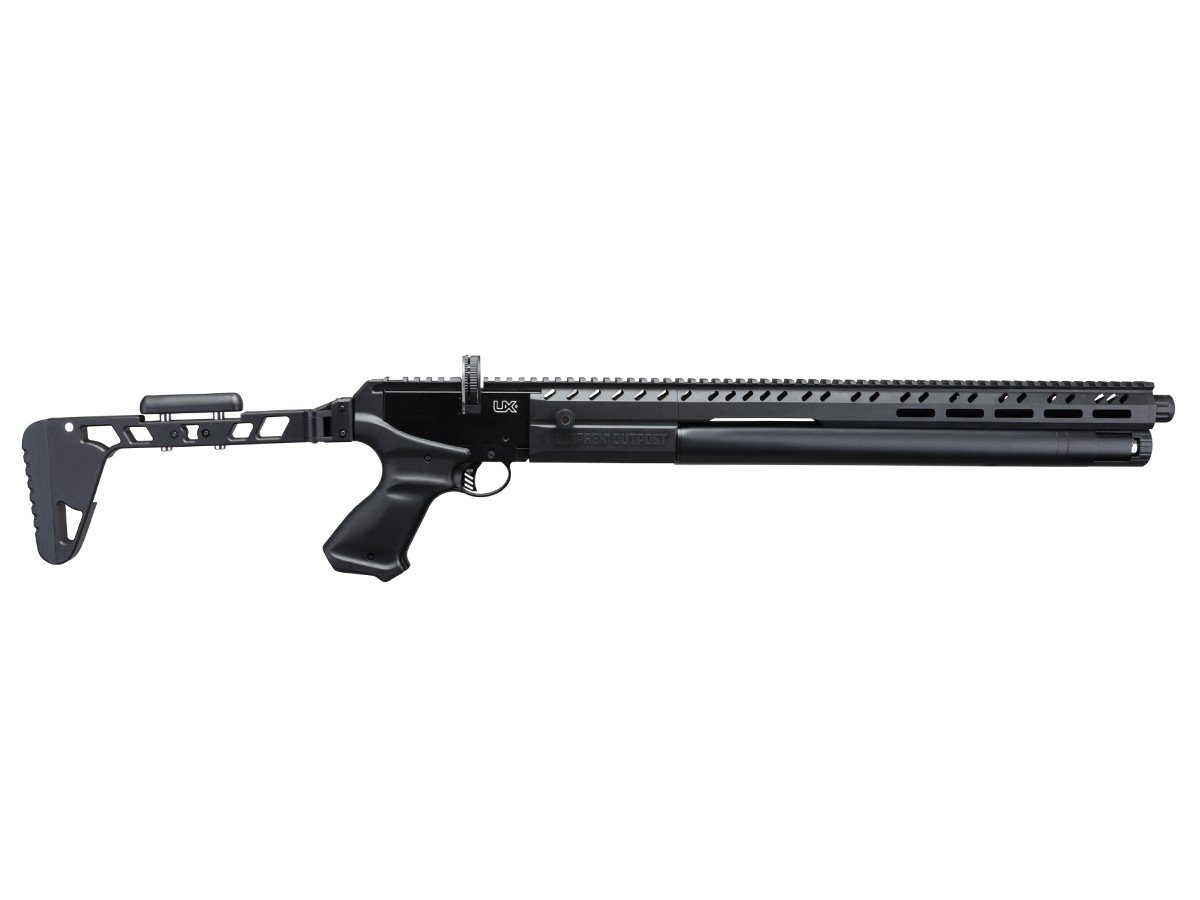
The Umarex Outpost gives you convenience and portability because it has a folding buttstock with a ridged rubber buttpad, and it also has storage for an extra magazine (two total are included) in the buttstock, plus a cheek rest you can adjust for height. This gives you an easier way to carry it through dense woods, and it also makes it easier to fit inside a rifle case when folded.
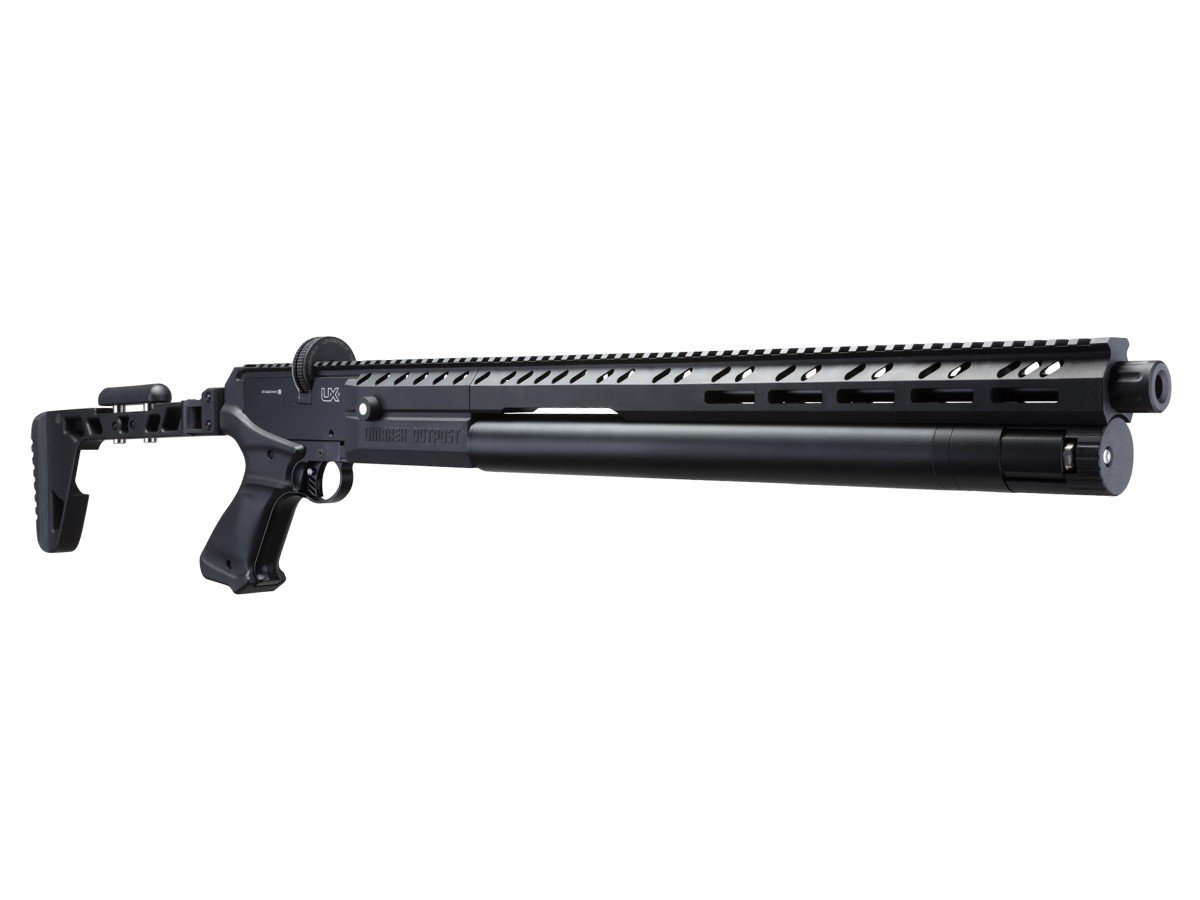
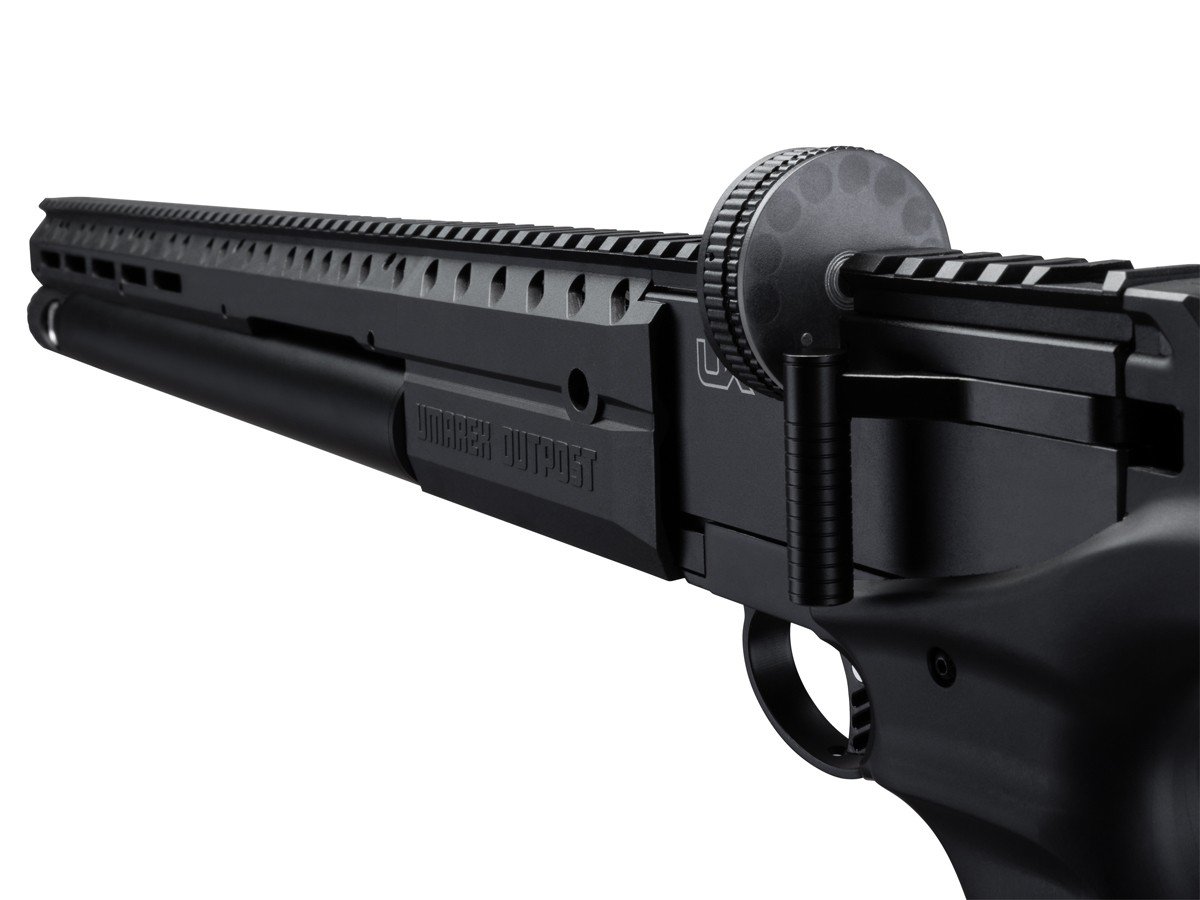
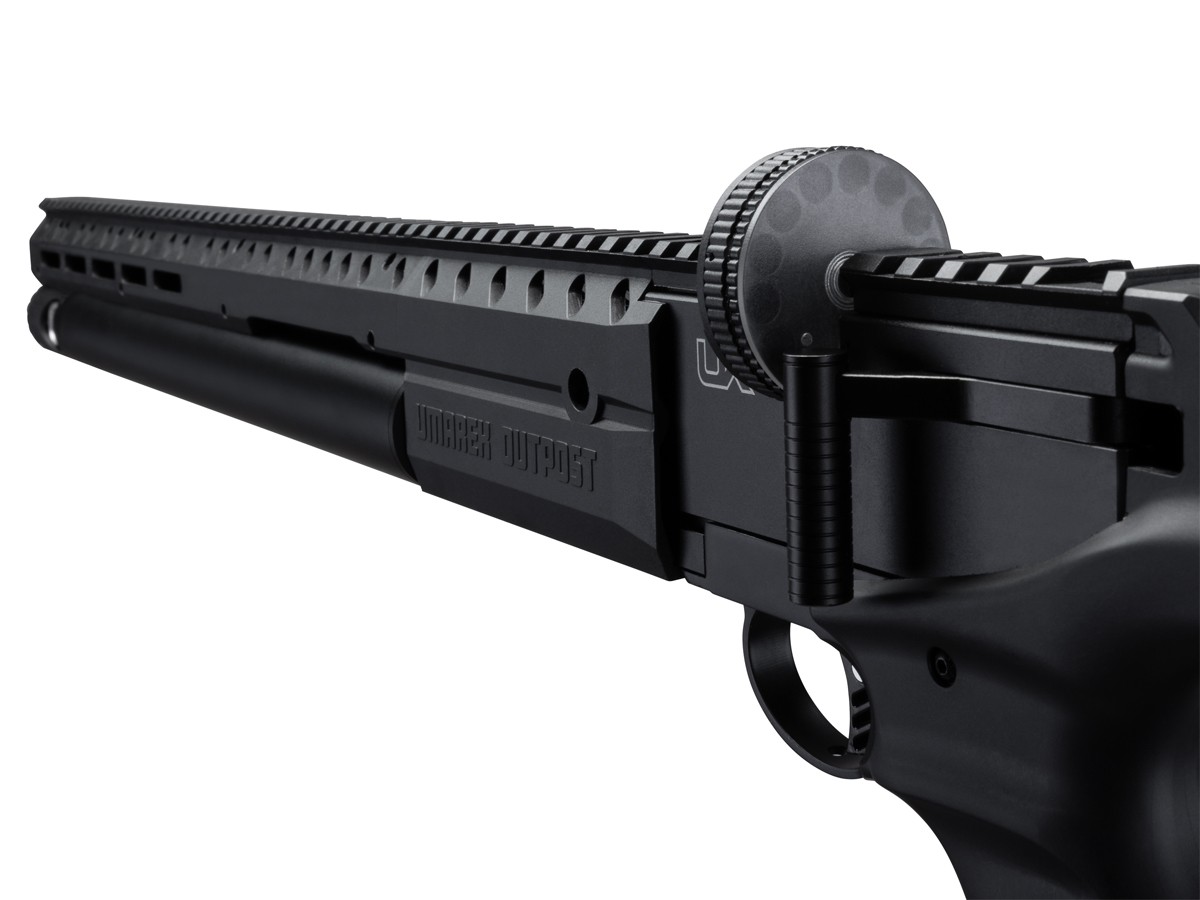
This air rifle gives you accurate aiming when you add your favorite scope to its extended Picatinny scope rail, and it lets you securely add accessories like lights and lasers to the M-LOK slots on both sides of the handguard. If you’re in the market for a dual power NitroAir PCP air rifle with an internal regulator for precise and powerful shots, get the Umarex Outpost now at Airgun Depot.
Umarex Outpost Features:
- Sidelever
- Unique NCR system with NitroAir recyclable/disposable nitrogen cartridge
- Dual power system can also use included 3,625 psi tank
- Includes 250cc PCP air cylinder
- Uses .25 caliber pellets
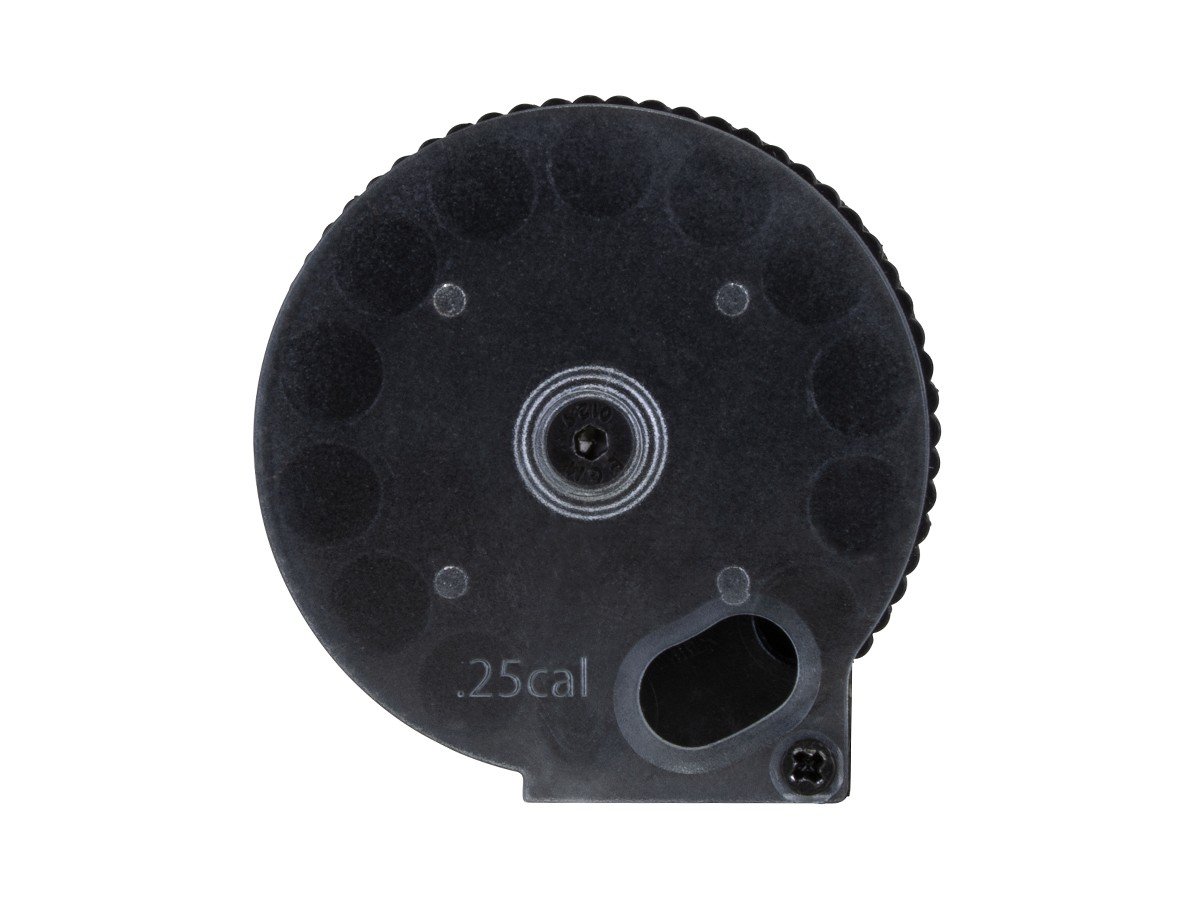
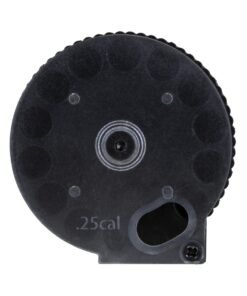
- 13-round removable rotary magazine
- 1/2×20 threaded muzzle with cap
- Internal regulator set to 1,800 psi
- Max. fill pressure: 3,625 psi (250 bar)
- Max. velocity: 830 fps (w/ 24gr pellet)
- Max. energy: 38 fpe (w/ 24gr pellet)
- Manual button safety
- Integrated side-facing pressure gauge on air tube
- Extended Picatinny scope rail
- M-LOK accessory slots on both sides of handguard
- Folding buttstock with ridged rubber buttpad
- Magazine storage in buttstock
- Adjustable cheek rest
- Male Foster quick-disconnect fill port
- Includes single-shot tray, two 13-round magazines, two NitroAir cartridges
- Overall length: 37.5″ (stock extended), 28.46″ (stock folded)
- ManufacturerUmarex
- Caliber .25
- Velocity 830 fps
- Condition New
- Ammo Type Pellets
- Action Sidelever
- Barrel Style Rifled
- Fire Mode Repeater
- Gun Weight 4.74
- Loudness 3-Medium
- Mechanism Pre-charged pneumatic
- Rail Weaver/Picatinny
- Safety Manual
- Front Sights none
- Rear Sights none
- Trigger Adjustability Two-stage adjustable
- Use Small game hunting/target practice
- Warranty 1-year limited warranty
Umarex Outpost .25-Caliber PCP Air Rifle
Built for adaptability, portability, and dependable performance, the Umarex Outpost introduces a flexible approach to modern PCP airgunning. This compact .25-caliber air rifle combines a regulated power system, a folding stock, practical accessory mounting options, and Umarex NitroAir compatibility. Consequently, it is well suited to responsible target shooting, lawful pest management, preparedness, and permitted small-game hunting.
Unlike a conventional PCP rifle that depends entirely on external filling equipment, the Umarex Outpost offers multiple air-source options. Its removable high-pressure PCP cylinder can be filled through compatible equipment, while Umarex NitroAir nitrogen cartridges provide an alternative source of power. Therefore, shooters can choose the filling method that best suits their equipment, location, and intended use.
Why Choose the Umarex Outpost?
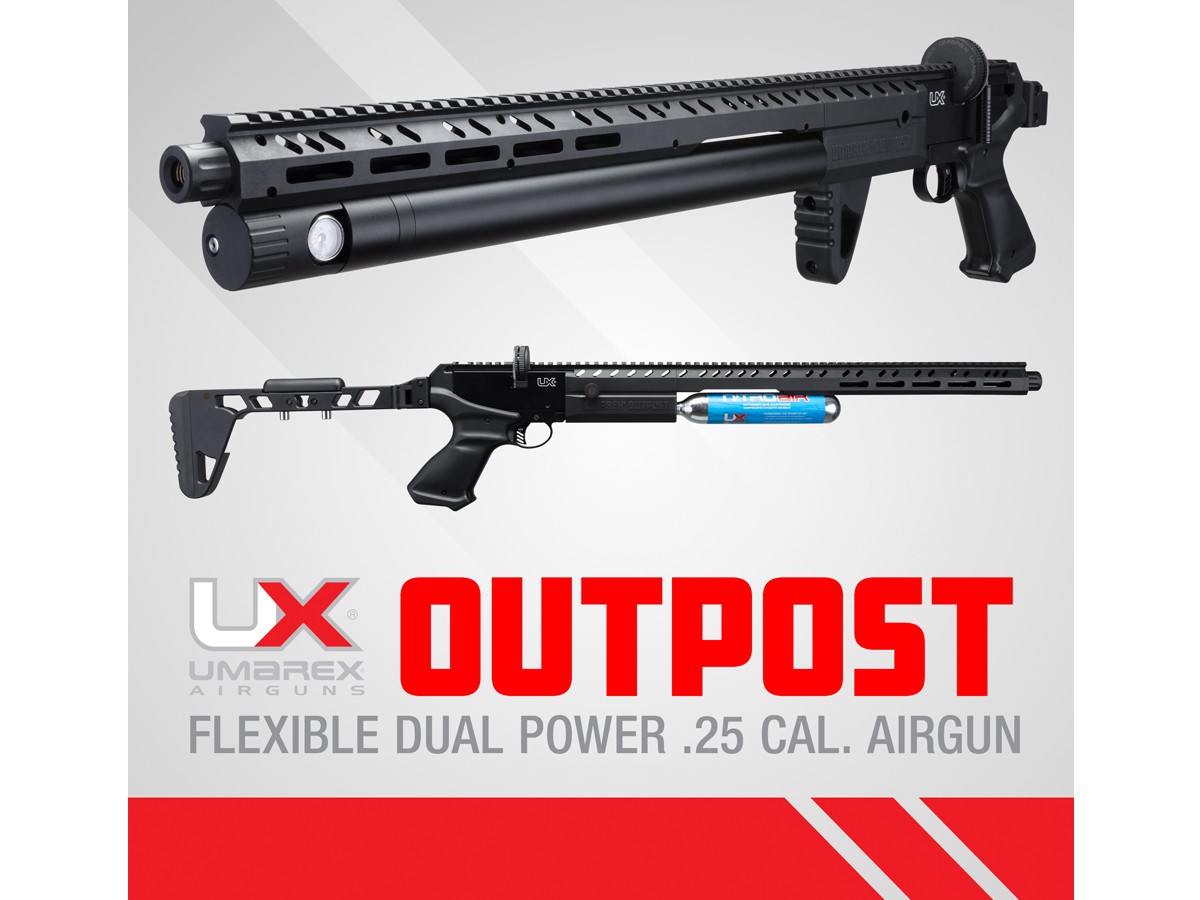
Versatility remains one of the strongest reasons to consider this rifle. Whether it is being transported to an approved shooting range or stored securely between sessions, the Outpost has been designed around convenience. Moreover, its folding stock reduces the rifle’s overall storage footprint without sacrificing a stable shoulder position when deployed.
Smooth cycling is supported by the sidelever action. After a shot has been taken, the next pellet can be chambered efficiently from the removable 13-round rotary magazine. As a result, unnecessary movement is reduced and attention can remain focused on the target.
Meanwhile, the internal regulator is set at approximately 1,800 PSI. Air pressure is therefore managed consistently as shots are fired, helping to maintain more predictable velocity and accuracy throughout the usable fill. Although actual results can vary with pellet weight, atmospheric conditions, fill pressure, and maintenance, the rifle is rated to produce up to approximately 830 FPS and 38 foot-pounds of muzzle energy with a suitable 24-grain pellet.
Highlighted Umarex Outpost Features
- Powerful .25-caliber platform: Heavier pellets deliver greater impact and improved resistance to wind compared with lighter small-bore options.
- Dual-source flexibility: The rifle can be powered through its included refillable PCP cylinder or compatible NitroAir nitrogen cartridges.
- Regulated performance: An internal regulator set at approximately 1,800 PSI supports consistent shot-to-shot operation.
- Maximum fill pressure: The included 250cc PCP cylinder accepts up to 3,625 PSI, or 250 bar.
- 13-round magazine: A removable rotary magazine allows multiple follow-up shots before reloading is required.
- Single-shot capability: An included single-shot tray can be used when deliberate pellet loading is preferred.
- Sidelever action: Pellets can be chambered through an accessible and efficient operating system.
- Folding stock: Storage and transportation are made easier by the compact stock design.
- Adjustable cheekpiece: A more comfortable cheek position can be established for different optics and shooting preferences.
- Integrated magazine storage: A spare magazine can be kept conveniently within the stock.
- Full-length Picatinny rail: A compatible scope or other lawful optical accessory can be installed.
- M-LOK mounting points: Suitable accessories can be fitted to the handguard without unnecessary bulk.
- Threaded muzzle: The 1/2-inch UNF threaded muzzle accepts compatible airgun accessories where their use is legal.
- Manual safety: An accessible manual safety provides an additional layer of responsible handling control.
Adaptable NitroAir and PCP Operation
Traditionally, PCP air rifles must be refilled through a hand pump, compressor, or larger high-pressure air tank. While those solutions remain useful, they may not always be convenient away from home. Accordingly, the Umarex Outpost has been developed to provide another option.
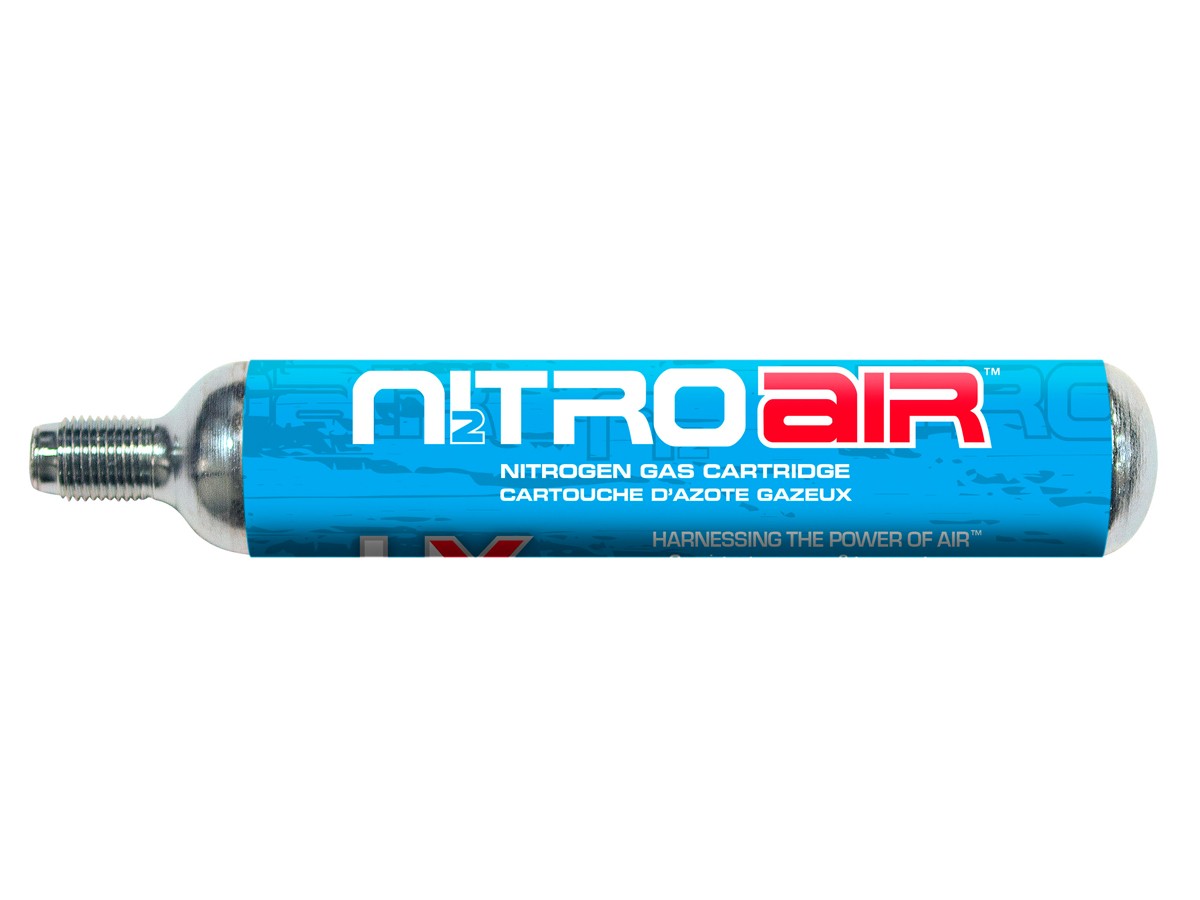
The included PCP cylinder can be filled through suitable high-pressure equipment. Alternatively, a compatible Umarex filling station and NitroAir cartridges may be used to transfer nitrogen into the cylinder. A NitroAir cartridge may also be fitted directly in place of the standard cylinder when appropriate.
Because disposable cartridges have a limited capacity, the number of available shots will differ from the output provided by a fully charged 250cc cylinder. Nevertheless, this flexibility can be valuable during travel, remote target sessions, or situations where a conventional compressor is unavailable. Always follow the manufacturer’s instructions, pressure limits, and approved filling procedures.
Compact Design with Practical Ergonomics
Portability has been built into the Umarex Outpost without overlooking shooting comfort. Once folded, the stock makes the rifle easier to place inside a suitable protective case. After the stock has been opened, a stable shoulder contact point is provided for controlled shooting.
Additionally, the adjustable cheekpiece helps users align naturally with their chosen optic. Since the rifle does not rely on traditional open sights, an appropriate scope or compatible sight must be installed on the top Picatinny rail. This arrangement allows the setup to be adapted for approved target distances and individual eyesight requirements.
Accessory space has also been provided through M-LOK slots along the handguard. Consequently, compatible equipment can be attached only when it is genuinely needed, helping to preserve the rifle’s manageable and uncluttered profile.
Regulated .25-Caliber Performance
The .25-caliber format gives the Umarex Outpost a purposeful balance of velocity and pellet mass. Instead of depending solely on extreme speed, the platform sends a heavier projectile with up to 38 foot-pounds of energy under the manufacturer’s specified test conditions. This characteristic makes it suitable for reactive targets and lawful small-game applications where adequate energy and responsible shot placement are essential.
Furthermore, the regulated system helps reduce velocity changes as cylinder pressure gradually declines. Tighter groups may therefore be supported when quality pellets are selected and a consistent shooting technique is applied. For the best results, several suitable pellet weights and designs should be tested safely, because every barrel may show a preference.
Convenient Magazine-Fed Operation
A 13-round rotary magazine is supplied for convenient repeater operation. Once it has been loaded correctly and inserted, the sidelever can be cycled between shots. The spare magazine may be stored within the stock, so additional pellets remain close at hand during an approved shooting session.
For methodical accuracy testing, the single-shot tray offers another useful choice. Pellets can be loaded individually, allowing their condition and orientation to be checked before each shot. Therefore, both fast magazine use and slower precision-focused practice are supported by the same platform.
Who Is the Umarex Outpost Designed For?
This rifle can appeal to experienced airgunners who want a compact .25-caliber PCP. Equally, it may suit responsible newcomers who value straightforward operation and flexible filling options. Its accessory-ready construction also makes it attractive to shooters who prefer to configure their equipment around a specific purpose.
Most importantly, the Umarex Outpost brings together portability, regulated output, repeat-shot convenience, and adaptable air sourcing in one distinctive package. With proper maintenance, secure storage, suitable eye protection, a safe backstop, and full compliance with local laws, it can provide a capable platform for responsible airgun use.
Before ordering or using this air rifle, buyers should verify local age restrictions, licensing requirements, hunting regulations, power limits, transportation rules, and accessory laws. Product packages may also vary by market, so included components should be confirmed with the seller. Specifications referenced from Umarex USA and its 2026 product announcement.
Calibre, FAC Power and Accessories for the Umarex Outpost
Available Umarex Outpost Calibre
The Umarex Outpost is currently offered in .25 calibre, also known as 6.35mm. No factory-produced .177 or .22 version has been announced for this model. Consequently, customers should avoid assuming that magazines, barrels, or pellets intended for another Umarex rifle will fit the Outpost.
A .25-calibre pellet is heavier and wider than the common .177 and .22 alternatives. Therefore, more energy can be retained at practical distances when an appropriate pellet is used. This calibre is particularly relevant to experienced airgun users seeking a hard-hitting platform for target shooting, lawful pest control, and permitted small-game management.
Nevertheless, accuracy should always be prioritised over power alone. Different pellet weights and head dimensions may produce noticeably different groups. Accordingly, several reputable .25-calibre domed pellets can be tested on an authorised range with a secure backstop. Once the most consistent option has been identified, the rifle can be zeroed specifically for that pellet.
Slug use should not be assumed without checking the manufacturer’s latest recommendations. Barrel suitability, projectile dimensions, magazine length, and local regulations must all be considered before ammunition other than conventional airgun pellets is used.
Umarex Outpost Power and Performance
Under the manufacturer’s published specifications, the Umarex Outpost can produce approximately 38 foot-pounds of muzzle energy. A maximum velocity of around 830 feet per second is quoted with a suitable 24-grain .25-calibre pellet. However, measured output may change according to projectile weight, fill pressure, ambient temperature, barrel condition, and individual rifle tolerances.
Consistent operation is supported by an internal regulator set at approximately 1,800 PSI. Instead of allowing the firing pressure to vary directly with every change in cylinder pressure, the regulator supplies a controlled quantity of gas for each shot. As a result, more predictable velocities and tighter vertical grouping can be encouraged across the useful portion of the fill.
A removable 250cc PCP cylinder is supplied and can be filled to a maximum pressure of 3,625 PSI, or 250 bar. In addition, compatible Umarex NitroAir cartridges can provide an alternative power source. This dual-source arrangement gives owners more flexibility when conventional high-pressure filling equipment is unavailable.
Only approved filling components should be used. Equally, the stated pressure limit must never be exceeded. Oils, petroleum-based lubricants, damaged connectors, and unapproved adapters must be kept away from high-pressure filling equipment because serious injury or equipment failure could otherwise result.
Does the Umarex Outpost Require an FAC?
Because the standard Umarex Outpost is rated at approximately 38 foot-pounds, it should be treated as a high-power or FAC-rated air rifle in the United Kingdom. It is not a typical sub-12-foot-pound air rifle.
In England and Wales, an air rifle capable of exceeding 12 foot-pounds may only be possessed under a valid Firearm Certificate. Therefore, a full-power Umarex Outpost must not be purchased, possessed, transferred, or used there unless the necessary authority has been granted and the rifle is correctly entered on the certificate. The certificate holder must also follow every condition governing approved use, land, ammunition, transportation, and secure storage.
Scotland operates a separate air-weapon licensing system. However, rifles producing more than 12 foot-pounds remain subject to the relevant firearms certification requirements. Northern Ireland also applies its own firearms licensing rules. Buyers in every jurisdiction should therefore consult their police firearms licensing department or an authorised firearms dealer before ordering.
A lower-powered version must not be presumed to exist unless it has been officially manufactured, tested, documented, and lawfully supplied for the destination market. Owners should never attempt to increase, decrease, or otherwise alter the rifle’s output themselves. Unauthorised modification can create serious safety problems and may change the rifle’s legal classification.
The UK Government confirms that an air rifle exceeding 12 foot-pounds must be held on a Firearm Certificate. Regulations may differ elsewhere, so buyers must verify the rules applicable to their country, region, and intended activity. Current guidance can be reviewed through the UK Government’s air-weapon safety guide.
Compatible Umarex Outpost Accessories
The Umarex Outpost has been designed to accept a useful selection of shooting and maintenance accessories. Nevertheless, every component should be checked for correct dimensions and legal suitability before installation.
Recommended accessory categories include:
- Rifle scope: The full-length Picatinny rail accepts compatible optic mounts. A suitable airgun-rated scope can support target identification and accurate shot placement.
- Picatinny scope rings: Ring diameter must match the selected scope tube, while ring height should provide adequate clearance for the objective lens.
- Spare 13-round magazines: Additional genuine magazines allow pellets to be prepared before an authorised shooting session. The stock also incorporates a convenient magazine-storage space.
- Single-shot tray: Deliberate, individually loaded shots can be supported during pellet testing or precision target practice.
- High-pressure hand pump: A properly rated PCP pump can be used to fill the removable cylinder, although filling a larger cylinder manually requires effort.
- PCP compressor: A compatible compressor rated above the rifle’s maximum working pressure can make regular refilling more convenient.
- Approved fill adapter: Only the correct manufacturer-specified connector or filling station should be selected.
- NitroAir cartridges: Compatible cartridges provide an alternative to a conventional PCP filling setup and must be installed according to Umarex instructions.
- Protective rifle case: A padded, lockable case can protect the rifle and optic during lawful transportation and secure storage.
- M-LOK accessories: The handguard provides attachment points for compatible equipment such as a lightweight shooting support where permitted.
- Airgun moderator: The muzzle incorporates a 1/2-inch UNF thread beneath its factory device. Any moderator must be designed for airguns and may only be acquired or used where legally permitted and, when applicable, specifically authorised on the owner’s certificate.
- Cleaning and maintenance supplies: Pull-through cleaning equipment, lint-free cloths, and manufacturer-approved lubricants can help maintain the rifle without damaging its seals.
With its .25-calibre chambering, regulated 38-foot-pound output, flexible power supply, and accessory-ready construction, the Umarex Outpost provides a distinctive platform for appropriately licensed and responsible airgun users. Its legal status and specifications should always be confirmed before purchase. Published technical details are supported by the official Umarex 2026 Outpost announcement.
Frequently Asked Questions
What type of air rifle is this model?
It is a regulated, sidelever-operated pre-charged pneumatic air rifle designed around a compact and adaptable platform. Instead of relying on a spring piston or a disposable CO₂ capsule, it uses high-pressure gas to propel each pellet. A removable air cylinder and compatible nitrogen cartridges provide more than one power-source option.
The regulated action helps control the firing pressure supplied for each shot. Consequently, velocity can remain more consistent throughout the useful portion of a cylinder fill. Actual performance will still depend on the pellet, atmospheric conditions, cylinder pressure, maintenance, and individual rifle.
Which calibre is available?
The rifle is currently produced in .25 calibre, or 6.35mm. Factory-produced .177 and .22 versions have not been announced for this particular model. Buyers should therefore select genuine .25-calibre pellets and the correct magazines.
Because .25-calibre pellets are generally heavier than .177 and .22 alternatives, they can deliver substantial energy while retaining useful stability. Nevertheless, pellet quality and shot placement remain more important than calibre alone. Each prospective owner must also confirm whether this calibre and power level are lawful in their location.
How powerful is the rifle?
Manufacturer information lists a maximum muzzle-energy figure of approximately 38 foot-pounds. A velocity of up to about 830 feet per second is quoted with a suitable 24-grain .25-calibre pellet. These figures represent controlled test conditions rather than a guarantee that every pellet will produce identical results.
Pellet weight, head size, cylinder pressure, temperature, barrel condition, and chronograph setup can affect the measured result. Therefore, lawful owners should use an appropriate chronograph when a precise energy reading is required. Testing should always be completed in a safe environment with an adequate backstop.
Is a Firearm Certificate required in the United Kingdom?
A standard full-power example rated at approximately 38 foot-pounds falls well above the 12-foot-pound threshold applied to air rifles in England and Wales. As a result, it must be treated as an FAC-rated rifle and may only be purchased or possessed by someone holding the appropriate authority.
Scotland and Northern Ireland operate under separate licensing arrangements. Buyers must consult their local police firearms licensing department or an authorised dealer before purchasing, transferring, or possessing the rifle. Government guidance confirms that an air rifle capable of exceeding 12 foot-pounds requires a Firearm Certificate in England and Wales. See the official UK air-weapon guidance.
Is a sub-12-foot-pound version available?
A lower-powered version should not be assumed to exist unless it has been officially produced, tested, and documented for the relevant market. Product configurations may differ between countries, but only the specification supplied by the authorised seller should be relied upon.
Customers should request written confirmation of the exact muzzle-energy rating and legal classification before ordering. The rifle should never be modified privately to change its output. Unauthorised alteration could make it unsafe, invalidate its warranty, or change its legal status.
What does dual-source operation mean?
Dual-source operation means that the action can be powered through more than one compatible gas-supply arrangement. The supplied high-pressure cylinder can be filled using suitable PCP equipment. Alternatively, compatible Umarex nitrogen cartridges can provide another source of power.
This flexibility can be particularly useful when a compressor or larger charging cylinder is unavailable. However, each source offers a different capacity, and the number of shots obtained may vary. Only manufacturer-approved cartridges, adapters, and filling procedures should be used.
What is the maximum cylinder pressure?
The removable 250cc cylinder has a stated maximum fill pressure of 3,625 PSI, equivalent to 250 bar. This limit must never be exceeded. Before filling, the user should confirm that every hose, connector, gauge, and adapter is correctly rated for the required working pressure.
The filling process must be completed slowly and according to the manufacturer’s instructions. Petroleum-based products should never be introduced into high-pressure air equipment. A damaged cylinder, seal, valve, or connector must be inspected by a qualified technician before further use.
What is a regulator, and why is it important?
A regulator reduces the high pressure stored in the cylinder to a more controlled working pressure before each shot is released. In this platform, the regulator is set at approximately 1,800 PSI.
Without regulation, velocity may change more noticeably as cylinder pressure decreases. By controlling the firing pressure, a regulator can support steadier performance and more predictable pellet impact. Even so, consistency also depends on ammunition, technique, maintenance, and environmental conditions.
How many pellets does the magazine hold?
Each rotary magazine holds 13 .25-calibre pellets. Once correctly loaded and inserted, the magazine indexes as the sidelever is operated. This arrangement allows multiple shots to be taken before the magazine needs to be removed and reloaded.
The user must still confirm that a pellet has been chambered and avoid operating the lever repeatedly without firing. Careless cycling can load more than one pellet into the barrel. If a blockage is suspected, the rifle should be made safe and checked by a competent technician.
Is a single-shot tray included?
Manufacturer package information identifies a single-shot tray among the standard accessories. It enables one pellet to be loaded at a time instead of being fed through the rotary magazine.
A single-shot tray can be particularly helpful during accuracy testing because each pellet can be inspected before loading. It may also appeal to users who prefer a slower, more deliberate target-shooting routine. Package contents can vary by country or seller, so the included components should be confirmed before purchase.
How does the sidelever action work?
The sidelever mechanically prepares the action and advances the magazine so that the next pellet can be chambered. It provides a smooth and accessible operating system without requiring the barrel to be broken open.
The lever must be operated fully and carefully. It should never be forced, because resistance could indicate an incorrectly inserted magazine, a damaged pellet, or a blockage. The safety rules continue to apply while the action is being cycled, and the muzzle must always remain pointed in a safe direction.
Does the rifle include open sights?
Traditional front and rear sights are not fitted. Instead, a full-length Picatinny rail is provided for the installation of a compatible scope or lawful optical sight.
Scope rings must match both the rail and the diameter of the selected optic’s tube. Their height should also provide sufficient clearance for the objective lens. After mounting, every fastener should be tightened according to the accessory manufacturer’s recommendations rather than being overtightened.
Which accessories can be mounted?
The top Picatinny rail supports compatible optics, while M-LOK attachment points are incorporated into the handguard. These interfaces allow the rifle to be configured with appropriate accessories without permanently changing its structure.
Suitable additions may include a scope, compatible rings, a lightweight shooting support, a protective case, and approved maintenance equipment. Excessive accessories can make a compact rifle unnecessarily heavy or unbalanced. Therefore, each item should serve a clear purpose and be permitted under local law.
Can an airgun moderator be installed?
A 1/2-inch UNF threaded muzzle is provided beneath the factory muzzle device. A compatible airgun moderator may therefore be fitted where its possession and use are lawful.
In the United Kingdom, a moderator intended for an FAC-rated rifle may require specific authority and inclusion on the owner’s certificate. Buyers should obtain advice from their police firearms licensing department or registered firearms dealer. A moderator must never be treated as automatically unrestricted simply because it is intended for an air rifle.
Does the stock fold?
Yes. The folding stock reduces the rifle’s storage footprint and makes it easier to place inside an appropriately sized protective case. When opened, the stock provides the shoulder support required for a stable shooting position.
Before use, the stock should be checked to ensure that it has locked correctly. The rifle should not be fired with a loose or damaged locking mechanism. Transportation rules still apply when the stock is folded, and the rifle must be unloaded, secured, and carried for a lawful reason.
Can the cheekpiece be adjusted?
An adjustable cheekpiece is incorporated into the stock. Its position can be changed to help the user establish comfortable alignment with the installed optic.
Correct alignment reduces the need to lift or twist the head while aiming. Nevertheless, adjustments should be completed only when the rifle is unloaded and pointed in a safe direction. After a comfortable position has been found, the adjustment must be secured before shooting begins.
Where is the spare magazine stored?
A storage space is integrated into the stock for a compatible spare magazine. This arrangement keeps an additional loaded or empty magazine readily organised without requiring a separate pouch.
Local rules and range policies may govern how loaded magazines are transported or stored. For that reason, the magazine should normally be removed and unloaded before the rifle is transported. Pellets must also be kept away from children and unauthorised users.
What pellets should be used?
High-quality .25-calibre lead pellets from a reputable manufacturer are generally appropriate. Domed designs are often selected for initial accuracy testing because they can perform consistently across a variety of PCP barrels.
Rather than choosing a pellet solely because it produces the highest velocity, users should compare group size, reliability, and measured energy. Damaged, corroded, oversized, or incorrectly labelled ammunition must not be loaded. The manufacturer’s latest manual should be consulted before non-standard projectiles are considered.
How many shots can be obtained from one fill?
An exact shot count cannot be promised because it depends on the air source, starting pressure, regulator setting, pellet, temperature, and acceptable velocity range. The 250cc cylinder is intended to provide greater capacity than a single disposable nitrogen cartridge.
A chronograph can be used to identify the rifle’s consistent operating range. Once velocity begins to fall noticeably, the cylinder should be refilled according to the approved procedure. Owners should not continue firing merely to extract the final possible shot from a depleted air source.
Is it suitable for target shooting?
The regulated action, repeat-shot magazine, adjustable cheekpiece, and optic rail make the platform suitable for responsible target shooting on an authorised range or private land where permission has been granted.
A strong backstop capable of safely containing .25-calibre pellets is essential. Targets should never be positioned where a missed shot could leave the property. Eye protection should be worn, while additional range rules and local discharge restrictions must always be followed.
Can it be used for hunting or pest control?
Where local law permits, the rifle’s stated energy may make it suitable for certain small-game or pest-control applications. However, legality varies according to species, season, land, licence, projectile, and permitted method.
The shooter must have the landowner’s permission, understand the rifle’s trajectory, and be capable of accurate shot placement. Live quarry should never be used for practice. If the shooter cannot guarantee a safe background and a humane outcome, the shot must not be taken.
How should the rifle be stored?
The rifle should be unloaded, depressurised only as directed by the manufacturer, and stored in a secure location that prevents unauthorised access. FAC holders must comply with the security conditions and storage arrangements required by their licensing authority.
Magazines and pellets should be secured appropriately, while keys or access codes must be kept away from unauthorised people. A soft case protects against scratches, but it does not replace an approved security cabinet where one is legally required.
What maintenance is required?
Routine care generally includes wiping external surfaces, checking seals and fasteners, keeping the magazine clean, and inspecting the filling components. Only lubricants approved for PCP airguns should be used.
The barrel should not be cleaned excessively. When cleaning becomes necessary, a suitable pull-through system can be used carefully from the correct direction. Internal regulator, valve, trigger, or high-pressure repairs should be entrusted to a qualified technician rather than attempted at home.
What is normally included with the rifle?
The standard package announced by Umarex includes the rifle, a 3,625 PSI PCP cylinder, two 13-round magazines, a single-shot tray, and two compatible nitrogen cartridges. A larger kit version has also been announced with additional magazines, pellets, a 3–9×40 scope and rings, a hand pump, extra cartridges, and a carrying case.
Contents may vary by dealer, country, and package level. Buyers should therefore check the seller’s written listing instead of relying solely on promotional photographs. The manufacturer’s published package information can be reviewed in the official product announcement.
Who is this rifle best suited to?
The rifle is best suited to responsible adults who want a compact, regulated .25-calibre platform and understand high-pressure PCP equipment. Its dual-source system may also appeal to users who value more than one filling option.
New airgun users should receive instruction from a qualified person or recognised shooting club before operating it. In addition, every prospective owner must confirm licensing, age, storage, transportation, and usage requirements before completing a purchase.
A Structured Target-Shooting Session
A planned target session provides one of the clearest ways to appreciate the rifle’s regulated performance, sidelever operation, and flexible configuration. Before leaving home, the owner can confirm that the rifle is unloaded, the safety is engaged, and the air system is in good condition. The cylinder pressure, magazine, optic mounts, and required licensing documents should also be checked before transportation begins.
Once the user arrives at an authorised range, a secure shooting position can be established. An appropriate backstop must be present, while every person nearby should wear suitable eye protection. The rifle can then be removed from its locked case and inspected before the air source is connected or the magazine is loaded.
For an initial zeroing session, the single-shot tray may be more useful than the rotary magazine. Each pellet can be inspected and loaded individually, allowing damaged ammunition to be rejected. Moreover, a consistent pellet design and weight can be used throughout the session so that meaningful comparisons can be made.
After the optic has been aligned at a suitable starting distance, a small group can be fired from a stable support. Adjustments should be made gradually, and another group should be fired after each change. Instead of reacting to one unusual impact, the shooter can evaluate the average position of several shots. Consequently, a more reliable zero can be established.
The regulator supports consistent firing pressure, but technique still matters. A repeatable shoulder position, comfortable cheek contact, gentle trigger operation, and steady follow-through can all influence accuracy. Through careful practice, the owner can learn how the rifle behaves without relying solely on its published velocity or energy figures.
Comparing Pellets for Accuracy
Different .25-calibre pellets may perform differently even when their weights appear similar. Therefore, a controlled pellet-comparison session can help identify the most suitable option for the individual barrel.
Several reputable domed pellets can be selected before the test begins. Each type should be clearly labelled, while the barrel, fill pressure, target distance, and shooting support should remain consistent. Groups can then be fired under similar conditions and measured after the rifle has been made safe.
Accuracy should be judged by repeatable group size rather than one impressive shot. Additionally, feeding reliability should be considered when the rotary magazine is used. A pellet that groups well but regularly becomes damaged during loading may not provide the best overall experience.
A chronograph can also be used by a competent, lawful owner to confirm consistency and compliance with applicable power limits. However, velocity alone does not determine suitability. Pellet mass, precision, stability, and the manufacturer’s recommendations must be evaluated together.
Once a reliable pellet has been chosen, its details can be recorded for future reference. The optic may then be zeroed using that exact pellet. Switching frequently between different weights or designs without checking the point of impact should be avoided because each option may follow a different trajectory.
Practising with the Rotary Magazine
After the rifle has been zeroed, the 13-round magazine can be introduced during an organised target exercise. This configuration allows the user to practise smooth sidelever operation while maintaining a stable position.
Before loading, the magazine should be inspected for dirt, damaged components, or incorrect pellet orientation. It should then be inserted according to the manufacturer’s instructions. The sidelever must be operated fully and without excessive force. If resistance is encountered, the user should stop rather than attempting to force the action closed.
A simple exercise can involve firing one deliberate shot at each of several paper targets. The goal should not be speed. Instead, the user can concentrate on rebuilding the same sight picture, cheek position, and trigger control for every shot. This method makes the magazine useful without encouraging hurried or careless handling.
The shooter must keep track of whether a pellet has already been chambered. Cycling the lever repeatedly without firing may create a barrel obstruction. If the rifle does not behave normally, it should be unloaded and inspected by a competent person.
At the end of the exercise, the magazine should be removed, the action cleared, and the rifle shown to be safe. Remaining pellets can then be stored securely according to local range rules.
Using the Folding Stock for Transport and Storage
The folding stock is particularly valuable when the rifle must be transported in a suitable case. Once folded, the platform occupies less space and can be organised alongside approved accessories without requiring an unnecessarily long container.
Compactness does not remove the need for secure transportation. The rifle should be unloaded and placed inside a protective, preferably lockable case. Magazines should be removed, while pellets and required documents should be carried in accordance with local law. The case must not be left unattended in an unsecured vehicle.
Upon arrival, the stock can be unfolded and checked to confirm that it has locked properly. A loose or damaged hinge could affect stability and safe handling. Therefore, the rifle should not be used until any stock problem has been corrected.
For home storage, the folded configuration may fit more conveniently inside an approved security cabinet. However, a soft bag or ordinary cupboard should never be treated as a replacement for legally required secure storage. Access must be restricted to authorised adults, and keys or codes must be protected.
Adjusting the Rifle for Different Users
The adjustable cheekpiece helps the rifle accommodate different facial structures, shooting positions, and optic heights. This flexibility can be useful when more than one authorised adult uses the same rifle at a supervised range.
Before adjustments are made, the rifle must be unloaded and pointed in a safe direction. One user can then establish a comfortable shoulder position while the cheekpiece is moved gradually. Ideally, the eye should align naturally with the centre of the optic without the head being stretched, lowered excessively, or tilted.
Once a comfortable position has been found, the adjustment should be tightened and checked. The next authorised user may require a different setting, so recording preferred positions can save time during later sessions.
Although the stock can improve comfort, no adjustment compensates for poor technique or an unsuitable optic position. Scope-ring height, eye relief, and cheekpiece placement must work together. A qualified instructor or experienced range officer can help new users establish a safe, repeatable setup.
Using the Refillable PCP Cylinder
For regular range visits, the 250cc refillable cylinder may provide the most practical air source. It can be filled from suitable high-pressure equipment that is correctly rated for the rifle’s maximum working pressure.
Before filling begins, the cylinder, valve, hose, gauge, and adapter should be inspected. The connection must be clean and properly secured. Filling should occur slowly, with close attention paid to both the rifle gauge and the supply gauge. The stated maximum of 3,625 PSI, or 250 bar, must never be exceeded.
After the desired pressure has been reached, the line should be isolated and depressurised according to the equipment manufacturer’s instructions. A pressurised hose must not be disconnected prematurely. Likewise, a leak should never be investigated with bare hands close to the suspected point because escaping high-pressure gas can cause injury.
The cylinder provides useful capacity for extended practice. Nevertheless, the owner should monitor the remaining pressure and refill only through an approved method. Internal valves, regulators, and seals must be serviced by a qualified technician when problems arise.
Using Nitrogen Cartridges Away from Filling Equipment
A compatible nitrogen cartridge offers an alternative when a conventional pump, compressor, or larger charging cylinder is unavailable. For example, a licensed user travelling to an approved rural range may prefer to carry the permitted cartridge system instead of transporting bulky filling equipment.
Before departure, the owner should confirm that the cartridges are genuine, undamaged, correctly stored, and legal to transport. Extreme heat, direct sunlight, and careless handling must be avoided. Every installation step should follow the manufacturer’s manual.
Because a cartridge has less available capacity than the refillable cylinder, a shorter shooting session should be expected. Accordingly, the user can plan a deliberate practice routine rather than relying on a large volume of shots. The single-shot tray may be selected for accuracy work, while one magazine may be sufficient for a short exercise.
Spent or partially used cartridges must be handled and disposed of according to the manufacturer’s instructions and local rules. They should never be punctured, heated, refilled, or modified by the user.
Supervised Introduction for a New PCP User
A newcomer may find the platform easier to understand when instruction is provided by a qualified range officer or experienced club member. The first session should focus on safety, basic operation, and range procedures rather than maximum distance or rapid follow-up shooting.
The instructor can begin by identifying the muzzle, safety, sidelever, magazine, pressure gauge, cylinder, trigger, and optic rail. Next, the user can be shown how to confirm that the rifle is unloaded. Safe muzzle direction and trigger discipline should be reinforced throughout the lesson.
Dry demonstrations may be used only where the manufacturer permits them and where no damage will be caused. Otherwise, the rifle should remain uncocked until live firing begins. When the user is ready, one pellet can be loaded through the single-shot tray under direct supervision.
Starting with individual shots reduces complexity. After safe habits have been demonstrated consistently, the magazine system can be introduced. This gradual approach encourages confidence without allowing convenience to replace careful handling.
At the end of the session, the new user should participate in clearing, inspecting, and securing the rifle. Consequently, storage and post-shooting responsibilities become part of the learning process rather than an afterthought.
Responsible Pest-Control Use
Where local law permits, an appropriately licensed and competent person may use the rifle for authorised pest management. This should take place only on land where clear permission has been granted and where the intended species may lawfully be controlled.
Before any activity begins, the user must identify safe firing directions and consider buildings, roads, footpaths, livestock, domestic animals, neighbouring property, and public access. A pellet must never be fired unless a reliable background will contain it. Darkness, vegetation, or distance should not be allowed to conceal what lies beyond the intended target.
The selected pellet must have already demonstrated dependable accuracy. Furthermore, the shooter must understand the chosen zero and personal accuracy limitations. If identification, range, background, or humane shot placement is uncertain, the shot should not be taken.
Pest management should never be presented as casual recreation. Local wildlife rules, land conditions, seasons, permissions, and licensing requirements must be checked in advance. Where uncertainty exists, professional pest-control assistance should be sought.
Lawful Small-Game Management
In jurisdictions where air-rifle hunting is permitted, the platform’s .25-calibre configuration may be considered for certain lawful small-game applications. However, the rifle’s power does not automatically make every species or situation appropriate.
Preparation should begin at an authorised range. The user needs to establish consistent accuracy from realistic positions and understand how pellet impact changes at different distances. Only ammunition that performs reliably in the individual rifle should be selected.
On the land, the shooter must carry any required certificate, licence, or written permission. The rifle should remain unloaded during transportation and should be handled discreetly and securely. Every potential shot must be assessed for species legality, humane placement, range, and background.
No shot should be attempted toward a crest, water surface, hard object, building, vehicle, or area where people may appear. Ricochets and missed pellets can travel beyond the intended location. Responsible judgement must always take priority over the opportunity to fire.
Monitoring Consistency During a Longer Session
During extended target practice, the cylinder pressure will gradually decrease. Although the regulator helps stabilise performance, a point will eventually be reached where the remaining pressure no longer supports the normal regulated output.
A user may notice that pellet impacts begin moving lower or that chronograph readings decline. Rather than compensating continuously through optic adjustments, the shooter should check the pressure gauge and refill when appropriate.
A written session log can be useful. Starting pressure, pellet type, approximate shot count, ending pressure, and observed group size can all be recorded. Over time, this information helps the owner anticipate when a refill will be needed.
Changes in sound, lever resistance, accuracy, or air consumption should not be ignored. An unusual result may indicate damaged ammunition, a loose optic mount, a seal problem, or another maintenance requirement. When a technical fault is suspected, use should stop until the rifle has been inspected.
Cleaning and End-of-Session Care
After shooting has finished, the magazine should be removed and the chamber checked. The rifle must be confirmed unloaded before it leaves the firing point. Any remaining pellets should be secured separately as required.
External surfaces can be wiped with a clean, lint-free cloth. Dust should be removed from the magazine and accessory rails, while the optic lenses can be cleaned using suitable lens-care materials. Excessive oil must not be applied around the filling system.
The barrel generally requires cleaning only when accuracy declines or the manufacturer recommends it. A suitable pull-through system and approved cleaning materials should be used carefully. Metal rods or abrasive compounds may damage the barrel if used incorrectly.
Finally, the rifle can be returned to its locked case or approved cabinet. Pressure should be left or removed only as directed by Umarex because some PCP systems are designed to retain a minimum amount of pressure for seal protection.
Building a Safe Long-Term Routine
The most practical use of this platform comes from a consistent routine. Before every session, licensing, permission, air pressure, optic security, ammunition, and safe storage arrangements should be confirmed. During use, muzzle awareness, target identification, trigger discipline, and backstop quality must remain central.
Afterwards, the rifle should be cleared, inspected, recorded, and secured. Accessories should be checked for damage, while empty cartridges and damaged pellets should be disposed of responsibly.
By combining regulated performance with careful preparation, the owner can use the rifle effectively for approved target practice and other lawful activities. Its folding stock, magazine system, adjustable cheekpiece, alternative air-source options, and accessory-ready construction provide genuine flexibility. Nevertheless, responsible handling, qualified instruction, legal compliance, and secure storage will always determine whether that flexibility is used safely.
Air Gun Guide: Types, Power Systems, Pellets, Optics and Accessories
An air gun uses compressed air or gas to propel a pellet, BB, dart, or another manufacturer-approved projectile. When people ask what is an airgun, what is air pistol, or search for air guns meaning, they are usually comparing air-powered equipment with conventional firearms. Although an air powered gun does not use the same ignition system as a firearm, it must still be handled responsibly and stored securely.
Whether you want only air gun information, are comparing types of air guns, or simply need another name for slingshot, this guide introduces popular platforms, accessories, and safety considerations without reducing the subject to just gun terminology.
Understanding the Main Types of Air Guns
Several types of air rifles and types of pellet guns are available. Each type of air gun uses a particular powerplant and offers different handling characteristics.
A spring-piston rifle stores energy inside a compressed spring. Anyone asking what is a break barrel pellet gun will usually encounter this design. The barrel is moved downward to cock the action before a pellet is loaded. Models such as the BSA Meteor stock platform and Winchester Model 55 are commonly associated with traditional airgun discussions.
A gas ram performs a similar function but uses a compressed gas strut instead of a conventional coil spring. Meanwhile, CO2 pellet rifles and a revolver air gun pellet CO2 model rely on replaceable carbon-dioxide capsules. Search phrases such as air gun pellet CO2 revolver, CO2 pistol replica, Smith and Wesson CO2 pistol, Walther CP88 Competition, Umarex RP5 CO2 pellet gun, SA 10 pistol, Webley revolver, and Webley MKVI describe several different replica-style or sporting platforms.
PCP is another major category. The PCP rifle meaning refers to a pre-charged pneumatic rifle that stores high-pressure air in a cylinder. Examples discussed by enthusiasts include FX DRS, FX Impact M3, FX Leopard .22 PCP specs, Air Arms, RM8, Rexymaxx, Niksan Ozark TW, Crosman 2250, and Crosman Shockwave .22. Buyers may also search for the cheapest PCP airgun, although reliability, servicing support, safe filling equipment, and lawful power limits should be considered before price alone.
An air gun electric model may use a battery-powered mechanism, particularly in recreational platforms. Searches for cold air guns may refer to gas-powered equipment affected by temperature or may simply be an incorrect phrase. Always check the manufacturer’s description instead of assuming the intended power source.
Popular Manufacturers and Recognised Platforms
Airgun buyers often compare long-established brands with newer manufacturers. Searches for BSA guns England, Webley guns, Umarex – Legends, FX Airguns Sverige, and Air Arms reflect interest in European and international airgun production.
Other searches may include rifle M50, Crosman ST-1, or models within the expanding AEA airgun range. AEA-related terms include AEA 22, AEA Challenger, AEA Element Max, AEA Harpoon 12 gauge, AA Harpoon, AEA Zeus 95 cal, AEA 50 caliber, AEA Megalodon 45 cal, AEA Megalodon 50 caliber, and .72 cal air rifle. These names cover products with very different energy levels and legal classifications. Accordingly, the exact model, calibre, licence requirements, and intended use must be verified before purchase.
The phrase AEA Harpoon 12 gauge should not be interpreted as describing every Harpoon model, while AEA Zeus 95 cal and large-bore products must not be confused with ordinary small-bore pellet rifles. High-powered and large-calibre airguns may be treated as firearms or otherwise restricted in many jurisdictions.
Pellets, BBs and Compatible Ammunition
Airguns must be used only with ammunition approved for the specific barrel and action. A metal pellet normally has a shaped waist and is designed for a rifled barrel. By comparison, metal BB pellets, a 4.5 mm BB, or a BB metal bullet usually describe spherical steel or lead projectiles, although “bullet” is not the correct technical term for a BB.
A pellet tin protects ammunition from contamination and deformation. Damaged pellets should be discarded because irregular skirts or heads can affect accuracy. A metal pellet gun or pillet gun, as the term is sometimes misspelled, must never be loaded with random metal objects.
Some specialist platforms may be marketed as a dart pellet gun, while shoppers may search for darts for BB gun. Darts should never be fired unless the manufacturer specifically approves them. An unsuitable projectile can damage the barrel, become lodged, or create an unpredictable ricochet hazard.
Slingshots, Catapults and Airguns
A wrist rocket is a braced slingshot rather than an air rifle. Common questions include catapult vs slingshot, what’s the difference between a slingshot and a catapult, synonym for slingshot, and another name for slingshot.
Terminology varies by region. In some places, “catapult” refers to a handheld Y-shaped launcher that may be called a slingshot elsewhere. A larger mechanical siege device can also be described as a catapult, so context matters. gun uk
Anyone searching are slingsgots illegsl should check the correct spelling—“are slingshots illegal?”—and consult current local law. Carrying, selling, or using one may be regulated even when ownership is permitted. A Mossy Oak bow belongs to another product category and should not be grouped automatically with airguns or handheld catapults.
Scopes, Energy and Shooting Accessories
A mil dot scope uses reference points within the reticle. The term mil dot refers to angular measurements rather than a fixed distance. These markings can support lawful target shooting when the optic is correctly mounted and understood. A sniper set is often a marketing expression for an air rifle sold with an optic or accessories; it does not establish quality, accuracy, or legal classification.
Energy may be expressed in foot-pounds or joules. An FPE calculator or Pyramyd Air calculator estimates muzzle energy from projectile weight and measured velocity. For comparison, searches such as .45 ACP muzzle energy joules concern firearm ammunition and should not be used to predict airgun performance. Manufacturer ratings should also be confirmed with the relevant legal limits.
Muzzle and accessory threads may be described as 1/2 UNF, 1 2 UNF, or 1/2-inch UNF. Thread dimensions must be confirmed before an accessory is installed. Local law must also be checked because some muzzle accessories require separate authorisation.
Useful storage and care products include an aluminium rifle case, approved airgun lubricant, cleaning cloths, safe targets, and eye protection. Proper air gun maintenance involves checking seals, mounts, magazines, and filling equipment. Petroleum-based oils must never be introduced into high-pressure PCP systems.
Responsible Target Shooting
Target shooting with air rifles should take place at an authorised range or on private property where permission has been granted. A reliable backstop must stop every pellet, including a missed shot. Hard surfaces, water, trees, fences, and thin household materials may cause ricochets or allow projectiles to escape.
Before firing, the user must identify the target and everything beyond it. The muzzle should always be kept in a safe direction, while the trigger should remain untouched until a lawful shot has been chosen. Eye protection should be worn, and unauthorised users must never have access to the equipment.
The rifle must be unloaded before transportation. Secure storage is equally important, particularly in homes with children. Local rules governing age, power, licensing, public carrying, and discharge should be verified before ownership or use.
Air Rifles and Pest Management
Questions such as can air rifles kill, will a BB gun kill a rat, will a pellet gun kill a rat, air rifle for rats, rat killing gun, rat gun, shoot rats with air rifle, shooting a rat, and rat shooting frequently appear online. A rat with a gun may describe a novelty image rather than an appropriate pest-control method.
Pest control must be lawful, necessary, humane, and conducted only by a competent person with the landowner’s permission. A low-powered BB gun may injure an animal without producing a humane result. Therefore, equipment should never be chosen solely because it can discharge a projectile.
Before any action is considered, the species must be identified, local wildlife and animal-welfare laws must be checked, and the entire firing area must be assessed. Buildings, roads, neighbouring property, people, pets, and livestock must remain completely protected. Where legal requirements or humane outcomes are uncertain, a licensed pest-control professional should be contacted. crossman 2250
Other CO₂ and Gas-Powered Equipment
A CO2 cannon wedding device is designed to create a visual effect using confetti, streamers, or fog rather than to function as an airgun. It must be used only for its intended purpose and according to venue safety rules. Likewise, blank-firing products such as Ekol blank guns are not pellet guns and may be heavily regulated.
Different terminology can create confusion across markets. For example, luftgevær is commonly used in Scandinavian languages for an air rifle, while airgu is likely an incomplete spelling of airgun. Clear product titles, accurate specifications, and responsible legal notices help customers distinguish recreational equipment from restricted high-powered platforms. umarex rp5 c02 pellet gun
Ultimately, selecting an airgun requires more than comparing appearance or advertised velocity. Calibre, power source, accuracy, service support, safe filling equipment, storage, licensing, and intended lawful use should all be evaluated. By choosing approved ammunition, maintaining the equipment correctly, and following local regulations, responsible owners can enjoy safe and structured airgun target shooting.
Be the first to review “Umarex Outpost”
Related products
Air Rifles
Air Rifles
Air Rifles
Air Rifles
PCP Air Rifles
Air Rifles
Air Rifles
Reviews
There are no reviews yet.