
Brocock Sniper XR .22
$1,250.00
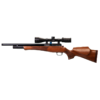
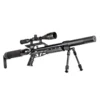
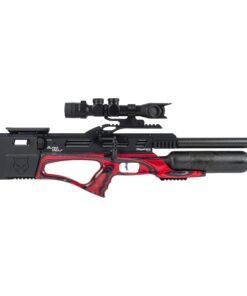
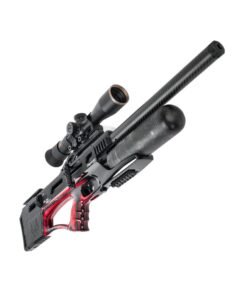
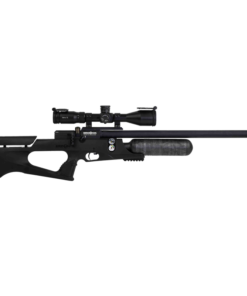
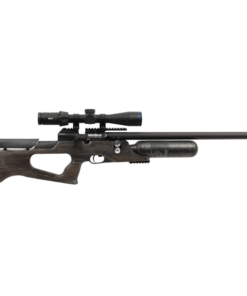
The Brocock Sniper XR .22 is a premium regulated PCP air rifle created for precision target shooting, responsible pest control, and legal small-game hunting. Smooth XR sidelever operation, a removable multi-shot magazine, adjustable ergonomics, a precision barrel, and a generous compressed-air supply are combined in a balanced full-length platform. Add a compatible scope, quality .22 pellets, and approved filling equipment to create a refined setup for range or field use.
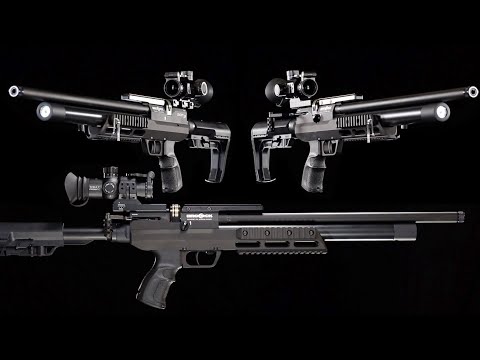
Tactical style air rifles and Bull Pups have become very popular for good reason. Tactical airguns give the shooter options for accessories such as bi-pods, shooting lamps, lasers, sling mounting, magazine holders and other useful tools in the field. Bull Pups style air rifles move the breech and barrel into a rearward position to decrease the overall length of the rifle and still provide high performance.
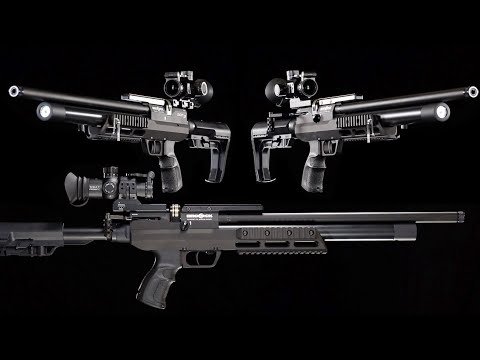
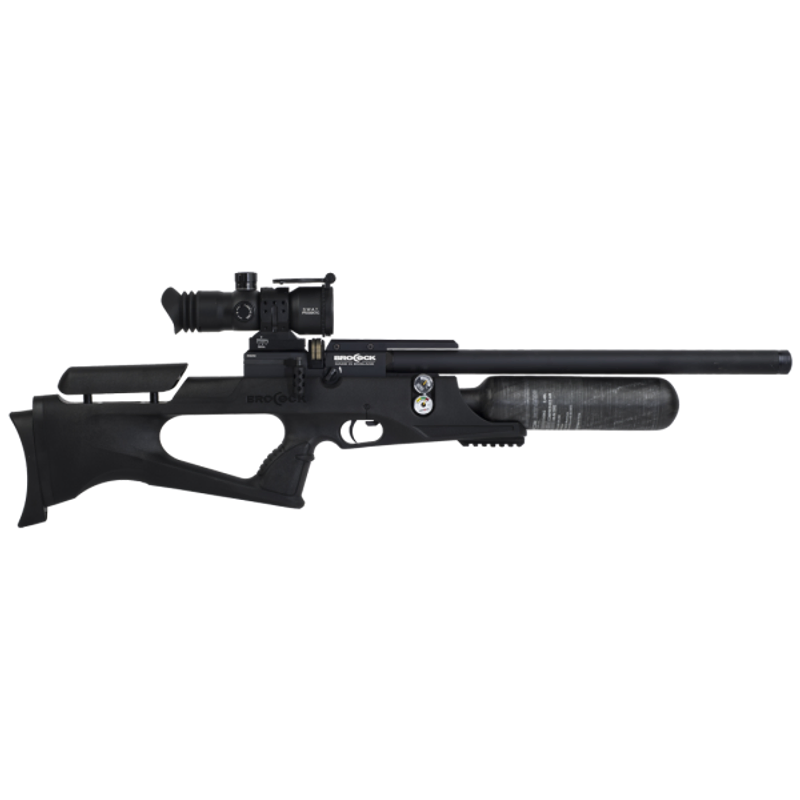
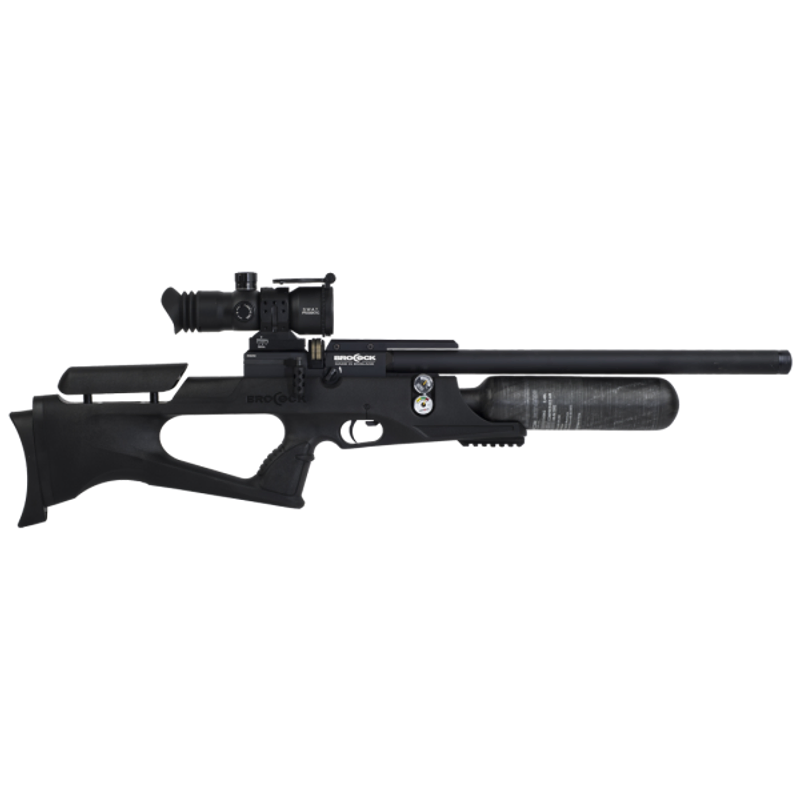
The all new Sniper made by Brocock combines the best of the tactical style and bull pup platforms. This all new Hybrid air rifle is short and light and does not require the long troublesome trigger linkages required in a traditional Bull Pup design. The Brocock Sniper XR comes standard with features found on much higher priced rifles. The purpose built breech block is made from high quality aircraft grade alloy and finished to provide to an almost indestructible level. The ballistic nylon synthetic stock has shooter inspired features like a adjustable cheek piece and butt pad with a removable picatinny rail on the forearm. Performance features include a HUMA regulator for match winning shot to shot consistency.
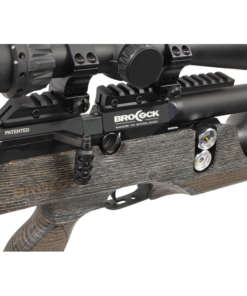
The Huma system is adjustable in pressure buy the shooter for tuning purpose. The regulator can be adjusted without removal of the stock or any disassembly of the rifle from a port behind the fill nipple. The Bantam Sniper sports two pressure gauges that show the state of charge from the carbon fiber bottle and the regulator pressure. To Further enhance the Bantams capabilities a three position power adjuster with a large control knob gives the sportsman the flexibility of long range varmint control to short range plinking in seconds with a satisfying click of the knob when needed.
This feature is very useful when shooting in a structure sensitive or urban environment. The XR sports an included 11mm scope rail and a large diameter barrel shroud system for reduced report. Further noise reduction is possible with the 1/2 UNF threads on the muzzle end. The all new Bantam Sniper will be equally at home or on the range with accuracy provided by the Lothar-Walther barrel and adjustable trigger unit. The ten shot magazine is cycled by the smooth side-lever cocking system and a single shot magazine is included for target work.
Brocock Sniper XR .22 PCP Air Rifle
The Brocock Sniper XR .22 has been engineered for shooters who expect refined accuracy, dependable power, comfortable handling, and premium British craftsmanship from a modern pre-charged pneumatic air rifle. Whether controlled pest management, precision target shooting, responsible small-game hunting, or recreational range use is planned, a versatile shooting platform is provided by this well-balanced rifle.
A sleek tactical appearance has been combined with a practical sporter-style layout. Consequently, the rifle can be handled naturally from a bench, supported field position, shooting sticks, or a standing stance. A fast sidelever action has also been fitted, so follow-up shots can be prepared smoothly without the shooting position being unnecessarily disturbed.
In .22 caliber, an excellent balance between pellet weight, retained energy, manageable air consumption, and downrange stability can be achieved. For that reason, the rifle can be considered by experienced airgun enthusiasts as well as responsible shooters moving into premium regulated PCP ownership.
Every major feature has been selected with practical shooting in mind. Consistent air delivery is supported by a regulated power system, comfortable control is encouraged by the adjustable stock, and accurate pellet placement is promoted by the precision barrel. Meanwhile, a removable rotary magazine allows shots to be cycled efficiently.
At Elite Air Gun Shop, premium PCP air rifles, optics, pellets, filling equipment, and compatible accessories can be selected in one convenient place. Therefore, a complete shooting setup can be assembled around the Brocock Sniper XR .22 rather than the rifle being purchased without the equipment needed for safe and effective use.
Brocock Sniper XR .22 Key Features
- Premium .22 caliber PCP configuration: A practical combination of accuracy, energy retention, pellet availability, and controlled recoil-free performance is provided.
- Smooth XR sidelever action: Fast, comfortable cycling is supported while unnecessary movement between shots is reduced.
- Regulated air delivery: More consistent velocity can be maintained throughout the usable pressure range.
- Precision barrel system: Strong accuracy potential is supported when quality pellets are matched to the barrel.
- Removable multi-shot magazine: Convenient follow-up shooting is enabled without a pellet being manually inserted after every discharge.
- Single-shot capability: A deliberate loading option can be used for careful target work where permitted and supplied.
- Adjustable power system: Output can be adapted on applicable versions, subject to the rifle’s specification and local regulations.
- Large-capacity air bottle: Extended shooting sessions can be supported before another refill is required.
- Adjustable trigger: A clean and predictable release can be configured within the manufacturer’s recommended limits.
- Adjustable butt pad: Shoulder contact and eye alignment can be improved for different users and shooting positions.
- Raised cheek support: A repeatable head position can be encouraged when a suitable riflescope is installed.
- Integrated pressure gauge: Remaining air pressure can be monitored before and during a shooting session.
- Optics mounting rail: A compatible air rifle scope and mounting system can be installed for precise aiming.
- Moderator-ready muzzle: A suitable sound moderator may be fitted where ownership and use are legally permitted.
- Manual safety mechanism: Additional control is provided when the rifle is being handled correctly.
- Ambidextrous-friendly configuration: The rifle can be considered by a wider range of shooters, although individual fit should always be checked.
- Durable tactical styling: A modern appearance is combined with materials selected for regular range and field use.
- Balanced full-length format: Stability is promoted without the rifle being made unnecessarily awkward to handle.
Why Choose the Brocock Sniper XR .22?
A premium PCP rifle should offer more than attractive styling. It should be predictable, comfortable, accurate, and sufficiently adaptable for the situations in which it will be used. Those qualities have been brought together effectively in the Brocock Sniper XR .22.
Unlike a spring-powered rifle, virtually no spring recoil is produced when the shot is released. As a result, sight movement can be reduced and shooting technique can be developed without heavy mechanical movement affecting the hold. Nevertheless, correct follow-through must still be maintained because every air rifle responds to how it is supported.
The regulated action represents one of the rifle’s most valuable characteristics. Compressed air is stored at high pressure in the bottle, while the regulator is used to provide a controlled amount of air for each shot. Therefore, more consistent pellet velocity can be produced across the rifle’s usable shot string.
When velocity is kept stable, vertical impact changes caused by fluctuating power can be reduced. Consequently, tighter groups may be achieved when suitable ammunition, a stable shooting position, and correct scope adjustment are used.
The sidelever mechanism provides another important advantage. A natural rearward-and-forward movement is used to operate the action, while the firing hand can remain close to its normal position. Follow-up shots can therefore be prepared efficiently, especially when the rifle is being used from a bench or supported field stance.
Furthermore, the full-length configuration helps the rifle settle steadily on target. Although compact bullpup rifles may be preferred where minimum overall length is essential, a conventional rifle layout is often chosen for its familiar balance and comfortable shoulder position. The Sniper XR has been designed for shooters who value that traditional handling while still wanting contemporary PCP technology.
A Refined .22 Caliber Shooting Platform
The .22 caliber configuration is widely valued because heavier pellets can be used than those normally selected for .177 rifles. Greater retained energy may consequently be delivered at appropriate distances, while the pellet can remain stable when matched correctly to the barrel and power level.
However, power alone should never be treated as a substitute for accuracy. Clean pellet placement, a verified zero, a suitable backstop, and responsible distance selection must always be prioritized. The Brocock Sniper XR .22 supports those priorities by providing a stable, regulated platform from which careful shots can be taken.
A broad selection of .22 pellets is available, including domed, hollow-point, pointed, and flat-head designs. In most circumstances, high-quality domed pellets are selected first for accuracy testing because favorable ballistic performance is usually provided by their rounded profile.
Several pellet brands, head sizes, and weights should be tested before a final choice is made. Even rifles of the same model may show slightly different preferences. Accordingly, the best pellet should be determined through controlled grouping rather than being selected only because another shooter has recommended it.
For paper targets, groups can initially be tested at a moderate distance under calm conditions. Once a reliable pellet has been identified, the scope can be zeroed and the trajectory can be mapped at several distances. A more complete understanding of the rifle will then be developed.
Precision Barrel Performance
A precision barrel is central to the performance of any accurate PCP air rifle. Within the Brocock platform, the barrel system has been designed to guide the pellet consistently while allowing the regulated pneumatic action to perform efficiently.
Nevertheless, excellent results depend upon more than the barrel alone. Pellets should be undamaged, the bore should be maintained correctly, the scope mounts should remain secure, and the shooter’s technique should be repeatable. When those details are managed carefully, the rifle’s true accuracy potential can be explored.
New owners are encouraged to begin with several proven pellet varieties. Five-shot or ten-shot groups can be fired from a stable rest, while only one variable should be changed at a time. Through this method, an informed pellet choice can be made without the results being confused by frequent scope or power adjustments.
Excessive barrel cleaning should generally be avoided unless accuracy has deteriorated or contamination has been detected. When cleaning is required, products intended for airgun barrels should be used. Harsh chemicals, unsuitable metal rods, and aggressive brushing should not be introduced because the rifling or barrel crown could be damaged.
After cleaning, several conditioning shots may be needed before the barrel returns to its established point of impact. Therefore, a rifle should not be cleaned immediately before an important shooting session unless sufficient time has been reserved for the zero to be reconfirmed.
Regulated PCP Consistency
Compressed air is used as the rifle’s power source. Before shooting begins, the air bottle must be filled with clean, dry air from a suitable high-pressure hand pump, PCP compressor, or certified air cylinder. The manufacturer’s stated maximum fill pressure must never be exceeded.
Within an unregulated PCP rifle, shot velocity may change as reservoir pressure falls. By contrast, regulated air delivery has been incorporated into the Sniper XR platform. A controlled working pressure can therefore be supplied to the firing valve for a significant portion of the shot string.
More uniform velocity is especially valuable when small targets are being engaged. If velocity changes significantly, vertical pellet impact may shift even when the aiming point remains unchanged. Because that variation is reduced by an effective regulator, confidence can be increased across the rifle’s usable pressure range.
However, the pressure gauge must still be watched. The rifle should not be fired continuously below its recommended operating region, and the reservoir should not be completely emptied through unnecessary dry firing. Proper filling and storage practices will help preserve seals and maintain reliable performance.
Actual shot count will vary according to the rifle’s power specification, pellet weight, fill pressure, regulator setup, environmental conditions, and the amount of air remaining when shooting is stopped. Therefore, one universal shot-count figure should not be promised for every market version.
Fast XR Sidelever Operation
A sidelever action has become one of the preferred operating systems for modern PCP rifles. Instead of a traditional rear bolt being lifted, pulled, pushed, and locked, a conveniently positioned lever is cycled through a smooth arc.
With the Brocock Sniper XR .22, the action can be operated with minimal disruption to the rifle’s position. The magazine is indexed, the next pellet is prepared, and the action is cocked through one controlled movement.
This arrangement can be particularly useful during target sessions. Once a shot has been released and the result has been observed, the next pellet can be loaded without the rifle being removed completely from the shoulder. A consistent cheek position can consequently be recovered more quickly.
The lever should always be operated through its full movement. It should not be forced, slammed, or partially cycled. If unusual resistance is felt, shooting should be stopped and the magazine, pellet, and action should be checked safely.
Two pellets must never be intentionally loaded into the barrel. If the operator is uncertain whether a pellet has already been chambered, the rifle should be made safe and inspected according to the manufacturer’s instructions.
Multi-Shot Magazine Convenience
A removable rotary magazine allows several pellets to be carried in a compact feeding system. Consequently, time does not need to be spent loading the breech manually after every shot.
Before the magazine is inserted, the correct pellet orientation should be confirmed. Pellets should sit neatly within their chambers without skirts being crushed or heads protruding. Damaged ammunition can affect feeding and accuracy, so it should be discarded safely rather than forced into the rifle.
The magazine should be kept clean and protected from dust, sand, fabric fibers, and moisture. When a spare magazine is carried in the field, a secure pouch or case should be used. Loose storage in a pocket with keys or other hard objects should be avoided.
For deliberate paper-target work, a compatible single-shot tray may be preferred where one is available. Each pellet can then be inspected and loaded individually. However, the multi-shot magazine remains particularly convenient for longer range sessions and situations in which a responsible follow-up shot may be required.
Magazine capacity and included equipment can differ by production period and regional package. For this reason, the exact capacity and box contents should be confirmed before the product listing is published or an order is completed.
Adjustable Trigger Control
An accurate rifle can be made difficult to use when its trigger is excessively heavy, inconsistent, or poorly suited to the shooter. Accordingly, an adjustable trigger system has been included to provide a more controlled release.
A properly configured first stage allows pressure to be introduced smoothly. The second-stage point can then be identified before the shot is released. Consequently, the trigger can be pressed without the rifle being pulled sharply away from the intended point of aim.
Adjustments should remain within the manufacturer’s safe limits. An excessively light or improperly adjusted trigger could make the rifle unsafe. Therefore, major changes should be carried out only by a qualified airgun technician or a competent owner following the official instructions.
During every shooting session, the trigger finger should remain outside the trigger guard until the rifle is pointed safely at the intended target and the decision to fire has been made. The manual safety must be treated as an additional mechanism rather than a replacement for correct muzzle control.
Ergonomic Stock and Adjustable Fit
Good stock fit helps the rifle become easier to aim and more comfortable to control. If the cheek is positioned differently for every shot, the eye may not remain centered behind the scope. Parallax-related aiming errors may then be introduced.
The Sniper XR stock has been configured to promote a repeatable shooting position. Its pistol grip supports natural hand placement, while the fore-end provides space for stable support from the hand, a shooting bag, or suitable field equipment.
An adjustable butt pad allows shoulder contact to be refined. Depending on the adjustment range of the individual model, the pad can be positioned to suit the user’s body shape, clothing, and preferred stance. Comfort can therefore be improved for bench, kneeling, sitting, and standing positions.
Any adjustment should be tightened correctly before live firing begins. A loose butt pad or accessory can shift during use, which may affect both comfort and accuracy.
Inclusive usability has also been considered within the rifle’s overall layout. Shooters with different experience levels and physical proportions may be able to establish a comfortable position through careful stock, scope, and mount selection. Nevertheless, adult supervision and local minimum-age requirements must always be observed.
Air Bottle Capacity and Shot Efficiency
A substantial compressed-air supply is carried within the rifle’s bottle. Therefore, longer sessions may be completed without constant refilling. This characteristic can be especially valuable when a remote outdoor range is used and filling equipment cannot be kept directly beside the firing point.
The exact number of consistent shots should be tested with the rifle’s selected pellet and power setting. A chronograph can be used to record velocity through the fill cycle. Once the velocity begins to move outside the desired range, the practical refill point can be established.
This information is more useful than relying entirely on a theoretical maximum shot count. For precision shooting, many owners choose to refill before the reservoir reaches the end of its usable regulated range.
Only clean, dry, breathable-quality compressed air from approved PCP equipment should be introduced. Carbon dioxide, oxygen, welding gas, or an unsuitable workshop compressor must never be used.
The fill connector must be clean before it is attached. Dust introduced into the valve can damage sealing surfaces or contaminate the air system. Once filling has been completed, pressure should be released from the hose through the equipment’s bleed valve before the connector is removed.
Power Adjustment and Responsible Setup
Certain versions of the Brocock Sniper XR are equipped with user-accessible power control. Where that feature is installed, output can be adapted for different approved applications. A lower setting may conserve air and suit shorter-range target practice, while a higher legal setting may be selected for appropriate field use.
However, the control must not be used to exceed the legal power limit of the owner’s location. Airgun regulations differ between countries, states, provinces, and municipalities. Licensing, age restrictions, storage rules, transportation requirements, sound-moderator laws, and hunting permissions may all apply.
Whenever the power setting is changed, the rifle’s velocity and muzzle energy should be verified with a chronograph. Pellet impact may also change, so the scope zero must be checked again.
For energy calculations, pellet weight and measured velocity must both be entered correctly. Estimated performance should not be treated as confirmed performance. In addition, temperature and pellet variation can cause small changes, so an adequate legal safety margin should be maintained.
Scope and Optics Compatibility
No open sights are normally relied upon for a precision rifle of this type. Instead, a compatible riflescope should be mounted to the available optics rail with correctly sized rings.
The best scope will depend on the rifle’s intended use. A compact variable-power optic may be preferred for carrying and general field shooting. Meanwhile, a higher-magnification scope with side-focus parallax adjustment may be selected for bench shooting or precision target work.
The objective lens should be positioned so that it does not contact the barrel, action, or magazine. Ring height must therefore be chosen carefully. At the same time, an unnecessarily high mount should be avoided because a comfortable cheek position may become harder to maintain.
Adequate eye relief must be established before the ring screws are tightened. The reticle should appear level when the rifle is held naturally. Once alignment has been confirmed, screws should be tightened evenly to the manufacturer’s recommended torque.
Overtightening can damage the scope tube or mounting components. Thread-locking products should only be used when specifically approved for the selected mounts.
After installation, the rifle can be bore-aligned safely and then zeroed on a secure range. Initial shots should be taken at a shorter distance to ensure that pellets are landing on the target paper. Fine adjustment can then be completed at the chosen zero distance.
Moderator and Muzzle Configuration
A threaded or compatible muzzle arrangement may allow an appropriate airgun moderator to be installed. When legally permitted, a moderator can reduce the sharp report produced as compressed air leaves the barrel.
Mechanical action noise and pellet impact will still be heard, so completely silent performance should not be expected. Hearing protection may still be appropriate depending on the rifle’s power, shooting environment, and range rules.
Only a moderator designed for the correct caliber and attachment system should be fitted. Alignment must be checked before live firing because a pellet clipping an internal baffle can damage the accessory and cause severe accuracy problems.
Local regulations must be verified before a moderator is purchased, possessed, transported, or used. In some regions, airgun moderators are controlled in the same manner as firearm suppressors.
Accuracy for Target Shooting
Precision target shooting is one of the strongest applications for the Sniper XR platform. The regulated action, stable stock, adjustable trigger, and smooth sidelever provide the characteristics needed for repeatable shooting.
From a bench, the fore-end can be supported by a suitable front bag while the rear of the stock is stabilized gently. The rifle should not be clamped rigidly unless an approved testing fixture is being used. Instead, the natural point of aim should be established before each group.
Breathing can be slowed, the trigger can be prepared gradually, and the shot can be released without disturbing the sight picture. Follow-through should then be maintained until the pellet reaches the target.
When groups are being evaluated, wind conditions must be considered. A .22 pellet can be moved laterally by a crosswind, particularly as distance increases. Therefore, a group fired during shifting wind should not automatically be blamed on the rifle or ammunition.
Targets should always be placed in front of an appropriate backstop. Hard surfaces, water, glass, and shallow metal angles should be avoided because dangerous ricochets may be produced.
Responsible Pest-Control Applications
Where airgun pest control is legal and authorized, the Brocock Sniper XR .22 can provide the precision required for carefully selected shots. However, lawful permission, correct species identification, suitable energy, and humane shot placement must be confirmed before the rifle is used.
The shooting distance should remain within the operator’s demonstrated ability. A small group fired once from a bench is not enough to establish field readiness. Accuracy must also be proven from the positions likely to be used during the actual task.
A safe pellet path must exist beyond the intended target. Farm equipment, buildings, roads, livestock, domestic animals, and neighboring property must be considered. If the backstop is uncertain, the shot should not be taken.
The rifle’s regulated consistency can help a verified point of impact be maintained, while the multi-shot magazine allows a follow-up pellet to be available if one is genuinely required. Nevertheless, speed must never be prioritized over a safe and deliberate decision.
Small-Game Hunting Where Permitted
The .22 pellet is commonly selected for legal small-game hunting because useful retained energy and reliable pellet designs are available. Yet hunting suitability depends upon much more than caliber.
The rifle’s legal power level, pellet performance, target species, distance, local season, landowner authorization, and licensing rules must all be considered. A pellet that groups accurately should be chosen, and the trajectory should be mapped under realistic conditions.
Before entering the field, the zero should be checked from a clean barrel and a known fill pressure. Spare magazines can be carried securely, while an approved gun case should be used during transportation.
Weather may influence performance. Strong wind can alter pellet drift, while rain can reduce visibility and make safe target identification difficult. If conditions do not support a humane shot, the opportunity should be allowed to pass.
Recreational Shooting Experience
Not every owner needs a rifle solely for competition or hunting. Many shooters simply want a refined PCP air rifle for enjoyable target sessions. In that role, the Sniper XR provides smooth operation and enough adjustability to keep shooting engaging.
Reactive targets designed specifically for airguns may be used in front of a safe backstop. Paper groups, resetting targets, and structured accuracy challenges can also be incorporated into a session.
New shooters should receive direct instruction before handling the rifle. Safe muzzle direction, trigger discipline, loading procedures, air-pressure monitoring, and target identification should be demonstrated clearly.
Because almost no recoil is felt, the platform can be comfortable to shoot. Nevertheless, its capability must be respected. It is not a toy, and it must always be stored so unauthorized individuals cannot gain access.
Recommended Accessories
A complete setup can be assembled with the following compatible equipment:
- Quality air rifle scope
- Correct-height scope rings
- Approved PCP filling probe or connector
- High-pressure hand pump, compressor, or certified cylinder
- .22 caliber test pellet selection
- Spare compatible magazine
- Single-shot tray where available
- Secure padded rifle case
- Airgun-rated moderator where legal
- Bipod or shooting support
- Paper and reactive airgun targets
- Chronograph
- Pellet storage tins or pouches
- Pull-through barrel-cleaning system
- Airgun-safe cleaning products
- Spare manufacturer-approved seals
- Eye protection
- Hearing protection where appropriate
- Lockable storage solution
Accessories should be checked for compatibility with the exact rifle version before an order is placed.
Care and Maintenance
Routine care will help the rifle remain dependable. After outdoor use, exterior metal surfaces should be wiped with a clean cloth. Moisture should not be allowed to remain on the rifle before it is placed into storage.
Only a small quantity of a manufacturer-approved product should be used on appropriate exterior surfaces. Petroleum-based oil must not be introduced into the high-pressure air system because unsafe ignition or seal damage could occur.
The magazine should be inspected periodically for dirt and damaged pellets. Scope screws, stock fasteners, and accessory mounts should also be checked, although overtightening must be avoided.
If air is heard leaking, the rifle should be unloaded, made safe, and inspected by a qualified technician. The action should not be dismantled while pressure remains inside the reservoir.
Internal servicing of a high-pressure PCP system should be performed only by trained individuals using correct tools and procedures. Unauthorized modification can create a serious safety risk and may invalidate the warranty.
Safe Storage and Transportation
When the rifle is not being used, it should be unloaded and secured in a locked location. Pellets and filling equipment may also need to be stored separately depending on local law.
The magazine should be removed, the chamber should be confirmed clear, and the safety procedure recommended by the manufacturer should be followed. A visible pressure reading does not indicate that the rifle is loaded or unloaded; these conditions must be checked independently.
During transportation, a protective case should be used. The rifle should not be displayed unnecessarily in public, and it must never be left unsecured in a vehicle.
Temperature extremes should be avoided. A pressurized rifle or air cylinder should not be left in direct sunlight inside a hot vehicle. Likewise, impact, corrosion, and contaminated fill equipment must be prevented.
Who Is the Brocock Sniper XR .22 Designed For?
This rifle may be well suited to:
- Shooters seeking a premium British-designed PCP platform
- Owners who prefer a conventional full-length rifle layout
- Target shooters who value regulated velocity
- Responsible pest controllers who require repeatable accuracy
- Legal small-game hunters seeking a capable .22 configuration
- Airgun enthusiasts who appreciate adjustable ergonomics
- Shooters who want fast sidelever operation
- Users who need a practical multi-shot system
- Experienced owners upgrading from an entry-level PCP
- Careful beginners receiving suitable training and supervision
Important Specification Notice
Specifications can differ according to production year, regional power limit, stock option, distributor package, and licensing category. Therefore, the following details should be confirmed for the exact rifle offered:
- Magazine capacity
- Maximum fill pressure
- Advertised shot count
- Muzzle energy
- Overall length
- Barrel length
- Total weight
- Bottle capacity
- Scope-rail format
- Muzzle thread or moderator system
- Included magazines
- Included filling adapter
- Single-shot tray availability
- Warranty coverage
Power must be selected according to the laws of the buyer’s jurisdiction. Where an FAC-rated or otherwise licensed version is offered, the necessary authorization must be obtained before purchase or possession.
Buy Brocock Sniper XR .22 Online
The Brocock Sniper XR .22 brings regulated PCP performance, rapid sidelever operation, multi-shot convenience, and comfortable full-length handling into one refined package. Accurate target sessions can be supported, responsible field applications can be approached with confidence, and the rifle can be adapted with suitable optics and accessories.
At Elite Air Gun Shop, compatible scopes, mounts, pellets, filling systems, airgun cases, and shooting accessories can be selected alongside the rifle. As a result, buyers can build a practical setup matched to their intended use.
Caliber, FAC Power and Compatible Accessories
.22 Caliber Performance
The Brocock Sniper XR .22 has been configured to provide a practical balance of accuracy, retained energy, air efficiency, and manageable pellet trajectory. Although Brocock rifles may be offered in several calibers depending on the market, the .22 version is especially well suited to precision target shooting, lawful pest control, and small-game hunting where those activities are permitted.
A wide selection of .22 pellets can be used for testing. However, the best results will usually be produced after several pellet weights and designs have been compared under controlled conditions. High-quality domed pellets are often selected first because their rounded shape supports efficient flight and good downrange stability. Heavier pellets may retain energy effectively, whereas medium-weight options may provide a flatter and more forgiving trajectory.
Every barrel can display an individual pellet preference. Therefore, accuracy should be tested rather than assumed. Five-shot or ten-shot groups can be fired from a stable rest, and the most consistent pellet can then be selected. The rifle’s zero should also be reconfirmed whenever the pellet weight, power setting, scope, or moderator is changed.
FAC and Standard-Power Versions
Different power configurations may be supplied according to regional laws. In the United Kingdom, a standard air-rifle version is generally configured below the legal threshold requiring a firearm certificate. An FAC-rated version may produce power above that threshold and can only be purchased or possessed when the required authorization has been obtained.
In other countries, different licensing limits, registration rules, age requirements, and hunting regulations may apply. Accordingly, the rifle’s exact muzzle energy must be matched to the buyer’s jurisdiction before an order is completed. A version described as unrestricted in one country should not automatically be considered unrestricted elsewhere.
FAC configurations are intended to provide increased velocity and energy for suitable legal applications. Because more compressed air is generally consumed per shot, a lower shot count may be delivered than with a reduced-power model. Pellet selection also becomes especially important because excessive velocity does not always produce the best accuracy. Instead, the rifle should be tuned within its approved specification so that stable and repeatable performance is maintained.
Manufacturer or distributor specifications should be confirmed for the individual rifle because power can vary by production period and export market. Published energy figures should be treated as approximate until the rifle has been tested with the chosen pellet. A chronograph should be used to verify velocity and calculate muzzle energy accurately.
Adjustable Power and Regulated Air Delivery
On applicable versions, an external power adjustment system allows the output to be adapted for different shooting situations. A lower setting may be selected for shorter-distance practice, quieter operation, or improved air efficiency. Meanwhile, a higher legal setting may be used when additional energy is required for an authorized field application.
The rifle’s regulated pneumatic system is designed to deliver a controlled quantity of air for each shot. Consequently, velocity variation can be reduced throughout the useful portion of the fill. More consistent velocity supports a predictable point of impact, especially when targets are engaged at changing distances.
Whenever the power level is adjusted, the rifle should be checked with a chronograph. Furthermore, the scope zero and trajectory must be confirmed again because pellet velocity and impact position may have changed. Adjustments must never be made with the intention of exceeding a legal limit or the manufacturer’s safe specification.
Only clean, dry compressed air should be used. The maximum approved fill pressure must not be exceeded, and oxygen, carbon dioxide, welding gas, or an ordinary workshop compressor must never be connected to the rifle.
Recommended Scope and Mounting Accessories
A quality variable-power riflescope can be installed for precise aiming. For general target and field shooting, a compact optic with adjustable parallax may be particularly useful. Higher magnification can be chosen for supported target work, while a wider field of view may be preferred for shorter-range use.
Correct scope rings must be selected for the rifle’s mounting rail and the optic’s tube diameter. The chosen height should provide clearance for the objective lens and magazine without positioning the scope unnecessarily high. Eye relief, reticle alignment, and cheek placement must be checked before all screws are tightened to the recommended torque.
A scope level, lens covers, and sunshade may also be added where compatible. Nevertheless, accessories should be kept reasonably light so that the rifle’s original balance is preserved.
Filling and Air-System Accessories
A suitable filling source will be required before the rifle can be operated. Depending on the owner’s needs, the following can be selected:
- High-pressure PCP hand pump with moisture filtration
- PCP compressor rated for the required pressure
- Certified carbon-fiber or steel air cylinder
- Compatible fill probe or adapter
- High-pressure hose with bleed valve
- Replacement sealing washers supplied for the connector
- Protective caps for keeping the filling port clean
- Chronograph for measuring velocity and energy
Every hose, fitting, and adapter must be rated for the required working pressure. Damaged connectors should be replaced rather than repaired temporarily.
Shooting and Maintenance Accessories
Spare magazines can be carried for convenient follow-up loading, while a compatible single-shot tray may be selected for deliberate target work. A padded rifle case, shooting mat, bipod, bench bag, sling, and pellet pouch can also improve convenience.
Where permitted, an airgun-rated .22 moderator may be fitted to reduce muzzle report. The thread and caliber must be confirmed, and correct bore alignment should be checked before firing.
For maintenance, a pull-through cleaning system, soft cloth, airgun-safe lubricant, and manufacturer-approved replacement seals are recommended. Petroleum oil must never be introduced into the pressurized air system. Finally, secure storage, eye protection, suitable targets, and a reliable backstop should be treated as essential parts of every setup.
Frequently Asked Questions
What type of air rifle is this?
This model is a pre-charged pneumatic air rifle, commonly known as a PCP. Compressed air is stored inside its onboard reservoir and released in a controlled quantity whenever a shot is fired. Because no heavy spring must move during the firing cycle, very little felt recoil is produced. Therefore, stable aiming, smooth operation, and repeatable pellet placement can be supported.
A suitable high-pressure hand pump, PCP compressor, or certified air cylinder will be required to refill the reservoir. Only clean, dry compressed air should be used, and the manufacturer’s stated maximum filling pressure must never be exceeded.
Which caliber is offered with this rifle?
The model covered on this page is chambered for .22 caliber pellets. This caliber is widely selected for target shooting, lawful pest management, and permitted small-game hunting because a useful balance of accuracy, retained energy, and pellet availability is provided.
Different pellet weights and designs can be tested. In many cases, high-quality domed pellets provide an excellent starting point because favorable aerodynamic performance is produced. However, the final choice should be based on actual grouping results rather than brand reputation alone.
Is it available in standard-power and FAC configurations?
Depending on the destination market, standard-power and higher-energy configurations may be offered. In the United Kingdom, a rifle producing energy above the applicable non-certificate limit is generally treated as an FAC air rifle and requires the correct firearm certificate.
Requirements vary internationally. Consequently, local laws concerning power limits, licensing, registration, possession, storage, transportation, and hunting must be checked before an order is placed. Customers should confirm which configuration is being offered and whether it can be legally delivered to their location.
How powerful is it?
The exact muzzle energy depends on the regional configuration, factory setup, pellet weight, and any approved power adjustment. Standard-power versions are generally prepared to remain within the legal limit of their intended market, while licensed configurations may be supplied at a higher output.
Because advertised power can vary, the individual rifle should be tested with a chronograph and the pellet that will actually be used. Estimated figures should not replace measured results, particularly where a strict legal limit applies.
Is the rifle regulated?
Yes, a regulated pneumatic system is used to support consistent air delivery. The regulator controls the pressure supplied to the firing valve instead of allowing the full reservoir pressure to act directly on every shot.
As a result, more uniform pellet velocity can be maintained through the useful part of the fill. Vertical point-of-impact changes may consequently be reduced, and predictable performance can be enjoyed across a longer shot string. Actual consistency will still be influenced by ammunition, maintenance, environmental conditions, and the rifle’s setup.
Does it have adjustable power?
Some regional versions may include an externally accessible power control. When provided, this feature allows output to be adapted for different lawful shooting applications. A lower setting may conserve compressed air during shorter-distance practice, whereas a higher approved setting may be chosen for suitable field use.
Whenever power is changed, velocity should be measured and the scope zero should be checked again. The adjustment must never be used to exceed local legal limits or the manufacturer’s safe operating specification.
How many shots can be fired from one fill?
Shot count varies according to fill pressure, power configuration, pellet weight, regulator setup, temperature, and the pressure at which the owner chooses to refill. A reduced-power version will generally provide more shots than a higher-energy configuration because less air is consumed with each discharge.
Rather than relying only on an advertised maximum, owners can record a complete shot string with a chronograph. The practical refill point can then be identified when velocity begins moving outside the preferred range.
What pressure should be used when filling it?
The maximum filling pressure printed in the official manual or marked on the rifle must be followed. The gauge should be watched throughout the filling process, and pressure should be introduced slowly to protect the seals from unnecessary heat and stress.
Once the correct pressure has been reached, the filling source must be closed. The hose should then be depressurized through its bleed valve before the probe is disconnected. The exact pressure should always be confirmed for the individual production version instead of being assumed from another owner’s rifle.
Can an ordinary air compressor be used?
No. An ordinary garage, tire, or workshop compressor must not be used. A compressor designed specifically for high-pressure PCP equipment is required. Alternatively, a suitable hand pump or certified breathing-air cylinder can be selected.
Every connector, hose, valve, and adapter must carry an appropriate pressure rating. Oxygen, carbon dioxide, welding gas, or another compressed gas must never be introduced. Only clean and dry compressed air should be used.
Is a filling probe included?
A compatible filling connector is commonly supplied with new rifles, although package contents can differ between dealers, production years, and regional distributors. Buyers should confirm whether the probe, magazine, single-shot tray, moderator, and other accessories are included before completing their order.
If a replacement connector is required, compatibility must be checked carefully. A fitting should never be forced into the filling port, and an unsuitable adapter must not be modified for use.
What magazine capacity does it have?
A removable rotary magazine is used, but its capacity can vary according to caliber and production version. Therefore, the exact capacity should be shown in the specifications for the rifle being stocked.
Pellets should be loaded in the correct direction and seated without their skirts being crushed. If resistance is experienced while cycling the action, the lever must not be forced. The rifle should instead be made safe so the magazine and chamber can be inspected.
Can it be fired as a single-shot rifle?
A compatible single-shot tray may be used where one is available for the specific action. Single loading can be useful during precision target testing because each pellet can be inspected and placed into the breech individually.
The supplied package should be checked because a single-shot tray may not be included in every market. Any tray purchased separately must be designed for the correct model and caliber.
What kind of action is fitted?
A sidelever-operated action is provided. The lever is drawn rearward and returned forward to index the magazine, chamber a pellet, and cock the rifle. This design allows the action to be cycled smoothly without requiring the firing hand to move far from its usual position.
The lever should always be operated through its complete movement. It must not be slammed, forced, or partially cycled. If the loading status is uncertain, the rifle should be unloaded and checked safely to prevent a second pellet from being inserted behind one already in the barrel.
Is it suitable for beginners?
A responsible adult beginner can use it after receiving proper instruction. Its low recoil, regulated performance, manual safety, and smooth loading system can make the shooting experience manageable. However, it is a powerful precision airgun rather than a toy.
New users must be taught safe muzzle direction, trigger discipline, correct filling procedures, pressure monitoring, target identification, and backstop selection. Applicable age restrictions and adult-supervision requirements must also be followed.
Is it suitable for target shooting?
Yes. The regulated action, stable full-length layout, adjustable trigger, and smooth sidelever make it well suited to recreational and precision target shooting. Strong results can be achieved when the rifle is paired with accurate pellets and a correctly installed scope.
For pellet testing, groups should be fired from a stable support under similar conditions. Only one variable should be changed at a time. Wind, inconsistent shoulder pressure, loose mounts, and damaged pellets must also be considered when results are evaluated.
Can it be used for pest control?
It may be used for pest management only where the activity, target species, and airgun configuration are lawful. Permission from the landowner or responsible authority must be obtained, and the shooter must be capable of placing pellets accurately at the intended distance.
A safe backstop is essential. Buildings, roads, livestock, domestic animals, farm equipment, and neighboring property must be considered before any shot is taken. When target identity or the pellet’s path is uncertain, the shot should not be attempted.
Is it appropriate for small-game hunting?
A legally configured version may be suitable for permitted small-game hunting. However, caliber alone does not establish suitability. Required muzzle energy, pellet construction, accuracy, target species, season, shooting distance, licensing, and local hunting regulations must all be assessed.
The selected pellet should be tested thoroughly, and the trajectory should be mapped at several distances. Shots should remain within the user’s demonstrated ability and the effective range of the chosen configuration.
Which pellets should be used?
Quality .22 pellets should be tested in several weights and head designs. Domed pellets often provide the most useful starting point for general shooting because good stability and retained velocity can be achieved. Nevertheless, every barrel may display a different preference.
Pellets should be clean, uniform, and undamaged. Bent skirts or deformed heads can interfere with accuracy and magazine feeding. Once a preferred option has been identified, its point of impact should be recorded at different distances.
Can slugs be fired through it?
Slug compatibility should not be assumed. The barrel, magazine, power level, twist rate, and projectile dimensions must all be suitable. Some airgun slugs may be too long for the magazine or may not stabilize correctly at the available velocity.
Manufacturer or qualified-dealer guidance should be obtained before slugs are tried. Standard lead pellets should be used unless the exact configuration has been confirmed as compatible with a particular slug design.
Does a scope come with the rifle?
A scope may not be included unless it is specifically listed as part of a package. A compatible airgun optic and the correct rings will normally need to be selected separately.
For general use, a variable-magnification scope with adjustable parallax can be a practical choice. Ring height should provide clearance for the objective lens and magazine while preserving comfortable cheek contact. The rail type, scope-tube diameter, and required eye relief must all be checked before mounts are purchased.
Can a sound moderator be installed?
A compatible airgun moderator may be fitted where the rifle’s muzzle system and local laws allow it. The correct caliber and attachment format must be selected, and alignment should be checked before live firing begins.
A moderator can reduce muzzle report, although mechanical noise and pellet impact will still be audible. Ownership and use may be restricted in certain jurisdictions, so applicable laws must be confirmed before one is ordered.
Is the trigger adjustable?
An adjustable trigger system is provided to support a controlled and predictable release. The settings may be refined within the manufacturer’s recommended range, although an excessively light or incorrectly adjusted trigger could create an unsafe condition.
Major changes should be performed by a qualified technician or an experienced owner following the official manual. After adjustment, safe operation must be checked before the rifle is loaded.
Is it suitable for left-handed shooters?
The stock and overall control layout may accommodate many left-handed users, but individual comfort should be checked. Sidelever position, cheek support, scope placement, and safety operation may feel different depending on the shooter’s dominant hand and body proportions.
Where possible, the intended user should verify the fit before purchase. Stock and butt-pad adjustments can then be used to improve shoulder contact and eye alignment.
How should the rifle be cleaned?
Exterior surfaces should be wiped with a clean, soft cloth after handling or outdoor use. Moisture should be removed before the rifle is placed into storage. Only products approved for airguns should be applied.
The barrel should not be cleaned aggressively after every session. If accuracy deteriorates or contamination is suspected, a suitable pull-through system can be used carefully. Harsh firearm solvents, unsuitable metal rods, and excessive oil should be avoided.
What maintenance does the air system require?
The filling connector should be kept clean and protected from dust. Seals should be inspected if leakage develops, and only manufacturer-approved replacement components should be installed.
Petroleum-based oil must never be placed inside the high-pressure system. Internal servicing should be completed by a qualified PCP technician because dangerous pressure may remain inside the reservoir even when the gauge appears low.
How should it be stored?
The rifle should be unloaded, secured, and kept away from unauthorized users. The magazine should be removed, and the chamber should be verified as clear. A lockable cabinet or another legally compliant storage system should be used.
Extreme heat, moisture, and direct sunlight should be avoided. The rifle should never be left unsecured inside a vehicle. Transportation requirements, including case and documentation rules, must be followed in the owner’s jurisdiction.
What should be confirmed before ordering?
Buyers should confirm the caliber, legal power level, magazine capacity, fill pressure, stock configuration, rail type, muzzle attachment, included accessories, warranty, and delivery eligibility. Because specifications may differ between markets and production periods, the exact product listing should take priority over generalized information.
Local possession and licensing requirements should also be verified before checkout. By confirming these details in advance, the correct configuration and compatible accessories can be selected confidently. pcp rifle with scope
| CALIBER | .177, .22, .25 |
|---|
Be the first to review “Brocock Sniper XR .22”
Related products
Air Rifles
Air Rifles
Air Rifles
Air Rifles
Precharged (PCP)
Air Rifles
Air Rifles
Reviews
There are no reviews yet.