


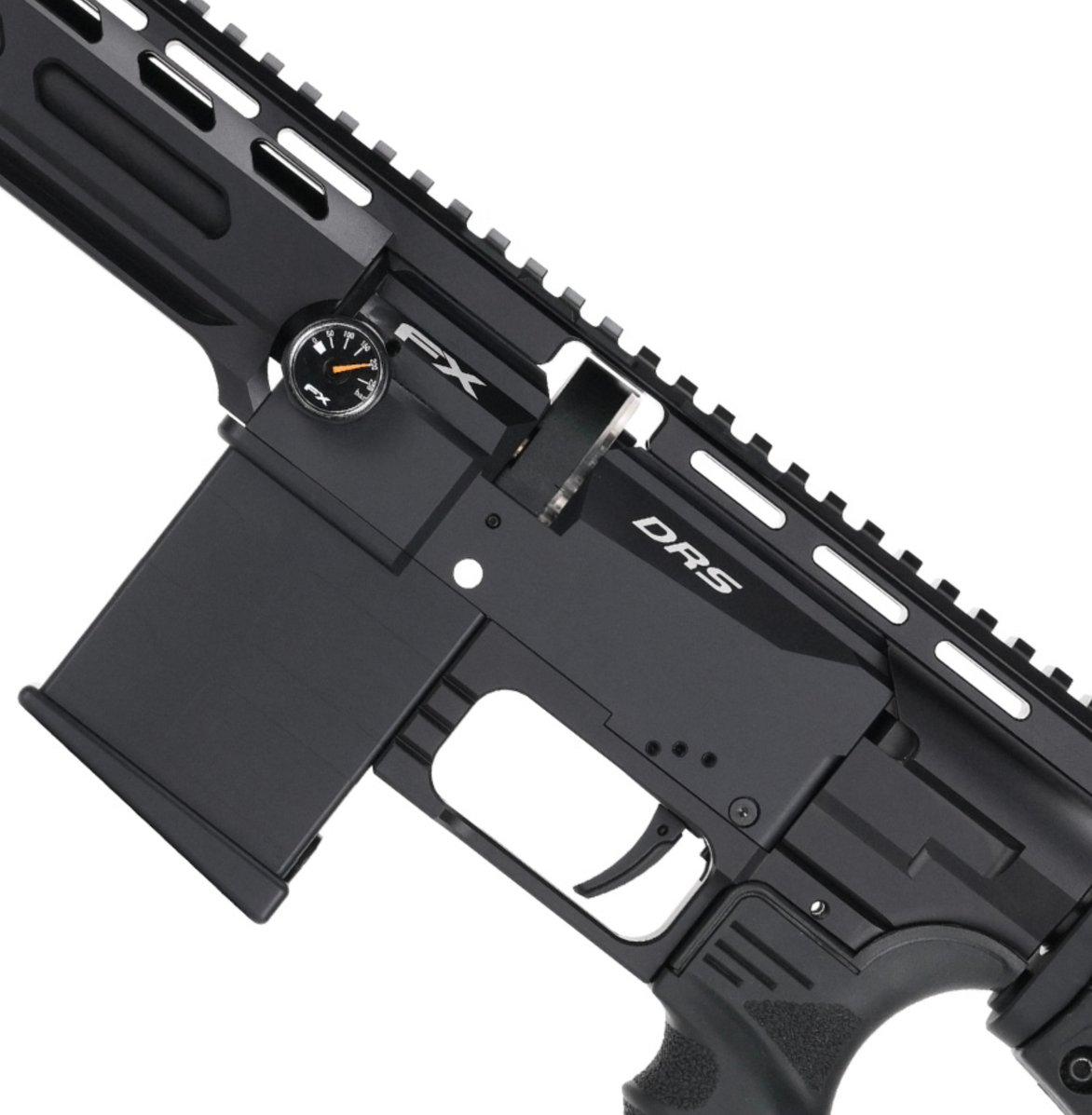

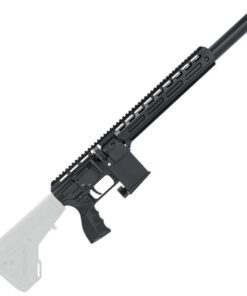


FX DRS Tactical 500 Airguns

$1,000.00
FX DRS Tactical 500 Airguns New without Stock
The New FX DRS Tactical – The Latest Innovation in The DRS Platform
The FX DRS Tactical takes the incredibly successful DRS platform and redefines versatility by using an AR15 inspired design.
Tactical Design Through and Through
Featuring a cutting-edge design, tactical functionality and industry leading performance. The AR15 design features a fully enclosed handguard rail system that provides a secure grip and unparalleled adaptability. The handguard features an arca rail at the bottom and a full length upper picatinny rail that allows for seamless mounting of both optics and accessories. To make the DRS Tactical even easier to use, there are quick disconnect sling mounts on the rail.
Improved Efficiency and Ergonomics
The DRS Tactical features a newly designed plenum that overall is smaller than the one found on the DRS Pro, whilst still delivering incredible efficiency. By optimising the airflow and performance of the plenum, the rifle achieves a higher shot count whilst maintaining the power needed for pellet shooting, and being capable of shooting slugs. Being equipped with FXs UG1 grip, with moulded finger grooves and rubberised over–mould, comfort and control is perfect in any shooting scenario. By being an AR15 style air rifle, the grip can be swapped out to your favourite aftermarket grip if desired.
Customisation Unleashed
Being a tactical airgun means a design perfect for the user. A main feature is that the rifle can accept a Mil-Spec Buffer Tube which allows users to attach their preferred AR15 compatible buttstock. By being able to add a buttstock to the rifle allows the user to also use it without if preferred making it a large pistol; additionally being able to add an AR15 style adaptor can add folding capability or other required functionality. This means the rifle is both able to be customisable whilst keeping the cost down for the user as they aren’t paying for a stock they will not use!
- AR15 Platform Allows Customisation
- Revolutionary Design
- Premium Rifle at Unbeatable Price
Product Features
FX DRS Tactical 500 Airguns – Premium 500mm PCP Air Rifle with Superior Precision, Advanced Regulator Technology and Tactical Engineering


The FX DRS Tactical 500 Airguns combines innovative Swedish engineering, modern tactical styling and sophisticated compressed-air technology in a compact, precision-oriented shooting platform.
Designed for enthusiasts who appreciate high-quality construction and dependable performance, this pcp air rifle introduces an advanced Air Pressure Barrel system, adjustable regulator and ergonomic chassis.
Furthermore, its 500mm barrel balances practical handling dimensions with the benefits of FX’s established Smooth Twist X barrel technology.
Unlike a conventional pellet gun, the rifle incorporates an air reservoir positioned around the barrel, creating a streamlined external appearance.
Consequently, the design offers a distinctive alternative to traditional configurations while maintaining the handling characteristics expected from premium sporting equipment.
2. Advanced Technical Specifications and Precision Features
Engineering Details That Make the Difference
The 500mm configuration incorporates carefully developed components intended to support consistency, comfort and reliability.
Important product specifications include:
- Manufacturer: FX Airguns, Sweden.
- Operating system: Precharged pneumatic.
- Barrel length: 500mm / 19.7 inches.
- Available original-model calibres: .177, .22 and .25.
- Barrel technology: Superior Smooth Twist X liner.
- Air capacity: Approximately 210cc.
- Maximum filling pressure: 230 bar / 3,335 PSI.
- Regulator: FX AMP MKII.
- Trigger: Adjustable two-stage design.
- Loading mechanism: Smooth sidelever.
- Magazine capacity: 16 rounds (.177), 14 rounds (.22) or 12 rounds (.25).
- Optics interface: Picatinny rail.
- Chassis: Tactical-style construction with accessory-mounting provisions.
Actual specifications depend on the version and regional configuration.
3. Tactical Airgun Engineering and Modern Ergonomic Design
Why the Tactical Chassis Matters
Modern airgun tactical, air gun tactical, air tactical, tactical air guns, and tactical air rifle designs emphasize adaptability, structural rigidity and comfortable handling.
The rifle combines an AR-inspired chassis with an extended upper optics rail, ergonomic grip and practical accessory provisions.
Additionally, the handguard incorporates mounting features suitable for compatible sporting accessories.
Searches involving fx drs tactical accessories, air gun suppressor, solofish, and solofish laser light combo reflect interest in aftermarket equipment, although individual compatibility must be confirmed.
The result is a sophisticated sporting platform that emphasizes practical customization without sacrificing its streamlined design.
4. Comparing Compact Pneumatic Platforms and Specialized Designs
Understanding Alternative Equipment Categories
Enthusiasts frequently compare this design with umarex notos, notos airgun, western rattler bullpup, mp30, mordax venom, barra 250z europe, tex rex, and slug hammer.
Other research terms include bintac t9, bintac t9 price, bintac t9 full auto, bintac s45, bintac t50, aea bintac t50 extreme, bintac mcar, bintec m50, b&w m50, tac 9, and tac-9.
Similarly, searches such as m50 vs evanix viper for sale usa, air ordnance smg 22, smg 22, full auto pellet gun, and huben gk1 price in usa involve substantially different operating configurations.
Therefore, prospective owners should compare actual specifications rather than assuming these platforms offer identical capabilities.
5. Large-Calibre Airguns and Pneumatic Performance Differences
Understanding Calibre and Equipment Classification
Searches involving aea zeus air rifle, aea zues, zeus air rifle, zeus air gun, aea zeus tactical, aea zeus mk2, zeus mk2, zeus mk2 .72cal air rifle, and zeus mk2 .72 cal air rifle concern substantially larger pneumatic platforms.
Related phrases include 72 caliber aea zeus, 72 caliber air rifle, .72 cal air rifle, aea zeus 72 cal, aea zeus 72 caliber, aea zeus 72, zeus 72 cal air rifle, and zeus 72 cal air rifle price.
Similarly, aea megalodon, aea megalodon air rifle, megalodon air rifle, aea megalodon 50 cal, aea megalodon 50 caliber, aea megalodon .58 cal, and aea megalodon 50 cal price describe large-bore equipment.
Additional searches include 50 cal air rifle, 50 caliber air rifle, 50 cal air pistol, 9mm air rifle, 9mm air gun, 9mm pellet gun, 9mm air pistol, and high powered air gun.
These categories differ significantly from the standard sporting configuration described here.
6. Specialized Pneumatic Equipment and Alternative Accessories
Understanding Different Product Applications
Other pneumatic products include aea harpoon, aea harpoon price, aea harpoon magnum, aea harpoon shotgun, aea harpoon gun, aea harpoon for sale, aa harpoon, and harpoon air gun.
Related equipment classifications include air shotgun, airgun shotgun, air shot gun, air powered shotgun, double barrel air gun, air crossbow, and pneumatic crossbow.
Additional searches involve x68, x68 pistol, x68 pistelle, pistelle x68, pistelle x 68, pistelle x 68 for sale, pistelle x 68 kaufen, and pistolé.
Meanwhile, aea terminator, aea defender lethal airgun, pneumatic air gun, and only air gun describe varied product categories.
Search terms such as self defense air gun, self defense air pistol, self defense air guns, air gun for self defense, and airgun for self defense concern a different intended use. This sporting rifle should not be represented as a personal-protection product.
7. Why Choose the FX DRS Tactical 500?
The greatest strengths of this design include its 500mm precision barrel, regulated air delivery, smooth sidelever mechanism and rigid tactical chassis.
Furthermore, the adjustable trigger and practical ergonomic features support comfortable operation during organized target shooting.
Its integrated air-cylinder design creates a distinctive profile, while the modular architecture accommodates different approved sporting configurations.
Ultimately, the FX DRS Tactical 500 delivers an impressive combination of Swedish engineering, mechanical consistency, premium construction and practical versatility for precision-focused recreational shooting.
Advanced Precision Engineering, Superior Barrel Technology, Exceptional Shooting Accuracy and Long-Term Performance
1. Understanding the Engineering Behind Exceptional Shooting Performance
Modern precision air rifles represent an impressive combination of mechanical innovation, sophisticated pneumatic technology and carefully developed ergonomic design. Every essential component contributes to the overall shooting experience, from the barrel and regulated air system to the trigger, receiver and supporting chassis.
A well-engineered sporting rifle should provide dependable mechanical operation, consistent performance and comfortable handling throughout regular recreational use. Furthermore, its construction should allow the shooter to maintain confidence in the equipment without unnecessary complexity.
One of the most important characteristics of a modern pneumatic platform is the relationship between compressed-air delivery and barrel performance. The air system provides the energy necessary to propel a projectile, while the barrel establishes its initial direction and rotational stability.
Consequently, precision depends on how effectively these components function together.
The design also incorporates an unconventional compressed-air reservoir arrangement that contributes to its distinctive appearance. Rather than positioning a traditional exposed reservoir beneath the barrel, the system integrates air storage around the barrel assembly.
This engineering approach creates a streamlined profile while maintaining the functional advantages of compressed-air propulsion.
Why Integrated Engineering Matters
A precision-oriented rifle cannot achieve consistent results through one component alone.
Barrel quality, pressure regulation, trigger characteristics and stock geometry all influence the shooting experience. Additionally, ammunition compatibility and environmental conditions affect practical results.
Therefore, the most effective design balances several engineering requirements rather than concentrating exclusively on maximum velocity.
A stable mechanical platform provides the foundation for repeatability, while ergonomic comfort helps users maintain natural handling during supervised recreational activities.
Ultimately, integrated engineering contributes to dependable operation, practical versatility and long-term ownership satisfaction.
2. Advanced Barrel Construction and Precision Manufacturing
Why Barrel Quality Is Essential
The barrel plays a central role in determining how consistently a sporting rifle performs.
During firing, compressed air accelerates the projectile through the bore. Meanwhile, the internal rifling imparts rotational movement that helps stabilize the projectile during flight.
The quality of this interaction depends on barrel geometry, internal surface condition and projectile compatibility.
Furthermore, manufacturing precision contributes to consistent engagement between the projectile and the rifling.
A carefully manufactured barrel should provide predictable mechanical characteristics when suitable ammunition is used.
However, even advanced barrel technology cannot eliminate every source of variation.
Changes in projectile dimensions, environmental conditions and equipment maintenance can affect results.
Understanding Barrel Length and Practical Handling
Barrel length influences the physical dimensions and balance of a sporting rifle.
A medium-length configuration can offer a practical compromise between compact handling and the operating characteristics associated with longer barrel assemblies.
Furthermore, a manageable overall length may improve convenience during transportation and supported shooting.
However, longer barrels do not automatically guarantee superior accuracy.
The quality of manufacturing, air delivery and projectile compatibility remains equally important.
Consequently, barrel length should be evaluated alongside the complete design rather than treated as an independent measure of performance.
3. Innovative Air Storage and Streamlined External Construction
How Integrated Air Storage Changes the Design
One of the most distinctive engineering characteristics of this platform is the placement of its compressed-air reservoir.
Traditional pneumatic rifles commonly position the main air cylinder beneath the barrel or within a separate external bottle assembly.
By comparison, an integrated barrel-surrounding reservoir creates a different external arrangement.
Consequently, the rifle achieves a streamlined appearance without relying on the familiar silhouette of a conventional exposed air cylinder.
Furthermore, this arrangement contributes to the overall identity of the design.
The result is a sporting platform that combines contemporary styling with established compressed-air operating principles.
Why Air Reservoir Design Matters
Air reservoir construction influences the amount of compressed air available for operation.
Its capacity, approved working pressure and integration with the regulator all contribute to the rifle’s intended performance.
However, storage capacity should not be confused with guaranteed shot count.
Practical air consumption depends on the rifle’s power configuration, operating pressure and mechanical efficiency.
Therefore, advertised performance figures should always be considered alongside the specifications of the particular model.
Owners must also respect the manufacturer’s maximum filling pressure and reservoir maintenance requirements.
4. Regulated Air Delivery and Shot-to-Shot Consistency
Understanding the Importance of Pressure Regulation
Compressed-air propulsion depends on the controlled release of stored energy.
A regulator helps manage the pressure supplied to the firing mechanism while sufficient reservoir pressure remains available.
Consequently, the system can provide more predictable operation throughout the regulated portion of its working range.
This consistency is important because variations in propulsion pressure may influence projectile velocity.
Furthermore, predictable air delivery supports repeatable mechanical behavior during organized target shooting.
However, regulation cannot eliminate every source of performance variation.
Ammunition differences, temperature changes and mechanical condition may still influence results.
Why Consistency Supports Precision
Precision involves producing repeatable results under comparable conditions.
A stable air supply reduces one potential source of inconsistency.
Additionally, predictable mechanical operation allows users to evaluate the effects of ammunition and environmental conditions more clearly.
Nevertheless, mechanical consistency should not be mistaken for guaranteed accuracy.
The shooter’s experience, equipment condition and target environment remain important.
A carefully regulated system provides a dependable foundation rather than replacing the need for responsible practice.
5. Precision Trigger Engineering and Controlled Mechanical Release
Why Trigger Characteristics Matter
The trigger creates the final mechanical interaction that initiates a shot.
Its design influences how naturally the shooter can operate the rifle without introducing unnecessary movement.
A predictable trigger mechanism contributes to familiarity during recreational shooting.
Furthermore, consistent mechanical resistance can help users recognize normal operation.
However, trigger performance should not be evaluated solely through minimum release weight.
Reliability, safety and mechanical predictability are equally important.
The Benefits of an Adjustable Design
An adjustable trigger allows certain operating characteristics to be adapted within the manufacturer’s intended specifications.
This flexibility can accommodate different personal preferences.
Furthermore, a suitable trigger arrangement contributes to comfortable handling during structured target activities.
Nevertheless, adjustments must never compromise the intended safety characteristics.
Unauthorized modifications may create serious hazards.
Therefore, internal servicing and adjustments should follow manufacturer guidance and be performed by qualified personnel where appropriate.
6. Smooth Mechanical Loading and Convenient Operation
Understanding the Sidelever Mechanism
A sidelever mechanism provides a practical interface for operating the rifle’s loading system.
Its construction allows the user to perform the intended cocking and loading cycle through a dedicated external control.
Furthermore, a well-manufactured mechanism should provide predictable movement without unnecessary resistance.
This contributes to the overall handling experience during organized recreational shooting.
However, mechanical smoothness depends on correct maintenance and compatible components.
Unexpected resistance should never be overcome through excessive force.
Why Reliable Feeding Matters
The feeding mechanism must present compatible projectiles correctly during normal operation.
Consequently, magazine condition and ammunition compatibility influence reliability.
Damaged projectiles or unsuitable dimensions may interfere with the intended loading cycle.
Furthermore, contamination can affect the movement of internal components.
Routine inspection helps preserve normal operation.
If a feeding problem occurs, the user should stop and follow the manufacturer’s approved safety procedures before further use.
7. Tactical Chassis Construction and Structural Stability
Why a Rigid Chassis Is Important
The chassis provides structural support for the rifle’s principal components.
Its design influences the relationship between the action, stock and external accessories.
A carefully manufactured chassis helps maintain the intended assembly geometry.
Furthermore, suitable materials provide resistance to normal handling and environmental exposure.
However, structural rigidity should not be interpreted as immunity to damage.
Substantial impacts or unauthorized modifications can affect equipment condition.
The Benefits of Modern Materials
Modern sporting chassis systems frequently incorporate durable metal and polymer components.
These materials offer different combinations of structural strength, weight and corrosion resistance.
Furthermore, their manufacturing flexibility allows designers to incorporate ergonomic surfaces and accessory provisions.
Consequently, a modern chassis can support practical customization without relying on extensive permanent alterations.
However, all accessories must remain compatible with the original equipment.
The manufacturer’s specifications should determine acceptable mounting arrangements.
8. Ergonomic Comfort and Natural Handling Characteristics
Understanding the Importance of Stock Geometry
Stock geometry influences how comfortably a shooter can handle sporting equipment.
The relationship between the shoulder support, pistol grip and sighting position affects overall fit.
Consequently, a design that supports natural positioning may reduce unnecessary muscular strain.
Furthermore, suitable contact surfaces contribute to secure handling.
These characteristics become particularly important during extended recreational sessions.
However, ergonomic comfort remains subjective.
Different users may prefer different dimensions and stock configurations.
Why Adjustability Adds Practical Value
Adjustable ergonomic components provide flexibility for individual preferences.
Depending on the installed configuration, the stock may offer features intended to improve personal fit.
Furthermore, compatible components may allow users to select arrangements suited to their physical dimensions.
However, customization should never interfere with safety controls or mechanical operation.
Accessories must remain appropriate for the original design.
The purpose of ergonomic adjustment is to improve comfort while preserving dependable functionality.
9. Weight Distribution and Balanced Shooting Comfort
Why Overall Balance Matters
The total weight of a rifle influences portability, but weight distribution also affects how naturally it handles.
A design with substantial forward weight may feel different from one with more centrally distributed mass.
Consequently, balance can influence comfort during transportation and supported shooting.
Furthermore, the installation of optical equipment and accessories can change the overall handling characteristics.
Therefore, accessory selection should consider both functionality and additional weight.
Understanding Comfort During Longer Sessions
Extended recreational activities can involve repeated handling, observation and preparation.
A balanced platform may reduce unnecessary physical strain.
Additionally, appropriate stock geometry helps support natural positioning.
However, comfortable equipment does not eliminate the need for regular breaks and responsible handling.
The most suitable configuration depends on the intended sporting activity and individual preferences.
10. Optical Compatibility and Target Visibility
Why Optical Quality Matters
A suitable optical sight provides a clear visual reference during recreational target shooting.
Image clarity, appropriate magnification and dependable mechanical construction influence the overall viewing experience.
Furthermore, optical compatibility depends on the rifle’s mounting arrangement.
An appropriate mounting interface provides a secure foundation for compatible equipment.
However, not every optical system offers the same physical dimensions or mounting requirements.
Therefore, compatibility should be verified before purchase.
Understanding Practical Optical Selection
Optical equipment should match the intended shooting environment.
Higher magnification does not automatically provide superior practical performance.
Field of view, eye relief and image clarity can be equally important.
Furthermore, additional optical weight may influence balance.
Consequently, equipment selection should prioritize compatibility and comfortable viewing rather than maximum magnification alone.
11. Accessory Compatibility and Modular Design Benefits
Why Modularity Is Valuable
A modular sporting platform allows compatible components to be incorporated according to individual requirements.
This can improve practical versatility while preserving the original mechanical design.
Furthermore, standardized mounting provisions may simplify the installation of approved accessories.
However, modularity does not mean that every aftermarket component is suitable.
Differences in dimensions, attachment methods and operating requirements can affect compatibility.
Maintaining Safe Accessory Arrangements
Accessories should never obstruct safety controls, interfere with moving parts or compromise secure handling.
Furthermore, additional components must remain appropriate for the equipment’s intended application.
Manufacturer-approved mounting solutions provide the preferred approach.
Improvised alterations should be avoided.
A well-planned accessory arrangement emphasizes practical utility without introducing unnecessary complexity.
12. Understanding Ammunition Quality and Performance Consistency
Why Projectile Manufacturing Matters
Projectile quality can influence the consistency of recreational shooting results.
Differences in dimensions, mass and shape may affect interaction with the barrel.
Furthermore, damaged ammunition can interfere with feeding.
Consequently, compatible projectiles should meet the manufacturer’s requirements.
However, no single ammunition type produces identical results under every condition.
Environmental factors and individual equipment characteristics remain relevant.
Protecting Ammunition Quality
Appropriate storage helps preserve the physical condition of projectiles.
Suitable containers reduce exposure to contamination and deformation.
Furthermore, clean and undamaged ammunition contributes to dependable feeding.
However, ammunition should always be secured against unauthorized access.
Responsible storage supports both equipment reliability and general safety.
13. Environmental Conditions and Their Influence on Performance
Understanding Temperature Effects
Temperature can influence compressed-air pressure and mechanical behavior.
Consequently, environmental changes may affect performance.
Furthermore, extreme temperatures can influence seals and other materials.
Owners should follow the manufacturer’s approved operating and storage conditions.
Appropriate environmental awareness helps preserve mechanical reliability.
Wind and Outdoor Shooting Conditions
Outdoor recreational activities introduce variables that may influence projectile flight.
Wind, lighting and weather conditions can affect observed results.
Consequently, performance may differ between indoor and outdoor facilities.
However, these variations do not necessarily indicate a mechanical defect.
Responsible shooters should understand the limitations of their equipment and select appropriate authorized locations.
14. Mechanical Maintenance and Long-Term Durability
Why Routine Care Is Essential
Precision equipment requires appropriate maintenance to preserve its intended operating characteristics.
Moving components experience wear, while seals and pressure-containing assemblies may deteriorate over time.
Consequently, regular inspection helps identify potential problems.
Furthermore, the exterior should remain protected against unnecessary moisture and contamination.
Manufacturer-approved maintenance provides the appropriate foundation for continued serviceability.
Understanding Barrel Maintenance
The barrel should receive attention according to the manufacturer’s recommendations.
However, excessive cleaning can introduce unnecessary wear.
Aggressive materials may damage sensitive internal surfaces or the muzzle crown.
Therefore, suitable cleaning methods and approved products should be preferred.
The objective is to preserve the barrel’s condition without interfering with its manufactured characteristics.
15. Compressed-Air Filling and Pressure Safety
Why Correct Filling Equipment Matters
The compressed-air reservoir must receive air through equipment suitable for its approved working pressure.
Furthermore, the filling connection must correspond to the manufacturer’s specifications.
An incompatible fitting can create serious hazards.
Consequently, owners should verify compatibility before using external filling equipment.
Understanding Safe Pressure Limits
Every pressure-containing reservoir has a defined maximum working pressure.
This limit must never be exceeded.
Additionally, pressure gauges should remain in suitable condition.
Unexpected readings or suspected leakage should prompt inspection.
Internal pressure-system servicing should remain the responsibility of qualified professionals.
Responsible pressure management protects both the equipment and its users.
16. Secure Storage and Transportation Requirements
Why Safe Storage Matters
Sporting rifles require secure storage to prevent unauthorized access.
A suitable locked arrangement should meet applicable legal requirements.
Furthermore, ammunition should remain secured according to relevant safety guidance.
Environmental protection also contributes to equipment condition.
Dry storage helps reduce unnecessary corrosion and deterioration.
Protecting Equipment During Transportation
A suitable protective case helps reduce exposure to impacts and contamination.
Furthermore, the rifle should remain in the transport condition required by local law.
Owners should avoid placing unnecessary pressure on the barrel, optical equipment or external components.
Careful handling preserves the physical condition of the complete assembly.
17. Practical Applications in Organized Sporting Environments
Recreational Target Shooting
Organized target shooting provides an opportunity to evaluate mechanical consistency and handling comfort.
A precision-oriented sporting platform can support participation in suitable recreational disciplines.
Furthermore, structured environments encourage responsible equipment use.
However, all activities should take place at authorized facilities with appropriate backstops and safety procedures.
Club Activities and Supervised Practice
Shooting clubs provide access to established safety rules and qualified instruction.
Furthermore, organized participation allows enthusiasts to develop familiarity with their equipment.
Reliable mechanical operation contributes to a positive recreational experience.
However, competition eligibility depends on the specific rules governing each discipline.
Owners should verify technical requirements before participating.
18. Evaluating Long-Term Ownership Value
Why Purchase Price Is Only One Consideration
The initial purchase price represents only part of the total ownership investment.
Maintenance, compatible accessories, secure storage and professional servicing may create additional costs.
Furthermore, the availability of approved replacement components influences long-term value.
Consequently, buyers should consider the complete ownership experience.
The Importance of Manufacturer Support
Clear documentation helps owners understand technical specifications and maintenance requirements.
Furthermore, authorized servicing supports the preservation of mechanical integrity.
Access to appropriate replacement components can simplify future maintenance.
A dependable support network contributes to long-term confidence.
19. Understanding the Relationship Between Precision and Reliability
Why Consistency Matters More Than Maximum Power
Maximum energy output does not independently determine practical accuracy.
Barrel quality, pressure regulation, ammunition consistency and mechanical condition all influence performance.
Furthermore, environmental conditions and user experience affect results.
Consequently, a balanced engineering approach offers greater practical value than focusing exclusively on maximum output.
The Benefits of Predictable Operation
A predictable mechanical system supports confidence during supervised recreational use.
Furthermore, consistent controls and comfortable ergonomics improve the overall experience.
However, reliability depends on appropriate maintenance and responsible operation.
The equipment must remain within its intended specifications.
20. Final Assessment of Advanced Engineering and Overall Performance
Understanding the Complete Design
A modern precision-oriented sporting rifle brings together several important engineering characteristics.
The barrel provides the mechanical foundation for projectile guidance, while regulated compressed air supports predictable propulsion.
Furthermore, the trigger and loading mechanism contribute to controlled operation.
The chassis establishes structural support, and ergonomic components influence handling comfort.
Together, these features create a carefully integrated platform.
Why Innovative Construction Matters
Unconventional air-reservoir placement demonstrates how manufacturers can reconsider traditional equipment layouts.
Furthermore, modern materials and precision manufacturing support practical design flexibility.
However, innovative construction must remain dependable throughout regular use.
The success of the arrangement depends on its ability to maintain intended performance characteristics without unnecessary complexity.
Long-Term Ownership and Dependability
A premium sporting platform should offer reliable operation, suitable ergonomics and accessible maintenance support.
Furthermore, compatible accessories can provide useful flexibility.
However, modifications must preserve the manufacturer’s original safety requirements.
Regular inspection helps maintain equipment condition, while professional servicing addresses internal mechanical concerns.
Responsible storage and transportation contribute to long-term durability.
Overall Precision and Shooting Experience
Precision is the result of several interacting factors rather than one isolated specification.
Stable compressed-air delivery supports consistency, while a carefully manufactured barrel contributes to predictable projectile behavior.
Furthermore, comfortable ergonomics can make recreational shooting more enjoyable.
A dependable trigger and loading mechanism also support familiarity during regular use.
Nevertheless, even sophisticated equipment requires appropriate ammunition, suitable environmental conditions and responsible handling.
The strongest designs successfully balance mechanical performance with practical usability.
Rather than concentrating exclusively on maximum power, they emphasize consistency, comfort and structural reliability.
Why Quality Engineering Provides Lasting Value
High-quality manufacturing establishes a foundation for long-term performance.
Appropriate materials resist ordinary wear, while precision assembly supports consistent mechanical interaction.
Furthermore, thoughtful ergonomics help accommodate individual preferences.
Modular construction introduces additional flexibility when compatible accessories are selected.
However, long-term value also depends on manufacturer support, maintenance and appropriate servicing.
A well-maintained sporting rifle can continue providing dependable recreational performance throughout its useful life.
Ultimately, the most important advantages of advanced pneumatic engineering are consistent air delivery, carefully manufactured barrel components, reliable mechanical operation and comfortable handling.
These qualities combine to create a sophisticated shooting platform suitable for authorized recreational activities.
Its value comes from the relationship between innovation and practicality.
The integrated air system contributes to a distinctive design, while the precision barrel and regulated mechanism provide a strong mechanical foundation.
Additionally, the tactical-style chassis offers structural support and practical versatility.
When operated responsibly and maintained according to manufacturer instructions, the complete system can deliver a rewarding ownership experience.
For enthusiasts who appreciate premium manufacturing, modern design and dependable sporting performance, this engineering approach provides an excellent combination of functionality, comfort and long-term serviceability.
Advanced Shooting Comfort, Innovative Mechanical Engineering, Exceptional Build Quality and Long-Term Performance
1. Understanding the Importance of Precision Engineering in Modern Shooting Equipment
Modern sporting rifles combine advanced manufacturing techniques, innovative mechanical systems and carefully developed ergonomic features to provide dependable recreational performance. Each component contributes to the overall experience, making engineering quality an important consideration for enthusiasts who appreciate precision, consistency and reliable operation.
A thoughtfully designed shooting platform must balance several essential characteristics. The barrel should provide consistent projectile guidance, while the compressed-air system must deliver predictable mechanical performance. Furthermore, the trigger mechanism, receiver and supporting chassis should operate together without unnecessary interference.
Consequently, successful engineering requires more than simply incorporating advanced components. The entire assembly must function as a coordinated system.
Another important consideration involves the relationship between mechanical complexity and practical usability. Although sophisticated technology can offer valuable advantages, unnecessary complexity may increase maintenance requirements without providing meaningful improvements.
Therefore, well-designed equipment should combine technical innovation with straightforward operation.
Why Mechanical Integration Matters
Mechanical integration influences the relationship between individual components and overall performance.
A carefully manufactured barrel provides limited practical value when other components fail to maintain consistent operating conditions.
Similarly, an efficient compressed-air system cannot independently guarantee precision when the supporting structure lacks stability.
For this reason, manufacturers must consider the complete relationship between pressure regulation, barrel alignment, trigger characteristics and ergonomic construction.
Furthermore, suitable materials help maintain component integrity throughout normal use.
These characteristics contribute to a dependable foundation for recreational target activities.
2. The Importance of Barrel Manufacturing and Structural Consistency
How Barrel Quality Influences Performance
Barrel construction plays a fundamental role in the performance of precision-oriented sporting equipment.
The barrel provides a controlled pathway for the projectile during acceleration and establishes its initial direction as it leaves the muzzle.
Furthermore, internal rifling introduces rotational movement that supports projectile stability during flight.
The consistency of this process depends on dimensional accuracy, internal surface condition and ammunition compatibility.
Consequently, carefully manufactured barrels can contribute to predictable mechanical behavior.
However, barrel quality alone cannot eliminate every source of variation.
Environmental conditions, projectile manufacturing differences and the condition of other mechanical components remain important.
Why Barrel Protection Matters
A precision-manufactured barrel requires appropriate handling and maintenance.
Substantial impacts may damage sensitive components or affect the relationship between the barrel and supporting structure.
Furthermore, unsuitable cleaning methods can damage internal surfaces.
Owners should therefore follow manufacturer-approved maintenance recommendations.
The muzzle crown deserves particular protection because damage in this area may affect projectile departure.
Appropriate storage and transportation help preserve the condition of the complete barrel assembly.
3. Advanced Pneumatic Technology and Controlled Air Delivery
Understanding Compressed-Air Propulsion
Compressed-air propulsion relies on stored pneumatic energy rather than a conventional mainspring.
During normal operation, the system releases a controlled quantity of compressed air to propel the projectile.
Consequently, the rifle can produce a relatively smooth firing cycle with limited mechanical vibration.
Furthermore, modern pressure-management systems help maintain predictable operation throughout the appropriate working range.
However, performance depends on several variables, including reservoir pressure, regulator condition and operating temperature.
Why Pressure Regulation Supports Consistency
A regulator helps control the pressure supplied to the firing mechanism.
While sufficient reservoir pressure remains available, this arrangement can reduce variations in air delivery.
Consequently, the system provides a more consistent mechanical foundation for successive shots.
Nevertheless, regulation does not guarantee identical projectile velocities.
Ammunition tolerances, environmental conditions and component wear may still influence results.
The practical benefit lies in reducing one important source of performance variation.
4. The Relationship Between Air Reservoir Design and Practical Performance
Why Reservoir Construction Matters
The compressed-air reservoir performs an essential function by storing the energy required for pneumatic operation.
Its capacity and approved working pressure influence the quantity of air available during use.
Furthermore, the reservoir’s physical arrangement contributes to the equipment’s overall dimensions and weight distribution.
Modern designs may incorporate unconventional reservoir placement to create a streamlined appearance.
However, the effectiveness of such construction depends on proper engineering and pressure containment.
Understanding Air Capacity and Shot Availability
The number of usable shots depends on several characteristics.
These include reservoir capacity, operating pressure, power configuration and mechanical efficiency.
Consequently, advertised shot counts should be treated as configuration-dependent estimates rather than universal guarantees.
Furthermore, environmental temperature may influence pressure behavior.
Owners should follow manufacturer guidance concerning filling pressure and reservoir maintenance.
Pressure-bearing components must never undergo unauthorized modifications.
5. Ergonomic Design and Comfortable Handling Characteristics
Why Proper Fit Matters
Ergonomic construction influences how naturally sporting equipment fits the individual.
The relationship between the stock, shoulder support and grip affects handling comfort.
Furthermore, suitable cheek support helps establish a comfortable relationship between the user’s eye and the sighting system.
A properly fitted platform can reduce unnecessary muscular strain during extended recreational activities.
However, individual preferences vary.
Differences in body dimensions and physical strength influence how comfortable a particular configuration feels.
Benefits of Adjustable Components
Adjustable ergonomic features provide flexibility for individual requirements.
Depending on the configuration, users may have access to different stock positions or interchangeable components.
Furthermore, compatible arrangements can improve comfort without requiring permanent alterations.
However, adjustments must remain within the manufacturer’s specifications.
No accessory should interfere with safety controls or mechanical operation.
The objective is to improve personal comfort while preserving the intended characteristics of the equipment.
6. Trigger Engineering and Predictable Mechanical Release
Understanding Trigger Quality
The trigger mechanism provides the final mechanical action that initiates a shot.
Its characteristics influence how naturally the shooter can operate the equipment during supervised recreational activities.
A predictable trigger contributes to familiarity and controlled handling.
Furthermore, consistent mechanical resistance supports a recognizable operating feel.
However, trigger quality should not be evaluated solely according to minimum release force.
Mechanical reliability and safety remain equally important.
Why Appropriate Adjustment Matters
Some trigger designs provide adjustment options within approved limits.
These features may accommodate different handling preferences.
However, unauthorized modifications can compromise mechanical safety.
Consequently, adjustments should follow manufacturer instructions.
Qualified technicians should perform internal servicing when necessary.
A reliable trigger mechanism should remain predictable without sacrificing safe operation.
7. Reliable Loading Systems and Mechanical Convenience
How Repeating Mechanisms Improve Practicality
A repeating mechanism provides convenience during organized shooting activities.
Compatible projectiles can remain inside a dedicated magazine, reducing the need for individual manual insertion before every shot.
Furthermore, a smooth mechanical loading system contributes to predictable operation.
However, reliability depends on correct magazine condition and suitable ammunition.
Damaged projectiles or inappropriate dimensions may interfere with feeding.
Maintaining Mechanical Reliability
The loading mechanism should operate without abnormal resistance.
Unexpected difficulty may indicate contamination, component wear or unsuitable ammunition.
Consequently, excessive force should never be used to overcome a malfunction.
The equipment should be made safe according to manufacturer instructions before inspection.
Professional servicing may become necessary when normal operation cannot be restored safely.
8. Modern Chassis Construction and Mechanical Stability
Why a Strong Supporting Structure Matters
The chassis provides structural support for the principal mechanical components.
Its design influences the relationship between the receiver, stock and accessory interfaces.
Furthermore, suitable materials help maintain dimensional stability during ordinary use.
A carefully manufactured structure contributes to dependable assembly integrity.
However, no chassis should be considered immune to damage.
Substantial impacts or unauthorized modifications can affect its condition.
Understanding Material Selection
Modern sporting equipment frequently combines metal and polymer components.
These materials provide different characteristics concerning weight, durability and environmental resistance.
Furthermore, advanced manufacturing methods allow designers to incorporate ergonomic contours and accessory provisions.
However, additional equipment must remain compatible with the original design.
Structural integrity and safe operation should take priority over appearance.
9. Weight Distribution and Comfortable Equipment Balance
Why Balance Influences Handling
Weight distribution affects how naturally a rifle feels during handling.
Equipment with substantial forward weight may feel different from a configuration with more centrally distributed mass.
Consequently, individual users may develop different preferences.
Furthermore, optical equipment and accessories can influence the overall balance.
The most suitable arrangement depends on physical comfort and intended recreational use.
Reducing Unnecessary Fatigue
Extended shooting sessions may involve considerable time spent handling and transporting equipment.
A manageable configuration can reduce unnecessary physical strain.
Furthermore, comfortable gripping surfaces contribute to secure handling.
However, fatigue can still develop during prolonged activities.
Appropriate breaks and responsible handling remain important.
10. Optical Equipment and Clear Target Observation
Why Image Clarity Matters
Optical sights provide visual references during recreational target activities.
Image quality depends on lens construction, magnification characteristics and suitable adjustment mechanisms.
Furthermore, correct mounting compatibility influences overall reliability.
A stable optical arrangement helps preserve the intended relationship between the sight and equipment.
However, optical quality should not be judged exclusively by maximum magnification.
Understanding Practical Optical Features
Eye relief, field of view and image clarity contribute to comfortable observation.
Furthermore, optical weight can influence handling.
Consequently, accessory selection should reflect the intended activity.
Manufacturer-approved mounting arrangements provide the preferred approach.
Improvised modifications should be avoided.
11. Ammunition Quality and Its Influence on Consistency
Why Manufacturing Quality Matters
Projectiles can vary in dimensions, mass and surface condition.
These differences may influence feeding and flight behavior.
Consequently, compatible ammunition should meet the manufacturer’s specifications.
Furthermore, damaged or contaminated projectiles may interfere with mechanical operation.
Appropriate storage helps preserve ammunition condition.
Understanding Performance Variation
Even when equipment operates correctly, projectile characteristics can affect observed results.
Environmental conditions also influence performance.
Consequently, no single ammunition type should be assumed to provide identical results in every configuration.
Responsible evaluation should consider equipment compatibility and approved recreational conditions.
12. Environmental Conditions and Outdoor Performance
How Temperature Influences Pneumatic Systems
Temperature changes can affect compressed-air pressure.
Furthermore, extreme conditions may influence seals and other materials.
Consequently, equipment should remain within the manufacturer’s approved operating range.
Appropriate environmental awareness contributes to dependable use.
Wind and Weather Considerations
Outdoor recreational shooting introduces additional variables.
Wind can influence projectile flight, while changing light affects visibility.
Furthermore, moisture may affect exposed components.
Therefore, outdoor performance may differ from results observed at controlled indoor facilities.
These differences do not necessarily indicate a mechanical problem.
13. Routine Maintenance and Mechanical Protection
Why Preventive Care Is Important
Preventive maintenance contributes to long-term reliability.
Moving components experience wear, while seals and pressure-containing assemblies may deteriorate over time.
Consequently, periodic inspection helps identify potential concerns.
Furthermore, accessible exterior surfaces should remain protected against unnecessary moisture and contamination.
Manufacturer-approved procedures provide the appropriate basis for maintenance.
Understanding Professional Servicing
Internal pneumatic mechanisms can contain significant stored pressure.
Consequently, unauthorized disassembly creates serious hazards.
Qualified technicians should perform repairs requiring specialized knowledge.
Furthermore, replacement parts should match the manufacturer’s specifications.
Professional servicing helps preserve mechanical integrity and dependable operation.
14. Safe Pressure Management and Filling Compatibility
Why Filling Equipment Must Match
Compressed-air reservoirs require appropriate filling equipment.
The pressure rating of the reservoir determines the maximum permitted filling pressure.
Furthermore, connectors must remain compatible with the manufacturer’s specifications.
A fitting should never be considered suitable solely because it appears physically compatible.
Protecting Pressure-Bearing Components
Pressure-containing components require careful handling.
Unexpected leakage, visible damage or unusual gauge readings should prompt inspection.
Furthermore, owners should never exceed approved pressure limits.
Only suitable compressed air should enter the reservoir according to manufacturer guidance.
These practices contribute to responsible ownership.
15. Secure Storage and Transportation
Why Equipment Security Matters
Sporting rifles should remain inaccessible to unauthorized users.
A suitable locked storage arrangement helps maintain security.
Furthermore, ammunition should remain secured according to applicable requirements.
Storage conditions should also protect the equipment against excessive moisture and temperature extremes.
Protecting Equipment During Travel
A suitable protective case reduces exposure to impacts and contamination.
Furthermore, the equipment must remain in the transportation condition required by local regulations.
Optical components and external accessories should receive appropriate protection.
Careful transportation contributes to long-term durability.
16. Practical Use in Supervised Recreational Environments
Indoor Target Facilities
Indoor ranges offer comparatively controlled environments.
Consequently, participants can evaluate mechanical performance with fewer weather-related disturbances.
Furthermore, organized facilities establish clear safety procedures.
However, equipment must meet the facility’s permitted energy and operating requirements.
Outdoor Sporting Facilities
Outdoor ranges introduce environmental variables that influence recreational activities.
Wind, temperature and lighting can affect observed performance.
Furthermore, suitable backstops and authorized locations remain essential.
Responsible participation requires compliance with all applicable regulations.
Organized Club Activities
Shooting clubs provide structured opportunities for supervised recreational participation.
Furthermore, experienced instructors can explain safe handling procedures and equipment limitations.
Reliable mechanical operation contributes to a positive experience.
However, formal competition eligibility depends on the rules governing each discipline.
17. Understanding Long-Term Ownership Costs
Why Initial Price Is Only One Consideration
The purchase price represents only part of the total investment.
Maintenance, compatible accessories, storage equipment and professional servicing may create additional expenses.
Furthermore, manufacturer support influences long-term practicality.
Consequently, buyers should evaluate the complete ownership experience.
The Importance of Service Availability
Access to qualified technicians helps owners address mechanical concerns.
Furthermore, approved replacement components support reliable servicing.
Clear documentation provides useful information concerning operating limits and maintenance requirements.
These factors contribute to lasting value.
18. Why Consistency Matters More Than Maximum Output
Understanding Practical Performance
Maximum velocity or energy figures cannot independently determine precision.
Barrel construction, air delivery, ammunition compatibility and mechanical condition all influence results.
Furthermore, environmental conditions affect projectile behavior.
Consequently, a balanced design may provide greater practical value than equipment selected exclusively for high advertised power.
The Benefits of Predictable Operation
A dependable system provides consistent mechanical characteristics during normal use.
Furthermore, comfortable ergonomics improve the overall experience.
However, performance remains dependent on responsible handling and suitable maintenance.
The equipment must operate within its intended specifications.
19. Innovation and Its Influence on Modern Sporting Equipment
Why Manufacturers Explore New Designs
Manufacturers continually investigate alternative arrangements for compressed-air storage, mechanical controls and structural components.
These innovations can improve ergonomics, simplify external construction or introduce additional modularity.
Furthermore, modern manufacturing technology allows greater design flexibility.
However, innovation should provide practical benefits rather than complexity alone.
Balancing Modern Features With Reliability
Advanced mechanical features must remain dependable throughout regular use.
Therefore, manufacturers must consider durability, maintenance and component compatibility.
Furthermore, ergonomic improvements should preserve safe handling.
A successful design combines innovation with established engineering principles.
20. Final Assessment of Precision, Comfort and Long-Term Performance
Understanding the Complete Engineering Approach
Modern precision-oriented sporting equipment incorporates several essential systems.
The barrel guides the projectile, while regulated compressed air provides propulsion.
Furthermore, the trigger mechanism controls release, and the supporting chassis maintains structural alignment.
Ergonomic components contribute to comfortable handling.
Together, these characteristics form an integrated mechanical platform.
Why Mechanical Quality Provides Lasting Benefits
Precision manufacturing helps maintain suitable component tolerances.
Furthermore, durable materials resist ordinary handling wear.
Reliable seals and pressure-containing assemblies support intended pneumatic operation.
However, every mechanical system requires appropriate maintenance.
Regular inspection helps preserve equipment condition throughout ownership.
The Importance of Responsible Use
Even sophisticated sporting equipment requires careful handling.
Secure storage prevents unauthorized access, while appropriate transportation reduces unnecessary damage.
Furthermore, use should remain limited to lawful and authorized recreational activities.
Manufacturer instructions must determine operating limits and maintenance requirements.
Overall Performance and Ownership Satisfaction
A high-quality sporting platform should provide a practical balance of mechanical consistency, comfortable handling and dependable construction.
Its value extends beyond individual specifications.
Furthermore, suitable ergonomics can improve the recreational experience, while reliable loading and trigger mechanisms support predictable operation.
Advanced pneumatic technology contributes to controlled air delivery.
However, performance depends on the complete relationship between mechanical components, ammunition and environmental conditions.
No individual feature can guarantee identical results in every circumstance.
Consequently, responsible evaluation should consider the overall engineering design.
Why Balanced Construction Matters
A successful modern rifle combines performance-oriented technology with practical usability.
The supporting chassis should maintain structural integrity, while the barrel and receiver operate according to their intended specifications.
Furthermore, ergonomic features should accommodate individual comfort.
Optional accessories may provide additional flexibility when they remain compatible with the manufacturer’s design.
However, unnecessary modifications can compromise reliability.
Therefore, owners should prioritize approved components and professional servicing.
Long-Term Value Through Quality and Maintenance
Appropriate maintenance contributes to continued mechanical performance.
Regular inspection helps identify developing wear, while proper storage protects vulnerable components.
Furthermore, qualified servicing preserves the integrity of internal assemblies.
The availability of manufacturer support also contributes to ownership confidence.
These factors influence long-term value beyond the initial purchase price.
Final Performance Conclusion
The greatest strength of advanced pneumatic sporting technology lies in its ability to combine controlled air delivery with carefully manufactured mechanical components.
A precision-oriented barrel contributes to predictable projectile guidance, while pressure regulation supports repeatable propulsion.
Furthermore, a dependable trigger and loading mechanism contribute to normal operational consistency.
Comfortable stock geometry improves the handling experience, while durable construction materials support everyday practicality.
However, these benefits must remain balanced with appropriate safety considerations.
The equipment should operate only within its approved pressure and performance limits.
Furthermore, qualified professionals should address internal mechanical problems.
Ultimately, the combination of advanced barrel engineering, consistent pneumatic operation, practical ergonomics and durable construction creates a strong foundation for dependable recreational performance.
When maintained correctly and used responsibly, a carefully engineered sporting rifle can provide years of enjoyable participation in authorized target activities.
Its lasting appeal comes from the relationship between engineering precision, mechanical reliability and practical comfort.
Rather than relying exclusively on maximum output, a well-balanced design emphasizes consistency, serviceability and responsible operation.
These qualities contribute to a rewarding ownership experience while preserving the dependability expected from premium sporting equipment.
Advanced Shooting Performance, Superior Mechanical Construction, Exceptional Ergonomic Comfort and Long-Term Durability
1. Understanding the Relationship Between Engineering Excellence and Practical Performance
Modern precision sporting equipment represents a sophisticated combination of mechanical engineering, innovative construction methods and carefully developed ergonomic features. Every essential component contributes to the overall experience, making the relationship between design quality and practical performance particularly important.
A well-engineered rifle must provide dependable operation while maintaining comfortable handling throughout regular recreational activities. Furthermore, its construction should support consistency without introducing unnecessary mechanical complexity.
The interaction between the barrel, receiver, trigger mechanism and compressed-air system determines how effectively the complete assembly performs. Consequently, manufacturers must consider these components as part of an integrated mechanical platform rather than independent features.
Another important consideration involves long-term durability. Advanced manufacturing techniques can provide excellent dimensional consistency, but proper maintenance remains necessary to preserve mechanical condition.
Why Integrated Engineering Matters
A precision-oriented design must balance several characteristics.
Barrel quality influences projectile guidance, while the pneumatic system provides the energy required for operation. Meanwhile, the trigger mechanism and supporting chassis contribute to controlled handling and structural stability.
Furthermore, suitable materials help maintain component integrity during ordinary use.
However, no individual feature guarantees exceptional results.
The most dependable systems combine consistent mechanical operation with appropriate maintenance and responsible handling.
This balanced approach supports practical functionality and long-term ownership satisfaction.
2. Precision Barrel Construction and Manufacturing Consistency
Understanding the Importance of Barrel Quality
The barrel performs an essential mechanical function by guiding the projectile during acceleration.
Its internal geometry influences how consistently the projectile travels through the bore and establishes its initial direction.
Furthermore, carefully manufactured rifling imparts rotational movement that supports projectile stability during flight.
Consequently, barrel manufacturing quality contributes to the overall precision potential of the equipment.
However, barrel quality alone cannot eliminate every source of variation.
Projectile dimensions, environmental conditions and other mechanical characteristics also influence observed results.
Why Internal Surface Condition Matters
The condition of the internal barrel surface can affect normal operation.
Contamination, inappropriate cleaning materials or physical damage may interfere with the intended interaction between the projectile and the bore.
Therefore, maintenance should follow the manufacturer’s recommendations.
Furthermore, excessive cleaning may introduce unnecessary wear.
The muzzle crown also deserves appropriate protection because damage in this area may influence projectile departure.
A carefully maintained barrel helps preserve the characteristics established during manufacturing.
3. The Benefits of Regulated Compressed-Air Technology
How Pressure Regulation Supports Consistency
Compressed-air propulsion depends on the controlled release of stored pneumatic energy.
A regulator helps maintain relatively consistent working pressure while sufficient reservoir pressure remains available.
Consequently, variations associated with changing reservoir pressure may become less pronounced.
Furthermore, predictable air delivery contributes to repeatable mechanical behavior during recreational shooting.
However, regulation cannot eliminate every factor influencing projectile velocity.
Temperature changes, ammunition differences and component wear may still affect results.
Why Consistent Air Delivery Matters
Consistency allows equipment performance to remain more predictable under comparable conditions.
A stable pressure supply reduces one source of mechanical variation.
Furthermore, this characteristic can make performance assessment more meaningful during structured recreational activities.
Nevertheless, pressure regulation does not automatically guarantee precision.
The complete relationship between the barrel, projectile and mechanical system remains important.
Responsible owners should evaluate performance within the equipment’s intended operating range.
4. Innovative Air Reservoir Design and Mechanical Integration
Why Reservoir Placement Influences Overall Construction
The compressed-air reservoir contributes to both energy storage and the external dimensions of the equipment.
Its positioning influences the physical arrangement of other components.
Modern designs may incorporate unconventional reservoir placement to achieve a more streamlined appearance.
Furthermore, integrated construction can reduce the visual prominence of traditional external air cylinders.
However, pressure containment must remain the primary engineering consideration.
The reservoir must satisfy the manufacturer’s approved pressure and structural requirements.
Understanding Practical Air Capacity
Reservoir capacity influences the amount of compressed air available for operation.
However, total capacity does not independently establish the number of usable shots.
Actual performance depends on the power configuration, regulator characteristics and mechanical efficiency.
Furthermore, environmental temperature may influence pressure readings.
Therefore, owners should follow manufacturer guidance concerning filling and inspection.
Pressure-bearing components must never undergo unauthorized modification.
5. Ergonomic Construction and Natural Handling Comfort
Why Ergonomic Design Is Important
Comfortable equipment encourages a more natural handling experience.
The relationship between the stock, grip and shoulder support influences how the rifle fits the individual.
Furthermore, appropriate cheek support contributes to comfortable alignment with the sighting system.
A well-designed stock can reduce unnecessary muscular strain during extended recreational sessions.
However, ergonomic suitability varies between users.
Differences in hand size, arm length and physical strength influence personal preferences.
Benefits of Adjustable Components
Adjustable ergonomic features allow certain dimensions or positions to accommodate individual requirements.
Furthermore, compatible components may improve comfort without permanent alterations.
However, all adjustments must remain within the manufacturer’s specifications.
Accessories should never obstruct safety controls or interfere with mechanical operation.
The purpose of ergonomic adaptation is to support comfortable handling while preserving dependable functionality.
6. Trigger Engineering and Predictable Mechanical Operation
Understanding Trigger Characteristics
The trigger provides the final mechanical interaction that initiates a shot.
Its design influences how naturally the operator can manage the firing mechanism during authorized recreational activities.
A predictable trigger contributes to familiarity and controlled handling.
Furthermore, consistent mechanical resistance helps establish a recognizable operating feel.
However, trigger quality should not be evaluated exclusively through release weight.
Reliability and safety remain equally important.
Why Professional Adjustment Matters
Some designs provide manufacturer-approved adjustment options.
However, inappropriate modifications can compromise mechanical safety.
Consequently, internal adjustments should follow the manufacturer’s instructions.
Qualified technicians should perform servicing when necessary.
A dependable trigger should maintain consistent operation without sacrificing its intended safety characteristics.
7. Sidelever Construction and Reliable Loading Convenience
How Mechanical Loading Supports Usability
A sidelever mechanism provides a convenient interface for operating the loading system.
Its movement forms part of the normal mechanical cycle.
Furthermore, a carefully manufactured mechanism should operate predictably without excessive resistance.
This characteristic contributes to the overall handling experience.
However, mechanical reliability depends on correct maintenance and compatible components.
Understanding Feeding Reliability
The magazine and loading mechanism must accommodate suitable projectiles.
Damaged ammunition or incompatible dimensions may interfere with feeding.
Furthermore, contamination can affect moving components.
Consequently, routine inspection helps preserve dependable operation.
Unexpected resistance should never be overcome through excessive force.
Owners should follow manufacturer-approved safety procedures when malfunctions occur.
8. Modern Chassis Design and Structural Stability
Why Supporting Structure Matters
The chassis provides mechanical support for the receiver and related components.
Its design influences how securely the equipment maintains its intended assembly geometry.
Furthermore, durable materials contribute to resistance against ordinary handling wear.
A stable structure provides a dependable foundation for compatible accessories.
However, substantial impacts or unauthorized alterations may affect integrity.
Benefits of Precision Manufacturing
Carefully controlled manufacturing helps maintain suitable component tolerances.
Furthermore, appropriate assembly contributes to consistent alignment.
Modern materials allow designers to incorporate ergonomic contours and mounting provisions.
However, manufacturing sophistication does not eliminate maintenance requirements.
Regular inspection remains important for identifying loose or damaged components.
9. Weight Distribution and Balanced Handling Characteristics
Why Equipment Balance Matters
Overall weight influences portability, but its distribution also affects handling.
A rifle with substantial forward weight may feel different from one with more centrally distributed mass.
Consequently, users may prefer different configurations according to their physical characteristics.
Furthermore, accessories can influence the balance of the complete assembly.
Therefore, additional equipment should be selected with practical handling in mind.
Reducing Fatigue During Recreational Activities
Extended sessions may involve repeated handling, preparation and transportation.
A manageable configuration can reduce unnecessary strain.
Furthermore, comfortable gripping surfaces improve the overall experience.
However, fatigue remains possible during prolonged activities.
Appropriate breaks and responsible handling contribute to comfort.
10. Optical Equipment and Target Observation
Why Optical Quality Influences Visibility
Optical sights provide visual references during recreational target activities.
Image clarity depends on lens quality, magnification characteristics and suitable mechanical construction.
Furthermore, secure mounting contributes to consistent alignment.
However, maximum magnification alone does not determine optical quality.
Eye relief, field of view and image clarity may be equally important.
Understanding Accessory Compatibility
Optical equipment must correspond to the available mounting arrangement.
Furthermore, dimensions and additional weight influence practical suitability.
An appropriate optic should complement the equipment rather than introduce unnecessary inconvenience.
Manufacturer-approved mounts provide the preferred approach.
Improvised attachment methods should be avoided.
11. Ammunition Quality and Consistent Mechanical Behavior
Why Projectile Manufacturing Matters
Projectiles can vary in mass, dimensions and surface condition.
These characteristics may influence feeding and flight behavior.
Consequently, ammunition compatibility remains important.
Furthermore, damaged projectiles can interfere with normal mechanical operation.
Owners should follow the manufacturer’s recommendations concerning suitable ammunition.
Protecting Ammunition Condition
Appropriate storage helps prevent contamination and physical damage.
Furthermore, secure containers reduce unnecessary exposure to moisture.
However, ammunition must remain inaccessible to unauthorized users.
Responsible storage supports both equipment reliability and general safety.
12. Environmental Conditions and Their Influence on Performance
Understanding Temperature Effects
Temperature changes can influence compressed-air pressure and material characteristics.
Consequently, environmental conditions may affect operating behavior.
Furthermore, extreme temperatures can influence seals and other components.
Owners should respect the manufacturer’s approved operating range.
Outdoor Conditions and Practical Limitations
Wind, changing light and moisture can influence recreational shooting.
Consequently, observed performance may vary between controlled indoor facilities and outdoor locations.
However, environmental variation does not necessarily indicate a mechanical problem.
Responsible users should understand these limitations and select suitable authorized facilities.
13. Routine Maintenance and Long-Term Mechanical Protection
Why Preventive Care Matters
Precision sporting equipment requires appropriate maintenance.
Moving components experience wear, while seals and pressure-containing assemblies may deteriorate over time.
Consequently, regular inspection helps identify potential problems.
Furthermore, external components should remain protected against contamination and moisture.
Manufacturer-approved maintenance procedures provide the appropriate foundation for ownership.
Understanding Professional Servicing
Internal pressure systems require specialized knowledge.
Unauthorized disassembly may create significant hazards.
Therefore, qualified technicians should perform repairs involving pressure-bearing components.
Furthermore, replacement parts should remain compatible with the original design.
Professional servicing helps preserve reliability and safety.
14. Pressure Management and Filling Equipment Compatibility
Why Correct Filling Equipment Is Essential
Compressed-air reservoirs require suitable filling equipment.
The receiving reservoir’s maximum working pressure must determine its filling limit.
Furthermore, connectors and hoses must remain appropriate for the intended application.
Visual similarity does not guarantee compatibility.
Consequently, specifications should receive verification before use.
Protecting Pressure-Bearing Components
Unexpected leakage, damaged fittings or unusual pressure readings require attention.
Furthermore, owners should never exceed approved pressure limits.
Internal modifications may compromise structural integrity.
Qualified servicing provides the appropriate response when pressure-related problems arise.
15. Secure Storage and Transportation Requirements
Why Proper Storage Matters
Secure storage prevents unauthorized access and protects the equipment.
A suitable locked arrangement should meet applicable legal requirements.
Furthermore, ammunition should remain secured according to relevant guidance.
Dry storage conditions help preserve metal surfaces and other components.
Protecting Equipment During Transportation
A suitable protective case reduces exposure to impacts and environmental contamination.
Furthermore, transportation must comply with local regulations.
External accessories and optical components should receive appropriate protection.
Careful handling contributes to long-term durability.
16. Applications in Organized Recreational Environments
Indoor Target Activities
Indoor facilities provide relatively controlled environments for recreational shooting.
Consequently, participants can observe equipment performance with fewer weather-related influences.
Furthermore, organized facilities maintain established safety procedures.
However, equipment must satisfy the facility’s operating requirements.
Outdoor Sporting Facilities
Outdoor activities introduce environmental variables.
Wind, temperature and lighting may influence observed results.
Furthermore, authorized locations must provide suitable projectile containment.
Responsible participation requires compliance with applicable regulations.
Club-Based Shooting Activities
Organized clubs offer structured opportunities for supervised recreational participation.
Furthermore, qualified instructors can explain equipment limitations and safe handling procedures.
Reliable mechanical operation contributes to a positive experience.
However, formal competition eligibility depends on the rules governing each discipline.
17. Understanding Long-Term Ownership Costs
Why Purchase Price Is Only One Consideration
Initial purchase cost represents only part of the total ownership investment.
Maintenance, compatible accessories, secure storage and professional servicing may create additional expenses.
Furthermore, manufacturer support influences long-term practicality.
Consequently, buyers should evaluate the complete ownership experience.
Benefits of Manufacturer Support
Clear documentation helps owners understand operating limits and maintenance requirements.
Furthermore, approved replacement components support dependable servicing.
Qualified technicians can address internal mechanical concerns.
These factors contribute to lasting ownership value.
18. The Importance of Mechanical Consistency
Why Predictability Matters
Mechanical consistency supports a dependable recreational experience.
A stable compressed-air system provides predictable propulsion characteristics within its intended operating range.
Furthermore, a carefully manufactured barrel contributes to repeatable projectile guidance.
However, environmental conditions and ammunition differences remain important.
Understanding Practical Precision
Precision results from several interacting factors.
Barrel construction, regulator performance, ammunition compatibility and equipment condition all contribute.
Furthermore, operator experience influences observed results.
Consequently, maximum advertised power cannot independently determine practical precision.
A balanced design provides greater value than focusing exclusively on velocity figures.
19. Innovation and Its Relationship to Practical Usability
Why Modern Design Continues to Evolve
Manufacturers continually explore new approaches to pneumatic systems and mechanical construction.
These developments may improve ergonomics, modularity and overall handling.
Furthermore, advanced manufacturing creates opportunities for unconventional component arrangements.
However, innovation should provide practical benefits rather than complexity alone.
Balancing Technology With Reliability
Sophisticated features must remain dependable throughout normal use.
Consequently, durability and serviceability deserve consideration during product development.
Furthermore, modern components should preserve the intended safety characteristics.
A successful design combines innovation with established engineering principles.
20. The Importance of Equipment Compatibility and Modular Construction
Why Modular Features Provide Flexibility
Modular construction allows certain accessories or components to accommodate individual preferences.
Furthermore, standardized mounting arrangements may simplify compatibility with suitable equipment.
However, modularity does not make every aftermarket component appropriate.
Dimensions, attachment methods and intended functions must remain compatible.
Protecting Structural Integrity
Accessories should not interfere with moving components or safety mechanisms.
Furthermore, additional weight may influence handling.
Therefore, owners should prioritize practical functionality.
Manufacturer-approved arrangements help preserve the original design.
Unauthorized modifications should be avoided.
21. Evaluating Overall Durability and Ownership Satisfaction
Why Manufacturing Quality Matters
Carefully manufactured components contribute to consistent mechanical operation.
Furthermore, durable materials resist ordinary environmental exposure and handling wear.
However, no mechanical product remains unaffected by use.
Regular inspection and maintenance help preserve intended performance.
The Value of Reliable Mechanical Operation
Dependable equipment supports a more satisfying recreational experience.
Consistent controls and comfortable ergonomics contribute to ease of handling.
Furthermore, suitable servicing arrangements support long-term reliability.
However, responsible ownership remains essential.
Equipment should always operate within the manufacturer’s specifications.
22. Final Assessment of Precision Engineering and Practical Performance
Understanding the Complete Mechanical System
A premium precision-oriented sporting rifle integrates several essential engineering features.
The barrel provides controlled projectile guidance, while the regulated pneumatic system supplies propulsion.
Furthermore, the trigger and loading mechanism contribute to normal operation.
The chassis maintains structural support, and ergonomic components improve handling comfort.
Together, these characteristics establish a carefully developed mechanical platform.
Why Balanced Design Provides Greater Value
Successful engineering combines precision, durability and practical usability.
A rigid supporting structure contributes to component stability, while appropriate materials resist ordinary wear.
Furthermore, adjustable ergonomic features may improve personal comfort.
However, additional accessories should remain compatible with the original design.
Unnecessary modifications can introduce mechanical problems.
Long-Term Reliability Through Responsible Maintenance
Routine inspection contributes to dependable performance.
Appropriate storage protects exposed components, while professional servicing addresses internal mechanical concerns.
Furthermore, manufacturer-approved replacement parts help preserve the intended design.
These practices support long-term ownership satisfaction.
Understanding the Importance of Practical Performance
Maximum velocity or energy figures do not provide a complete measure of equipment quality.
Consistent air delivery, barrel manufacturing and mechanical reliability all contribute to practical performance.
Furthermore, comfortable handling improves the recreational experience.
However, results remain dependent on appropriate ammunition and environmental conditions.
Consequently, a balanced approach provides more meaningful value than focusing exclusively on maximum output.
Why Engineering Innovation Makes a Difference
Modern pneumatic technology continues to introduce new design possibilities.
Alternative air-reservoir arrangements, modular chassis systems and carefully engineered controls demonstrate how manufacturers can reconsider established layouts.
Furthermore, improved manufacturing methods support greater dimensional consistency.
However, innovation must remain compatible with reliable operation and responsible maintenance.
The most effective features provide clear practical benefits.
Overall Ownership Benefits
A carefully engineered sporting platform can provide an excellent combination of precision-oriented construction, dependable operation and comfortable handling.
Furthermore, a modern chassis offers structural support and practical accessory compatibility.
The regulated air system supports predictable propulsion, while the barrel contributes to stable projectile guidance.
However, safe operation requires attention to filling limits, mechanical condition and applicable regulations.
Routine maintenance preserves equipment quality, while secure storage protects against unauthorized access.
Additionally, qualified servicing supports long-term reliability.
Final Performance Conclusion
The strongest characteristics of advanced pneumatic sporting equipment emerge through the relationship between mechanical consistency, comfortable ergonomics and durable construction.
A carefully manufactured barrel contributes to precise projectile guidance, while controlled compressed-air delivery supports repeatable operating behavior.
Furthermore, a dependable trigger and loading mechanism improve the overall handling experience.
Modern chassis construction provides structural stability and compatibility with approved accessories.
Nevertheless, premium engineering cannot eliminate the responsibilities associated with ownership.
The equipment requires suitable maintenance, correct pressure management and responsible use.
Ultimately, a balanced combination of precision engineering, regulated pneumatic technology, ergonomic comfort and reliable construction provides a strong foundation for dependable recreational shooting performance.
When correctly maintained and operated within its intended limits, a quality sporting rifle can offer lasting enjoyment at authorized target facilities.
Its long-term appeal comes from engineering integrity, practical versatility and dependable mechanical behavior.
Rather than emphasizing maximum output alone, a well-designed platform prioritizes consistency, serviceability and comfortable handling.
These characteristics contribute to a rewarding ownership experience while preserving the reliability expected from advanced sporting technology.
Exceptional Precision Engineering, Superior Shooting Comfort, Advanced Mechanical Reliability and Long-Term Ownership Benefits
1. Understanding the Importance of Premium Engineering in Modern Sporting Equipment
Modern sporting equipment combines innovative mechanical systems, precision manufacturing and ergonomic construction to deliver dependable performance during recreational shooting activities. Every major component contributes to the overall experience, making engineering quality an important consideration for enthusiasts who value consistency, comfort and long-term durability.
A carefully designed rifle must maintain a suitable relationship between its barrel, compressed-air reservoir, pressure regulator, receiver and trigger mechanism. Furthermore, the supporting chassis must provide structural stability while accommodating the individual handling preferences of its owner.
Consequently, dependable performance requires more than impressive technical specifications. The complete mechanical system must function consistently under appropriate operating conditions.
Another important consideration involves the relationship between innovation and practicality. Advanced technology can introduce meaningful improvements, but excessive complexity may increase maintenance requirements without delivering proportional benefits.
Therefore, premium engineering should emphasize useful features that support reliability and everyday usability.
Why Manufacturing Precision Matters
Precision manufacturing helps maintain the intended alignment and interaction of mechanical components.
Carefully controlled dimensions reduce unnecessary variation between assemblies, while suitable materials support structural integrity.
Furthermore, quality manufacturing contributes to predictable mechanical movement and dependable component fit.
However, even sophisticated equipment experiences normal wear.
Regular inspection and appropriate maintenance remain necessary to preserve its condition throughout ownership.
2. The Benefits of Advanced Barrel Technology
Why Barrel Construction Influences Performance
The barrel plays an essential role in the mechanical performance of any precision-oriented sporting rifle.
Its internal geometry guides the projectile during acceleration and establishes its initial direction.
Furthermore, rifling imparts rotational movement that contributes to stability during flight.
A carefully manufactured barrel provides a foundation for consistent projectile guidance.
However, barrel quality alone cannot guarantee identical results.
Ammunition characteristics, environmental conditions and other mechanical factors influence observed performance.
Consequently, practical precision depends on the complete equipment system.
Understanding Barrel Durability
Barrel materials must withstand normal operating conditions while maintaining suitable internal geometry.
Furthermore, protective finishes may help reduce environmental deterioration.
However, improper cleaning or substantial impacts can damage sensitive surfaces.
Therefore, owners should follow manufacturer-approved maintenance procedures.
The muzzle crown deserves particular protection because damage may affect the conditions under which a projectile leaves the barrel.
Careful storage and transportation support long-term barrel condition.
3. Regulated Air Delivery and Mechanical Consistency
Why Pressure Regulation Is Important
Compressed-air propulsion relies on the controlled release of stored pneumatic energy.
A regulator helps manage the pressure supplied to the firing mechanism while sufficient reservoir pressure remains available.
Consequently, changes in propulsion energy may become less pronounced throughout the regulated portion of the operating range.
Furthermore, predictable air delivery contributes to mechanical consistency.
However, regulation cannot eliminate every source of variation.
Temperature changes, ammunition tolerances and component wear may still influence results.
Understanding Consistent Performance
Consistency provides an important foundation for evaluating recreational shooting equipment.
A stable pneumatic system reduces one potential source of mechanical variation.
Furthermore, predictable operating characteristics help users become familiar with the equipment.
Nevertheless, precision depends on the relationship between multiple factors.
Barrel condition, ammunition compatibility and environmental conditions remain important.
Reliable performance requires an integrated engineering approach.
4. Innovative Reservoir Construction and Practical Design Benefits
How Air Storage Influences External Design
The compressed-air reservoir stores the energy required for pneumatic operation.
Its placement influences the overall dimensions and appearance of the equipment.
Modern engineering allows manufacturers to explore alternative reservoir arrangements.
Consequently, unconventional designs can create streamlined external profiles.
Furthermore, integrated construction may influence weight distribution and handling characteristics.
However, reservoir design must always prioritize structural integrity and pressure containment.
Why Capacity Matters
Reservoir capacity influences the quantity of compressed air available during operation.
However, total capacity cannot independently determine the number of usable shots.
Practical performance depends on the selected power configuration, regulator characteristics and mechanical efficiency.
Furthermore, pressure behavior may vary with temperature.
Owners should follow manufacturer instructions concerning filling pressure and reservoir care.
Pressure-bearing components must never undergo unauthorized modification.
5. Ergonomic Construction and Comfortable Handling
Why Proper Equipment Fit Matters
Ergonomic design influences how naturally sporting equipment accommodates the individual.
The relationship between the stock, grip and shoulder support affects overall comfort.
Furthermore, suitable cheek support contributes to a comfortable viewing position.
A properly fitted platform may reduce unnecessary muscular strain during extended recreational sessions.
However, ergonomic preferences differ between users.
Hand size, arm length and physical strength influence individual requirements.
The Benefits of Adjustable Features
Adjustable components provide flexibility for different handling preferences.
Depending on the configuration, stock dimensions or other ergonomic characteristics may offer approved adjustment options.
Furthermore, compatible accessories can improve comfort without requiring permanent modifications.
However, adjustments must preserve the intended operation of safety controls.
The manufacturer’s specifications should determine acceptable configurations.
The objective is to improve comfort while maintaining dependable functionality.
6. Trigger Mechanism Quality and Predictable Operation
Understanding Mechanical Trigger Characteristics
The trigger provides the final mechanical action that initiates a shot.
Its design influences how naturally the shooter can operate the equipment.
A predictable mechanism contributes to familiarity during supervised recreational activities.
Furthermore, consistent mechanical resistance helps establish a recognizable operating feel.
However, trigger quality should not be evaluated exclusively by release weight.
Reliability and safety remain equally important.
Why Correct Maintenance Matters
Trigger mechanisms contain components that require appropriate alignment and engagement.
Consequently, unauthorized alterations may compromise safety.
Owners should follow manufacturer-approved instructions concerning maintenance and adjustment.
Furthermore, qualified technicians should perform internal repairs when necessary.
Predictable trigger operation contributes to a controlled recreational experience.
7. Sidelever Operation and Mechanical Loading Reliability
Why Loading Convenience Matters
A repeating mechanism can improve convenience during organized target activities.
The loading system allows compatible projectiles to move through the intended mechanical cycle.
Furthermore, a smooth sidelever contributes to predictable operation.
However, feeding reliability depends on magazine condition and ammunition compatibility.
Damaged projectiles may interfere with the intended mechanism.
Maintaining Reliable Mechanical Movement
Unexpected resistance during loading may indicate contamination or component wear.
Consequently, excessive force should never be used to overcome a malfunction.
The equipment should be made safe according to manufacturer instructions before inspection.
Furthermore, professional servicing may become necessary when mechanical problems persist.
Routine maintenance supports dependable operation.
8. Modern Chassis Design and Structural Integrity
Why Chassis Construction Matters
The chassis provides structural support for the receiver and associated components.
Its design influences the mechanical relationship between the action and external accessories.
Furthermore, suitable materials help maintain dimensional stability.
A carefully manufactured chassis provides a strong foundation for dependable assembly.
However, substantial impacts or unauthorized alterations may affect structural integrity.
Understanding Material Quality
Modern sporting equipment may incorporate metal and polymer components.
These materials provide different combinations of strength, weight and environmental resistance.
Furthermore, contemporary manufacturing techniques allow precise component shaping.
However, material quality does not eliminate the need for care.
Regular inspection helps identify damage or unusual wear.
9. Weight Distribution and Overall Balance
Why Balance Influences Comfort
Overall weight affects portability, while weight distribution influences handling characteristics.
A configuration with greater forward weight may feel different from one with more centrally distributed mass.
Consequently, personal preferences vary.
Furthermore, additional accessories can change the balance of the complete assembly.
Therefore, equipment selection should consider both functionality and comfort.
Reducing Unnecessary Fatigue
Extended recreational activities involve preparation, handling and transportation.
A manageable configuration can help reduce physical strain.
Furthermore, comfortable gripping surfaces contribute to secure handling.
However, even lightweight equipment can become tiring during prolonged use.
Appropriate breaks and responsible handling remain important.
10. Optical Compatibility and Clear Target Observation
Why Optical Quality Matters
Optical sights provide visual references during recreational target activities. FX DRS Tactical 500 Airguns
Image clarity depends on lens quality, magnification characteristics and suitable mechanical construction.
Furthermore, secure mounting supports dependable alignment. FX DRS Tactical 500 Airguns
However, maximum magnification does not independently determine optical performance.
Field of view, eye relief and image clarity may be equally important.
Selecting Suitable Accessories
Optical equipment must correspond to the available mounting interface.
Furthermore, its dimensions and weight influence practical handling.
A suitable arrangement should provide comfortable observation without introducing unnecessary complexity.
Manufacturer-approved mounting solutions remain preferable. FX DRS Tactical 500 Airguns
Improvised alterations should be avoided. FX DRS Tactical 500 Airguns
11. Understanding Ammunition Quality and Consistency
Why Projectile Characteristics Matter
Projectiles may vary in dimensions, mass and surface condition.
These differences can influence feeding and flight behavior.
Consequently, ammunition should meet the manufacturer’s compatibility requirements.
Furthermore, damaged projectiles may interfere with mechanical operation.
Proper storage helps preserve ammunition condition.
The Importance of Responsible Storage
Ammunition should remain protected from unnecessary moisture and physical damage.
Furthermore, suitable containers reduce contamination.
However, ammunition must remain inaccessible to unauthorized individuals.
Secure storage supports responsible ownership.
12. Environmental Conditions and Their Influence on Performance
Understanding Temperature Changes
Temperature can influence compressed-air pressure and component characteristics. FX DRS Tactical 500 Airguns
Consequently, performance may vary under different environmental conditions.
Furthermore, extreme temperatures may affect seals and protective materials.
Owners should remain within the manufacturer’s approved operating range.
Outdoor Environmental Factors
Wind, lighting and moisture can influence recreational shooting conditions.
Consequently, results may differ between indoor and outdoor facilities.
However, environmental variation does not necessarily indicate mechanical problems.
Responsible owners should recognize these limitations.
13. Routine Maintenance and Long-Term Mechanical Protection
Why Preventive Care Matters
Precision equipment requires appropriate maintenance throughout ownership.
Moving components experience wear, while pressure-containing assemblies require careful inspection.
Consequently, routine maintenance helps identify potential concerns.
Furthermore, accessible exterior surfaces should remain protected against unnecessary contamination.
Manufacturer-approved procedures provide the appropriate foundation for care.
Understanding Professional Servicing
Internal pneumatic components may contain substantial stored pressure.
Therefore, unauthorized disassembly can create serious hazards.
Qualified technicians should perform repairs involving pressure-bearing assemblies.
Furthermore, replacement components should remain compatible with the original design.
Professional servicing supports long-term reliability.
14. Pressure Safety and Filling Equipment Compatibility
Why Correct Equipment Selection Matters
Compressed-air reservoirs require suitable filling equipment. FX DRS Tactical 500 Airguns
The reservoir’s approved working pressure determines the maximum permissible filling pressure.
Furthermore, hoses and fittings must meet the relevant technical requirements.
Visual similarity does not guarantee compatibility. FX DRS Tactical 500 Airguns
Consequently, specifications should receive verification before use.
Protecting the Air System
Unexpected leakage or unusual pressure readings should prompt inspection.
Furthermore, damaged connectors should not remain in service.
Owners must never exceed manufacturer pressure limits.
Correct maintenance helps preserve the integrity of pressure-containing components.
15. Secure Storage and Responsible Transportation
Why Proper Storage Is Essential
Secure storage helps prevent unauthorized access.
A suitable locked arrangement should comply with applicable regulations.
Furthermore, ammunition should remain secured according to relevant requirements.
Dry storage conditions help preserve equipment condition.
Protecting Equipment During Transportation
A protective case reduces exposure to impacts and environmental contamination.
Furthermore, transportation must comply with local regulations.
External accessories should receive appropriate protection.
Careful handling contributes to durability.
16. Practical Use in Recreational Shooting Facilities
Indoor Target Activities
Indoor facilities provide relatively controlled environments for recreational shooting.
Consequently, participants can observe equipment performance with fewer weather-related influences.
Furthermore, organized facilities establish safety procedures.
However, equipment must meet facility requirements. FX DRS Tactical 500 Airguns
Outdoor Recreational Activities
Outdoor facilities introduce environmental variables.
Wind, changing light and temperature may influence performance.
Furthermore, suitable backstops and authorized locations remain essential.
Responsible participation requires compliance with local regulations.
Organized Club Activities
Shooting clubs provide structured opportunities for supervised recreational participation.
Furthermore, qualified instructors can explain equipment limitations and responsible handling.
Reliable mechanical operation contributes to a positive experience.
However, competition eligibility depends on the rules governing each discipline.
17. Understanding Long-Term Ownership Costs
Why Initial Price Is Only One Consideration
The purchase price represents only part of the total ownership investment.
Maintenance, storage equipment and professional servicing may create additional expenses.
Furthermore, accessory compatibility influences long-term practicality.
Consequently, buyers should evaluate complete ownership requirements.
Why Manufacturer Support Matters
Clear documentation helps owners understand technical specifications.
Furthermore, approved replacement components support dependable servicing.
Qualified technicians can address internal mechanical concerns.
These factors contribute to lasting ownership confidence.
18. The Benefits of Predictable Mechanical Operation
Why Reliability Improves the Experience
Dependable equipment provides consistent mechanical characteristics during normal use.
Furthermore, familiar controls contribute to comfortable handling.
However, reliability depends on suitable maintenance and responsible operation.
The equipment must remain within its intended specifications.
Understanding Long-Term Performance
Mechanical components gradually experience wear.
Consequently, periodic inspection supports continued reliability.
Furthermore, appropriate environmental protection helps preserve materials.
Professional servicing remains important when internal problems arise.
19. Innovation and Practical Sporting Equipment Development
Why Modern Engineering Continues to Evolve
Manufacturers continually investigate alternative arrangements for pneumatic systems, chassis construction and ergonomic components.FX DRS Tactical 500 Airguns
These developments can improve practical functionality.
Furthermore, modern materials offer opportunities for refined designs.
However, innovation should provide meaningful benefits rather than unnecessary complexity.
Balancing Technology With Dependability
Advanced features must remain reliable during ordinary use. FX DRS Tactical 500 Airguns
Consequently, manufacturers must consider durability and serviceability.
Furthermore, ergonomic improvements should preserve safe handling.
A successful design combines innovation with established mechanical principles.
20. Why Balanced Performance Matters More Than Maximum Output
Understanding Practical Precision
Maximum velocity or energy figures cannot independently determine accuracy.
Barrel construction, pressure regulation, ammunition compatibility and mechanical condition all influence performance.
Furthermore, environmental variables remain relevant. FX DRS Tactical 500 Airguns
Consequently, a balanced design can provide greater practical value than focusing exclusively on maximum output.
The Importance of Consistency
Predictable air delivery supports repeatable mechanical characteristics.
Furthermore, quality manufacturing contributes to suitable component alignment.
However, no individual feature guarantees identical results.
The complete system must function as intended.
21. Evaluating Overall Durability and Practical Ownership Value
Why Construction Quality Matters
Carefully manufactured components help preserve mechanical integrity.
Furthermore, suitable materials resist ordinary handling wear.
However, no sporting rifle remains completely unaffected by use.
Maintenance and appropriate storage remain essential.
The Benefits of Accessible Servicing
Professional support contributes to long-term ownership confidence.
Qualified technicians can identify mechanical deterioration and replace approved components.
Furthermore, manufacturer documentation supports correct maintenance.
These characteristics provide practical value beyond the initial purchase.
22. Final Assessment of Engineering Quality, Comfort and Long-Term Performance
Understanding the Complete Mechanical Design
A premium sporting rifle combines barrel precision, controlled compressed-air delivery and dependable mechanical operation.
The barrel guides the projectile, while the pneumatic system provides propulsion.
Furthermore, the trigger mechanism controls release, and the chassis supports the principal components.
Ergonomic features contribute to comfortable handling.
Together, these elements form an integrated platform.
Why Engineering Quality Provides Lasting Benefits
Precision manufacturing helps maintain consistent component tolerances.
Furthermore, suitable materials contribute to durability.
A stable mechanical structure supports dependable operation during normal use.
However, every component remains subject to wear.
Regular maintenance helps preserve equipment condition.
The Importance of Comfortable Handling
Ergonomic comfort contributes to a satisfying recreational experience.
Suitable stock geometry helps accommodate natural positioning.
Furthermore, adjustable features may provide flexibility for individual preferences.
However, modifications should never compromise mechanical safety.
Manufacturer-approved configurations remain preferable.
Long-Term Reliability and Responsible Ownership
Dependable performance requires more than high-quality manufacturing.
Proper maintenance, secure storage and professional servicing are equally important.
Furthermore, pressure-bearing components must remain within approved operating limits.
Correct handling helps preserve both equipment condition and safety.
Overall Performance and Practical Value
Advanced sporting equipment offers meaningful benefits when its components function together effectively.
A carefully manufactured barrel provides consistent projectile guidance, while regulated compressed-air delivery supports predictable operation.
Furthermore, an ergonomic chassis contributes to comfortable handling.
A dependable trigger and loading mechanism improve the overall user experience.
However, practical performance remains influenced by ammunition quality, environmental conditions and responsible maintenance.
Consequently, technical specifications should always be evaluated as part of the complete design.
Why Long-Term Serviceability Matters
Equipment ownership continues beyond the initial purchase.
Replacement components, professional maintenance and manufacturer support influence practical value.
Furthermore, accessible servicing can help address normal mechanical wear.
Proper storage protects external surfaces and sensitive components. FX DRS Tactical 500 Airguns
These characteristics support continued reliability. FX DRS Tactical 500 Airguns
Final Performance Conclusion
The greatest strengths of advanced pneumatic sporting equipment emerge through the relationship between precision engineering, mechanical consistency and comfortable handling. FX DRS Tactical 500 Airguns
Modern manufacturing supports accurate component construction, while regulated air delivery contributes to predictable propulsion.
Furthermore, durable materials provide structural stability. FX DRS Tactical 500 Airguns
Ergonomic features help accommodate individual preferences, and compatible accessories can expand practical versatility.
However, premium engineering cannot eliminate the need for responsible ownership. FX DRS Tactical 500 Airguns
Routine inspection, secure storage and adherence to manufacturer specifications remain essential.
Ultimately, the combination of carefully manufactured components, controlled pneumatic operation, comfortable ergonomics and dependable construction provides a strong foundation for long-term recreational performance. FX DRS Tactical 500 Airguns
When maintained correctly and used within its intended operating limits, quality sporting equipment can provide lasting enjoyment in authorized shooting environments. FX DRS Tactical 500 Airguns
Its greatest value comes from consistent mechanical behavior, practical functionality and accessible maintenance support.
Rather than emphasizing maximum output alone, a successful design prioritizes reliability, comfort and responsible operation.
These characteristics create a rewarding ownership experience while preserving the engineering integrity expected from premium sporting technology. FX DRS Tactical 500 Airguns
| CALIBER | .177, .22 |
|---|
Be the first to review “FX DRS Tactical 500 Airguns”
Related products
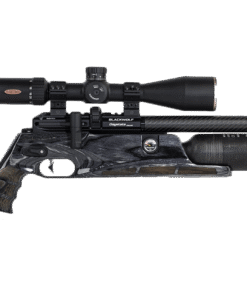
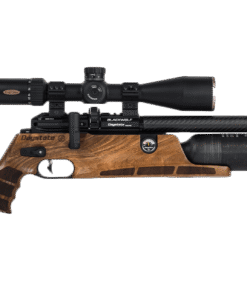
Air Rifles
Daystate Blackwolf
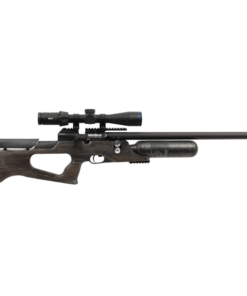
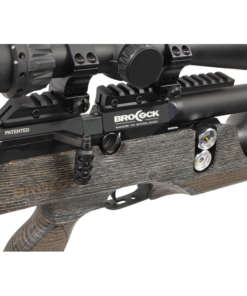
Precharged (PCP)
Brocock Sniper XR Magnum Safari
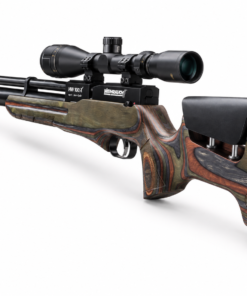
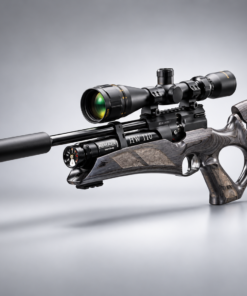
Air Rifles
HW110 KT LAMINATE ADJUSTABLE
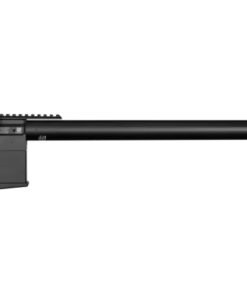
Air Rifles
FX DRS MKII System
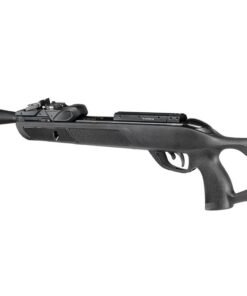
Air Rifles
Gamo Roadster 10X – .177 Air Rifle
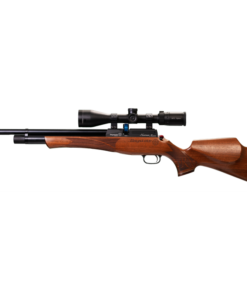
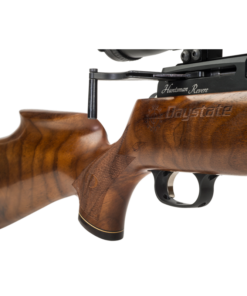
Daystate Air Rifle
Daystate Huntsman Revere Regulated

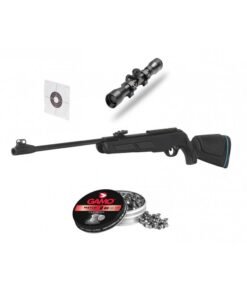
Air Rifles
Gamo Target Shooting Kit – .177 Pellet Air Rifle
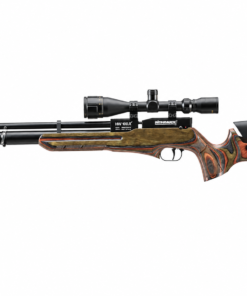
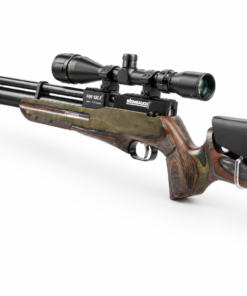
PCP Air Rifles
Reviews
There are no reviews yet.