
Gamo HPA Tactical
$550.00
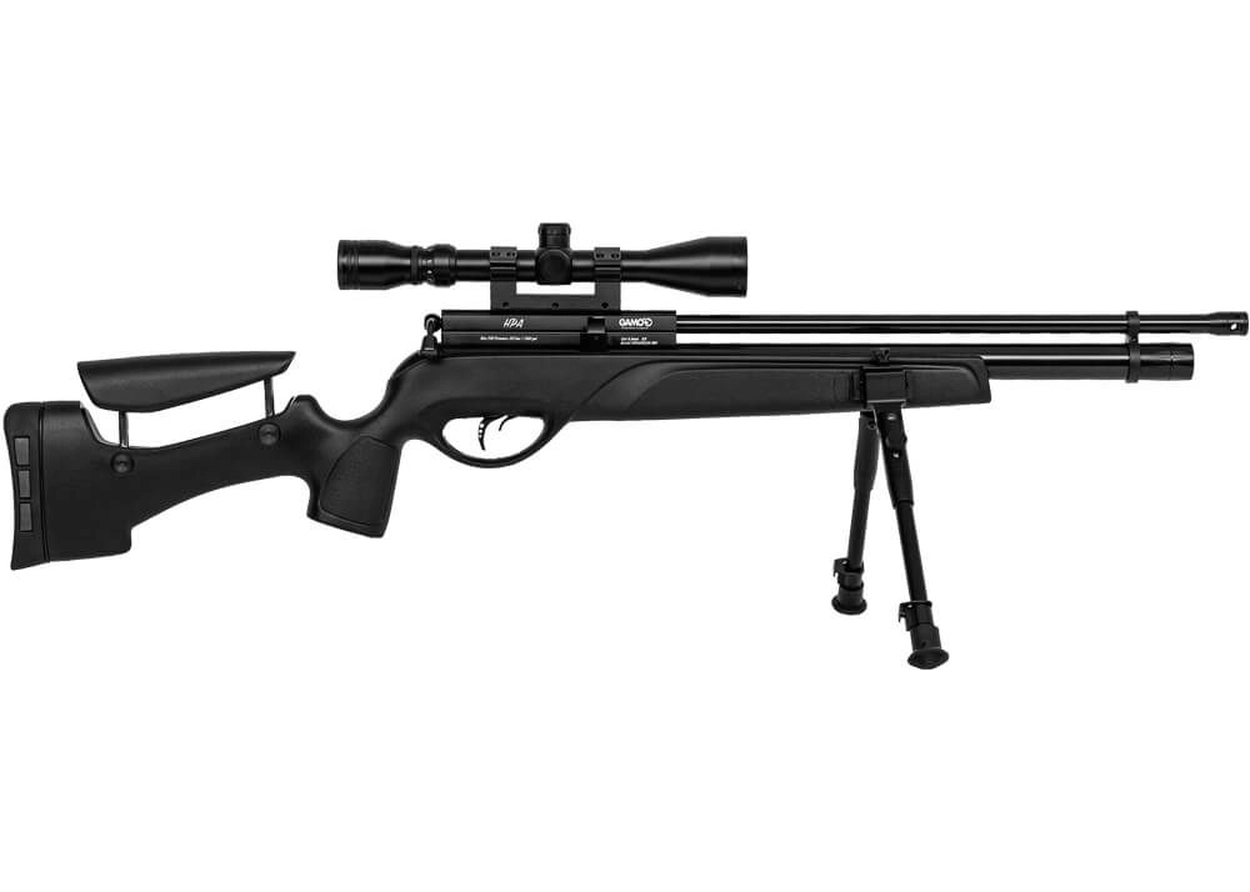
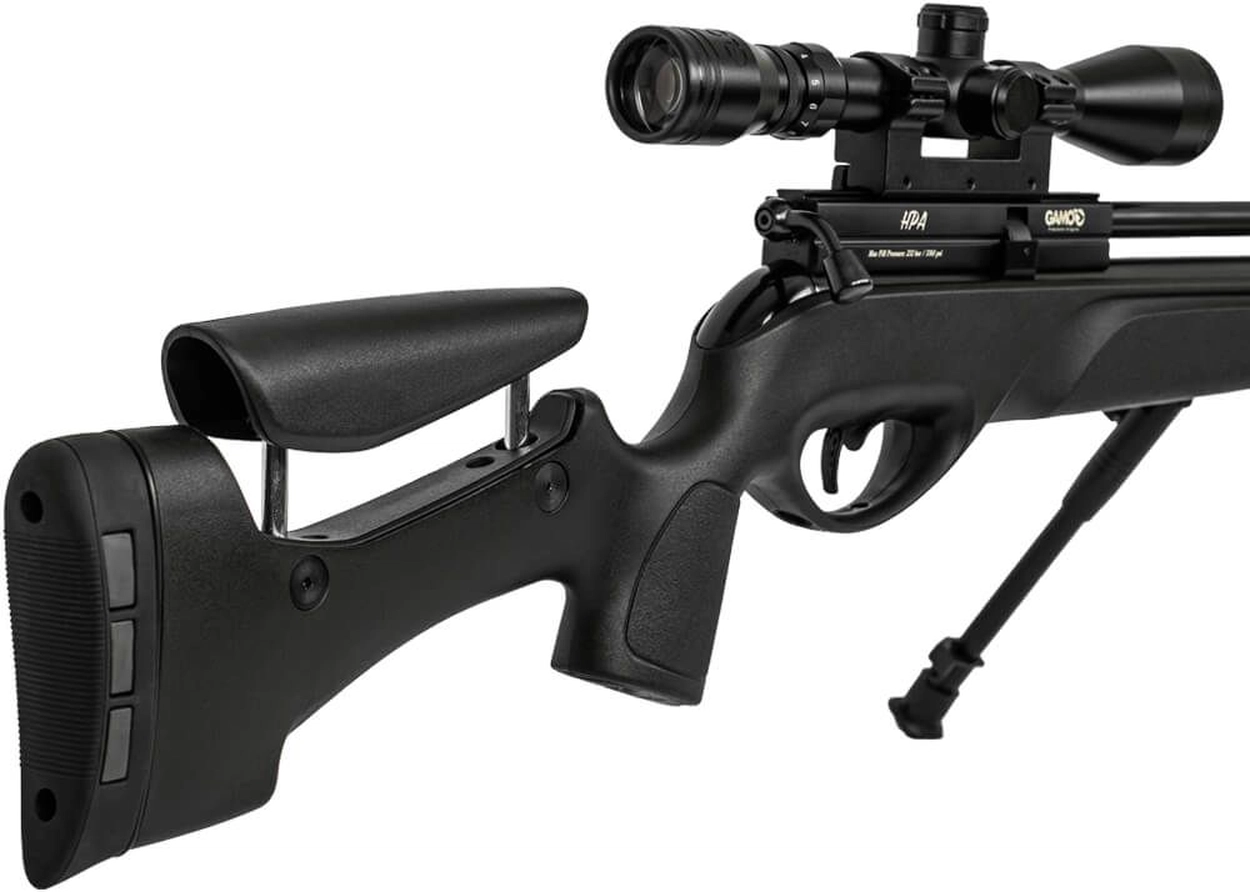
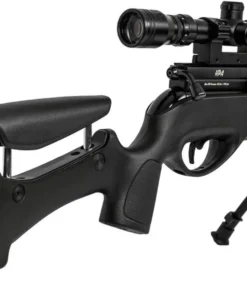
The Gamo HPA Tactical is a powerful 40 Joules PCP air rifle with a cold forged barrel and an ergonomic polymer stock. The stock features an adjustable cheekpiece and SWA (Shock Wave Absorber) butt plate that reduces recoil remarkably.
You can adjust the travel of both first as second stage of the CAT-trigger (Custom Action Trigger) independently, personalising the trigger to your own requirements.
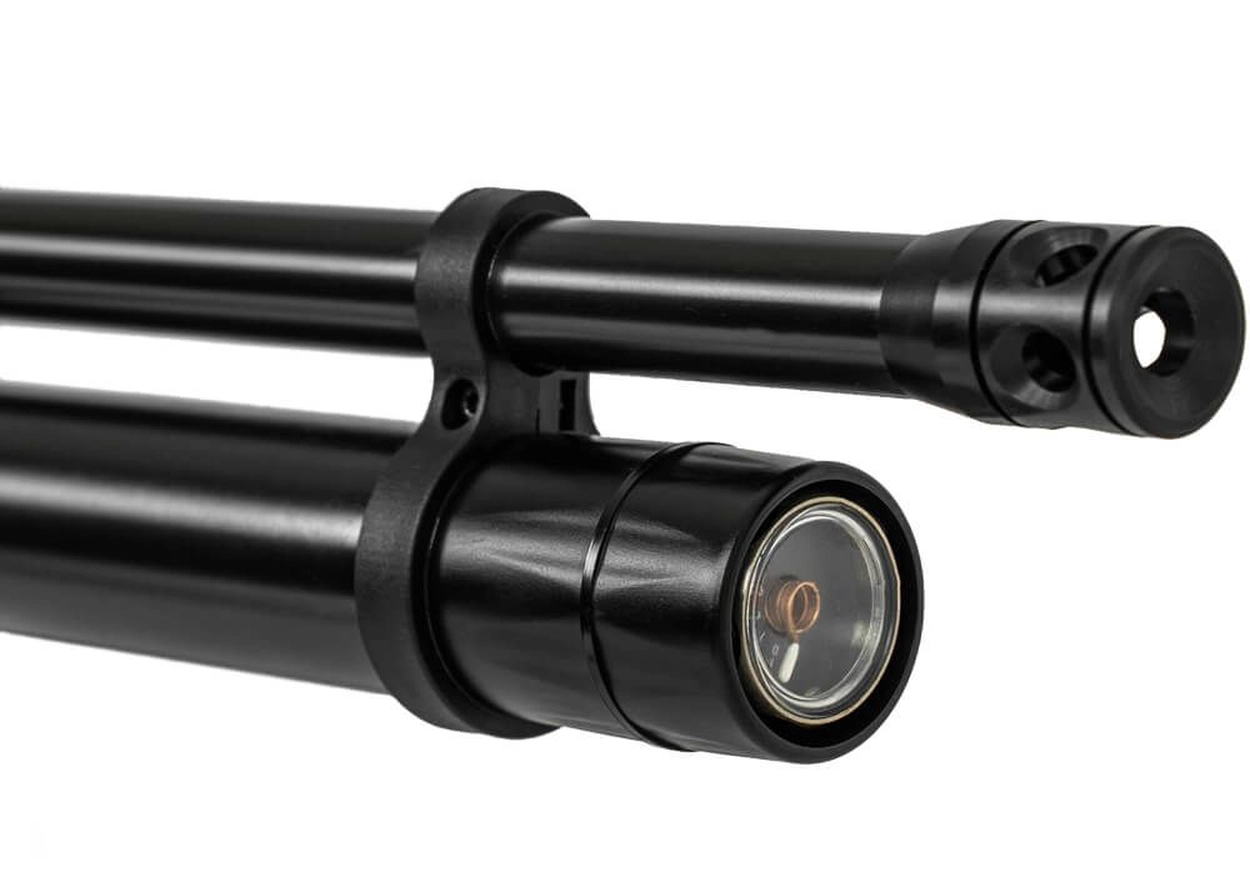
This Gamo HPA Tactical PCP air rifle weighs 3300 grams, has a total length of 1020 mm, a barrel length of 485 mm and a 11 mm dovetail rail to mount a rifle scope. This rifle is supplied with a bipod, muzzle brake, mount, magazine and a Gamo 3-9×40 rifle scope.
|
Brand
|
Gamo |
|
Series
|
Gamo HPA |
|
Product code
|
1440 |
|
Status
|
New |
|
Caliber
|
.22 (5.5 mm) |
|
Power source
|
PCP |
|
Cylinder capacity (cc)
|
153 |
Gamo HPA Tactical – High-Performance PCP Air Rifle with Precision Barrel, Adjustable Stock and Advanced Shooting Technology


The Gamo HPA Tactical combines precharged pneumatic technology, modern tactical styling, and precision-oriented engineering in a versatile sporting air rifle. Designed for recreational target shooting and lawful sporting applications, this pellet gun offers a distinctive alternative to traditional spring-powered equipment.
Unlike a conventional break barrel pellet gun, the HPA Tactical uses compressed air stored inside a reinforced cylinder. Consequently, its operating mechanism delivers energy through a mechanical valve rather than a spring-driven piston.
Furthermore, the rifle features an ergonomic synthetic stock, a cold hammer-forged barrel, and Gamo’s Custom Action Trigger technology.
Its substantial construction and carefully developed mechanical system make it an interesting option for adult enthusiasts seeking a modern airgun with established engineering features.
Precharged Pneumatic Technology and Power Delivery
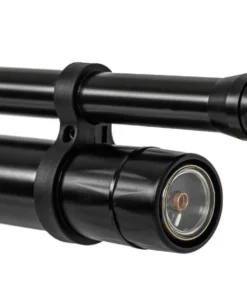
The Gamo HPA Tactical belongs to the PCP air rifle category. Its precharged pneumatic system uses compressed air stored within a steel cylinder, allowing the internal valve to release air during the firing cycle.
Unlike CO2 pellet guns, a CO2 airgun, or a CO2 gun, this design does not rely on disposable gas cartridges.
Instead, compatible high-pressure charging equipment is required. An air gun compressor or an air compressor for PCP equipment may provide an appropriate charging solution when approved for the rifle’s pressure specifications.
The original manufacturer lists configurations in .177 and .22 calibre, with published energy ratings reaching approximately 27 and 40 joules respectively in some markets.
However, different market versions have different published performance figures, so the exact model specification must always be checked.
Cold Hammer-Forged Barrel and Precision Engineering
Precision is an important consideration for any air rifle intended for recreational target shooting.
Accordingly, Gamo equips the HPA Tactical with a cold hammer-forged steel barrel, an established manufacturing method intended to produce consistent internal barrel geometry.
Furthermore, the compressed-air mechanism avoids the substantial spring-piston movement associated with some traditional air rifles.
Nevertheless, practical accuracy depends on ammunition quality, barrel condition, optical alignment, and consistent handling.
The rifle’s reinforced synthetic stock also contributes to its distinctive appearance and structural characteristics.
Ergonomic Tactical Stock, CAT Trigger and SWA Recoil Pad
The HPA Tactical features an adjustable ergonomic stock manufactured from glass-filled nylon.
Its textured grip and fore-end provide contact surfaces for controlled handling, while the adjustable cheekpiece supports individual fit.
Additionally, Gamo incorporates its CAT two-stage trigger system and SWA multi-panel recoil pad.
These features distinguish the rifle from basic recreational designs and provide a more configurable ownership experience.
The rifle weighs approximately 3.3 kg according to the manufacturer’s principal product listing.
Calibre Options, Pellet Compatibility and Energy Calculations
The manufacturer identifies 4.5 mm (.177) and 5.5 mm (.22) configurations.
Therefore, appropriately specified .177 pellets or .22 pellets must be selected according to the particular rifle’s marked calibre.
A muzzle energy calculator, ballistic energy calculator, foot pound calculator, ft lbs calculator, or fpe calculator can help explain published energy measurements.
However, Gamo Lethal .177cal /100 632274054 and Predator Polymag 1007-01 air gun pellets should not automatically be assumed compatible without verifying the exact specification.
Comparing Modern Sporting Airguns and Alternative Designs
Buyers researching a high power air rifle, high power air gun, high power pellet gun, or high powered air rifles may also encounter the FX Impact M3, FX Impact M4, Hatsan Blitz, AirForce Texan, Dragon Claw air rifle, and Umarex Notos G2.
Similarly, searches for big bore air guns, a 30 cal air rifle, or a 50 cal air rifle represent substantially different equipment categories.
Traditional alternatives include the HW 90, HW 50, HW 44, Beeman R9, Beeman P17, Seneca Dragonfly MK2, and models manufactured by Crosman and Weihrauch.
Meanwhile, searches for competition air rifle, hunting air rifle, airgun hunting, and air rifle deer hunting concern different sporting applications and legal restrictions. The HPA Tactical’s suitability must be assessed separately for each lawful activity.
Airgun Retail Searches and Related Buyer Terminology
Online research frequently uses overlapping descriptions such as pellet guns, air guns, pellet rifle, air rifle, airgun, airguns, air rifless, and air rifle and air pistol.
Popular retail searches include air depot, pyramid air, pyramid air guns, pyramid airguns, pyramyd air, pyramydair, pyramidair, air pyramid, and pyramyd.
Additional shopping phrases include pyramyd air bb guns, pyramyd air coupon, pyramyd air coupon code, pyramyd air discount code, pyramyd blog, airgun depot coupon, airgun depot coupon code, eliteairsguns, elite, and airsguns.
These terms describe shopping interests rather than technical characteristics of the HPA Tactical.
Understanding Different Air-Powered Product Categories
The wider sporting market contains BB gun, bb guns, bbguns, bb rifle, bb gun pistol, red ryder bb gun, full auto bb gun, bebe guns for sale, and air pistol categories.
Other recognizable products include the Crosman DPMS SBR, Crosman M1 Carbine, Daisy 880, sometimes misspelled diasy 880, Air Venturi Alpha, Air Venturi MicroStrike, and Hatsan Velox.
Meanwhile, a pcp gun, pcp pistol, or CO2 pellet gun uses a different configuration from many spring-powered designs. A CO2 cartridge is specifically associated with cartridge-powered systems.
Searches involving 11mm scope rings or an air rifle scope may be relevant when researching compatible sighting equipment, although fitment must be confirmed.
Broader searches such as coolest pellet guns, ingram m11, tex-rex, fx redback, fx redback bow gun, less lethal weapons, cold steel war hammer, arbalet for sale, rcbs rock chucker, and pinchingthatpenny.blogspot.com concern unrelated products or topics and should not be interpreted as HPA Tactical accessories.
Why Choose the Gamo HPA Tactical for Recreational Shooting?
The HPA Tactical combines several important characteristics: a reinforced compressed-air cylinder, cold hammer-forged barrel, adjustable stock, two-stage trigger, and recoil-absorbing butt pad.
Furthermore, the multishot mechanism described in Gamo’s original product documentation offers a different operating experience from conventional single-shot spring-powered equipment.
Its all-weather synthetic construction also provides a practical alternative to traditional wooden stocks.
However, the owner must account for the additional charging equipment required by the pneumatic system.
For enthusiasts who appreciate modern design, mechanical precision, and configurable ergonomics, the rifle offers an appealing combination of established technology and contemporary styling.
The Gamo HPA Tactical stands out for its PCP operating system, precision-oriented barrel construction, ergonomic stock, and distinctive tactical sporting design.
Important Technical Specifications
-
Manufacturer: Gamo
-
Model: HPA Tactical PCP
-
Operating system: Precharged pneumatic
-
Available calibres: 4.5 mm (.177) and 5.5 mm (.22), depending on market
-
Published power: 27–40 joules for certain original configurations
-
Barrel: Cold hammer-forged steel
-
Trigger: CAT two-stage Custom Action Trigger
-
Stock: Glass-filled nylon synthetic stock with adjustable ergonomics
-
Recoil pad: SWA shock absorption system
-
Weight: Approximately 3.3 kg
-
Optical mounting: Dovetail grooves
-
Safety: Manual safety and cocking safety provisions
-
Scope: Not included with Gamo’s standard HPA Tactical PCP specification
-
Optional accessories: Model-compatible optical equipment and detachable sound-dampening accessory where lawful
These specifications are based on Gamo’s published HPA Tactical PCP documentation.
They should not be confused with the similarly named HPA Mi Maxxim IGT, which is a break-barrel gas-piston design rather than the HPA Tactical PCP model.
Gamo HPA Tactical – Advanced Engineering, Precision Performance, Ergonomic Comfort and Long-Term Reliability
Understanding the Engineering Philosophy Behind the Gamo HPA Tactical
The Gamo HPA Tactical represents a modern approach to recreational sporting equipment, combining precision-oriented construction, advanced pneumatic technology, and carefully considered ergonomic features. Its design reflects the manufacturer’s commitment to developing equipment that balances mechanical functionality, structural durability, and practical handling comfort.
One of the most important characteristics of this model is its use of stored compressed air rather than a traditional spring-driven piston. This distinction influences the mechanical behavior of the rifle, particularly the relationship between energy delivery, internal movement, and the overall shooting experience.
Furthermore, the design incorporates contemporary materials that provide structural strength without relying exclusively on traditional wooden construction. Its reinforced synthetic stock supports the principal mechanical components while offering resistance to many environmental conditions encountered during normal recreational use.
The combination of a cold hammer-forged barrel, adjustable stock, and two-stage trigger system also demonstrates how individual components contribute to the overall quality of the equipment.
Nevertheless, the presence of advanced engineering features should not be interpreted as a guarantee of exceptional performance under every circumstance. Practical results depend on mechanical condition, ammunition consistency, proper servicing, and individual handling characteristics.
For enthusiasts who appreciate a modern sporting design, these qualities establish a distinctive foundation for long-term recreational ownership.
How the Precharged Pneumatic System Works
The operating system is based on the controlled release of compressed air stored within a dedicated pressure cylinder.
Unlike a conventional spring-powered mechanism, the system does not depend on a heavy internal piston accelerating during each firing cycle. Instead, a valve assembly regulates the release of stored air when the firing mechanism operates.
This arrangement produces a different mechanical experience because fewer large internal components move during the moment of discharge.
Consequently, the firing cycle generally produces less mechanical disturbance than many traditional spring-piston systems.
However, the system still generates recoil forces, mechanical vibration, and acoustic energy. Therefore, it should not be described as completely recoil-free or silent.
The performance of the pneumatic mechanism depends on several important factors.
The pressure cylinder must retain its structural integrity, while the internal valve must operate within its intended manufacturing tolerances.
Furthermore, sealing components must prevent unintended pressure loss.
The relationship between these components influences reliability and the consistency of the operating cycle.
Because the system contains high-pressure air, servicing requires appropriate technical knowledge and suitable equipment.
Owners should never attempt unauthorized alterations to the pressure system, valve assembly, or related components.
Professional maintenance and adherence to the manufacturer’s instructions are essential for preserving safe operation.
The Importance of a Cold Hammer-Forged Barrel
The barrel plays a central role in the engineering quality of the Gamo HPA Tactical.
Its cold hammer-forged construction reflects a manufacturing process commonly used to produce barrels with carefully controlled internal dimensions.
During industrial production, specialized equipment forms the barrel around an appropriately shaped mandrel. This process can create the required internal geometry while maintaining consistent manufacturing characteristics.
The resulting barrel is designed to support repeatable projectile movement under suitable operating conditions.
However, the manufacturing technique alone does not determine practical accuracy.
Ammunition quality, barrel condition, optical alignment, mechanical consistency, and environmental circumstances also influence results.
Furthermore, small variations in individual projectiles can affect performance even when the barrel itself remains in excellent condition.
The internal bore must therefore be protected against unnecessary damage.
Improper cleaning tools, unsuitable chemicals, and careless maintenance can affect sensitive surfaces.
Similarly, external corrosion or physical impacts may compromise the condition of the barrel assembly.
The manufacturer’s maintenance recommendations should remain the primary reference for cleaning and inspection.
For owners who value established manufacturing technology, the cold hammer-forged construction represents an important aspect of the rifle’s overall engineering identity.
Understanding Precision and Mechanical Consistency
Precision is best understood as the combined result of numerous mechanical and environmental factors.
Although the Gamo HPA Tactical incorporates features associated with controlled performance, no individual component can guarantee consistent results independently.
The barrel contributes to projectile guidance, while the pneumatic system determines how stored energy is released.
Meanwhile, the trigger assembly influences the predictability of the mechanical release process.
The stock provides structural support and establishes the primary contact surfaces between the user and the equipment.
These elements must function together to create a stable sporting platform.
Furthermore, consistency depends on the condition of internal seals, the pressure reservoir, and other mechanical components.
Deteriorated seals or damaged valve components can produce irregular operation.
External factors also deserve consideration.
Changes in temperature, environmental conditions, and differences between manufactured projectiles may contribute to variations in measured results.
Consequently, precision should never be evaluated exclusively through an advertised maximum velocity figure.
A meaningful assessment considers the quality and repeatability of the complete mechanical system.
For recreational target shooting, predictable behavior and dependable operation are particularly valuable characteristics.
Advanced Trigger Engineering and Mechanical Control
The Gamo HPA Tactical incorporates the manufacturer’s Custom Action Trigger system.
This two-stage trigger arrangement forms an important part of the rifle’s mechanical identity.
A two-stage mechanism separates the initial movement of the trigger from the subsequent release stage, creating a distinct operating characteristic compared with certain single-stage designs.
The mechanical condition of the trigger assembly influences how predictably the firing mechanism operates.
Furthermore, manufacturing tolerances, component engagement, and normal wear may affect its long-term behavior.
A properly functioning trigger should remain consistent with the manufacturer’s intended specifications.
However, unauthorized adjustments can interfere with safety provisions or compromise mechanical reliability.
For this reason, internal changes should only be performed by appropriately qualified personnel following official technical instructions.
The trigger mechanism must also be considered alongside the rifle’s safety arrangements.
Mechanical safety features provide additional protection, but they cannot replace responsible handling.
Every sporting rifle must remain subject to established safety procedures regardless of the sophistication of its internal mechanisms.
Ultimately, the trigger system contributes to the equipment’s overall mechanical refinement while requiring appropriate care throughout its service life.
Ergonomic Stock Design and Modern Construction Materials
The synthetic stock represents one of the most recognizable elements of the Gamo HPA Tactical.
Its contemporary appearance combines angular design characteristics with practical ergonomic surfaces.
The reinforced polymer construction provides an alternative to traditional natural materials.
Unlike wood, appropriately manufactured synthetic materials are generally less susceptible to dimensional changes caused by ordinary humidity variations.
Consequently, they can offer practical advantages in environments where moisture exposure is a recurring concern.
However, synthetic construction does not make the stock immune to damage.
Excessive heat, aggressive chemicals, physical impacts, and inappropriate storage can still affect its condition.
The stock incorporates carefully shaped contact surfaces intended to provide a comfortable relationship between the user and the equipment.
Furthermore, its adjustable elements accommodate certain differences in physical proportions.
This flexibility can be beneficial because individual users vary considerably in height, arm length, shoulder dimensions, and handling preferences.
Nevertheless, an adjustable stock cannot guarantee a perfect ergonomic fit for everyone.
Physical suitability should be assessed through responsible, supervised handling in an appropriate sporting environment.
Adjustable Cheekpiece and Individual Comfort
The adjustable cheekpiece contributes to the rifle’s ergonomic flexibility.
Its purpose is to accommodate differences in the physical relationship between the stock and the user’s face.
Because sporting equipment varies in overall geometry, a fixed stock configuration may not provide equal comfort for every individual.
The presence of an adjustable cheekpiece offers a degree of customization within the manufacturer’s intended design.
Furthermore, its integration into the synthetic stock maintains the rifle’s modern appearance.
Comfort is particularly important during extended recreational activities because unsuitable equipment dimensions may cause unnecessary physical fatigue.
The relationship between overall length, stock shape, weight distribution, and shoulder contact also influences how the rifle feels.
Consequently, ergonomic performance should be evaluated as a complete system rather than through the cheekpiece alone.
Additional consideration should be given to the condition of adjustable components.
Visible damage, excessive looseness, or abnormal movement may indicate that professional inspection is appropriate.
Owners should avoid forcing adjustment mechanisms beyond their intended limits.
Preserving the original components helps maintain both appearance and mechanical integrity.
Shock Absorption and the Importance of Shoulder Comfort
The Gamo HPA Tactical incorporates a shock-absorbing butt pad developed as part of the manufacturer’s ergonomic system.
This feature provides an additional contact surface between the stock and the user’s shoulder.
Its design incorporates removable cushioning elements intended to influence the perceived firmness of shoulder contact.
Although compressed-air systems generally produce a different recoil impulse from conventional spring-piston mechanisms, some movement remains unavoidable.
Consequently, shoulder comfort continues to be relevant.
The effectiveness of cushioning depends on several factors, including material condition, equipment weight, and individual physical characteristics.
Furthermore, the presence of a recoil pad does not necessarily establish superior practical accuracy.
Its primary contribution relates to ergonomic comfort and the subjective handling experience.
Over time, cushioning materials may experience normal wear.
Exposure to excessive heat, unsuitable chemicals, or prolonged physical stress can also influence their condition.
Therefore, routine visual inspection is appropriate.
The recoil pad should remain securely attached and free from significant damage.
For owners who value a comfortable sporting experience, this feature adds another practical dimension to the rifle’s overall design.
Structural Balance, Weight and Handling Characteristics
The rifle’s approximately 3.3-kilogram mass contributes to its substantial handling character.
Weight influences how equipment feels during transportation, supported use, and general recreational handling.
However, total mass represents only one aspect of ergonomic suitability.
The distribution of weight between the stock, barrel, pressure cylinder, and receiver also affects the overall experience.
A sporting rifle with considerable forward weight may feel different from another model with the same total mass but a more centrally located balance point.
Furthermore, personal strength and body proportions influence how comfortably the equipment can be supported.
Some enthusiasts may appreciate the sense of solidity associated with substantial construction.
Others may prefer a lighter design for activities involving prolonged carrying.
Consequently, the most appropriate choice depends on individual circumstances.
The reinforced synthetic stock contributes to the rifle’s structural arrangement while supporting its principal mechanical components.
Meanwhile, the pressure cylinder and barrel assembly form a significant portion of the forward construction.
These components collectively establish the model’s distinctive visual proportions.
For prospective owners, practical comfort should take priority over assumptions based solely on published weight.
Understanding the Importance of the Pressure Reservoir
The pressure reservoir is a fundamental component of the operating system.
Its function is to retain compressed air within the manufacturer’s specified operating limits.
Because the reservoir operates under substantial pressure, material integrity and proper maintenance are essential.
The cylinder must withstand the mechanical stresses associated with its intended use.
Furthermore, its connections and sealing components must maintain appropriate pressure containment.
Surface damage, corrosion, unauthorized modifications, or deterioration of associated components may compromise reliability.
Consequently, pressure-system abnormalities should always receive professional attention.
Owners should never attempt to exceed manufacturer-approved pressure limits.
Similarly, incompatible charging equipment can create serious safety risks.
The reservoir must only be serviced using procedures and equipment approved for the particular model.
Manufacturer documentation should also be consulted regarding inspection requirements and the service life of pressure-bearing components.
An important distinction concerns the difference between ordinary exterior cleaning and technical pressure-system maintenance.
While exterior surfaces can receive routine care, internal pressure components require specialized knowledge.
Preserving the original reservoir configuration contributes directly to long-term mechanical integrity.
Environmental Resistance and All-Weather Construction
The synthetic construction provides several practical ownership advantages.
Its resistance to ordinary humidity-related dimensional changes makes it suitable for a range of recreational environments.
Furthermore, the stock does not require the same finish maintenance associated with natural wooden materials.
However, the complete rifle still contains metal components, seals, and mechanical assemblies that require protection.
Moisture can contribute to corrosion on vulnerable surfaces.
Similarly, dirt and environmental contamination may affect exposed components when maintenance is neglected.
Rapid temperature changes can also create condensation.
Consequently, the equipment should be protected from prolonged exposure to damp conditions.
Extreme heat deserves additional attention because excessive temperatures can affect polymers, seals, and pressure-system components.
For this reason, the rifle should never be left in environments where temperatures may rise beyond safe storage limits.
Appropriate storage involves a secure, dry location with reasonable environmental stability.
The equipment should remain unloaded, depressurized only where required by the manufacturer’s storage instructions, and protected against unauthorized access.
These precautions help preserve both the external finish and the internal mechanical system.
Maintenance Requirements and Responsible Ownership
Long-term reliability depends on appropriate care.
The Gamo HPA Tactical contains several components that require different maintenance considerations.
External synthetic surfaces generally benefit from gentle cleaning and protection against unnecessary chemical exposure.
Metal components require appropriate safeguards against moisture and corrosion.
Meanwhile, optical mounting surfaces and external fittings should be inspected for visible damage.
The internal pneumatic system requires particular caution.
Pressure seals, valve components, and the reservoir must remain within their intended technical specifications.
Unauthorized dismantling or adjustment can create dangerous conditions.
Therefore, internal servicing should be entrusted to qualified personnel.
Routine maintenance should follow official manufacturer instructions rather than informal procedures developed for unrelated equipment.
Furthermore, signs of unexpected pressure loss, damaged fittings, or abnormal operation should not be ignored.
Use should stop until the equipment has received appropriate inspection.
Proper maintenance also involves secure storage.
The rifle should remain inaccessible to children and unauthorized individuals.
A suitable locking arrangement helps reduce the risk of improper handling.
Responsible ownership protects both the equipment and the surrounding community.
Practical Applications in Controlled Recreational Environments
The Gamo HPA Tactical is designed for sporting use where appropriate facilities, regulations, and safety procedures are observed.
A designated recreational shooting range provides a controlled environment for appreciating the rifle’s mechanical characteristics.
Such facilities typically establish rules concerning equipment handling, protective eyewear, and safe target arrangements.
Furthermore, supervised sporting clubs can provide instruction and opportunities to develop familiarity with equipment safety.
The compressed-air mechanism offers a distinctive experience because its operating behavior differs from traditional spring-powered systems.
Its adjustable stock also provides an opportunity to assess physical suitability under responsible conditions.
However, the rifle’s energy output means it must never be treated as a toy.
Projectiles can cause serious injury or death.
Consequently, safe handling and secure storage are essential at all times.
Activities involving wildlife are subject to separate legal requirements, which vary considerably by location.
No particular field application should be assumed lawful or appropriate based solely on the rifle’s appearance or advertised performance.
For most buyers, controlled recreational target shooting provides the clearest context for evaluating its sporting characteristics.
Long-Term Durability and Component Preservation
Durability depends on manufacturing quality, operating conditions, and maintenance history.
The synthetic stock offers a robust external structure, while the metal barrel and pneumatic components provide the principal mechanical framework.
However, every system experiences some degree of wear.
Seals may deteriorate over time, mechanical components can develop friction-related wear, and external surfaces may become damaged through careless handling.
Furthermore, environmental exposure can accelerate deterioration when equipment receives inadequate protection.
For these reasons, preventative care remains important.
Regular visual inspections may identify damaged external components or signs that professional servicing is required.
Likewise, preserving purchase records and manufacturer documentation can assist with future maintenance.
The availability of original replacement components should also be considered when evaluating long-term ownership.
Depending on the region, authorized servicing and parts availability may vary.
Consequently, durability should not be assessed solely through initial material quality.
The most dependable ownership experience results from combining suitable construction with responsible maintenance and professional technical support.
Why Advanced Engineering Does Not Eliminate Mechanical Limitations
Modern pneumatic technology offers several attractive characteristics, but it also introduces specific ownership responsibilities.
The pressure system requires compatible charging equipment and careful attention to manufacturer-approved limits.
Furthermore, seals and valves must retain their intended condition.
Unlike simpler mechanical arrangements, high-pressure systems can require specialized professional servicing.
Consequently, buyers should consider maintenance access before selecting this type of equipment.
Another important limitation involves published performance figures.
Maximum velocity and energy specifications do not independently establish accuracy or reliability.
Actual results vary according to mechanical condition, projectile characteristics, and testing circumstances.
Similarly, modern ergonomic features cannot guarantee physical comfort for every individual.
The adjustable stock provides flexibility, but personal proportions and preferences remain important.
Recognizing these limitations encourages a balanced assessment.
Rather than treating advanced features as automatic guarantees, prospective owners can evaluate the complete system according to their intended recreational requirements.
Why the Gamo HPA Tactical Appeals to Modern Sporting Enthusiasts
The Gamo HPA Tactical combines several qualities that distinguish it from traditional designs.
Its compressed-air system provides a particular mechanical character, while the cold hammer-forged barrel reflects established precision manufacturing techniques.
Furthermore, its reinforced synthetic stock contributes modern styling and practical environmental resistance.
The adjustable cheekpiece and shock-absorbing butt pad introduce additional ergonomic considerations.
Meanwhile, the two-stage trigger system adds another element of mechanical refinement.
These characteristics create a coherent sporting platform that may appeal to adult enthusiasts seeking contemporary construction.
Nevertheless, the strongest reason to choose this model should be its suitability for the intended activity.
Appearance, published energy, and technical features are useful considerations, but responsible ownership requires attention to comfort, maintenance, local regulations, and access to appropriate facilities.
For individuals who appreciate advanced pneumatic technology, the complete configuration provides a distinctive alternative to more traditional mechanisms.
Final Assessment of Engineering, Precision and Practical Value
The Gamo HPA Tactical brings together modern materials, established barrel manufacturing technology, and a self-contained pneumatic operating assembly.
Its reinforced stock provides a durable external framework, while the adjustable ergonomic components contribute to individual comfort.
The cold hammer-forged barrel represents an important engineering feature, and the two-stage trigger system provides a distinctive mechanical operating characteristic.
Furthermore, the pneumatic mechanism creates a different shooting experience from conventional spring-powered alternatives.
However, the rifle also requires appropriate high-pressure charging equipment, professional servicing when necessary, and careful adherence to safety instructions.
Practical precision depends on the condition and interaction of the complete mechanical system rather than any individual advertised feature.
For responsible adult enthusiasts who value contemporary sporting design, adjustable ergonomics, and established compressed-air technology, the Gamo HPA Tactical offers a noteworthy combination of engineering characteristics.
Its lasting appeal is founded on the relationship between technical construction, suitable recreational use, dependable maintenance, and long-term ownership satisfaction.
Ultimately, the Gamo HPA Tactical represents a modern sporting design that combines pneumatic engineering, ergonomic flexibility, substantial construction, and precision-oriented manufacturing within one distinctive recreational platform.
Gamo HPA Tactical – Long-Term Reliability, Advanced Performance, Engineering Quality, Practical Ownership and Frequently Asked Questions
Introduction to Advanced Performance and Long-Term Ownership
The Gamo HPA Tactical represents a modern combination of pneumatic engineering, contemporary construction materials, and carefully developed sporting features. Its design emphasizes structural durability, consistent mechanical operation, ergonomic flexibility, and an ownership experience built around established manufacturing principles.
For enthusiasts who appreciate contemporary sporting equipment, the rifle offers several distinctive characteristics. Its compressed-air operating system provides an alternative to conventional spring-powered mechanisms, while its reinforced synthetic construction contributes to durability and practical handling.
Furthermore, the carefully manufactured barrel and two-stage trigger assembly reflect the importance of mechanical consistency throughout the complete design. Each component contributes to the relationship between structural integrity, controlled energy delivery, and the overall recreational experience.
However, advanced engineering does not eliminate the responsibilities associated with ownership. Routine inspections, suitable storage conditions, correct maintenance, and professional servicing remain essential for preserving the equipment’s intended characteristics.
Consequently, understanding the relationship between design quality and responsible ownership is important for anyone considering this model.
The greatest long-term benefits arise when the equipment remains mechanically sound, properly maintained, and suitable for its owner’s intended recreational activities.
Why Modern Pneumatic Engineering Offers a Distinctive Experience
The operating mechanism distinguishes this rifle from many traditional sporting designs.
Instead of relying on a large spring-driven piston to compress air during every firing cycle, the system stores compressed air within a dedicated pressure reservoir.
A mechanical valve then controls the release of the stored air.
This arrangement changes the physical characteristics of the firing cycle because the mechanism does not require the rapid movement of a heavy spring-loaded piston.
Consequently, some forms of mechanical vibration associated with traditional spring-powered equipment are reduced.
Nevertheless, pneumatic operation does not eliminate recoil, acoustic energy, or other mechanical forces.
The complete system still experiences movement and stress during normal operation.
Furthermore, the pressure reservoir and valve assembly require suitable maintenance to preserve their intended performance.
The condition of internal seals is particularly important because deterioration can influence pressure retention.
For owners who appreciate modern mechanical technology, the combination of controlled air release and contemporary construction provides a distinctive recreational experience.
However, the system also requires appropriate charging equipment and careful adherence to manufacturer-approved operating limits.
The Importance of Structural Strength and Manufacturing Quality
Structural integrity forms an essential part of long-term equipment reliability.
The Gamo HPA Tactical combines metal mechanical components with a reinforced synthetic stock designed to support the complete assembly.
Its construction provides a substantial foundation for the barrel, pressure reservoir, and operating mechanism.
Furthermore, carefully manufactured components contribute to proper alignment and predictable mechanical function.
However, manufacturing quality should never be judged exclusively by appearance.
The condition of internal assemblies, fastening components, pressure seals, and mechanical engagement surfaces also influences reliability.
Over time, normal operation can introduce wear.
Similarly, environmental exposure may affect exterior finishes or vulnerable mechanical components.
Consequently, periodic visual inspections remain beneficial.
Cracks, unusual movement, corrosion, or obvious component damage may indicate that professional attention is necessary.
Unauthorized modifications should be avoided because changes to structural or pressure-bearing components can compromise the manufacturer’s intended design.
Maintaining the original configuration provides an important foundation for safe and dependable long-term ownership.
Cold Hammer-Forged Barrel Construction and Quality Preservation
The barrel represents one of the most technically significant components in the rifle.
Its cold hammer-forged construction reflects an established industrial manufacturing process designed to achieve carefully controlled internal geometry.
This manufacturing method contributes to the structural and dimensional characteristics of the finished component.
Nevertheless, barrel construction alone cannot determine practical precision.
Ammunition consistency, mechanical condition, environmental circumstances, and overall assembly quality also affect results.
Furthermore, damage to the internal surfaces may influence performance.
For this reason, cleaning and maintenance should follow the manufacturer’s recommendations.
Unsuitable cleaning tools, aggressive chemicals, or unnecessary mechanical treatment can damage sensitive surfaces.
The exterior finish also requires appropriate protection against moisture.
Although metal components are designed for normal sporting use, prolonged exposure to damp conditions can cause corrosion.
Consequently, suitable storage and careful maintenance contribute to preserving the original barrel assembly.
For owners who value established manufacturing technology, the cold hammer-forged construction remains an important part of the rifle’s engineering character.
Understanding the Relationship Between Consistency and Precision
Precision is a characteristic of the complete mechanical system rather than an isolated component.
The barrel, valve assembly, pressure reservoir, trigger mechanism, and supporting structure must function together.
Furthermore, the condition of ammunition and the surrounding environment can influence observed results.
A consistent operating system provides a foundation for predictable behavior, but it cannot eliminate every source of variation.
The mechanical condition of pressure seals is especially important.
Deterioration can affect pressure retention and potentially influence the regularity of operation.
Similarly, damage to internal components may produce inconsistent mechanical behavior.
The rifle’s original configuration is designed to operate within defined manufacturing specifications.
Consequently, unauthorized modifications may undermine reliability rather than improve it.
Practical performance should therefore be assessed under appropriate recreational conditions, with attention to equipment condition and applicable safety requirements.
Maximum advertised performance figures should not be treated as guarantees.
A realistic evaluation considers repeatability, durability, suitability, and the overall condition of the sporting platform.
Ergonomic Comfort and the Value of Adjustable Features
The reinforced synthetic stock contributes substantially to the rifle’s modern appearance and handling characteristics.
Its adjustable ergonomic elements provide a degree of flexibility for individuals with different physical proportions.
Furthermore, the design incorporates shaped contact surfaces intended to support comfortable recreational handling.
Personal comfort remains an important consideration because users vary in height, arm length, shoulder dimensions, and strength.
A fixed configuration may not feel equally suitable to everyone.
Consequently, the ability to accommodate some physical differences can contribute to a more satisfactory ownership experience.
However, adjustable features cannot guarantee universal comfort.
The overall weight and distribution of mechanical components remain important.
For example, the pressure reservoir and forward barrel assembly contribute to the rifle’s substantial physical character.
Some adults may appreciate this sense of solidity, while others may prefer lighter equipment.
Therefore, ergonomic suitability should be assessed individually.
Comfort, physical capability, and intended recreational activities should guide equipment selection rather than appearance alone.
The Benefits of Reinforced Synthetic Construction
Modern synthetic materials provide several practical advantages when used in sporting equipment.
The reinforced stock offers resistance to many ordinary environmental influences, particularly humidity-related dimensional changes that may affect some natural materials.
Furthermore, synthetic surfaces generally require less specialized finish maintenance than traditional wooden alternatives.
However, durability should not be confused with complete resistance to damage.
Excessive heat, strong chemicals, and substantial physical impacts can still compromise synthetic components.
Long-term exposure to unsuitable conditions may also affect surface appearance.
Consequently, routine care remains necessary.
The stock should be protected from unnecessary impacts and cleaned using appropriate materials.
Visible cracks or deformation deserve professional assessment, especially when damage affects structural areas.
The quality of the supporting stock contributes to the integrity of the complete assembly.
Therefore, preserving the original condition is important for both appearance and mechanical reliability.
For owners who prefer contemporary construction, reinforced synthetic materials offer a useful combination of practical durability and modern styling.
Pressure Reservoir Integrity and Professional Maintenance
The pressure reservoir forms a critical component of the operating system.
It stores compressed air within limits established by the manufacturer.
Because substantial pressure is involved, maintaining the cylinder’s structural integrity is essential.
The condition of associated seals, fittings, and valve components also affects reliability.
Furthermore, the pressure system must remain free from unauthorized modifications.
Attempts to exceed approved operating limits can create serious hazards.
Damaged components should never receive improvised repairs.
Similarly, abnormal pressure loss or visible deterioration requires appropriate professional inspection.
The absence of obvious exterior damage does not guarantee that every internal component remains in satisfactory condition.
Consequently, manufacturer-directed servicing remains important.
Pressure-bearing components should be handled only by personnel with suitable technical expertise.
Owners should also use charging equipment that meets the manufacturer’s compatibility requirements.
These precautions help preserve the original engineering configuration while reducing avoidable risks.
Long-Term Maintenance and Mechanical Reliability
Mechanical equipment requires appropriate care throughout its service life.
The Gamo HPA Tactical contains several assemblies that experience different forms of normal wear.
External components may accumulate dirt or moisture.
Meanwhile, internal seals and moving parts can gradually deteriorate through repeated operation.
Consequently, maintenance should address both exterior preservation and the condition of the complete mechanical system.
Routine visual inspections can help identify obvious problems.
However, internal servicing requires professional expertise.
The pressure reservoir and valve system should never be dismantled casually.
Furthermore, unsuitable lubricants or replacement components can compromise mechanical performance and safety.
Manufacturer-approved materials and procedures should remain the primary reference.
The original design should also be preserved whenever possible.
Unauthorized adjustments may introduce additional stress or interfere with protective mechanisms.
For long-term ownership, appropriate maintenance is more valuable than unnecessary modifications.
A carefully preserved sporting rifle offers the strongest foundation for dependable recreational use.
Environmental Protection and Proper Storage Practices
Environmental conditions influence the long-term condition of mechanical equipment.
Moisture presents a particular concern because vulnerable metal surfaces can gradually corrode.
Furthermore, rapid temperature changes may cause condensation.
This moisture can accumulate when equipment moves between environments with significantly different temperatures.
Consequently, dry and reasonably stable storage conditions are preferable.
Excessive heat also deserves consideration, especially because the rifle contains a pressure reservoir and synthetic components.
High temperatures may affect seals, materials, and pressure conditions.
Therefore, prolonged storage in unsuitable environments should be avoided.
Protective storage equipment can help reduce exposure to dust and accidental impacts.
However, storage arrangements must also provide appropriate security.
The rifle should remain unloaded and inaccessible to unauthorized individuals.
The pressure reservoir should be managed according to the manufacturer’s instructions rather than automatically emptied for every storage period.
Secure storage supports both equipment preservation and responsible ownership.
Why Responsible Ownership Is Essential
The Gamo HPA Tactical is a serious sporting instrument rather than a recreational toy.
Its projectiles can cause severe or fatal injuries.
Consequently, safe handling must remain a priority throughout ownership.
Appropriate recreational use requires suitable facilities, protective equipment, and adherence to established safety procedures.
Furthermore, applicable laws may regulate purchase, possession, transportation, storage, and sporting activities.
These requirements vary considerably between jurisdictions.
Owners should therefore verify the rules relevant to their location.
Mechanical safety devices provide additional protection but cannot replace responsible behavior.
Likewise, the rifle should never be accessible to children or unauthorized individuals.
Appropriate locking storage arrangements reduce the risk of accidental or improper handling.
For inexperienced users, professional instruction and supervised recreational participation are particularly important.
Responsible ownership contributes to personal safety while supporting the wider sporting community.
Frequently Asked Questions About the Gamo HPA Tactical
What Makes the Gamo HPA Tactical Different From Traditional Spring-Powered Designs?
Its pneumatic operating system uses compressed air stored inside a pressure reservoir.
Unlike traditional spring-powered mechanisms, it does not depend on a large piston compressing air during every firing cycle.
Consequently, the operating characteristics differ.
However, the pressure system requires compatible charging equipment and appropriate professional servicing.
Does the Rifle Require Special Maintenance?
Yes. Its pressure reservoir, valves, and seals require attention consistent with the manufacturer’s specifications.
External surfaces also benefit from appropriate cleaning and protection.
Furthermore, internal repairs should only be undertaken by qualified technicians.
Is the Synthetic Stock Resistant to Moisture?
The reinforced synthetic material generally offers better resistance to ordinary humidity-related dimensional changes than many natural wooden materials.
However, the complete rifle still contains metal and mechanical components that require protection against moisture.
Therefore, dry storage remains important.
Does the Two-Stage Trigger Improve Mechanical Quality?
The manufacturer’s two-stage system provides a distinctive mechanical arrangement with separate initial movement and release stages.
However, actual performance depends on component condition and the complete mechanical system.
Unauthorized trigger modifications should be avoided.
Is the Rifle Suitable for Every Adult Shooter?
Not necessarily.
Physical suitability depends on body proportions, strength, experience, and intended recreational activities.
Its substantial construction may feel comfortable to some individuals but less convenient to others.
Supervised evaluation can help determine suitability.
Does a Cold Hammer-Forged Barrel Guarantee Perfect Accuracy?
No.
The manufacturing process contributes to barrel construction quality, but accuracy depends on several additional variables.
Ammunition consistency, mechanical condition, and environmental influences remain important.
Therefore, advertised technical features should not be interpreted as unconditional performance guarantees.
How Important Is the Condition of the Pressure Reservoir?
It is essential.
The reservoir contains compressed air and must remain structurally sound.
Visible damage, unusual pressure loss, or suspected mechanical problems require professional inspection.
Unauthorized modifications can create serious safety hazards.
Can the Rifle Be Used in Different Weather Conditions?
The synthetic construction provides practical resistance to some environmental influences.
However, extreme temperatures, excessive moisture, and prolonged exposure to unsuitable conditions can affect mechanical components.
The manufacturer’s environmental and storage recommendations should always be followed.
Does the Adjustable Stock Provide Better Comfort?
Adjustable components can help accommodate certain differences in individual physical proportions.
However, comfort depends on the complete relationship between stock dimensions, equipment weight, and the user’s characteristics.
Consequently, individual suitability remains important.
What Should Owners Consider Before Purchasing?
Important considerations include the exact factory specification, physical comfort, access to compatible charging equipment, professional servicing availability, and applicable regulations.
Furthermore, prospective owners should evaluate whether suitable recreational facilities are available.
A balanced purchasing decision considers the complete ownership experience rather than a single advertised feature.
How Long Can the Rifle Remain in Good Condition?
No universal service life can be guaranteed.
Durability depends on manufacturing quality, maintenance, environmental conditions, usage history, and the condition of pressure-bearing components.
With appropriate care and necessary professional servicing, the equipment may remain suitable for prolonged recreational ownership.
Is Professional Servicing Necessary?
Professional servicing is particularly important for internal pressure-system components and safety-critical mechanical assemblies.
High-pressure equipment requires specialized knowledge.
Therefore, suspected internal faults should never be addressed through improvised repairs.
Does the Rifle Offer Good Long-Term Ownership Value?
Its value depends on individual requirements, mechanical condition, maintenance history, and regional access to servicing.
The reinforced stock, established barrel construction, and adjustable ergonomic features contribute to its appeal.
However, future resale value and long-term reliability cannot be guaranteed.
What Is the Main Advantage of the Complete Design?
The principal advantage lies in the integration of modern pneumatic operation, reinforced construction, adjustable ergonomics, and established manufacturing technology.
These features create a distinctive sporting platform.
Nevertheless, their benefits depend on appropriate use, responsible maintenance, and individual suitability.
The Importance of Original Components and Manufacturer Specifications
Preserving original components is an important part of responsible ownership.
The manufacturer develops the rifle as a coordinated mechanical system in which individual assemblies operate within defined specifications.
Consequently, unauthorized alterations can affect the relationship between components.
This is particularly important for the pressure reservoir, trigger assembly, and associated safety mechanisms.
Replacement parts should meet the manufacturer’s requirements.
Furthermore, technical servicing should follow approved procedures.
Original documentation provides an important reference for future inspections and maintenance.
Maintaining purchase records may also assist with warranty inquiries or professional repairs.
For long-term owners, access to accurate manufacturer information is an important practical advantage.
Understanding the Complete Cost of Ownership
The purchase price represents only one part of the ownership commitment.
The rifle requires compatible charging equipment, secure storage, appropriate maintenance, and access to lawful recreational facilities.
Furthermore, internal components may eventually require professional servicing.
The cost and availability of replacement parts can vary by region.
Consequently, buyers should consider long-term expenses before making a purchasing decision.
The availability of technical support is particularly important for equipment that uses a high-pressure operating system.
Accessories should also be evaluated according to their compatibility with the original configuration.
A realistic budget supports responsible ownership and reduces the likelihood of unexpected expenses.
Why Modern Engineering Continues to Appeal to Sporting Enthusiasts
Modern sporting technology offers a distinctive combination of materials, mechanical principles, and ergonomic development.
The Gamo HPA Tactical reflects these characteristics through its reinforced synthetic construction and compressed-air operating mechanism.
Furthermore, the adjustable stock and two-stage trigger system contribute to its contemporary design.
The cold hammer-forged barrel demonstrates how established industrial production methods remain relevant to modern sporting equipment.
Together, these characteristics create a recognizable mechanical identity.
However, advanced technology does not automatically make a product suitable for every individual.
Traditional designs may offer advantages in simplicity and reduced dependence on supporting equipment.
Consequently, personal preferences and practical ownership requirements remain central to equipment selection.
For enthusiasts who value modern materials and pneumatic engineering, this model presents a noteworthy combination of established technology and contemporary styling. fx redbackft lbs calculator
Long-Term Satisfaction Through Responsible Care
Ownership satisfaction extends beyond the initial purchase.
Over time, equipment condition, maintenance accessibility, comfort, and suitability become increasingly important.
A properly maintained sporting rifle can continue providing recreational value while preserving its original appearance.
However, neglect can reduce reliability and create unnecessary safety risks.
Consequently, preventative care remains essential.
Exterior surfaces should receive suitable protection, while pressure-bearing components require professional attention whenever problems arise.
Furthermore, secure storage helps prevent unauthorized access and accidental damage.
Owners should also remain informed about applicable regulations and manufacturer guidance.
These responsibilities contribute to a more predictable ownership experience.
Ultimately, long-term satisfaction depends on matching the equipment’s characteristics with realistic expectations and appropriate recreational activities.
Final Conclusion: A Modern Sporting Rifle Built Around Engineering Quality and Practical Value
The Gamo HPA Tactical combines modern pneumatic technology, reinforced synthetic construction, adjustable ergonomic features, and established manufacturing principles.
Its compressed-air operating system distinguishes it from traditional spring-powered alternatives, while the cold hammer-forged barrel represents an important element of its precision-oriented engineering.
Furthermore, the two-stage trigger system and adjustable stock contribute to the rifle’s mechanical and ergonomic character.
The reinforced external construction provides practical durability, although appropriate maintenance remains essential.
The pressure reservoir introduces specific responsibilities relating to charging equipment, inspections, and professional servicing.
Consequently, responsible ownership is inseparable from the long-term performance of the product.
The rifle’s overall value should be assessed through its mechanical condition, physical suitability, maintenance requirements, and intended recreational applications.
For adult enthusiasts who appreciate contemporary sporting design, the Gamo HPA Tactical offers a distinctive combination of established engineering principles and modern construction.
Its strongest qualities emerge from the relationship between its individual components rather than any single advertised specification.
Ultimately, the Gamo HPA Tactical represents a carefully developed sporting platform whose appeal rests on modern pneumatic engineering, structural durability, ergonomic flexibility, responsible ownership, and the potential for dependable long-term recreational performance.
Be the first to review “Gamo HPA Tactical”
Related products
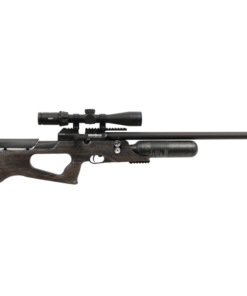
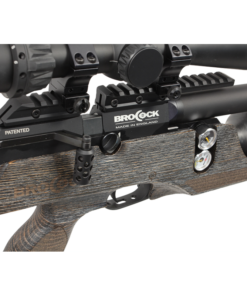
Precharged (PCP)
Brocock Sniper XR Magnum Safari
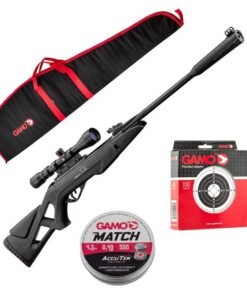
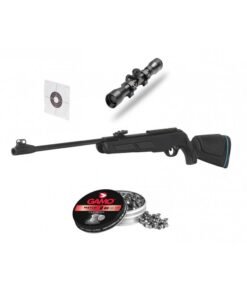
Air Rifles
Gamo Target Shooting Kit – .177 Pellet Air Rifle
Air Rifles
Daystate Blackwolf
PCP Air Rifles
Weihrauch HW100X T LAM ADJ
Air Rifles
AirForce Airguns Talon SS Spin-Loc
Air Rifles
Brocock Sniper XR Magnum Synthetic
Air Rifles
HW110 KT LAMINATE ADJUSTABLE
Air Rifles
Reviews
There are no reviews yet.