
-
 1 × $350.00
 -
 1 × $180.00
Subtotal: $530.00




$1,355.00
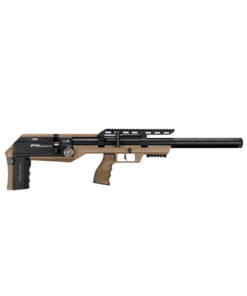
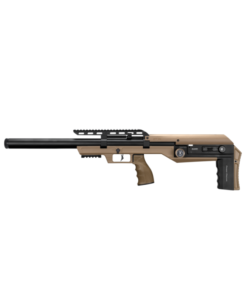
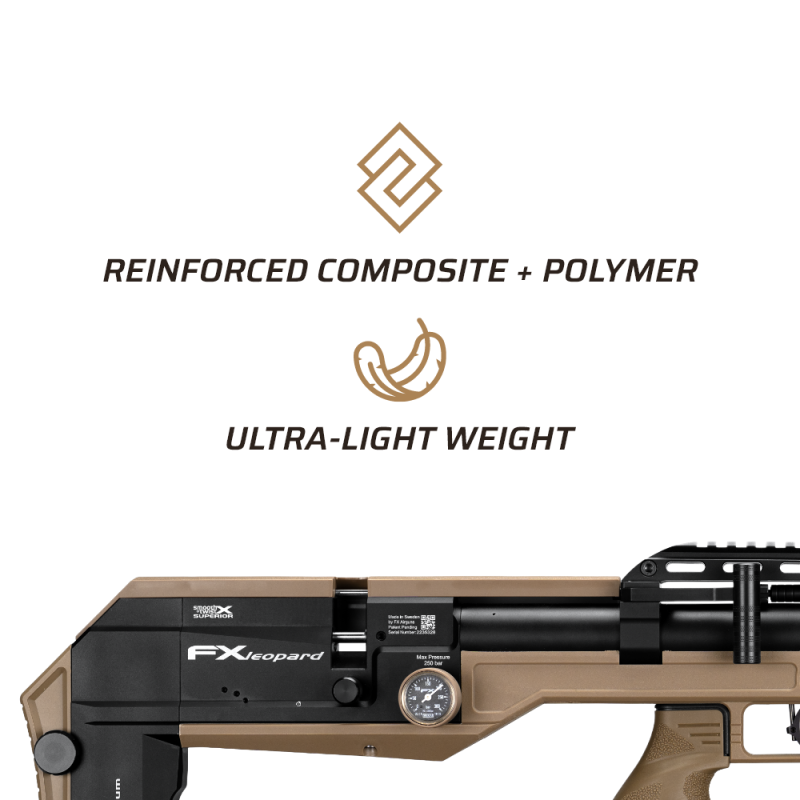
The FX Leopard Sniper Composite brings together cutting-edge engineering, modern ergonomics, and the unmistakable precision FX is known for now enhanced with a reinforced composite stock that delivers a lighter overall weight while preserving the rifle’s rigid, competition-grade stability. This platform is built for shooters who demand power, adaptability, and reliability in every scenario.
Designed as the Sniper Tube variant of the Leopard family, this model strikes a perfect balance between precision and powerful. It’s an exceptional option for hunters and all-around shooters who want maximum efficiency in the field without sacrificing anything when it comes to power. The Leopard’s integrated plenum design, built directly into the buttstock, further solidifies its role as a compact yet authoritative airgun.
The tube version of the Leopard is optimized for balance and maneuverability. With 310cc of onboard air, it’s ready for extended sessions without adding unnecessary bulk—perfect for stalking, target transitions, or precise offhand shots.
The modular fore-end includes a rigid bridge system, giving shooters the option to mount accessories with confidence. Along with a full-length Arca-Swiss rail and M-LOK slots on all sides, the Leopard is fully customizable for bipods, lights, slings, and other mission-specific gear.
Hidden within the buttstock, the plenum serves as a consistent high-pressure buffer between the regulator and the valve, ensuring each shot receives a steady supply of regulated air for optimized accuracy and power.
This advanced, externally adjustable regulator lets shooters fine-tune pressure for specific ammunition types—whether heavy slugs or traditional pellets—unlocking the full precision potential of the platform.
Fine-tune hammer control with both macro and micro adjustments, allowing true personalization of airflow, velocity, and performance.
A sleek, ergonomic over-barrel 310cc air tube design (unique to the broader Leopard lineup) maximizes handling while maintaining impressive air capacity.
The go-to choice for superior slug and heavy-pellet performance. Its 1:18 smooth twist rate and optimized choke maintain airtight consistency and unparalleled accuracy shot after shot.
Ensures maximum elevation adjustment for long-range shooting setups.
A crisp, customizable trigger that can be tailored to your preferred break and feel.
Soft, contoured, and fully compatible with AR-style grips for limitless customization.
Dial in your perfect shoulder weld with tool-less vertical adjustment.
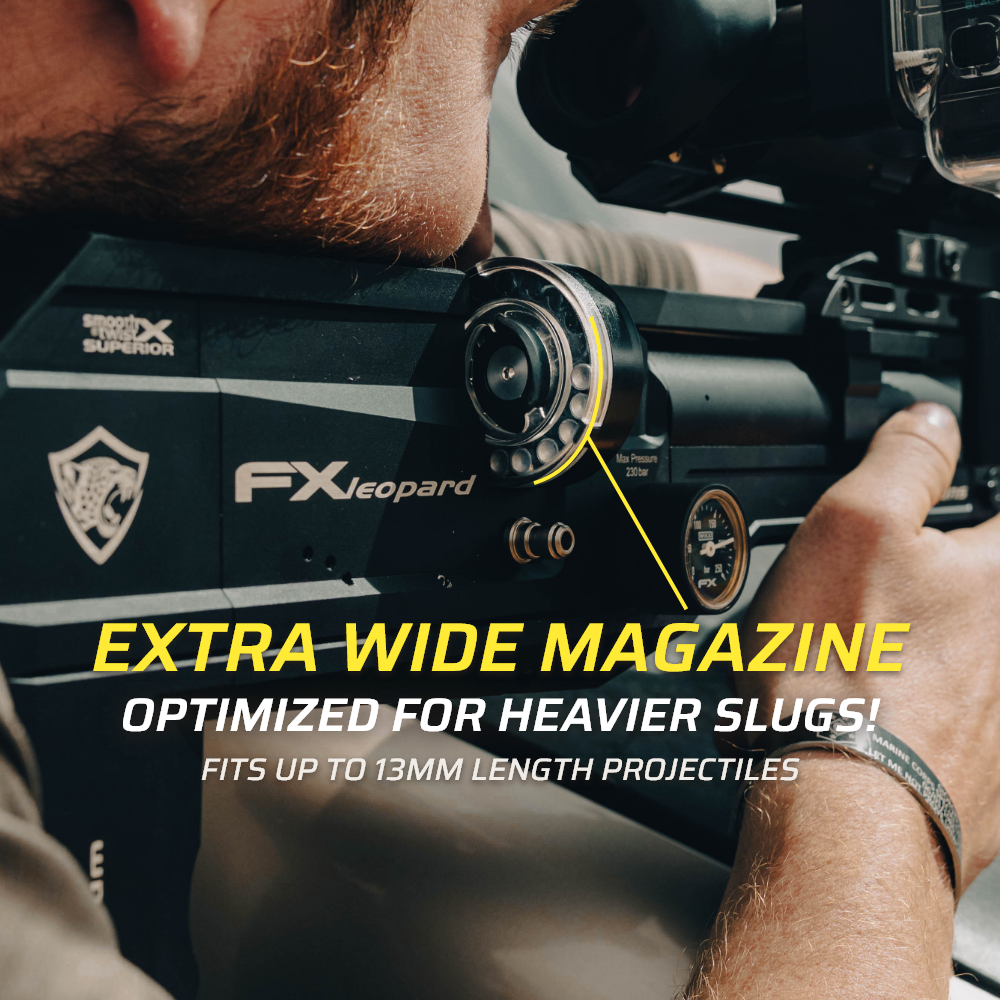
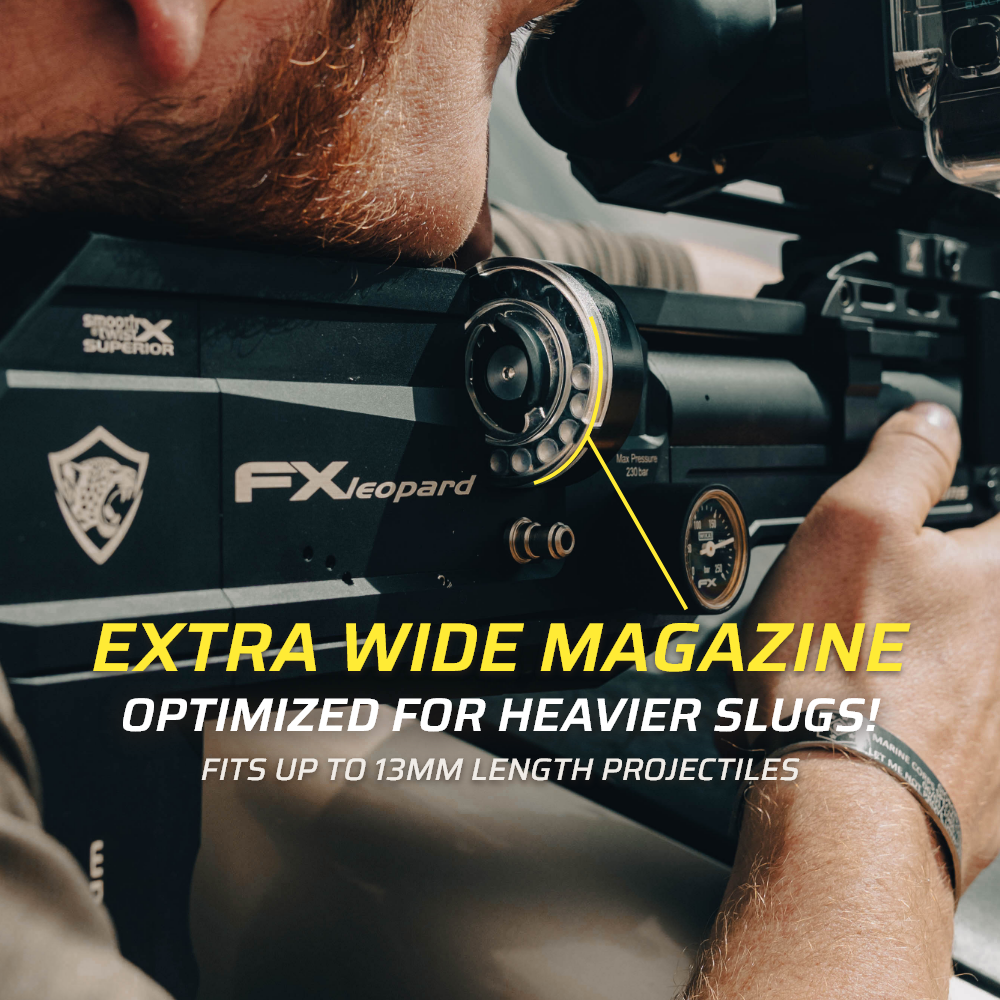
Smooth cycling and compatibility with projectiles up to 13 mm long ideal for modern, heavy-slug shooting.
Compatible with your preferred sound moderator for quieter, more enjoyable shooting.
Accessible and intuitive from either side for safe, confident operation.
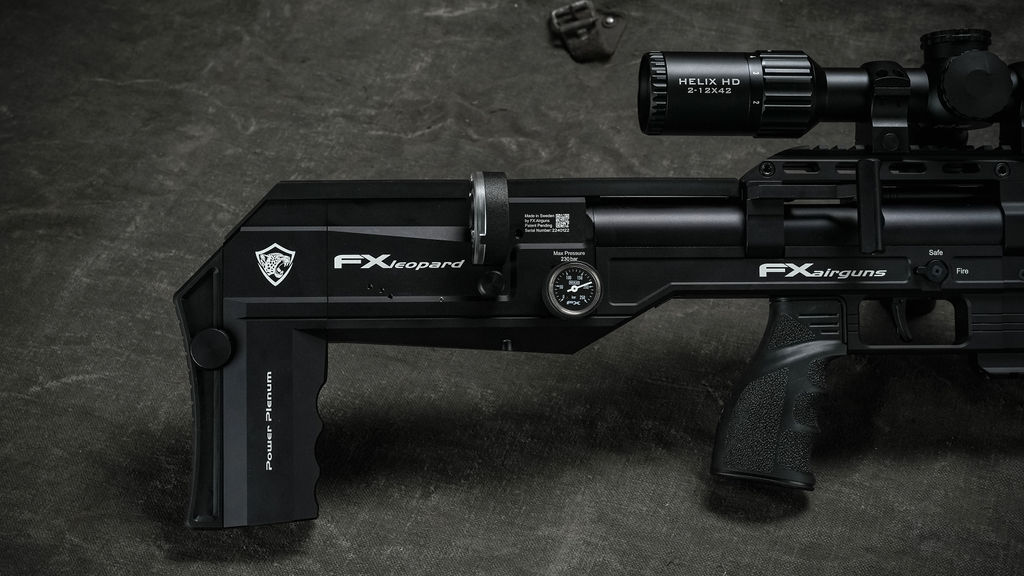
The FX Leopard Sniper Composite (Black or FDE) has been created for airgun enthusiasts who expect advanced adjustability, sophisticated Swedish engineering, exceptional balance, and the performance potential demanded from a modern precision PCP platform. Rather than being designed around a conventional full-length rifle layout, the Leopard has been built around an efficient bullpup architecture through which a substantial barrel length can be retained while overall dimensions are kept controlled.
With the Sniper configuration, a 700 mm barrel is provided, thereby giving the platform the longest barrel option within the Leopard family. Consequently, substantial airflow potential, projectile stability, and efficient utilization of regulated compressed air can be supported. At the same time, the rearward action configuration keeps the rifle substantially more manageable than might normally be expected from a conventional rifle carrying a barrel of equivalent length.
Furthermore, the FX Leopard Sniper Composite is offered with a reinforced polymer chassis in either Black or FDE, allowing an appearance to be selected according to individual preference while the practical advantages of a lightweight, durable stock material are retained.
However, appearance represents only one part of the Leopard concept. Considerable emphasis has been placed on barrel rigidity, air management, adjustability, ergonomics, and accessory compatibility. Therefore, the rifle can be configured around different lawful sporting requirements rather than forcing every shooter into a single factory-defined setup.
At its heart, the Leopard incorporates the FX APB barrel system, an innovative architecture through which the barrel assembly and surrounding air system are integrated in a manner intended to increase rigidity while maintaining a low-profile design. Inside that system, FX interchangeable liner technology is retained. As a result, the familiar versatility associated with modern FX barrel platforms has been carried into a completely new rifle architecture.
Meanwhile, regulated airflow is managed through the latest AMP MKII regulator, while a substantial 54cc power plenum is integrated into the rear section of the platform. Accordingly, regulated air can be stored close to the valve system and released efficiently when a shot is fired.
Power refinement has also been made conveniently accessible. Through the FX Quick Tune System, adjustments can be approached without extensive disassembly. Consequently, the rifle can be configured more effectively around compatible pellets, heavier projectiles, regional power requirements, and individual sporting applications.
For shooters who value an adaptable precision platform rather than a basic fixed-output PCP, these features allow the FX Leopard Sniper Composite (Black or FDE) to occupy a distinctive position within the FX Airguns range.
Designed around a combination of compact bullpup proportions and Sniper-length performance architecture, the FX Leopard provides an impressive selection of premium features.
A premium PCP rifle is rarely defined by a single component. Instead, performance is determined by the interaction between the barrel, regulator, plenum, valve system, trigger, stock geometry, magazine, and shooter interface.
That integrated approach can clearly be seen in the Leopard.
Rather than having unrelated upgrades added to an established action, the rifle has been developed as a complete system. The air reservoir arrangement, barrel architecture, rear plenum, magazine location, stock geometry, and external adjustment controls have therefore been designed to function together.
Consequently, a platform has been produced that feels distinctly modern while remaining recognizably part of the FX Airguns family.
One of the strongest advantages provided by a bullpup layout is packaging efficiency.
With a conventional rifle, the action is positioned in front of the trigger. Therefore, when barrel length is increased, overall rifle length is increased considerably as well.
In contrast, the action of a bullpup is positioned farther toward the rear. Accordingly, a long barrel can be incorporated while a comparatively compact exterior profile is retained.
This principle becomes particularly valuable in the FX Leopard Sniper Composite because the Sniper configuration uses the longest Leopard barrel option.
A 700 mm barrel would make many conventionally configured rifles extremely long. However, because the Leopard has been engineered around its bullpup architecture, the increased barrel length can be accommodated far more efficiently.
Therefore, shooters who appreciate a substantial barrel but do not want the handling characteristics of an unnecessarily oversized rifle are provided with an appealing alternative.
Perhaps one of the most distinctive engineering features of the Leopard is the APB – Air Pressure Barrel – system.
Rather than treating the air reservoir and barrel as completely independent structures, the APB concept has been integrated around the barrel architecture itself.
Through this arrangement, increased structural rigidity can be promoted while the streamlined exterior profile of the rifle is maintained.
When consistency is being pursued, unwanted barrel movement can become significant.
Even relatively small changes in alignment may affect the relationship between the barrel, optic, and projectile path. Therefore, considerable attention has historically been paid to barrel support within precision-oriented rifle design.
With the Leopard, structural rigidity has been treated as a core engineering objective.
The APB arrangement has therefore been incorporated not simply for appearance, but as part of the mechanical architecture surrounding the barrel.
Moreover, because the barrel system has been integrated with the rifle’s air-storage concept, exterior bulk has been reduced compared with layouts in which multiple large components are positioned independently beneath or around the action.
The resulting profile is consequently clean, modern, and distinctly purpose-built.
Inside the APB architecture, FX barrel-liner technology has been retained.
This is particularly important because barrel versatility has become one of the defining characteristics associated with modern FX rifles.
Rather than requiring the entire platform to be fundamentally changed when different compatible configurations are considered, the liner-based architecture provides a more modular foundation.
Consequently, an owner can remain within the familiar FX ecosystem while benefiting from the Leopard’s newer barrel-support architecture.
Compatibility should always be confirmed for the exact caliber, liner, barrel component, and regional rifle configuration being used. Nevertheless, the underlying modular philosophy remains an important part of the Leopard design.
The designation Sniper identifies the long-barrel version of the FX Leopard family.
Within the range, different barrel lengths are offered so that portability, handling, air efficiency, and performance can be balanced according to the intended sporting application.
For the Sniper model, the 700 mm / approximately 27.6-inch barrel is fitted.
This configuration provides the greatest barrel length within the standard Leopard lineup.
A longer barrel provides additional distance through which expanding compressed air can act behind a projectile.
As a result, depending on caliber, tune, projectile mass, regulator setting, and local power restrictions, efficient use of the available air can be supported.
Nevertheless, power should never be considered in isolation.
Consistency, projectile compatibility, regulator stability, and appropriate adjustment are equally important. Therefore, the Leopard is not simply designed around maximum output. Instead, a combination of airflow control and external tunability has been incorporated.
This distinction is important.
A well-developed PCP platform should allow power to be managed rather than merely produced. Consequently, the Leopard provides multiple systems through which its operating characteristics can be refined responsibly.
A substantial 54cc power plenum has been incorporated into the rear portion of the FX Leopard.
The location is significant because it allows a large volume of regulated air to be positioned close to the firing valve without an oversized external component being attached awkwardly elsewhere on the rifle.
Before each shot is released, regulated compressed air is held within this chamber. Once the valve is activated, that air can be delivered efficiently behind the projectile.
Consequently, the plenum becomes an important part of the rifle’s airflow architecture.
In a regulated PCP, the main reservoir and firing valve do not operate as a completely unrestricted system.
Instead, the regulator controls the pressure supplied to the regulated side of the rifle. The plenum then provides the volume of regulated air available for the firing cycle.
Therefore, plenum capacity, regulator setting, valve behavior, hammer energy, projectile selection, and barrel configuration must operate together.
By incorporating a 54cc plenum, FX has provided the Leopard with substantial regulated volume for an adaptable range of configurations.
Accordingly, both moderate and higher-output sporting setups can be supported where permitted.
Consistency has been placed at the center of the Leopard’s air-management system.
For that reason, the rifle is equipped with the FX AMP MKII regulator.
Regulation is extremely important within a precision PCP because reservoir pressure naturally changes as shots are fired. Without effective regulation, those changing pressures can contribute to changes in projectile velocity.
By contrast, a regulator is used so that air supplied to the firing system can be controlled at a more consistent pressure.
Consequently, velocity consistency can be improved when the rifle has been properly configured.
The regulator has also been made externally adjustable.
Therefore, the rifle’s operating pressure can be configured as part of the overall tune.
However, regulator adjustment should always be carried out according to FX instructions and within the limits specified for the rifle.
Adjustments should never be approached randomly.
Instead, regulator pressure, hammer setting, projectile selection, and other variables should be considered as parts of one complete system.
When properly understood, this adjustability becomes one of the Leopard’s strongest characteristics.
Rather than being locked permanently into one narrow operating window, the platform can be configured more appropriately around different compatible sporting requirements.
Another important element of the FX Leopard Sniper Composite (Black or FDE) is the Quick Tune System.
Modern PCP enthusiasts frequently use different projectile types or operate within different regulated power requirements. Consequently, the ability to make controlled external adjustments can be extremely valuable.
With the Leopard, power refinement can be approached through accessible controls rather than requiring the rifle to be extensively dismantled each time a legitimate configuration change is required.
Hammer energy forms one part of the valve-opening process within a PCP rifle.
Therefore, adjustable hammer-spring tension can be used as one variable within the tuning process.
A conveniently accessible control has been incorporated into the Leopard so that the setting can be refined.
However, greater adjustment does not automatically mean better performance.
Instead, an efficient tune is generally achieved when airflow, regulator pressure, valve behavior, projectile characteristics, and hammer energy are balanced.
Consequently, the Leopard’s adjustability should be viewed as a precision tool rather than simply as a method of maximizing output.
A redesigned rotary magazine is used by the FX Leopard.
Beyond simply holding multiple projectiles, the magazine has been engineered with additional internal length.
Compatible projectiles measuring up to approximately 13 mm in overall length can be accommodated by the magazine architecture.
This increased clearance is particularly useful because modern precision airgun ammunition has expanded considerably beyond traditional pellet designs.
Conventional diabolo pellets remain widely used because of their established aerodynamic behavior and excellent compatibility with air rifles.
However, heavier and longer projectile designs are also available for suitable high-performance PCP platforms.
Accordingly, additional magazine clearance can provide useful flexibility.
With the Leopard, this extra-wide architecture has been deliberately incorporated so that longer compatible ammunition can be accommodated more comfortably.
Nevertheless, actual compatibility should always be verified according to caliber, barrel liner, projectile dimensions, rifle tune, and manufacturer guidance.
Different ammunition types can produce dramatically different results.
Therefore, testing should always be conducted responsibly in a safe and lawful sporting environment.
A smooth sidelever action is incorporated into the FX Leopard.
The sidelever arrangement allows the magazine to be indexed and the firing mechanism to be prepared through a controlled movement of the lever.
Because the action is positioned within the compact bullpup architecture, considerable attention has been placed on making the operating controls accessible.
Consequently, repeated target sessions can be conducted without the awkward handling sometimes associated with poorly arranged bullpup actions.
Mechanical refinement can have a major influence on the overall impression created by a premium rifle.
Even when excellent accuracy potential is available, a rough or poorly positioned action can reduce confidence and enjoyment.
Therefore, the Leopard has been developed to provide a smooth, deliberate cycling experience.
The repeating mechanism is especially useful during structured target sessions in which multiple shots are being taken without the rifle being removed from the shooting position unnecessarily.
An adjustable two-stage trigger has been incorporated into the Leopard.
Trigger quality is particularly important whenever precise shot release is required.
If excessive movement, inconsistent resistance, or an unpredictable break is present, the shooter may unintentionally disturb the rifle immediately before the shot is released.
For this reason, the trigger system has been designed to provide a controlled and customizable interface.
A two-stage trigger divides the movement into clearly differentiated phases.
During the first stage, initial movement is taken up. Subsequently, the second stage provides the final resistance before release.
When correctly adjusted to suit the user and operated safely, this configuration can provide a predictable trigger feel.
Consequently, concentration can be placed on sight alignment, breathing, stability, and proper technique rather than compensating for an inconsistent trigger.
The FX Leopard Sniper Composite is available with a reinforced polymer chassis in Black or FDE.
Both versions share the same fundamental rifle concept. Therefore, the choice is primarily determined by appearance and individual preference rather than a major change in the operating platform.
A clean and understated appearance is created by the Black version.
The darker finish complements the rifle’s tactical geometry and integrates naturally with black optics, bipods, mounts, and many common accessories.
For users who prefer a traditional tactical appearance, Black will therefore be an obvious choice.
Moreover, minor differences between accessories tend to be visually less noticeable against an all-black platform.
A distinctive alternative is provided by Flat Dark Earth, commonly abbreviated as FDE.
This lighter earth-tone finish gives the Leopard a very different visual character while preserving the benefits of the polymer chassis.
FDE has become particularly popular on modern modular sporting platforms because a strong tactical appearance can be maintained without relying exclusively on black components.
Consequently, the FDE Leopard provides a visually distinctive option for anyone who wants the rifle to stand apart from conventional dark-finished PCP platforms.
Regardless of color, the composite configuration provides several practical advantages.
Polymer is not affected by moisture in the same way as an unfinished or poorly maintained natural wood stock. Furthermore, routine surface maintenance can generally be simplified.
Minor marks associated with normal sporting use may also be less concerning to owners who expect their equipment to be regularly transported and handled.
Therefore, the composite Leopard has been particularly well suited to anyone who values functional durability and comparatively straightforward maintenance.
Compactness alone does not make a successful bullpup.
Balance, trigger position, cheek support, grip angle, optic height, control placement, and rear-stock geometry must all be considered.
Accordingly, considerable attention has been paid to the Leopard’s shooter interface.
Because major components are positioned closer to the shooter, mass can be concentrated toward the center and rear of the platform.
Consequently, the rifle can feel more manageable than its barrel length might initially suggest.
This becomes especially important in the Sniper version.
Although a 700 mm barrel is installed, the bullpup layout prevents the platform from developing the extremely front-heavy proportions that could otherwise be created.
An FX-designed AR-style grip is fitted to the Leopard.
The grip provides a familiar hand angle for users who prefer contemporary tactical ergonomics.
Texturing has also been incorporated so that controlled hand placement can be maintained more easily.
Furthermore, because the grip is visually and mechanically integrated into the chassis, the rifle presents a cohesive appearance rather than resembling a traditional stock to which tactical components have simply been attached.
Shooter dimensions vary considerably.
Consequently, a fixed rear interface cannot provide the same comfortable position to every user.
An adjustable rear buttpad has therefore been fitted to the Leopard.
Through appropriate adjustment, shoulder contact and head position can be refined.
A more consistent mounting position can subsequently be encouraged during repeated shooting.
Consistency is essential in precision shooting.
If the rifle is shouldered differently for every shot, eye alignment, cheek pressure, trigger-hand position, and stability may also vary.
Accordingly, seemingly small ergonomic adjustments can produce meaningful practical benefits.
The Leopard’s adjustable rear interface allows the platform to be configured more closely around the individual user.
A full optical sighting system can be installed through the rifle’s Picatinny scope rail.
This standardized interface provides broad compatibility with suitable rings and mounts.
Consequently, an optic can be selected according to the user’s intended sporting discipline rather than being dictated by a proprietary mounting system.
An inclined scope rail is incorporated into the Leopard architecture.
The exact specification should always be confirmed for the market-specific configuration being purchased, because product documentation and variants can differ.
Nevertheless, the underlying purpose of an inclined rail is to preserve useful optical adjustment when the rifle is being configured for precision target work at extended sporting distances.
As always, zeroing and trajectory verification should be conducted in a controlled shooting environment with an appropriate backstop.
Modern precision airgun setups frequently use ARCA-compatible mounting systems.
Accordingly, ARCA functionality has been integrated into the Leopard’s forend.
This provides a broad, stable interface for compatible accessories.
One common advantage of an ARCA rail is the ability to adjust the position of a compatible bipod or support system without being restricted to one permanently fixed mounting point.
Consequently, balance can be refined for different shooting positions.
For example, the support point used at a shooting bench may differ from the position preferred for another lawful sporting discipline.
The ability to reposition an accessory can therefore improve adaptability.
M-LOK mounting provisions are also incorporated into the Leopard forend.
Because M-LOK has become widely adopted across modern sporting equipment, a broad range of compatible accessories can be installed where appropriate.
Importantly, unused sections remain relatively clean and low-profile.
Therefore, unnecessary rail bulk does not need to be carried simply to preserve future accessory options.
This contributes to the Leopard’s streamlined appearance.
Pressure information is essential on a regulated PCP rifle.
Consequently, two pressure indicators are incorporated into the Leopard architecture.
One is used in relation to the main air supply, while the second allows regulated pressure information to be observed.
By separating reservoir and regulated-pressure information, a clearer picture of the rifle’s operating state can be obtained.
The amount of air remaining in the reservoir can therefore be monitored while the regulator side is considered independently.
This arrangement becomes particularly useful when different legitimate tunes are being evaluated.
Rather than relying entirely on guesswork, pressure information can be incorporated into the setup process.
A Foster-style quick-disconnect filling interface has been incorporated.
This widely recognized PCP filling format allows compatible filling equipment to be connected conveniently.
The exact filling procedure and maximum pressure requirements must always be followed according to the official FX instructions supplied with the rifle.
Compressed air should never be treated casually.
Properly rated equipment must therefore always be used, and components should be inspected regularly.
A manually operated safety is incorporated into the Leopard.
However, a mechanical safety should never be treated as a substitute for responsible handling.
Every air rifle should always be treated as though it could be loaded.
The muzzle should therefore be kept pointed in a safe direction, the trigger should remain untouched until a lawful shot is intended, and an appropriate backstop should always be confirmed.
Eye protection should also be used where appropriate.
Furthermore, the rifle should be stored securely and in accordance with applicable local regulations.
Depending on regional availability, the Leopard platform can be offered in several popular airgun calibers, including:
Availability, power level, magazine capacity, projectile compatibility, and legal requirements may differ according to caliber and country.
Therefore, the configuration offered on the product page should always be checked before an order is selected.
The .177 configuration is commonly associated with economical pellet use, relatively flat trajectories at suitable energy levels, and precision target disciplines.
Because projectile mass is typically lower than in larger calibers, different airflow and regulator requirements may be used.
Consequently, tuning information should never simply be copied from another caliber.
The .22 configuration remains one of the most widely selected PCP calibers because an effective compromise between projectile mass, efficiency, availability, and versatility can be achieved.
For many adult recreational shooters, .22 therefore represents an appealing all-round option.
Greater projectile mass is generally provided by .25-caliber ammunition.
Accordingly, more regulated air may be required to achieve an efficient setup.
The substantial plenum volume and long Sniper barrel provide a platform that can accommodate appropriate .25 configurations where permitted.
The .30-caliber Leopard represents the largest commonly listed caliber within the standard range.
Substantially heavier projectiles can be used compared with .177 or .22.
Consequently, air consumption and setup requirements can differ considerably.
Regional laws should always be checked before any high-output PCP configuration is selected.
Magazine capacity varies according to caliber because larger projectiles occupy more physical space.
Typical Leopard magazine configurations are designed around high-capacity repeating use while maintaining clearance for relatively long compatible projectiles.
Therefore, users should always select a magazine corresponding exactly to the rifle’s caliber and generation.
Mixing incompatible components should never be attempted.
The Leopard family has been designed around multiple barrel lengths.
Consequently, each configuration provides a different balance between portability and barrel length.
The Compact configuration uses the shortest barrel within the primary Leopard range.
As a result, maximum maneuverability is prioritized.
A more compact exterior package can therefore be obtained for users whose needs favor portability over maximum barrel length.
The Standard occupies the middle position.
Additional barrel length is provided compared with the Compact, while overall dimensions remain below those of the Sniper.
Consequently, the Standard can offer a useful middle ground for many users.
The FX Leopard Sniper Composite (Black or FDE) is selected when the longest barrel architecture is preferred.
Its 700 mm barrel maximizes the available barrel length within the standard family.
Accordingly, the configuration is particularly attractive to users who value long-barrel efficiency, extensive adjustability, and precision-oriented equipment.
The Leopard platform is offered around both tube-oriented and bottle-oriented architectures.
Although they share important design principles, meaningful differences are present.
The Composite Sniper uses the streamlined tube-based concept combined with the polymer chassis.
Consequently, the exterior profile remains clean and relatively lightweight.
A highly integrated appearance is also maintained.
For anyone who values maneuverability and a straightforward chassis architecture, this version can therefore be especially attractive.
The bottle-equipped Leopard increases onboard air capacity through the addition of a carbon-fiber bottle.
Consequently, extended shot count can be prioritized.
However, the exterior architecture and weight distribution differ from the tube-based Composite model.
Therefore, neither configuration should automatically be described as universally better.
Instead, the correct choice depends on whether lower-profile handling or maximum onboard air capacity is considered more important.
The Leopard has been developed around repeatability rather than relying on one headline specification.
Several systems contribute to this approach.
Barrel rigidity is addressed through APB architecture.
Air consistency is supported through regulation.
Available firing air is managed through the substantial plenum.
Power refinement is enabled through external controls.
Trigger feel can be adjusted.
Optics and support equipment can be mounted through standardized interfaces.
Consequently, each major part of the rifle contributes to the broader precision concept.
One of the characteristics for which premium FX platforms have become widely recognized is adjustability.
That philosophy is strongly represented by the Leopard.
Instead of being treated as a fixed-output air rifle with minimal user configuration, it has been created as a tunable system.
Nevertheless, tunability must be approached intelligently.
More regulator pressure does not automatically produce better groups.
More hammer tension does not automatically increase efficiency.
A heavier projectile is not automatically more accurate.
Likewise, maximum velocity is rarely the only meaningful objective.
Instead, the complete configuration should be considered.
An efficient PCP tune is created when multiple operating variables are balanced appropriately.
Those variables may include:
Consequently, excellent performance is generally produced through systematic configuration rather than simply turning every adjustable control toward its highest position.
Although the Leopard can certainly be appreciated by anyone capable of safely and legally operating a PCP rifle, much of its value is derived from its advanced adjustment systems.
Therefore, experienced PCP enthusiasts may particularly appreciate the platform.
Users who understand regulator behavior, projectile testing, chronograph data, barrel compatibility, and systematic tuning will be able to appreciate why the rifle has been designed with so many independently refined components.
However, newer PCP owners should not be discouraged.
The rifle can still be operated in a properly configured factory setup while additional adjustment knowledge is learned gradually.
FX Airguns has built its reputation around sophisticated pre-charged pneumatic systems.
With the Leopard, that engineering philosophy has been expressed through an entirely new combination of familiar FX technologies.
Rather than reproducing the architecture of the Impact, Panthera, DRS, or Wildcat directly, features and lessons associated with several advanced FX generations have been incorporated into a distinctive platform.
Consequently, the Leopard feels recognizable without being merely derivative.
Visually, the FX Leopard Sniper Composite is unmistakably contemporary.
Straight chassis lines, the bullpup action, modular forend, AR-style grip, Picatinny optics rail, and adjustable rear assembly combine to create a purpose-built technical appearance.
However, these design elements are not included merely to create a tactical visual impression.
Each serves a functional purpose.
The rail supports optics.
The ARCA interface supports compatible positioning equipment.
M-LOK allows accessories to be mounted selectively.
The adjustable buttpad supports fit.
The grip defines hand position.
The bullpup structure controls overall length.
Therefore, visual form has largely followed mechanical function.
Because performance is fundamentally shared between the two composite color options, selection can be based primarily on personal preference.
Choose Black when:
Choose FDE when:
Either version preserves the fundamental composite chassis advantages.
Therefore, performance should not be expected to differ simply because a different color has been selected.
Natural wood remains attractive, but it brings a different ownership experience.
Temperature, moisture, impact marks, scratches, and long-term finish care can all affect natural materials.
Polymer construction is different.
Routine external maintenance is generally easier, while greater resistance to ordinary environmental exposure can be provided.
Accordingly, a composite platform may be preferred by users who expect their rifle to be transported regularly.
Furthermore, weight can often be controlled more effectively with engineered polymer components.
This contributes to the handling characteristics of the Leopard.
The long-barrel Sniper configuration is naturally well suited to supported recreational target shooting.
An ARCA-compatible interface allows a suitable support system to be positioned according to individual requirements.
Meanwhile, the adjustable rear pad can be configured for comfortable shoulder contact.
The bullpup architecture also limits unnecessary forward length.
Consequently, substantial barrel length can be used without forcing the shooter to manage the proportions of a conventional long-action rifle.
When a stable shooting position is being used, the Leopard’s design becomes particularly advantageous.
The rigid barrel architecture, adjustable trigger, regulated airflow system, and optical mounting platform all contribute to repeatable equipment setup.
However, accuracy remains dependent on far more than the rifle.
Ammunition quality, wind, shooting technique, optic setup, stable support, and consistent rifle configuration all contribute.
Therefore, no responsible product description should promise a specific group size for every user or every projectile.
Instead, the Leopard should be understood as a sophisticated platform designed to provide the mechanical consistency required for serious precision work.
Not every Leopard owner needs to compete.
For recreational target shooting, the rifle provides equally valuable benefits.
The high-capacity repeating action reduces interruptions between shots.
The adjustable trigger can improve comfort.
Multiple accessory interfaces make it possible to build a personalized setup.
Furthermore, the Quick Tune system allows the rifle to be configured appropriately for compatible ammunition.
Consequently, a premium recreational experience can be enjoyed without every shooting session being treated as formal competition.
Certain airgun competitions place considerable emphasis on equipment consistency.
In these environments, shot-to-shot velocity stability, predictable trigger release, comfortable ergonomics, and dependable optical alignment become extremely important.
The Leopard incorporates engineering features intended to support those requirements.
Nevertheless, competition rules differ.
Therefore, power restrictions, rifle dimensions, equipment classes, and accessory regulations should always be confirmed before the rifle is configured for a specific discipline.
A premium PCP rifle should be protected appropriately whenever it is not being used.
A padded or hard-sided rifle case suitable for the Leopard’s dimensions should therefore be considered.
Before storage, the rifle should be placed in a safe condition according to FX instructions.
It should also be secured against unauthorized access.
Furthermore, local regulations governing airgun storage and transport must always be followed.
Because rules vary widely between countries, states, provinces, and municipalities, legal requirements should never be assumed solely from general online information.
Sophisticated engineering does not eliminate the need for proper care.
Instead, correct maintenance helps preserve that engineering.
External surfaces should therefore be kept clean.
Dust and debris should be prevented from entering the filling connection.
Suitable ammunition should be used.
Seals should be monitored.
Any abnormal air leakage should be investigated according to manufacturer procedures.
However, unnecessary disassembly should be avoided.
The official FX documentation should always be followed when servicing is required.
The Foster filling interface should be kept free from contaminants.
Dust, grit, and other debris can damage sealing surfaces if allowed to enter the compressed-air system.
Therefore, an appropriate dust cap should be used when available.
Barrel cleaning frequency should be based on actual performance rather than an unnecessarily aggressive schedule.
Only suitable airgun-cleaning equipment should be used.
Hard cleaning rods or inappropriate chemicals may damage internal components.
Consequently, manufacturer guidance should always be prioritized.
Because the Leopard is a PCP rifle, a suitable high-pressure air source is required.
Depending on the owner’s equipment and local availability, filling may be performed from an appropriate compressor, high-pressure cylinder, or another correctly rated PCP source.
All hoses, fittings, and charging equipment must be rated for the pressures involved.
Components should also be inspected regularly.
Compressed air contains substantial stored energy. Therefore, shortcuts should never be taken.
No single optic is ideal for every Leopard owner.
Instead, magnification range, objective size, reticle type, adjustment system, weight, mounting height, and intended sporting application should all be considered.
For general recreational target use, moderate magnification may be sufficient.
For more specialized precision applications, greater magnification and finer adjustment may be preferred.
However, extremely large optics can increase overall weight.
Therefore, balance should be considered rather than simply selecting the largest scope available.
Appropriate Picatinny-compatible rings or a suitable one-piece mount should be used.
Ring height must provide adequate clearance for the optic while preserving a comfortable head position.
Furthermore, mounting screws should be tightened according to the manufacturer’s specifications.
Overtightening should be avoided because unnecessary stress can be placed on scope tubes and mounting components.
One of the strongest characteristics of the Leopard is that accessories can be added selectively.
A rifle does not become more capable simply because every available mounting position has been filled.
Instead, each accessory should solve a specific requirement.
For example:
By choosing accessories deliberately, weight and complexity can be controlled.
Balance is especially important on a bullpup.
Because the action and major pneumatic components are concentrated toward the rear, the rifle does not behave exactly like a conventional sporter.
Some users prefer this immediately.
Others require a short familiarization period.
However, the layout provides a major advantage when a long barrel is desired.
The mass associated with the action is brought closer to the body rather than being projected far forward.
Consequently, the 700 mm Sniper barrel can be incorporated without creating the same lever effect that would be experienced in many traditional rifle layouts.
The Leopard should not be viewed as a rifle that must remain exactly as it left the factory.
Instead, its modular architecture encourages thoughtful personalization.
The optic can be selected according to purpose.
The buttpad can be positioned according to the shooter.
Compatible accessories can be located along ARCA or M-LOK interfaces.
Trigger characteristics can be adjusted within the intended range.
Air-system settings can be configured responsibly.
Compatible projectile options can be evaluated.
Therefore, ownership becomes an ongoing process of refinement rather than merely operating an entirely fixed system.
Several important reasons can make this configuration especially attractive.
First, the longest standard Leopard barrel is obtained without the overall length normally associated with a conventional 700 mm-barreled rifle.
Second, the reinforced composite chassis provides durability and comparatively simple maintenance.
Third, Black and FDE color choices are available.
Fourth, the APB architecture provides a distinctive rigid barrel-support concept.
Fifth, the 54cc plenum and AMP MKII regulation create a sophisticated airflow foundation.
Sixth, external adjustment systems provide extensive legitimate tuning capability.
Finally, standardized accessory interfaces allow the rifle to be configured around individual sporting requirements.
Consequently, the platform combines many of the characteristics sought by modern PCP enthusiasts within one cohesive system.
Specifications can vary according to caliber, region, and production configuration. Therefore, the exact option selected at checkout should always be confirmed.
The Leopard represents an interesting stage in FX development because it combines several modern engineering priorities simultaneously.
Traditional rifle architecture has not simply been modernized cosmetically.
Instead, barrel support, air storage, plenum positioning, accessory mounting, magazine dimensions, trigger geometry, and stock design have all been reconsidered.
Accordingly, the rifle demonstrates how contemporary PCP engineering can be packaged more efficiently.
The APB concept is perhaps the clearest example.
Rather than placing a conventional standalone barrel above a completely separate air reservoir, the system integrates these components more closely.
The resulting arrangement allows rigidity and compactness to be pursued simultaneously.
Similarly, the 54cc plenum has been incorporated into the buttstock architecture.
Consequently, a substantial regulated air chamber can be provided without requiring an awkward external component.
ARCA, M-LOK, and Picatinny standards are incorporated rather than proprietary mounting formats being relied upon exclusively.
Therefore, owners have access to a broad ecosystem of compatible sporting accessories.
A rifle cannot compensate entirely for poor technique, unsuitable ammunition, or unstable support.
Nevertheless, a precision platform should minimize unnecessary mechanical variables.
The Leopard has therefore been designed so that several important factors can be controlled.
Regulated pressure can be stabilized.
Trigger release can be adjusted.
Barrel rigidity can be supported.
Optic mounting can be made secure.
Support accessories can be positioned.
Ammunition compatibility can be evaluated.
Consequently, the shooter is provided with a strong mechanical foundation from which consistent technique can be developed.
Every barrel can exhibit preferences.
Two projectiles of the same nominal caliber may differ in diameter, weight, shape, material, manufacturing tolerance, and aerodynamic characteristics.
Therefore, ammunition should be evaluated systematically.
Quality should generally be prioritized over simply purchasing the least expensive option available.
Groups should then be tested safely at controlled sporting distances.
When one projectile consistently performs better, that result can be documented and used as the basis for further configuration.
A chronograph can be a valuable diagnostic tool for advanced PCP ownership.
Velocity consistency can be measured objectively rather than estimated by sound or perceived recoil.
Consequently, changes in regulator and hammer settings can be evaluated more responsibly.
However, adjustments should remain within legal and manufacturer-defined operating limits.
The objective should be consistency and efficiency rather than uncontrolled pursuit of maximum output.
Because the Leopard offers significant adjustment capability, responsible use becomes particularly important.
Regional power restrictions may apply.
Projectile-energy limits can also determine whether particular licensing or ownership requirements exist.
Therefore, tuning should always be performed within applicable law.
Manufacturer specifications must also be respected.
The existence of an adjustment control should never be interpreted as permission to operate the rifle beyond its designed or legal limits.
The FX Leopard Sniper Composite (Black or FDE) may be especially suitable for an adult airgun user who values:
It may be less appropriate for someone who wants the simplest possible fixed-output PCP and has no interest in advanced adjustability.
In that case, a simpler platform may provide a more straightforward ownership experience.
The value of the Leopard is not concentrated in one specification.
Instead, it is created by the combination of multiple systems.
The barrel architecture is specialized.
The plenum is substantial.
The regulator is adjustable.
The hammer system is tunable.
The trigger can be refined.
The stock can be configured.
The magazine accommodates longer projectiles.
Accessory compatibility is extensive.
Color choices are available.
Therefore, a complete premium PCP ecosystem is provided.
The FX Leopard Sniper Composite is the long-barrel polymer-chassis version of the FX Leopard tactical bullpup PCP platform. A 700 mm barrel, APB barrel system, 54cc plenum, AMP MKII regulator, external Quick Tune adjustments, adjustable trigger, extra-wide magazine, and modular accessory interfaces are incorporated.
Yes. A Black reinforced polymer/composite chassis is available for the Leopard.
This version creates a conventional tactical appearance and coordinates easily with most black optics and accessories.
Yes. An FDE, or Flat Dark Earth, composite configuration is available.
The major operating architecture remains fundamentally the same, while the exterior color provides a distinctly different appearance.
The Sniper configuration uses a 700 mm barrel, equivalent to approximately 27.6 inches.
It represents the longest main barrel option within the Leopard family.
Yes.
A bullpup configuration is used, meaning that major action components are positioned farther rearward than they would be on a conventional rifle.
Consequently, a long barrel can be incorporated without creating excessive overall length.
APB refers to the Air Pressure Barrel architecture used by FX.
The system integrates the barrel with the surrounding air-reservoir structure in a manner designed to create a rigid, streamlined barrel platform.
Inside the architecture, FX interchangeable liner technology is retained.
Yes.
The APB system incorporates FX interchangeable liner technology.
The exact liner specification depends on the selected barrel and caliber configuration.
The Leopard uses the FX AMP MKII regulator.
It provides regulated pressure control and can be adjusted externally within the manufacturer’s intended operating procedure.
Yes.
A 54cc regulated power plenum is integrated into the rear portion of the platform.
This provides a substantial regulated air volume close to the valve system.
The Leopard incorporates the FX Quick Tune System and adjustable hammer-spring control.
Therefore, the operating characteristics can be refined according to suitable ammunition and lawful configuration requirements.
Any adjustments should remain within FX specifications and applicable regulations.
Yes.
A two-stage adjustable trigger is installed.
This allows trigger characteristics to be configured according to the user and appropriate manufacturer instructions.
The Leopard uses an extra-wide rotary magazine architecture.
The magazine has been designed to accommodate compatible projectiles measuring up to approximately 13 mm in length.
Magazine capacity depends on caliber.
The magazine architecture has specifically been designed with additional projectile-length clearance.
However, compatibility must still be confirmed according to caliber, barrel liner, projectile dimensions, and rifle configuration.
Depending on market availability, the Leopard platform is offered in:
Regional restrictions and stock availability may affect which configurations can be ordered.
Yes.
A Picatinny optics rail is incorporated so that suitable scope mounts and optics can be installed.
Yes.
ARCA compatibility has been incorporated into the forend architecture, thereby supporting suitable bipods and other precision-sport accessories.
Yes.
M-LOK mounting provisions are included.
Consequently, compatible accessories can be fitted where appropriate without requiring continuous external rail sections.
Yes.
Dual pressure monitoring is provided so that main air-supply pressure and regulated-system information can be observed separately.
A Foster-style quick-disconnect system is used.
Only correctly rated PCP filling equipment should be connected, and the official FX filling procedure should always be followed.
The principal difference is barrel length.
The Sniper uses the 700 mm barrel, while the Standard uses a shorter barrel configuration.
Consequently, the Sniper is oriented toward users who specifically prefer maximum barrel length within the Leopard platform.
The Compact configuration prioritizes reduced dimensions and maneuverability.
By contrast, the Sniper prioritizes the longest barrel architecture.
Therefore, the better option depends on whether compact handling or maximum barrel length is considered more important.
No.
They belong to the same Leopard family, but the bottle-equipped configuration incorporates additional bottle-style onboard air storage.
The Composite tube configuration maintains the sleeker tube-based architecture.
Exact weight depends on caliber and configuration.
However, the composite tube architecture is designed around a relatively streamlined and maneuverable platform.
Exact factory weight should be confirmed for the specific variant selected.
No performance advantage is inherently created by either color.
The choice is primarily aesthetic.
Black provides a conventional tactical finish, while FDE creates a lighter earth-tone appearance.
The chassis is constructed from reinforced polymer.
Consequently, resistance to routine environmental exposure and straightforward maintenance are important practical advantages compared with more delicate decorative stock materials.
Yes.
Compatible equipment can be installed through the rifle’s ARCA and other accessory mounting interfaces.
The exact bipod and adapter should be selected according to the attachment standard being used.
Yes.
The Picatinny optics platform allows suitable rings or mounts to be used.
Scope dimensions and ring height should be selected so that proper clearance and comfortable eye alignment are maintained.
The Leopard is primarily configured around optical sighting equipment.
Therefore, a compatible scope or other lawful sporting optic should be selected according to the user’s requirements.
It can be operated by a properly trained adult beginner, but its extensive tuning capability means that experienced PCP users may appreciate its features more fully.
A new user can nevertheless begin with an appropriate factory configuration and learn the adjustment system gradually.
Yes.
Its rigid barrel architecture, regulated air system, adjustable trigger, modular support interfaces, and optical mounting platform make it well suited to lawful precision-oriented sporting use.
Actual accuracy remains dependent on ammunition, environmental conditions, setup, and shooter technique.
A high degree of configuration is possible.
Optics, support accessories, rear fit, compatible barrel components, and several operating parameters can be selected or adjusted within manufacturer specifications.
The plenum stores regulated air that can be released during the firing cycle.
Its substantial capacity provides a strong airflow foundation for different legitimate Leopard configurations.
The two systems influence different parts of the firing cycle.
Regulator pressure affects the regulated air supply, while hammer energy influences valve operation.
Accordingly, both can contribute to the overall tune.
No.
Maximum settings do not automatically create the most efficient or accurate setup.
A properly balanced configuration is generally more important than maximum output.
Yes.
Projectile mass, diameter, length, and aerodynamic characteristics can influence the configuration that performs most consistently.
Testing should therefore be conducted systematically and safely.
Not necessarily.
Barrel length alone does not guarantee better accuracy.
Projectile quality, barrel compatibility, regulator consistency, optic setup, wind, support, and shooter technique remain critical.
The longer barrel primarily changes the physical and pneumatic characteristics of the system.
The bullpup architecture helps reduce this concern.
Because the action is positioned toward the rear, the 700 mm barrel can be incorporated without producing the overall dimensions associated with many conventional rifles using an equivalent barrel length.
Yes.
Because this is a pre-charged pneumatic rifle, an appropriate compressed-air source is required for filling.
Only equipment rated for the required operating pressures should be used.
No.
The Leopard is a pre-charged pneumatic platform and is designed to operate from high-pressure compressed air according to manufacturer specifications.
No.
No spring-piston powerplant is used.
Compressed air stored within the PCP system is used to propel compatible projectiles.
Yes, although routine maintenance is generally straightforward.
External surfaces, filling connections, seals, and barrel condition should be monitored.
Manufacturer procedures should always be followed.
Unnecessary disassembly should be avoided.
FX specifically advises owners to follow official instructions and appropriate service procedures.
Complex internal work should be handled by a qualified service provider where required.
A suitable optic, correctly rated filling equipment, secure storage case, and appropriate eye protection are among the most important considerations.
Other accessories should be added according to actual sporting requirements rather than simply because mounting space is available.
When a premium PCP platform is being selected, specifications represent only part of the buying decision.
Correct variant selection matters as well.
Caliber, color, barrel configuration, accessory compatibility, and regional requirements should therefore be considered before the order is completed.
At Elite Air Gun Shop, the FX Leopard Sniper Composite can be presented as part of a carefully selected range of premium PCP air rifles and airgun equipment.
A customer can consequently compare the Leopard with other FX platforms while considering the characteristics that matter most for their intended lawful sporting application.
Select:
Both versions provide the same fundamental Leopard Sniper architecture while allowing the exterior appearance to be matched to individual preference.
Available caliber options may include:
Actual inventory may vary.
Therefore, current product options should be checked before ordering.
Few modern PCP platforms combine long-barrel capability, bullpup efficiency, extensive external adjustability, advanced barrel architecture, modular accessory compatibility, and reinforced composite construction as comprehensively as the FX Leopard Sniper Composite (Black or FDE).
At the center of the design, the FX APB barrel system is used to create an unusually rigid and integrated barrel architecture. Meanwhile, the interchangeable liner concept preserves the versatility for which FX has become widely recognized.
Behind the firing system, a substantial 54cc regulated power plenum is incorporated.
Furthermore, pressure control is provided by the AMP MKII regulator.
Through the Quick Tune architecture, important operating parameters can be refined without the platform being treated as an entirely fixed system.
At the same time, the 700 mm Sniper barrel provides the longest standard barrel configuration in the Leopard family.
Nevertheless, excessive exterior length is avoided because the action has been positioned within the bullpup architecture.
Therefore, long-barrel characteristics and manageable proportions are combined.
The reinforced polymer chassis provides another important advantage.
Whether Black or FDE is selected, a durable, low-maintenance exterior is obtained.
Additionally, an adjustable rear pad, ergonomic FX grip, two-stage trigger, sidelever action, Picatinny optic interface, ARCA rail, and M-LOK mounting provisions allow the platform to be configured around individual sporting preferences.
Consequently, the Leopard is not defined by one spectacular component.
Instead, it is defined by integration.
Air management, barrel rigidity, ergonomics, accessory compatibility, adjustability, and compact packaging have been developed as connected parts of the same system.
For the adult enthusiast who wants a premium FX bullpup with the longest Leopard barrel configuration and a practical composite chassis, the FX Leopard Sniper Composite (Black or FDE) represents one of the most technically advanced choices within the current FX lineup.
Choose Black for a clean tactical presentation.
Choose FDE for a distinctive earth-tone finish.
Either way, the same fundamental Leopard philosophy is delivered: precision-focused engineering, configurable PCP performance, modern ergonomics, and advanced FX technology brought together within an exceptionally refined bullpup platform.
Always follow applicable local laws, safe airgun-handling practices, FX operating instructions, and regional power restrictions.
A high-performance PCP platform becomes most valuable when its engineering translates into practical advantages during real shooting sessions. Although technical specifications matter, the way a rifle behaves from a bench, from a supported position, during extended target practice, and while being transported between shooting locations ultimately determines how useful the platform feels to the owner.
This configuration has been designed around long-barrel efficiency, regulated consistency, compact bullpup proportions, external adjustment, and modular accessory compatibility. Consequently, it can be adapted to a wide range of lawful recreational and precision-oriented applications without forcing every shooter into exactly the same setup.
One of the most natural applications for this platform is supported benchrest shooting.
From a stable bench, the long barrel configuration can be paired with a suitable optic and correctly positioned front support. Because an ARCA-compatible interface is integrated into the forend, a compatible bipod or support can be moved along the available mounting area until the balance point feels appropriate.
This adjustability becomes particularly useful when different optics or accessories are installed.
A heavier scope may move the rifle’s center of gravity rearward, while a larger moderator or forward accessory may shift the balance toward the muzzle. Instead of accepting one permanent support position, the shooter can adjust the bipod placement to compensate.
Consequently, a more stable bench setup can be created.
The regulated pneumatic system also becomes valuable during repeated precision strings. As reservoir pressure decreases, the regulator is used to supply the firing system with a more controlled pressure level.
Therefore, velocity variations associated with changing reservoir pressure can be reduced when the rifle has been properly configured.
For a shooter evaluating group size, ammunition consistency, or optic settings, this predictable behavior can be especially valuable.
Rather than wondering whether a poor group resulted from rapidly changing air pressure, greater attention can be placed on ammunition, wind, trigger technique, and shooting position.
Another strong practical scenario involves extended recreational target sessions.
A shooter may spend an afternoon working through paper targets, reactive targets, or properly approved steel targets at a safe shooting facility. In this environment, comfort and repeatability become just as important as raw mechanical performance.
The repeating sidelever action reduces the need for excessive movement between shots.
Once the magazine has been loaded correctly, follow-up shots can be prepared through a relatively short mechanical cycle.
This allows the shooter to remain in position more consistently.
The benefit is not simply convenience.
Repeatedly lifting the head from the stock, moving the rifle, and rebuilding the shooting position can introduce small variations into technique. By reducing unnecessary movement, a more consistent routine can be maintained.
The adjustable rear pad also contributes to comfort during longer sessions.
Different shooters have different shoulder structures, arm lengths, and preferred head positions. Therefore, the rear interface can be adjusted so that the rifle sits more naturally against the shoulder.
Once the position has been established, repeated mounting can become more consistent.
That consistency can reduce fatigue and make longer practice sessions more productive.
A highly adjustable PCP platform is particularly useful for shooters who enjoy methodical ammunition testing.
Even when two pellets are marketed in the same caliber and similar weight range, differences in head diameter, skirt design, alloy composition, weight distribution, and manufacturing tolerance can affect performance.
Therefore, a shooter may test several compatible pellets to determine which option produces the most consistent groups.
A controlled testing process can be followed.
First, one projectile type can be fired through a chronograph to establish a baseline.
Next, several groups can be fired from a stable support.
Then, average velocity, velocity spread, group size, and overall consistency can be recorded.
Afterward, another compatible projectile can be tested under the same conditions.
Because external adjustment is available, the rifle can later be refined around a preferred projectile where appropriate.
However, changes should be introduced gradually.
Only one major tuning variable should ideally be altered at a time.
Otherwise, it becomes difficult to determine which adjustment created the improvement or decline.
This methodical approach makes the platform especially appealing to technically minded owners who enjoy understanding how ammunition and pneumatic settings interact.
The wider rotary magazine creates another practical testing opportunity.
Certain modern projectiles can be longer than conventional diabolo pellets.
Therefore, additional magazine clearance can become important
Choosing a premium PCP rifle is rarely about one specification alone. A better platform should combine consistency, adjustability, durability, comfort, balance, and practical usability in a way that makes every shooting session easier to manage. This model stands out because those qualities have been built into one complete system rather than added as isolated features.
For shooters who want more than a basic fixed-output air rifle, the biggest advantage is versatility. The rifle can be configured around different lawful sporting applications, different projectile preferences, and different shooting styles. As a result, it offers a level of flexibility that simpler platforms may not provide.
One of the strongest reasons to choose this rifle is its ability to combine a long barrel with compact overall proportions.
Normally, a long barrel can make a rifle difficult to transport, awkward to handle, and excessively front-heavy. However, the bullpup architecture places the action farther toward the rear.
Consequently, substantial barrel length can be retained without creating the same overall dimensions associated with many conventional rifles.
This makes the platform especially attractive for shooters who want the efficiency of a long barrel but do not want an unnecessarily oversized rifle.
The centralized layout also helps the rifle feel more controlled from supported positions. Instead of carrying too much weight far forward, more of the mass is concentrated closer to the shooter.
Therefore, handling can feel more natural, particularly when a scope and support system are installed.
A premium PCP should deliver predictable performance throughout a shooting session.
For this reason, regulated air management is one of the most important advantages of this platform.
The regulator helps control the pressure delivered to the firing system even as the main reservoir pressure gradually decreases. Consequently, velocity can remain more stable when the rifle is correctly configured.
This consistency matters because unstable velocity can contribute to vertical variation on a target.
By reducing unnecessary pressure variation, the rifle provides a stronger mechanical foundation for accurate shooting.
The large regulated plenum also adds to the overall airflow system.
Instead of relying on a small regulated air volume, the rifle has been designed with substantial capacity available close to the firing valve.
As a result, airflow can be managed efficiently across a broad range of compatible setups.
Another major advantage is the ability to refine performance without extensive disassembly.
Many traditional air rifles offer very little adjustment after leaving the factory. If the owner wants to change the operating characteristics, specialized tools or internal modifications may be required.
This platform is different.
External adjustment systems allow important tuning variables to be refined more conveniently.
Consequently, the rifle can be configured around compatible ammunition, desired efficiency, and legal power requirements.
This does not mean every setting should be increased.
In fact, the best results are usually achieved through balance rather than maximum adjustment.
A properly tuned rifle should combine regulator pressure, hammer energy, projectile weight, and airflow efficiently.
Because these variables can be managed more intelligently, the owner is given greater control over the final shooting behavior.
Barrel stability is another reason this rifle deserves consideration.
A rigid barrel system helps reduce unwanted movement between the barrel and the rest of the rifle.
This becomes particularly important when consistent optic alignment and repeatable shot placement are being pursued.
The integrated barrel architecture has been designed to provide additional structural support without relying on an excessively bulky external system.
Consequently, the rifle maintains a streamlined appearance while still prioritizing rigidity.
This provides a clear advantage for shooters who value repeatability.
Modern PCP shooters are no longer limited to one traditional pellet style.
Different projectile designs are now available in a wide range of weights, lengths, and profiles.
For that reason, magazine dimensions can become important.
This rifle uses a wider magazine architecture capable of accommodating longer compatible projectiles than many conventional rotary magazines.
Therefore, greater flexibility is available when testing different ammunition types.
This can be especially valuable for experienced users who enjoy comparing performance and finding the most consistent projectile for their setup.
Instead of being restricted by a short magazine chamber, the owner has more room to explore suitable options.
A quality trigger can make a noticeable difference in practical accuracy.
If the trigger feels unpredictable, the shooter may disturb the rifle during the final moment before release.
An adjustable two-stage trigger helps reduce this problem.
The first stage allows controlled take-up, while the second stage creates a more defined release point.
Consequently, the shooter can build a repeatable trigger routine.
This can be especially useful during benchrest practice or any situation where precise shot timing matters.
Because the trigger can be adjusted within its intended range, different users can achieve a feel that better matches their preferences.
Another strong reason to choose this platform is its use of modern standardized mounting systems.
A Picatinny rail allows a wide variety of suitable optics to be installed.
Meanwhile, ARCA compatibility provides a practical interface for bipods and supported shooting accessories.
M-LOK mounting points create additional flexibility without forcing the rifle to carry unnecessary rail sections.
Therefore, the owner can build a clean setup using only the accessories that are actually needed.
This modular approach is better than relying on proprietary mounting systems because replacement or upgrade options are generally easier to find.
No two shooters have exactly the same body dimensions.
Therefore, adjustability in the stock area is particularly valuable.
The rear pad can be positioned to improve shoulder contact, while the ergonomic grip provides a comfortable and familiar hand angle.
As a result, the rifle can be adapted more effectively to different users.
A better fit can improve stability, comfort, and repeatability.
Furthermore, correct positioning becomes increasingly important during longer shooting sessions because poor ergonomics can create unnecessary fatigue.
A reinforced composite chassis offers practical advantages for shooters who use their equipment frequently.
Unlike decorative natural wood, polymer construction generally requires less cosmetic maintenance.
Moisture exposure, fingerprints, and minor handling marks are less likely to become major concerns.
Consequently, the rifle is well suited to users who prioritize function over delicate appearance.
It can be transported, handled, and used regularly without the same level of concern associated with highly finished wood stocks.
The choice between Black and FDE also allows appearance to be personalized without changing the underlying performance.
One of the most compelling reasons to choose this rifle is that it provides room to grow.
A beginner can use the rifle in a straightforward factory-style configuration.
Later, as knowledge improves, the owner can begin exploring ammunition testing, accessory changes, trigger adjustments, and responsible tuning.
Therefore, the rifle does not become limiting quickly.
Instead, it can continue to provide value as the user’s experience increases.
This makes it a strong option for someone who wants to buy one advanced PCP platform rather than replacing a simpler rifle after a short period.
The biggest advantage comes from the way all of these features work together.
A long barrel is paired with compact bullpup proportions. Regulated airflow is combined with a substantial plenum. External tuning is supported by a rigid barrel system. Modern accessory interfaces are matched with adjustable ergonomics, while the reinforced composite chassis keeps the platform practical for regular use.
Consequently, the rifle provides a balanced combination of precision, adaptability, durability, and usability.
For shooters who value advanced PCP engineering and want a platform that can be refined over time, it represents a highly capable choice for lawful recreational and precision sporting use.
The modern air gun category covers an enormous range of equipment, technologies, shooting disciplines, calibers, historical designs, and recreational uses. A person encountering airguns for the first time may initially assume that every model operates in roughly the same way. However, substantial differences exist between a spring-powered rifle, a PCP platform, a CO2 pistol, a pneumatic target rifle, a metal BB launcher, and a replica-style recreational air pistol.
Understanding these differences is important before comparing products or specifications.
Some people search for air guns meaning because they want to understand exactly what separates an airgun from another projectile-launching device. Others may search what is an airgun, what is air pistol, PCP rifle meaning, or types of air guns while deciding which technology best matches their recreational interests.
Meanwhile, experienced enthusiasts may already understand the basics and instead compare manufacturers such as FX Airguns, Air Arms, BSA, Crosman, Umarex, Webley, AEA, Reximex, and other established names.
This guide brings those subjects together in one educational resource.
The goal is not simply to describe one type of air gun. Instead, the major technologies, ammunition formats, historical developments, maintenance requirements, optical systems, terminology, safety considerations, and manufacturer categories are explained so that readers can understand the wider airgun market.
The simplest answer to what is an airgun is that it is a device that launches a projectile using compressed gas rather than the combustion of conventional firearm propellant.
That compressed gas may come from several different sources.
Depending on the design, energy may be supplied by:
Consequently, describing something as an air powered gun does not identify one specific mechanism.
Instead, the phrase refers to a broad category.
Within that category, substantial differences can exist in operating pressure, projectile type, action design, trigger system, reservoir capacity, barrel architecture, intended use, and regional legal classification.
When people research air guns meaning, confusion sometimes occurs because several overlapping terms are used online.
“Airgun” is generally the broadest term.
An air rifle is normally shoulder-fired.
An air pistol is usually a handgun-format airgun.
A pellet rifle is designed primarily for shaped airgun pellets.
A BB gun commonly launches spherical BB ammunition.
A PCP rifle uses high-pressure pre-compressed air stored in an onboard reservoir.
A CO2 airgun uses compressed carbon dioxide.
A spring-piston airgun stores mechanical energy in a spring before the shot.
Therefore, not every pellet gun is a PCP, and not every BB gun is powered by CO2.
Understanding the operating system is much more useful than relying on appearance alone.
Anyone searching types of air guns, types of air rifles, or types of pellet guns will encounter several major categories.
The most common are:
Each has advantages and limitations.
A pre-charged pneumatic rifle is commonly abbreviated as PCP.
This explains the basic PCP rifle meaning.
A high-pressure reservoir is filled using appropriate compressed-air equipment. That stored air is then released in controlled quantities each time the rifle is operated.
Because the reservoir already contains compressed air, the shooter does not need to compress a large spring immediately before every shot.
Modern PCP rifles may incorporate:
These characteristics have helped PCP technology become prominent among precision-oriented enthusiasts.
The term “pre-charged” refers to the fact that the air is compressed before the individual firing cycle.
A suitable external source fills the reservoir.
Once charged, the system can generally provide multiple shots before additional air is required.
Actual shot count varies dramatically between designs and should never be assumed based solely on reservoir size.
Caliber, regulated pressure, projectile mass, barrel configuration, valve settings, reservoir pressure, and desired performance all affect consumption.
Spring-piston designs remain among the most recognizable air rifles.
Mechanical energy is stored by compressing a spring.
When the trigger mechanism releases the piston, the piston rapidly compresses air inside a cylinder. That compressed air then provides the energy required to move the projectile through the barrel.
Spring rifles have several advantages.
They generally do not require a separate high-pressure air bottle or compressor.
Once the rifle and suitable ammunition are available, the shooting system remains comparatively self-contained.
However, spring-piston rifles also have distinctive recoil characteristics because internal components move during the firing cycle.
This means shooting technique and optic selection can differ from PCP use.
The query what is a break barrel pellet gun refers to one of the most familiar spring-powered designs.
On a typical break-barrel rifle, the barrel pivots downward around a hinge.
This movement performs two functions.
First, the internal spring or gas ram is cocked.
Second, the breech becomes accessible so that a pellet can be loaded.
Afterward, the barrel is returned to its normal position.
The system is simple and has been widely used for generations.
A gas ram system is conceptually related to a spring-piston rifle but replaces the traditional coiled steel mainspring with a sealed gas strut.
When cocked, gas within the strut is compressed.
When the trigger releases the piston assembly, the gas expands and drives the mechanism.
Some shooters prefer this architecture because the firing characteristics can feel different from those of conventional metal-spring systems.
However, neither technology is automatically superior in every situation.
Trigger quality, barrel quality, manufacturing tolerances, stock design, and shooter technique remain important.
CO2 pellet rifles and pistols use compressed carbon dioxide as their energy source.
Many recreational models use small disposable cartridges.
Others may use larger CO2 cylinders.
CO2 technology is particularly common among replica-style pistols because it can support compact designs and semi-automatic-style cycling mechanisms.
Temperature can affect CO2 performance because carbon dioxide pressure varies with environmental conditions.
Consequently, a CO2 platform may behave differently in very cold weather than it does in moderate conditions.
A multi-pump pneumatic airgun uses a manual pumping mechanism to compress air into a chamber.
Several pump strokes may be used before a shot.
Unlike a PCP, the rifle is not normally filled from a separate high-pressure cylinder.
Instead, the pumping mechanism is built directly into the airgun.
This provides a self-contained operating system, although repeated pumping requires more physical effort.
Single-stroke pneumatic systems compress the required air through one complete charging movement.
They have traditionally been popular in certain target disciplines because consistent mechanical operation can be achieved without an external air supply.
The power level and intended use often differ significantly from large-reservoir PCP platforms.
One of the most important distinctions in the airgun world concerns ammunition.
People frequently use the terms BB gun and pellet gun interchangeably.
Technically, they describe different projectile formats.
A conventional pellet usually has a waisted shape.
The front section is known as the head, while the rear flared section is commonly called the skirt.
Several pellet profiles exist, including:
Different barrels may show preferences for particular pellet weights and dimensions.
Therefore, ammunition selection should always be based on compatibility and safe manufacturer guidance rather than visual appearance alone.
Searches such as metal bb pellets, metal pellet, metal pellet gun, bb metal bullet, and 4.5 mm bb often reflect confusion between pellets and BBs.
A traditional steel BB is a spherical projectile.
A 4.5 mm/.177 pellet is usually shaped rather than spherical.
Therefore, the two formats should not automatically be treated as interchangeable.
Some recreational airguns are designed specifically for BBs.
Others are intended specifically for pellets.
A limited number of designs accept both, but that compatibility must be stated by the manufacturer.
Attempting to load unsuitable ammunition can create safety problems or damage the barrel.
Anyone searching what is air pistol is generally asking about an air-powered platform in handgun form.
Air pistols may use:
They range from inexpensive recreational models to sophisticated competition pistols.
Appearance should not be used to determine operating mechanism.
A realistic replica may use CO2, while an Olympic-style target pistol may use a regulated PCP reservoir.
The CO2 pistol replica category has become particularly popular among collectors and recreational target shooters.
Manufacturers may reproduce the proportions, controls, grip design, external finish, and approximate handling characteristics of well-known historical or modern platforms.
Some incorporate blowback slides.
Others prioritize efficiency and keep the slide stationary.
Replica airguns should nevertheless be handled responsibly.
Realistic appearance means that another person may not be able to distinguish one from a firearm at a distance.
Secure transportation and storage are therefore especially important.
The phrase revolver air gun pellet CO2 usually refers to a CO2-powered revolver-style air pistol that fires pellets.
Some use rotary clips positioned inside the cylinder area.
Others use cartridge-shaped pellet holders.
Several manufacturers have produced this style of equipment.
When considering an air gun pellet CO2 revolver, users should verify whether the specific model accepts pellets, BBs, or both.
External similarity does not guarantee ammunition compatibility.
Searches for Smith and Wesson CO2 pistol generally relate to licensed recreational replicas.
These products are typically designed to reproduce recognizable external styling while using an airgun operating system.
Specifications vary between models.
Consequently, magazine type, projectile compatibility, trigger system, power source, and action type should always be checked individually.
The Walther CP88 Competition is another name frequently encountered by people researching CO2-powered pellet pistols.
It belongs to a long-established category of recreational and precision-oriented CO2 pistols influenced by firearm styling.
When comparing a model of this type with a modern PCP pistol, the operating philosophy is very different.
A CO2 pistol emphasizes cartridge convenience.
A PCP pistol usually emphasizes regulated compressed-air performance.
Neither should be selected purely because one technology sounds more advanced.
The intended use should determine the better format.
A search for SA 10 pistol often points toward modern recreational CO2 pellet or BB pistols.
When evaluating any model in this category, buyers should distinguish between cosmetic features and functional characteristics.
Important factors include:
Umarex – Legends is associated with a broad family of historically inspired recreational airguns.
Replica-style airguns can appeal to collectors because they reproduce recognizable design cues while using CO2 or another airgun power source.
Some may fire pellets, while others are BB-only.
Therefore, buyers should never assume that every model under a replica-oriented series operates identically.
Searches for Umarex RP5 C02 pellet gun demonstrate another common pattern in airgun research: users frequently search for a specific platform while misspelling CO2 as C02.
Search engines generally understand this variation, but accurate website content should normally use CO2.
When discussing a model such as the RP5, factual specification information should be taken from the manufacturer or authorized documentation because variants and regional configurations may differ.
Webley guns occupy an important place in British airgun history.
The company name has been associated with sporting equipment for generations.
Historical products are particularly interesting because their construction, sights, power systems, and ergonomics reflect the engineering expectations of their era.
Collectors may encounter names such as the Webley MKVI or searches for Webley revolver when researching replica and historical-style products.
Some modern airgun products reproduce classic firearm designs using CO2 systems.
Therefore, historical firearm terminology and contemporary airgun terminology sometimes overlap.
The search phrase BSA guns England reflects another major part of British sporting history.
BSA became closely associated with air rifles as well as other engineering products.
Vintage BSA models remain of interest to collectors, while modern BSA-branded air rifles continue the association with British sporting equipment.
A BSA Meteor stock may be sought by someone restoring or maintaining a particular vintage rifle.
Stock generations and inletting can vary.
Therefore, a replacement should be matched to the exact rifle variant rather than being purchased solely because it carries the Meteor name.
Vintage airgun restoration also requires particular care because seals, springs, screws, sights, and stock dimensions may have changed over decades of production.
Air Arms is another prominent name associated with British airgun manufacturing.
Over the decades, the company has produced both spring-powered and pre-charged pneumatic designs.
Its history demonstrates how the airgun industry developed from traditional mechanical spring systems toward sophisticated regulated or precision PCP platforms.
A modern enthusiast comparing Air Arms with FX, BSA, or other manufacturers should consider intended discipline rather than attempting to rank every brand with a single universal score.
Different companies emphasize different design philosophies.
The phrase FX Airguns Sverige refers to the Swedish roots of FX Airguns.
“Sverige” is the Swedish word for Sweden.
FX has become particularly associated with modular PCP architecture, external adjustability, interchangeable barrel technologies, sophisticated regulators, and precision-focused designs.
The manufacturer has released numerous platforms over the years, each emphasizing a somewhat different combination of portability, power management, target capability, and modularity.
The FX DRS represents a different design philosophy from heavily tactical-looking PCP platforms.
Its architecture has been developed around a more traditional rifle silhouette while retaining contemporary pneumatic technology.
This illustrates an important principle when comparing air rifles.
External appearance does not determine technological sophistication.
A rifle with conventional sporting lines can still incorporate advanced pressure regulation and modern barrel engineering.
The FX Impact M3 became widely recognized within the enthusiast community for extensive external adjustability and modular PCP architecture.
It also demonstrates why technical terminology has become increasingly important in modern airgun shopping.
Concepts such as regulator settings, barrel liners, plenums, hammer adjustments, and magazine dimensions are now routinely discussed by enthusiasts who previously may have focused mainly on caliber and velocity.
Searches for FX Leopard .22 PCP specs show how buyers increasingly research exact configurations rather than a model name alone.
Caliber matters.
Barrel length matters.
Reservoir configuration matters.
Magazine capacity can vary by caliber.
Regional power specifications can also differ.
Therefore, an accurate specification table should always identify the exact model and caliber instead of combining numbers from several variants.
The phrase cheapest PCP airgun attracts significant search interest, but price alone rarely determines long-term value.
A low purchase price may be appealing.
However, PCP ownership also requires consideration of filling equipment, seals, manufacturer support, spare magazines, optic mounting, replacement parts, and ongoing maintenance.
Therefore, a more useful question may be:
“What complete PCP setup provides the best value for my intended use?”
A slightly more expensive platform with strong parts availability and reliable support may ultimately provide better value than the lowest-cost option.
The term rexymaxx is sometimes used online as a misspelling or phonetic reference associated with Reximex.
Search-friendly content can acknowledge common search variations without intentionally repeating incorrect terminology throughout a website.
Proper brand spelling improves professionalism and makes product information easier to verify.
RM8 commonly appears in searches involving PCP air rifles.
Short model names can create ambiguity, so users should confirm manufacturer, generation, caliber, stock configuration, and regional version before comparing specifications.
This is especially important when second-hand products are involved.
A model name alone may not identify the exact configuration.
Crosman has played an important role in recreational airgunning, particularly in North America.
The brand has been associated with BB guns, pellet rifles, CO2 platforms, pneumatic designs, and PCP products.
The Crosman 2250 is commonly associated with CO2-powered pellet shooting.
Its popularity also illustrates how modularity became appealing long before modern tactical PCP platforms entered the market.
Owners have historically shown interest in stocks, barrels, optics, grips, and other compatible components.
Any modification should nevertheless remain within manufacturer guidance and applicable law.
The Crosman Shockwave .22 represents another type of airgun search.
Here, caliber and powerplant are often more relevant than tactical appearance.
When comparing a .22 break-barrel platform with a .22 PCP rifle, the user is comparing two fundamentally different operating experiences.
A break barrel is self-contained.
A PCP provides multiple shots from stored compressed air but requires filling equipment.
The search phrase Crosman ST-1 reflects interest in modern recreational platforms with contemporary styling.
As with any model-specific search, buyers should rely on the current manufacturer specification rather than copied marketplace descriptions.
Searches such as Niksan Ozark TW demonstrate how broad the international airgun market has become.
Products from Turkey, Sweden, the United Kingdom, Germany, the United States, and many other manufacturing regions are now compared online.
For lesser-known models, several factors deserve additional attention:
An impressive specification list is less useful if basic replacement components are difficult to obtain.
The phrase AEA airgun covers several different product families.
Searches may include names such as:
Because some AEA products occupy unusually large caliber categories, they should not be treated as equivalent to ordinary recreational .177 or .22 pellet rifles.
Legal classification can vary substantially by jurisdiction.
Consequently, ownership requirements must be checked before any purchase is considered.
The AEA Challenger name appears across PCP-related searches because it has been associated with multiple caliber and configuration options.
This is a good example of why exact model identification matters.
A product-family name is not enough when researching:
The AEA Element Max belongs to another category of modern PCP searches focused on compact and high-output pneumatic designs.
Readers should distinguish between manufacturer marketing terms and measurable specifications.
Independent specification verification, lawful ownership status, warranty support, and intended sporting use remain important.
Queries such as AEA Megalodon 45 cal and AEA Megalodon 50 caliber involve very large-caliber pneumatic equipment.
These products occupy a substantially different category from everyday pellet rifles.
A .177 target rifle and a large-caliber pneumatic platform should never be discussed as though they have the same legal, safety, backstop, storage, or facility requirements.
Large-caliber equipment requires particular attention to applicable regulation and approved shooting locations.
Searches for AEA Zeus 95 cal or similar terminology refer to extremely large-bore pneumatic platforms.
These are specialty products rather than typical introductory airguns.
Legal treatment varies significantly.
Anyone researching this class should verify local regulations directly with the appropriate authorities before ownership or use.
A .72 cal air rifle is another example of a large-bore pneumatic platform.
It should not be confused with common .177, .22, .25, or .30 air rifles.
Caliber alone does not tell the entire story, but larger bores typically place equipment into a very different practical and regulatory category.
Similarly, AEA 50 caliber queries often relate to large-bore PCP platforms.
Website content covering these models should distinguish clearly between:
Combining all four into one generic specification category creates confusion.
Searches such as AEA Harpoon 12 gauge and AA Harpoon can refer to specialty pneumatic equipment whose naming resembles conventional gauge terminology.
Because terminology alone can create misunderstanding, readers should rely on manufacturer documentation and local legal definitions rather than assuming that the name determines classification.
Caliber describes projectile diameter, but it does not automatically describe power, accuracy, intended purpose, or legal status.
Common airgun calibers include:
Larger specialty pneumatic calibers also exist.
The term 4.5 mm BB usually refers to a spherical BB approximately corresponding to the .177 airgun class.
However, a 4.5 mm steel BB and a .177 lead pellet do not necessarily have identical geometry.
Only ammunition explicitly approved for the airgun should be used.
The .22 airgun caliber is widely used because it provides a heavier projectile than .177 while remaining common enough that ammunition availability is generally broad.
Different .22 rifles can nevertheless produce completely different performance characteristics depending on their powerplant.
Therefore, caliber is only one variable.
A pellet tin may appear simple, but the information printed on it can matter.
Useful details include:
Pellets should be stored clean and dry.
Damaged or heavily deformed ammunition may produce inconsistent results.
Handling should also be kept clean so that unnecessary contamination is not introduced into the barrel or magazine.
Queries such as darts for BB gun or dart pellet gun should be approached carefully.
Not every airgun barrel is designed for darts.
Using non-approved projectile types may damage rifling, seals, magazines, or other components.
Therefore, novelty ammunition should never be used simply because its diameter appears compatible.
Manufacturer approval is more important than visual fit.
Correct airgun lubricant selection matters because pneumatic equipment contains seals, O-rings, valves, and other materials that may react differently to unsuitable chemicals.
One lubricant should not automatically be used everywhere.
For example, a product intended for an external metal surface may not be suitable for a high-pressure pneumatic component.
Similarly, petroleum-based products can be inappropriate in certain high-pressure or compression environments.
Manufacturer-specific servicing guidance should therefore be followed.
Proper air gun maintenance helps preserve reliability, appearance, sealing performance, and safe operation.
Maintenance requirements differ substantially between powerplants.
For a PCP platform, routine attention may include:
Internal high-pressure service should be handled only according to manufacturer procedures.
A spring-powered rifle may require attention to:
Because spring rifles generate unique internal movement, scope mounts may also require periodic inspection.
CO2-powered equipment requires suitable seal care and clean cartridge interfaces.
Cartridges should be installed and removed according to manufacturer instructions.
Long-term storage requirements vary by design.
An aluminium rifle case can provide rigid external protection during lawful transportation and storage.
When choosing any case, interior dimensions matter more than external appearance.
The case should accommodate:
The equipment should not be forced against the case walls.
Regional transport laws must also be followed.
Searches for 1/2 UNF and 1 2 UNF generally relate to thread terminology used on some sporting equipment and barrel accessories.
UNF means Unified National Fine.
However, a thread designation should never be assumed simply because an accessory appears visually compatible.
Diameter, pitch, shoulder geometry, and manufacturer specification must match.
Using incompatible threaded components can damage equipment.
A mil dot scope incorporates a reticle using milliradian-based reference points.
The abbreviation “mil” in this context refers to milliradian rather than military.
Milliradian systems can be used for angular measurement and aiming references.
A mil dot is part of a reticle system that provides angular reference marks.
Modern reticles may use dots, hash marks, Christmas-tree layouts, or combinations of these designs.
A shooter should understand whether the optic’s turret adjustments and reticle measurements use matching units.
Mixing MOA and milliradian concepts without understanding the conversion can create unnecessary confusion.
An optic should be selected according to:
Spring rifles may impose different mechanical stresses on scopes than PCP rifles.
Therefore, optic compatibility should always be checked.
An FPE calculator is generally used to express projectile kinetic energy in foot-pounds of energy.
The calculation uses projectile mass and velocity.
However, an energy number should not be treated as a universal measurement of accuracy, quality, or suitability.
Two rifles producing similar energy can feel and perform very differently because of:
The phrase Pyramyd Air calculator frequently appears when users are looking for online airgun energy or ballistic calculation tools.
Calculators can be useful educational resources, but their output depends entirely on the accuracy of the numbers entered.
Chronograph data should be measured rather than guessed if a precise result is required.
A search such as .45 ACP muzzle energy joules may appear alongside airgun energy research, but conventional firearm ammunition and pneumatic airgun projectiles belong to very different systems.
Direct comparisons can be misleading.
Projectile construction, legal classification, pressure generation, intended use, and safety requirements differ substantially.
For airgun education, energy figures should therefore be interpreted within the context of the specific airgun rather than used to imply equivalence with conventional ammunition.
The phrase air gun electric can refer to several technologies depending on context.
In airsoft, electric powerplants are extremely common.
In traditional pellet airguns, electrical components may instead be associated with electronic valves, digital controls, sensors, or specialized triggering systems.
Therefore, “electric air gun” should not be treated as one universal product category.
The phrase cold air guns can relate to several questions, particularly concerns about airgun performance in low temperatures.
Temperature can affect systems differently.
CO2 equipment is especially temperature-sensitive because gas pressure changes substantially with temperature.
Compressed-air PCP systems may also experience environmental effects, although their operating behavior differs from CO2.
Lubricants, seals, batteries in electronic accessories, and optics can also be influenced by very low temperatures.
Manufacturer temperature guidance should therefore be considered when equipment is used in extreme conditions.
A term such as rifle M50 is ambiguous because similar model names can be used across unrelated products and manufacturers.
Whenever a search term is this broad, the safest approach is to identify:
This prevents specifications from one product being mistakenly applied to another.
The name Winchester Model 55 can refer to different historical contexts depending on the category being researched.
Airgun manufacturers have also licensed famous firearm brand names for recreational products.
Therefore, the exact manufacturer and product type should always be confirmed before ordering parts or ammunition.
A search for sniper set is often used casually in ecommerce to describe a bundled air rifle package containing an optic and accessories.
It is not a technical airgun classification.
A better product description should specify exactly what the package contains.
For example:
Precise descriptions create better customer expectations than vague bundle terminology.
Target shooting with air rifles is one of the most established recreational and competitive airgun activities.
Targets may range from simple paper systems to formal competition targets.
Whatever the level of participation, a safe setup should include:
Airgun safety should never depend entirely on the assumption that a particular model is “low powered.”
Every projectile must eventually stop somewhere.
Consequently, a suitable backstop is one of the most important parts of any target setup.
Walls, fences, trees, signs, windows, and household objects should never be treated as improvised backstops.
A proper target trap or purpose-designed shooting environment should be used.
The area beyond the target must also be considered.
Searches for can air rifles kill are important because they reflect a safety question that should be answered clearly.
Airguns are capable of causing serious injury, and some models can be extremely powerful.
Therefore, no airgun should ever be treated as a toy simply because compressed air or CO2 is used instead of firearm propellant.
Safe handling rules should always be followed.
Questions such as will a bb gun kill a rat, will a pellet gun kill a rat, air rifle for rats, rat killing gun, rat gun, shooting a rat, rat shooting, and shoot rats with air rifle frequently appear in search data.
These questions should be approached from a legal, humane, and safety perspective rather than as shooting instructions.
Pest-control laws differ by jurisdiction.
Animal-welfare requirements may also apply.
Furthermore, discharging any projectile in a residential or populated environment can create risks to people, pets, neighboring property, and wildlife.
Where rodent control is required, professionally approved pest-management methods should be considered first.
A licensed pest-control professional can also determine what methods are lawful and appropriate for the specific property.
The phrase rat with a gun can have completely different meanings online, including memes, illustrations, gaming references, and novelty searches.
It should therefore not be assumed to represent a product-buying query.
This demonstrates why SEO content should interpret search intent rather than blindly inserting every keyword into a sales paragraph.
A responsible approach to rodent control begins with prevention.
Common non-shooting measures include:
These measures often address the underlying cause rather than simply dealing with individual animals.
Searches for catapult vs slingshot, what’s the difference between a slingshot and a catapult, another name for slingshot, and synonym for slingshot show how terminology differs internationally.
In American English, “slingshot” generally refers to the handheld Y-shaped device using elastic bands.
In British usage, “catapult” is often used for the same handheld device.
However, historically, a catapult can also mean a much larger mechanical siege device.
Therefore, context determines the meaning.
The misspelled search phrase are slingsgots illegsl is generally asking whether slingshots are legal.
There is no universal answer.
Restrictions vary by country, state, province, municipality, age, location of use, and sometimes design.
Consequently, local law should be checked before carrying or using one.
A wrist rocket is a commonly used term for a slingshot equipped with a wrist support.
Although it may appear alongside airgun searches, it is not an airgun.
Energy is stored in stretched elastic material rather than compressed gas.
Therefore, the technology is fundamentally different.
A Mossy Oak bow also belongs outside the airgun category.
Mossy Oak is widely associated with camouflage branding and outdoor equipment.
Archery equipment stores energy in limbs or related mechanisms rather than using compressed air.
SEO pages should therefore avoid mixing bows, slingshots, air rifles, and airsoft products as though they were technically identical.
The word luftgevær is used in Scandinavian languages for an air rifle or airgun-related concept.
International retailers may encounter this type of search because airgun terminology differs substantially between countries.
Other languages likewise have their own standard terminology.
Search optimization for an international audience should therefore consider localization rather than simply machine-translating every English keyword.
Phrases such as only air gun and just gun are broad and ambiguous.
A user might be trying to distinguish:
Rather than stuffing these awkward phrases repeatedly into product pages, high-quality SEO content should answer the likely intent naturally.
The search term airgu is most likely an incomplete spelling of “airgun.”
Misspellings can appear in keyword tools because real users make typing mistakes.
However, intentionally filling a professional website with incorrect spellings can reduce readability and credibility.
Search engines generally understand many common variations.
Therefore, correct spelling should remain the default.
Similarly, pillet gun is almost certainly intended to mean “pellet gun.”
The correct phrase should dominate published content.
A search engine can usually associate the misspelled query with relevant correctly written pages.
SEO quality should never be sacrificed merely to reproduce every typo found in keyword research.
Whether someone is researching a basic pellet rifle or a sophisticated PCP, a specification sheet should be read carefully.
Important information can include:
Not every specification is equally important to every user.
It is easy to become focused on caliber.
However, the best caliber depends on the platform and intended lawful use.
A high-quality .177 target rifle may be more appropriate for precision paper shooting than a substantially larger caliber.
Likewise, a .22 PCP may offer a different balance of projectile mass and air consumption.
The “largest” option should therefore never automatically be considered the “best.”
Velocity is one of the most heavily marketed airgun specifications.
However, a single maximum velocity number can be misleading if projectile mass is not provided.
Lightweight ammunition usually travels faster than heavier ammunition.
Therefore, comparing two rifles solely through advertised velocity may produce a poor comparison.
Consistency and accuracy often matter more.
Manufacturers may design excellent barrels and regulators, but practical accuracy depends on the complete system.
Factors include:
Therefore, claims of universal guaranteed group sizes should be viewed cautiously.
A larger reservoir can potentially increase available shot count, but it can also increase dimensions and weight.
Moreover, a high-output tune may consume more air per shot.
Therefore, reservoir volume should be considered together with operating pressure and intended configuration.
A regulator manages the pressure supplied from the main reservoir to the firing system.
A regulated rifle can therefore provide a more controlled pressure environment.
However, regulator quality, setup, valve design, and the remainder of the system still matter.
Simply adding a regulator does not guarantee excellent performance.
Trigger systems range from simple recreational units to sophisticated multi-adjustable match triggers.
Common terminology includes:
Adjustments should always remain within manufacturer specifications.
A trigger should never be altered in a way that compromises safe sear engagement.
Some airguns use manual safeties.
Others automatically engage the safety during cocking.
The exact system should be learned before use.
Regardless of design, the safety mechanism should never replace proper muzzle discipline and trigger discipline.
Multi-shot magazines provide convenience.
Single-shot trays can provide a more deliberate loading routine.
Some precision shooters prefer single-loading during ammunition testing because each projectile can be handled individually.
Others appreciate magazines during recreational sessions.
A platform that supports both can provide useful flexibility.
Airgun stocks may be manufactured from:
Each creates a different combination of aesthetics, weight, rigidity, maintenance, and cost.
Walnut is highly valued for appearance and traditional sporting character.
Because wood grain is natural, every stock can look somewhat different.
Beech is often used as a durable and comparatively affordable stock material.
Laminated stocks combine layers of wood material and can provide distinctive color patterns with good structural stability.
Polymer is commonly selected for durability, moisture resistance, reduced maintenance, and tactical styling.
Modern precision platforms may use substantial aluminum structures to increase rigidity and provide modular accessory interfaces.
A technically advanced rifle still needs to fit the user.
Important ergonomic features can include:
A rifle that fits properly is generally easier to mount consistently.
Bullpup designs move the action toward the rear of the rifle.
This allows a relatively long barrel to be combined with shorter overall dimensions.
Advantages can include compact handling and centralized balance.
Potential disadvantages may include unfamiliar control placement or different trigger linkage compared with conventional layouts.
Whether a bullpup feels better is therefore subjective.
Traditional sporter layouts place the action ahead of the trigger.
Many users find this arrangement familiar and naturally balanced.
Wood-stocked PCP rifles often use this format, although composite versions are also common.
Choosing between a bullpup and sporter should be based on handling preference rather than fashion.
A tactical-style PCP may incorporate:
These features can make customization easier.
However, additional accessories also increase weight.
A clean, purposeful setup is usually preferable to adding equipment simply because mounting space exists.
PCP rifles require a suitable compressed-air source.
Common categories include:
All components must be rated for the required pressures.
Fill connectors and adapters should match manufacturer specifications.
Compressed-air equipment should never be improvised.
Maximum filling pressure varies between products.
The highest number printed on another rifle, compressor, or bottle should never be assumed to apply.
Manufacturer documentation is the correct source.
Overfilling can damage components and create serious safety hazards.
Many PCP rifles incorporate gauges.
Some show reservoir pressure.
Advanced platforms may have another gauge for regulator pressure.
A gauge is useful for monitoring the system but should still be interpreted according to the manufacturer’s documentation.
A regulator separates the main reservoir pressure from the lower controlled pressure used by the firing system.
As long as reservoir pressure remains above the regulator’s operating threshold, the regulated side can be supplied at a more consistent pressure.
Once the reservoir pressure falls too low, performance may change.
This is why chronograph strings can show a relatively stable section followed by a change as the system falls below regulation.
A chronograph measures projectile velocity.
For enthusiasts, it can help identify:
Chronographs should be used as diagnostic tools rather than as a competition to achieve the largest possible velocity number.
Foot-pounds of energy is simply one way to express kinetic energy.
Other regions may use joules.
Legal limits in certain jurisdictions may also be written in one of these units.
Consequently, airgun owners should understand which measurement system local law uses.
The phrase gun UK frequently appears in searches because UK regulation is an important subject for airgun owners.
However, rules differ between England, Wales, Scotland, Northern Ireland, and other jurisdictions internationally.
Age restrictions, power thresholds, licensing requirements, storage obligations, transport requirements, and discharge restrictions can all vary.
Therefore, legal guidance should always be verified against current official information.
Safe storage prevents unauthorized access.
Airguns should be secured particularly carefully when children, visitors, or other unauthorized people may be present.
A locked cabinet or appropriate secure case may be suitable depending on local legal requirements.
Ammunition should also be stored responsibly.
Before transporting an airgun:
Replica airguns deserve particular caution because their external appearance can create misunderstandings.
Eye protection is strongly advisable around BB shooting.
Hard BBs can ricochet from unsuitable surfaces much more readily than many beginners expect.
Suitable targets and traps should therefore be selected.
A shooter should always know:
If those questions cannot be answered confidently, the shot should not be taken.
The best powerplant depends on priorities.
A PCP may be appropriate when the user values:
However, filling equipment must be considered.
CO2 may appeal when:
Temperature sensitivity and recurring cartridge cost should be considered.
A spring or gas-ram rifle may appeal when:
The distinctive firing cycle requires suitable technique.
A beginner researching types of pellet guns should avoid starting with brand names alone.
Instead, begin with five questions:
Once these questions are answered, model comparisons become much easier.
For paper target shooting, extreme power is rarely the most important feature.
A comfortable stock, predictable trigger, suitable sights, accurate barrel, and consistent ammunition can matter much more.
This is one reason dedicated target air rifles may produce relatively modest energy while still delivering exceptional precision.
Formal airgun competition includes several disciplines.
Rules vary widely and may specify:
Equipment should therefore be chosen for a specific discipline rather than based on general marketing language.
Higher-priced airguns may incorporate:
However, price is not a guarantee that a particular rifle will suit every shooter.
Ergonomics and intended use remain important.
A less expensive airgun can provide an excellent introduction to recreational shooting if it is safe, reliable, and suitable for its intended purpose.
Beginners do not necessarily need the most technically complicated platform.
A simpler rifle can sometimes make it easier to learn fundamentals.
A useful airgun product page should provide factual information rather than relying entirely on superlatives.
Customers benefit from clear sections covering:
Clear information reduces uncertainty.
SEO has changed substantially.
A page does not become useful simply because phrases such as air gun, types of air guns, metal BB pellets, FX DRS, Air Arms, and PCP rifle meaning appear hundreds of times.
Search engines increasingly evaluate whether content actually answers user questions.
Therefore, keywords should be placed naturally.
Synonyms, related concepts, clear headings, useful explanations, and accurate terminology generally create better content than artificial repetition.
A strong airgun website can build topical authority by creating interconnected educational resources.
Potential supporting pages include:
Internal links can then connect these pages logically.
A projectile-launching system powered by compressed gas rather than conventional firearm propellant combustion.
Pre-charged pneumatic.
Carbon dioxide used as a compressed-gas power source.
A shaped projectile specifically designed for compatible airgun barrels.
Usually a spherical projectile used by compatible BB airguns.
A component used to manage pressure delivered from a high-pressure reservoir to the firing system.
A chamber containing regulated air available for the firing cycle.
An internal barrel component used by certain modular barrel systems.
A device holding multiple projectiles for sequential loading.
A component used to load one projectile at a time.
A standardized rail system commonly used for optics and accessories.
A mounting interface commonly used with precision shooting supports and compatible accessories.
A modular accessory mounting interface.
A quick-disconnect fitting commonly encountered on PCP filling equipment.
A rifle architecture in which the action is positioned farther rearward, typically behind the trigger area.
A hinged-barrel airgun design in which pivoting the barrel commonly cocks the powerplant and exposes the breech.
A sealed gas-spring mechanism used instead of a traditional steel mainspring in certain air rifles.
An instrument used to measure projectile velocity.
Foot-pounds of energy.
The SI unit used to express energy.
A reticle reference based on milliradian angular measurement.
Airgun brands should not be judged solely by one flagship model.
Each manufacturer may serve several market segments.
Often associated with sophisticated PCP engineering, modularity, external adjustment, and precision-oriented platforms.
Known for a long history involving high-quality sporting and competition-oriented air rifles, including PCP and spring-powered designs.
A historically significant British name associated with sporting air rifles across multiple generations.
Another long-established British name with historical importance and modern airgun associations.
Known for a wide range of recreational airguns, licensed replicas, CO2 products, and sporting platforms.
Associated strongly with accessible recreational airguns, pneumatic rifles, CO2 platforms, and modern PCP equipment.
Known particularly for modern PCP platforms, including several unusual larger-caliber products.
A Turkish manufacturer associated with contemporary PCP rifles and pistols.
A meaningful comparison should use the same criteria for both products.
Compare:
Avoid comparing a manufacturer’s maximum specification in one caliber against another manufacturer’s standard figure in a different caliber.
Words such as “precision,” “premium,” “tactical,” and “high performance” are marketing descriptions.
They should be supported by measurable product characteristics.
For example, instead of relying only on “highly adjustable,” identify exactly what can be adjusted.
Instead of simply saying “lightweight,” provide weight where reliable data exists.
Instead of saying “large magazine,” provide caliber-specific capacity.
Specific information creates stronger SEO content and greater customer confidence.
Airguns evolve.
A model name may remain while regulators, magazines, stocks, barrels, or internal components change between generations.
Consequently, manufacturer manuals and current specification pages are valuable references.
This is particularly important when shopping for:
A used airgun should be evaluated differently from a new one.
Important questions include:
High-pressure pneumatic equipment should be inspected carefully if its condition is uncertain.
Collectors researching products such as older BSA, Webley, Winchester-branded, or Crosman models should expect that original seals and other consumable components may have aged.
A vintage rifle’s historical interest may be more important than its performance.
Restoration should preserve safety and, where appropriate, originality.
Accessories can improve usability, but each should have a clear purpose.
Common categories include:
Buying unnecessary accessories before understanding the rifle can waste money.
A protective case is especially useful when a scope remains mounted.
An aluminium rifle case provides a rigid shell, while polymer hard cases and padded soft cases offer other advantages.
Internal padding should support the rifle without putting excessive pressure on the optic.
Airgun barrels usually do not require the aggressive cleaning routines associated with certain firearm applications.
Excessive cleaning can sometimes create more problems than it solves.
Use equipment and chemicals specifically appropriate for the manufacturer and barrel type.
Keep pellets:
Mixing multiple pellet types in the same tin makes repeatable testing difficult.
Accuracy testing should emphasize consistency.
Use the same:
Change one variable at a time.
This makes comparisons more meaningful.
Wind affects projectiles.
Temperature can affect gas systems.
Rain and moisture can affect equipment surfaces.
Strong sunlight may influence optical clarity and target visibility.
Therefore, shooting conditions should be recorded when meaningful comparisons are being made.
Pellet weight influences velocity, trajectory, and how a particular powerplant behaves.
A heavier pellet will not necessarily be more accurate.
A lighter pellet will not necessarily be better.
Barrel compatibility and complete system behavior determine practical results.
Some precision-oriented pellet manufacturers offer slightly different nominal head sizes.
Small dimensional differences can influence fit in certain barrels.
However, users should avoid assuming that one size is universally superior.
Testing remains the most reliable approach.
Airgun noise varies substantially.
Factors include:
Local laws may regulate noise-reduction devices and threaded accessories.
Consequently, legal compatibility should be verified before accessories are purchased.
PCP rifles generally have relatively little mechanical recoil because a heavy piston is not moving through the action.
Spring-piston rifles behave differently.
Their internal motion creates a characteristic recoil impulse.
This affects shooting technique and may influence optic selection.
Because the rifle moves during the firing cycle, small differences in grip pressure or support can affect point of impact.
Many spring-rifle enthusiasts therefore emphasize repeatable, relatively relaxed technique.
PCP rifles are generally less sensitive to this particular mechanical behavior.
The trigger finger should remain outside the trigger guard until the shooter is prepared to fire at a confirmed safe target.
This rule applies whether the equipment is:
Power level does not eliminate the need for disciplined handling.
The muzzle should always remain pointed in a direction where an unintended discharge would not injure a person or damage property.
This principle remains fundamental regardless of whether the airgun is believed to be unloaded.
A safe handling routine does not depend on memory.
Even if the user believes the airgun was unloaded earlier, it should still be handled with the same muzzle and trigger discipline.
This creates consistent habits.
A realistic CO2 pistol may visually resemble a conventional handgun.
That means carrying or displaying it publicly can create serious misunderstandings.
Transport should therefore be discreet, secure, and lawful.
An airgun that can be purchased freely in one jurisdiction may require licensing in another.
Similarly, power limits, age restrictions, and storage rules differ.
International websites should avoid presenting one country’s rules as universal.
Instead, buyers should be advised to check regulations where they live.
People searching gun UK may be asking about:
Because regulation can change, official government sources should always take priority over old forum posts.
Model names such as RM8, M50, Impact, DRS, Challenger, Meteor, or CP88 can appear in thousands of online pages.
Before purchasing parts, users should identify:
This reduces compatibility problems.
Parts that look similar may not be interchangeable.
This is particularly important for:
Part numbers should be used whenever possible.
A term such as 1/2 UNF identifies a thread standard rather than a universal airgun accessory system.
Even where the same nominal thread is used, shoulder dimensions and surrounding geometry may differ.
Manufacturer compatibility should therefore be verified.
A technically impressive airgun becomes less attractive if replacement components or service are unavailable.
Before purchasing, consider:
These factors can significantly influence long-term ownership.
For someone entering PCP ownership, simplicity can be valuable.
Important features include:
Extreme adjustability is not essential for every beginner.
Experienced users may value:
However, more adjustment also requires more understanding.
Manufacturers generally configure rifles to operate within an intended range.
New owners should become familiar with the rifle before changing multiple settings.
If several variables are changed simultaneously, diagnosing performance problems becomes difficult.
The manual should be read before operating a new platform.
It usually explains:
A manual is part of the equipment, not optional reading.
Professional servicing may be appropriate when:
High-pressure systems should not be treated as ordinary low-pressure mechanical equipment.
Modern airgunning has expanded far beyond the simple pellet rifles many people remember from childhood.
Today, the market includes:
This diversity explains why general questions such as types of air guns require more than a one-sentence answer.
The best rifle for a formal target competitor may be completely unsuitable for someone seeking an inexpensive recreational spring rifle.
Similarly, the best compact PCP may not be the best benchrest platform.
A useful comparison therefore begins with intended use.
These questions produce better buying decisions than searching only for maximum velocity.
Readers encountering terminology such as air powered gun, types of pellet guns, PCP rifle meaning, metal BB pellets, gas ram, mil dot, airgun lubricant, or CO2 pellet rifles should recognize that each phrase describes a specific part of the larger airgun ecosystem.
Likewise, names such as FX DRS, FX Impact M3, Air Arms, Webley MKVI, BSA Meteor, Crosman 2250, Walther CP88 Competition, Umarex Legends, AEA Challenger, and Reximex represent different manufacturers, technologies, eras, or model families.
They should not be treated as interchangeable products.
Understanding the category first makes individual product research far easier.
An airgun launches a compatible projectile using compressed gas rather than conventional firearm propellant combustion. The pressure source may be compressed air, CO2, spring-driven air compression, or another pneumatic mechanism.
PCP means pre-charged pneumatic.
The rifle contains a reservoir that is filled with compressed air before shooting.
The major categories include PCP, spring-piston, gas-ram, CO2, multi-pump pneumatic, and single-stroke pneumatic designs.
A break-barrel uses a hinged barrel. Pivoting the barrel commonly cocks the powerplant and exposes the breech for loading.
No.
A traditional BB is spherical, while an airgun pellet usually has a shaped profile with a head and skirt.
No.
A .177 pellet rifle may not be designed for steel BBs.
Use only ammunition types approved for the specific airgun.
Compressed carbon dioxide can provide the energy required to launch the projectile.
It is particularly common in recreational and replica-style pistols.
A gas ram is a sealed gas-spring system used in some piston air rifles instead of a conventional steel mainspring.
A regulator manages pressure supplied from the main reservoir to the firing system, helping provide more controlled operating pressure.
A plenum is a chamber containing regulated air available for the firing cycle.
A magazine stores multiple compatible projectiles and presents them sequentially for loading.
It allows a projectile to be loaded individually instead of through a repeating magazine.
It is an optic incorporating milliradian-based reticle references.
FPE means foot-pounds of energy, one unit used to express kinetic energy.
They express the same physical quantity—energy—but use different units.
Not universally.
PCPs provide characteristics such as low mechanical recoil and multi-shot capability, while spring rifles provide a highly self-contained power system.
Not necessarily.
Suitable PCP hand pumps or high-pressure charging cylinders may also be available depending on the platform and user.
Standard low-pressure workshop compressors are generally not designed for PCP filling pressures.
Only properly rated equipment should be used.
Yes.
The type and amount of maintenance depend on the powerplant and manufacturer.
Not automatically.
Excessive or incorrect lubrication can cause problems.
Follow manufacturer instructions and use only suitable products.
Not necessarily.
Airguns contain seals and pneumatic components that may require specific lubricants.
A case protects equipment during lawful storage and transport.
Hard cases can provide additional impact protection, while padded cases may be lighter.
ARCA is a mounting interface widely used with precision shooting support equipment.
M-LOK is a modular accessory mounting system.
Picatinny is a standardized rail commonly used to mount optics and accessories.
No.
Airguns may use Picatinny, Weaver-style, dovetail, or proprietary systems.
Not every optic is suitable for the unusual recoil characteristics of spring-piston rifles.
Compatibility should be confirmed with the optic manufacturer.
There is no universal answer.
Intended shooting activity, local law, ammunition availability, and rifle type should determine the choice.
They refer to the same broad airgun caliber class, although exact projectile dimensions and shapes differ.
They refer to the same broad caliber class in common airgun terminology.
A bullpup places major action components farther toward the rear, allowing a relatively long barrel within a shorter overall package.
Not automatically.
Accuracy depends on barrel quality, ammunition, consistency, optics, shooting technique, and many other factors.
Important qualities include consistent operation, a suitable trigger, reliable barrel performance, comfortable ergonomics, and appropriate sights.
Advanced regulators, precision machining, premium barrels, adjustable triggers, complex stocks, and modular systems can increase manufacturing cost.
Prices and models change frequently, so a single permanent answer is not reliable.
Total ownership cost should also include filling equipment and accessories.
FX Airguns is a Swedish airgun manufacturer particularly associated with modern PCP platforms and advanced pneumatic technology.
Air Arms is a British airgun manufacturer with a long history in PCP and spring-powered sporting rifles.
BSA is a historic British engineering and sporting brand strongly associated with air rifles.
Webley is a long-established British name associated historically with sporting arms and airguns.
It is associated with a range of historically styled recreational airgun replicas.
It is a well-known CO2-powered pellet platform associated with Crosman.
It is the container in which airgun pellets are commonly packaged and stored.
No.
Only use projectile types specifically approved by the manufacturer.
It is a Unified National Fine thread designation encountered on certain threaded equipment.
Compatibility must still be verified for the exact product.
It is a Scandinavian term associated with an air rifle.
No.
A wrist rocket is a slingshot design using elastic bands and a wrist support.
In some regions, particularly British English, “catapult” can mean a handheld slingshot. Historically, however, catapult also refers to much larger mechanical projectile devices.
No.
Rules vary by jurisdiction.
Yes.
Airguns can cause serious injury and should always be handled responsibly.
No.
Safe muzzle control, trigger discipline, secure storage, and an appropriate backstop are essential.
The legality and appropriateness of pest-control methods vary by jurisdiction, location, species, and animal-welfare rules. Professional pest-management services and local regulations should be consulted rather than assuming that possession of an air rifle automatically makes a particular use lawful. aea 22
CO2 pressure changes with temperature, which can influence the operating characteristics of CO2-powered airguns.
Weight, diameter, shape, manufacturing tolerance, and barrel compatibility can all influence results.
It measures projectile velocity.
No.
Maximum velocity and maximum accuracy are not the same objective.
Consistency and ammunition compatibility are usually more important.
Some models provide external adjustment, while others are designed to remain largely fixed.
Only manufacturer-approved adjustments should be made.
Not without manufacturer guidance.
Operating outside design limits can damage equipment and create safety hazards.
The manual explains loading, filling, safety, pressure limits, maintenance, and operating procedures specific to the model.
The enormous variety found within today’s airgun market is one of its greatest strengths.
A person who wants a simple recreational break-barrel rifle can find a completely self-contained platform.
Someone interested in realistic CO2 replicas can explore designs inspired by historic and contemporary equipment.
A precision enthusiast can choose a sophisticated regulated PCP with adjustable trigger systems, modular barrels, pressure gauges, and modern accessory rails.
Meanwhile, collectors can explore decades of engineering represented by names such as Webley, BSA, Crosman, Air Arms, Umarex, FX Airguns, and many others.
However, the best decisions are made through understanding rather than marketing terminology.
First, identify the operating system.
Next, determine the appropriate caliber and ammunition type.
Then, consider ergonomics, available shooting facilities, maintenance, accessories, manufacturer support, storage, and local regulation.
For PCP ownership, the filling system must also be included in the budget.
For spring-powered rifles, the distinctive firing behavior should be understood.
For CO2 products, cartridge requirements and temperature sensitivity deserve consideration.
For replica airguns, secure and discreet handling becomes particularly important because realistic appearance can create misunderstandings.
Likewise, large-bore pneumatic platforms should be recognized as a specialized category requiring substantially more attention to regulation, approved facilities, and safety than ordinary recreational pellet rifles. crossman 2250
Ultimately, terms such as air gun, air powered gun, PCP rifle, pellet gun, CO2 pistol, gas ram, and BB gun describe different branches of a broad technological category.
Understanding those branches makes it easier to interpret model-specific searches such as FX DRS, FX Impact M3, FX Leopard .22 PCP specs, Air Arms, Webley MKVI, BSA Meteor stock, Walther CP88 Competition, Crosman 2250, Crosman Shockwave .22, Umarex Legends, AEA Challenger, AEA Element Max, or other manufacturer and model names.
Rather than asking which airgun is universally “best,” the more useful question is which platform best matches the user’s lawful activity, experience, preferred shooting style, equipment requirements, and available support.
A well-selected airgun should provide a predictable, manageable, and enjoyable ownership experience.
Correct ammunition should be used.
Manufacturer instructions should be followed.
Pressure limits should be respected.
Airgun lubricant should be selected according to the exact system.
Appropriate targets and backstops should always be used.
Equipment should be stored securely.
Furthermore, local rules governing purchase, possession, transportation, and use should always be verified.
With those principles understood, newcomers can navigate the enormous selection of types of air rifles and experienced enthusiasts can make more informed comparisons between increasingly sophisticated modern platforms. ekol blank guns
The airgun industry now spans everything from simple mechanical spring rifles to highly advanced regulated PCP systems. That range means there is no single design suitable for every person or every discipline. co2 cannon wedding
Instead, the strongest choice is the one that combines appropriate technology, reliable construction, suitable ergonomics, good manufacturer support, compatible ammunition, and responsible ownership for the intended lawful application.
| CALIBER | .177, .22, .25, .30 |
|---|---|
| COLOR | FDE (Flat Dark Earth), Black |
Air Rifles
Air Rifles
Air Rifles
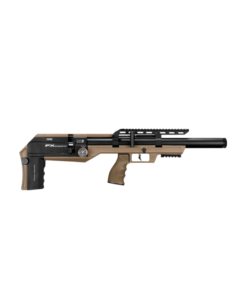
Air Rifles
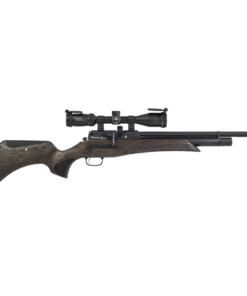
Air Rifles
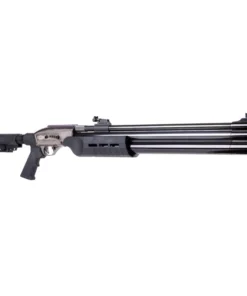
Air Rifles
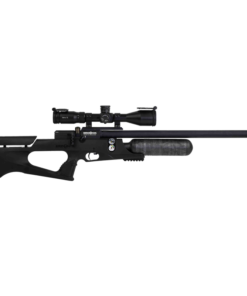
Air Rifles
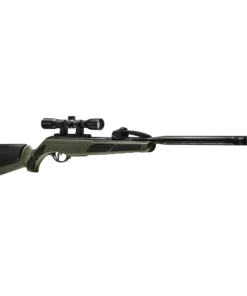
Air Rifles
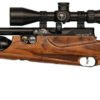
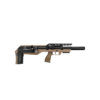
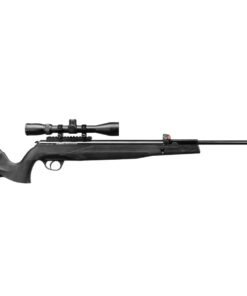
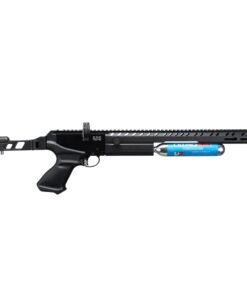
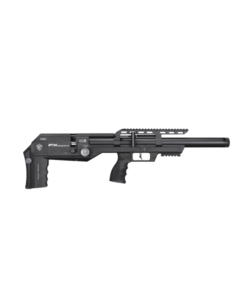
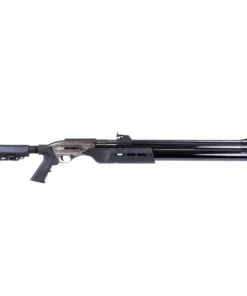
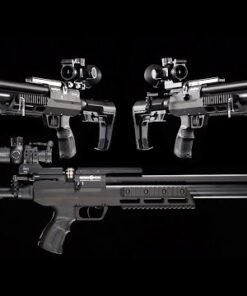
Reviews
There are no reviews yet.