





Daystate Huntsman Revere Regulated Safari .22


Price range: $1,000.00 through $1,500.00
Classic sporter looks, a sleek design and a lineage tracing back to Daystate’s inception over 40 years ago: the Huntsman series is iconic and has remained a firm favorite with field shooters the world over. The latest, Huma-Air regulated Revere sets performance levels good enough to entice precision-minded target shooters too, and this has led to the development of the new Safari Edition a Huntsman offering added practicality and versatility for field and range shooters alike.
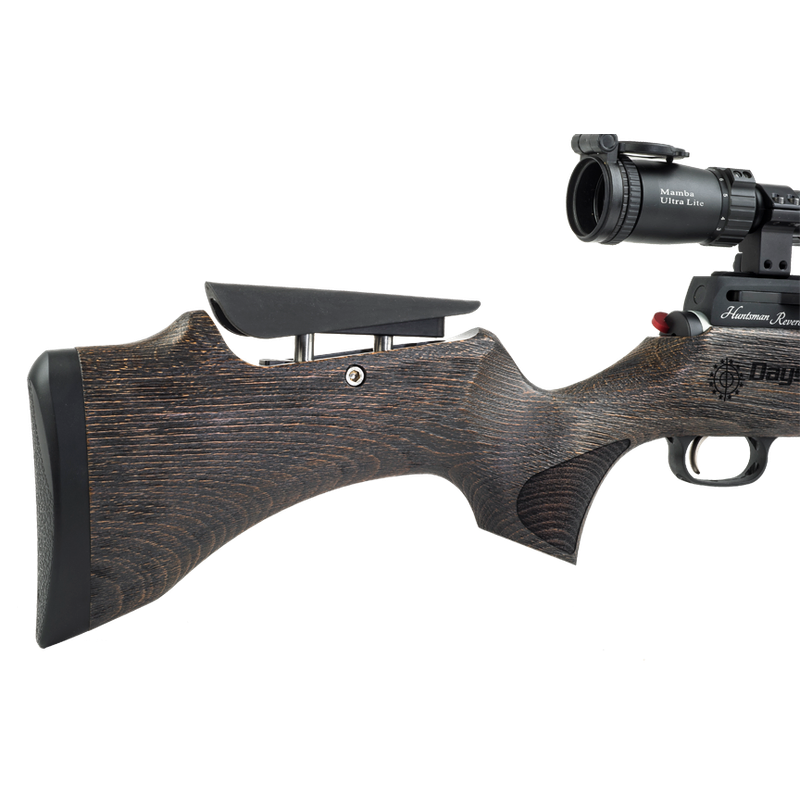
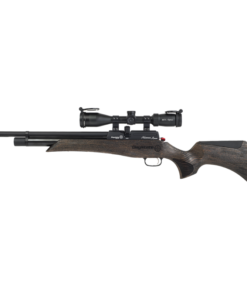
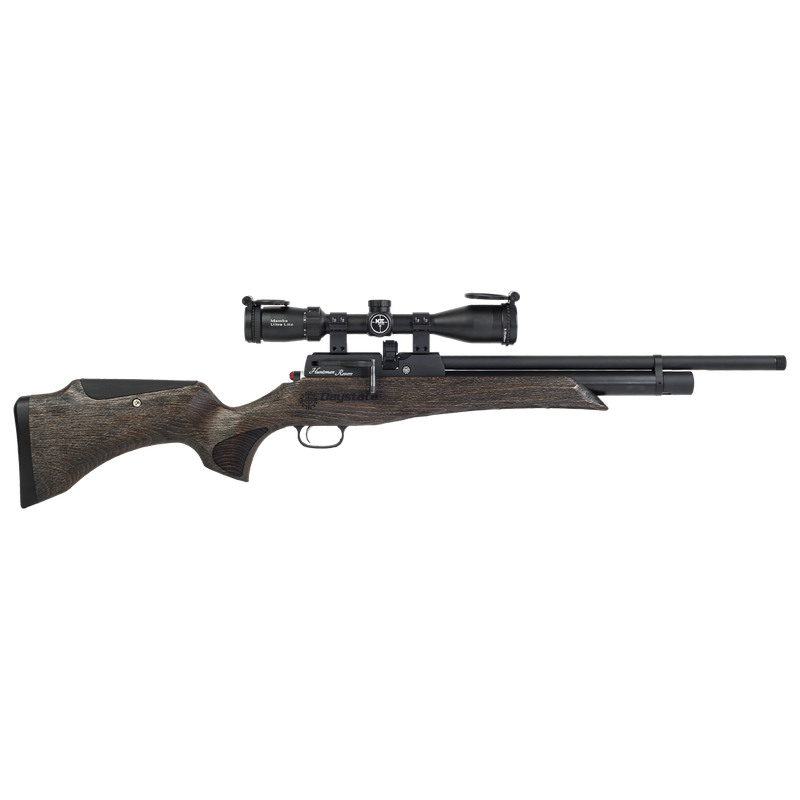
The Safari Edition features Daystate’s tactile, raised-grain wood stock. Ambidextrous and incorporating a lower-seated action that’s been a hallmark of the Huntsman’s design for years, the ‘high-grip’ advantages the textured Safari stock brings are further enhanced by stippled panels to the grip and forend. Combined with its natural camouflage look, it has all the perfect attributes for the field.
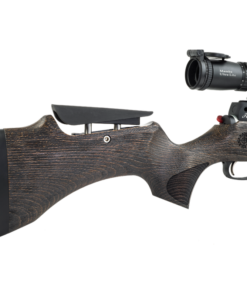
However, the Safari Edition’s stock has been subtly tweaked to also accommodate the needs of target shooters, without compromising the Revere’s inherent sporter feel. A rise-and-fall cheekpiece allows perfect eye alignment for both varmint and target-styled scopes and its comb is finished in a soft-feel rubber for extreme comfort in all conditions and shooting disciplines.
The Safari stock’s forend has been shaped to suit all holds and disciplines, too, with a broader shape and flatter base to assist those preferring to shoot off a bench. Its weight-relieved construction will appeal to hunters with large permissions to trek across, though stud-points have been incorporated for those who want to fit a sling, bipod or other shooting aid. The scalloped butt is as practical as it is aesthetic, ensuring good balance in the shoulder for hunters, and making the ideal anchor if shooting off a benchrest or bean bag.
Action-wise, the Safari Edition keeps all the attributes that have made the Huntsman Revere Daystate’s biggest-selling rifle: a factory-installed Huma-Air regulator, sidelever cocking – user swappable for right-hand or left-hand use that keeps cocking effort minimal even on the high power models, self-indexing magazine with new loading gate (with a single-shot loading tray supplied for those who prefer to manually feed their pellets), probe-charging with integral rotary dust cover, shrouded match-grade barrel with threaded muzzle, adjustable two-stage trigger with manual safety catch and a tough, anti-glare metal finish.
Daystate Huntsman Revere Regulated Safari .22
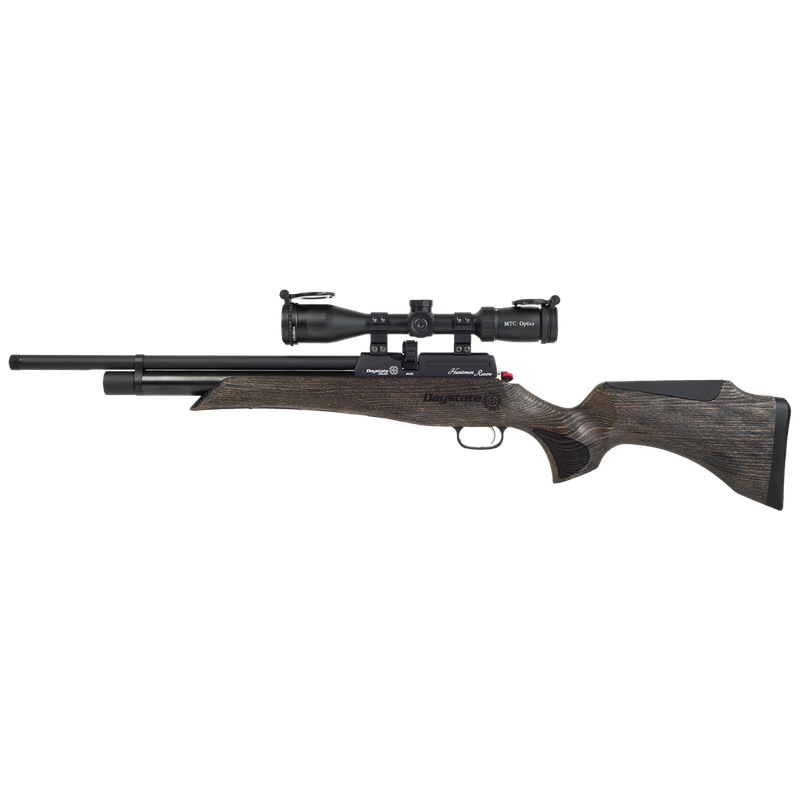
Premium Regulated PCP Performance in an Adaptable Safari Stock
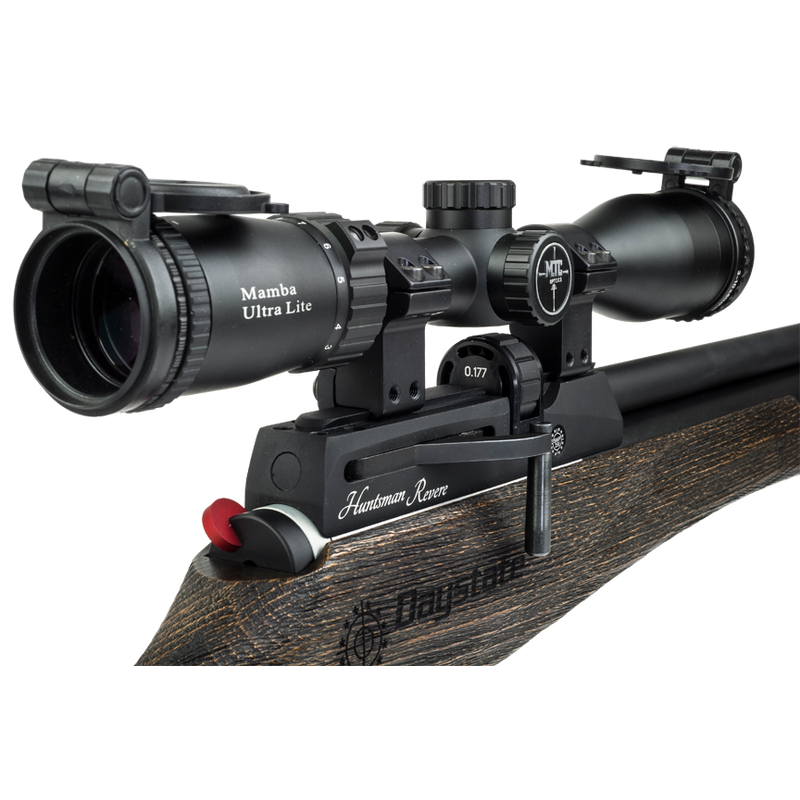
The Daystate Huntsman Revere Regulated Safari .22 brings classic sporting-rifle balance into a thoroughly modern pre-charged pneumatic platform. Refined handling is provided by its weight-conscious Safari stock, while dependable shot-to-shot performance is supported by a Huma-Air regulator. Consequently, the rifle is suited to shooters who value traditional proportions but still expect the smooth operation, consistency, and practical adjustability associated with a premium contemporary PCP.
At first glance, the raised-grain woodwork gives this model a distinctive field-ready identity. Yet the Safari treatment is not merely cosmetic. A naturally secure hold is encouraged by the textured finish and stippled grip areas. Meanwhile, the broader, flatter forend can be supported comfortably from the hand, a shooting bag, or a benchrest. An adjustable cheekpiece is also provided, allowing eye alignment to be refined around the chosen optic.
The familiar Huntsman profile has been preserved, although the Revere action has been upgraded with a smooth sidelever mechanism. Because less effort is generally required than with a conventional bolt action, follow-up loading can be completed with less disturbance to the shooting position. A self-indexing magazine is supported, and a single-shot loading tray is included by Daystate for shooters who prefer deliberate pellet placement during precision work.
In .22 caliber, a useful balance between trajectory, retained energy, pellet availability, and moderate air consumption can be enjoyed. This makes the rifle an appealing choice for supervised target practice, lawful pest-control applications, and responsible small-game use where permitted. Local airgun laws, power limits, licensing rules, and landowner requirements must always be checked before purchase or use.
Product Highlights
- Premium regulated PCP action: Consistent air delivery is supported by a factory-fitted Huma-Air regulator.
- Smooth sidelever operation: Cocking and loading can be completed with reduced disruption to the firing position.
- Ambidextrous Safari stock: The adaptable design can be shouldered by right- and left-handed shooters.
- Raised-grain wooden finish: A tactile surface and natural camouflage-inspired appearance are combined.
- Adjustable cheekpiece: Scope alignment and cheek contact can be personalized for greater comfort.
- Soft-feel comb insert: Comfortable contact is promoted across different shooting positions and weather conditions.
- Broad, flat-based forend: Supported, bench, bag-rest, and traditional field holds are accommodated.
- Shrouded match-grade barrel: Daystate precision engineering is paired with a clean sporting profile.
- Adjustable two-stage trigger: Trigger feel can be refined according to the manufacturer’s guidance.
- Multi-shot and single-shot capability: A self-indexing magazine and Daystate loading tray provide flexible operation.
- Accessory mounting points: Stud points allow suitable slings, bipods, or other compatible aids to be fitted.
- Balanced sporter architecture: A low-seated action and scalloped butt help the rifle settle naturally in the shoulder.
Why the Daystate Huntsman Revere Regulated Safari .22 Stands Out
Many modern PCP rifles are designed around tactical frames, exposed bottles, and extensive external adjustment. By contrast, the Daystate Huntsman Revere Regulated Safari .22 is shaped around a more traditional sporter experience. Its air cylinder and action are integrated into a slim, coherent silhouette, so the rifle feels familiar without being technologically dated.
That blend is important. A buyer may want regulated performance without the visual bulk of a bottle rifle. Another shooter may prefer wooden furniture but still require ambidextrous handling. Others may want a premium rifle that can move comfortably between a garden range, a formal target lane, and a lawful field setting. Those needs are brought together here in a platform that feels purposeful rather than overloaded.
Moreover, the Huntsman name carries a long Daystate lineage. The series has been developed through multiple generations, and the Revere represents the first Huntsman to adopt a sidelever action. The result is a design that remains recognizable while becoming more convenient to cycle. Instead of abandoning the qualities that made the sporter popular, practical refinements have been incorporated around them.
Regulated Consistency That Supports Confident Shooting
A regulator is used to manage the pressure delivered from the main air reservoir to the firing valve. In an unregulated PCP, the relationship between reservoir pressure, valve behavior, and pellet velocity may change as the rifle is discharged. Although a well-designed unregulated system can perform admirably, a regulator helps create a more controlled working pressure across the usable portion of the fill.
For the shooter, the benefit is usually experienced as a more stable point of impact and a more predictable firing cycle. Vertical variation caused by inconsistent pellet speed can be reduced when the rifle, ammunition, optic, and technique are properly matched. Therefore, attention can be directed toward wind reading, range estimation, trigger control, and follow-through rather than avoidable pressure-related changes.
The Huma-Air regulator fitted to the Revere forms part of the rifle’s complete hammer-and-valve system. It should not be viewed in isolation or adjusted casually. Factory settings, service procedures, and regional power requirements must be respected. When maintenance is required, qualified service support should be chosen so that safety, reliability, and legal compliance are preserved.
Consistency also depends on the ammunition. Even a regulated premium PCP can produce disappointing groups when damaged, dirty, inconsistent, or poorly matched pellets are used. Several high-quality .22 pellet designs may therefore be tested at a safe range. Once an accurate choice has been identified, the same head size, weight, and production batch can be retained where practical.
Smooth Sidelever Loading
The Revere’s sidelever is one of its most meaningful mechanical upgrades. A conventional bolt may require a more pronounced rearward and forward movement, whereas a sidelever can generally be operated with a shorter, smoother hand motion. As a result, the rifle can remain more settled on the shoulder or rest while the next pellet is indexed.
This advantage becomes noticeable during target strings. When body position is repeatedly broken to cycle an action, small inconsistencies can be introduced. With a well-positioned sidelever, the firing hand can complete the loading sequence and return to the grip naturally. Follow-up shots are not guaranteed to be accurate simply because loading is faster; however, a more repeatable routine can be encouraged.
The mechanism also complements the rifle’s higher-power configurations. Daystate explains that sidelever systems are especially useful on more powerful air rifles because cocking effort can be reduced. Exact energy depends on the market specification and legal configuration, so buyers should confirm the version offered before ordering. For the .22 model, Daystate lists configurations reaching up to 30 ft-lb, but lower-power versions may be supplied in jurisdictions where different limits apply.
A Safari Stock Built for Real Shooting Positions
The Safari stock has been designed for more than visual impact. Raised grain gives the wood a tactile surface, while stippled panels are placed around the grip and forend. Secure contact can therefore be maintained without relying on aggressive checkering or a heavily synthetic feel.
Because the stock is ambidextrous, ownership is made more flexible. A left-handed shooter is not forced into a strongly right-handed cheekpiece, and a household or club may allow more than one responsible user to set up behind the rifle. Even so, eye dominance, scope position, and individual reach should still be considered when the complete setup is assembled.
The cheekpiece can be raised or lowered. This is valuable because scope objective diameter, ring height, rail arrangement, and facial structure all influence head position. When the comb is too low, the shooter may lift the head and lose consistent contact. When it is too high, the eye may be forced above the optic’s centerline. Through careful adjustment, a relaxed and repeatable cheek weld can be established.
A soft-feel rubber finish is applied to the comb area. On cold mornings or through extended bench sessions, that contact surface may feel more comfortable than bare hard material. It can also help the head settle without excessive pressure. Nevertheless, the cheek should not be driven forcefully into the stock. A neutral posture usually produces more repeatable alignment.
Further forward, the Safari forend is broader and flatter than a narrowly rounded hunting profile. This shape offers useful versatility. From a standing position, it can be supported across the palm. From a bench, it can sit more steadily on a bag. When a compatible bipod is fitted to the provided stud point, the load can be distributed through the forend without requiring an improvised attachment.
The butt is scalloped to help the rifle anchor naturally against the shoulder and settle against a rear bag when supported shooting is preferred. Combined with the low-seated action, this geometry helps preserve the Huntsman’s balanced sporter character. Instead of feeling excessively top-heavy, the rifle is intended to sit within the hold.
Designed Around the Versatility of .22 Caliber
The .22 pellet is one of the most widely chosen air-rifle calibers because a practical middle ground is provided. Compared with many .177 pellets, additional mass and retained energy may be available. Compared with larger calibers, pellet cost, air consumption, and trajectory can remain manageable. Actual performance will always depend on pellet design, rifle output, atmospheric conditions, and range.
For target use, .22 caliber can produce clean, easily observed impacts on suitable backstops and reactive targets. For lawful field use, appropriate pellets may carry useful energy when ranges are kept ethical and shot placement is precise. Yet caliber alone must never be treated as a substitute for skill. Safe handling, accurate range estimation, a verified zero, and knowledge of the chosen pellet’s trajectory remain essential.
The Daystate Huntsman Revere Regulated Safari .22 should be tested with quality lead pellets or other ammunition specifically approved for the rifle and local rules. Pellets must never be forced into the magazine or breech. Designs that are too long may not fit or index correctly, while inconsistent skirts can affect sealing and accuracy. Before a full supply is purchased, small sample quantities can be evaluated.
Pellet Selection and Accuracy Testing
Domed pellets are often selected as a starting point because their aerodynamic shape can perform reliably across common air-rifle distances. Heavier designs may be considered for higher-power configurations, although the heaviest option is not automatically the most accurate. Likewise, a lightweight pellet may produce a higher muzzle velocity without delivering the best downrange stability.
A controlled test is recommended. The barrel can first be allowed to settle with a chosen pellet type. Groups can then be fired from a stable rest at a known distance. Wind conditions, fill pressure, and point of aim should be recorded. After several meaningful groups have been completed, another pellet can be tested under similar conditions.
Group shape deserves attention. Random wide shots may suggest inconsistent technique or damaged ammunition. Vertical stringing can be associated with velocity variation, hold changes, or an unstable rest. Horizontal spread may be influenced by wind, cant, or trigger technique. No single group should be used to declare a winner; a pattern across repeated groups provides a more dependable basis for selection.
Once the preferred pellet has been found, trajectory data can be established safely. The rifle should be zeroed at a distance appropriate to its use, and impacts should then be checked at shorter and longer intervals. This process reveals the actual holdover or dial adjustment required. Generic ballistic tables may offer an estimate, but confirmed range results are more valuable.
Power Configurations and Legal Responsibility
Daystate states that the .22 Huntsman Revere can be offered in high-power form up to 30 ft-lb. That figure does not mean every Safari .22 is supplied at that output. Country regulations, retailer configurations, licensing classes, and factory specifications can differ. Consequently, the precise model and power level should be verified on the invoice and product configuration before checkout.
In some regions, an air rifle above a defined energy threshold may require a license or may be treated under stricter rules. In others, hunting with an air rifle may be limited by species, caliber, energy, season, land status, or minimum-distance requirements. It is the owner’s responsibility to understand and follow the laws that apply where the rifle will be possessed, transported, stored, and used.
Power should never be altered in an attempt to bypass local restrictions. Unauthorized adjustment may affect accuracy, air efficiency, component life, warranty coverage, and legality. If a different factory configuration is required, advice should be requested before purchase rather than attempting an unapproved modification afterward.
Precision-Focused Barrel and Trigger System
A shrouded match-grade barrel is fitted to the Huntsman Revere. The barrel is central to the rifle’s premium identity, but it operates as part of a wider system. A consistent regulator, well-matched pellet, correctly aligned optic, stable stock position, and controlled trigger release all contribute to the final group.
The shroud gives the barrel assembly a clean profile and may moderate aspects of the report, depending on configuration. Sound behavior varies with power level, pellet, environment, and regional equipment. Any additional moderator must be legal, compatible, and installed according to manufacturer or qualified dealer guidance. Thread type should be confirmed rather than assumed.
An adjustable two-stage trigger is also provided. During the first stage, deliberate movement can be taken up before the defined release point is reached. The second stage then provides the final break. When properly set, this arrangement helps the shooter prepare the shot without releasing it before alignment is complete.
Trigger adjustment must be approached carefully. An excessively light or incorrectly set trigger can create an unsafe condition. The rifle must be unloaded and depressurized or otherwise made safe as directed before service procedures are attempted. Only adjustments expressly covered by the official manual should be performed by the owner; unfamiliar work should be referred to a competent technician.
Building a Repeatable Shot Cycle
Accuracy is encouraged when every shot is approached in the same way. First, the rifle can be supported without muscular strain. Next, the sight picture can be confirmed while breathing remains controlled. The first stage can then be taken up smoothly, followed by a clean second-stage release. Finally, the sight picture should be maintained through the pellet’s departure.
Because a PCP produces little of the spring movement associated with a spring-piston rifle, a very light hold may be used in supported positions. However, inconsistent shoulder pressure can still shift impact. The same contact points should therefore be repeated. The Safari stock’s grip texture, cheekpiece, and broad forend are especially useful here because tactile reference points are provided.
Cant must also be controlled. If the rifle is tilted, the pellet’s path and the scope’s vertical axis will no longer align as intended, especially at distances away from the zero. A small compatible level may help during bench work, although it should not distract from the target or safe observation of the surroundings.
Magazine Convenience and Single-Shot Control
The Revere breech and action have been optimized for Daystate’s revised gate-loading, self-indexing magazine system. The magazine offers faster follow-up loading and keeps pellets organized during a course of fire. Capacity varies by caliber and magazine version, so the supplied configuration should be confirmed with the retailer.
Careful loading protects both pellets and equipment. Each pellet should be oriented correctly and seated without crushing the skirt. The magazine should rotate and index without being forced. If unusual resistance is felt, the rifle must be kept pointed in a safe direction while the issue is checked. Cycling the lever repeatedly against an obstruction can damage pellets or components.
For deliberate target work, the supplied single-shot tray provides a useful alternative. A pellet can be inspected and placed individually, helping the shooter avoid magazine-related variables during ammunition testing. Some owners also enjoy the slower rhythm because every shot is treated as a separate decision.
Neither feeding method is universally better. A magazine is convenient in the field or during timed practice, while a single-shot tray can be preferred for precision testing and relaxed bench sessions. By supporting both, the Daystate Huntsman Revere Regulated Safari .22 can be adapted without changing its central character.
Optics and Setup Recommendations
The rifle is intended to be paired with an appropriate scope. Because no single optic suits every user, the intended distance and application should guide the choice. A compact, moderate-magnification scope may preserve the Huntsman’s balance for field use. By comparison, a larger side-focus optic may provide finer aiming and parallax correction during bench or target shooting.
Ring height should be selected so that the objective clears the barrel or shroud while the scope remains as low as practical for comfortable alignment. Clearance must also be allowed for lens caps and any magazine projection. After the optic has been installed, the adjustable cheekpiece can be set around the actual sightline.
Eye relief must be checked in the positions that will genuinely be used. A scope that appears comfortable from a bench may sit too far forward during standing shots. Conversely, an optic positioned for an upright stance may become awkward from prone. A balanced compromise can be found, or the dominant use can be prioritized.
The reticle and turret system should match the shooter’s preferred method. A simple hunting reticle offers a clear picture, while a graduated reticle can provide measured hold points. Exposed dialing turrets may be valuable for known-distance target work, whereas capped turrets can resist accidental movement in the field. Whichever system is chosen, its adjustments should be tested rather than trusted solely from printed markings.
Useful Compatible Accessories
- Quality PCP-rated scope: Choose magnification and parallax range around realistic shooting distances.
- Correct mounts or rings: Confirm rail type, tube diameter, objective clearance, and magazine clearance.
- Reliable filling equipment: Use a clean, dry-air source and the correct Daystate-compatible connection.
- Pellet samples: Test several reputable .22 domed pellets before buying large quantities.
- Secure rifle case: Protect the stock, optic, and action during lawful transport and storage.
- Sling: A compatible sling can be attached to the provided stud points for easier field carrying.
- Bipod or shooting bags: Supported practice can help reveal the rifle-and-pellet combination’s potential.
- Chronograph: Where lawful and used safely, velocity data can support consistency checks and energy calculations.
- Cleaning and care products: Only airgun-safe tools and manufacturer-approved lubricants should be selected.
- Eye protection: Suitable shooting glasses should be worn by the shooter and nearby observers.
Who Is This Premium PCP Air Rifle For?
The Daystate Huntsman Revere Regulated Safari .22 is well suited to the shooter who wants refinement without unnecessary visual complexity. Traditional rifle proportions are retained, yet the performance features expected from a modern regulated PCP are provided. Its appeal is therefore broad, though it is particularly strong for experienced recreational shooters, careful field users, and target enthusiasts who value handling as much as raw specification.
A newer PCP owner may also appreciate the rifle, provided safe filling, storage, and maintenance practices are learned. The sidelever is intuitive, the magazine system supports convenient use, and the adjustable cheekpiece helps solve common scope-alignment problems. Nevertheless, the rifle is a precision instrument rather than a casual toy, and responsible adult supervision is essential wherever required.
Left-handed shooters should pay particular attention to the Safari version. Unlike the handed walnut sporter alternatives mentioned by Daystate, the Safari stock is designed to be truly ambidextrous. This can remove a major barrier for buyers who want the Huntsman platform but do not want to compromise their natural shooting side.
Bench shooters can benefit from the flatter forend, adjustable comb, regulator, and single-shot option. Hunters and pest controllers, where such use is lawful, can value the weight-relieved stock, natural-textured finish, sling points, and smooth follow-up loading. Recreational target shooters can simply enjoy the rifle’s combination of tactile woodwork and repeatable mechanical operation.
A Premium Choice for the Shooter Who Values Balance
Specifications can attract attention, but balance often determines whether a rifle is enjoyed over the long term. A rifle may be powerful yet tiring, adjustable yet complicated, or accurate yet awkward to shoulder. The Huntsman Revere Safari takes a more integrated approach. Its key features have been designed to support the complete shooting experience rather than compete for attention.
The action sits low within the stock. The forend can be carried or rested. The cheekpiece can be aligned with the optic. The sidelever can be cycled without excessive movement. The regulator supports consistent air delivery, and the trigger provides a deliberate two-stage release. Together, these qualities create a PCP that can feel composed in many positions.
For buyers comparing premium .22 air rifles, the decision should not be made on maximum power alone. Stock fit, service support, legal configuration, pellet compatibility, optic choice, and intended use all matter. When a classic sporter form, ambidextrous field stock, regulated action, and respected British pedigree are priorities, the Daystate Huntsman Revere Regulated Safari .22 deserves serious consideration.
Buy the Daystate Huntsman Revere Regulated Safari .22 from Elite Air Guns
The Daystate Huntsman Revere Regulated Safari .22 can be selected as the foundation of a refined PCP setup. Before ordering, the required market specification, power level, magazine configuration, handed-use requirements, and planned optic should be confirmed. Compatible filling equipment should also be arranged, because safe high-pressure charging is essential to PCP ownership.
At Elite Air Guns, customers can explore premium air rifles, optics, pellets, and accessories for target shooting and lawful field use. Product availability, final specifications, and package contents should be confirmed at the time of purchase, as manufacturer updates and regional configurations may apply.
Choose the Revere Safari when modern regulated performance is wanted in a rifle that still feels like a true sporter. With its tactile ambidextrous stock, adjustable cheek support, smooth sidelever, flexible loading system, and carefully integrated Daystate action, it offers a compelling route into premium .22 PCP ownership.
Order the Daystate Huntsman Revere Regulated Safari .22 today, or contact Elite Air Guns for help confirming the correct configuration, compatible optic, filling equipment, and pellet options for your intended use.
Calibres, FAC Power and Accessories for the Daystate Huntsman Revere Regulated Safari .22
The Daystate Huntsman Revere Regulated Safari is designed for shooters who expect refined handling, consistent performance, and configuration flexibility from a premium PCP air rifle. Although the featured model is chambered in .22 calibre, the Huntsman Revere platform is also produced in other calibre and power options for different shooting disciplines and regional requirements.
Available Calibre Options
Depending on the market and current factory availability, the Huntsman Revere range may be offered in the following calibres:
- .177 calibre: Selected for target shooting, flatter short-to-medium-range trajectories, and economical pellet use.
- .20 calibre: A less common option that combines some of the flatter trajectory characteristics of .177 with increased pellet weight.
- .22 calibre: A versatile choice for precision target shooting, recreational use, pest management, and lawful small-game hunting.
- .25 calibre: Intended for shooters who prioritize heavier pellets and greater downrange energy in suitable high-power configurations.
The Daystate Huntsman Revere Regulated Safari .22 offers an excellent balance between pellet weight, trajectory, retained energy, and air consumption. Furthermore, .22 pellets are widely available in different weights and designs, making it easier to test several options and identify the ammunition preferred by the barrel.
Premium domed pellets are generally recommended as an initial choice. However, accuracy should always be confirmed through controlled grouping tests. The heaviest or fastest pellet will not necessarily deliver the smallest groups. Therefore, pellet quality, head size, weight, and compatibility with the magazine should all be considered.
FAC and Non-FAC Configurations
FAC refers to a Firearm Certificate within the United Kingdom. An air rifle producing more than the legal non-FAC energy limit is normally classified as an FAC-rated air rifle and must be possessed under the appropriate authorization. Different laws and terminology may be applied outside the UK.
Non-FAC Huntsman Revere models may be configured to comply with applicable local power limits. Meanwhile, higher-powered versions can be supplied for countries or licensed owners where their possession and use are permitted.
Before the rifle is ordered, the exact power specification should be confirmed. The purchaser must also check all laws covering ownership, licensing, transportation, storage, hunting, pest control, and use on private property. A rifle should never be modified to avoid regional restrictions.
FAC performance can provide increased retained energy and a more extended practical trajectory. Nevertheless, additional power does not replace responsible range selection or accurate shot placement. Higher output may also affect pellet preference, usable shot count, muzzle report, and air consumption.
Daystate states that high-power Huntsman Revere configurations may deliver approximately:
- Up to 18 ft-lb in .177 calibre
- Up to 30 ft-lb in .22 calibre
- Up to 40 ft-lb in .25 calibre
These figures represent maximum configurations rather than guaranteed output for every rifle. Actual energy can vary according to the factory version, pellet weight, regional specification, and individual setup. Therefore, the exact model supplied by Elite Air Guns should be verified before purchase.
Regulated Power and Consistency
A factory-fitted Huma-Air regulator supports the Huntsman Revere’s controlled firing cycle. Air is delivered to the valve at a managed working pressure, helping velocity remain consistent throughout the usable portion of the fill.
Consequently, vertical point-of-impact variation can be reduced when suitable pellets and proper shooting techniques are used. Predictable performance is especially valuable during precision target shooting and lawful field applications where consistency matters.
However, regulator or power adjustments should not be attempted without the correct knowledge and authorization. Unauthorized changes may reduce accuracy, shorten component life, invalidate warranty coverage, or make the rifle unlawful. Professional servicing should be requested whenever internal adjustment or repair is required.
Recommended Accessories
A carefully selected accessory package can improve the rifle’s usability without compromising its classic sporter balance.
- PCP-rated rifle scope: Choose suitable magnification, parallax adjustment, and reticle design for the intended shooting distance.
- Compatible scope mounts: Confirm the mounting rail, scope-tube diameter, objective clearance, and magazine clearance before ordering.
- PCP compressor or hand pump: Only clean, dry, high-pressure air should be used.
- Carbon-fibre air cylinder: A portable charging bottle can provide convenient refilling away from a fixed compressor.
- Correct filling connector: Compatibility with the rifle and charging equipment must be verified.
- .22 pellet samples: Several quality pellet weights can be tested before a larger quantity is purchased.
- Spare magazine: An additional compatible magazine can reduce interruptions during extended shooting sessions.
- Single-shot tray: Daystate supplies a loading tray for deliberate pellet placement and precision testing.
- Bipod: The Safari stock incorporates stud points for mounting a suitable shooting aid.
- Rifle sling: A supportive sling can make the rifle easier to carry during lawful field use.
- Shooting bags: Front and rear bags can provide a stable platform for zeroing and pellet testing.
- Protective rifle case: A padded or hard case protects the stock, action, barrel, and mounted optic during lawful storage and transportation.
- Chronograph: Velocity can be monitored and muzzle energy calculated with the selected pellet.
- Airgun cleaning equipment: Use only manufacturer-approved products and avoid excessive barrel cleaning.
- Eye protection: Suitable shooting glasses should always be worn by shooters and observers.
With the correct calibre, lawful power specification, quality ammunition, and compatible accessories, the Daystate Huntsman Revere Regulated Safari .22 can be configured as a refined and dependable PCP package for precision target shooting and responsible field use.
Frequently Asked Questions
What type of air rifle is this model?
It is a premium pre-charged pneumatic air rifle built around a regulated mechanical action. Compressed air is stored inside the onboard cylinder and released in a controlled amount whenever a shot is taken. Because no spring or gas ram is used, the firing cycle is smooth, with minimal recoil and movement.
A Huma-Air regulator is incorporated to control the pressure supplied to the firing valve. As a result, greater consistency can be maintained across the usable portion of the air fill. This regulated design is particularly valuable during precision target shooting, pellet testing, and lawful field use.
What calibre is the featured rifle?
The featured configuration is chambered in .22 calibre, also commonly identified as 5.5 mm. This calibre provides a useful combination of pellet weight, trajectory, retained energy, and widespread ammunition availability.
Different .22 pellets can produce noticeably different results. Therefore, several reputable domed pellet designs should be tested before a large quantity is purchased. Pellet weight, head size, construction, and compatibility with the magazine should all be considered.
Is the rifle available in other calibres?
Depending on regional availability and the current manufacturer range, the platform may also be offered in .177, .20, and .25 calibre. Each option provides different characteristics.
The .177 version may be preferred for precision target shooting and a comparatively flat trajectory. Meanwhile, .20 calibre provides an intermediate option. The .25 model can deliver increased energy with heavier pellets when supplied in a suitable high-power configuration.
Available calibres, power levels, and stock configurations should be confirmed before ordering because inventories and regional specifications may vary.
What does “regulated” mean?
A regulated PCP contains an internal device that manages the air pressure supplied from the main reservoir to the firing system. Rather than allowing the firing valve to receive constantly changing reservoir pressure, a more controlled working pressure is provided.
Consequently, pellet velocity can remain more consistent throughout the rifle’s recommended operating range. This consistency may help reduce vertical dispersion and make the point of impact more predictable.
However, regulation cannot correct poor pellets, an unstable shooting position, incorrect scope setup, or inconsistent trigger control. Accuracy is produced by the complete rifle, ammunition, optic, and shooter combination.
What is special about the Safari stock?
The Safari stock combines distinctive raised-grain wood with practical handling features. Its tactile finish creates a secure contact surface, while stippled panels are incorporated around the grip and forend.
Unlike strongly right- or left-handed sporter stocks, this version is designed for ambidextrous use. Therefore, it can be shouldered naturally by right-handed and left-handed shooters. A height-adjustable cheekpiece is also provided to improve alignment between the shooter’s eye and the scope.
Additionally, the forend has been made broader and flatter. It can be supported comfortably by the hand, a shooting bag, or a suitable bipod. The weight-relieved construction also helps preserve the rifle’s manageable sporter character.
Is the cheekpiece adjustable?
Yes. The cheekpiece can be raised or lowered to suit the shooter’s facial structure, scope height, and chosen shooting position. Proper adjustment allows a consistent cheek weld to be established without forcing the head upward or downward.
The comb is finished with a soft-feel rubber surface for added comfort. Once the scope and mounts have been installed, the cheekpiece should be adjusted while the rifle is safely unloaded. The shooter’s eye should naturally align with the optic when the rifle is placed into the shoulder.
Can left-handed shooters use it?
Yes. The Safari stock is ambidextrous and is suitable for both left-handed and right-handed use. This feature distinguishes it from stock designs that include a pronounced cheekpiece for only one side.
Nevertheless, the sidelever position and personal operating technique should still be considered. Each shooter should handle the rifle safely and confirm that the controls can be reached without an awkward change in grip or muzzle direction.
Does it use a bolt or sidelever action?
A sidelever action is fitted. Compared with a traditional bolt, the lever can generally be cycled using a smooth rearward and forward movement. Less disturbance may therefore be introduced into the firing position between shots.
The action must always be operated deliberately. If unusual resistance is encountered, the lever should never be forced. The magazine, pellet, and breech should instead be checked while the rifle remains pointed in a safe direction.
Does it include a magazine?
A self-indexing magazine is designed for use with the Revere action. Daystate has revised the gate-loading magazine system to work efficiently with the rifle’s optimized breech.
Magazine capacity can vary according to calibre and the exact magazine version. Therefore, the number and capacity of the magazines included with a particular package should be confirmed before purchase.
Pellets must be loaded in the correct direction and seated without being damaged. Designs that are excessively long may not rotate smoothly inside the magazine.
Can the rifle be used as a single-shot model?
Yes. A single-shot loading tray is supported and is normally included by the manufacturer. This option allows pellets to be inserted individually rather than loaded through the magazine.
Single-shot operation is especially useful during ammunition testing because every pellet can be inspected before being placed into the breech. It may also be preferred during deliberate target shooting, where speed is less important than a controlled and repeatable routine.
How powerful is it?
Power depends on the factory configuration and the legal requirements of the destination market. High-power .22 versions may be produced at levels reaching approximately 30 ft-lb. However, this figure should not be assumed for every rifle.
Lower-powered versions may be supplied where licensing restrictions or statutory limits apply. Furthermore, measured energy can change with pellet weight and individual configuration. The exact output must be confirmed with the retailer before an order is placed.
The rifle should never be modified to exceed a legal limit. Unauthorized power changes may affect safety, accuracy, warranty coverage, air consumption, and component durability.
What does FAC mean?
FAC means Firearm Certificate in the United Kingdom. An air rifle exceeding the UK non-FAC muzzle-energy limit normally requires the appropriate certificate.
Other countries and regions use different classifications, limits, and licensing systems. Consequently, buyers must check the laws governing ownership, storage, transportation, hunting, pest control, and use in their location.
A product being available online does not automatically mean that it can legally be shipped to or possessed in every area. Verification should always be completed before purchase.
How many shots can be fired from one fill?
The usable shot count depends on the rifle’s power setting, calibre, pellet choice, starting pressure, regulator setup, and the point at which the fill is stopped. A lower-powered configuration will generally provide more shots than a high-power version.
Because configurations vary, a single shot-count figure should not be applied to every rifle. The supplied manual and exact factory specification should be consulted. A chronograph can also be used safely to identify the rifle’s consistent operating range.
What pressure should be used when filling it?
Only the maximum pressure stated on the rifle, cylinder, and current manufacturer documentation should be followed. A pressure figure should never be guessed from another model or an older version.
The reservoir must be filled slowly with clean, dry compressed air. Oxygen, carbon dioxide, industrial gas, or an unsuitable workshop compressor must never be used. Overfilling can damage the equipment and create a serious safety hazard.
Can it be filled with a hand pump?
A compatible high-pressure PCP hand pump may be used if it provides clean, dry air and includes the correct connector. However, physical effort will be required, especially when the reservoir is being filled from a low pressure.
A PCP compressor or carbon-fibre charging cylinder may offer greater convenience. Regardless of the air source, all hoses, fittings, gauges, and connectors must be rated for the required pressure.
What scope should be fitted?
The ideal scope depends on the intended shooting distance and application. A compact optic with moderate magnification can preserve the rifle’s balance during field use. In contrast, a larger side-focus scope may provide greater aiming precision for bench and target shooting.
Correct mounts must be selected for the rifle’s rail and the scope’s tube diameter. Objective clearance, magazine clearance, and comfortable eye relief should be checked before the mounts are tightened.
After installation, the adjustable cheekpiece can be positioned to create natural eye alignment.
Is a scope included?
Package contents can vary between retailers, promotions, and regional distributions. A scope should not be assumed to be included unless it is clearly listed in the product offer.
Before checkout, buyers should confirm whether the package contains the rifle only or also includes mounts, an optic, magazine, single-shot tray, filling connector, moderator, or protective case.
Can a bipod or sling be installed?
Yes. Stud points are incorporated into the Safari stock so compatible accessories can be attached. A sling can make the rifle easier to carry, while a bipod can provide support during bench, prone, or suitable field shooting.
Only correctly fitting accessories should be installed. Oversized screws or poorly fitted adapters may damage the wooden stock or interfere with internal components.
What type of pellets should be used?
High-quality .22-calibre airgun pellets should be selected. Domed lead pellets are often used as a starting point because they provide dependable aerodynamic performance across common shooting distances.
Nevertheless, the preferred pellet can only be identified through testing. Several weights and designs should be compared under controlled conditions. Damaged, corroded, dirty, or incorrectly sized ammunition should not be loaded.
Steel BBs, firearm ammunition, darts, and unsuitable projectiles must not be used.
Is it suitable for hunting?
The rifle may be suitable for lawful small-game hunting or pest management when supplied at an appropriate power level and paired with accurate ammunition. However, suitability depends on local laws, the target species, shooting distance, pellet performance, and the user’s ability.
A verified zero, dependable range estimation, suitable backstop, and precise shot placement are essential. Uncertain, excessively distant, or unsafe shots must always be refused. Hunting must only be undertaken where legal permission and landowner authorization have been obtained.
Is it suitable for target shooting?
Yes. Its regulated action, adjustable trigger, match-grade barrel, adjustable cheekpiece, and single-shot capability make it highly suitable for precision target shooting.
The flatter forend can also be supported securely on a shooting bag or benchrest. For the best results, a compatible scope should be properly mounted, several pellets should be tested, and a repeatable shooting technique should be developed.
How loud is it?
Perceived sound depends on power level, pellet choice, surroundings, and the rifle’s exact configuration. A shrouded barrel is fitted, although this does not make the rifle silent.
Sound can seem louder when the rifle is fired near walls, buildings, or enclosed spaces. Any additional sound-moderating device must be legal and compatible with the rifle. Thread specifications should be confirmed before an accessory is purchased.
Is the trigger adjustable?
An adjustable two-stage trigger is fitted. The first stage allows controlled movement before the final release point is reached, while the second stage provides the shot break.
Only manufacturer-approved adjustments should be made. An incorrectly adjusted or excessively light trigger can become unsafe. Internal work should be completed by a qualified airgun technician whenever the owner is uncertain.
How should the rifle be stored?
The rifle should be unloaded, uncocked, and stored securely away from unauthorized users, children, ammunition, and incompatible accessories. Applicable local storage laws must be followed.
Moisture should be removed from the exterior before storage, especially after outdoor use. A lightly treated cloth can be used on exposed metal surfaces, while manufacturer-approved stock-care products should be applied sparingly to the wood.
How often should the barrel be cleaned?
The barrel should not be cleaned unnecessarily. Many PCP barrels perform best after a stable layer has been established through normal pellet use.
Cleaning may be considered when accuracy declines unexpectedly, when a different pellet material is introduced, or when contamination is suspected. Only airgun-safe equipment and approved procedures should be used. Abrasive brushes and firearm solvents may damage seals, finishes, or barrel surfaces.
Why should this model be considered?
It combines traditional sporter styling with modern regulated performance. The tactile ambidextrous stock, adjustable cheekpiece, smooth sidelever action, flexible loading system, shrouded match-grade barrel, and two-stage trigger create a balanced premium package.
Most importantly, its features work together. Instead of being built around unnecessary bulk or excessive external adjustment, it has been designed to provide refined handling, reliable operation, and adaptable performance for responsible shooters.
Air Gun: Complete Guide to PCP Rifles, Pellet Guns, BB Guns and Shooting Equipment
An air gun provides an accurate, enjoyable, and versatile platform for recreational shooting, target practice, competition, training, and lawful pest control. Instead of burning conventional firearm propellant, compressed air, carbon dioxide, a spring, a gas ram, or another pneumatic system is used to launch a projectile. Consequently, reduced recoil, manageable operating costs, and impressive precision can be enjoyed across a broad selection of modern platforms.
Although some shoppers use “just gun,” “airgu,” or “pillet gun” when searching online, the correct terminology is usually airgun, air rifle, air pistol, pellet gun, or BB gun. Understanding these terms makes selecting the appropriate model, calibre, power system, ammunition, and accessories considerably easier.
Our collection brings together recreational models, precision PCP rifles, CO₂ replicas, break-barrel rifles, regulated field platforms, target pistols, compatible optics, pellets, filling equipment, maintenance products, and protective cases. Therefore, beginners and experienced enthusiasts can build a complete setup around their intended shooting activity.
What Is an Airgun?
An airgun is a gun that uses stored or mechanically compressed gas to propel a pellet, BB, slug, or another compatible projectile. Unlike a conventional firearm, combustion from gunpowder is not normally used. The energy needed to launch the projectile is instead provided by compressed air, carbon dioxide, a coiled spring, a gas ram, an electric mechanism, or a pre-charged reservoir.
The simplest air guns meaning can therefore be described as: shooting equipment powered by compressed gas rather than conventional firearm cartridges.
Several power systems are available. A spring-piston rifle compresses air when its internal piston moves forward. A gas ram performs a similar function using a sealed gas strut. A CO₂ gun is powered by replaceable or refillable carbon-dioxide capsules. Meanwhile, a pre-charged pneumatic model stores high-pressure air inside a cylinder or bottle.
The phrase PCP rifle meaning refers to a pre-charged pneumatic rifle. Before shooting, the onboard reservoir is filled from a specialized hand pump, PCP compressor, or charging cylinder. Once filled, multiple shots can usually be fired without manually compressing a spring after every discharge.
Main Types of Air Guns
Different types of air guns are designed around different priorities. Some emphasize simplicity and independence, while others prioritize power, low recoil, magazine capacity, realism, or competition-level precision.
Break-Barrel Pellet Guns
A break-barrel model is loaded by pivoting the barrel downward. This movement cocks the internal spring or gas ram and exposes the breech so a pellet can be inserted. Once the barrel has been returned to its locked position, the rifle is ready to be aimed and fired safely.
Anyone asking, “What is a break barrel pellet gun?” is usually looking for one of the most straightforward air-rifle designs available. No external charging equipment is generally needed, making this system convenient for beginners and recreational shooters.
Models such as the Crosman Shockwave .22 demonstrate the practical appeal of this format. Traditional rifles fitted with furniture such as a BSA Meteor stock are also valued by enthusiasts who appreciate classic airgun construction.
Pre-Charged Pneumatic Rifles
PCP rifles are filled with compressed air before use. A smooth firing cycle, minimal recoil, high accuracy, and multi-shot capability can be provided. Regulated versions manage the pressure delivered to the firing valve, helping velocity remain consistent throughout the usable portion of the fill.
Premium models such as the FX Impact M3, FX DRS, RM8, and certain AEA airgun platforms illustrate the variety available within this category. Some are configured as traditional sporters, whereas others use tactical chassis, adjustable regulators, interchangeable barrels, large air bottles, or bullpup layouts.
Someone looking for the cheapest PCP airgun should consider more than the initial purchase price. Filling equipment, magazines, pellets, seals, servicing, optics, and long-term parts availability must also be included in the complete ownership cost.
CO₂ Pellet Rifles and Pistols
CO₂ pellet rifles and pistols are powered by carbon-dioxide capsules or larger compatible containers. Smooth operation and realistic handling can be offered, particularly with replica pistols.
Popular searches include the Smith & Wesson CO₂ pistol, Walther CP88 Competition, Umarex Legends, Umarex RP5 CO₂ pellet gun, SA 10 pistol, and Webley revolver. Historical-style products such as the Webley MKVI are often selected for recreational target shooting and collecting because recognizable styling is combined with airgun operation.
A revolver air gun pellet CO₂ model may use a rotating cylinder or removable cartridge-style pellet holders. Package specifications should always be checked because some replicas fire pellets through rifled barrels, while others are designed for BBs through smoothbore barrels.
BB Guns
BB guns are usually intended for recreational shooting and training at appropriate distances. Many models fire a 4.5 mm BB, although the projectile is not identical to a 4.5 mm lead pellet.
Metal BB pellets, BB metal bullet, and metal pellet are phrases often used by shoppers, but the correct ammunition must be verified carefully. Steel BBs are generally spherical, whereas airgun pellets have a shaped head and hollow skirt. A BB should never be fired through a model designed exclusively for lead pellets unless the manufacturer expressly approves it.
An aluminium rifle case can protect a suitable BB or pellet rifle during lawful transportation. However, the rifle should be unloaded, secured, and transported according to all applicable regulations.
Electric Air Guns
An air gun electric system uses a battery-powered mechanism to operate or assist the firing cycle. Electric designs are especially familiar within airsoft, although products such as the Crosman ST-1 combine modern styling with specialized operating systems.
An electric airgun should not automatically be assumed to use the same ammunition or power system as a conventional pellet rifle. Product specifications must be checked to determine whether BBs, pellets, airsoft projectiles, cartridges, batteries, or compressed gas are required.
Big-Bore PCP Air Rifles
Big-bore air rifles use larger projectiles and can produce substantially more energy than conventional small-calibre pellet guns. Searches may include the AEA Zeus .95 calibre, AEA .50 calibre, AEA Megalodon .45 calibre, AEA Megalodon .50 calibre, .72 cal air rifle, AEA Challenger, AEA Element Max, or AEA Harpoon 12 gauge.
These platforms require advanced knowledge, specialized filling equipment, suitable backstops, and strict legal compliance. They should not be treated as ordinary backyard pellet guns. Availability, permissible use, licensing, ammunition, energy, and transportation rules must be confirmed before purchase.
The phrase “.45 ACP muzzle energy joules” relates to conventional firearm ballistics rather than ordinary air-rifle performance. Direct comparisons can also be misleading because projectile construction, velocity, energy delivery, intended use, and legal classification differ significantly.
Pellet Guns Versus BB Guns
Understanding the difference between types of pellet guns and BB guns helps prevent incorrect ammunition from being purchased.
Pellets are normally shaped with a defined head, narrow waist, and hollow skirt. Domed, wadcutter, pointed, hollow-point, and slug-style designs are available. Meanwhile, a traditional steel BB is spherical and commonly measures approximately 4.5 mm.
Rifled pellet barrels are designed to rotate compatible projectiles for improved stability. Smoothbore BB barrels are commonly used for close-range recreational shooting. Some combination models can accept both ammunition types, but this capability must be stated by the manufacturer.
A pellet tin should be stored in a clean and dry location. Damaged skirts, dirt, corrosion, and inconsistent sizing can reduce accuracy. Likewise, loose BBs should be kept away from moisture and debris that could contaminate the magazine or barrel.
A dart pellet gun is a historical or specialized format intended to fire compatible airgun darts. Darts for a BB gun should never be used unless that exact model has been approved for them. Modern seals, magazines, rifling, and breeches may be damaged by unsuitable projectiles.
Choosing the Correct Calibre
Calibre affects trajectory, pellet weight, retained energy, air consumption, magazine capacity, and the range of ammunition available.
.177 Calibre
The .177 or 4.5 mm pellet is frequently selected for target shooting because its relatively light weight can provide a flat trajectory at common distances. A broad selection of economical pellets is also available.
However, a 4.5 mm BB and a .177 lead pellet should not be treated as interchangeable merely because their stated diameters appear similar. Their shapes, materials, barrel requirements, and feeding systems can differ.
.22 Calibre
A .22 air rifle offers a widely appreciated balance of pellet availability, retained energy, and practical trajectory. It is commonly selected for recreational target shooting and lawful field applications.
Searches for FX Leopard .22 PCP specs, AEA .22, Crosman Shockwave .22, and similar models often come from buyers comparing power, barrel length, air capacity, magazine size, weight, and adjustability. Specifications should be checked against the exact product version because manufacturers may update their ranges.
.25 Calibre and Larger
A .25 calibre rifle fires a heavier projectile than typical .177 or .22 models. More air may be consumed, although increased downrange energy can be provided in suitable configurations.
Larger calibres, including .30, .35, .45, .50, .72, and .95, enter specialized big-bore territory. These rifles should be selected only after power requirements, filling needs, ammunition availability, range facilities, and laws have been carefully considered.
Understanding Power and Muzzle Energy
Velocity alone does not provide a complete description of airgun performance. Projectile weight must also be considered because muzzle energy is calculated using both mass and speed.
An FPE calculator is commonly used to determine foot-pounds of energy. Searches may also refer to a Pyramyd Air calculator or another online ballistic tool. Results are estimates unless accurate pellet weight and chronograph data are entered.
Higher velocity is not automatically better. A pellet may become unstable, inaccurate, or inefficient when driven outside the range preferred by its design. Accordingly, the best setting is often the one that produces dependable groups and suitable legal energy rather than the highest displayed number.
The question “Can air rifles kill?” cannot be answered responsibly with a simple yes or no. Air rifles are capable of causing serious injury or death and must never be treated as toys. Every model should be handled as loaded, kept pointed in a safe direction, and discharged only toward an appropriate target and backstop.
Responsible Pest-Control Use
Searches such as air rifle for rats, rat killing gun, shoot rats with air rifle, shooting a rat, will a BB gun kill a rat, and will a pellet gun kill a rat usually indicate a pest-control concern. Humane and lawful pest control requires considerably more than selecting a powerful product.
First, local regulations must be checked. Discharging an air rifle may be prohibited in residential areas, gardens, or near public roads. Permission from the landowner may also be required. Furthermore, the target species must be legally controlled using the proposed method.
A BB gun is generally not the preferred choice for humane pest control because spherical projectiles may provide limited accuracy and unpredictable ricochet behavior. A properly configured pellet rifle may be more appropriate where airgun pest control is legal, but only competent users should attempt it.
Accurate range estimation, a verified zero, an effective backstop, correct pellet selection, and precise shot placement are essential. If a safe and humane result cannot be assured, the shot must not be taken. Professional pest-control services should be contacted when the environment, skill level, or law makes airgun use unsuitable.
Phrases such as rat with a gun and rat shooting can also refer to games, illustrations, memes, or fictional content rather than real pest control. They should not be forced into a commercial product page merely because they appear in search data.
Scopes, Mil-Dot Reticles and Mounting Equipment
A correctly selected optic can improve aiming precision and help a shooter observe targets clearly. Scope magnification, objective diameter, parallax adjustment, reticle design, eye relief, turret system, and overall weight should be matched to the rifle.
A mil-dot scope contains reference marks spaced according to milliradian measurements. The phrase mil dot may refer to the marks themselves or to the complete reticle design. Once the spacing and magnification behavior are understood, the marks can assist with measured holdover, wind correction, and range-related adjustments.
The mounting system must also be verified. The terms 1/2 UNF and 1 2 UNF usually describe a thread specification commonly associated with certain muzzle accessories rather than standard scope mounts. Thread compatibility should never be assumed. An incorrect adapter can damage components or create unsafe alignment.
Essential Airgun Accessories
A complete setup may include:
- PCP compressor, hand pump or charging cylinder for compatible pre-charged pneumatic rifles
- Correct fill probe and high-pressure hose matched to the manufacturer’s connection
- Airgun-rated scope and mounts selected for the rail, tube diameter and intended distance
- Quality pellets or approved BBs matched to the calibre and barrel
- Spare magazines for convenient multi-shot operation
- Pellet tin or ammunition pouch for clean and organized storage
- Chronograph for safe velocity and consistency testing
- FPE calculator for estimating muzzle energy from verified data
- Aluminium rifle case or padded gun bag for secure lawful transportation
- Targets and dependable backstop designed for the projectile and energy level
- Airgun lubricant and cleaning products approved for pneumatic seals and finishes
- Eye protection for the shooter and nearby observers
Air Gun Maintenance and Care
Proper air gun maintenance protects reliability, appearance, and long-term value. Before inspection or cleaning, the rifle must be unloaded and made safe according to its manual.
Exterior metalwork can be wiped with a soft cloth after handling. This removes fingerprints, moisture, and light contamination that could affect the finish. Wooden stocks should be cared for using a compatible stock product, while synthetic furniture can usually be cleaned with a lightly dampened cloth.
Only manufacturer-approved airgun lubricant should be used. Petroleum products must not be placed inside high-pressure PCP components because unsuitable oils can damage seals and create serious hazards. Likewise, excessive lubrication can attract dirt or interfere with valve performance.
Barrels should not be aggressively cleaned after every session. Cleaning may be required when accuracy changes, contamination is suspected, or a different projectile material is introduced. Airgun-safe pull-through systems are generally preferred where approved by the manufacturer.
High-pressure reservoirs, hoses, gauges, and connectors must be inspected periodically. Damaged, leaking, corroded, or expired pressure equipment should be removed from service and examined by a qualified professional.
Air Rifles, Slingshots and Catapults
A wrist rocket, catapult, and slingshot are elastic-powered projectile launchers rather than air guns. The question “What’s the difference between a slingshot and a catapult?” often depends on regional language. In the United States, slingshot is commonly used for a handheld Y-shaped launcher. In the United Kingdom, the same device may be called a catapult. aea megalodon 45 cal
Therefore, another name for slingshot may be catapult, hand catapult, wrist-braced slingshot, or wrist rocket. A synonym for slingshot can vary by country and context. aea zeus 95 cal
The comparison of catapult vs slingshot usually concerns terminology or design rather than airgun technology. An air rifle uses compressed gas, while a slingshot stores energy in elastic bands.
Searches such as “are slingsgots illegsl” contain spelling errors but reflect an important legal question. Slingshot laws vary substantially by country, state, province, and municipality. Possession may be legal in one location while carrying, hunting, or discharging the device may be prohibited elsewhere.
A Mossy Oak bow belongs to archery equipment and should also be separated from airgun products. Bows, slingshots, air rifles, blank guns, and conventional firearms operate differently and may be regulated under separate laws. co2 pistol replica
Comparing Popular Airgun Brands
The modern market includes manufacturers serving recreational, competition, historical-replica, hunting, and high-power PCP categories. luftgevær
FX Airguns Sverige reflects the Swedish origin of FX Airguns. Platforms such as the FX DRS, FX Impact M3, and FX Leopard are known for advanced PCP engineering. Buyers comparing FX Leopard .22 PCP specs should verify the exact barrel, bottle, power, magazine, and stock configuration. crossman 2250
Air Arms produces traditional and competition-oriented British air rifles. Meanwhile, BSA Guns England has a long association with classic sporting airguns, including older models for which collectors may search for replacement furniture such as a BSA Meteor stock. types of air rifles, rat gun
Webley guns include traditional air rifles and replica pistols. Products such as the Webley Revolver and Webley MKVI appeal to enthusiasts who appreciate historical styling. co2 cannon wedding
Umarex offers recreational air rifles, pistols, and licensed replicas. Searches commonly include Umarex Legends, SA 10 pistol, and other CO₂-powered models. metal pellet gun, aea 22
AEA produces PCP rifles ranging from compact configurations to high-energy big-bore platforms. The AEA Challenger, AEA Element Max, AEA Megalodon, AEA Harpoon, and AEA Zeus should each be evaluated according to their exact calibre, output, air requirements, dimensions, and legal status. target shooting with air rifles, aea megalodon 50 caliber
Other searches—including Niksan Ozark TW, Rexymaxx, Rifle M50, Winchester Model 55, Crosman 2250, and RM8—show how varied buyer interests can be. Each product should be assessed using verified specifications rather than broad brand assumptions. mil dot scope, smith and wesson co2 pistol, co2 pellet rifles
Blank Guns and Air Guns Are Not the Same
Ekol blank guns and similar products are not ordinary pellet or BB guns. Blank-firing models are designed around blank cartridges and may be subject to completely different legal requirements. air gun pellet co2 revolver, what is air pistol, type of air gun
Likewise, searches for “gun UK” are too broad to establish what a person may legally purchase or possess. Air rifles, air pistols, blank guns, slingshots, replicas, and firearms may each be governed differently. darts for bb gun, air powered gun
Before purchasing any projectile-launching or blank-firing product, current regulations must be checked through the appropriate authority. An online description should never be treated as legal advice. sniper set, aa harpoon
Why Buy Air Guns and Accessories from Elite Air Guns?
A suitable air rifle should be selected around the shooter’s actual requirements rather than an isolated velocity claim. Calibre, power system, stock fit, intended distance, available filling equipment, ammunition cost, service support, and local regulations should all be considered. revolver air gun pellet co2, aea 50 caliber
At Elite Air Guns, customers can explore PCP rifles, break-barrel models, CO₂ pistols, BB guns, scopes, pellets, charging equipment, magazines, cases, and essential maintenance accessories. Product specifications and package contents should be confirmed before checkout because configurations can vary by calibre and market.
Whether a traditional sporter, regulated PCP, affordable recreational rifle, precision target platform, or realistic CO₂ replica is preferred, an appropriate option can be selected from our growing collection. cold air guns
Browse our air guns today and build a dependable shooting setup with compatible ammunition, optics, filling equipment, and protective accessories. Always shoot responsibly, use a secure backstop, wear eye protection, and follow every law applicable to ownership and use. only air gun, umarex rp5 c02 pellet gun
| CALIBER | .177, .22, .25 |
|---|---|
| CUSTOM TUNE | Stage 1 Tune $100 Each, Factory Tune – $0.00 Each, Basic Tune – $0.00 Each |
| WARRANTY | Factory Warranty (+0)- $0.00 Each, Factory Warranty +3 Year Warranty Booster (+200) – $200 Each, Factory Warranty +1 Year Warranty Booster (+130) – $130.00 Each, Factory Warranty + 1 Year Wear and Tear Booster (+$100) – $100.00 Each |
Be the first to review “Daystate Huntsman Revere Regulated Safari .22”
Related products
Air Rifles
Air Rifles
Air Rifles
Air Rifles
Reviews
There are no reviews yet.