
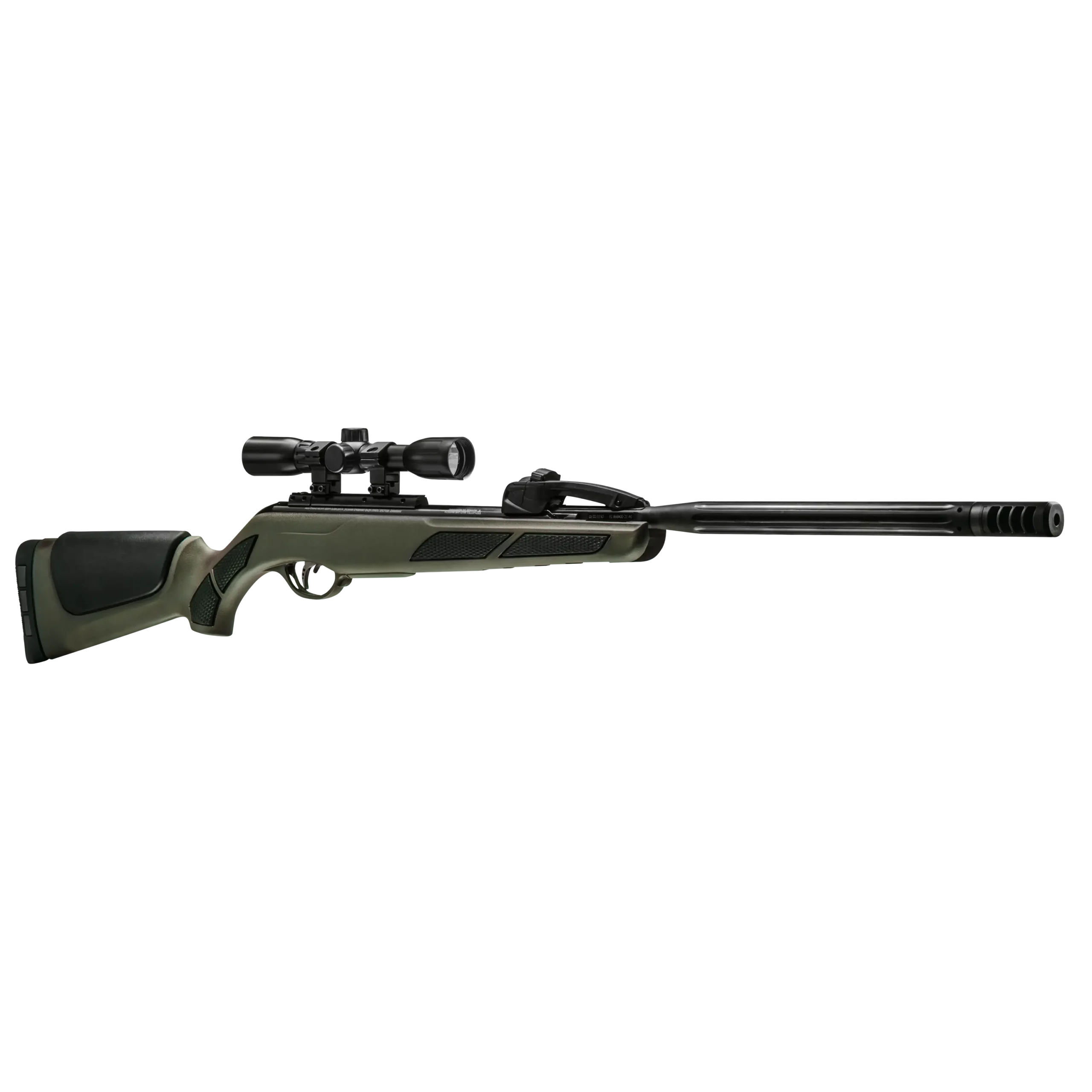
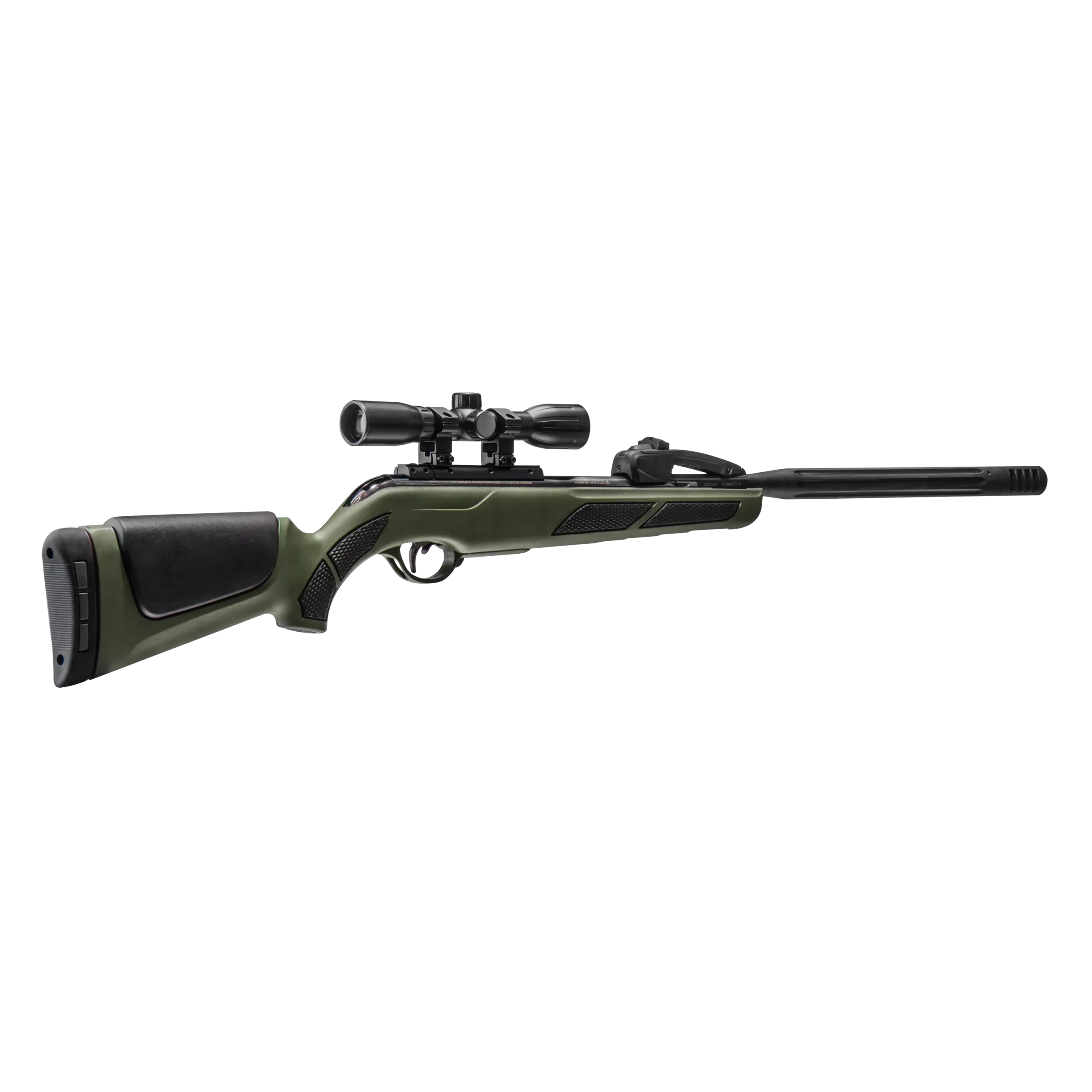
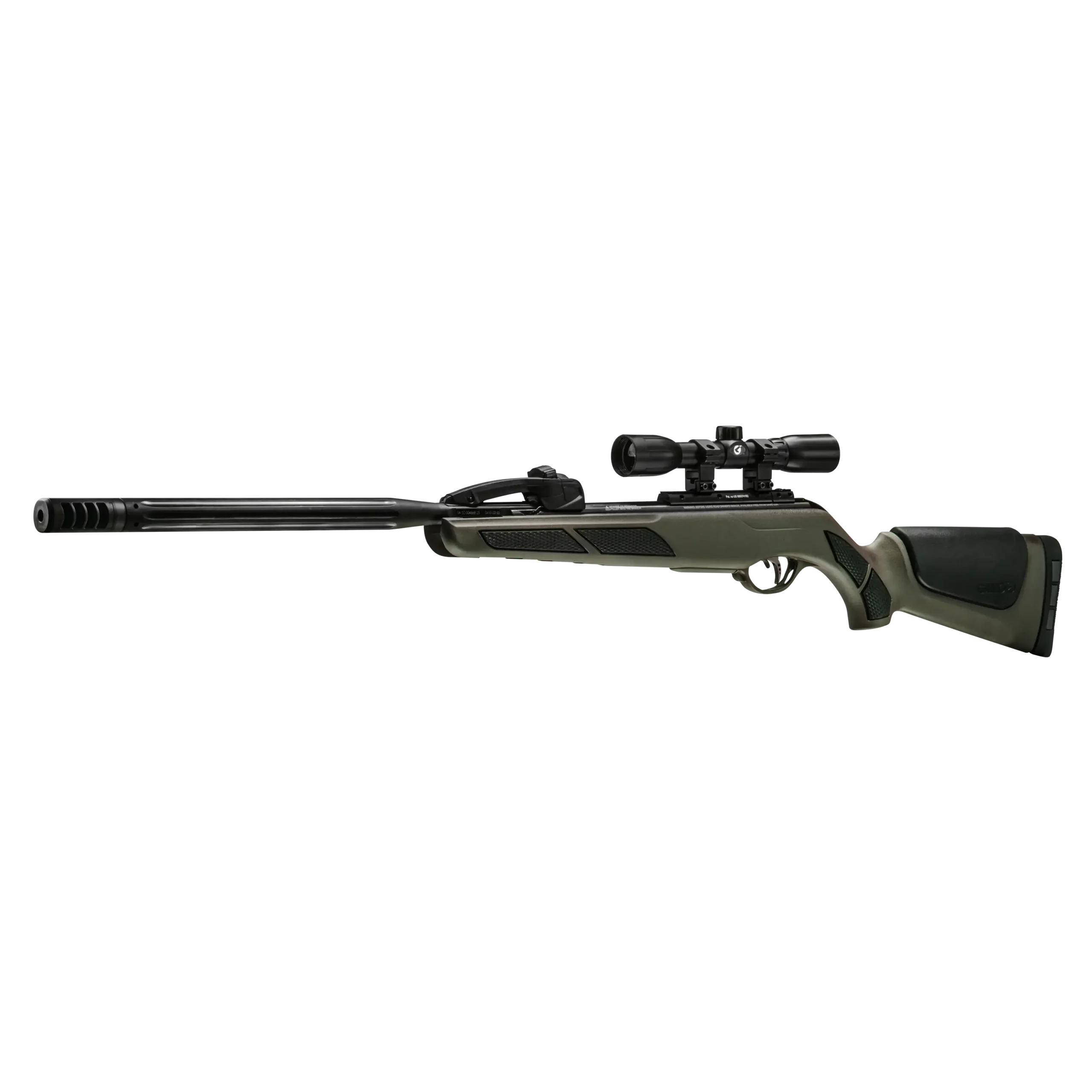
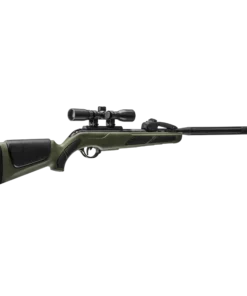
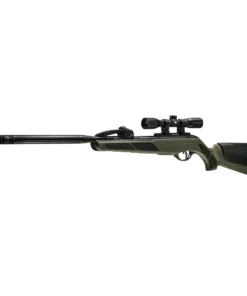
Swarm DX .22 caliber 10-shot break barrel air rifle
$155.00
The GAMO Swarm DX is built for effective hunting and reliable pest control. Featuring our patent-pending 10X Quick-Shot™ technology, it allows you to fire up to 10 pellets without reloading just break the barrel and shoot for fast, seamless follow-up shots.
Finished with a premium olive green synthetic stock accented by rubber grip inserts, the Swarm DX delivers both performance and control in the field.
The GAMO Swarm DX pellet rifle is equipped with patent-pending 10X Quick-Shot™ technology, featuring a 10-round rotary magazine that delivers faster loading and rapid follow-up shots. Designed for durability and comfort, it sports a premium olive green synthetic stock with textured rubber inserts for a secure grip
Powered by IGT™ (Inert Gas Technology), this air rifle produces higher velocity, reduced vibration, and a longer service life compared to traditional spring-powered airguns. For quieter shooting, it incorporates Gamo’s patented Whisper Maxxim® noise-dampening technology.
Additional features include velocities of up to 1,000 fps in .22 caliber with alloy pellets, a Custom Action Trigger (C.A.T.) for adjustable trigger control, Whisper Maxxim noise suppression, a single-cocking break barrel, automatic cocking safety, manual trigger safety, and a fluted polymer-jacketed steel barrel.
The Swarm DX also comes complete with a 4×32 shockproof scope and mounting rings, and is backed by a one-year warranty.
Every Swarm DX .22 multishot pellet air rifle includes a 10x magazine.
MULTI-SHOT PELLET AIR RIFLE WITH 10X TECHNOLOGY
This advanced multi-shot pellet air rifle features Gamo’s patent-pending 10X Technology, allowing you to fire up to 10 pellets without reloading. Simply break the barrel and shoot for fast, seamless follow-up shots. Designed for speed and convenience, this multi-shot system is available exclusively in select Gamo air rifles.
WHISPER MAXXIM NOISE SUPPRESION
Engineered for quiet performance, this multi-shot pellet air rifle incorporates Gamo’s patented Whisper noise-suppression technology an industry leader in sound reduction. Whisper technology is offered in three levels: Whisper, Whisper Maxxim, and Whisper Fusion, delivering quiet, quieter, and quietest shooting experiences.
While sound suppression significantly reduces noise, it does not eliminate it entirely. Pellet choice impacts sound levels, as lighter and faster pellets tend to be louder than heavier, slower options.
The Whisper Maxxim system features dual noise-dampening chambers and an improved muzzle brake design that reduces recoil and enhances balance. Integrated into a lightweight, fluted polymer/steel rifled bull barrel, this system makes the multi-shot pellet air rifle quieter, more compact, and better balanced than previous designs.
The Whisper Maxxim features two noise dampening chambers, offering a quieter performance as well as an improved muzzle break design. This technology results in a lightweight, fluted, steel rifled barrel, integrating one of the latest sound-suppression technologies from Gamo. The Whisper Maxxim takes less space than the Whisper, keeping a better weight balance while making the air rifle quieter.
IGT (Inert Gas Technology) GAS PISTON
This multi-shot pellet air rifle is powered by Gamo’s IGT™ gas piston system, which replaces the traditional spring with a pneumatic cylinder. The result is increased terminal velocity, reduced vibration, smoother cocking, and more consistent power.
Shooters can achieve speeds of up to 1,300 fps with .177 caliber alloy pellets and up to 1,000 fps with .22 caliber alloy pellets—enhancing both hunting and target-shooting performance.
CUSTOM ACTION TRIGGER
Precision shooting is further enhanced with Gamo’s Custom Action Trigger. The C.A.T. system allows independent adjustment of both the first and second trigger stages, giving shooters control over trigger travel and crispness. With simple adjustments, this multi-shot pellet air rifle can be fine-tuned to match individual shooting preferences for improved accuracy and confidence.
OLIVE GREEN SYNTHETIC STOCK
The Swarm DX comes with an automotive grade glass filled nylon all-weather stock. This model is finished in Olive Green color and comes with premium rubber inserts for the grip, forearm, and cheek rest, making it very comfortable.
Swarm DX .22 Caliber 10-Shot Break Barrel Air Rifle
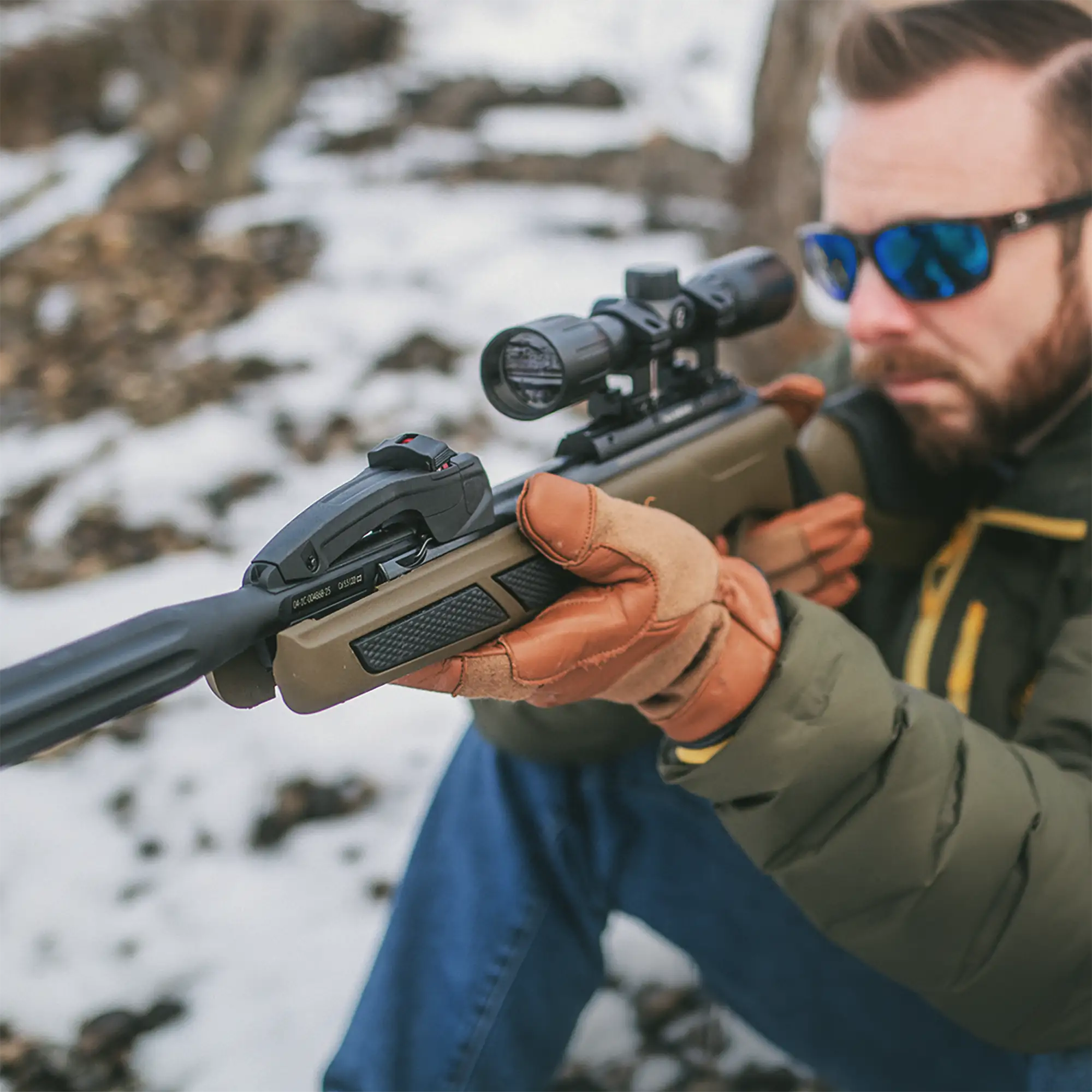
The Swarm DX .22 caliber 10-shot break barrel air rifle has been designed for shooters who value dependable performance, convenient follow-up shots, and traditional break-barrel simplicity. Instead of requiring a pellet to be manually inserted after every shot, a 10-shot magazine system has been incorporated. Swarm DX .22 caliber 10-shot break barrel air rifle
Therefore, a faster and more enjoyable shooting experience can be provided without the need for an external air tank, CO₂ cartridge, or battery.
Powerful .22-caliber performance has been combined with a practical repeating mechanism, making this rifle suitable for recreational target shooting, range practice, and lawful pest-management applications where permitted. Furthermore, a balanced synthetic stock has been fitted so that the rifle can be handled comfortably by a wide range of adult users.
Reliable .22-Caliber Break-Barrel Performance
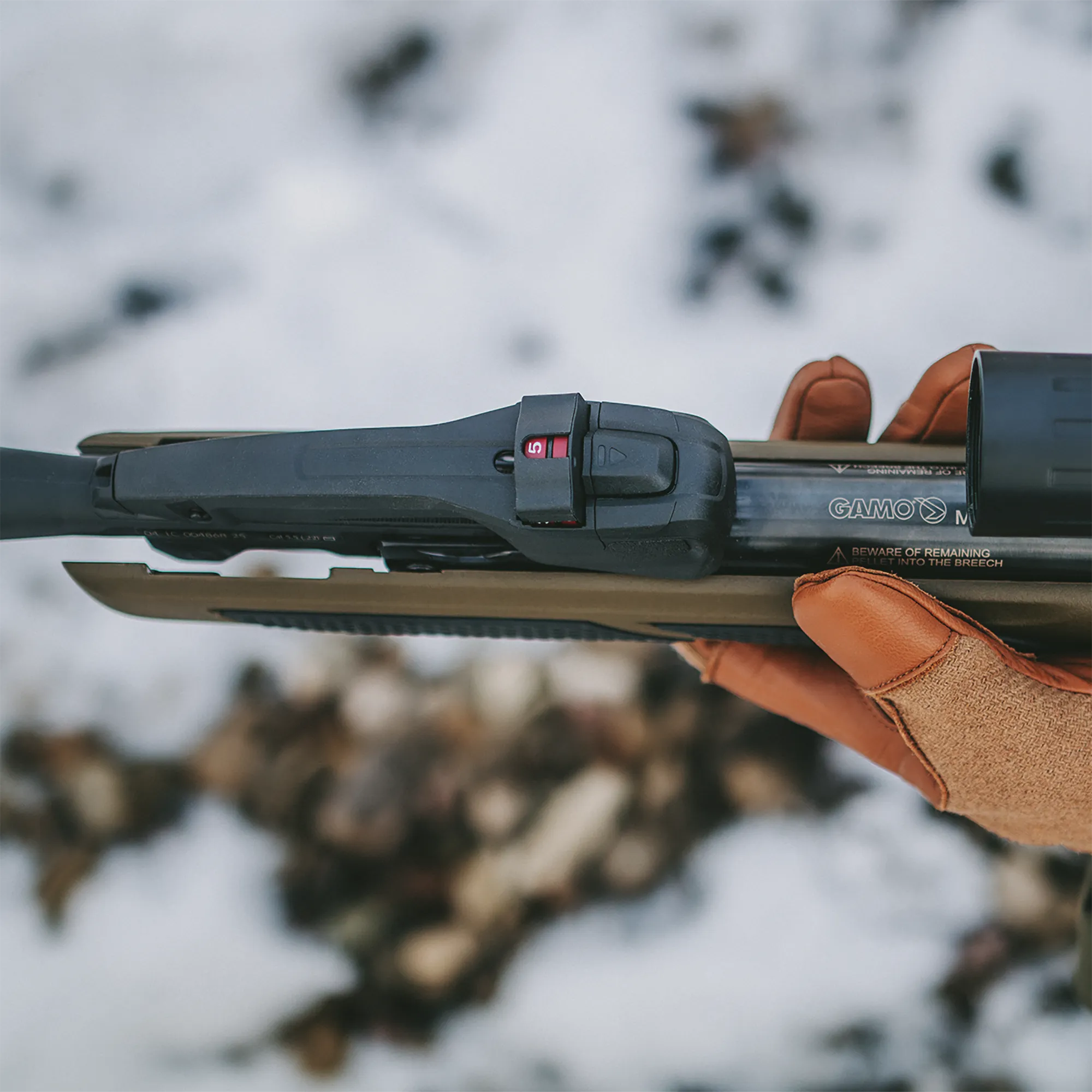
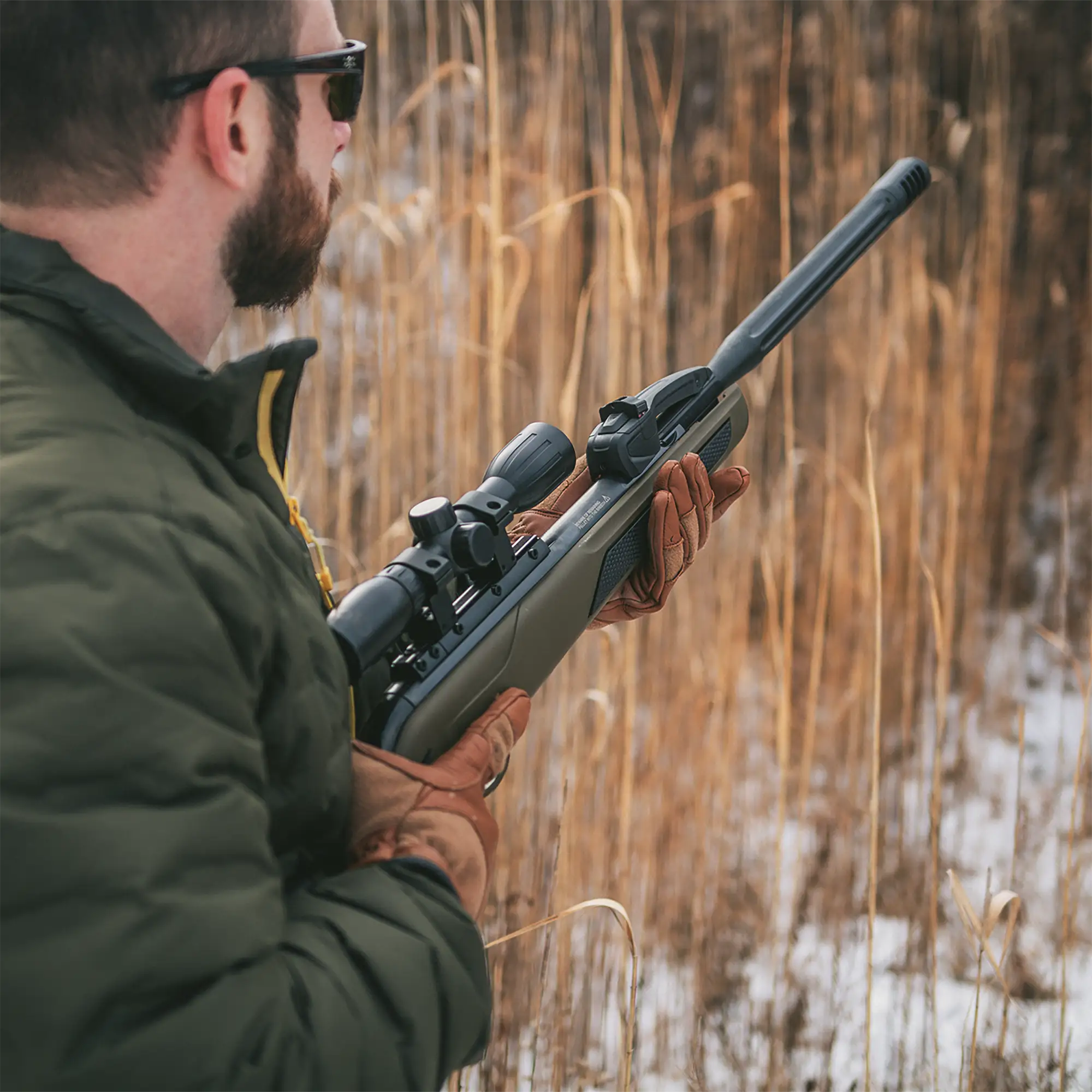
With the Swarm DX .22 caliber 10-shot break barrel air rifle, dependable power is produced through a self-contained break-barrel system. The barrel is simply broken downward to cock the action, while the next pellet is automatically aligned by the magazine mechanism. Once the barrel has been returned to its firing position, the rifle is prepared for the next carefully aimed shot.
Because no separate charging equipment is required, greater freedom can be enjoyed at the range or on private property where shooting is legal. Additionally, the ongoing costs associated with compressed-air cylinders and disposable CO₂ cartridges can be avoided.
The .22 caliber has been widely appreciated because a heavier pellet can be used. As a result, solid energy retention and noticeable target impact can be achieved. However, accuracy will always be influenced by pellet selection, shooting technique, distance, weather conditions, and correct sight adjustment. Responsible testing with several quality pellet types is therefore recommended.
Convenient 10-Shot Magazine System
One of this rifle’s most valuable features is its 10-shot magazine capacity. Up to ten pellets can be loaded before a shooting session begins. Consequently, repeated manual pellet handling can be reduced, especially when several targets are being engaged during organized range practice.
Although the rifle must still be cocked between shots, the next pellet is automatically presented by the magazine system. Therefore, the familiar reliability of a break-barrel platform is retained while greater convenience is introduced.
A loaded magazine should always be treated with care. Moreover, the rifle should be pointed in a safe direction and handled as though it were ready to fire. Local laws, safe backstops, and the manufacturer’s instructions must always be followed.
Key Product Highlights
- 10-shot repeating magazine: Multiple pellets can be prepared in advance for convenient follow-up shooting.
- Powerful .22-caliber platform: Heavier pellets can be used for strong impact and stable performance.
- Self-contained power system: No external air bottle, compressor, battery, or CO₂ cartridge is required.
- Break-barrel operation: A proven and straightforward cocking system has been incorporated.
- Durable synthetic stock: Resistance to ordinary outdoor conditions and regular handling is provided.
- Textured grip areas: Improved control can be maintained during careful shooting.
- Recoil-reducing design features: Greater shooting comfort and better stability can be supported.
- Optics-ready configuration: A compatible air-rifle scope can be mounted when correctly selected and installed.
- Manual safety provision: An additional layer of control is supplied, although safe handling must still be maintained.
- Versatile adult air rifle: Recreational shooting, target practice, and lawful pest control can be supported.
Comfortable, Practical Stock Design
A weather-resistant synthetic stock has been selected for the Swarm DX .22 caliber 10-shot break barrel air rifle. Compared with untreated traditional materials, less concern may be required when the rifle is used in changing outdoor conditions. In addition, routine cleaning can usually be completed with a soft, dry cloth.
Comfortable contact points have been shaped into the stock so that a secure hold can be maintained. Meanwhile, textured sections have been included to help reduce unwanted movement. Because stable support contributes greatly to accuracy, the rifle should be held consistently without being squeezed excessively.
An ambidextrous-friendly layout may also be appreciated by both right-handed and left-handed shooters. Consequently, the rifle can be considered by more users without comfort being unnecessarily compromised.
Reduced Noise and Recoil Experience
Several design elements have been incorporated to make shooting more manageable. Depending on the exact regional configuration, a sound-management system may be fitted to help reduce the muzzle report. However, the rifle will not be made silent, and hearing protection should still be considered.
Likewise, recoil-control features may be included to soften the shooting cycle. Because a break-barrel air rifle produces movement in more than one direction, an airgun-rated scope should always be chosen. A scope intended only for low-recoil equipment could otherwise be damaged.
For the best results, the rifle should be allowed to move naturally during firing. A relaxed, repeatable hold is generally preferred because excessive pressure can negatively affect consistency.
Accuracy for Target Practice and Skill Development
Accuracy has not been created by power alone. Instead, it is supported by proper pellet selection, consistent technique, a stable sight picture, and a suitable backstop. The barrel should be cleaned only as recommended, while loose mounting screws should be checked periodically.
Before regular use, the rifle should be sighted in at a safe and controlled range. A large paper target can initially be used, and adjustments can then be made gradually. Once a reliable grouping has been achieved, smaller targets and different distances may be introduced.
Because every barrel can display individual pellet preferences, several reputable .22-caliber pellets should be tested. Ultimately, the pellet producing the smallest and most consistent group should be selected rather than the pellet offering the highest advertised speed.
Ideal Uses for the Swarm DX Air Rifle
The Swarm DX .22 caliber 10-shot break barrel air rifle can be chosen for backyard target shooting where local regulations allow it, informal range sessions, accuracy training, and responsible pest management. Nevertheless, an appropriate backstop must always be installed, and shots must never be directed toward roads, buildings, people, pets, or unknown areas.
For beginners, the rifle’s straightforward power system can be appreciated. For experienced shooters, the repeating magazine and substantial .22-caliber performance can provide a refreshing and practical shooting experience. Adult supervision must always be provided whenever younger authorized users are present.
Easy Maintenance and Responsible Storage
Only basic maintenance is normally required. After use, external metal surfaces should be wiped with a lightly treated cloth so that moisture and fingerprints can be removed. The stock should also be cleaned gently, while harsh chemicals should be avoided.
Before storage, the rifle must be unloaded and uncocked. The magazine should be removed, and its empty condition should be visually confirmed. Afterward, the rifle should be secured in a locked cabinet or approved storage case, with pellets stored separately and access prevented for unauthorized persons.
Internal lubricants should only be applied according to the manufacturer’s recommendations. Excess oil should not be introduced into the compression chamber because unsafe combustion and seal damage could be caused.
Why Choose the Swarm DX .22 Caliber Air Rifle?
A strong balance of convenience, simplicity, and practical performance has been delivered by this rifle. Through the 10-shot magazine, interruptions between shots can be reduced. At the same time, the independence of a traditional break-barrel system can still be enjoyed.
Furthermore, expensive filling equipment is not required, and replacement gas cartridges do not need to be purchased. The rifle can therefore be prepared with suitable pellets, a safe shooting location, and proper protective equipment.
For adult shooters seeking a dependable repeater with useful .22-caliber capability, the Swarm DX .22 caliber 10-shot break barrel air rifle offers an appealing solution. Convenient operation has been paired with a durable design, while the accuracy potential needed for rewarding practice has been preserved. Choose the Swarm DX today and enjoy a modern multi-shot experience built around proven break-barrel performance.
Calibres, FAC Requirements, Power and Accessories
The Swarm DX .22 caliber 10-shot break barrel air rifle has been designed to combine practical power, multi-shot convenience, and dependable break-barrel operation. However, calibre, muzzle energy, licensing requirements, and compatible accessories should always be examined before the rifle is purchased. Specifications can differ between countries and regional versions; therefore, the exact product label and manufacturer’s documentation should be checked carefully.
Available Calibre Options
.177-Calibre Configuration
In markets where it is available, the .177-calibre version may be preferred for recreational target shooting and precision practice. Because a smaller and lighter pellet is used, a flatter trajectory can generally be achieved over common air-rifle distances. Consequently, less holdover may be required when targets are positioned at slightly different ranges.
The smaller calibre may also be appreciated by shooters who want economical ammunition and a wide selection of pellet designs. Nevertheless, performance will depend on the pellet’s weight, shape, quality, and compatibility with the barrel. Several reputable pellets should therefore be tested before a final choice is made.
Although a higher velocity may be produced with lighter .177 pellets, velocity alone should not be treated as the only measure of performance. Accuracy, retained energy, consistency, and safe target placement must also be considered.
.22-Calibre Configuration
The Swarm DX .22 caliber 10-shot break barrel air rifle uses a larger and usually heavier pellet than the .177 version. As a result, greater pellet mass and stronger impact can be delivered, although the trajectory will generally be more curved.
For informal target shooting, reactive targets, and lawful pest-management applications, the .22 calibre is often selected because a useful balance between power and control can be provided. Additionally, heavier pellets may retain energy effectively at practical distances. However, the rifle’s trajectory must be understood, while shooting distances should be kept within the user’s demonstrated accuracy.
Only high-quality .22-calibre pellets of the correct size should be loaded into the magazine. Steel BBs, darts, damaged pellets, and incorrectly sized ammunition should not be used. The magazine should also be inspected regularly because deformed pellet skirts or debris could interfere with reliable indexing.
Power and Performance
Power output can differ according to the rifle’s market, internal configuration, pellet weight, testing method, and legal classification. Therefore, one universal velocity or muzzle-energy figure should not be assumed for every Swarm DX rifle.
Some versions may be advertised using velocity figures achieved with lightweight alloy pellets. Although those numbers can be useful for comparison, they may not reflect the results obtained with standard lead or lead-free hunting and target pellets. A chronograph test with the chosen pellet can provide a more meaningful measurement of actual performance.
Muzzle energy can be calculated when pellet weight and measured velocity are known. Even so, modifications should never be made merely to increase power. Unauthorized adjustment could create an unsafe rifle, invalidate the warranty, damage internal components, or place the owner outside the law.
The best results will usually be produced when a suitable pellet is matched with consistent shooting technique. A stable hold, correctly fitted optic, secure stock screws, and repeatable trigger control should therefore be prioritized. More power does not automatically produce better accuracy.
Understanding FAC Classification
“FAC” commonly refers to a Firearm Certificate in the United Kingdom. Whether an air rifle requires certification is determined by its muzzle energy, location, user circumstances, and current legislation.
In England and Wales, an air rifle exceeding the applicable non-FAC energy limit is generally treated as a firearm requiring the appropriate certificate. Scotland has a separate air-weapon licensing system, while Northern Ireland is governed by different firearm rules. Consequently, legal requirements should never be assumed to be identical throughout the United Kingdom.
Before ordering an FAC-rated or full-power version, the buyer should confirm the law with the relevant police firearms-licensing authority or another qualified local source. Retailer conditions, secure storage requirements, transportation rules, age restrictions, and permitted places of use should also be verified.
If the rifle is being purchased outside the United Kingdom, “FAC” may not be the legal term used locally. Different power limits, permits, registrations, import rules, or ownership restrictions may be applied. Therefore, the buyer remains responsible for confirming that the selected configuration can be legally purchased, possessed, transported, and used.
Recommended Accessories
Compatible 10-Shot Magazines
A spare 10-shot rotary magazine can be one of the most useful accessories for the Swarm DX. Additional magazines can be loaded before a range session, allowing interruptions to be reduced. However, only magazines specifically confirmed for the correct Swarm model, generation, and calibre should be selected.
A .177 magazine must not be used with .22-calibre pellets, and a .22 magazine must not be forced into an incompatible rifle. When stored, magazines should be kept clean, dry, and protected from impact.
Airgun-Rated Scope and Mounts
A suitable scope can improve target visibility and help the shooter develop consistent accuracy. Because a spring or gas-piston break-barrel rifle produces a distinctive two-direction recoil cycle, an optic rated for this type of airgun should be fitted.
Correct mounts and an appropriate recoil stop should also be used. Before purchasing an optic, the rifle’s rail type, available mounting space, and scope clearance should be confirmed. Excessively tall or heavy equipment may affect balance and cheek placement.
Pellets and Pellet Storage
Quality domed pellets are often chosen for general shooting because stable flight and dependable feeding can be provided. Nevertheless, pointed, hollow-point, flat-head, and lead-free designs may also be considered when appropriate for the intended lawful use.
Pellets should be stored in a secure, dry container. Damaged or dirty ammunition should be discarded safely because accuracy and magazine operation could be negatively affected.
Protective and Maintenance Equipment
Eye protection should always be worn, while hearing protection may be considered depending on the shooting environment. A secure pellet trap and a substantial backstop should be used for target practice. The area behind the target must also be checked because pellets can ricochet or travel beyond an inadequate backstop.
A padded rifle case, cleaning cloth, manufacturer-approved lubricant, soft brush, and basic gunsmithing tools may be useful for routine care. However, the barrel and powerplant should only be maintained as directed by the manufacturer.
Finally, a lockable cabinet or approved security device should be used so that unauthorized access can be prevented. When the correct calibre, lawful power level, and compatible accessories are selected, the Swarm DX .22 caliber 10-shot break barrel air rifle can provide a convenient, controlled, and rewarding shooting experience.
Frequently Asked Questions
What type of air rifle is this model?
This model is a multi-shot break-barrel air rifle intended for adult recreational shooting, controlled target practice, and other lawful applications. A self-contained powerplant is used, so an external compressed-air cylinder, manual pump, battery, or disposable CO₂ cartridge is not required.
Before every shot, the barrel must be broken downward to cock the action. During this movement, the magazine system prepares the next pellet. The barrel is then returned carefully to its closed position before the rifle is aimed and fired.
How does the 10-shot magazine system work?
Up to ten correctly sized pellets can be loaded into the removable rotary magazine. After the magazine has been installed, the rifle’s loading mechanism automatically presents a pellet each time the barrel is cycled correctly.
Although the pellets are fed automatically, the rifle is not semiautomatic. The barrel must still be broken and returned to its closed position before every shot. The action should be operated smoothly and completely so that reliable magazine indexing can be supported.
Does the rifle fire ten shots without being cocked again?
No. The rifle must be cocked manually before each shot. The magazine reduces the need to handle and insert individual pellets, but it does not eliminate the traditional break-barrel cocking process.
Once the first shot has been fired, the barrel must be broken downward again. The next pellet will then be prepared by the loading system. This sequence continues until the magazine is empty.
Is an external air tank required?
No external air tank is required. Power is generated by the rifle’s internal break-barrel powerplant. Consequently, a scuba tank, high-pressure compressor, charging bottle, or hand pump does not need to be purchased.
This self-contained design may be particularly convenient for users who want straightforward equipment. Nevertheless, regular inspection and manufacturer-approved maintenance will still be required to keep the rifle functioning correctly.
Does the rifle use CO₂ cartridges?
No CO₂ cartridge is required for ordinary operation. Therefore, performance will not depend on the availability of disposable gas capsules. The inconvenience and recurring cost associated with replacing CO₂ cartridges can also be avoided.
Because a break-barrel system is used, the action is re-energized each time the barrel is cocked. The exact cocking effort and shooting characteristics may vary according to the rifle’s configuration and condition.
Which calibre should be selected?
The best calibre will depend on the intended lawful application, preferred shooting distance, local regulations, and individual experience. A smaller pellet may provide a flatter trajectory for target shooting, while a larger and heavier pellet may offer stronger impact and energy retention.
Buyers should confirm which versions are available in their country. The calibre printed on the barrel, packaging, magazine, and manufacturer’s documentation should always match the pellets being used.
Can different pellet calibres be used in the same rifle?
No. Only the calibre marked on the rifle should be used. A pellet of a different diameter must never be forced into the barrel or magazine. Incorrect ammunition could cause a blockage, damage the loading system, reduce accuracy, or create a dangerous condition.
The magazine must also match the rifle’s calibre and generation. Compatibility should be confirmed with the manufacturer or an authorized retailer before a replacement magazine is ordered.
What type of pellets should be used?
High-quality airgun pellets in the correct calibre should be selected. Domed pellets are commonly used for general shooting because dependable feeding and stable flight can often be achieved. Flat-head pellets may be chosen for paper targets, while other pellet designs may be considered for specific lawful purposes.
Several weights and designs should be tested at a controlled range. The pellet producing the most consistent group should normally be preferred over one selected only for its advertised speed.
Can steel BBs be loaded into the magazine?
Steel BBs should not be used unless the manufacturer expressly approves them for that exact model. The rifle and magazine are designed primarily for correctly sized airgun pellets. Steel BBs may damage a rifled barrel, feed incorrectly, ricochet more readily, or create unsafe pressure conditions.
Darts, damaged pellets, reused ammunition, and improvised projectiles should also be avoided. Only clean, correctly manufactured ammunition should be loaded.
How powerful is the rifle?
Actual power can vary according to the market, legal configuration, pellet weight, seal condition, temperature, and testing method. Advertised velocity may also be measured with lightweight alloy ammunition, while standard pellets may produce a lower velocity but different energy characteristics.
The exact specification should be confirmed on the product packaging or official manufacturer’s documentation. Where legal compliance depends on muzzle energy, testing should be performed by a qualified professional using an appropriate chronograph.
Does higher velocity guarantee better accuracy?
No. High velocity does not automatically produce a more accurate shot. Accuracy is influenced by pellet quality, barrel compatibility, sight adjustment, shooting technique, trigger control, wind, range, and the consistency of the rifle’s powerplant.
A slightly slower pellet that groups consistently may be more useful than a faster pellet that spreads widely. Safe testing should therefore be completed with several suitable options before a preferred pellet is selected.
Is a firearm certificate required?
Licensing requirements depend on the rifle’s power and the laws applying where it will be owned or used. In the United Kingdom, different rules may apply in England and Wales, Scotland, and Northern Ireland. Elsewhere, permits, registration, power restrictions, age limits, or import approvals may be imposed.
Current requirements should be confirmed with the relevant government authority before purchase. Retailer advice can be helpful, but it should not replace official legal guidance.
Can the rifle’s power be increased?
Unauthorized power modifications should not be attempted. Alterations could damage the rifle, create unreliable operation, invalidate the warranty, or cause the legal energy limit to be exceeded.
Internal servicing and repairs should be performed only by a competent airgun technician. If a different power classification is needed, a correctly manufactured and legally approved version should be purchased through an authorized channel.
Is this model suitable for beginners?
It may be suitable for a responsible adult beginner who has received appropriate instruction. However, break-barrel rifles can require noticeable cocking effort, disciplined muzzle control, and consistent shooting technique.
New users should be supervised by an experienced and safety-conscious adult or qualified instructor. Safe loading, unloading, magazine removal, backstop selection, sight adjustment, and storage procedures should be learned before regular use begins.
Can younger shooters use it?
Applicable age restrictions must always be followed. Where supervised use by a younger person is legally permitted, direct and attentive adult supervision must be maintained. The supervising adult should control access to the rifle and ammunition before, during, and after the session.
The rifle should never be treated as a toy. Safe muzzle direction, trigger discipline, protective equipment, and an effective backstop remain essential at all times.
Is the stock suitable for right- and left-handed users?
The synthetic stock may provide a practical fit for both right- and left-handed shooters, depending on individual body shape and shooting preference. However, comfort can vary according to arm length, cheek position, grip size, and the optic being used.
Whenever possible, the rifle should be handled in a safe retail environment before purchase. A consistent cheek position and comfortable trigger reach should be achievable without strain.
Can a scope be installed?
A compatible airgun scope can usually be installed using the appropriate mounting system. The rifle’s rail style should be confirmed before rings or mounts are ordered. Adequate clearance must also be provided for the magazine and loading mechanism.
Because break-barrel recoil moves differently from conventional firearm recoil, an airgun-rated scope should be selected. Correctly fitted mounts and a recoil stop can help prevent unwanted movement.
Does the rifle include a scope?
Package contents can vary between sellers and regions. Some packages may include an optic, while others may contain only the rifle, magazine, and basic accessories. Product photographs should not automatically be treated as confirmation that every displayed item is included.
The retailer’s written “package contents” section should be reviewed before an order is placed. Any uncertainty should be resolved directly with the seller.
How should the scope be sighted in?
Sighting-in should begin at a short, safe distance using a large paper target and a secure backstop. A consistent aiming point should be used, and several shots should be fired before small adjustments are made.
Once a stable group has been centered, the target distance may be increased gradually. Adjustments should be based on groups rather than single shots because occasional flyers may be caused by technique or damaged pellets.
Why might the rifle’s accuracy change?
Accuracy may be affected by loose stock screws, changing pellet types, an unstable scope mount, inconsistent holding pressure, wind, dirt, or damaged ammunition. A new rifle may also require a reasonable settling period before its most consistent performance is observed.
Basic checks should be completed before a fault is assumed. If the problem continues, the rifle should be inspected by an authorized technician rather than dismantled without suitable knowledge.
What is the best way to hold a break-barrel air rifle?
A relaxed and repeatable hold is generally recommended. Excessive gripping pressure can interfere with the rifle’s natural movement during the firing cycle. The fore-end should be supported consistently, while the trigger should be pressed smoothly.
The same cheek position, shoulder pressure, and support point should be used for every shot. Through regular safe practice, more predictable groups can be developed.
Is hearing protection necessary?
The rifle will not be completely silent. Hearing protection may be advisable, particularly when shooting in an enclosed area or during extended practice. Local range rules should also be followed.
Eye protection should always be worn because fragments and ricochets can be produced by unsuitable targets or inadequate backstops. Everyone near the firing area should be given appropriate protection.
Can it be used for backyard target practice?
Backyard shooting may be permitted in some locations and prohibited in others. Local laws, property boundaries, noise restrictions, minimum age rules, and projectile-discharge regulations must be checked first.
A purpose-built pellet trap and an effective secondary backstop should be installed. No shot should be taken toward a road, neighboring property, building, animal, person, or area that cannot be seen clearly.
Can the rifle be used for pest management?
Lawful pest management may be possible where the user has permission, the species can legally be controlled, and the rifle is suitable for the task. Humane standards, safe shot placement, appropriate pellet selection, and a reliable backstop must all be considered.
If a clean and responsible result cannot be assured, the shot should not be taken. Local wildlife rules and landowner authorization must always be respected.
How should a magazine jam be handled?
If feeding does not occur normally, firing should be stopped immediately. The safety should be applied, the muzzle should be kept in a safe direction, and the manufacturer’s unloading procedure should be followed.
The barrel, magazine, or loading system should never be forced. If the cause cannot be identified safely, assistance should be obtained from an authorized retailer or qualified airgun technician.
How often should the rifle be cleaned?
External surfaces should be wiped after handling so that fingerprints and moisture can be removed. The stock can be cleaned with a soft cloth, while harsh solvents should be avoided.
Frequent barrel cleaning is not always necessary for an air rifle. Cleaning intervals and approved materials should be taken from the manufacturer’s manual. Excess lubricant must not be introduced into the compression chamber.
Should the rifle be stored cocked?
No. The rifle should normally be stored unloaded, uncocked, and secured against unauthorized access. The magazine should be removed, and its empty condition should be confirmed.
Pellets should be stored separately where required. A locked cabinet, approved security device, or secure case should be used according to local law and household circumstances.
What accessories are most useful?
Useful accessories may include spare compatible magazines, an airgun-rated scope, appropriate mounts, quality pellets, eye protection, hearing protection, a pellet trap, a substantial backstop, a padded case, and manufacturer-approved maintenance products.
Every accessory should be checked for model and calibre compatibility. The rifle should not be overloaded with unnecessary equipment that affects balance, handling, or safe operation.
What should be checked when the rifle arrives?
The packaging, rifle, stock, barrel, sights, magazine, safety mechanism, and included accessories should be inspected for visible damage. The model, calibre, serial information, and package contents should be compared with the order.
The owner’s manual should be read before loading or cocking begins. If damage, missing parts, or incorrect specifications are found, the retailer should be contacted before the rifle is used.
Why is this model a practical choice?
Multi-shot convenience has been combined with the independence of a self-contained break-barrel system. External charging equipment and disposable gas cartridges are not required, while repeated manual pellet insertion can be reduced.
A durable stock, useful magazine capacity, and versatile calibre options can make the rifle appealing for responsible adult target shooters. When correct ammunition, lawful use, proper maintenance, and secure storage are prioritized, an enjoyable and dependable shooting experience can be supported.
Practical Use Scenarios
A well-designed multi-shot air rifle can be used in several practical situations when safety, legality, and responsible handling are prioritized. Its self-contained power system makes it especially convenient for adult shooters who want to practice without carrying a charging bottle, compressor, or disposable gas cartridges. Meanwhile, the repeating magazine reduces the amount of pellet handling required between shots.
The following scenarios explain how the rifle may fit into realistic shooting routines. They also show why preparation, appropriate ammunition, secure storage, and a reliable backstop are just as important as the equipment itself.
Scenario One: Recreational Target Practice at Home
Imagine that an adult owner has access to a spacious private garden where air-rifle shooting is permitted. Before any target is installed, local laws and property boundaries are checked. Nearby footpaths, roads, houses, animals, and frequently used areas are also identified so that an unsuitable shooting direction can be avoided.
A quiet corner is then selected. A purpose-built pellet trap is positioned in front of a thick and dependable secondary backstop. The backstop is made wide enough to catch pellets that might miss the main target. Hard, angled metal surfaces are avoided because dangerous ricochets could be produced.
Before the rifle is removed from its case, children, visitors, and pets are kept away from the shooting area. Eye protection is worn, and hearing protection is made available. The rifle is kept pointed toward the safe backstop throughout the entire setup.
Several suitable pellets are placed into the removable magazine. Each pellet is inspected so that damaged skirts, dirt, and visible deformities can be identified. The magazine is then installed according to the manufacturer’s instructions.
For the first practice group, a large paper target is used. The barrel is broken carefully and returned to its closed position without being slammed. A stable stance is adopted, the sights are aligned, and the trigger is pressed smoothly. After each shot, the same cocking and aiming process is repeated.
Because several pellets have already been loaded into the magazine, constant handling of a pellet tin is avoided. Therefore, more attention can be given to breathing, sight alignment, trigger control, and follow-through. However, the shooter does not rush. Every shot is treated as a separate and deliberate action.
Once the magazine has been emptied, the rifle is pointed at the backstop and checked. The shooting area is then made safe before the target is examined. Group size, shot placement, and any unusual results are recorded in a notebook.
Through this organized routine, recreational practice becomes both enjoyable and educational. Progress can be measured over time, while careless habits are less likely to be developed.
Scenario Two: Testing Different Pellet Types
A new rifle may not perform equally well with every pellet. Therefore, a controlled pellet-comparison session can be arranged at a legal shooting range or another approved location.
Three or four reputable pellet designs are selected in the correct calibre. The tins are clearly labeled, and the pellets are not mixed. Identical paper targets are placed at the same measured distance so that each pellet can be tested under similar conditions.
Before testing begins, the mounting screws and sight settings are checked. A stable bench and soft front support may be used, although the rifle must still be allowed to move naturally during its firing cycle. Excessive pressure is avoided because it could affect the results.
The first magazine is loaded with only one pellet type. A careful group is fired at the first target, and the rifle is allowed to settle between shots. The process is then repeated with the remaining pellet types. If possible, more than one group is fired with each design so that a single unusually good or poor group does not influence the final decision.
Velocity alone is not used to select the best pellet. Instead, group size, feeding reliability, consistency, and point of impact are considered. A slightly slower pellet that produces a tight and repeatable group may be preferred over a faster pellet that spreads across the target.
Once a suitable design has been identified, its brand, weight, and shape are recorded. The sight can then be adjusted specifically for that pellet. Consequently, greater consistency may be achieved during future practice sessions.
Scenario Three: Developing Accuracy at a Shooting Range
At an organized range, a new shooter can be guided through the basic stages of accurate air-rifle use. The session begins with the range rules, firing-line commands, and emergency procedures being explained.
The rifle remains unloaded until permission to begin has been given. Afterward, the shooter adopts a supported seated or standing position. The butt is placed consistently against the shoulder, while the cheek is rested naturally against the stock. A relaxed grip is maintained so that the rifle is not prevented from moving in its normal way.
A large target is first placed at a manageable distance. Instead of aiming for the smallest possible mark, the shooter concentrates on repeating the same body position and sight picture. Each trigger press is completed smoothly, while breathing is controlled.
The magazine system allows a planned string of shots to be completed without individual pellets being inserted each time. Nevertheless, the muzzle remains pointed downrange during every part of the cocking cycle. Fingers are kept away from the trigger until the rifle has been aimed and the decision to fire has been made.
After each group, the rifle is unloaded and made safe before anyone moves forward. The target is then reviewed with an instructor. If the group is tight but positioned away from the center, the sights can be adjusted. If the shots are widely scattered, technique and pellet suitability are examined before the sight setting is changed.
Over several sessions, target distance may be increased gradually. Unsupported shooting positions can also be introduced. Because the training is progressed in stages, confidence is built without allowing speed to replace control.
Scenario Four: Safe Farmyard Target Practice
A rural property may provide more space, but it does not automatically provide a safe shooting environment. Farm workers, vehicles, livestock, machinery, neighboring land, and public paths must all be considered.
Suppose an owner wants to create a temporary practice area beside an outbuilding. The chosen direction is examined first, and an earth bank is used as the primary background. A commercial pellet trap is positioned in front of it, while targets are placed at a clearly measured distance.
The session is scheduled when the area is not being used for other work. Everyone on the property is informed, and a clear boundary is established around the shooting zone. Livestock are moved away because unexpected noise and movement could create risk.
Only paper targets and purpose-built airgun targets are used. Bottles, stones, scrap metal, and other hard objects are excluded because fragments and ricochets could be produced. Furthermore, no shot is directed into trees or open fields because the pellet’s final destination cannot be guaranteed.
After practice, every target and pellet tin is removed. The trap is inspected, and the surrounding area is checked for debris. In this way, the property can be returned to normal use without a hidden hazard being left behind.
Scenario Five: Responsible Pest Management Where Legal
In some locations, an appropriately powered air rifle may be used for lawful pest management. However, this activity should only be undertaken by a competent person who understands local wildlife laws, the limits of the equipment, and humane standards.
First, the species must be identified correctly. Permission must be obtained from the landowner, and current regulations must be checked. Protected wildlife must never be targeted. If there is uncertainty about the species or the law, a qualified pest-control professional should be consulted.
The location must then be assessed. Buildings, livestock, feed stores, vehicles, roads, and neighboring property may create serious risks. A shot should only be considered when an effective backstop is present and the area beyond the target is fully understood.
The rifle’s accuracy should already have been confirmed at the expected distance. A suitable pellet should have been tested, and the shooter should be able to place repeated shots within the required target area from the intended position. Shots beyond the user’s proven ability should not be attempted.
The magazine may offer convenient follow-up capability, but it must never be used as a reason to take a rushed or uncertain first shot. If a safe, responsible, and humane outcome cannot be assured, the trigger should not be pressed.
Where the situation is complex, frequent, or close to occupied buildings, professional pest-control services may be the safer choice. Responsible ownership includes recognizing when a task should be left to someone with specialist training.
Scenario Six: Introducing a New Adult Shooter
A first-time adult shooter can be introduced to the rifle through an unloaded handling session. Before pellets are brought into the area, the major controls are explained. Safe muzzle direction, the safety mechanism, trigger discipline, magazine removal, and the break-barrel action are demonstrated.
The new user is shown how the barrel should be controlled during cocking. The barrel must not be released suddenly, and fingers should be kept clear of pinch points. The instructor also explains that the safety mechanism is a supplement to careful handling rather than a replacement for it.
Once the learner can handle the unloaded rifle confidently, a single pellet may be loaded under direct supervision. Beginning with one pellet prevents the presence of additional ammunition from causing confusion. After several safe single-shot cycles have been completed, the multi-shot magazine can be introduced.
Large paper targets are used at a comfortable distance. Early success is encouraged, but accuracy is not placed above safety. If an unsafe action occurs, the session is paused and the correct procedure is reviewed calmly.
By the end of the lesson, the new shooter should understand how to confirm that the rifle is unloaded, how to remove the magazine, and how to return the equipment to secure storage. These habits should be established before independent shooting is considered.
Scenario Seven: Sight Adjustment and Scope Setup
A compatible airgun-rated scope may be fitted to improve target visibility. Before installation, the rail type, ring size, eye relief, and magazine clearance are checked. Mounting screws are tightened evenly according to the manufacturer’s guidance, and a recoil stop is used where appropriate.
At the range, the first shots are taken at a short distance. A large target is used so that the initial point of impact can be identified. Adjustments are then made gradually, with several shots being fired between changes.
If the group remains consistent but lands away from the aiming point, the scope can be adjusted. However, if the group is scattered, the mounts, pellet choice, and shooting technique should be examined first.
Once the sight has been set, the final position of the mounts can be marked discreetly. This makes future movement easier to identify. The screws should be inspected periodically, but excessive tightening should be avoided because the scope tube or rail could be damaged.
Scenario Eight: An Organized Weekend Shooting Session
A weekend session can be made more efficient through preparation. Before leaving home, the rifle is confirmed to be unloaded and placed in a padded, lockable case. Pellets, spare magazines, eye protection, targets, and maintenance cloths are packed separately.
The rifle is transported in accordance with local laws and is not displayed unnecessarily. At the destination, permission to shoot is confirmed, and the condition of the range and backstop is examined.
Rather than loading every magazine immediately, only the ammunition required for the planned activity is prepared. A warm-up group is fired first. Afterward, accuracy drills, timed but controlled exercises, and different shooting positions may be practiced.
Timed practice should never encourage unsafe speed. The objective is to complete each loading, aiming, and firing sequence smoothly while maintaining full control. Misses are studied rather than ignored, and fatigue is monitored.
When concentration begins to decline, the session is ended. The rifle is unloaded, the magazine is removed, and the chamber area is checked. Equipment is counted, rubbish is collected, and the shooting location is left clean.
Scenario Nine: Routine Care After Use
Once the rifle has been returned home, basic care can be completed. The rifle is kept pointed in a safe direction, and its unloaded condition is verified again. External metal surfaces are wiped with a soft cloth so that moisture, dust, and fingerprints can be removed.
The synthetic stock is cleaned gently without aggressive chemicals. Meanwhile, the magazine is inspected for dirt or damaged pellets. Lubricants are only applied where and when they are recommended by the manufacturer. Excess oil is not placed inside the compression chamber.
Loose screws, damaged seals, unusual noises, and changes in performance are noted. If a mechanical fault is suspected, the rifle is not dismantled casually. Instead, an authorized technician is contacted.
Finally, the uncocked rifle is secured in a locked cabinet or approved storage device. The magazine is removed, pellets are stored separately where required, and access is prevented for children or unauthorized adults.
Achieving the Best Practical Experience
The most rewarding experience is produced when preparation and restraint are combined with regular practice. The magazine system can reduce interruptions, while the self-contained action can simplify transportation and setup. Nevertheless, neither feature replaces safe judgment.
Reliable results are more likely when one proven pellet is used consistently, the sights remain securely mounted, and shooting distances stay within the user’s demonstrated ability. In addition, legal requirements should be reviewed whenever the rifle is transported or used in a new location.
Through controlled target practice, responsible maintenance, secure storage, and careful equipment selection, the rifle can provide many productive shooting sessions. Every practical use should begin with a safe location and end with the equipment being unloaded, inspected, and locked away.
Practical Use Scenarios
A well-designed multi-shot air rifle can be used in several practical situations when safety, legality, and responsible handling are prioritized. Its self-contained power system makes it especially convenient for adult shooters who want to practice without carrying a charging bottle, compressor, or disposable gas cartridges. Meanwhile, the repeating magazine reduces the amount of pellet handling required between shots.
The following scenarios explain how the rifle may fit into realistic shooting routines. They also show why preparation, appropriate ammunition, secure storage, and a reliable backstop are just as important as the equipment itself.
Scenario One: Recreational Target Practice at Home
Imagine that an adult owner has access to a spacious private garden where air-rifle shooting is permitted. Before any target is installed, local laws and property boundaries are checked. Nearby footpaths, roads, houses, animals, and frequently used areas are also identified so that an unsuitable shooting direction can be avoided.
A quiet corner is then selected. A purpose-built pellet trap is positioned in front of a thick and dependable secondary backstop. The backstop is made wide enough to catch pellets that might miss the main target. Hard, angled metal surfaces are avoided because dangerous ricochets could be produced.
Before the rifle is removed from its case, children, visitors, and pets are kept away from the shooting area. Eye protection is worn, and hearing protection is made available. The rifle is kept pointed toward the safe backstop throughout the entire setup.
Several suitable pellets are placed into the removable magazine. Each pellet is inspected so that damaged skirts, dirt, and visible deformities can be identified. The magazine is then installed according to the manufacturer’s instructions.
For the first practice group, a large paper target is used. The barrel is broken carefully and returned to its closed position without being slammed. A stable stance is adopted, the sights are aligned, and the trigger is pressed smoothly. After each shot, the same cocking and aiming process is repeated.
Because several pellets have already been loaded into the magazine, constant handling of a pellet tin is avoided. Therefore, more attention can be given to breathing, sight alignment, trigger control, and follow-through. However, the shooter does not rush. Every shot is treated as a separate and deliberate action.
Once the magazine has been emptied, the rifle is pointed at the backstop and checked. The shooting area is then made safe before the target is examined. Group size, shot placement, and any unusual results are recorded in a notebook.
Through this organized routine, recreational practice becomes both enjoyable and educational. Progress can be measured over time, while careless habits are less likely to be developed.
Scenario Two: Testing Different Pellet Types
A new rifle may not perform equally well with every pellet. Therefore, a controlled pellet-comparison session can be arranged at a legal shooting range or another approved location.
Three or four reputable pellet designs are selected in the correct calibre. The tins are clearly labeled, and the pellets are not mixed. Identical paper targets are placed at the same measured distance so that each pellet can be tested under similar conditions.
Before testing begins, the mounting screws and sight settings are checked. A stable bench and soft front support may be used, although the rifle must still be allowed to move naturally during its firing cycle. Excessive pressure is avoided because it could affect the results.
The first magazine is loaded with only one pellet type. A careful group is fired at the first target, and the rifle is allowed to settle between shots. The process is then repeated with the remaining pellet types. If possible, more than one group is fired with each design so that a single unusually good or poor group does not influence the final decision.
Velocity alone is not used to select the best pellet. Instead, group size, feeding reliability, consistency, and point of impact are considered. A slightly slower pellet that produces a tight and repeatable group may be preferred over a faster pellet that spreads across the target.
Once a suitable design has been identified, its brand, weight, and shape are recorded. The sight can then be adjusted specifically for that pellet. Consequently, greater consistency may be achieved during future practice sessions.
Scenario Three: Developing Accuracy at a Shooting Range
At an organized range, a new shooter can be guided through the basic stages of accurate air-rifle use. The session begins with the range rules, firing-line commands, and emergency procedures being explained.
The rifle remains unloaded until permission to begin has been given. Afterward, the shooter adopts a supported seated or standing position. The butt is placed consistently against the shoulder, while the cheek is rested naturally against the stock. A relaxed grip is maintained so that the rifle is not prevented from moving in its normal way.
A large target is first placed at a manageable distance. Instead of aiming for the smallest possible mark, the shooter concentrates on repeating the same body position and sight picture. Each trigger press is completed smoothly, while breathing is controlled.
The magazine system allows a planned string of shots to be completed without individual pellets being inserted each time. Nevertheless, the muzzle remains pointed downrange during every part of the cocking cycle. Fingers are kept away from the trigger until the rifle has been aimed and the decision to fire has been made.
After each group, the rifle is unloaded and made safe before anyone moves forward. The target is then reviewed with an instructor. If the group is tight but positioned away from the center, the sights can be adjusted. If the shots are widely scattered, technique and pellet suitability are examined before the sight setting is changed.
Over several sessions, target distance may be increased gradually. Unsupported shooting positions can also be introduced. Because the training is progressed in stages, confidence is built without allowing speed to replace control.
Scenario Four: Safe Farmyard Target Practice
A rural property may provide more space, but it does not automatically provide a safe shooting environment. Farm workers, vehicles, livestock, machinery, neighboring land, and public paths must all be considered.
Suppose an owner wants to create a temporary practice area beside an outbuilding. The chosen direction is examined first, and an earth bank is used as the primary background. A commercial pellet trap is positioned in front of it, while targets are placed at a clearly measured distance.
The session is scheduled when the area is not being used for other work. Everyone on the property is informed, and a clear boundary is established around the shooting zone. Livestock are moved away because unexpected noise and movement could create risk.
Only paper targets and purpose-built airgun targets are used. Bottles, stones, scrap metal, and other hard objects are excluded because fragments and ricochets could be produced. Furthermore, no shot is directed into trees or open fields because the pellet’s final destination cannot be guaranteed.
After practice, every target and pellet tin is removed. The trap is inspected, and the surrounding area is checked for debris. In this way, the property can be returned to normal use without a hidden hazard being left behind.
Scenario Five: Responsible Pest Management Where Legal
In some locations, an appropriately powered air rifle may be used for lawful pest management. However, this activity should only be undertaken by a competent person who understands local wildlife laws, the limits of the equipment, and humane standards.
First, the species must be identified correctly. Permission must be obtained from the landowner, and current regulations must be checked. Protected wildlife must never be targeted. If there is uncertainty about the species or the law, a qualified pest-control professional should be consulted.
The location must then be assessed. Buildings, livestock, feed stores, vehicles, roads, and neighboring property may create serious risks. A shot should only be considered when an effective backstop is present and the area beyond the target is fully understood.
The rifle’s accuracy should already have been confirmed at the expected distance. A suitable pellet should have been tested, and the shooter should be able to place repeated shots within the required target area from the intended position. Shots beyond the user’s proven ability should not be attempted.
The magazine may offer convenient follow-up capability, but it must never be used as a reason to take a rushed or uncertain first shot. If a safe, responsible, and humane outcome cannot be assured, the trigger should not be pressed.
Where the situation is complex, frequent, or close to occupied buildings, professional pest-control services may be the safer choice. Responsible ownership includes recognizing when a task should be left to someone with specialist training.
Scenario Six: Introducing a New Adult Shooter
A first-time adult shooter can be introduced to the rifle through an unloaded handling session. Before pellets are brought into the area, the major controls are explained. Safe muzzle direction, the safety mechanism, trigger discipline, magazine removal, and the break-barrel action are demonstrated.
The new user is shown how the barrel should be controlled during cocking. The barrel must not be released suddenly, and fingers should be kept clear of pinch points. The instructor also explains that the safety mechanism is a supplement to careful handling rather than a replacement for it.
Once the learner can handle the unloaded rifle confidently, a single pellet may be loaded under direct supervision. Beginning with one pellet prevents the presence of additional ammunition from causing confusion. After several safe single-shot cycles have been completed, the multi-shot magazine can be introduced.
Large paper targets are used at a comfortable distance. Early success is encouraged, but accuracy is not placed above safety. If an unsafe action occurs, the session is paused and the correct procedure is reviewed calmly.
By the end of the lesson, the new shooter should understand how to confirm that the rifle is unloaded, how to remove the magazine, and how to return the equipment to secure storage. These habits should be established before independent shooting is considered.
Scenario Seven: Sight Adjustment and Scope Setup
A compatible airgun-rated scope may be fitted to improve target visibility. Before installation, the rail type, ring size, eye relief, and magazine clearance are checked. Mounting screws are tightened evenly according to the manufacturer’s guidance, and a recoil stop is used where appropriate.
At the range, the first shots are taken at a short distance. A large target is used so that the initial point of impact can be identified. Adjustments are then made gradually, with several shots being fired between changes.
If the group remains consistent but lands away from the aiming point, the scope can be adjusted. However, if the group is scattered, the mounts, pellet choice, and shooting technique should be examined first.
Once the sight has been set, the final position of the mounts can be marked discreetly. This makes future movement easier to identify. The screws should be inspected periodically, but excessive tightening should be avoided because the scope tube or rail could be damaged.
Scenario Eight: An Organized Weekend Shooting Session
A weekend session can be made more efficient through preparation. Before leaving home, the rifle is confirmed to be unloaded and placed in a padded, lockable case. Pellets, spare magazines, eye protection, targets, and maintenance cloths are packed separately.
The rifle is transported in accordance with local laws and is not displayed unnecessarily. At the destination, permission to shoot is confirmed, and the condition of the range and backstop is examined.
Rather than loading every magazine immediately, only the ammunition required for the planned activity is prepared. A warm-up group is fired first. Afterward, accuracy drills, timed but controlled exercises, and different shooting positions may be practiced.
Timed practice should never encourage unsafe speed. The objective is to complete each loading, aiming, and firing sequence smoothly while maintaining full control. Misses are studied rather than ignored, and fatigue is monitored.
When concentration begins to decline, the session is ended. The rifle is unloaded, the magazine is removed, and the chamber area is checked. Equipment is counted, rubbish is collected, and the shooting location is left clean.
Scenario Nine: Routine Care After Use
Once the rifle has been returned home, basic care can be completed. The rifle is kept pointed in a safe direction, and its unloaded condition is verified again. External metal surfaces are wiped with a soft cloth so that moisture, dust, and fingerprints can be removed.
The synthetic stock is cleaned gently without aggressive chemicals. Meanwhile, the magazine is inspected for dirt or damaged pellets. Lubricants are only applied where and when they are recommended by the manufacturer. Excess oil is not placed inside the compression chamber.
Loose screws, damaged seals, unusual noises, and changes in performance are noted. If a mechanical fault is suspected, the rifle is not dismantled casually. Instead, an authorized technician is contacted.
Finally, the uncocked rifle is secured in a locked cabinet or approved storage device. The magazine is removed, pellets are stored separately where required, and access is prevented for children or unauthorized adults.
Achieving the Best Practical Experience
The most rewarding experience is produced when preparation and restraint are combined with regular practice. The magazine system can reduce interruptions, while the self-contained action can simplify transportation and setup. Nevertheless, neither feature replaces safe judgment.
Reliable results are more likely when one proven pellet is used consistently, the sights remain securely mounted, and shooting distances stay within the user’s demonstrated ability. In addition, legal requirements should be reviewed whenever the rifle is transported or used in a new location.
Through controlled target practice, responsible maintenance, secure storage, and careful equipment selection, the rifle can provide many productive shooting sessions. Every practical use should begin with a safe location and end with the equipment being unloaded, inspected, and locked away.
Air Gun: A Complete Guide to Modern Air-Powered Shooting Equipment
Choosing the right air gun becomes easier when power systems, calibres, intended uses, and legal requirements are understood. Whether an air powered gun is being selected for recreational target practice, competitive shooting, collecting, or lawful pest management, safety and suitability must always be prioritized. This guide explains air guns meaning, answers what is an airgun, and compares popular platforms without treating any model as just gun equipment.
An airgun uses compressed air, CO₂, a spring piston, or a gas ram to propel an approved pellet or BB. Therefore, anyone searching for an only air gun, airgu, luftgevær, or gun UK listing should check the precise product specifications rather than rely on a search term alone.
Understanding the Main Types of Air Guns
Several types of air guns are available, including break-barrel rifles, PCP rifles, CO₂ pistols, pneumatic models, and spring-powered designs. When people ask what is a break barrel pellet gun, they are describing a rifle that is cocked by lowering its barrel before each shot. The familiar Crosman Shockwave .22 is one example shoppers may compare while researching a type of air gun.
The PCP rifle meaning is pre-charged pneumatic. These rifles store compressed air inside a cylinder and generally offer low recoil, consistent power, and multi-shot operation. Popular comparison searches include FX DRS, FX Impact M3, FX Airguns Sverige, RM8, Rexymaxx, Niksan Ozark TW, and FX Leopard .22 PCP specs. Shoppers looking for the cheapest PCP airgun should compare reliability, warranty coverage, filling pressure, shot count, and local service support—not price alone.
Meanwhile, CO₂-powered designs use removable gas cartridges. Common searches include CO2 pellet rifles, CO2 pistol replica, Crossman 2250, Smith and Wesson CO2 pistol, Walther CP88 Competition, SA 10 pistol, Umarex – Legends, and Umarex RP5 C02 pellet gun. Buyers asking what is air pistol should understand that an air pistol is still a regulated projectile device in many jurisdictions and must never be treated as a toy.
Pellets, BBs and Compatible Ammunition
Correct ammunition is essential. Depending on the model, a rifle or pistol may be designed for lead pellets, lead-free pellets, or a 4.5 mm BB. Searches such as metal BB pellets, metal pellet, metal pellet gun, BB metal bullet, pillet gun, and pellet tin may produce products that are not interchangeable.
A steel BB must never be loaded into a pellet-only barrel unless compatibility has been confirmed by the manufacturer. Similarly, darts for BB gun equipment and any dart pellet gun projectile should only be used when expressly approved. Incorrect ammunition can damage rifling, obstruct a magazine, reduce accuracy, or cause a ricochet.
Although several types of pellet guns and types of air rifles may appear similar, their calibre, magazine, and power requirements can differ. The owner’s manual and calibre markings must therefore be checked before loading.
Accuracy, Energy and Shooting Performance
Reliable accuracy is produced through suitable ammunition, consistent technique, a sound barrel, and correctly installed sights. A mil dot scope may help with measured aiming references, while a mil dot reticle can support range-based adjustments after proper sighting-in. However, an airgun-rated optic should be selected because spring-powered rifles produce a distinctive recoil cycle.
A trusted FPE calculator or Pyramyd Air calculator can estimate muzzle energy when pellet weight and measured velocity are known. Nevertheless, a calculated figure should not replace professional testing where legal classification depends on energy. Searches for .45 ACP muzzle energy joules refer to firearm ammunition and should not be used as a direct comparison for ordinary airguns.
Thread specifications must also be confirmed carefully. Terms such as 1 2 UNF and 1/2 UNF may describe an accessory thread, but compatibility with a particular barrel or moderator cannot be assumed.
Popular Brands, Models and Collectable Designs
Airgun enthusiasts often compare established names and historic designs. Searches for Air Arms, BSA Guns England, BSA Meteor stock, Webley guns, Webley revolver, Webley MKVI, and Winchester Model 55 reflect an interest in both classic and contemporary equipment.
Other searches may include Rifle M50, AEA 22, AEA airgun, AEA Challenger, AEA Element Max, FX DRS, and Crosman ST-1. Because generations and regional specifications can differ, each product should be evaluated using its exact manufacturer number.
Big-bore searches such as AEA Harpoon 12 gauge, AA Harpoon, AEA Zeus 95 cal, AEA 50 caliber, AEA Megalodon 45 cal, AEA Megalodon 50 caliber, and .72 cal air rifle describe highly specialized equipment. These products may be subject to stricter licensing and ownership rules. Their suitability must be assessed by an experienced adult, and legal authorization should be confirmed before purchase.
Blank-firing products such as Ekol blank guns also belong to a separate category. They must not be confused with pellet rifles or assumed to be unrestricted.
Target Shooting and Responsible Pest Management
Target shooting with air rifles can be rewarding when a purpose-built pellet trap, substantial backstop, eye protection, and controlled firing area are provided. Roads, neighboring property, animals, hard surfaces, and occupied buildings must never be placed behind the target.
Questions such as can air rifles kill, will a BB gun kill a rat, and will a pellet gun kill a rat should be approached responsibly. Airguns can cause fatal injuries and must always be handled as dangerous projectile devices. A BB gun is not an appropriate tool simply because it looks less powerful, and attempting shooting a rat without sufficient skill, legal permission, or an effective backstop could result in unnecessary suffering or damage.
Anyone considering an air rifle for rats, rat gun, or rat killing gun should first confirm local wildlife and pest-control laws. Humane professional pest control may be the safest option. If regulations permit an authorized person to shoot rats with air rifle equipment, the correct calibre, proven accuracy, safe shot direction, and responsible method must be established beforehand. Images or phrases such as rat with a gun and rat shooting should not be allowed to trivialize safe ownership.
Airgun Accessories and Storage
Useful accessories may include an aluminium rifle case, approved eye protection, a secure cabinet, compatible spare magazines, quality targets, and a suitable optic. A preassembled sniper set should still be inspected carefully because included accessories may not be airgun-rated.
Only manufacturer-approved airgun lubricant should be used during air gun maintenance. Excess oil must not be introduced into a compression chamber, while internal repairs should be completed by a qualified technician. The rifle should always be stored unloaded, uncocked, and inaccessible to unauthorized people.
Airguns, Slingshots and Other Sporting Equipment
A wrist rocket belongs to the slingshot category rather than the airgun category. Anyone asking for another name for slingshot or a synonym for slingshot may encounter terms such as catapult or hand catapult. However, catapult vs slingshot terminology varies by region.
The answer to what’s the difference between a slingshot and a catapult depends partly on local usage: “slingshot” commonly describes a handheld elastic-powered device, while “catapult” may describe the same device in British English or a much larger mechanical launcher. Searches asking are slingsgots illegsl should be resolved through current local law. Products such as a Mossy Oak bow also operate differently and may be governed by separate regulations.
A CO2 cannon wedding device is another distinct product category intended for event effects, not pellet shooting. It should be operated only with approved consumables and in accordance with its instructions.
Choose the Right Airgun Responsibly
The ideal airgun should match the owner’s experience, permitted use, local law, preferred calibre, and maintenance ability. Break-barrel, PCP, CO₂, and other pneumatic systems each provide different benefits. Consequently, advertised velocity should never be the only deciding factor.
Correct ammunition, secure storage, a dependable backstop, and safe handling must be included in every purchase decision. Whether a classic design or advanced PCP platform is preferred, responsible ownership will always matter more than appearance or maximum power.
Be the first to review “Swarm DX .22 caliber 10-shot break barrel air rifle”
Related products
Air Rifles
Air Rifles
Air Rifles

Air Rifles

Air Rifles

Air Rifles
Air Rifles
Reviews
There are no reviews yet.