
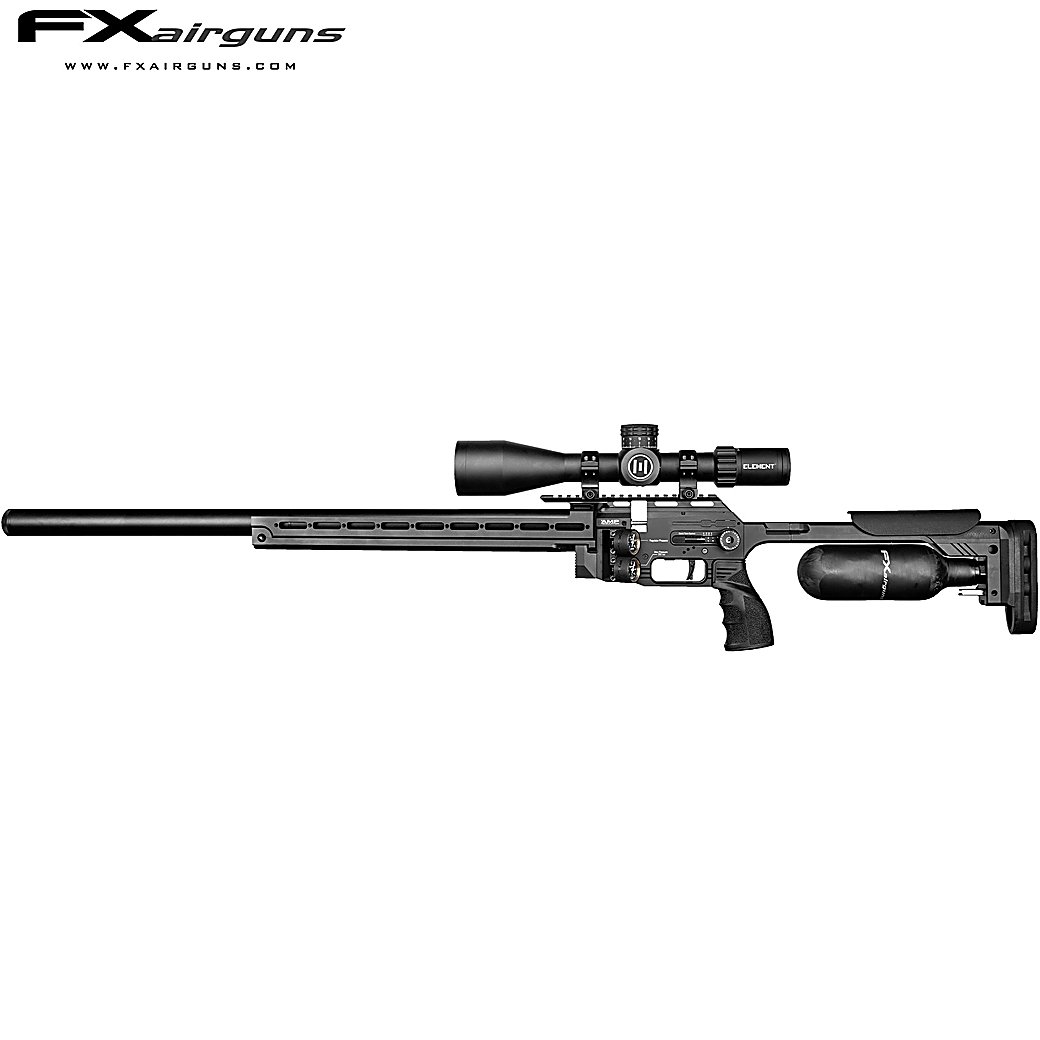
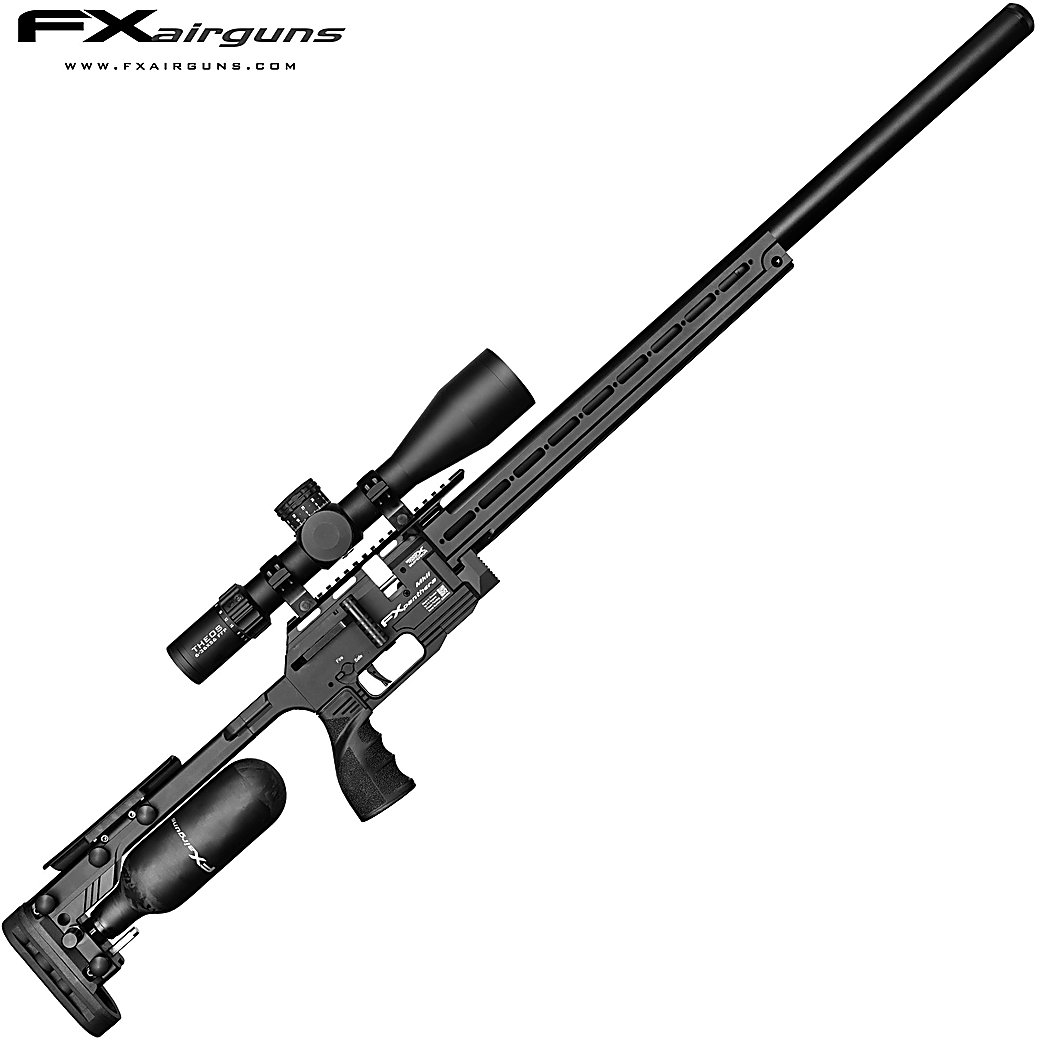

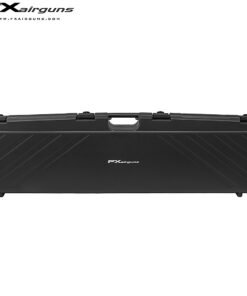
PCP Air Rifle FX Panthera MKII 700
$1,750.00
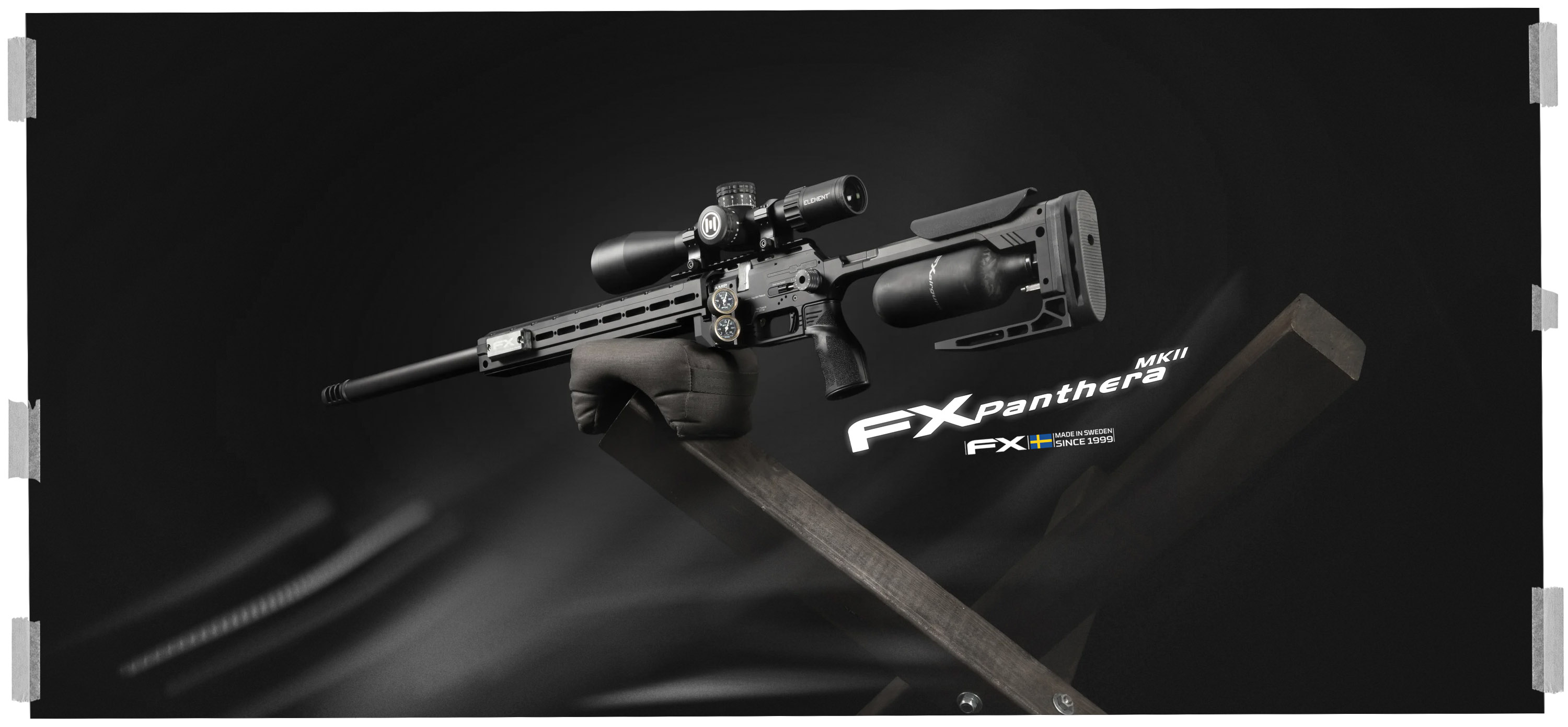
A Refined Precision Platform.. Presenting the FX Panthera MKII. The Panthera MKII builds on the strengths of the original Panthera line, introducing a series of structural and mechanical upgrades that sharpen its consistency, ergonomics, and long‑range capability.
Heritage ;The original FX Panthera quickly became a landmark in modern airgun design.
Its ergonomics, and design priorities were undeniably competition‑driven, and it broke away from traditional hunting‑centric platforms and introduced a purpose‑built chassis system with a long Arca forend and a more forward‑mounted 300 cc carbon fiber bottle that balanced the rifle beautifully.
Its modularity, tuning freedom, and STX barrel technology set new expectations for what a competition air rifle could be.
The Panthera didn’t just enter the PRS‑style airgun scene, it helped define it, pushing other manufacturers to rethink performance, ergonomics, and adaptability in high‑end air rifles.
What’s new: The Panthera MKII brings several key upgrades.
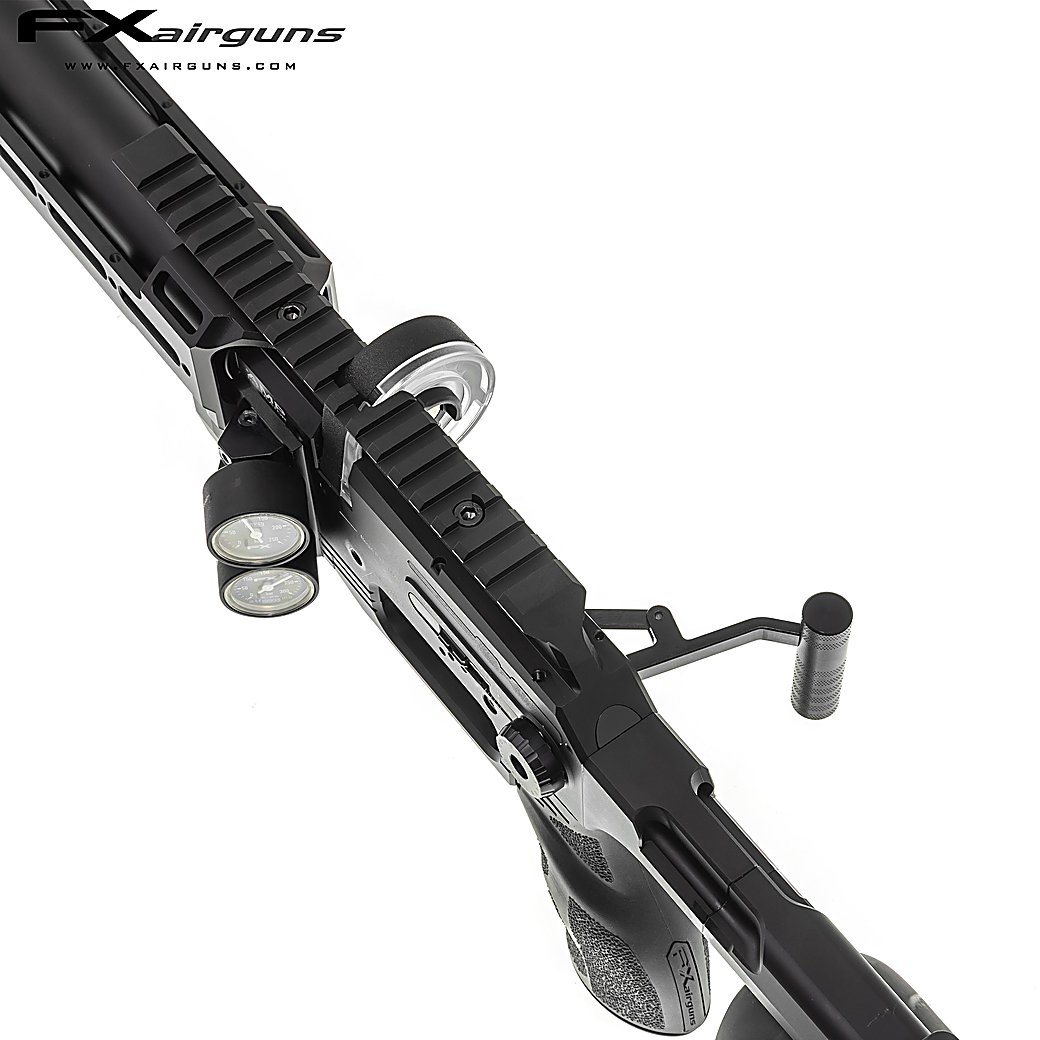
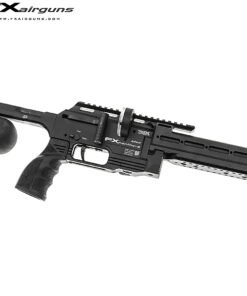
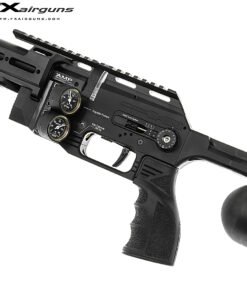
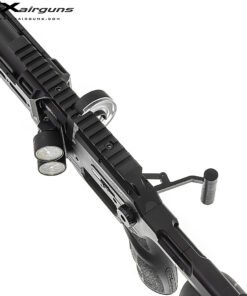
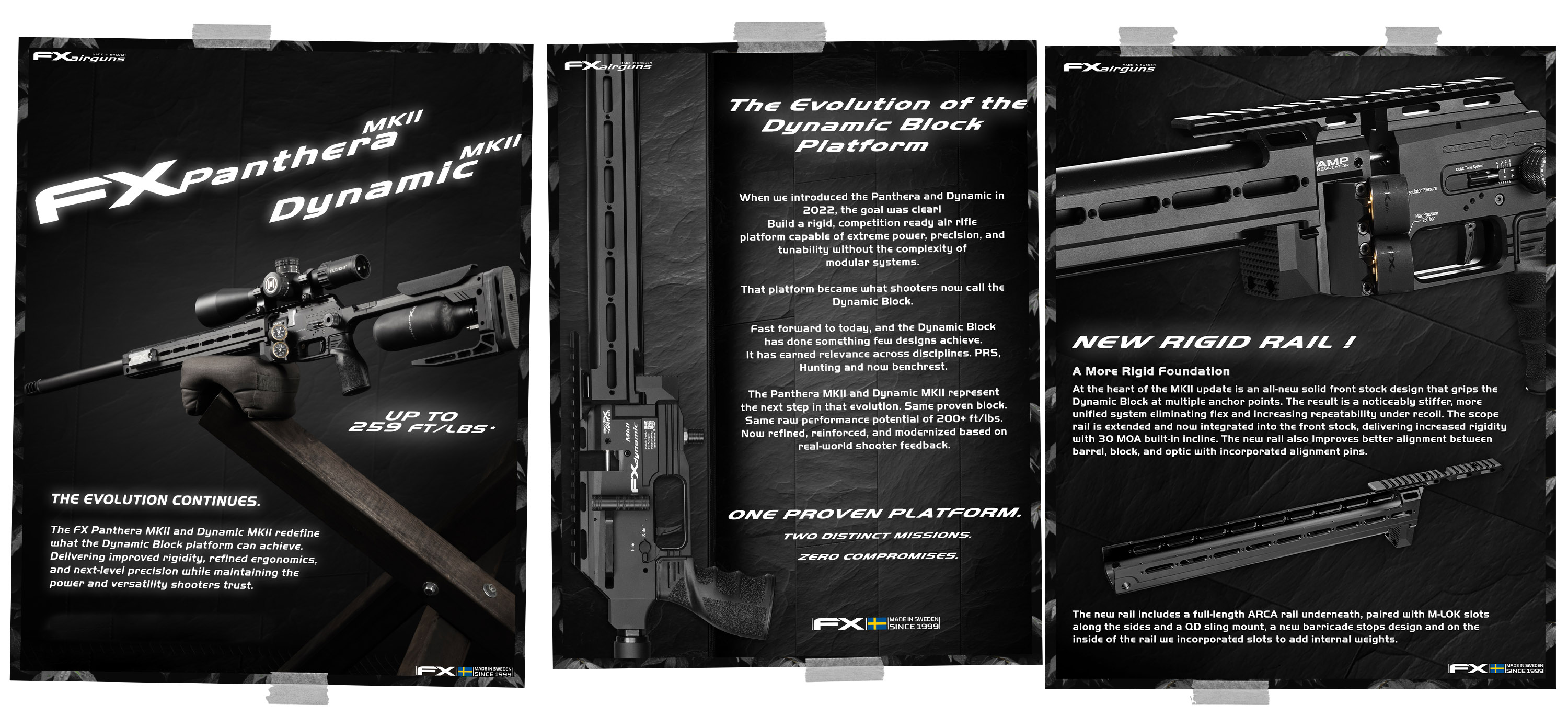
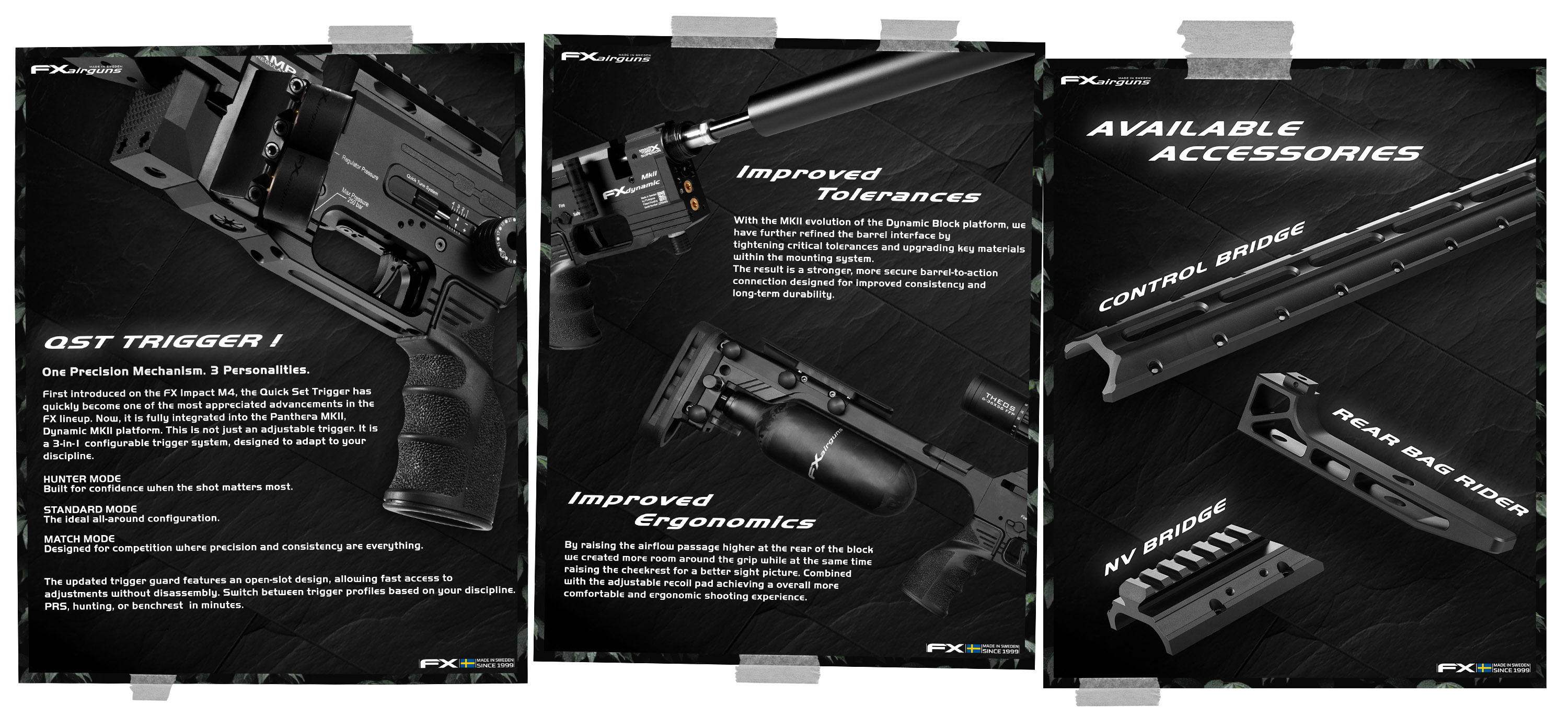
A reinforced aluminum forend boosts rigidity, adds a full Arca rail, M‑LOK slots, internal weight channels, and an integrated 30 MOA Picatinny rail.
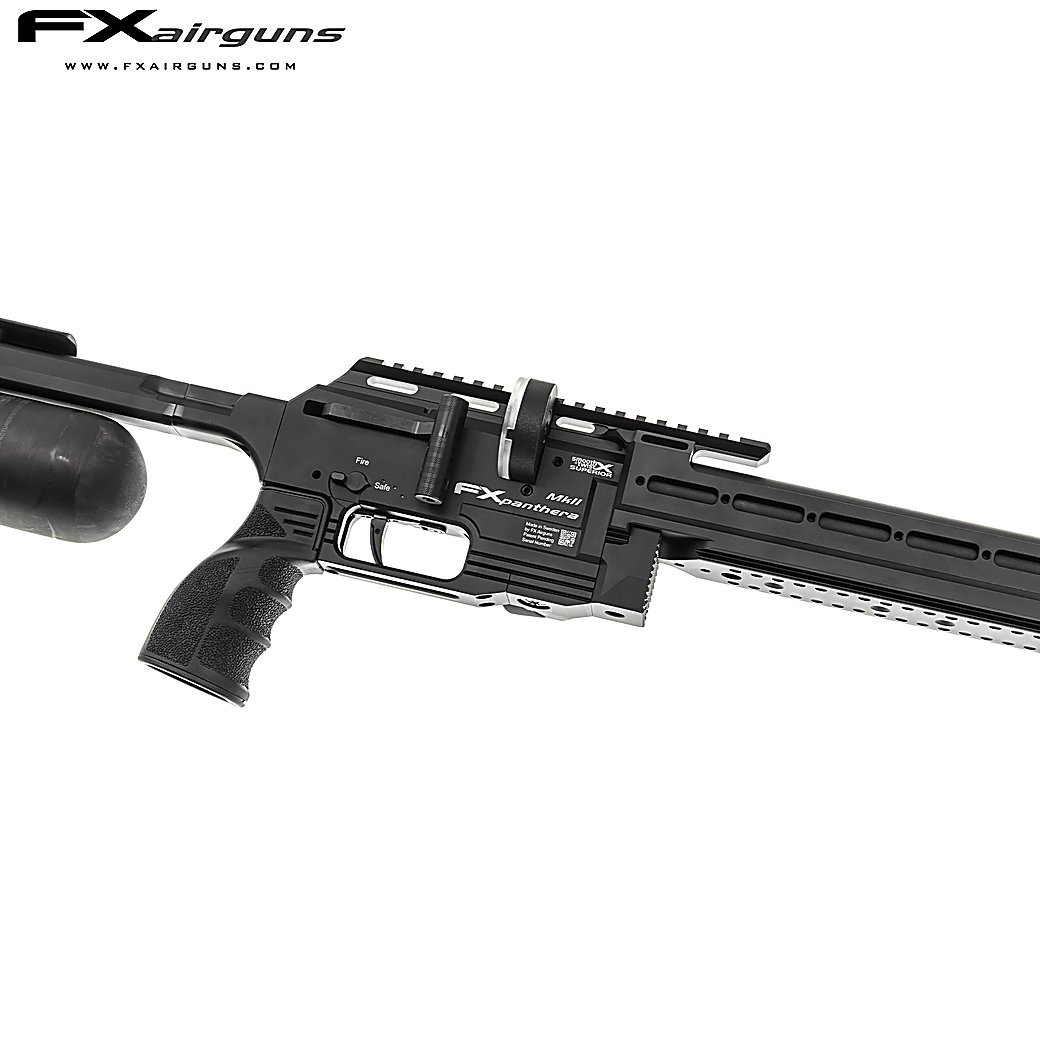
The new Quick Set Trigger offers three selectable profiles for PRS, hunting, and benchrest.
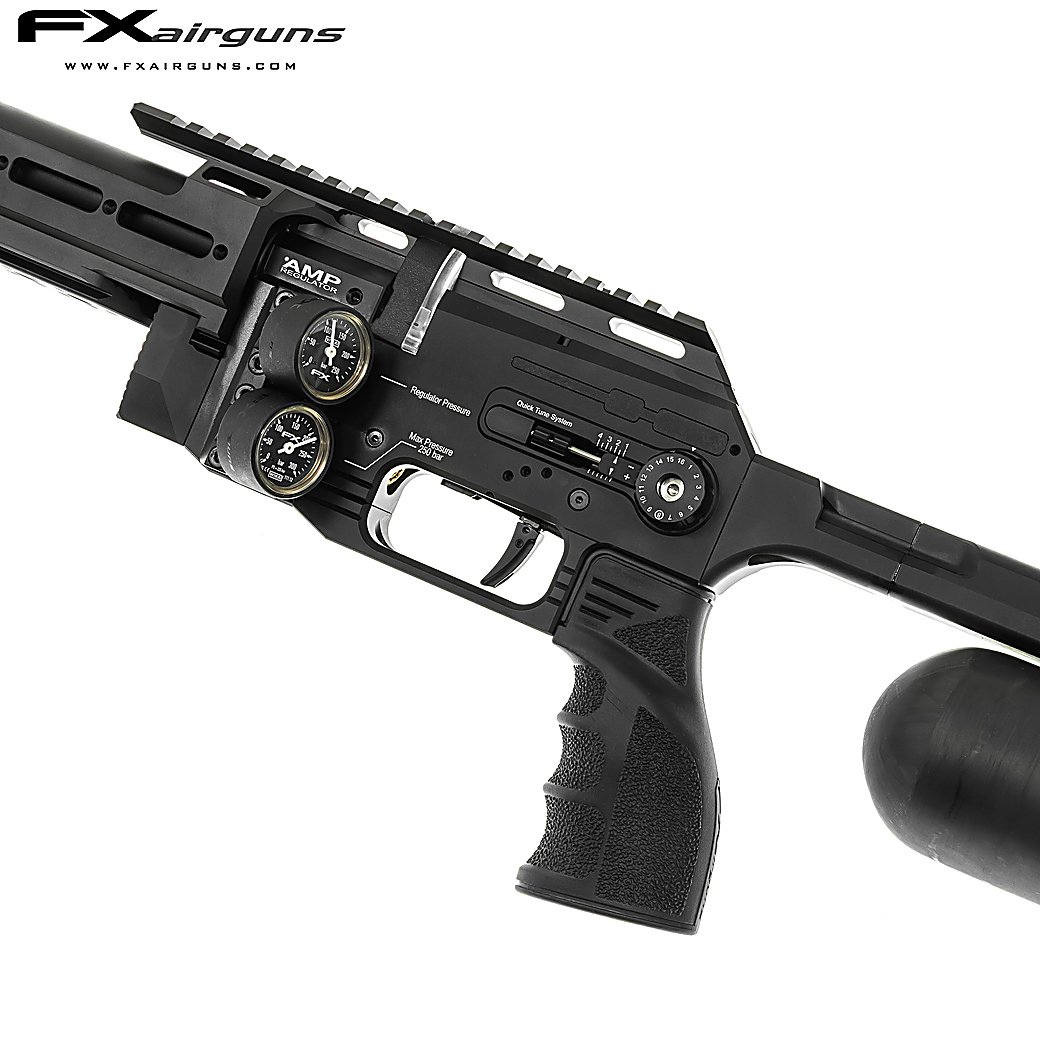
Air regulation is handled by the AMP MKII regulator with dual gauges for precise tuning.
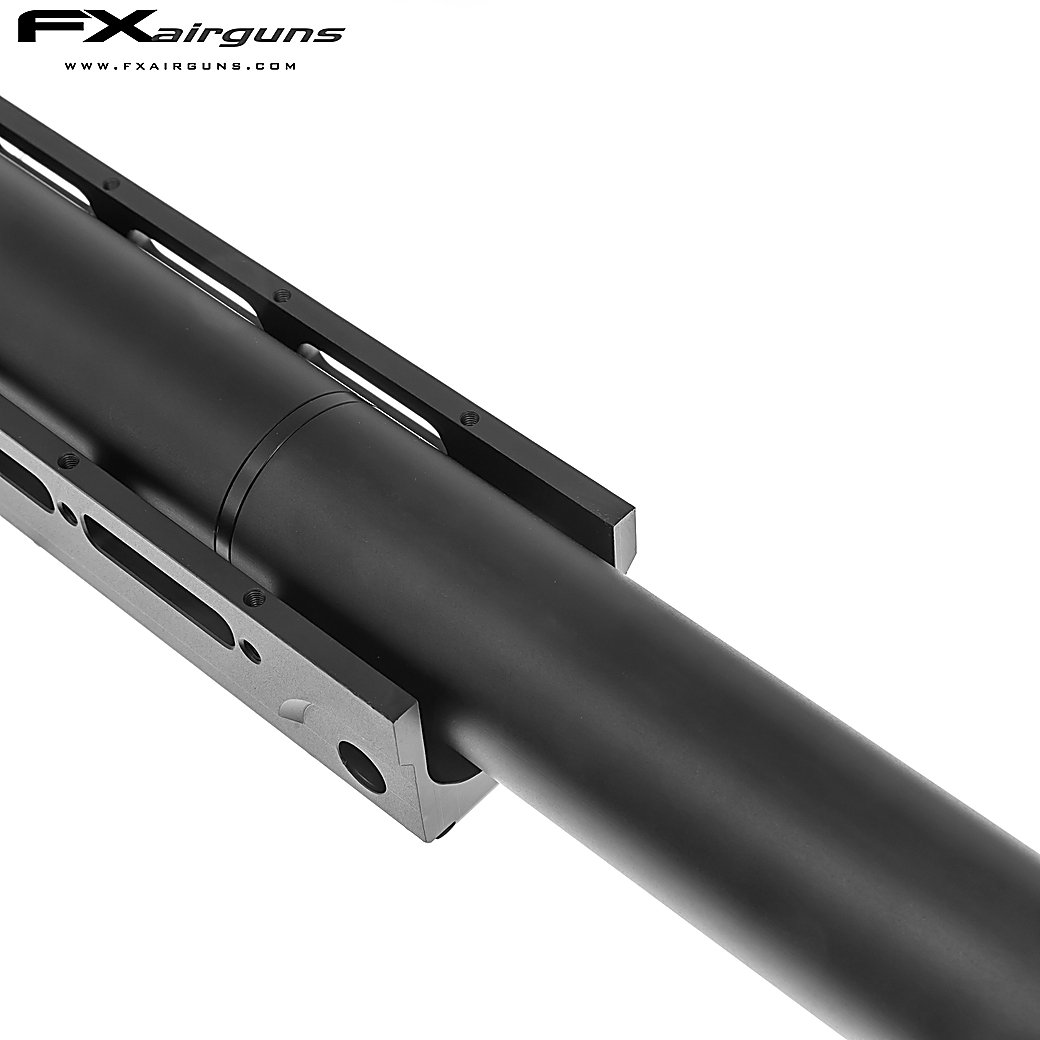
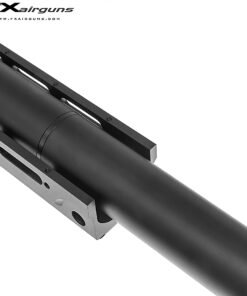
A 163 cc plenum now surrounds the barrel, paired with an enlarged breech for longer slugs and a high‑flow, short‑impulse one‑piece valve.
Rear airflow routing is raised for better cheek weld.
The Quick Tune System provides macro and micro hammer adjustments, while the Superior STX barrel system continues with interchangeable liners and smooth, externally pressed rifling.
Adaptability at the Core
The Panthera MKII was built with competitive shooters in mind, and its design reflects that philosophy: every major system is engineered to be shaped, tuned, and refined to match the shooter’s intent.
Its upgraded Panthera Block, enlarged plenum, and AMP MKII regulator work together to create a platform that responds predictably to tuning changes. With the macro and micro hammer adjustments, dialing in a setup for different slug weights, distances, or match conditions becomes a deliberate, repeatable process.
A Platform That Conforms to You
The reinforced aluminum forend brings new stiffness to the chassis, reducing flex and helping the rifle maintain perfect tracking under load. Integrated mounting options – Arca along the bottom, M‑LOK on the sides, and a 30 MOA Picatinny rail machined directly into the forend – give shooters the freedom to configure the rifle for barricades, tripods, bipods, or heavy optics without compromise.
Trigger Profiles for Every Discipline
The Quick Set Trigger adds another layer of adaptability. Three selectable modes let shooters shift instantly between PRS‑style responsiveness, hunting practicality, or the controlled precision needed for benchrest. No tools, no disassembly – just a quick adjustment, and the rifle changes character.
Ready for Modern Ammunition
With its enlarged breech and slug‑friendly geometry, the Panthera MKII accepts projectiles up to 13 mm in length. This gives shooters the freedom to experiment with modern slug designs and tailor performance to their caliber and barrel choice.
FX Panthera MKII: The Evolution Continues.
Functional design:
The FX Panthera MKII is shaped around the idea of delivering unwavering stability and precision, especially for shooters who demand predictable behaviour across long‑range and competition environments. Every update in the MKII platform reinforces rigidity, tuning control, and ergonomic refinement.
At the heart of the rifle is FX’s enhanced Panthera Block and high‑flow valve system, working together with the AMP MKII regulator and enlarged plenum to maintain consistent pressure delivery, even when pushing heavy slugs at elevated power levels. This synergy ensures the rifle stays steady shot after shot.
The Quick Set Trigger adds another layer of adaptability. With three selectable profiles tailored for PRS, hunting, and benchrest, it gives shooters instant control over trigger feel without disassembling anything. Each mode is designed to offer a clean, predictable break suited to its discipline.
For smooth cycling, the side‑lever action remains a key component of the Panthera lineage. Its placement and mechanical refinement allow rapid follow‑up shots while keeping the rifle anchored in position, reducing shooter movement and maintaining sight alignment.
Highlights:
The FX Panthera MKII is built for precision, stability, and tuning freedom. Every upgrade strengthens its role as a competition-ready platform, delivering consistent performance with modern slug ammunition. Here’s a closer look at its defining features.
Aluminium Forend
A reinforced aluminium forend increases rigidity and reduces flex under load. It includes a full-length Arca-Swiss rail for bipods or tripods, M-LOK slots on the sides, and internal channels for optional balancing weights. A fully integrated 30 MOA Picatinny rail ensures reliable zero retention with long-range optics
Quick Set Trigger (QST)
The QST system provides three selectable trigger profiles suited for PRS, hunting, or benchrest. Adjustments can be made instantly without removing the trigger guard, allowing fast adaptation to different shooting styles.
Regulator
The single AMP MKII regulator, paired with its dedicated gauge, allows precise control of the pressure coming from the 250-bar, 300 cc bottle. This ensures stable plenum pressure and consistent shot output across a wide range of ammunition.
Panthera Plenum
A large 163 cc plenum surrounds the barrel, keeping a high volume of regulated air ready for each shot. This design is ideal for high-power slug setups where airflow stability is critical.
Air Capacity
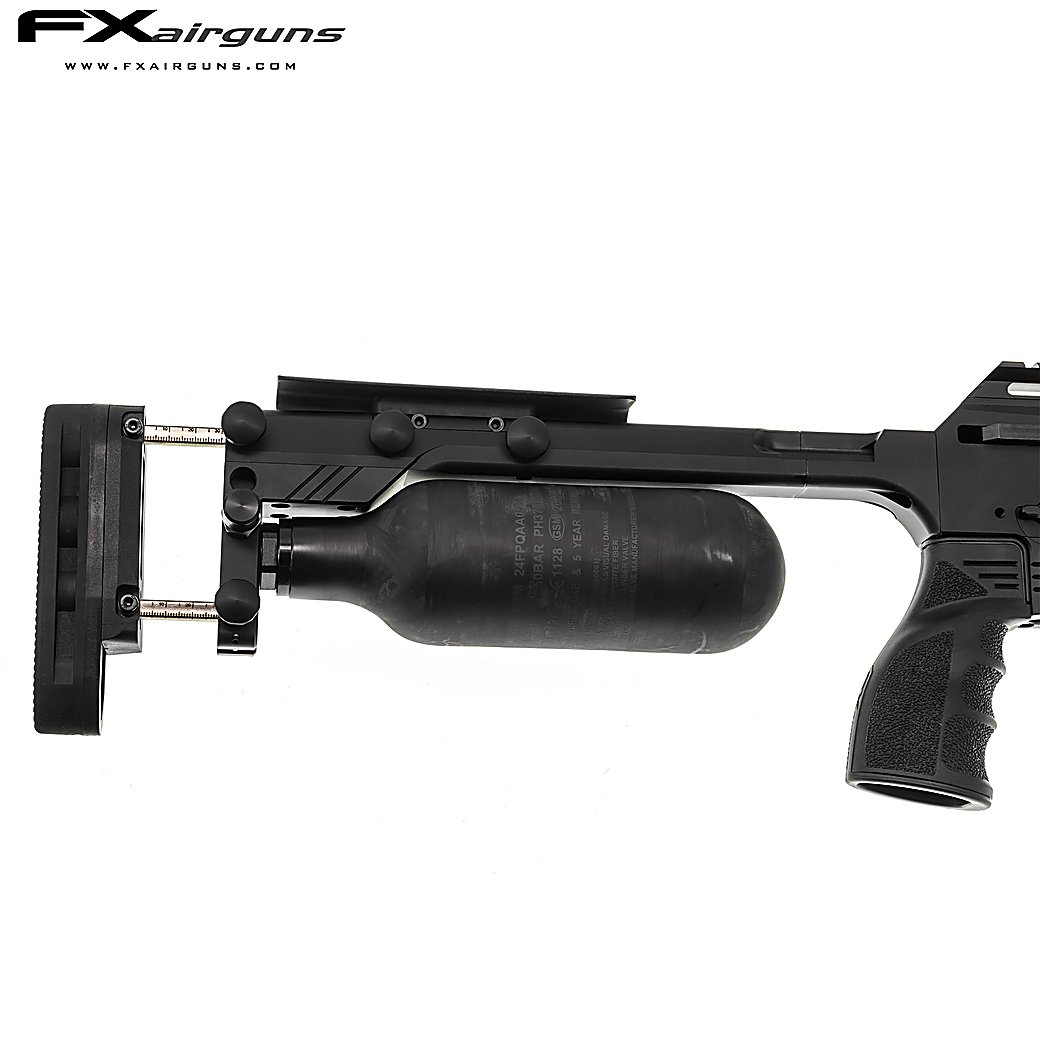
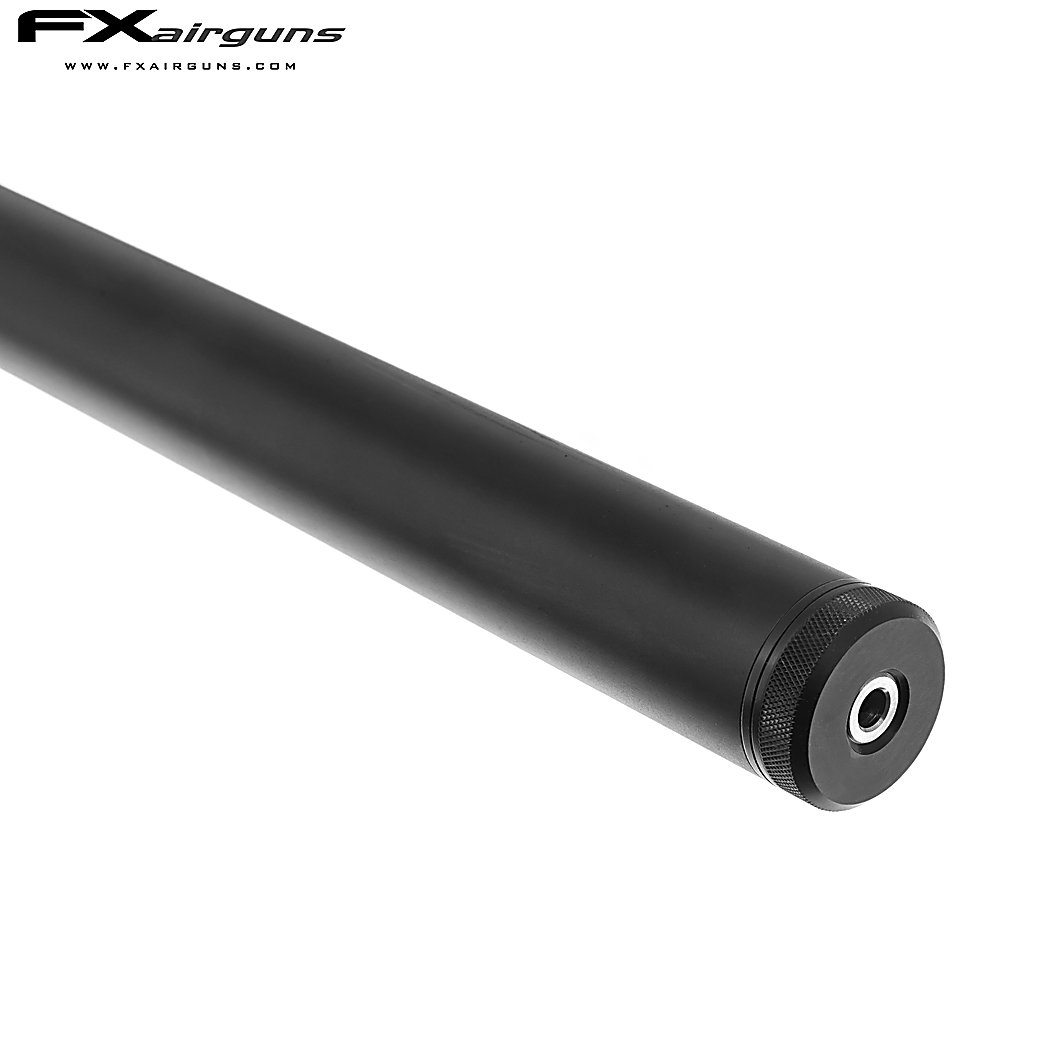
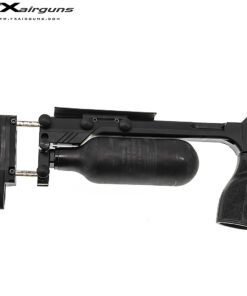
The high-capacity carbon fiber bottle supports extended shooting sessions, reducing the need for frequent refills during training or competition.
Panthera Block
The enlarged breech accepts slugs up to 13 mm, reinforcing the rifle’s slug-focused design. The high-flow, short impulse one-piece valve delivers fast, efficient airflow for maximum consistency.
Quick Tune System
Macro and micro hammer-spring adjustments make tuning intuitive. The numbered macro wheel allows rapid changes, while the micro adjuster provides fine, repeatable control for precision tuning.
Superior STX
The Superior STX barrel system uses an interchangeable STX liner with externally pressed rifling, ensuring a smooth bore and excellent projectile sealing for top-tier accuracy.
Observations:
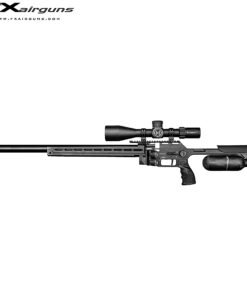
– The scope depicted is for illustrative purposes. A selection of scopes is available for purchase.
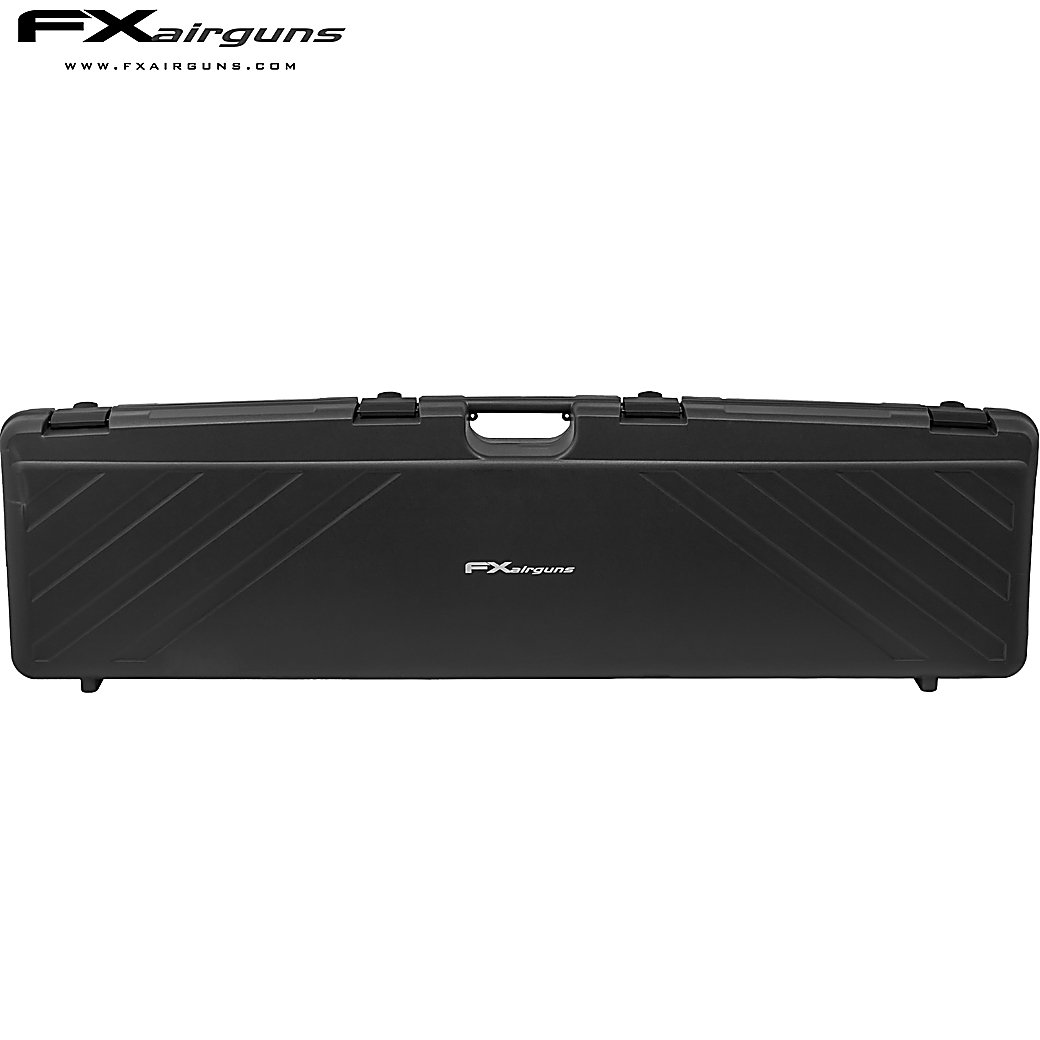
– The FX Panthera MKII makes a grand entrance, encased in a robust hard case with precision-cut foam, ensuring your rifle is transported and stored in style.
– The FX Panthera MKII is available in a multitude of options, including the 500, 600, 700 mm in calibers 4.50 mm (.177″) and 5.50 mm (.22″).
About FX Airguns
Craftsmanship is at the heart of FX Airguns, with a dedicated team of Swedish artisans and engineers whose expertise is unparalleled. Their meticulous attention to detail ensures that no airgun leaves the factory without passing rigorous tests, guaranteeing unmatched precision, reliability, and power. FX Airguns have consistently set the standard, outshining competitors with grace.
Pioneers in innovation, FX Airguns hold numerous patents and have introduced unique advancements that place them at the pinnacle of technological evolution in airgun manufacturing.
The essence of FX Airguns lies in their unwavering passion for airgun sports and their relentless pursuit of excellence. As technology continues to advance, the potential for groundbreaking airguns remains boundless, nurtured by the inventive spirit of Mariestad.
Data sheet
| Caliber | 4.50mm (.177) | 5.50mm (.22) |
| Regulated | Yes |
| Pressure Gauge | Yes |
| Regulator Gauge | Yes |
| Open Sight | No |
| Optics Included | No |
| Cocking System | Adjustable Side Lever |
| Power Source | PCP |
| Shooting Mode | Manual |
| Air Reserve | Air Bottle |
| Plenum | 163 cc |
| Air Capacity | 300 cc |
| Max Fill Pressure | 250 Bar (3625 Psi) |
| Number of Shots | 18 |
| Barrel Type | STX Superior Heavy liner |
| Barrel Lenght | 700 mm |
| Mounting Rail | Weaver | Picatinny |
| Extra Mounting Rails | M-LOK/Arca Swiss |
| Ambidextrous | Yes |
| Safety | Yes |
| Stock | Tactical |
| Stock Material | Synthetic |
| Stock Finish | Mate |
| Grip | FX UG1 |
| Grip Material | Soft-Touch Synthetic |
| Grip Finish | Mate |
| Overall Lenght | 1190 mm |
| Transport Case | Yes |
| Product Total Weight | 4.13 Kg |
| Country of Manufacture | Sweden |
| Additional References | PA2-450306-022-00 |
| Additional References | PA2-550306-022-00 |
PCP Air Rifle FX Panthera MKII 700 – Technical Overview, Features and Platform Details
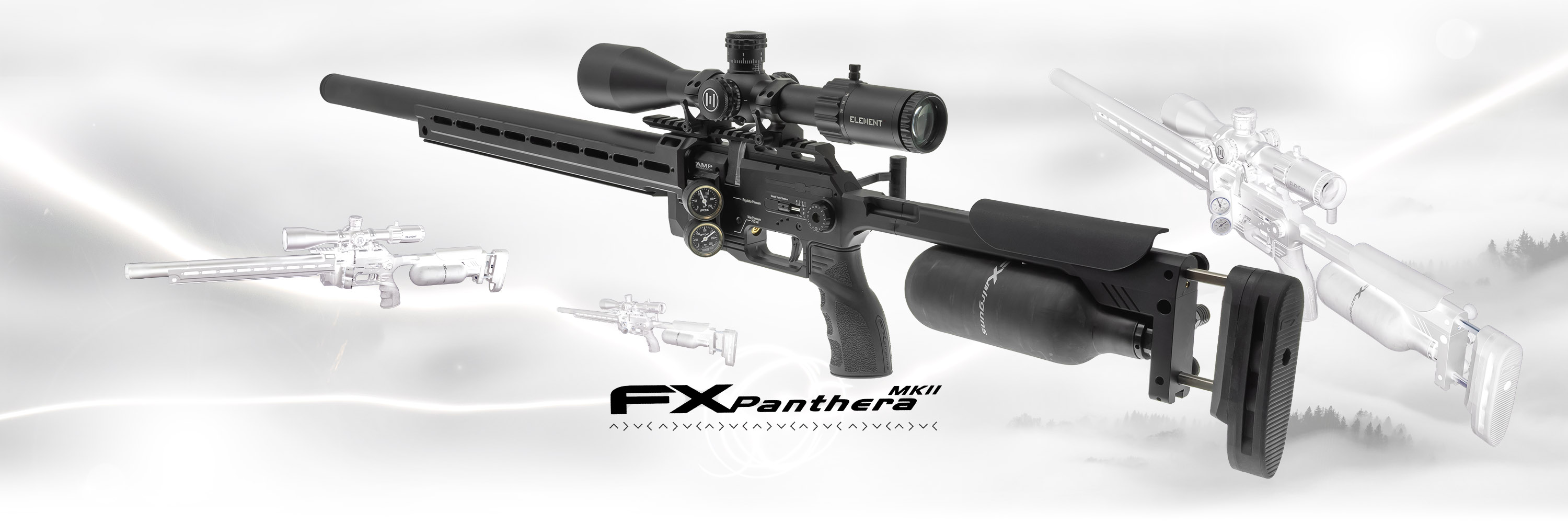
The PCP Air Rifle FX Panthera MKII 700 represents the second-generation development of FX Airguns’ competition-oriented Dynamic Block platform. Rather than being designed as a conventional sporting air rifle, the Panthera architecture has been developed around rigidity, adjustability, repeatability, accessory integration, and the requirements associated with precision-oriented shooting disciplines.
For the MKII generation, several structural and ergonomic revisions have been incorporated into the platform. A redesigned solid front stock has been introduced, the scope rail has been integrated more substantially into the front structure, critical barrel-interface tolerances have been refined, and the geometry around the grip and cheek support has been revised.
Consequently, the Panthera MKII can be considered an evolutionary redesign rather than a cosmetic model update.
With the 700 mm barrel configuration, additional barrel length is provided for users selecting this particular Panthera setup. FX documentation identifies 700 mm barrel components for several Panthera-compatible calibers within the Dynamic barrel system.
Because PCP rifles depend on regulated compressed-air delivery rather than conventional spring propulsion, consistency throughout the pneumatic system remains particularly important. For that reason, the Panthera architecture combines a substantial plenum, FX regulator technology, external adjustment systems, a rigid barrel assembly, and a chassis-style support structure.
The result is a highly specialized precision airgun platform intended for lawful sporting and competition environments.
What Is the FX Panthera MKII?
The Panthera MKII belongs to the FX Dynamic family.
Its architecture was originally created around what FX refers to as the Dynamic Block. Rather than adapting an existing conventional rifle into a competition chassis, the action, plenum arrangement, barrel system, accessory interfaces, and support structure were developed as interconnected components.
For the second generation, that foundation has been further reinforced.
A new front-stock design now attaches to the Dynamic Block at multiple anchor points. Therefore, greater structural unity is created between the primary action and forward assembly.
At the same time, the optics rail has been extended and incorporated into this structure.
Furthermore, alignment pins have been incorporated to improve alignment between the barrel, action, and optic mounting structure.
These changes are particularly relevant because extremely small movements within an air-rifle platform can influence repeatability.
Although the Panthera MKII remains recognizable as part of the original Panthera family, its revised structure provides several meaningful engineering changes.
Why the 700 mm Configuration Matters
The designation 700 refers to the selected barrel length.
A longer barrel does not automatically mean that every configuration will deliver greater accuracy. Accuracy depends on projectile compatibility, barrel characteristics, regulator consistency, tuning, environmental conditions, shooter technique, and numerous other variables.
Nevertheless, barrel length forms an important part of the overall pneumatic system.
FX documentation identifies Panthera/Dynamic barrel assemblies in several lengths, including 700 mm.
Because the Panthera platform has been engineered around configurable barrel components, different arrangements can be used depending on the specific factory-supported setup.
Users should always verify that replacement barrels, liners, probes, magazines, and associated components correspond to their exact rifle specification before installation.
Reinforced MKII Front Structure
One of the most important revisions made to the Panthera MKII is found at the front of the rifle.
A solid front stock has been incorporated and attached to the Dynamic Block through multiple anchoring locations.
Consequently, structural flex is reduced.
The front assembly is therefore designed to function as a more unified system.
This engineering approach becomes especially relevant when large optics, bipods, rests, weights, or other competition accessories are attached to a precision platform.
Rather than allowing these accessories to interact with a relatively flexible mounting surface, increased chassis rigidity is intended to provide greater repeatability.
Moreover, the redesigned structure supports the integrated optics rail.
Therefore, several improvements have effectively been combined into one revised chassis arrangement.
Integrated 30-MOA Scope Rail
The Panthera MKII is equipped with an extended scope rail incorporating 30 MOA of built-in inclination.
An inclined rail changes the mechanical relationship between the optical sight and barrel.
In practical terms, this gives suitable optics additional elevation adjustment range for disciplines where substantial sight correction may be necessary.
However, appropriate optic selection and correct sight installation remain essential.
The rail is also integrated into the front-stock structure rather than functioning as an isolated mounting component.
As a result, improved structural support is provided.
Alignment pins have additionally been incorporated into the system.
Together, these features are intended to maintain improved alignment between the optic mounting system, action, and barrel.
Improved Barrel-to-Action Interface
Precision depends heavily on mechanical repeatability.
For that reason, the barrel interface has received attention during development of the Panthera MKII.
Critical tolerances within the mounting system have been tightened, while selected materials have also been upgraded.
A stronger connection is therefore created between the barrel assembly and action.
This may contribute to greater long-term consistency because unwanted movement at this interface can potentially influence the relationship between the bore, action, and optic.
For owners comparing the original Panthera with the Panthera MKII, this structural improvement is therefore more significant than a simple cosmetic redesign.
FX Quick-Set Trigger System
Another major addition is the FX Quick-Set Trigger.
The system was previously introduced on the FX Impact M4 before being incorporated into the Panthera MKII platform.
Rather than functioning as only a conventional adjustable trigger, the Quick-Set system provides several configuration possibilities intended for different shooting disciplines.
Trigger preference remains highly personal.
Some shooters prefer a clearly defined first stage followed by a predictable second-stage break, whereas others may favor characteristics more commonly associated with specialized competition setups.
Consequently, configurability can be useful when one rifle platform is being adapted to different sporting environments.
Any trigger adjustment should nevertheless be performed according to FX documentation, and safe function should always be verified before the rifle is returned to service.
Redesigned Ergonomics
Mechanical precision alone does not determine practical consistency.
The position of the shooter’s head, shoulder, hand, and eye relative to the optic can also affect repeatability.
Accordingly, several ergonomic changes have been incorporated into the Panthera MKII.
The airflow passage at the rear of the block has been positioned higher.
By doing so, additional room has been created around the grip.
Meanwhile, the cheek support has also been raised.
An adjustable cheek rest allows the rifle to be configured around different optics and shooting positions.
Likewise, an adjustable recoil pad helps accommodate different shoulder positions and user dimensions.
These adjustments can make a substantial difference because comfortable positioning generally allows a shooter to establish a more repeatable interface with the rifle.
Adjustable Cheek Rest
A consistent cheek position is particularly important when optical sights are used.
If the eye repeatedly approaches the optic from different positions, visual alignment can vary.
For that reason, the Panthera MKII incorporates an adjustable cheek support.
Its position can be configured according to the installed optic, mounting height, shooting posture, and user preference.
Furthermore, the revised rear-block geometry provides additional clearance around the grip.
Together, these features make the Panthera MKII adaptable to a broad range of sporting users rather than requiring every shooter to accommodate one fixed stock geometry.
Adjustable Recoil Pad
Although a PCP air rifle operates differently from a conventional powder-burning firearm, shoulder positioning remains important.
The Panthera MKII therefore includes an adjustable recoil pad.
Its purpose extends beyond managing physical movement.
Instead, the component helps establish a consistent shoulder reference point.
When the cheek rest, grip position, recoil pad, optic height, and support arrangement are configured together, the rifle can be adapted more precisely to the individual.
Consequently, ergonomics become part of the overall repeatability equation.
Large Plenum Architecture
The Panthera platform has been developed around a substantial compressed-air plenum.
Within a PCP rifle, the plenum functions as a regulated volume of compressed air available to the firing valve.
Consequently, plenum design can influence the way air is delivered during the firing cycle.
The original Panthera was notable for FX’s plenum-over-barrel arrangement, which allowed considerable air volume to be incorporated while contributing to structural rigidity.
The MKII continues the Dynamic Block philosophy while combining it with its updated structural components.
Because pressure settings and internal adjustments directly affect operating characteristics, manufacturer specifications should always be followed.
AMP MKII Regulator
The AMP MKII regulator forms another important component of the Panthera system.
A regulator controls the pressure supplied from the main air reservoir to the firing system.
Therefore, consistent regulator behavior helps provide repeatable pneumatic conditions from one shot cycle to another.
Nevertheless, regulator pressure represents only one part of PCP tuning.
Valve behavior, projectile mass, barrel characteristics, hammer settings, airflow, environmental conditions, and other variables can influence performance.
For that reason, adjustments should be approached methodically rather than simply being increased.
Manufacturer recommendations and local energy restrictions should always take priority.
Quick-Tune System
External adjustment capability forms an important element of modern FX designs.
The Panthera MKII therefore incorporates FX’s Quick-Tune System.
This allows supported adjustments to be made without extensive disassembly.
For competition users who carefully document their configurations, accessible adjustments may make it easier to establish repeatable settings for approved projectiles and disciplines.
However, tuning should not be treated as an unrestricted search for maximum output.
Consistency, legal compliance, safe operating pressure, projectile compatibility, and manufacturer recommendations remain more important.
ARCA Rail
The Panthera MKII incorporates an ARCA rail into its competition-oriented chassis.
ARCA-style interfaces have become common across several precision shooting disciplines because compatible accessories can be positioned along the rail.
For example, an appropriate support device can be moved until the desired balance point is reached.
This feature also helps the rifle accommodate different competition positions without requiring permanent structural modifications.
Because the rail forms part of the chassis, the overall setup remains relatively streamlined.
Barricade Stop
A barricade stop is also included within the Panthera platform.
In supported competition disciplines, such a component can provide a repeatable contact point when the rifle is positioned against an approved support surface.
The location and configuration of any support accessory should nevertheless remain consistent with competition rules.
M-LOK Accessory Slots
Alongside the ARCA interface, M-LOK accessory slots are provided.
M-LOK offers another standardized method for attaching compatible sporting accessories.
Consequently, the rifle’s forward structure can be adapted without covering the entire chassis in continuous rail sections.
This approach helps maintain a relatively uncluttered design while preserving accessory flexibility.
Accessory weight, placement, and compatibility should always be considered because each addition changes the balance and handling characteristics of the complete rifle.
Reversible Cocking Lever
The Panthera MKII incorporates a reversible cocking lever.
This feature is particularly useful from an inclusive ergonomic perspective.
Rather than forcing every user to operate the rifle from one predefined side, the mechanism can be configured according to the supported setup.
Left-handed and right-handed users may therefore have greater flexibility when establishing their preferred operating arrangement.
Furthermore, cocking-lever location can interact with optic placement and shooting position.
Its reversible design consequently adds practical configurability to the platform.
Wide Mega Magazine Compatibility
The Panthera MKII uses FX’s Wide Mega Magazine system.
Magazine dimensions and capacity can vary with caliber, so owners should consult the specifications supplied for their exact rifle configuration.
Correct ammunition dimensions must also be observed.
A projectile that exceeds supported dimensions or does not correspond with the barrel and magazine configuration should never be forced into the system.
Likewise, magazines should be inspected periodically for contamination or damage.
Quick-Disconnect Fill System
A QD fill connection is incorporated into the Panthera MKII.
The system allows compatible compressed-air charging equipment to be connected to the rifle.
Because PCP reservoirs operate at substantial pressure, filling requires suitable high-pressure equipment.
Only clean, dry compressed air from equipment specifically rated for PCP use should be used.
Ordinary workshop compressors should not be substituted unless they are specifically designed and certified for the required pressure and air quality.
Before filling, connectors, hoses, gauges, and seals should also be inspected.
Optional Control Bridge
FX lists an optional Control Bridge among the Panthera MKII accessories and configuration features.
This type of component can provide additional structural or accessory integration depending on the selected setup.
Because configurations and accessory availability may change, compatibility should be verified against the exact model and production specification.
Optional Bag Rider
An optional bag rider is also supported.
Within appropriate bench-oriented sporting disciplines, a bag rider provides a broader and more consistent interface with a rear support bag.
Consequently, the rifle can track more predictably across the support surface.
This feature demonstrates how the Panthera platform has been developed for more than one style of precision competition.
Optional Internal Weights
Balance characteristics are highly individual.
Therefore, FX also provides provisions for optional internal weights.
Adding weight at different positions changes the center of gravity and handling behavior of the rifle.
For example, one user may prefer a relatively neutral balance, while another may favor additional forward mass for a particular supported position.
Because the weights can be incorporated into the platform, balance can be adjusted without necessarily attaching numerous external components.
700 mm Barrel System
The PCP Air Rifle FX Panthera MKII 700 uses the longer 700 mm configuration within the compatible Dynamic barrel architecture.
FX documentation for the Panthera barrel system identifies 700 mm liners and carbon-fiber sleeve components across several calibers.
Therefore, buyers and existing owners researching replacement components should distinguish carefully between caliber and barrel length.
A component labelled for a Panthera-family rifle is not automatically interchangeable with every Panthera configuration.
The precise barrel length, caliber, liner specification, production generation, probe, magazine, and associated hardware should always be checked.
Carbon-Fiber Barrel Support Components
FX documentation identifies carbon-fiber sleeve components within its 700 mm barrel assemblies.
Carbon fiber provides a useful combination of relatively low mass and structural stiffness.
Within an air-rifle barrel assembly, such material can be incorporated to reinforce the barrel system without adding the mass associated with an equivalent solid-metal structure.
Nevertheless, barrel performance should be evaluated as an integrated assembly rather than being attributed to one material alone.
The liner, sleeve, mounting interface, shroud, action, projectile, and tune all interact.
Designed Around Precision Disciplines
The Panthera family was developed specifically around precision-oriented applications.
According to FX, the Dynamic Block architecture has been used across PRS-style competition, benchrest, and other sporting applications.
The MKII revisions are therefore particularly focused on structural stiffness, ergonomics, repeatability, and configuration flexibility.
Those characteristics distinguish the Panthera from more traditional sporting PCP rifles.
Repeatability as a Design Priority
Repeatability is one of the central themes running through the Panthera MKII design.
Several features contribute:
- Reinforced multi-point front-stock attachment
- Integrated 30-MOA optics rail
- Alignment pins within the rail system
- Refined barrel-interface tolerances
- Adjustable cheek support
- Adjustable recoil pad
- Configurable trigger system
- AMP MKII regulator
- Large plenum architecture
- ARCA accessory interface
- M-LOK mounting provisions
- Optional balance weights
- Reversible cocking lever
- 700 mm barrel configuration
Each element addresses a different part of the shooting system.
Therefore, the Panthera MKII should be understood as a complete platform rather than simply an action fitted with a long barrel.
Importance of Rifle Fit
A high-specification rifle cannot compensate completely for inconsistent user positioning.
Accordingly, rifle fit remains important.
Cheek height should allow a natural view through the optic.
The recoil pad should contact the shoulder consistently.
Grip placement should not force excessive wrist rotation.
Furthermore, accessory positioning should allow the rifle to remain balanced for the intended lawful sporting discipline.
When these variables are correctly configured, unnecessary muscular tension may be reduced and position repeatability may improve.
Importance of Compatible Projectiles
Projectile compatibility remains equally important.
Different barrels may favor different projectile designs, dimensions, and masses.
Therefore, no projectile should be selected solely because another Panthera owner reports good results.
Caliber, barrel specification, factory recommendations, legal limits, and intended competition rules must also be considered.
Using correctly manufactured ammunition is additionally important for maintaining consistency and protecting the barrel system.
Maintenance Considerations
Like any high-pressure pneumatic system, the Panthera MKII benefits from appropriate maintenance.
External surfaces should be kept dry and clean.
Dust should be removed from accessory interfaces.
Fill connectors should be protected from contamination.
O-rings should be replaced only with compatible components.
Additionally, inappropriate petroleum-based lubricants should never be introduced into high-pressure air systems.
Any internal regulator, valve, trigger, or pressure-system servicing beyond routine manufacturer-approved maintenance should be handled according to official technical documentation or by a competent technician.
Storage
Responsible storage is essential.
The rifle should be stored unloaded and secured against unauthorized access.
Compressed-air condition should be managed according to the manufacturer’s storage guidance.
Projectiles should be stored separately where required.
Furthermore, local legislation regarding airgun storage, transportation, energy limits, ownership, and use should always be observed.
Transportation
Transportation requirements vary considerably between jurisdictions.
Therefore, users should verify the regulations that apply in their country, state, province, or municipality.
When transported, an air rifle should generally be unloaded, secured against unauthorized handling, and protected from impact.
Optical sights and other delicate accessories should also be protected.
Who Is the Panthera MKII Platform Designed For?
The Panthera MKII is primarily relevant to experienced sporting users who appreciate extensive ergonomic and mechanical adjustment.
Its design particularly emphasizes:
- Precision-oriented competition
- Bench-supported sporting disciplines
- PRS-style airgun competition where permitted
- Users who require adjustable balance
- Shooters who value configurable ergonomics
- Users working with an ARCA-based accessory system
- Owners already familiar with regulated PCP platforms
- Competitors seeking a chassis-style FX architecture
Nevertheless, individual configurations and legal classifications vary.
Panthera MKII Versus Conventional PCP Designs
Many traditional PCP rifles use a recognizable sporting-rifle layout consisting of an action mounted within a conventional stock.
The Panthera takes a different approach.
Its action, plenum, rail, barrel support, accessory interfaces, and adjustable ergonomic components form a specialized chassis system.
Consequently, the platform offers considerably more configuration possibilities than a basic fixed-stock PCP.
That flexibility also means that owners should understand their settings and document changes carefully.
Changing several variables simultaneously can make performance analysis considerably more difficult.
Panthera MKII Engineering Philosophy
The Panthera MKII demonstrates an engineering philosophy centered around controlled adjustability.
Rather than relying on one factory-fixed configuration, the rifle allows several aspects of fit and operating behavior to be adapted.
However, adjustability is most valuable when it is used systematically.
A stable baseline should therefore be established first.
Subsequently, one variable can be changed at a time.
Results can then be compared under controlled conditions.
This method is considerably more useful than repeatedly altering multiple settings without documentation.
Technical Highlights
Chassis and Structure
The Panthera MKII incorporates a reinforced forward structure attached through multiple points to the Dynamic Block.
Optics Interface
An extended integrated rail provides 30 MOA inclination.
Barrel Interface
Critical tolerances have been refined to strengthen the barrel-to-action connection.
Trigger
The FX Quick-Set Trigger provides configurable characteristics for supported disciplines.
Ergonomics
A raised cheek position, additional grip clearance, adjustable cheek support, and adjustable recoil pad help accommodate different users.
Air Management
A large plenum and AMP MKII regulator form central components of the pneumatic architecture.
Accessory Mounting
ARCA and M-LOK interfaces provide several mounting possibilities.
Controls
A reversible cocking lever supports different user preferences.
Barrel Length
The selected model uses a 700 mm barrel configuration.
Frequently Asked Questions
What does 700 mean on the FX Panthera MKII 700?
The number refers to the 700 mm barrel configuration.
Is the Panthera MKII the same as the original Panthera?
No. Although both models share the Dynamic Block design philosophy, the MKII introduces structural, ergonomic, rail, trigger, and barrel-interface revisions.
Does the Panthera MKII have a 30-MOA rail?
Yes. FX specifies an extended integrated rail with 30 MOA of inclination on the Panthera MKII.
Is the cheek rest adjustable?
Yes. An adjustable cheek support forms part of the revised ergonomic system.
Is the recoil pad adjustable?
Yes. Its position can be configured to improve user fit.
Can the cocking lever be reversed?
Yes. FX lists a reversible cocking lever among the Panthera MKII features.
Does it use M-LOK?
Yes. M-LOK accessory slots are incorporated into the platform.
Does the Panthera MKII use an ARCA rail?
Yes. An ARCA interface and barricade stop are included.
Which regulator is used?
FX lists the AMP MKII regulator for the Panthera MKII.
Does it have a large plenum?
Yes. A large plenum remains part of the Dynamic Block architecture.
Which magazine system is used?
FX lists its Wide Mega Magazine among the Panthera MKII features.
Is a bag rider available?
FX lists an optional bag rider for supported configurations.
Can weights be added?
Optional internal weights are supported, allowing balance characteristics to be altered.
Why does chassis rigidity matter?
A rigid structure can help maintain the mechanical relationship between the barrel, action, optic, and support accessories.
Does a 700 mm barrel automatically make the rifle more accurate?
No. Barrel length alone does not determine accuracy. Projectile compatibility, barrel quality, mechanical consistency, pneumatic consistency, environmental conditions, optic setup, and user technique remain important.
Should regulator settings be changed without understanding the system?
No. Pressure-system changes should follow FX technical guidance and applicable legal restrictions.
Responsible Use
The PCP Air Rifle FX Panthera MKII 700 should be handled as a serious high-pressure sporting airgun.
Before use, operators should understand the manual, safe handling procedures, range rules, applicable laws, and their particular configuration.
Eye protection should be used where appropriate.
A suitable backstop is essential.
The rifle should never be pointed toward anything that is not intended to be engaged within a lawful controlled shooting environment.
Additionally, access should be restricted when the rifle is not being used.
Final Technical Overview
The PCP Air Rifle FX Panthera MKII 700 combines the established FX Dynamic Block architecture with substantial second-generation refinements.
Greater rigidity is provided through the redesigned front stock.
Meanwhile, the integrated 30-MOA rail strengthens the optics mounting architecture.
Refined barrel-interface tolerances further reinforce the mechanical relationship between the action and barrel.
At the rear, revised geometry creates more grip clearance while supporting a higher cheek position.
Likewise, the adjustable cheek rest and recoil pad allow the platform to accommodate a broad range of users.
The FX Quick-Set Trigger adds another level of configurability.
Furthermore, the AMP MKII regulator, large plenum, Quick-Tune system, ARCA rail, M-LOK slots, reversible cocking lever, QD filling connection, Wide Mega Magazine system, optional bag rider, optional control bridge, and internal weight provisions collectively reinforce the rifle’s competition-oriented design philosophy.
Combined with the 700 mm barrel system, these features make the Panthera MKII 700 one of the more technically configurable platforms within the contemporary FX airgun family.
For anyone researching this model, however, specification verification remains essential. Caliber, magazine capacity, barrel components, energy configuration, legal classification, and accessory compatibility may vary by market and configuration. Manufacturer documentation should therefore remain the primary reference before servicing, modifying, transporting, or operating the rifle.
Air Gun Guide: PCP, CO₂, Pellet Guns, BB Guns, Slingshots, Optics, Maintenance and Modern Airgun Platforms
The term air gun covers a remarkably broad family of sporting equipment. Some models are powered by compressed air, others rely on CO₂, while traditional designs may use a spring piston or gas ram. Because of these differences, anyone researching an only air gun setup, a target rifle, a recreational pistol, or a modern PCP platform should first understand how each system works, how ammunition differs, and how the equipment should be maintained responsibly.
At the same time, search terminology can be confusing. People often use expressions such as just gun, air powered gun, pellet gun, pillet gun, metal pellet gun, or even airgu when referring broadly to air-powered sporting equipment. However, those expressions are not always technically interchangeable.
Consequently, understanding air guns meaning is an important starting point.
An airgun generally launches a projectile using stored compressed gas rather than the combustion process used by conventional firearms. Depending on the platform, compressed air may be stored in a high-pressure reservoir, generated mechanically during cocking, or supplied through a disposable CO₂ cartridge.
Modern manufacturers have developed everything from simple recreational designs to sophisticated precision platforms. Brands associated with the category include FX Airguns, Air Arms, Webley, BSA, Crosman, Umarex, Walther, AEA and many others.
Therefore, understanding the types of air guns available makes it considerably easier to compare technologies.
What Is an Airgun?
People searching what is an airgun are usually asking how it differs from both conventional firearms and basic BB guns.
An airgun uses pneumatic energy to propel a projectile.
Depending on the design, that energy can be supplied by:
- Pre-charged pneumatic air
- CO₂
- Spring-piston mechanisms
- Gas-ram systems
- Multi-pump pneumatic systems
- Single-stroke pneumatic mechanisms
Although these technologies share the same broad principle, their operating characteristics can differ considerably.
For example, a pre-charged pneumatic rifle stores high-pressure compressed air in a reservoir. Conversely, a spring-piston rifle generates compressed air mechanically during its firing cycle.
Therefore, searching type of air gun can produce very different equipment.
Types of Air Rifles Explained
When researching types of air rifles, four categories appear especially frequently.
PCP Air Rifles
PCP stands for pre-charged pneumatic.
A user researching pcp rifle meaning will therefore encounter rifles that are filled with compressed air before use.
The high-pressure reservoir then supplies regulated or unregulated air to the firing system.
Modern examples from FX Airguns include sophisticated platforms such as the DRS, Panthera, Impact and Leopard families.
FX currently provides official manuals for platforms including the FX DRS, FX DRS MKII, FX Panthera, FX Impact M3, FX Impact M4 and FX Leopard, illustrating how extensive the company’s modern PCP range has become.
Spring-Piston Air Rifles
Another major category is the spring-piston rifle.
Someone asking what is a break barrel pellet gun is generally describing one of the most common spring-powered designs.
The barrel is typically hinged and used to cock the mechanism.
When operated, the spring drives a piston through a compression chamber.
Air is compressed rapidly and propels the pellet through the barrel.
This format remains popular because it does not require an external compressed-air bottle.
Gas-Ram Air Rifles
A gas ram performs a similar function to the traditional metal spring but uses a sealed gas strut.
Manufacturers may use different terminology for this technology.
The objective is generally to provide a predictable cocking and firing cycle while reducing some characteristics associated with conventional coil springs.
CO₂ Airguns
A co2 pellet rifle or CO₂ pistol uses compressed carbon dioxide.
Many recreational pistols, replicas and lightweight rifles use this system.
The compact cartridge format makes CO₂ particularly common in pistol-style platforms.
Types of Pellet Guns
The phrase types of pellet guns can refer to several operating systems rather than a single design.
Pellet guns may include:
- PCP rifles
- PCP pistols
- Spring-piston rifles
- Break-barrel rifles
- Underlever rifles
- Gas-ram rifles
- CO₂ rifles
- CO₂ pistols
- Multi-pump pneumatics
- Single-stroke pneumatics
Consequently, the propulsion system should always be considered separately from projectile type.
A pellet rifle is not automatically a break-barrel rifle.
Likewise, a PCP rifle is not necessarily a high-power platform.
Specifications vary substantially between models and markets.
Pellet Versus BB Ammunition
People frequently confuse pellets and BBs.
A conventional airgun pellet normally has a waisted or diabolo-style profile.
In contrast, a 4.5 mm BB is usually spherical.
The phrase metal bb pellets is therefore technically imprecise because BBs and pellets are distinct projectile categories.
Similarly, searches for bb metal bullet frequently refer to spherical steel BBs rather than conventional bullets.
The expression metal pellet is more appropriate for traditional airgun projectiles manufactured from suitable pellet materials.
Compatibility is important.
A barrel designed exclusively for pellets should not automatically be assumed to accept steel BBs.
The owner’s manual should always determine the correct projectile type.
4.5 mm BB Explained
The 4.5 mm bb format is widely associated with recreational BB guns and replica pistols.
However, 4.5 mm can also correspond approximately with .177-caliber pellet equipment.
That does not mean the projectiles are interchangeable.
Steel BBs are spherical.
Pellets have a different geometry.
Consequently, the magazine, barrel and feeding system determine which projectile should be used.
Pellet Tins and Proper Storage
A pellet tin does more than provide convenient packaging.
Consistent projectile condition matters in precision shooting.
Pellets that become badly deformed can behave differently from undamaged examples.
For that reason, pellets should generally be protected from:
- Moisture
- Dirt
- Heavy impact
- Crushing
- Contamination
- Excessive handling
The manufacturer’s storage recommendations should remain the primary reference.
PCP Rifle Meaning and Modern PCP Technology
The phrase pcp rifle meaning refers to a pre-charged pneumatic rifle.
Air is compressed beforehand and stored inside the rifle’s reservoir.
During operation, a controlled quantity of that stored air is released.
Advanced PCP designs may incorporate:
- Pressure regulators
- Adjustable valves
- Large plenums
- Precision barrels
- Adjustable stocks
- Modular accessory rails
- Multi-shot magazines
- Integrated pressure gauges
- Quick-disconnect fill fittings
For example, FX’s current DRS MKII Classic retains an over-the-barrel air-cylinder architecture while incorporating the company’s updated APB barrel system, revised plenum architecture and Dynamic Block barrel inlet. FX currently lists .177, .22 and .25 among supported configurations on its official page.
FX DRS
The fx drs represents a distinctive approach to PCP design.
Rather than positioning the air cylinder as a conventional tube beneath the barrel, the DRS architecture integrates the air reservoir more closely with the barrel profile.
That helps produce a silhouette resembling a conventional sporting rifle.
FX documentation also confirms several barrel configurations for the DRS system.
Its technical barrel schematic identifies 500, 600 and 700-series configurations and corresponding barrel components.
Consequently, anyone researching FX DRS parts should verify the precise barrel length and caliber rather than assuming every component is interchangeable.
FX Airguns Sverige
The search phrase fx airguns sverige reflects the Swedish origin of the FX brand.
FX Airguns has become particularly associated with adjustable PCP technology, modular barrel systems and modern precision-oriented platforms.
Current support documentation includes rifles such as:
- FX DRS MKII
- FX Panthera
- FX Leopard
- FX Impact M3
- FX Impact M4
- FX Crown
- FX Maverick
- FX Dreamline
This broad documentation base makes official manufacturer manuals especially important when researching compatibility.
FX Impact M3
The fx impact m3 belongs to FX’s modular Impact platform.
It helped establish many of the adjustment concepts associated with contemporary FX competition and precision rifles.
However, parts compatibility should never be assumed between different Impact generations.
An Impact M3, Impact M4 and older Impact platform may share design heritage while still using generation-specific components.
Therefore, factory documentation remains essential.
FX Leopard .22 PCP Specs
People searching fx leopard .22 pcp specs should verify current specifications directly with FX because model configurations can change between production generations and markets.
FX currently provides an official Leopard manual through its support portal, which is a more reliable reference than relying on third-party listings alone.
When comparing specifications, useful fields include:
- Caliber
- Barrel length
- Reservoir design
- Magazine compatibility
- Overall dimensions
- Weight
- Optics interface
- Fill system
- Adjustment features
Cheapest PCP Airgun
The phrase cheapest pcp airgun is common among first-time PCP researchers.
However, initial price should not be the only consideration.
A PCP system may also require:
- Appropriate filling equipment
- Compatible magazines
- Suitable pellets
- Protective storage
- Manufacturer-approved servicing items
- Optics where required
Therefore, total ownership requirements should be considered rather than only the rifle itself.
Air Arms
Air Arms is another well-established name within precision airgun manufacturing.
The brand has produced PCP and spring-powered sporting rifles for many years.
When comparing Air Arms products with newer modular platforms, users should focus on intended discipline rather than simply comparing one specification.
Traditional sporting rifles and competition-oriented chassis rifles may prioritize entirely different characteristics.
BSA Guns England
The phrase bsa guns england refers to BSA’s long association with British airgun manufacturing.
BSA rifles have historically included both traditional spring-powered and modern PCP platforms.
Older models can differ substantially from present production, so replacement-part research should include model generation whenever possible.
BSA Meteor Stock
A bsa meteor stock is a common search among owners restoring older BSA rifles.
Because multiple Meteor generations have existed, a stock should never be assumed compatible solely because it is labelled “Meteor.”
Important considerations include:
- Exact model generation
- Action dimensions
- Trigger-guard configuration
- Screw placement
- Stock material
- Original or aftermarket manufacture
RM8
The term rm8 commonly refers to the Walther Rotex RM8 air rifle.
When researching accessories or parts, users should distinguish the exact caliber and market specification.
This principle applies broadly across PCP ownership because apparently identical model names can have region-specific variants.
Walther CP88 Competition
The walther cp88 competition is associated with CO₂-powered recreational pistol shooting.
As with other replica-style CO₂ platforms, ammunition compatibility and cartridge type should be confirmed from official documentation.
A CO₂ pistol should not automatically be treated as mechanically equivalent to a PCP pistol.
Smith and Wesson CO₂ Pistol
A smith and wesson co2 pistol usually refers to a licensed or replica-pattern recreational air pistol.
Such models may use pellets, BBs or a specific ammunition format depending on the design.
Therefore, the exact model should always be identified.
The manufacturer’s markings and manual provide a better reference than appearance alone.
CO₂ Pistol Replica
A co2 pistol replica is designed to reproduce some external characteristics of an existing handgun while using an airgun operating system.
Replica styling does not necessarily mean identical internal operation.
Different models may use:
- Pellet magazines
- Rotary clips
- Steel BB magazines
- Blowback mechanisms
- Non-blowback actions
Thus, external similarity should never be used to infer ammunition compatibility.
Webley Revolver
The webley revolver name has strong historical recognition.
Within modern airgun markets, Webley-style replica revolvers can also be encountered.
Searches for webley mkvi commonly refer to products inspired by the historic Webley Mk VI design.
Because replicas may exist in different calibers or propulsion systems, the exact manufacturer specification should be checked.
Webley MKVI
The phrase webley mkvi should therefore be interpreted carefully.
Historical firearm information and modern airgun replica information can appear together in search results.
A modern CO₂-powered replica may resemble the historic platform externally while operating through a completely different internal mechanism.
Webley Guns
The broader phrase webley guns can include historic firearms, air rifles and modern replica airguns.
For SEO and product categorization, it is better to specify:
- Webley air rifle
- Webley CO₂ revolver
- Webley pellet pistol
- Webley replica airgun
This makes search intent clearer.
Revolver Air Gun Pellet CO₂
A revolver air gun pellet co2 platform typically combines CO₂ propulsion with a rotating or simulated revolver-style cylinder system.
Likewise, the phrase air gun pellet co2 revolver refers to the same broad category.
Some replicas use individual shell-style carriers.
Others use rotary magazines.
Because the loading system differs by design, the manufacturer instructions should always be followed.
Umarex Legends
umarex – legends refers to a replica-focused product family associated with historic firearm-inspired airguns.
The line has included various CO₂-powered recreational designs.
When comparing Legends products, users should consider whether the particular model is designed for pellets or BBs.
Umarex RP5 CO₂ Pellet Gun
The phrase umarex rp5 c02 pellet gun usually refers to the Umarex RP5 platform.
As with any model-specific search, the exact product generation and cartridge requirements should be verified before selecting compatible consumables or accessories.
SA 10 Pistol
The sa 10 pistol search phrase generally refers to a pellet or BB-oriented air pistol rather than one universal product specification.
Therefore, model documentation should be checked for:
- Ammunition type
- CO₂ cartridge requirements
- Magazine design
- Safety mechanism
- Maintenance guidance
Crosman 2250
The crossman 2250 search phrase is usually intended to refer to the Crosman 2250.
It is a long-running CO₂ platform with a substantial aftermarket and enthusiast following.
However, aftermarket compatibility varies considerably.
Therefore, part numbers should be verified rather than relying only on model-family similarity.
Crosman Shockwave .22
The crosman shockwave .22 belongs to the spring or gas-piston sporting-air-rifle category depending on the specific generation.
A .22-caliber break-barrel rifle operates very differently from a PCP rifle.
Consequently, its maintenance requirements, firing cycle and accessories should be considered separately.
Crosman ST-1
The term crosman st-1 refers to a modern recreational airgun platform with styling very different from a conventional wooden-stock rifle.
Regardless of appearance, users should still verify the exact ammunition and propulsion system from official instructions.
Winchester Model 55
The phrase winchester model 55 can refer to multiple historic product categories depending on context.
Therefore, it should not automatically be treated as an airgun-specific search.
Whenever historical model numbers overlap between firearms and airguns, adding terms such as “air rifle,” “BB gun,” or “pellet gun” improves search precision.
Rifle M50
The expression rifle m50 is similarly ambiguous.
Several unrelated products have used the M50 designation.
Consequently, brand and propulsion type should always accompany the model number when researching parts or specifications.
Niksan Ozark TW
The search phrase niksan ozark tw appears in airgun research and may relate to specific PCP or sporting-airgun listings.
Because manufacturer lineups change, exact specifications should be checked against current manufacturer or authorized technical information before compatibility assumptions are made.
Rexymaxx
The term rexymaxx may appear in searches relating to specific airgun products or regional listings.
When a search term does not clearly identify one standardized model, model number, caliber and manufacturer should be confirmed before technical information is relied upon.
Air Gun Electric
The phrase air gun electric can describe several very different concepts.
Some recreational devices use electric mechanisms.
Others use electronically controlled valves or triggers while still relying on compressed air for propulsion.
Therefore, “electric” does not necessarily mean electricity itself propels the projectile.
Cold Air Guns
The expression cold air guns is occasionally used imprecisely.
Airguns do not normally depend on heated propellant gases.
However, ambient temperature can affect certain propulsion systems.
CO₂ is especially sensitive to temperature because cartridge pressure changes with environmental conditions.
Therefore, operating guidance from the manufacturer should be followed.
Luftgevær
The term luftgevær means air rifle in several Scandinavian-language contexts.
European airgun terminology varies between countries, so local laws and technical classifications should always be checked.
What Is Air Pistol?
People searching what is air pistol are asking about a compact air-powered platform designed in pistol form.
Air pistols can use:
- CO₂
- PCP
- Spring-piston mechanisms
- Single-stroke pneumatics
- Multi-pump pneumatic systems
Their applications range from informal target practice to highly regulated precision competition.
Target Shooting With Air Rifles
Target shooting with air rifles is one of the most established sporting uses of airguns.
Depending on the discipline, participants may use:
- Precision PCP rifles
- Spring rifles
- Match air rifles
- Benchrest platforms
- Field-target rifles
Safe range design and appropriate backstops remain essential.
Eye protection may also be appropriate depending on the environment and discipline.
Mil Dot Scope
A mil dot scope uses a reticle containing angular reference marks.
The abbreviation “mil” refers to milliradians rather than millimeters.
A mil dot reticle can assist with standardized angular reference and aiming adjustments when used appropriately.
However, reticle design varies considerably between manufacturers.
Therefore, users should read the optic manufacturer’s instructions before interpreting markings.
FPE Calculator
An fpe calculator is used to express projectile energy in foot-pounds.
A typical calculator requires projectile mass and measured velocity.
The figure is useful for comparing documented equipment specifications and checking regulatory compliance.
It should not be used as a substitute for manufacturer ratings or local legal requirements.
Pyramyd Air Calculator
The phrase pyramyd air calculator commonly refers to online airgun energy or ballistic reference tools provided by Pyramyd AIR.
Such calculators can help interpret chronograph data.
However, actual measurements should always come from properly used equipment rather than estimates.
.45 ACP Muzzle Energy Joules
The search phrase .45 acp muzzle energy joules refers to conventional-firearm ballistic data rather than normal airgun classification.
It therefore should not be directly compared with ordinary recreational airgun figures without context.
Projectile mass, propulsion system and intended application differ significantly.
Air Gun Maintenance
Proper air gun maintenance helps preserve function and reliability.
The exact procedure depends on propulsion type.
PCP rifles may require attention to:
- Fill-port cleanliness
- O-rings
- Reservoir seals
- Manufacturer-approved lubrication
- Pressure gauges
- Magazine condition
Spring rifles have different servicing requirements.
CO₂ equipment likewise requires its own maintenance practices.
Therefore, one universal servicing procedure should not be applied to every platform.
Airgun Lubricant
An airgun lubricant must be compatible with the specific mechanism for which it is intended.
High-pressure pneumatic systems require particular caution.
Inappropriate petroleum-based oils should not be introduced into high-pressure air systems.
Always use products specifically recommended by the manufacturer for the relevant component.
1/2 UNF and 1 2 UNF
The search terms 1/2 unf and 1 2 unf refer to a Unified Fine thread specification commonly encountered on some sporting-airgun muzzle interfaces.
However, the presence of a threaded muzzle should never be assumed.
Thread diameter, pitch and adapter design must be verified against the exact model.
A component should not be forced onto a thread simply because the dimensions appear similar.
Aluminium Rifle Case
An aluminium rifle case is commonly used for protected storage and transportation.
When choosing any protective case, useful considerations include:
- Interior dimensions
- Padding
- Locking provision
- Moisture management
- Overall rigidity
- Local transportation requirements
The rifle should be unloaded and handled according to applicable laws during transportation.
Sniper Set
The phrase sniper set is frequently used in casual online listings for packages containing a rifle-shaped airgun, scope and accessories.
However, the term is primarily marketing language rather than a technical airgun classification.
A more precise description would identify the actual propulsion system, caliber, optic and intended sporting use.
Dart Pellet Gun
A dart pellet gun may refer to older recreational airgun designs capable of using specialized darts.
Likewise, searches for darts for bb gun may involve products designed for particular smoothbore or recreational platforms.
Projectiles should never be used unless the manufacturer specifically approves them for that model.
Slingshot and Catapult Terminology
Airgun-related searches frequently overlap with slingshots.
A wrist rocket generally refers to a wrist-braced slingshot.
The phrase another name for slingshot may produce terms such as catapult, hand catapult or wrist rocket depending on region.
Likewise, synonym for slingshot varies geographically.
In North American English, “slingshot” is common.
In British English, “catapult” may refer to the same handheld elastic-powered device.
Catapult vs Slingshot
When comparing catapult vs slingshot, language is often the largest difference.
In some regions, both terms describe a handheld Y-shaped frame using elastic bands.
Historically, however, “catapult” can also describe much larger mechanical projectile devices.
Therefore, context determines meaning.
What’s the Difference Between a Slingshot and a Catapult?
The question what’s the difference between a slingshot and a catapult has no universal answer because terminology varies internationally.
In everyday British usage, “catapult” may mean a handheld slingshot.
In American usage, “catapult” more often suggests a larger mechanical launching device.
Are Slingshots Illegal?
The misspelled search phrase are slingsgots illegsl reflects a common legal question.
Legality varies by jurisdiction.
Possession may be legal in one location while public carrying, hunting use or certain designs may be restricted elsewhere.
Therefore, local laws should always be checked.
Mossy Oak Bow
The phrase mossy oak bow relates more directly to archery equipment than airguns.
Nevertheless, it frequently appears in broader outdoor-sport searches because Mossy Oak patterns are used across hunting and outdoor equipment categories.
Airguns, bows and slingshots should still be treated as distinct sporting systems.
Air Rifle Use Around Pests and Wildlife
Searches such as air rifle for rats, shoot rats with air rifle, shooting a rat, rat shooting, rat gun, rat killing gun, will a bb gun kill a rat, will a pellet gun kill a rat and can air rifles kill often reflect questions about pest control.
These questions should be approached primarily from a legal, humane and safety perspective.
Airgun use against animals may be prohibited, restricted or subject to hunting and pest-control regulations depending on jurisdiction.
Improper use can also cause unnecessary suffering, property damage or injury to bystanders.
Therefore, people dealing with rodent problems should first consider lawful pest-management methods, professional pest-control services and local wildlife rules rather than assuming an airgun is an appropriate solution.
Rat With a Gun
The phrase rat with a gun is generally associated with memes, cartoons or humorous imagery rather than technical airgun terminology.
It therefore has limited relevance to an airgun product taxonomy despite appearing in broad keyword datasets.
CO₂ Cannon Wedding
A co2 cannon wedding typically refers to an event-effect device that uses compressed gas to launch lightweight confetti or similar materials.
It should not be confused with an airgun.
Event cannons are designed for entertainment effects rather than projectile shooting.
Ekol Blank Guns
ekol blank guns are another category that can appear in weapon-related search datasets but should not be confused with ordinary pellet or BB airguns.
Blank-firing products may be regulated differently from airguns depending on jurisdiction.
Classification should always be checked locally.
AEA Airgun
The phrase aea airgun refers to products from AEA Precision Airguns.
The company’s product family has included a wide range of PCP platforms.
Searches may include models such as:
- AEA Challenger
- AEA Element Max
- AEA Harpoon
- AEA Megalodon
- Large-caliber AEA platforms
Because many models have multiple caliber or generation variants, precise specifications should always be verified from current manufacturer documentation.
AEA Challenger
The aea challenger family has been associated with PCP rifles across several configurations.
Users researching magazines, probes, barrels or seals should identify the exact generation and caliber first.
AEA Element Max
The aea element max belongs to another AEA PCP product family.
Its configuration can differ by market and production generation.
Therefore, any technical comparison should identify the exact model rather than treating all Element-branded products as interchangeable.
AEA .22
The phrase aea 22 generally indicates an AEA platform chambered for .22-caliber airgun ammunition.
Because multiple AEA models can be configured in .22, the caliber alone does not identify one rifle.
AEA Harpoon and AA Harpoon
Searches for aea harpoon 12 gauge, aa harpoon and AEA Harpoon variants should be treated carefully because the model family includes unusually specialized high-energy pneumatic equipment.
Exact legal classification can vary by jurisdiction.
Consequently, manufacturer specifications and local law should be consulted before acquisition, possession, transportation or use.
AEA Megalodon .45 and .50 Caliber
The phrases aea megalodon 45 cal and aea megalodon 50 caliber refer to large-caliber PCP airgun configurations.
These are substantially different from conventional .177 or .22 recreational pellet rifles.
Their legal treatment, suitable range requirements and handling considerations may therefore differ significantly.
AEA 50 Caliber
Likewise, the phrase aea 50 caliber can refer broadly to an AEA large-caliber pneumatic model rather than one specific product.
Model identification should precede any technical comparison.
AEA Zeus 95 Cal
The aea zeus 95 cal is associated with an exceptionally large-caliber PCP platform.
Equipment in this category should not be discussed as if it were equivalent to an ordinary target air rifle.
Its specifications and legal status should be verified from authoritative sources.
.72 Cal Air Rifle
A .72 cal air rifle belongs to a very different equipment class from common .177, .22 or .25 target rifles.
Large-caliber pneumatic platforms may be subject to additional regulations and demand substantially different range infrastructure.
Therefore, they should be researched within their proper legal and sporting context.
Airguns and Responsible Ownership
Regardless of whether someone is researching a basic recreational air gun, a metal pellet gun, a CO₂ replica, a traditional break barrel, or a sophisticated PCP system, responsible ownership should remain central.
Important principles include:
- Treat every airgun as capable of causing injury.
- Keep the muzzle pointed in a safe direction.
- Verify whether the airgun is loaded before handling.
- Store airguns securely against unauthorized access.
- Use suitable eye protection when appropriate.
- Use only approved ammunition.
- Ensure an appropriate backstop is present.
- Follow manufacturer pressure limits.
- Observe local laws governing ownership and use.
- Never rely on appearance alone to determine whether a device is safe.
Choosing Between Different Types of Air Guns
The best type of air gun depends on intended lawful sporting use.
A recreational CO₂ pistol and a precision PCP rifle serve very different purposes.
Likewise, a spring-powered break barrel may appeal to users who prefer a self-contained system, while a PCP platform may be better suited to disciplines where adjustable ergonomics and pneumatic consistency are priorities.
Therefore, the most useful comparison factors are:
Propulsion System
Determine whether the platform uses PCP, CO₂, spring piston, gas ram or another pneumatic system.
Ammunition
Confirm whether it uses pellets, BBs or another manufacturer-approved projectile.
Intended Sport
Identify whether the design is meant for informal plinking, formal target competition, field target, benchrest or another lawful activity.
Ergonomics
Consider stock dimensions, cheek support, grip geometry and weight.
Maintenance
Different propulsion systems require different servicing routines.
Legal Classification
Airgun rules differ between countries and sometimes between states or municipalities.
Why This Rifle Platform May Be a Better Choice for Precision Sporting Use
Choosing the right air rifle depends on what the user wants to achieve, how often it will be used, the level of adjustment required, and the type of shooting environment involved. For precision-oriented sporting use, a modern pre-charged pneumatic platform can offer several advantages over simpler spring-powered or basic recreational designs. These benefits are mainly found in consistency, ergonomics, adjustability, handling, and the ability to configure the rifle around different sporting disciplines.
One of the primary reasons a precision PCP platform may be preferred is the consistency of its firing cycle. Unlike a traditional spring-powered rifle, where a piston and spring create significant internal movement during each shot, a PCP system releases a controlled quantity of compressed air. As a result, the firing cycle can feel smoother and less disruptive. This can help experienced users maintain a more repeatable shooting position, particularly during structured target practice or competition.
Another important advantage is the availability of regulated air delivery. Many modern PCP rifles incorporate a regulator that helps control the pressure supplied to the firing system. When the system operates correctly, the pneumatic conditions can remain relatively consistent over a useful portion of the air reservoir. Consequently, velocity variation may be reduced compared with an unregulated system. Consistency of this type is particularly valuable when a user is trying to evaluate equipment performance under controlled range conditions.
Ergonomic adjustment provides another reason why sophisticated air rifles are often chosen for precision-oriented use. A fixed stock may work well for one person but feel uncomfortable for another. Adjustable cheek supports, shoulder pads, grip positions, and accessory rails allow the rifle to be configured around different body dimensions and shooting positions. Therefore, users can establish a more natural relationship between their eye, optic, shoulder, and trigger hand.
This is important because good accuracy does not depend only on the mechanical performance of the rifle. User position also matters. If the cheek position changes from one shot to another, optical alignment may change. Likewise, inconsistent shoulder placement or grip pressure can affect repeatability. An adjustable platform helps reduce these variables by allowing the equipment to fit the user rather than forcing the user to adapt completely to the equipment.
A rigid chassis or reinforced stock system can also improve the overall consistency of a precision setup. Optics, bipods, rests, and other accessories add weight and mechanical forces to the rifle. If the supporting structure flexes excessively, the relationship between the barrel, optic, and action may change. A stronger structure is therefore often valued in competition-oriented platforms because it helps maintain alignment.
Accessory compatibility is another practical reason some users prefer a modern modular rifle. Standardized mounting systems allow suitable sporting accessories to be positioned where they are most useful. A bipod, balance weight, hand stop, support plate, or other approved range accessory can be added without permanently modifying the rifle. This makes the platform more adaptable for different types of target shooting.
Balance also plays an important role. A rifle that feels too front-heavy, too rear-heavy, or poorly balanced can become tiring to hold and less predictable during positional shooting. Some modern platforms allow the center of gravity to be adjusted through accessory positioning or internal weights. Therefore, the rifle can be configured for a particular user or discipline.
A longer precision barrel configuration may also be selected because it forms part of the complete pneumatic and ballistic system. However, barrel length alone should never be treated as proof that one rifle is automatically more accurate than another.
Accuracy depends on many factors, including barrel quality, projectile compatibility, regulator consistency, mechanical alignment, environmental conditions, and user technique. Nevertheless, a carefully engineered barrel system can contribute to overall repeatability when it is matched correctly with the rest of the platform.
Trigger quality is another reason why precision users may prefer higher-specification rifles. A predictable trigger can make it easier to release a shot without disturbing the rifle unnecessarily. Adjustable trigger characteristics allow the user to establish a feel that suits their sporting discipline and personal preference. Any adjustment should, however, remain within manufacturer specifications, and safe operation should always be confirmed after changes are made.
Modern air rifles can also provide practical advantages during extended target sessions. Multi-shot magazine systems, easy-to-access filling points, clear pressure gauges, and external adjustment controls can reduce unnecessary handling. This can make the rifle more convenient to manage at an organized range while helping the user maintain a consistent setup.
Maintenance can be another consideration. A well-designed platform normally provides clear manufacturer documentation for filling, cleaning, seal replacement, barrel care, and safe storage. When the correct procedures are followed, reliability can be maintained more effectively. Users should avoid inappropriate lubricants, excessive disassembly, or unsupported pressure adjustments, especially within high-pressure pneumatic systems.
For sporting users who enjoy analyzing performance, adjustability can also provide an educational advantage. Changes in projectile choice, environmental conditions, optic setup, balance, and ergonomic fit can be evaluated methodically. However, adjustments should be documented and made one at a time. This allows the effect of each change to be understood rather than creating confusion by altering several variables simultaneously.
Another reason a precision air rifle may be preferred is versatility. A well-designed platform may be suitable for benchrest, supported target practice, field-target style competition, or other lawful sporting disciplines depending on configuration and local rules. Instead of requiring a completely different rifle for every activity, one adjustable system may accommodate several sporting setups.
However, the best rifle is not simply the most expensive or most adjustable one. The correct choice depends on experience level, intended use, legal restrictions, maintenance expectations, available filling equipment, and personal preference. A simpler rifle may be more appropriate for a beginner or for casual recreational use, while a highly configurable PCP platform may better suit experienced users who appreciate detailed adjustment and structured performance testing.
Ultimately, the main reasons to consider an advanced precision air rifle are consistency, controllable ergonomics, structural rigidity, modular accessory compatibility, balance adjustment, refined trigger characteristics, regulated pneumatic operation, and adaptability across different sporting applications.
When these features are combined effectively, the rifle becomes more than a basic launching mechanism. It becomes a configurable precision platform designed to help users establish repeatable conditions during lawful target shooting and competition. gun uk
For that reason, users who value technical refinement, adjustability, and repeatability may find this type of rifle particularly suitable. Nevertheless, specifications should always be verified against the exact model, and all operation, storage, transportation, maintenance, and use should follow manufacturer guidance and applicable local law. co2 pellet rifles
| CALIBER | 4.50mm (.177), 5.50mm (.22) |
|---|
Be the first to review “PCP Air Rifle FX Panthera MKII 700”
Related products
PCP Air Rifles
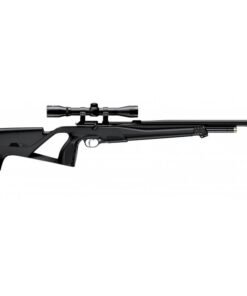
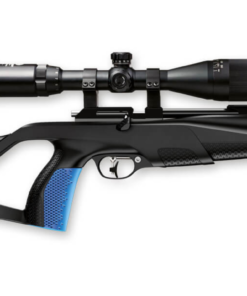
Air Rifles
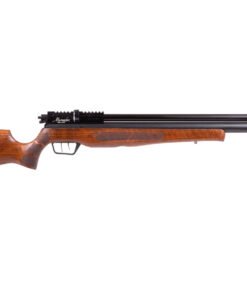
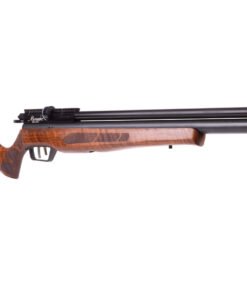
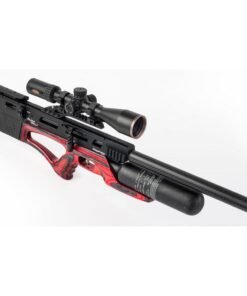
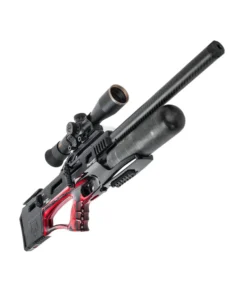
Air Rifles
PCP Air Rifles
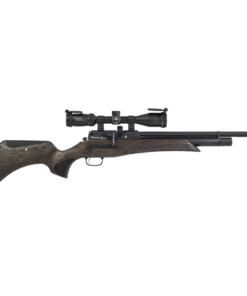
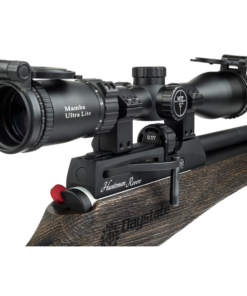
Uncategorized
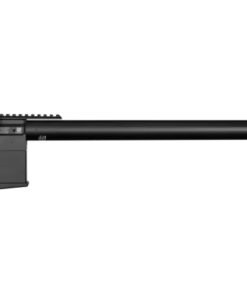
Air Rifles
Reviews
There are no reviews yet.