
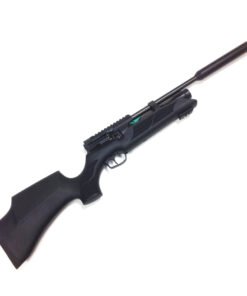
Weihrauch HW110K | HW 110 ST K Carbine

$870.00
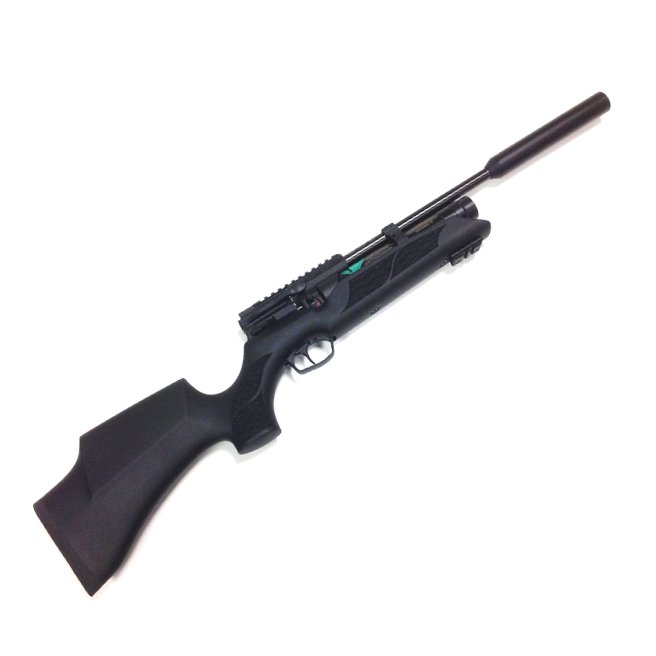
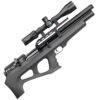
Weihrauch HW 110 ST K Carbine PCP Pre-Charged
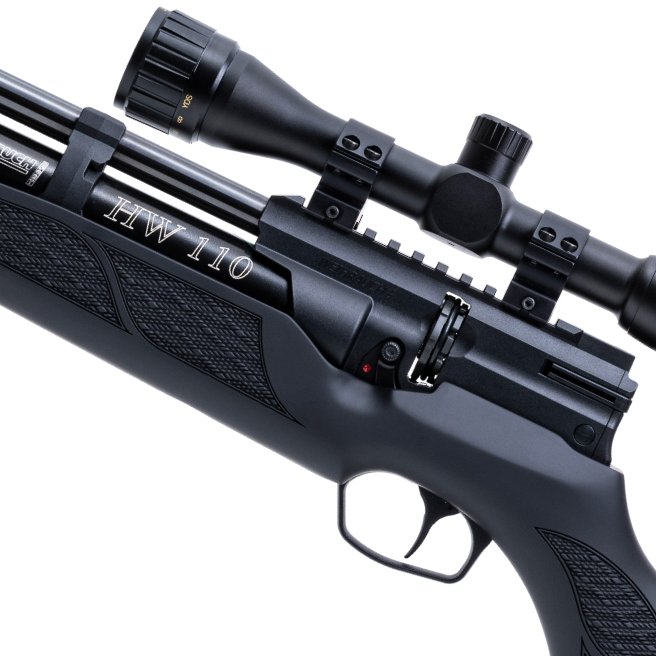
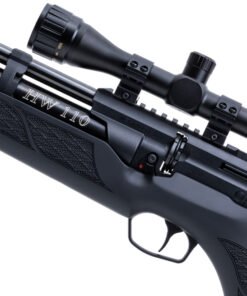
Compact carbine Weihrauch HW110 ambidextrous stock comes with right-handed side-lever. (Left handed version available at extra cost by special order only). Multi-shot PCP comes with two magazines. Black soft touch stock. Weaver / Picatinny rail comes with Weihrauch sound moderator included.
This airgun is light-weight, compact, reliable and accurate. Hull Cartridge Company official UK import. The Weihrauch HW110 features an ambidextrous stock with a right handed side-lever.
The Weihrauch HW110K | HW 110 ST K Carbine combines renowned German engineering, innovative pre-charged pneumatic technology and exceptional manufacturing quality in a compact sporting rifle. Developed by Weihrauch Sport, this sophisticated model offers precision-oriented construction, comfortable ergonomics and dependable mechanical operation for discerning airgun enthusiasts.
Unlike conventional spring-powered equipment, the HW110K operates through a regulated compressed-air system. Consequently, users benefit from a low-recoil shooting experience, consistent mechanical performance and smooth operation during authorized recreational target shooting.
Furthermore, its compact configuration distinguishes it from longer sporting rifles. The approximately 800 mm overall length and 310 mm barrel contribute to manageable proportions without sacrificing the manufacturer’s emphasis on accuracy.
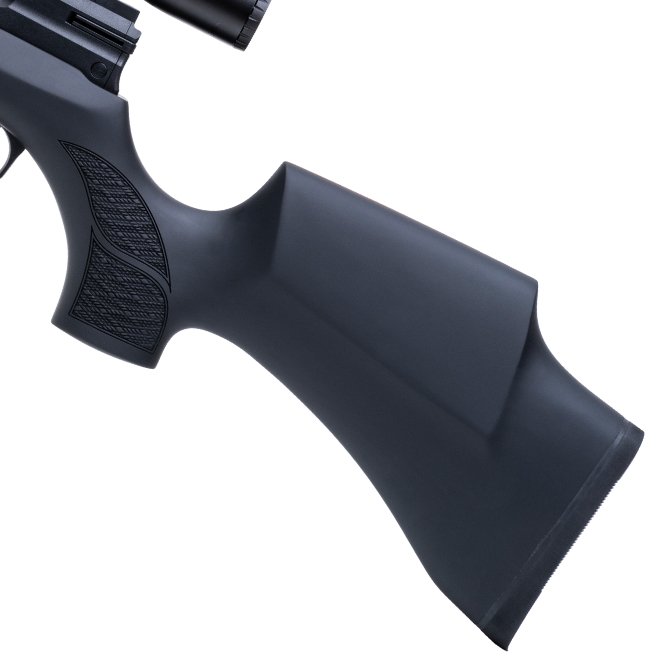
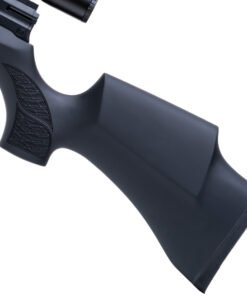
The HW 110 ST K incorporates an ambidextrous, black soft-touch sporting stock. Its comfortable exterior finish provides a secure handling surface, while the traditional stock profile supports a familiar shoulder position.
Weihrauch’s established reputation for precision manufacturing further strengthens the appeal of this sophisticated sporting platform

Please note: scope and mounts not included. We have a wide range of discounted scopes available to suit all budgets. Extra discount available on a new scope when you are purchasing a new airgun.
Left handed shooters: If you are left handed the HW110’s side cocking lever can be transferred across (in house) to the left hand side for an addition cost of £30.00. Please call for more information.
Product Features
Weihrauch HW110K | HW 110 ST K Carbine – German Precision PCP Air Rifle, Compact Design, Outstanding Accuracy and Advanced Performance


The Weihrauch HW110K | HW 110 ST K Carbine combines renowned German engineering, innovative pre-charged pneumatic technology and exceptional manufacturing quality in a compact sporting rifle. Developed by Weihrauch Sport, this sophisticated model offers precision-oriented construction, comfortable ergonomics and dependable mechanical operation for discerning airgun enthusiasts.
Unlike conventional spring-powered equipment, the HW110K operates through a regulated compressed-air system. Consequently, users benefit from a low-recoil shooting experience, consistent mechanical performance and smooth operation during authorized recreational target shooting.
Furthermore, its compact configuration distinguishes it from longer sporting rifles. The approximately 800 mm overall length and 310 mm barrel contribute to manageable proportions without sacrificing the manufacturer’s emphasis on accuracy.
The HW 110 ST K incorporates an ambidextrous, black soft-touch sporting stock. Its comfortable exterior finish provides a secure handling surface, while the traditional stock profile supports a familiar shoulder position.
Weihrauch’s established reputation for precision manufacturing further strengthens the appeal of this sophisticated sporting platform.
Advanced Regulated PCP Technology and Consistent Air Delivery

One of the most important features is the integrated pressure-regulated pneumatic system.
The regulator manages compressed-air delivery between the reservoir and firing mechanism, helping establish more predictable operating conditions.
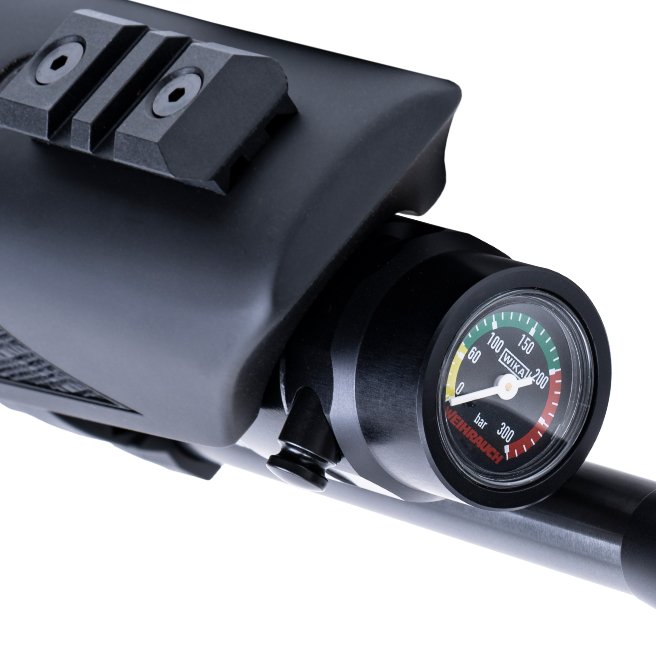
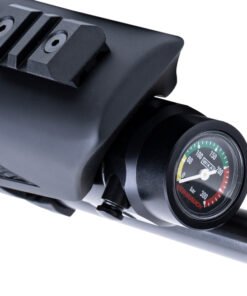
Additionally, the rifle incorporates a built-in air cylinder with a maximum manufacturer-specified filling pressure of 200 bar.
An integrated pressure gauge provides convenient monitoring, while the quick-fill arrangement supports replenishment using approved equipment.
These features demonstrate Weihrauch’s commitment to functional engineering and practical ownership convenience.
Precision Barrel Construction – Why Accuracy Matters
Weihrauch manufactures its own barrels, an important consideration for enthusiasts who value established engineering standards.
The carbine incorporates an approximately 310 mm barrel designed to support dependable precision performance.
Furthermore, its comparatively short configuration contributes to the rifle’s practical proportions.
However, accuracy depends on more than barrel quality. Appropriate ammunition, environmental conditions, equipment maintenance and individual experience all influence results.
For this reason, the rifle’s engineering should be appreciated as a foundation for consistent recreational target shooting rather than a guarantee of identical performance under every circumstance.
Ten-Shot Magazine and Smooth Sidelever Mechanism
The Weihrauch HW110K features a 10-shot rotary magazine system accompanied by a convenient sidelever operating mechanism.
Its straightforward arrangement contributes to smooth mechanical handling during supervised recreational activities.
Furthermore, the compact receiver design maintains the rifle’s relatively streamlined appearance.
A two-stage adjustable match trigger complements the sophisticated operating mechanism, while a manual safety provides an additional control feature.
Trigger servicing and adjustments should always follow manufacturer instructions.
Compact Soft-Touch Stock and Ergonomic Comfort
The HW 110 ST K’s black soft-touch stock offers a distinctive combination of traditional styling and practical convenience.
Its ambidextrous design accommodates different handling preferences, although sidelever orientation should be confirmed when ordering.
Furthermore, the comfortable stock geometry and approximately 3 kg overall weight contribute to balanced handling.
The rubberized exterior finish provides a tactile surface, while its understated appearance complements the rifle’s German sporting heritage.
For enthusiasts who appreciate compact dimensions without unnecessarily complicated external design, this configuration offers a compelling combination of practicality and refinement.
Available Calibres, Power Configurations and Technical Specifications
The HW110 family has been offered in .177 (4.5 mm), .20 (5.0 mm) and .22 (5.5 mm) configurations, although individual calibres may be unavailable in particular markets.
The British-market carbine is commonly supplied in a sub-12 ft-lb configuration.
Manufacturer and distributor specifications identify approximately 50 shots in .177 and 75 shots in .22 for certain UK carbine configurations.
However, actual shot counts vary with operating conditions, calibre and production version.
The rifle also incorporates an optics mounting rail. Appropriate optical equipment and other compatible accessories should be selected according to manufacturer recommendations.
Related Airgun Categories and Search Comparisons
The Weihrauch HW110K is a compact sporting PCP rifle, not a large-calibre airgun, automatic airgun, air-powered shotgun or personal-defense device. Broader searches may nevertheless include the following unrelated products and terminology.
Compact and tactical models: bintac t9, bintac t9 price, bintac t9 full auto, bintac s45, bintac t50, aea bintac t50 extreme, bintac mcar, bintec m50, b&w m50, mp30, tac 9, tac-9, mordax venom, m50 vs evanix viper for sale usa, airgun tactical, air gun tactical, air tactical, tactical air guns, tactical air rifle, air ordnance smg 22 and smg 22.
Large-calibre alternatives: zeus mk2 .72cal air rifle, zeus mk2 .72 cal air rifle, zeus air rifle, aea zeus air rifle, 72 caliber aea zeus, aea zeus 72 cal, aea zeus 72 caliber, aea zeus 72, aea zeus mk2, aea zues, zeus air gun, zeus mk2, zeus 72 cal air rifle, zeus 72 cal air rifle price, aea zeus tactical, 72 caliber air rifle, .72 cal air rifle, 50 cal air rifle, 50 caliber air rifle, 50 cal air pistol, 9mm air rifle, 9mm air gun, 9mm pellet gun and 9mm air pistol.
Alternative pneumatic platforms: aea megalodon, aea megalodon 50 cal, aea megalodon .58 cal, aea megalodon air rifle, aea megalodon 50 cal price, aea megalodon 50 caliber, megalodon air rifle, aea terminator, aea harpoon, aa harpoon, aea harpoon price, aea harpoon magnum, aea harpoon gun, aea harpoon for sale, aea harpoon shotgun, harpoon air gun, western rattler bullpup, umarex notos, notos airgun, huben gk1 price in usa, barra 250z europe, tex rex and slug hammer.
Other airgun search categories: air shotgun, air powered shotgun, airgun shotgun, air shot gun, double barrel air gun, air crossbow, pneumatic crossbow, pellet gun, pneumatic air gun, pcp air rifle, high powered air gun, full auto pellet gun, only air gun, air gun suppressor, solofish laser light combo, solofish and fx drs tactical accessories.
Personal-defense-related searches: self defense air gun, self defense air pistol, self defense air guns, air gun for self defense, airgun for self defense, aea defender lethal airgun, x68, x68 pistol, x68 pistelle, pistelle x68, pistelle x 68, pistelle x 68 for sale, pistelle x 68 kaufen and pistolé.
These terms describe separate models, product categories or consumer searches and do not represent the Weihrauch rifle’s specifications, intended applications or included accessories.
Why Choose the Weihrauch HW110K Carbine?
The principal appeal of this German-engineered sporting rifle lies in its refined construction, compact dimensions, regulated pneumatic system and comfortable traditional styling.
Its precision-manufactured barrel, 10-shot magazine, adjustable two-stage trigger and soft-touch stock demonstrate the manufacturer’s emphasis on functional quality.
Furthermore, the quick-fill arrangement and integrated pressure gauge contribute to practical ownership convenience.
The compact proportions make the rifle particularly appealing to enthusiasts who prefer a shorter sporting platform for supervised range activities.
Ultimately, the Weihrauch HW110K | HW 110 ST K Carbine combines mechanical refinement, established manufacturing expertise and everyday practicality in a distinctive precision-oriented sporting design.
Advanced German Engineering, Exceptional Precision, Compact Performance, Shooting Comfort, and Long-Term Reliability
Understanding the Engineering Excellence Behind This Premium German Air Rifle
German engineering has earned international recognition for precision manufacturing, attention to mechanical detail, and the development of reliable sporting equipment. These qualities are especially important in sophisticated pneumatic rifles, where several interconnected components must function together to maintain consistent operation and dependable performance.
The Weihrauch HW110K demonstrates a thoughtful approach to sporting rifle construction. Its compact proportions, carefully developed pneumatic mechanism, and ergonomic stock design combine traditional craftsmanship with modern engineering principles. Consequently, enthusiasts can appreciate a refined sporting platform without the unnecessary complexity sometimes associated with larger models.
One of the most appealing characteristics of this rifle is the relationship between its external design and internal technology. Although its appearance remains relatively traditional, the internal mechanism incorporates advanced compressed-air management and carefully manufactured operating components.
Furthermore, the compact carbine configuration provides practical advantages for owners who appreciate manageable dimensions. A shorter overall length can simplify lawful transportation and storage while preserving the familiar handling characteristics associated with conventional sporting rifles.
The manufacturer has also placed considerable emphasis on mechanical consistency. The regulated pneumatic system contributes to predictable operating conditions, while the precision-manufactured barrel provides an important foundation for recreational target accuracy.
Another significant advantage involves the stock. Its practical soft-touch exterior offers a comfortable handling surface and complements the rifle’s understated appearance. Additionally, the ambidextrous design accommodates a broader range of owners.
However, excellent engineering does not eliminate the importance of maintenance. Every sophisticated mechanical product requires appropriate care, regular inspection, and responsible operation.
Ultimately, the value of German engineering becomes apparent through thoughtful construction, dependable materials, comfortable ergonomics, and the satisfaction that comes from owning equipment developed around established manufacturing standards.
Why Precision Manufacturing Is Essential for Consistent Performance
Precision manufacturing influences nearly every aspect of a premium sporting rifle. From the barrel and receiver to the loading mechanism and trigger assembly, individual components must meet carefully established dimensional requirements.
Modern manufacturing techniques allow engineers to create parts with controlled tolerances and suitable surface finishes. These characteristics support proper assembly and contribute to predictable mechanical behavior.
Furthermore, consistent component dimensions help maintain the intended relationship between moving and stationary parts. When components interact correctly, the operating system can function smoothly without unnecessary friction or irregular movement.
The manufacturing quality of the receiver is particularly important because it supports several essential mechanical assemblies. Its construction must accommodate the loading system, barrel attachment, and associated operating components while maintaining the design specifications established by the manufacturer.
Likewise, precision-manufactured internal components contribute to mechanical reliability. The relationship between the valve system, pneumatic regulator, and firing mechanism influences how consistently compressed air is managed.
However, manufacturing quality should not be confused with unlimited durability. Even carefully produced components experience wear during ordinary use.
Consequently, owners should follow the manufacturer’s inspection and servicing recommendations.
Another advantage of high manufacturing standards involves replacement-part compatibility. Genuine components manufactured to the appropriate specifications help preserve the intended mechanical characteristics when repairs become necessary.
For enthusiasts who appreciate technical craftsmanship, precision manufacturing represents much more than a promotional feature. It forms the foundation of reliable operation, appropriate durability, and long-term ownership satisfaction.
How the Regulated Pneumatic System Supports Mechanical Consistency
One of the defining characteristics of modern precision-oriented sporting rifles is the use of regulated compressed-air technology.
The rifle stores compressed air inside a pressure-rated reservoir. During normal operation, the pneumatic mechanism uses a controlled release of this stored energy.
A pressure regulator helps manage the air supplied to the firing mechanism. Consequently, the system can maintain more predictable operating conditions while reservoir pressure remains within the regulator’s intended working range.
This arrangement offers an important advantage over an unregulated system, where the changing reservoir pressure may have a more direct influence on performance.
Furthermore, regulated technology reflects the manufacturer’s emphasis on efficiency and mechanical refinement.
However, the regulator does not operate independently. Seals, valves, internal passages, and other pneumatic components contribute to the complete system.
The condition of these components can influence reliability over time.
For example, aging seals may eventually develop leaks, while contamination or mechanical deterioration can interfere with normal operation.
Therefore, unexpected pressure loss or unusual mechanical behavior should prompt professional inspection.
Pressure-related adjustments and internal repairs should remain within manufacturer instructions and be performed by appropriately qualified technicians.
Ultimately, regulated pneumatic technology contributes to predictable operation while demonstrating the sophisticated engineering involved in contemporary sporting rifle design.
Precision Barrel Construction and Its Importance for Target Accuracy
The barrel is among the most important components of a precision-oriented sporting rifle.
Its internal dimensions, material properties, manufacturing quality, and physical condition influence the mechanical foundation for accurate shooting.
Weihrauch has an established reputation for manufacturing sporting rifle barrels, and its attention to barrel production remains an important part of the company’s engineering heritage.
A carefully manufactured bore provides a consistent pathway for suitable projectiles. Furthermore, appropriate barrel alignment contributes to the overall mechanical integrity of the rifle.
However, accuracy depends on more than the barrel itself.
Ammunition characteristics, environmental conditions, the rifle’s mechanical condition, and the user’s experience can all influence the results observed during target shooting.
For example, differences in pellet dimensions and manufacturing consistency may affect performance. Similarly, wind can influence projectile movement during outdoor recreational activities.
Consequently, even a high-quality barrel cannot guarantee identical results with every type of ammunition or under changing environmental conditions.
Barrel condition also deserves attention.
Physical damage, unsuitable cleaning products, or improper maintenance can interfere with the carefully manufactured internal surfaces.
Owners should therefore follow manufacturer guidance rather than attempting unnecessary cleaning or modifications.
A precision-manufactured barrel offers lasting value when supported by suitable ammunition, responsible handling, and appropriate maintenance.
Why the Compact Carbine Design Is So Practical
Compact sporting rifles appeal to enthusiasts who appreciate manageable proportions without abandoning traditional shoulder-fired ergonomics.
The shorter configuration reduces overall length compared with many full-size sporting rifles. Consequently, the equipment may be easier to accommodate in an appropriately sized protective case or secure storage arrangement.
Furthermore, compact dimensions can contribute to convenient handling during organized recreational activities.
However, compact construction must be balanced against several engineering requirements.
The manufacturer must accommodate the barrel, pneumatic reservoir, receiver, stock, and operating controls within a relatively limited overall length.
This requires careful attention to component placement and mechanical integration.
Another consideration involves balance.
Reducing length does not automatically produce superior handling. The distribution of weight remains essential because the location of the rifle’s mass influences how it feels.
A carefully developed carbine can provide comfortable traditional proportions while retaining the required structural support for its mechanical components.
The compact design also creates a distinctive appearance. It maintains a recognizable sporting profile without relying on elaborate external structures.
For owners who value understated styling and practical dimensions, this approach offers an appealing combination of convenience and mechanical sophistication.
Ultimately, the benefit of a carbine configuration lies in balancing compactness, ergonomics, and dependable engineering.
Comfortable Soft-Touch Stock Construction and Everyday Handling
The stock plays a major role in determining how comfortable a sporting rifle feels during ordinary handling.
Its geometry influences the relationship between the user’s shoulder, hands, and head position.
A carefully developed sporting stock should provide comfortable contact surfaces and practical proportions without introducing unnecessary complexity.
The soft-touch exterior adds a distinctive tactile characteristic. Its surface finish provides a pleasant handling feel while contributing to the rifle’s modern appearance.
Furthermore, the black stock offers an understated aesthetic that complements the mechanical components.
The ambidextrous design is another practical consideration.
A stock intended to accommodate different handling preferences can appeal to a wider variety of owners.
However, individual comfort still depends on physical proportions.
Arm length, shoulder width, height, and personal preferences influence how naturally the rifle fits.
Consequently, prospective owners should consider dimensions and overall handling rather than relying exclusively on the appearance of the stock.
Material maintenance is equally important.
Although modern synthetic construction avoids some cosmetic concerns associated with traditional wooden furniture, it still requires protection from excessive heat, harsh chemicals, and severe impacts.
Appropriate cleaning and secure storage help preserve its appearance.
The stock ultimately contributes to the ownership experience through its combination of comfortable geometry, practical materials, and attractive sporting styling.
Understanding the Benefits of a Smooth Sidelever Operating System
A refined sidelever mechanism contributes to the convenience and mechanical character of a modern pneumatic sporting rifle.
The mechanism provides a dedicated external control associated with the rifle’s loading and cocking system.
Its smooth operation depends on carefully manufactured components and the correct relationship between interacting parts.
Furthermore, a conveniently positioned sidelever can contribute to the streamlined appearance of the receiver.
High-quality mechanical controls should function predictably without unnecessary resistance or irregular movement.
However, smooth operation does not mean that a mechanism is maintenance-free.
Moving components experience normal wear, while dust and other contaminants can affect their condition.
Consequently, unusual stiffness, grinding sensations, or irregular operation should receive appropriate attention.
Owners should never force a mechanism that appears to be malfunctioning.
Such actions can cause further damage and may introduce safety concerns.
Instead, the rifle should remain out of use until the issue has been assessed according to manufacturer guidance.
Professional servicing helps preserve the original mechanical characteristics and ensures that suitable replacement components are used when necessary.
Ultimately, a refined sidelever system contributes to ownership satisfaction by combining predictable mechanical movement with straightforward exterior design.
The Importance of a Reliable Magazine System
A rotary magazine provides a convenient arrangement for holding compatible ammunition within the rifle’s loading system.
Its construction must satisfy appropriate dimensional and material requirements to support normal mechanical operation.
The magazine and receiver interface are particularly important because these components must function together according to the manufacturer’s design.
Furthermore, consistent manufacturing helps reduce the likelihood of irregular operation associated with poorly fitting components.
However, compatibility should never be assumed.
Magazines intended for different models or production generations may appear similar while incorporating important dimensional differences.
Consequently, replacement magazines should be selected according to verified manufacturer specifications.
Routine inspection also supports reliability.
Visible cracks, damaged components, or unexpected resistance may indicate that servicing or replacement is necessary.
Owners should avoid modifying magazines or forcing incompatible components into the rifle.
Another important consideration involves safe handling.
The removal of a magazine does not automatically establish that a sporting rifle is unloaded.
All manufacturer-established unloading and safety procedures must be followed.
A dependable magazine system ultimately contributes to practical convenience while reinforcing the importance of correct component selection and responsible operation.
Advanced Trigger Engineering and Predictable Mechanical Response
The trigger mechanism is an essential component of a precision-oriented sporting rifle.
Its function must balance predictable mechanical response with appropriate safety characteristics.
A well-developed trigger assembly demonstrates careful coordination between internal components, manufacturing tolerances, and the manufacturer’s intended operating requirements.
Furthermore, a two-stage design provides distinct phases of trigger movement as determined by its configuration.
However, trigger quality should not be evaluated solely by how light the mechanism feels.
Excessively light or incorrectly adjusted triggers can create safety hazards.
Consequently, adjustments should follow manufacturer instructions and, where appropriate, be carried out by a qualified professional.
Unexpected changes in trigger behavior should also receive immediate attention.
A trigger that behaves irregularly, fails to reset normally, or exhibits other unusual characteristics requires inspection before further use.
Regular maintenance helps preserve the intended mechanical response.
Ultimately, sophisticated trigger engineering contributes to reliable operation and reinforces the manufacturer’s emphasis on mechanical precision.
Practical Advantages During Organized Recreational Target Shooting
Recreational target shooting offers an appropriate environment for appreciating the characteristics of carefully engineered sporting equipment.
Established shooting facilities generally provide designated areas, suitable backstops, approved targets, and operating procedures intended to support responsible participation.
These arrangements create a controlled setting in which enthusiasts can enjoy their equipment.
Furthermore, access to qualified instructors or experienced range personnel can be particularly valuable for individuals developing familiarity with pneumatic sporting rifles.
Supervised instruction supports awareness of safety requirements and appropriate equipment handling.
Experienced owners may also appreciate the opportunity to observe the normal characteristics of their equipment within a structured recreational environment.
However, facilities may impose different restrictions concerning equipment types, ammunition, and permitted energy levels.
Therefore, users should confirm applicable requirements before attending.
Comfortable ergonomics and manageable dimensions contribute to the practical appeal of a compact sporting rifle in these settings.
Nevertheless, safety remains more important than performance expectations.
Owners must follow range instructions, observe established safety procedures, and use equipment only in appropriate lawful environments.
The value of precision engineering becomes most meaningful when it supports responsible recreational enjoyment.
Long-Term Durability and the Importance of Material Quality
Durability depends on appropriate materials, careful manufacturing, and responsible maintenance.
A premium sporting rifle combines several different materials because each component must satisfy specific engineering requirements.
Metal alloys provide structural properties suitable for various mechanical assemblies.
Synthetic stock materials, meanwhile, offer practical exterior construction and relatively straightforward cosmetic care.
Furthermore, suitable surface finishes help protect susceptible components from ordinary environmental exposure.
However, no material remains completely unaffected by time or use.
Metal surfaces may develop corrosion when exposed to moisture, while certain synthetic materials can deteriorate under extreme heat or chemical exposure.
Mechanical components also experience gradual wear.
Consequently, proper storage and periodic inspection remain essential.
Manufacturing quality provides an important foundation for durability, but it cannot replace maintenance.
Owners should protect their equipment from unnecessary impacts, unsuitable environmental conditions, and unauthorized modifications.
By combining sound engineering with responsible care, premium sporting equipment can remain serviceable and enjoyable for an extended period.
Why Environmental Conditions Matter for Precision Equipment
Environmental conditions influence both equipment preservation and recreational shooting results.
Temperature changes may affect pneumatic pressure and certain material characteristics.
Similarly, humidity can increase the risk of corrosion on inadequately protected metal surfaces.
Wind represents another variable during outdoor target shooting.
Consequently, changing environmental conditions may influence observed results even when the rifle operates consistently.
Rain and moisture require particular attention because internal components may remain susceptible to deterioration despite the practical advantages of synthetic furniture.
Furthermore, prolonged exposure to direct sunlight or excessive heat should be avoided.
Compressed-air equipment must remain within the manufacturer’s recommended environmental limits.
After outdoor use, appropriate external cleaning and inspection help preserve the rifle’s condition.
However, maintenance should never involve unnecessary disassembly of pressure-containing components.
Understanding these environmental influences encourages more informed ownership and realistic expectations concerning performance.
Responsible Maintenance and Professional Servicing Requirements
Regular maintenance contributes to long-term reliability and helps preserve the condition of sophisticated sporting equipment.
Appropriate care begins with external inspection and adherence to manufacturer guidance.
Owners can check for visible surface damage, corrosion, or unusual deterioration without interfering with internal mechanisms.
Furthermore, suitable nonabrasive cleaning materials help preserve exterior finishes.
However, specialized pneumatic components require professional attention.
High-pressure reservoirs, regulators, valves, and internal seals should never be modified or disassembled without the required qualifications and approved procedures.
Unexpected pressure loss or unusual mechanical behavior should prompt immediate inspection.
Professional servicing offers several benefits.
Qualified technicians can assess internal components, verify replacement-part compatibility, and identify developing problems.
Furthermore, documented maintenance records may support warranty discussions and future lawful resale.
Proper servicing should therefore be viewed as an important part of ownership rather than an unnecessary expense.
What Makes German Sporting Equipment a Valuable Long-Term Investment?
The value of premium sporting equipment extends beyond its initial purchase price.
Manufacturing quality, ergonomic comfort, technical refinement, and available manufacturer support all contribute to long-term ownership satisfaction.
A carefully developed rifle can provide an enjoyable recreational experience when its characteristics match the owner’s requirements.
Furthermore, dependable construction and access to appropriate servicing resources can support continued use over many years.
However, prospective buyers should consider the complete cost of ownership.
Secure storage, approved filling equipment, maintenance supplies, compatible accessories, and professional servicing may create additional expenses.
Warranty conditions and replacement-part availability also deserve attention.
Another important consideration involves resale value.
Well-maintained equipment may appeal to future buyers, but market demand, age, and overall condition influence actual prices.
Consequently, premium quality should be understood as a combination of practical benefits rather than a guarantee of financial appreciation.
Ultimately, informed ownership decisions provide greater satisfaction than purchasing solely because of impressive advertising claims.
Final Assessment of Engineering Excellence and Practical Performance
The Weihrauch HW110K demonstrates how traditional sporting design and modern pneumatic engineering can complement one another.
Its compact proportions, regulated compressed-air operation, precision-manufactured barrel, and comfortable stock construction reflect a carefully developed approach to recreational sporting equipment.
Furthermore, its magazine system, sidelever mechanism, and refined trigger assembly contribute to the overall mechanical experience.
These characteristics support a compelling combination of technical sophistication and practical usability.
However, dependable operation always requires responsible ownership.
Suitable storage, manufacturer-approved maintenance, professional servicing, and compliance with applicable regulations help preserve the equipment’s intended characteristics.
For enthusiasts who appreciate German manufacturing standards, comfortable ergonomics, and precision-oriented engineering, this compact sporting platform offers a distinctive ownership experience.
Ultimately, lasting satisfaction comes from the relationship between quality construction, predictable mechanical behavior, appropriate care, and safe recreational use.
A well-maintained example can remain an enjoyable part of an enthusiast’s sporting activities while demonstrating the enduring value of thoughtful mechanical engineering.
Practical Shooting Applications, Advanced Precision Engineering, Exceptional Comfort, Operational Reliability, and Long-Term Performance
Understanding the Practical Advantages of a Premium German Sporting Rifle
A premium sporting rifle should provide more than impressive technical specifications and an attractive exterior. Its true value becomes apparent through dependable mechanical operation, comfortable handling, appropriate durability, and the satisfaction associated with carefully developed engineering. These qualities are especially important for enthusiasts who appreciate precision equipment and expect consistent performance throughout years of responsible recreational use.
The Weihrauch HW110K combines the manufacturer’s established engineering expertise with a compact design intended to provide an enjoyable sporting experience. Its carefully coordinated components demonstrate how modern pneumatic technology can complement traditional rifle construction.
Furthermore, the relationship between the barrel, receiver, regulated air system, stock, and mechanical controls contributes to the overall quality of the platform. Each component performs a distinct function, yet their combined operation determines how refined the equipment feels.
One particularly appealing characteristic is its manageable size. Compact dimensions can offer practical advantages during lawful transportation, secure storage, and organized recreational activities. Additionally, the traditional sporting profile maintains a familiar appearance without incorporating unnecessarily complicated external features.
The soft-touch stock further contributes to practical convenience. Its comfortable exterior finish provides a pleasant handling surface, while the ambidextrous design accommodates different preferences.
However, premium engineering does not eliminate the need for appropriate care. Regular inspection, suitable storage, and professional servicing remain important responsibilities.
Ultimately, this sporting rifle represents a thoughtful combination of mechanical refinement, established manufacturing quality, ergonomic comfort, and long-term ownership appeal.
How Advanced Barrel Manufacturing Contributes to Precision
The barrel remains one of the most influential components in a precision-oriented sporting rifle. Its manufacturing quality, internal geometry, dimensional consistency, and structural condition all contribute to the mechanical foundation for accurate recreational target shooting.
Weihrauch has extensive experience manufacturing barrels for sporting equipment. This expertise reflects the importance of carefully controlled production processes and appropriate material selection.
A precision-manufactured bore provides a defined pathway for compatible projectiles during normal operation. Furthermore, consistent internal dimensions help establish predictable interaction between the projectile and barrel.
However, barrel quality alone cannot guarantee identical shooting results.
Ammunition characteristics, weather conditions, mechanical condition, and the experience of the person using the equipment can influence accuracy.
For example, variations in projectile manufacturing may produce different results even when the rifle itself remains in excellent condition. Similarly, outdoor wind can affect observed target impacts.
Consequently, accuracy should be understood as the outcome of several interacting factors rather than one mechanical feature.
Barrel preservation also matters. Unsuitable cleaning materials, unnecessary mechanical intervention, or physical damage can affect carefully manufactured internal surfaces.
Therefore, owners should follow the manufacturer’s maintenance recommendations and seek professional assistance when specialized inspection becomes necessary.
A high-quality barrel ultimately provides lasting value through sound engineering, appropriate maintenance, and dependable mechanical construction.
Why Consistent Air Regulation Improves the Ownership Experience
Regulated compressed-air technology represents an important development in modern pneumatic sporting equipment.
Unlike traditional systems that depend entirely on mechanical energy stored in springs, pneumatic rifles use compressed air contained within a pressure-rated reservoir.
A regulator helps manage the pressure supplied to the firing mechanism, contributing to more predictable operating conditions.
Consequently, the rifle can maintain relatively consistent mechanical behavior while the reservoir pressure remains within its intended working range.
This characteristic is especially relevant to precision-oriented recreational equipment, where dependable operation contributes to overall satisfaction.
Furthermore, a properly designed pneumatic system combines several important components, including pressure seals, valves, internal passages, and supporting mechanical structures.
Each component influences the behavior of the complete system.
However, regulated operation should not be interpreted as maintenance-free performance.
Seals naturally age, pressure-related components may require inspection, and unsuitable handling can affect reliability.
Unexpected pressure loss or irregular operation should therefore prompt professional assessment.
Owners should never attempt unauthorized modifications to regulators or pressure-containing components.
Following manufacturer instructions helps preserve the system’s intended characteristics while supporting safe ownership.
Ultimately, sophisticated pneumatic engineering contributes to a refined mechanical experience through predictable operation and thoughtfully developed internal technology.
Compact Carbine Dimensions and Their Practical Benefits
Compact sporting rifles offer a distinctive combination of traditional shoulder-fired ergonomics and manageable external proportions.
The shorter overall configuration can provide practical advantages for enthusiasts who prefer equipment that is convenient to transport and store.
Furthermore, compact design may reduce the amount of space required inside an appropriately sized protective case or secure cabinet.
However, reduced length does not automatically guarantee superior handling.
Engineers must carefully balance the placement of the barrel, reservoir, receiver, and stock to maintain suitable proportions.
This process requires thoughtful structural design and accurate component integration.
Another important consideration involves the distribution of weight.
A compact rifle may still feel relatively substantial if its mass is concentrated in one area. Conversely, carefully balanced construction can provide comfortable handling even when the equipment incorporates robust internal components.
The traditional sporting profile also contributes to visual appeal.
Rather than relying on elaborate external structures, a compact carbine can present a clean and purposeful appearance.
For enthusiasts who appreciate practical dimensions and understated design, this arrangement offers an attractive balance between engineering sophistication and convenience.
Ultimately, the benefits of compact construction become apparent through manageable proportions, suitable ergonomics, and everyday practicality.
The Importance of Ergonomic Stock Geometry
Stock geometry influences the physical relationship between a sporting rifle and its owner.
The shape of the grip, length of the stock, height of the cheekpiece, and contour of the fore-end all contribute to comfort.
A thoughtfully developed design accommodates natural body positioning without requiring unnecessary strain.
Furthermore, an ambidextrous stock provides practical flexibility for owners with different handling preferences.
However, individual comfort depends on physical characteristics such as height, arm length, shoulder dimensions, and personal expectations.
Consequently, equipment that feels comfortable to one person may not provide exactly the same experience for another.
The material and surface finish also influence handling.
A soft-touch exterior can provide a comfortable tactile surface while contributing to the rifle’s modern appearance.
Nevertheless, the finish still requires appropriate care.
Excessive heat, incompatible cleaning products, or severe impacts can affect its condition.
Owners should therefore follow manufacturer recommendations concerning exterior maintenance.
Good ergonomics ultimately combine comfortable proportions, accessible controls, and thoughtful material selection.
These characteristics contribute to a more satisfying ownership experience without changing the fundamental importance of safe equipment handling.
Smooth Mechanical Controls and Refined Operation
The operating controls of a premium sporting rifle should demonstrate predictable movement and appropriate mechanical quality.
Modern sidelever arrangements offer a dedicated external control associated with the rifle’s loading and cocking mechanism.
Their operation depends on carefully manufactured components interacting within the intended mechanical tolerances.
Furthermore, quality surface finishes and proper assembly contribute to smooth movement.
A refined mechanism should feel consistent during normal use without requiring excessive force.
However, unexpected resistance or unusual mechanical behavior may indicate wear, contamination, or damage.
Forcing a mechanism under these circumstances can worsen the problem.
Consequently, equipment displaying abnormal characteristics should remain out of use until appropriately inspected.
Another important consideration involves regular servicing.
Moving parts experience gradual wear, and suitable maintenance helps preserve the relationship between interacting components.
Manufacturer-approved service procedures are particularly valuable because they account for the specific design requirements of the equipment.
Owners should avoid unsupported modifications intended to change mechanical behavior.
Ultimately, smooth controls contribute to overall refinement when they operate reliably and remain supported by appropriate maintenance.
The Role of a Reliable Magazine in Practical Convenience
Magazine construction influences how efficiently the loading system performs its intended function.
A rotary magazine incorporates components designed to accommodate compatible ammunition while interacting with the rifle’s receiver.
Its dimensions and mechanical characteristics must correspond to the manufacturer’s requirements.
Furthermore, quality manufacturing helps maintain dependable operation under normal conditions.
However, magazine compatibility should never be assumed from external appearance alone.
Different models or production versions may require distinct components.
Consequently, owners should verify the correct specifications before ordering replacement magazines.
Routine inspection also supports reliability.
Visible cracks, irregular movement, or unusual resistance may indicate a need for servicing or replacement.
Owners should never force damaged or incompatible magazines into the rifle.
Safe handling remains essential regardless of magazine design.
Removing a magazine does not necessarily confirm that the equipment is completely unloaded.
All manufacturer-established safety procedures must therefore be followed.
A dependable magazine system contributes to convenience while reinforcing the importance of appropriate component selection and responsible operation.
Why Trigger Quality Matters in Precision Sporting Equipment
Trigger quality forms an important part of the overall mechanical experience.
A well-developed trigger assembly provides predictable movement while retaining the safety characteristics intended by the manufacturer.
Precision manufacturing contributes to the appropriate interaction of individual components.
Furthermore, a two-stage trigger system incorporates a defined sequence of mechanical movement according to its design.
However, trigger refinement should not be confused with excessively light operation.
Incorrect adjustments can compromise safety and reliability.
Consequently, any servicing or adjustment should follow manufacturer instructions and be performed by a qualified professional when necessary.
Unexpected changes in trigger behavior should receive immediate attention.
A mechanism that feels irregular or functions differently from normal may require inspection.
Continuing to use equipment with a suspected trigger problem can introduce unnecessary risks.
The value of a refined trigger therefore lies in its predictable mechanical characteristics and appropriate safety performance.
Practical Applications in Organized Recreational Target Shooting
An established shooting range provides an appropriate environment for appreciating sophisticated sporting equipment.
Such facilities generally incorporate designated shooting areas, approved targets, suitable backstops, and defined safety procedures.
Furthermore, organized recreational activities provide opportunities for enthusiasts to become familiar with their equipment in a controlled setting.
Beginners may benefit from professional instruction, particularly when learning essential handling and safety requirements.
Experienced participants can also appreciate the convenience of a well-managed facility.
However, individual ranges may establish restrictions concerning equipment types, projectile characteristics, and permissible energy levels.
Consequently, owners should confirm the applicable requirements before attending.
A comfortable stock and manageable overall dimensions contribute to the practical appeal of a compact sporting rifle during these activities.
Similarly, reliable mechanical operation supports an enjoyable experience.
Nevertheless, equipment quality never replaces disciplined safety practices.
Appropriate supervision, compliance with facility rules, and awareness of other participants remain essential.
The most rewarding recreational experience combines responsible conduct with an appreciation for precision engineering.
Understanding the Importance of Balanced Weight Distribution
Weight distribution influences how a sporting rifle feels during normal handling.
Although overall mass provides a useful specification, it does not fully explain ergonomic comfort.
The placement of the barrel, receiver, air reservoir, stock, and accessories determines the balance of the complete assembly.
Furthermore, different individuals may prefer different weight characteristics.
A rifle with more mass concentrated toward the front may feel different from one with a more centralized distribution.
Consequently, buyers should consider how equipment fits their physical requirements rather than relying exclusively on published weight figures.
Accessory selection can also influence balance.
Additional equipment may increase total mass and alter the original handling characteristics.
Therefore, compatible accessories should be chosen according to genuine recreational needs.
The manufacturer’s original design represents a coordinated arrangement of components.
Maintaining this intended configuration can help preserve practical comfort and mechanical integrity.
Ultimately, balanced construction contributes to an enjoyable ownership experience by combining appropriate proportions with thoughtful engineering.
Long-Term Reliability Through Quality Material Selection
The durability of sporting equipment depends on several interconnected factors.
Material selection, manufacturing standards, assembly quality, and environmental exposure all influence long-term condition.
Metal components provide structural characteristics suitable for different mechanical applications.
Synthetic materials, meanwhile, offer practical alternatives for exterior furniture and certain supporting components.
Furthermore, protective finishes help reduce ordinary deterioration when properly maintained.
However, no material is completely resistant to damage.
Moisture can encourage corrosion, excessive heat may affect certain synthetic materials, and severe impacts can damage mechanical assemblies.
Consequently, responsible storage and transportation remain important.
Another consideration involves component aging.
Seals and other parts may eventually require replacement even when the rifle receives appropriate care.
Professional servicing helps ensure that these components are inspected and replaced according to manufacturer requirements.
Quality materials therefore provide the foundation for durability, while responsible maintenance contributes to continued reliability.
Environmental Conditions and Their Influence on Equipment Performance
Environmental factors can affect both the condition of sporting equipment and results observed during recreational activities.
Temperature changes may influence compressed-air pressure and certain material properties.
Similarly, humidity can increase the likelihood of corrosion when susceptible surfaces remain exposed.
Wind represents another consideration during outdoor target shooting.
Consequently, results can vary even when the equipment functions consistently.
Furthermore, exposure to rain or excessive moisture may require additional external care.
Although synthetic furniture offers practical advantages, the complete rifle still contains metal and mechanical components.
Therefore, owners should avoid leaving equipment exposed to unfavorable conditions unnecessarily.
Excessive heat also deserves particular attention because pneumatic equipment incorporates pressure-containing components.
Storage and transportation should always comply with manufacturer recommendations.
After outdoor activities, appropriate inspection and cleaning help preserve external condition.
Understanding environmental influences supports realistic expectations and more responsible equipment care.
Maintenance Practices That Support Long-Term Performance
Appropriate maintenance helps preserve mechanical reliability and ownership value.
Routine care begins with following the manufacturer’s documentation.
External inspection can identify visible damage, corrosion, unusual deterioration, or other concerns without interfering with internal components.
Furthermore, suitable cleaning materials help protect surface finishes.
However, excessive maintenance can sometimes cause problems.
Abrasive cleaning products, incompatible chemicals, and unauthorized disassembly may damage components.
Consequently, owners should avoid unnecessary intervention.
Pneumatic systems require particular caution.
High-pressure reservoirs, regulators, and internal seals should only be serviced according to approved procedures.
Qualified technicians possess the specialized knowledge required to assess these components.
Regular professional inspection can also identify developing problems before they become more serious.
Maintaining service records provides additional benefits by documenting the equipment’s history.
Ultimately, responsible maintenance supports dependable operation while helping protect the owner’s investment.
Secure Storage and Responsible Transportation
Safe storage is an essential responsibility associated with sporting equipment ownership.
A rifle should remain secured against unauthorized access whenever it is not being used.
Appropriate locking arrangements and secure storage facilities help support this objective.
Furthermore, suitable environmental conditions protect the equipment from unnecessary moisture, dust, and temperature extremes.
Protective cases can reduce the likelihood of accidental damage during lawful transportation.
However, owners should follow applicable transportation regulations and manufacturer instructions.
Another important consideration involves preparation for storage.
The equipment should be unloaded and secured according to the manufacturer’s procedures.
Specific pneumatic storage requirements may differ between models.
Consequently, owners should consult the relevant documentation rather than relying on general assumptions.
Responsible storage protects people while preserving equipment condition.
It also demonstrates the importance of combining mechanical appreciation with disciplined ownership.
The Benefits of Professional Technical Support
Manufacturer support and qualified servicing contribute significantly to long-term ownership satisfaction.
Even carefully engineered equipment may eventually require inspection or replacement components.
Access to experienced technicians helps ensure that maintenance follows appropriate procedures.
Furthermore, authorized service providers can confirm compatibility between different production versions.
This becomes particularly important when manufacturers introduce revised components.
Owners should retain purchase records, model information, and relevant documentation to support future servicing.
Warranty conditions also deserve consideration.
Unauthorized modifications or inappropriate maintenance may affect eligibility for certain forms of support.
Consequently, professional assistance is often preferable to unsupported repairs.
Reliable technical support provides confidence because owners have access to appropriate expertise when mechanical concerns arise.
Why Overall Ownership Value Goes Beyond Purchase Price
Premium sporting equipment should be evaluated according to its complete ownership requirements.
Initial purchase price represents only one consideration.
Secure storage, maintenance supplies, approved filling equipment, compatible accessories, and professional servicing may involve additional expenses.
Furthermore, manufacturer reputation and replacement-part availability can influence long-term convenience.
A carefully selected rifle should match the owner’s recreational interests, physical requirements, and maintenance expectations.
However, a higher purchase price does not automatically guarantee greater satisfaction.
The most suitable product is one that meets genuine needs while offering dependable engineering and practical usability.
Resale value may also matter.
A well-maintained example with appropriate documentation can appeal to prospective buyers where lawful resale is permitted.
Nevertheless, market demand, condition, age, and product availability influence actual resale prices.
Ultimately, genuine value comes from the combination of technical quality, practical comfort, responsible ownership, and long-term satisfaction.
Final Assessment of Practical Performance and German Engineering Quality
The Weihrauch HW110K illustrates how compact sporting design can coexist with sophisticated pneumatic engineering.
Its regulated air system, precision-manufactured barrel, smooth mechanical controls, and comfortable stock contribute to a refined recreational platform.
Furthermore, the traditional exterior profile provides familiar handling characteristics while maintaining manageable dimensions.
The manufacturer’s established engineering experience strengthens the appeal of this carefully developed sporting rifle.
However, long-term satisfaction depends on more than initial manufacturing quality.
Appropriate servicing, compatible components, responsible storage, and adherence to manufacturer recommendations remain essential.
Owners should also maintain realistic expectations concerning accuracy and performance because environmental conditions, ammunition characteristics, and individual experience influence results.
For enthusiasts who value German craftsmanship, dependable mechanical design, and practical ergonomic comfort, this compact carbine represents an appealing combination of traditional sporting principles and modern pneumatic technology.
Ultimately, its greatest strengths lie in thoughtful construction, predictable operation, convenient proportions, and the lasting satisfaction associated with responsibly maintained precision equipment.
Exceptional German Craftsmanship, Precision Performance, Practical Shooting Applications, Advanced Reliability, and Long-Term Ownership Benefits
Understanding the Importance of Exceptional Engineering in Modern Sporting Rifles
The quality of a premium sporting rifle becomes apparent through its mechanical refinement, carefully selected materials, ergonomic construction, and dependable performance. While impressive specifications often attract attention, the real value of sophisticated equipment comes from the relationship between its individual components and the overall ownership experience.
German manufacturing has long maintained a reputation for technical discipline, precise machining, and consistent production standards. These characteristics remain particularly important in pneumatic sporting equipment, where complex mechanical assemblies must operate together under carefully controlled conditions.
A well-engineered rifle should combine mechanical precision with practical convenience. Its operating controls should respond predictably, its stock should provide comfortable support, and its internal components should function according to the manufacturer’s established specifications.
Furthermore, thoughtful design helps reduce unnecessary complexity. Instead of relying exclusively on elaborate exterior features, a refined sporting rifle can maintain a traditional appearance while incorporating advanced technology internally.
Another important consideration involves the relationship between performance and durability. Carefully manufactured components can support dependable operation, but long-term reliability also requires appropriate maintenance and responsible handling.
Consequently, enthusiasts should evaluate equipment through a combination of technical characteristics, physical comfort, manufacturer reputation, and servicing requirements.
The appeal of premium German craftsmanship ultimately lies in the confidence created by thoughtful engineering, careful assembly, and a commitment to dependable mechanical quality.
How Precision Manufacturing Supports Consistent Mechanical Operation
Precision manufacturing is fundamental to the construction of sophisticated pneumatic sporting rifles. Each component must meet dimensional and material requirements established during the engineering process.
Modern production equipment allows manufacturers to create mechanical parts with carefully controlled tolerances. These tolerances influence how effectively individual components fit and interact.
Furthermore, suitable surface finishes help moving parts function according to their intended design.
The relationship between the receiver, barrel, loading mechanism, and internal pneumatic components is particularly important. Although each assembly performs a different function, reliable operation depends on the complete system functioning correctly.
For example, accurately manufactured supporting structures contribute to mechanical alignment, while appropriately fitted operating components help maintain predictable movement.
However, even precise manufacturing cannot eliminate all sources of variation.
Normal wear, environmental exposure, inadequate maintenance, and accidental damage can affect equipment condition over time.
Consequently, owners should remain attentive to changes in mechanical behavior.
Unexpected resistance, unusual noises, or irregular operation may indicate a need for professional inspection.
Another advantage of established manufacturing standards involves servicing. Replacement components produced to the correct specifications help qualified technicians preserve the equipment’s intended characteristics.
Precision manufacturing therefore contributes to both immediate mechanical refinement and long-term ownership confidence.
Why Barrel Quality Remains Essential for Precision Target Shooting
The barrel represents one of the most significant components of a precision-oriented sporting rifle.
Its internal geometry, manufacturing consistency, material characteristics, and physical condition influence the foundation for accurate recreational shooting.
A carefully manufactured barrel provides a controlled pathway for compatible projectiles. Furthermore, suitable internal dimensions support predictable interaction between the bore and ammunition.
Modern barrel production involves specialized processes intended to achieve consistent mechanical characteristics.
However, barrel quality alone cannot guarantee exceptional results under every circumstance.
Ammunition quality, equipment condition, environmental conditions, and individual experience also influence observed accuracy.
For example, variations between projectiles may produce different results even when the rifle operates normally. Similarly, wind and changing atmospheric conditions can affect outdoor target shooting.
Consequently, performance should be evaluated realistically rather than through exaggerated accuracy claims.
Proper barrel maintenance is another important consideration.
Aggressive cleaning, unsuitable products, or unauthorized modifications may damage carefully manufactured internal surfaces.
Owners should therefore follow the manufacturer’s recommendations and avoid unnecessary mechanical intervention.
A precision-manufactured barrel represents a valuable engineering feature because it supports consistent mechanical characteristics when combined with appropriate care and suitable ammunition.
The Advantages of Reliable Compressed-Air Regulation
Modern pneumatic technology demonstrates how carefully managed compressed air can support sophisticated sporting equipment.
A pressure-rated reservoir stores compressed air for use during normal operation. The internal mechanism then manages its release according to the manufacturer’s design.
A regulator helps maintain more predictable pressure delivery while the reservoir remains within its intended operating range.
Consequently, the system can provide consistent mechanical characteristics across a useful portion of the available air supply.
Furthermore, regulated technology reflects the manufacturer’s commitment to efficient pressure management.
However, the regulator is only one part of the pneumatic assembly.
Seals, valves, connecting passages, and other internal components contribute to the complete operating system.
The condition of these components can influence reliability.
For example, sealing materials may deteriorate with age, while contamination or physical damage can affect normal pneumatic behavior.
Therefore, unusual pressure loss or unexpected operating characteristics should receive professional attention.
High-pressure equipment must never be modified or disassembled casually.
Owners should follow manufacturer-approved filling procedures and use compatible pressure-rated equipment.
Reliable regulation ultimately contributes to a refined ownership experience while emphasizing the importance of specialized maintenance.
How Compact Dimensions Contribute to Everyday Convenience
Compact sporting rifles offer practical advantages through manageable overall proportions.
A shorter configuration may simplify lawful transportation, secure storage, and routine handling compared with larger sporting designs.
However, compact dimensions must be supported by thoughtful engineering.
Manufacturers must accommodate the barrel, receiver, compressed-air reservoir, stock, and operating controls within a relatively limited space.
Furthermore, each component must remain positioned appropriately to preserve structural integrity and mechanical functionality.
Weight distribution is particularly important.
A compact rifle can feel comfortable when its mass is distributed effectively, whereas poorly balanced equipment may feel awkward despite having a shorter overall length.
Consequently, overall dimensions should be considered alongside ergonomics.
The traditional sporting appearance provides another advantage.
A clean exterior profile can remain visually appealing without relying on unnecessarily complicated external structures.
Furthermore, a compact design may fit conveniently inside appropriate protective storage equipment.
Nevertheless, actual case compatibility should always be verified against the rifle’s dimensions and any approved accessories.
The practical value of compact construction therefore comes from the combination of manageable proportions, comfortable handling, and careful engineering.
Understanding the Role of Ergonomic Stock Construction
The stock provides an essential connection between the sporting rifle and its owner.
Its shape influences shoulder contact, hand placement, head positioning, and overall handling comfort.
A carefully designed stock should accommodate natural body proportions without requiring unnecessary strain.
Furthermore, ambidextrous construction can provide practical flexibility for individuals with different handling preferences.
However, a universal stock design cannot guarantee identical comfort for everyone.
Height, arm length, shoulder proportions, and individual preferences influence how naturally the equipment fits.
Consequently, prospective owners should consider personal ergonomics rather than relying exclusively on published dimensions.
Surface finish also contributes to the overall experience.
A soft-touch coating can provide a comfortable tactile feel while complementing the rifle’s understated appearance.
Nevertheless, the finish requires appropriate care.
Harsh cleaning chemicals, excessive heat, or abrasive treatment may cause deterioration.
Owners should therefore follow suitable maintenance recommendations.
Well-developed stock geometry contributes to everyday satisfaction by combining comfort, practical design, and familiar sporting proportions.
Why Mechanical Balance Matters During Recreational Activities
Mechanical balance affects how a sporting rifle feels during ordinary handling and organized recreational activities.
Although total weight provides useful information, weight distribution often has a greater influence on perceived comfort.
The location of the barrel, reservoir, receiver, and other components determines the equipment’s center of mass.
Furthermore, accessories can change the original balance.
Additional optical equipment or substantial mounting hardware may increase overall weight and alter the way the rifle feels.
Consequently, accessory selection should consider comfort and compatibility.
Different individuals may prefer different handling characteristics.
Some enthusiasts appreciate a substantial feel, while others prefer relatively lightweight equipment.
Neither preference automatically establishes superior quality.
Instead, suitable balance depends on personal requirements and intended recreational applications.
Manufacturers must coordinate materials and component placement to achieve their desired handling characteristics.
Ultimately, thoughtful weight distribution supports comfortable ownership and contributes to the overall impression of mechanical refinement.
The Importance of Smooth and Predictable Operating Controls
High-quality mechanical controls contribute significantly to the experience of owning sophisticated sporting equipment.
A refined operating mechanism should respond consistently and perform its intended function without unusual resistance.
Precision machining, appropriate materials, and careful assembly support smooth mechanical movement.
Furthermore, conveniently positioned external controls can make routine handling feel more natural.
However, smooth operation should never encourage forceful handling.
Unexpected stiffness, grinding sensations, or irregular movement may indicate wear, contamination, or mechanical damage.
Under these circumstances, continuing to operate the equipment may worsen the problem.
Owners should therefore arrange appropriate inspection rather than attempting unsupported repairs.
Regular professional servicing helps preserve the intended relationship between moving components.
Additionally, manufacturer-approved replacement parts can support reliable operation when servicing becomes necessary.
Predictable controls ultimately contribute to confidence because they demonstrate appropriate mechanical functionality.
Why Trigger Engineering Is Important for Mechanical Refinement
The trigger mechanism represents an important interface between the owner and the rifle.
Its design must provide predictable mechanical operation while maintaining the safety characteristics established by the manufacturer.
A carefully developed trigger assembly incorporates components manufactured to suitable tolerances.
Furthermore, a two-stage arrangement provides a defined sequence of mechanical movement according to its intended configuration.
However, trigger quality should never be judged solely by how light the mechanism feels.
Incorrect adjustments can create serious safety concerns.
Consequently, servicing and adjustments should follow manufacturer instructions and be performed by appropriately qualified personnel when necessary.
Unexpected changes in trigger response should receive immediate attention.
A mechanism displaying irregular movement or abnormal behavior requires inspection before further use.
Proper maintenance helps preserve the original operating characteristics.
Ultimately, refined trigger engineering contributes to predictable mechanical performance and reinforces the importance of responsible ownership.
Practical Benefits of a Well-Designed Magazine System
A reliable magazine contributes to convenient operation during authorized recreational activities.
Its construction must accommodate compatible ammunition and interact correctly with the loading mechanism.
Precise manufacturing helps establish the dimensional consistency required for normal operation.
Furthermore, suitable materials contribute to durability under intended operating conditions.
However, magazines are not necessarily interchangeable between different models.
Even components with similar external appearances may incorporate distinct mechanical characteristics.
Consequently, owners should verify compatibility through manufacturer documentation.
Routine inspection also remains important.
Visible cracks, damaged components, or unexpected resistance may indicate the need for replacement.
Forcing an unsuitable magazine can damage the loading system.
Safe handling procedures must always be observed.
Removing a magazine does not necessarily confirm that the rifle is completely unloaded.
Therefore, the manufacturer’s full safety instructions remain essential.
A dependable magazine system contributes to convenience while demonstrating the value of accurate component design.
Recreational Target Shooting and Controlled Range Environments
Organized recreational target shooting provides an appropriate setting for enjoying precision-oriented sporting equipment.
Established shooting facilities typically incorporate designated shooting positions, suitable targets, appropriate backstops, and clearly defined safety rules.
Furthermore, trained personnel may provide supervision and assistance when required.
For individuals developing familiarity with sporting rifles, professional instruction offers valuable opportunities to understand safe handling practices.
Experienced enthusiasts can also benefit from structured recreational environments.
However, individual facilities may establish restrictions concerning equipment types, ammunition characteristics, and permissible power levels.
Consequently, owners should confirm relevant requirements before participating.
Comfortable stock geometry and manageable dimensions contribute to the appeal of compact sporting equipment in these settings.
Additionally, dependable mechanical operation can support an enjoyable recreational experience.
Nevertheless, safety must always remain the primary consideration.
All participants should follow range instructions, maintain awareness of their surroundings, and handle equipment responsibly.
The practical benefits of precision engineering become most meaningful when enjoyed within appropriate controlled environments.
Understanding the Influence of Temperature and Environmental Conditions
Environmental factors can influence equipment condition and recreational shooting results.
Temperature changes may affect compressed-air pressure and certain mechanical properties.
Similarly, humidity can increase the likelihood of corrosion when metal surfaces remain exposed.
Furthermore, outdoor wind conditions can influence the results observed during target shooting.
Consequently, performance may vary even when the rifle’s mechanical systems function correctly.
Rain and moisture introduce additional maintenance considerations.
Although modern synthetic furniture provides practical advantages, internal components may still require protection from environmental exposure.
Owners should avoid unnecessary contact with excessive moisture and follow suitable drying procedures after outdoor activities.
Extreme heat also deserves attention.
Compressed-air reservoirs and associated equipment must remain within the manufacturer’s recommended temperature limits.
Appropriate storage and transportation help reduce unnecessary environmental stress.
Understanding these influences supports realistic expectations and responsible equipment preservation.
Durable Materials and Their Contribution to Long-Term Reliability
Material selection influences the strength, weight, appearance, and durability of sporting equipment.
Metal alloys provide mechanical properties required for structural and moving components.
Synthetic materials offer practical alternatives for external furniture and supporting structures.
Furthermore, appropriate surface treatments can help protect susceptible components against ordinary wear and corrosion.
However, material durability depends on environmental conditions and maintenance.
Metal components may deteriorate through prolonged exposure to moisture, while certain polymers can be affected by excessive heat or incompatible chemicals.
Consequently, owners should protect equipment from unnecessary environmental stress.
Mechanical assemblies also experience normal wear.
Even carefully manufactured components may eventually require inspection or replacement.
Professional servicing helps ensure that replacement parts meet the appropriate specifications.
Ultimately, durable construction provides a strong foundation for long-term reliability when supported by responsible care.
Responsible Cleaning and Maintenance Practices
Routine maintenance plays an important role in preserving the mechanical and cosmetic condition of premium sporting equipment.
Appropriate care begins with regular external inspection.
Owners can check accessible surfaces for visible damage, corrosion, unusual wear, or other concerns without interfering with internal components.
Furthermore, suitable nonabrasive materials can help remove ordinary dust and fingerprints.
However, inappropriate cleaning may cause more harm than neglect.
Harsh chemicals, excessive lubrication, and aggressive cleaning methods can damage sensitive finishes or mechanical components.
Consequently, manufacturer instructions should guide maintenance decisions.
Pneumatic components require particular caution.
High-pressure reservoirs, regulators, and internal sealing systems should only be serviced according to approved procedures.
Qualified technicians possess the specialized knowledge required to inspect these assemblies safely.
Maintaining service documentation provides additional value.
Records of inspections and repairs can support future ownership decisions.
Responsible maintenance ultimately preserves the equipment’s intended characteristics and contributes to long-term satisfaction.
Safe Storage and Lawful Transportation
Secure storage remains an essential responsibility associated with sporting equipment ownership.
A rifle should remain inaccessible to unauthorized individuals whenever it is not being used.
Appropriate locking systems and secure cabinets can provide important access-control benefits.
Furthermore, suitable storage conditions help protect equipment from dust, moisture, and extreme temperatures.
Protective cases may reduce accidental cosmetic damage during lawful transportation.
However, owners should confirm applicable transportation requirements in their jurisdiction.
Another important consideration involves preparing the equipment for storage.
The rifle should be unloaded and secured according to manufacturer procedures.
Compressed-air systems may have specific storage recommendations that differ between models.
Consequently, owners should consult the relevant documentation rather than relying on assumptions.
Responsible storage protects people while preserving the mechanical condition and appearance of the equipment.
Why Professional Servicing Provides Long-Term Benefits
Professional servicing contributes significantly to the continued reliability of sophisticated sporting equipment.
Although routine external care may be suitable for owners, internal pneumatic mechanisms can require specialized knowledge.
Qualified technicians can inspect pressure-related assemblies, assess mechanical wear, and verify replacement-part compatibility.
Furthermore, professional assessment helps identify the underlying causes of unusual operating behavior.
Attempting unsupported repairs may worsen existing damage or introduce safety risks.
Consequently, internal servicing should remain within manufacturer-approved procedures.
Service documentation also provides practical benefits.
Records of authorized inspections and component replacements may support warranty claims or future lawful resale.
Another advantage involves access to genuine replacement components.
Parts that meet the manufacturer’s specifications help preserve intended mechanical characteristics.
Professional maintenance therefore contributes to safety, dependable operation, and long-term ownership confidence.
Evaluating Ownership Costs and Overall Product Value
A premium sporting rifle should be evaluated according to its complete ownership requirements.
Initial purchase price represents only one consideration.
Appropriate secure storage, protective equipment, approved filling accessories, maintenance supplies, and professional servicing may create additional expenses.
Furthermore, replacement-part availability and manufacturer support can influence long-term convenience.
Prospective buyers should consider whether the equipment’s dimensions, ergonomic characteristics, and intended recreational applications match their requirements.
A technically impressive product may still be unsuitable if it does not provide the desired comfort or practical convenience.
Consequently, informed purchasing decisions should prioritize genuine needs rather than promotional claims.
Resale value may also influence ownership considerations.
Well-maintained equipment with appropriate documentation may appeal to prospective purchasers where lawful resale is permitted.
However, actual prices depend on age, condition, market demand, and regional regulations.
Ultimately, long-term value reflects the relationship between engineering quality, practical suitability, responsible care, and ownership satisfaction.
Final Thoughts on German Craftsmanship and Lasting Performance
The Weihrauch HW110K represents an appealing combination of established German manufacturing expertise, compact sporting design, and sophisticated pneumatic technology.
Its precision-oriented construction, regulated operating system, comfortable stock, and refined mechanical controls demonstrate the importance of thoughtful engineering.
Furthermore, its practical proportions contribute to manageable handling and convenient storage.
However, mechanical sophistication must always be supported by responsible ownership.
Suitable maintenance, secure storage, professional servicing, and compliance with applicable regulations remain essential throughout the rifle’s service life.
For enthusiasts who appreciate traditional sporting aesthetics and modern mechanical innovation, this compact platform provides an opportunity to enjoy carefully developed engineering within appropriate recreational environments.
Ultimately, lasting satisfaction comes from dependable construction, comfortable ergonomics, predictable operation, and informed equipment care.
When technical quality and responsible ownership are combined, premium sporting equipment can provide years of rewarding recreational use while demonstrating the enduring value of precision manufacturing and thoughtful design.
Advanced Ownership Experience, Precision Engineering, Practical Shooting Benefits, Long-Term Durability, Maintenance, and Frequently Asked Questions
Understanding the Lasting Value of Exceptional German Sporting Rifle Engineering
The value of a premium sporting rifle extends beyond its external appearance, initial specifications, and purchase price. A carefully engineered product should provide dependable mechanical operation, comfortable handling, durable construction, and an enjoyable ownership experience. These characteristics become increasingly important over time, particularly for enthusiasts who appreciate quality manufacturing and responsible recreational shooting.
German sporting equipment has earned recognition for its attention to detail, precision machining, and established manufacturing traditions. These qualities contribute to the development of sophisticated mechanical products designed around consistent performance and practical functionality.
Furthermore, the relationship between individual components determines the overall quality of the equipment. The barrel, stock, receiver, pneumatic mechanism, trigger assembly, and operating controls must function together according to the manufacturer’s specifications.
A refined sporting rifle demonstrates how modern technology can complement traditional design principles. Although the exterior may retain familiar proportions, internal systems can incorporate advanced pneumatic engineering and carefully manufactured mechanical assemblies.
Another important consideration involves durability. High-quality materials and appropriate manufacturing processes provide a foundation for long-term reliability. However, these advantages depend on suitable maintenance and responsible handling.
Consequently, owners should consider the complete ownership experience rather than concentrating exclusively on advertised performance figures.
Comfort, technical support, safe storage, and availability of compatible replacement components all contribute to long-term satisfaction.
Ultimately, the appeal of premium engineering comes from the combination of mechanical refinement, practical convenience, dependable construction, and the confidence associated with responsible ownership.
Why Precision and Mechanical Consistency Remain Essential
Precision-oriented sporting equipment depends on the consistent interaction of carefully manufactured components.
A rifle’s mechanical characteristics are influenced by its barrel construction, pneumatic system, operating mechanism, and overall assembly quality.
Each component contributes to the intended operation of the complete platform.
Furthermore, consistent manufacturing tolerances help ensure that interacting components fit and function appropriately.
A carefully manufactured receiver supports the relationship between essential mechanical assemblies, while suitable internal components contribute to predictable operation.
However, mechanical consistency should not be confused with guaranteed accuracy under every circumstance.
Environmental conditions, ammunition quality, equipment condition, and user experience can influence results during recreational target shooting.
For example, outdoor wind may affect projectile flight, while differences between individual projectiles may create variations in observed performance.
Consequently, even sophisticated equipment remains subject to external influences.
Another important factor involves maintenance.
Worn components, damaged seals, or unsuitable replacement parts can interfere with normal mechanical behavior.
Therefore, owners should remain attentive to changes in operation and arrange professional assessment when necessary.
Precision manufacturing establishes the foundation for dependable performance, but responsible maintenance helps preserve that foundation throughout the equipment’s useful life.
How Modern Pneumatic Technology Enhances the Shooting Experience
Compressed-air technology has become an important part of contemporary sporting rifle engineering.
A pneumatic system stores energy within a pressure-rated reservoir before releasing an appropriate quantity of compressed air through the firing mechanism.
This arrangement provides distinctive mechanical characteristics compared with traditional spring-powered designs.
Furthermore, regulated pneumatic technology helps maintain more predictable pressure delivery while the reservoir remains within the intended operating range.
This contributes to consistent mechanical behavior and demonstrates the sophistication of modern air management systems.
However, pneumatic operation involves several interconnected components.
The reservoir, regulator, valves, seals, and internal passages must work together correctly.
If one component becomes damaged or deteriorates, the overall system may no longer operate as intended.
Consequently, routine inspection and appropriate professional servicing remain important.
Owners should never attempt unauthorized modifications to pressure-related assemblies.
High-pressure equipment requires specialized knowledge, compatible components, and strict adherence to manufacturer instructions.
The benefits of modern pneumatic technology are therefore best appreciated through safe operation, dependable construction, and appropriate maintenance.
The Importance of Comfortable Ergonomics During Recreational Activities
Comfort influences how enjoyable a sporting rifle feels during organized recreational shooting.
A carefully shaped stock provides contact points intended to support natural handling and manageable body positioning.
The grip, cheekpiece, fore-end, and stock length all contribute to the overall ergonomic experience.
Furthermore, suitable weight distribution can reduce the perception of unnecessary bulk.
However, physical comfort varies between individuals.
Height, shoulder proportions, arm length, and personal preferences influence how naturally a particular rifle fits.
Consequently, prospective owners should evaluate ergonomic characteristics alongside technical specifications.
The exterior surface also contributes to handling comfort.
A modern soft-touch finish offers a distinctive tactile feel and complements a traditional sporting profile.
Nevertheless, the surface requires suitable maintenance to preserve its appearance.
Excessive heat, unsuitable chemicals, and abrasive cleaning products can damage certain finishes.
Therefore, manufacturer-approved cleaning procedures should always guide exterior care.
Another important consideration involves accessory weight.
Additional equipment can alter the original balance and influence overall comfort.
For this reason, accessories should be selected according to verified compatibility and genuine recreational requirements.
Thoughtful ergonomics ultimately contributes to a more satisfying ownership experience by connecting mechanical design with human comfort.
Why Compact Sporting Equipment Offers Practical Ownership Advantages
Compact sporting rifles provide a combination of manageable dimensions and traditional handling characteristics.
A shorter overall configuration may simplify lawful transportation and reduce storage-space requirements.
Furthermore, compact equipment can offer practical convenience for owners who regularly attend authorized shooting facilities.
However, the benefits of reduced length depend on appropriate engineering.
Manufacturers must carefully coordinate the positioning of the barrel, receiver, pneumatic reservoir, operating controls, and stock.
The complete arrangement must maintain structural integrity and dependable mechanical functionality.
Weight distribution is another important consideration.
A compact rifle can still feel substantial depending on the placement of its components.
Consequently, overall length should not be evaluated independently of balance and weight.
The appearance of compact sporting equipment also appeals to enthusiasts who appreciate understated design.
A traditional profile can provide visual refinement without unnecessary external complexity.
Nevertheless, personal preference remains important.
Some individuals favor longer sporting equipment, while others appreciate the convenience of a shorter configuration.
Ultimately, compact construction provides practical value when combined with suitable ergonomics, thoughtful engineering, and responsible use.
Understanding the Relationship Between Barrel Quality and Accuracy Potential
Barrel manufacturing plays an essential role in the development of precision-oriented sporting equipment.
A carefully produced barrel incorporates suitable materials, consistent internal dimensions, and appropriate structural characteristics.
These qualities support the mechanical foundation required for predictable projectile movement.
Furthermore, established manufacturing standards help ensure that individual barrels conform to the manufacturer’s intended specifications.
However, no barrel can eliminate every factor affecting observed accuracy.
Ammunition characteristics, weather conditions, mechanical condition, and individual experience all influence recreational target-shooting results.
Consequently, accuracy claims should be evaluated realistically.
Another important consideration involves barrel preservation.
Improper cleaning, unsuitable products, or accidental physical damage can affect sensitive internal surfaces.
Owners should therefore avoid unnecessary intervention and follow approved maintenance guidance.
Professional inspection may become necessary if the equipment displays abnormal characteristics or has suffered physical damage.
A precision-manufactured barrel provides lasting value when supported by compatible ammunition, suitable care, and responsible recreational use.
Reliable Operating Controls and Mechanical Refinement
The operating mechanism of a premium sporting rifle should provide predictable movement and dependable functionality.
Carefully manufactured controls contribute to a refined ownership experience because they operate according to established mechanical requirements.
Furthermore, suitable materials and accurate assembly help reduce unnecessary irregularities in moving components.
A conveniently positioned operating control can also support the equipment’s traditional external design.
However, mechanical systems remain subject to ordinary wear.
Dust, contamination, physical damage, and aging components may eventually affect operation.
Consequently, unusual resistance, unexpected noises, or irregular movement should prompt inspection.
Owners should never force a mechanism that appears to be malfunctioning.
Attempting to overcome resistance through excessive force can worsen damage or create additional risks.
Professional servicing helps preserve the manufacturer’s intended operating characteristics.
Ultimately, smooth mechanical operation contributes to satisfaction because it reflects careful engineering and appropriate maintenance rather than unnecessary complexity.
The Role of Durable Materials in Long-Term Reliability
Material quality influences the structural integrity, appearance, weight, and durability of sporting equipment.
Modern manufacturers combine different materials because each component must satisfy particular engineering requirements.
Metal alloys provide suitable mechanical properties for structural and operating components.
Synthetic materials, meanwhile, offer practical alternatives for exterior furniture.
Furthermore, protective finishes can help reduce ordinary surface deterioration.
However, every material has limitations.
Moisture can encourage corrosion on susceptible metal surfaces, while certain synthetic materials may be affected by excessive heat or chemical exposure.
Consequently, responsible storage and routine inspection remain necessary.
Another consideration involves mechanical wear.
Components that move or maintain pressure seals may require servicing or eventual replacement.
High manufacturing quality can support durability, but it cannot prevent normal aging.
Therefore, long-term reliability depends on both appropriate material selection and responsible ownership.
Well-developed construction offers a strong foundation for an extended service life when supported by suitable maintenance.
Why Proper Storage Is Essential for Equipment Preservation
Storage conditions influence the mechanical and cosmetic condition of premium sporting equipment.
A suitable storage arrangement should protect the rifle from unauthorized access, unnecessary physical damage, and unfavorable environmental conditions.
Secure cabinets or other approved locking systems provide important access-control benefits.
Furthermore, a controlled environment can reduce the likelihood of corrosion and material deterioration.
Excessive humidity may affect metal surfaces, while prolonged heat exposure can influence certain synthetic materials.
Consequently, owners should avoid unsuitable storage locations whenever possible.
Protective cases can provide useful protection during lawful transportation.
However, long-term storage should account for the possibility of moisture accumulation.
Another important requirement involves preparing equipment correctly before storage.
Owners should follow manufacturer instructions concerning unloading, securing, and maintaining the pneumatic system.
Specific storage recommendations may vary according to the model and production version.
Therefore, general assumptions should never replace manufacturer documentation.
Responsible storage supports safety while helping preserve the equipment’s condition and value.
How Routine Maintenance Supports Long-Term Performance
Routine maintenance helps preserve the appearance and mechanical condition of sophisticated sporting equipment.
Appropriate care begins with regular external inspection.
Owners can examine accessible surfaces for visible damage, corrosion, unusual wear, or signs of deterioration.
Furthermore, suitable cleaning materials help remove ordinary dust and fingerprints.
However, excessive cleaning or inappropriate products can cause damage.
Harsh solvents, abrasive materials, and unsuitable lubricants may affect protective finishes or nearby components.
Consequently, maintenance decisions should follow manufacturer recommendations.
Pneumatic assemblies require particular caution.
Pressure reservoirs, internal regulators, valves, and sealing components should not be disassembled casually.
Qualified technicians possess the specialized knowledge required to assess these components safely.
Professional servicing may also identify developing problems before they cause additional damage.
Another useful practice involves maintaining service records.
Documentation of inspections and repairs supports organized ownership and may assist with future warranty inquiries.
Ultimately, appropriate maintenance contributes to reliability, safety, and long-term ownership satisfaction.
Understanding the Importance of Professional Technical Support
Access to qualified technical support represents an important advantage for owners of sophisticated sporting equipment.
Even carefully manufactured products may eventually require specialized inspection or replacement components.
Professional technicians can assess internal mechanisms, verify component compatibility, and perform maintenance according to manufacturer procedures.
Furthermore, authorized service providers may have access to relevant technical documentation and genuine replacement parts.
This becomes particularly valuable when different production generations incorporate revised components.
Owners should retain model information, serial-number details, purchase documentation, and service records.
These materials can help technicians identify the correct configuration.
Warranty coverage also deserves attention.
Unauthorized modifications or unsuitable maintenance may affect eligibility for certain forms of support.
Consequently, professional assistance is generally preferable to unsupported internal repairs.
Reliable after-sales support contributes to long-term confidence by helping owners maintain their equipment appropriately.
Practical Recreational Applications and Responsible Range Use
An established shooting range provides an appropriate environment for enjoying precision-oriented sporting equipment.
Organized facilities generally incorporate designated shooting positions, suitable backstops, approved targets, and clearly defined safety rules.
These arrangements support responsible participation.
Furthermore, access to qualified instructors may benefit individuals who are developing familiarity with sporting rifles.
Supervised instruction helps participants understand safe handling expectations and facility procedures.
Experienced enthusiasts may also appreciate the convenience of a structured recreational environment.
However, individual facilities may establish different requirements concerning equipment configurations, permissible power levels, and ammunition.
Consequently, owners should confirm applicable rules before attending.
Comfortable ergonomics and manageable equipment dimensions can contribute to an enjoyable recreational session.
Nevertheless, equipment quality never replaces responsible behavior.
All participants must follow facility instructions, observe appropriate safety procedures, and remain attentive to their surroundings.
Recreational enjoyment should always occur within lawful and controlled environments.
Frequently Asked Questions About Performance, Maintenance, and Ownership
What Makes a Premium German Sporting Rifle Different From an Entry-Level Model?
Premium sporting equipment often incorporates more sophisticated manufacturing processes, refined mechanical components, and carefully developed ergonomic features.
Furthermore, established manufacturers may provide comprehensive documentation and access to specialized servicing resources.
However, the most suitable choice depends on the owner’s requirements, budget, and intended recreational activities.
Does a Compact Rifle Offer the Same Comfort as a Full-Length Model?
Comfort depends on individual physical characteristics and the equipment’s ergonomic design.
A compact model may offer convenient proportions, while a longer configuration may suit different preferences.
Consequently, prospective owners should consider stock fit, balance, and overall weight.
Why Is a Regulated Pneumatic System Important?
A regulator helps manage pressure delivery within the operating system.
This contributes to more predictable mechanical characteristics while the reservoir remains within the intended pressure range.
However, the complete pneumatic assembly must remain in suitable condition.
Does the Rifle Require Frequent Maintenance?
Maintenance requirements depend on usage, storage conditions, and manufacturer guidance.
Routine external inspection and appropriate cleaning are important, while specialized internal servicing should remain the responsibility of qualified personnel.
Can Environmental Conditions Affect Performance?
Yes. Temperature, humidity, wind, and other environmental factors can influence equipment condition or observed recreational shooting results.
Consequently, appropriate storage and realistic performance expectations remain important.
Is a Soft-Touch Stock Difficult to Maintain?
Generally, modern synthetic furniture requires relatively straightforward exterior care.
However, incompatible cleaning products, excessive heat, and abrasive treatment may damage the surface.
Manufacturer-approved maintenance methods should therefore be followed.
Are Replacement Magazines Always Interchangeable?
No. Magazine compatibility depends on the exact model and production configuration.
Owners should verify the correct component before purchasing a replacement.
Why Is Professional Servicing Recommended?
Qualified technicians can inspect mechanical and pressure-related components using appropriate procedures.
Professional servicing also helps preserve the manufacturer’s intended operating characteristics.
Can a Premium Sporting Rifle Maintain Its Value Over Time?
A carefully maintained example may retain greater appeal than neglected equipment.
However, resale value depends on age, condition, market demand, availability, and applicable regulations.
Is Expensive Equipment Automatically More Accurate?
No. Purchase price alone cannot guarantee accuracy.
Manufacturing quality, ammunition characteristics, equipment condition, environmental conditions, and individual experience all influence results. fx drs tactical accessories
Why Should Owners Retain Manufacturer Documentation?
Documentation provides information concerning approved components, operating limitations, maintenance requirements, and servicing procedures.
Furthermore, accurate records can support warranty inquiries and future ownership decisions.
What Is the Best Environment for Recreational Target Shooting?
An established facility with appropriate backstops, clear operating procedures, and suitable supervision provides a controlled environment for recreational participation.
Owners should always comply with local laws and facility requirements.
Evaluating Long-Term Ownership Costs and Practical Value
Purchasing premium sporting equipment involves several considerations beyond the initial retail price.
Secure storage, approved filling equipment, compatible accessories, maintenance supplies, and professional servicing may create additional costs.
Consequently, prospective owners should evaluate the complete ownership requirements before making a decision.
Manufacturer reputation and technical support also contribute to long-term convenience.
Equipment supported by accessible documentation and qualified service providers may offer practical advantages throughout its useful life.
Furthermore, the availability of compatible replacement parts can influence maintenance planning.
Another important factor involves personal suitability.
A technically sophisticated product may still be inappropriate if its dimensions, weight, or intended recreational applications do not match the owner’s requirements.
Therefore, informed purchasing decisions should prioritize comfort, reliability, and genuine needs rather than exaggerated promotional claims.
Long-term value ultimately reflects the relationship between engineering quality, responsible maintenance, practical suitability, and ownership satisfaction.
Why Quality Craftsmanship Supports Lasting Satisfaction
The appeal of carefully manufactured sporting equipment often becomes more apparent through extended ownership.
Refined mechanical controls, comfortable ergonomics, dependable construction, and suitable manufacturer support contribute to the overall experience. air tactical, zeus mk2 .72 cal air rifle
Furthermore, traditional sporting aesthetics can remain appealing even as product trends evolve.
A clean exterior design offers understated visual character while accommodating sophisticated internal technology.
However, appearance alone cannot establish mechanical quality. pistelle x 68 for sale
Reliable operation depends on appropriate manufacturing standards, suitable materials, and correct maintenance.
Owners should therefore evaluate products through a combination of technical characteristics and practical considerations.
Another benefit of established manufacturing expertise involves confidence in the engineering process.
Manufacturers with extensive experience can apply accumulated knowledge to component design, assembly methods, and quality-control procedures. smg 22, zeus air rifle
Nevertheless, every individual product remains subject to normal wear and potential defects.
Responsible inspection and professional servicing remain important throughout ownership. full auto pellet gun
Ultimately, lasting satisfaction comes from equipment that performs its intended recreational function reliably while providing comfort and manageable maintenance requirements. pneumatic crossbow, bintac t9
Final Conclusion: Exceptional Engineering, Dependable Quality, and Responsible Long-Term Ownership
A premium German sporting rifle represents the combination of traditional manufacturing expertise, modern pneumatic technology, and thoughtful ergonomic design. pistolé, air shot gun, tactical air guns, m50 vs evanix viper for sale usa
Its precision-oriented barrel, regulated operating system, compact proportions, and refined mechanical controls demonstrate how individual engineering elements contribute to a sophisticated recreational platform. 50 caliber air rifle, aea megalodon 50 cal price
Furthermore, durable materials and comfortable stock construction support practical everyday ownership. zeus 72 cal air rifle price
However, advanced technology should always be accompanied by appropriate maintenance and responsible handling. solofish laser light combo
High-pressure components require specialized care, while moving mechanisms benefit from periodic inspection and manufacturer-approved servicing. tac-9, huben gk1 price in usa, mordax venom, air gun for self defense
Secure storage, suitable transportation arrangements, and compliance with applicable regulations remain essential responsibilities.
Prospective buyers should also consider long-term ownership costs, availability of technical support, and compatibility with their individual requirements. barra 250z europe, pcp air rifle
Ultimately, genuine quality is measured through dependable construction, predictable operation, ergonomic comfort, and lasting satisfaction rather than exaggerated performance claims. pistelle x 68 kaufen, tex rex
For enthusiasts who appreciate mechanical craftsmanship and traditional sporting design, carefully engineered pneumatic equipment provides an engaging example of modern manufacturing excellence. barra 250z europe, slug hammer
When supported by responsible ownership, appropriate maintenance, and lawful recreational use, a well-developed sporting rifle can remain a valued part of an enthusiast’s equipment collection for many years. fx drs tactical accessories
| CALIBER | .177(50), .22(75) |
|---|
Be the first to review “Weihrauch HW110K | HW 110 ST K Carbine”
Related products
Air Rifles
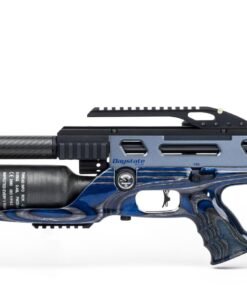
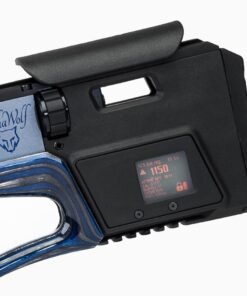
Air Rifles
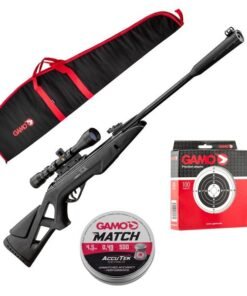
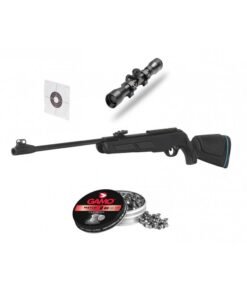
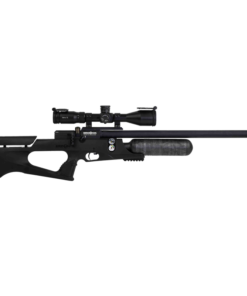
Air Rifles
Air Rifles
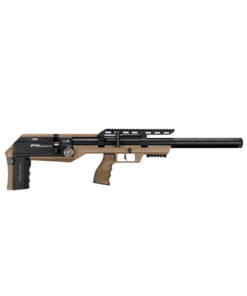
Air Rifles
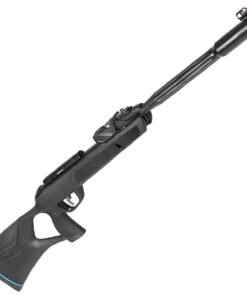
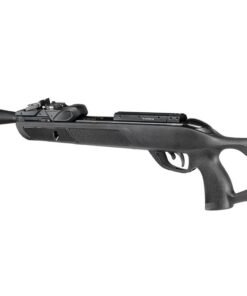
Air Rifles
Reviews
There are no reviews yet.