






Benjamin Marauder Semi-Automatic Air Rifle .22
Price range: $799.00 through $898.00
-
1x Benjamin Marauder Semi-Automatic Air Rifle .22$899.99
-
Add a Hammer De-bounce Device (HDD) – Please install the HDD on my Marauder!$99.00
Benjamin Marauder Semi-Auto PCP Air Rifle, Wood Stock
- SAM: Semi-Automatic Marauder
- Regulated, pre-charged pneumatic
- 206 BAR / 3,000 PSI fill pressure
- 10-round magazine
- 2-stage adjustable trigger
- Hardwood stock with synthetic adjustable comb
- Ambidextrous charging handle
- Integral manometer
- Male quick-disconnect Foster fitting
- Includes one magazine
- Picatinny optics rail
- Forward assist clears misloads and jams
Benjamin Marauder Semi-Automatic Air Rifle .22
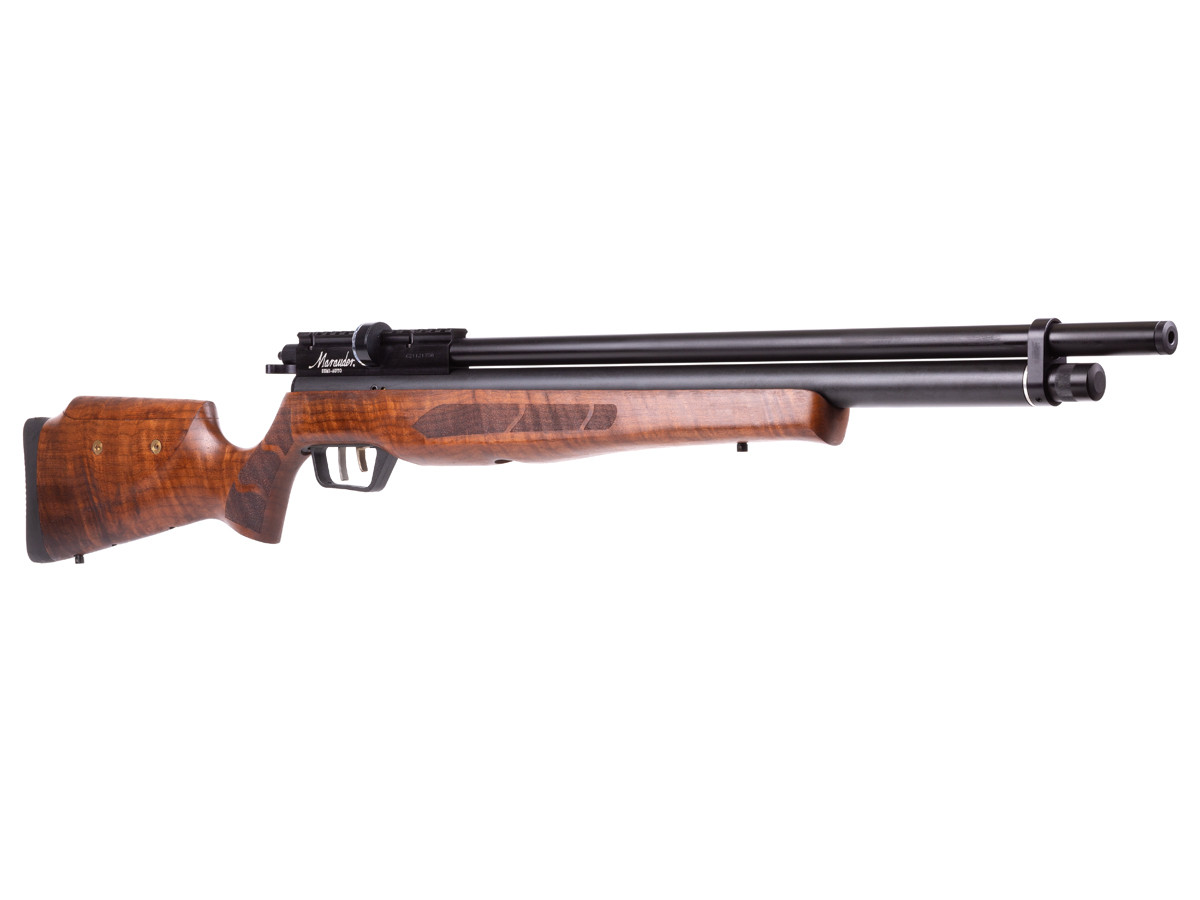
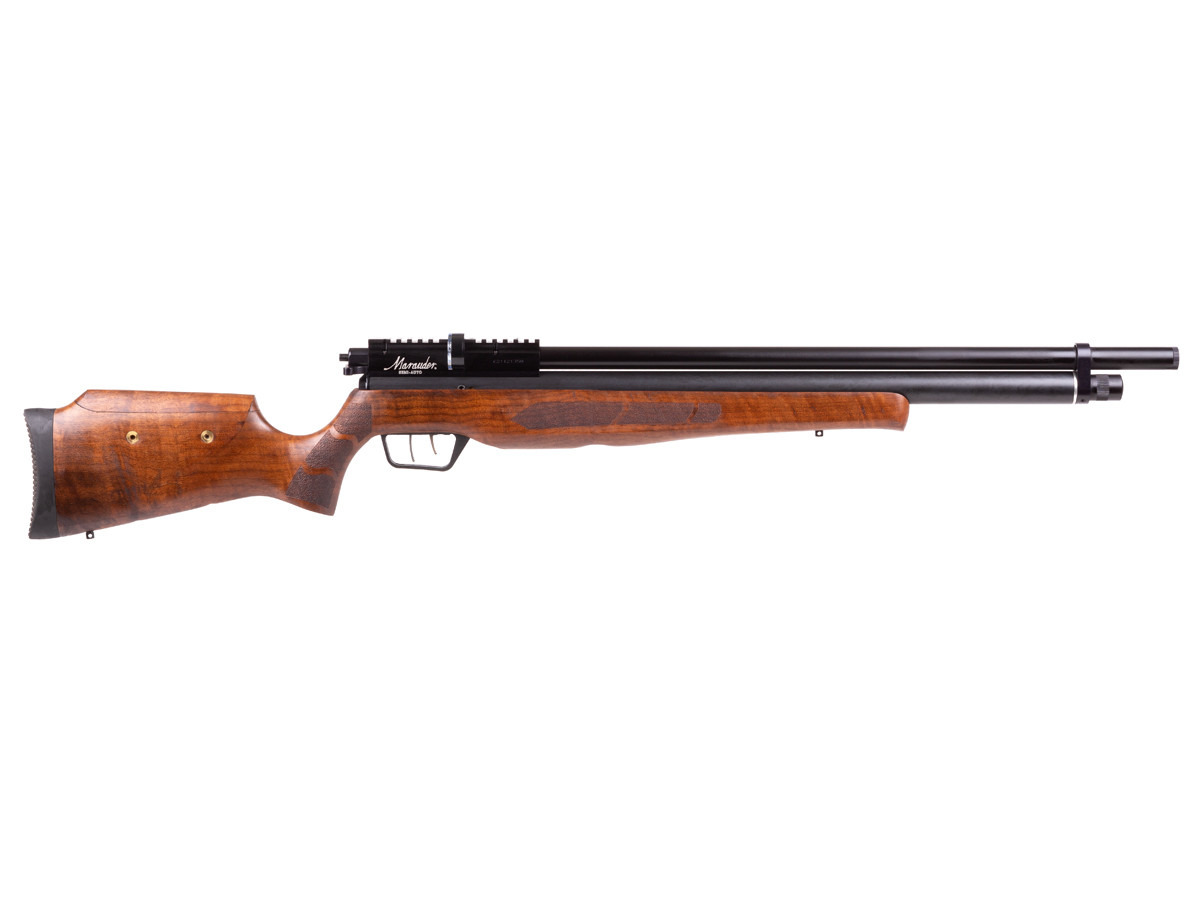
The Benjamin Marauder Semi-Automatic Air Rifle .22 has been developed around one of the best-known platforms in modern pre-charged pneumatic airgunning. The familiar Marauder concept has been combined with a regulated PCP power system, semi-automatic operation, a 10-shot rotary magazine, a shrouded rifled barrel, and an ergonomic rifle configuration intended for experienced recreational shooters, target shooters, and responsible airgun enthusiasts.
Instead of requiring the action to be manually cycled between every shot, the semi-automatic operating system has been designed so that another pellet can be prepared after each firing cycle. As a result, shooting sessions can be conducted with fewer interruptions to the firing position. At the same time, the traditional characteristics associated with the Marauder platform including regulated air delivery, adjustable ergonomics, a shrouded barrel, and multi-shot capability have been retained.
The rifle is chambered exclusively for .22-caliber pellets, while a 10-round rotary magazine is used for pellet feeding. According to the manufacturer, velocities of up to 950 feet per second can be produced, while energy output is listed at approximately 26 foot-pounds. A maximum fill pressure of 3,000 PSI is used, and as many as 60 shots per fill are stated under suitable operating conditions.
Consistency has also been supported by an integrated regulator. Rather than allowing progressively changing reservoir pressure to influence every firing cycle directly, regulated air is supplied to help maintain more repeatable pressure characteristics across a useful portion of the fill. Consequently, a more predictable shooting experience can be obtained when suitable pellets, correct fill procedures, and sound shooting fundamentals are used.
Moreover, an integrated barrel shroud has been incorporated around the rifled steel barrel. The shroud contributes to the rifle’s characteristic Marauder profile while sound suppression is incorporated into the design. A Picatinny mounting rail is also provided so that compatible optics can be installed according to the owner’s intended legal and recreational use.
For shooters who already understand PCP equipment, the Benjamin Marauder Semi-Automatic .22 can therefore be viewed as an evolution of a familiar platform rather than an entirely different concept. Increased firing convenience has been introduced without abandoning the regulated air system, multi-shot magazine, adjustable cheekpiece, substantial rifle proportions, and established Benjamin design approach for which the Marauder family has become known.
Benjamin Marauder Semi-Automatic .22 Key Features
- Caliber: .22 pellet
- Powerplant: Pre-charged pneumatic, commonly abbreviated PCP
- Operating format: Semi-automatic multi-shot configuration
- Magazine: 10-shot rotary magazine
- Maximum stated velocity: Up to 950 fps
- Maximum fill pressure: 3,000 PSI
- Approximate stated energy: 26 ft-lb
- Shot capacity: Up to approximately 60 shots per fill under suitable conditions
- Regulation: Integrated regulator for improved shot-to-shot consistency
- Barrel: Rifled steel barrel
- Barrel system: Shrouded with integrated sound suppression
- Optics interface: Picatinny mounting rail
- Overall length: Approximately 42.8 inches
- Weight: Approximately 7.2 lb depending on configuration
- Cheekpiece: Adjustable
- Safety: Lever-style safety
- Sling provision: Sling mounts included
- Warranty: Manufacturer lists a five-year warranty
Manufacturer specifications can vary by configuration and production revision, so the markings and documentation supplied with the individual rifle should always be treated as the final reference.
A Modern Interpretation of the Benjamin Marauder Platform
Since the original Benjamin Marauder became established within the PCP category, the name has become closely associated with regulated-style performance, multi-shot operation, quiet barrel architecture, practical ergonomics, and significant aftermarket familiarity.
With the semi-automatic version, that foundation has been approached differently.
Instead of requiring a conventional manual bolt movement after every discharge, a semi-automatic cycling system has been incorporated. Therefore, once the magazine has been correctly installed and the rifle has been prepared according to the manufacturer instructions, repeated shots can be taken without manually operating a traditional bolt between each discharge.
This distinction changes the overall user experience considerably.
A conventional multi-shot PCP can remain extremely efficient and accurate. However, the shooting position normally has to be disturbed slightly whenever the action is cycled. With semi-automatic operation, less movement is required between shots. Consequently, a stable cheek weld, shoulder position, grip, and viewing position through the optic can be maintained more naturally.
That characteristic can be particularly noticeable during recreational target sessions where several shots are being fired onto a paper or reactive target under controlled range conditions.
Importantly, semi-automatic operation should not be confused with unrestricted automatic firing. One firing cycle is initiated by each individual trigger operation. Responsible handling, safe muzzle direction, correct target identification, suitable backstops, eye protection, and compliance with applicable laws remain essential at all times.
Regulated PCP Performance
A central component of the Benjamin Marauder Semi-Automatic Air Rifle .22 is its regulated PCP powerplant.
PCP rifles store compressed air inside an onboard reservoir. When the rifle is fired, a controlled quantity of compressed air is released so that the pellet can be propelled through the barrel.
Because substantial pressure is involved, the entire filling and operating process must be conducted with equipment rated for the required pressure and in accordance with the manufacturer’s instructions.
In the Marauder Semi-Automatic, a fill pressure of up to 3,000 PSI is specified by Benjamin. Under appropriate conditions, as many as approximately 60 shots per fill are stated.
Actual usable shot count should not automatically be assumed to equal the published maximum in every circumstance.
Pellet weight, temperature, regulator behaviour, rifle condition, fill pressure, shooting cadence, maintenance condition, and production tolerances can all influence practical results.
Nevertheless, a regulated PCP system offers an important theoretical advantage: pressure delivered to the firing mechanism can be made more consistent even while reservoir pressure is gradually falling.
Without regulation, changing reservoir pressure can produce a more pronounced velocity curve across a fill. A properly functioning regulator reduces that variation by supplying air at a controlled pressure until reservoir pressure approaches the regulator’s operating threshold.
Consequently, greater consistency can be obtained through the rifle’s useful pressure range.
For target shooters, that consistency can be particularly valuable because vertical point-of-impact variations caused by velocity changes may be reduced.
For recreational shooting, the benefit can be experienced as a rifle that behaves more predictably across successive magazines.
However, the regulator should not be regarded as a replacement for correct technique. Pellet compatibility, optic installation, stable shooting form, barrel condition, environmental factors, and consistent aiming remain critically important.
.22-Caliber Configuration
The semi-automatic Marauder covered here is chambered for .22-caliber airgun pellets.
The .22 caliber has long occupied a practical middle position within recreational and sporting airgunning. Compared with smaller .177 pellets, .22 pellets are generally heavier when similar projectile designs are compared. As a result, velocity and retained momentum characteristics differ.
According to Benjamin, the Marauder Semi-Automatic can produce velocities reaching approximately 950 fps, with energy listed at about 26 ft-lb.
Those figures should be understood as manufacturer-rated maximum performance rather than a guarantee that every pellet will leave the barrel at precisely that velocity.
Different pellet weights and shapes produce different velocities.
For example, a lightweight pellet will generally be accelerated differently from a heavier pellet under the same power setting. Moreover, drag characteristics change according to pellet profile, head diameter, skirt geometry, manufacturing consistency, and atmospheric conditions.
Accordingly, precision should never be evaluated through velocity alone.
A slightly slower pellet that is highly compatible with a particular barrel may produce better repeatability than a lighter pellet chosen merely to maximize chronograph numbers.
For this reason, responsible target shooters commonly evaluate several appropriate pellet designs within controlled range conditions before deciding which projectile is best suited to their particular rifle.
Semi-Automatic Cycling and Shooting Rhythm
Perhaps the most distinctive aspect of the Benjamin Marauder Semi-Automatic .22 PCP air rifle is the operating cycle itself.
After one shot has been discharged, the next shot can be prepared through the rifle’s semi-automatic mechanism rather than through a manually operated bolt.
As a consequence, physical interruption between shots can be reduced.
This can create a smoother target-session rhythm.
When an optic has been mounted and a comfortable shooting position has been established, the shooter can remain behind the rifle instead of repeatedly moving a hand away from the firing grip to operate a conventional action.
Nevertheless, the faster operating capability places even greater importance on disciplined handling.
The muzzle should remain pointed toward an appropriate target area and safe backstop. Trigger contact should be avoided until a shot has intentionally been selected. The rifle should remain on safe whenever it is not immediately being fired.
Furthermore, every pellet must be accounted for.
Semi-automatic convenience should therefore be treated as an ergonomic feature rather than an invitation to careless firing.
Ten-Shot Rotary Magazine
A 10-shot rotary magazine is used with the Benjamin Marauder Semi-Automatic.
Ten .22-caliber pellets can be carried inside the compatible magazine, allowing a complete sequence of shots to be fired before the magazine needs to be removed and reloaded.
The magazine system contributes significantly to the rifle’s character.
First, repeated manual pellet placement into the breech is avoided.
Second, a consistent loading arrangement can be maintained.
Third, the semi-automatic action can function as intended because a fresh pellet is made available for each cycle.
Correct magazine loading remains important.
Pellets should be loaded in the correct orientation and should not be damaged, distorted, or forced into place. Damaged skirts can negatively influence sealing and aerodynamic consistency, while improperly seated pellets may contribute to feeding problems.
Only the correct magazine type should be used.
Benjamin separately lists a 10-round .22-caliber magazine intended specifically for the semi-automatic Marauder, so compatibility should be verified before additional magazines are acquired.
Rifled Steel Barrel
Accuracy begins with several interacting factors, and the barrel remains one of the most important.
A rifled steel barrel has been fitted to the Benjamin Marauder Semi-Automatic.
As the pellet travels through the bore, engagement with the rifling causes rotation to be imparted. Consequently, aerodynamic stability can be improved during flight.
However, barrel quality represents only one part of the precision equation.
Pellet manufacturing consistency, barrel cleanliness, crown condition, regulator consistency, optic quality, mounting stability, shooter technique, air pressure, wind, and distance all contribute to final group size.
Because pellets are manufactured with different head diameters, weights, materials, and skirt designs, performance can vary noticeably between projectile types.
Therefore, the most expensive pellet is not automatically the best pellet for every individual barrel.
Controlled testing is preferable.
Several five-shot or ten-shot groups can be fired under the same conditions. Once variables have been minimized, repeatability can be compared between pellet designs.
By approaching pellet selection methodically, a more realistic understanding of the rifle’s precision potential can be developed.
Shrouded Barrel and Integrated Sound Suppression
Sound management has long been associated with the Marauder platform.
On this model, the barrel is enclosed within a shrouded assembly that includes integrated sound suppression.
The shroud changes the way expanding air is released around the muzzle area. As a result, the sharpness of the report can be reduced compared with some unshrouded PCP designs.
Nevertheless, the rifle should never be described as silent.
Mechanical cycling, pellet impact, compressed-air discharge, environmental reflection, target construction, and surrounding surfaces all contribute to perceived sound.
In addition, local laws regarding sound moderators, barrel shrouds, airgun accessories, and airgun use can vary significantly.
Therefore, the factory configuration and applicable legal requirements should be checked before any alteration is considered.
Integrated Regulator and Consistent Pressure Delivery
The regulator deserves additional attention because it directly supports one of the defining objectives of a precision-oriented PCP rifle: repeatability.
Inside the air system, reservoir pressure will be relatively high after filling. As shots are fired, that reservoir pressure gradually decreases.
The regulator is used so that the pressure delivered downstream can remain within a more controlled range for a substantial portion of the fill.
Accordingly, the firing valve can operate under more repeatable conditions.
When projectile characteristics and shooting technique are also consistent, velocity variation can potentially be reduced.
Lower extreme spreads and standard deviations are often valued during precision-oriented airgun testing, although actual figures should always be measured rather than assumed.
A chronograph can be used by experienced owners in a suitable legal environment to evaluate velocity consistency.
However, modifications to regulator settings, hammer systems, valves, transfer systems, or other pressure-bearing components should not be undertaken casually.
The rifle has been engineered around specific pressure limits.
Factory documentation should therefore be followed, while pressure-system servicing should be handled by qualified personnel whenever appropriate.
Up to 60 Shots Per Fill
Benjamin states that the semi-automatic Marauder can provide up to 60 shots from a 3,000 PSI fill.
That potential shot count can make the rifle convenient for extended controlled-range sessions.
With a 10-round magazine, the theoretical maximum represents approximately six magazines before another full charge would be required.
Yet the phrase “up to” remains important.
Not every fill will necessarily produce sixty shots at identical useful velocity.
Environmental temperature can affect compressed-air systems.
Fill technique may also influence starting pressure.
Pellet weight, internal adjustment, regulator characteristics, maintenance condition, and firing cadence can further influence shot count.
For that reason, owners who need precise information about their individual rifle should evaluate its own pressure behaviour and velocity consistency rather than relying solely on a headline number.
3,000 PSI Maximum Fill Pressure
The air reservoir has been designed to operate with a maximum fill pressure of approximately 3,000 PSI.
This is high-pressure equipment.
Consequently, only compatible charging equipment rated for the necessary pressure should be used.
A suitable PCP hand pump, high-pressure compressor, or approved charging cylinder may be used depending on the filling arrangement supported by the rifle and the owner’s equipment.
Air should be clean and dry.
Lubricants or substances that are not specifically approved for high-pressure PCP systems should not be introduced into the fill system.
Pressure gauges should also be read carefully.
Overfilling should be avoided.
Whenever a high-pressure connector, hose, probe, fitting, or seal appears damaged, operation should be stopped until the component has been inspected.
Although PCP technology has become widely established, the pressures involved deserve the same level of respect that would be given to other high-pressure pneumatic equipment.
Adjustable Cheekpiece
Ergonomics can have a direct influence on practical precision.
If the shooter’s head position changes each time the rifle is shouldered, the relationship between the eye and optic can also change.
An adjustable cheekpiece is therefore provided on the Benjamin Marauder Semi-Automatic.
By adjusting cheek support appropriately, a more natural eye position behind a mounted optic can be established.
This becomes particularly valuable when scope rings of different heights are being used.
A comfortable cheek weld should allow the rifle to be mounted without excessive neck movement.
When the head is repeatedly positioned in approximately the same place, sight alignment can become more consistent.
Consequently, the cheekpiece should not be treated simply as a comfort feature.
It can contribute to repeatable shooting posture.
Picatinny Optics Rail
A Picatinny mounting rail has been integrated into the rifle.
The standardized rail interface allows compatible optical equipment to be securely attached when properly matched mounts are used.
Because the rifle is not dependent on conventional open sights, an optic will commonly form an important part of the setup.
The optic should be appropriate for the distances and lawful shooting activity being undertaken.
Ring height should allow sufficient clearance around the objective bell and other components.
At the same time, unnecessarily high mounts should generally be avoided because they can make cheek positioning less natural.
After installation, all mounting hardware should be checked for correct seating.
Excessive tightening should also be avoided because scope tubes and mounting components can be damaged.
Once the optic has been securely installed, sight-in should be performed against an appropriate backstop in a controlled environment.
Rifle Dimensions and Handling
The Benjamin Marauder Semi-Automatic has an overall length of approximately 42.8 inches and a listed product weight of approximately 7.2 pounds, depending on stock configuration.
These proportions place it firmly within the full-size sporting PCP category.
A rifle of this size generally offers more space for a conventional shoulder position than compact bullpup designs.
The weight can also help create a planted feel when the rifle is being supported from a bench or other stable position.
Nevertheless, total system weight increases after an optic and other lawful accessories have been added.
Balance may also change.
Therefore, owners should evaluate the entire configured rifle rather than considering bare-rifle weight alone.
Stock Options
Benjamin currently references wood and synthetic configurations for the Marauder Semi-Automatic.
Each stock material provides a different character.
Wood can provide a traditional sporting-rifle appearance. Individual grain patterns also mean that no two natural stocks appear completely identical.
Synthetic material, by contrast, can provide a more utilitarian finish and may be preferred where exposure to changing weather conditions is expected.
Neither material automatically determines mechanical accuracy.
The barrel, action, pressure system, projectile, mounting arrangement, and shooter remain more important determinants of precision.
Stock choice should therefore be based primarily on ergonomics, environmental use, appearance preference, and maintenance expectations.
Trigger System
Trigger characteristics play an important role in practical accuracy.
When excessive movement is introduced immediately before the rifle fires, the sight picture may be disturbed.
The Marauder platform incorporates an adjustable trigger arrangement, although factory documentation and the exact configuration supplied with the rifle should always be consulted before adjustment is attempted.
Trigger adjustment should be approached conservatively.
Safety mechanisms must never be defeated.
An excessively light or incorrectly adjusted trigger can create unsafe conditions.
Therefore, factory settings should be retained unless the owner understands the approved adjustment procedure.
Following any authorized adjustment, correct safety function should be confirmed before live firing.
Lever Safety
A lever-style safety mechanism is fitted.
The safety should remain engaged whenever the rifle is being handled but is not immediately intended to fire.
However, no mechanical safety should be treated as a substitute for correct handling.
The muzzle must still remain pointed in a safe direction.
A finger should remain outside the trigger area until firing has intentionally been selected.
The rifle should never be pointed toward a person, animal, vehicle, building, or object that has not been deliberately selected as a legal target with an adequate backstop.
Safe handling habits remain the primary safety system.
Practical Target-Shooting Experience
On a controlled range, the Benjamin Marauder Semi-Automatic .22 offers a distinctive experience.
Once the rifle has been filled correctly, the magazine loaded, the optic checked, and the target area confirmed safe, a stable firing position can be established.
Because the action does not need to be manually cycled after each shot, that position can be maintained more consistently.
For example, when the rifle is being fired from a supported bench position, the support hand can remain relatively stable.
The cheek can remain against the cheekpiece.
The firing hand does not need to leave the grip to cycle a bolt.
Consequently, less physical movement may be introduced between shots.
That can make the rifle particularly enjoyable for controlled paper-target sessions where group consistency is being evaluated.
Rather than focusing on firing speed, the semi-automatic system can instead be used to improve positional consistency.
A shot can be fired.
The result can be observed.
Breathing and sight alignment can be reset.
Then another carefully aimed shot can be taken without substantially altering the firing position.
In this context, semi-automatic operation becomes a precision convenience rather than merely a speed feature.
Pellet Selection and Accuracy
Every individual air-rifle barrel can display pellet preferences.
For that reason, the performance of the Benjamin Marauder Semi-Automatic should not be judged after testing only one random pellet.
Several established .22-caliber pellet types can be evaluated.
Projectile weight should be recorded.
Head diameter can also be considered where manufacturers provide it.
Groups should then be fired under similar conditions at the same distance.
If possible, wind should be minimized.
The same aiming point and support method should be used.
After multiple groups have been completed, average group size can be compared.
A pellet producing one exceptional group followed by several poor groups may not be as suitable as another design producing consistently good groups.
Repeatability should therefore be prioritized.
The barrel should also be allowed to settle after switching pellet types because different lead formulations and lubricants can leave different deposits inside the bore.
Why Pellet Quality Matters
A pellet may appear simple, but small manufacturing differences can influence performance.
The head must engage with the rifling correctly.
The skirt must seal against the bore as compressed air begins to accelerate the projectile.
Weight should remain reasonably consistent.
The projectile should also remain symmetrical.
If a pellet is badly deformed, aerodynamic stability can be compromised.
Magazine feeding can also be affected.
Therefore, damaged pellets should not be used merely because they remain capable of fitting into the magazine.
Careful handling of ammunition contributes to both reliability and precision.
Understanding the 950 FPS Rating
The up to 950 fps specification is useful, but it should be interpreted correctly.
Velocity is influenced by projectile mass.
A lightweight pellet can generally be accelerated to a higher velocity than a heavier pellet when the same powerplant is being used.
Consequently, the manufacturer’s maximum velocity should not be assumed for every pellet.
Moreover, maximum velocity does not automatically equal maximum accuracy.
Airgun pellets are generally designed to operate within particular velocity ranges.
If a pellet is driven outside the range in which its shape remains aerodynamically stable, group size may increase.
Therefore, precision testing should be prioritized over the pursuit of the highest possible chronograph reading.
Approximately 26 Foot-Pounds of Energy
Benjamin lists approximately 26 ft-lb for this model.
Muzzle energy represents the relationship between projectile mass and velocity.
It provides another way of describing output, but energy alone does not define accuracy or suitability for any particular legal use.
Projectile construction, shot placement, range, local law, environmental conditions, and the nature of the target all remain relevant.
Importantly, air rifles should not be casually compared with powder-burning firearms merely because the bore diameter is similar.
Benjamin’s own airgun-ballistics discussion notes that a .22-caliber Marauder-type air rifle and a .22 LR firearm can have dramatically different muzzle-energy levels despite sharing the nominal .22 diameter designation.
The distinction matters.
An air rifle remains capable of causing severe or fatal injury, yet its ballistic characteristics should be understood on their own terms rather than being confused with those of a firearm cartridge.
PCP Efficiency
Air efficiency represents a balance between power output and the quantity of compressed air consumed per shot.
If excessive air is released without producing useful additional velocity, efficiency can be reduced.
The regulated system used in the Marauder Semi-Automatic has been engineered around a factory operating configuration.
Under suitable conditions, the stated shot count demonstrates how regulated power delivery and reservoir capacity have been balanced.
For most users, the most reliable approach is therefore to operate the rifle within manufacturer specifications.
Unnecessary modification can compromise reliability, shot count, consistency, warranty coverage, and safety.
Consistency Across Multiple Magazines
One of the useful characteristics of a regulated PCP is that several magazines can potentially be fired before a significant performance change is experienced.
For the Marauder Semi-Automatic, a stated maximum of approximately 60 shots means multiple 10-round magazines can potentially be used during one complete fill cycle.
That arrangement can simplify range sessions.
Instead of constantly stopping to refill the rifle, attention can remain focused on shooting fundamentals.
However, reservoir pressure should still be monitored.
Owners should learn how their particular rifle behaves as the reservoir approaches the lower end of its useful pressure range.
Once the regulator can no longer maintain the intended operating pressure, velocity can begin to change more noticeably.
Semi-Automatic PCP Versus Traditional Bolt-Action PCP
A traditional bolt-action PCP remains mechanically straightforward from the user’s perspective.
After each shot, the bolt or sidelever is manually cycled so the next pellet can be loaded.
That mechanical interaction can be satisfying, and many excellent precision PCP rifles continue to use manual actions.
The semi-automatic Marauder offers a different experience.
Manual cycling between shots is removed.
Consequently, physical movement is reduced.
For some shooters, this makes target sessions feel smoother.
For others, a manual action may still be preferred because each shot is separated by a deliberate loading cycle.
Neither format should automatically be considered universally superior.
The correct choice depends on the shooter’s priorities.
The Marauder Semi-Automatic is principally differentiated by convenience and continuity between shots while retaining the compressed-air advantages associated with PCP technology.
Semi-Automatic Marauder Versus Standard Marauder
The standard Marauder and semi-automatic Marauder share a family identity, but they should not be treated as identical products.
The conventional Marauder is manually cycled.
The semi-automatic model has been designed to prepare the next shot through its own operating cycle.
Magazine compatibility can therefore differ.
Performance specifications can also differ between generations and versions.
For example, Benjamin currently lists several Marauder configurations, including regulated bolt-action models and newer-generation designs with different reservoir capacities and outputs.
Accordingly, specifications from one Marauder should not automatically be copied to another.
Model identification should always be confirmed before magazines, seals, stock components, or other replacement parts are selected.
Handling From a Supported Position
From a shooting bench, the rifle’s full-size dimensions can work comfortably.
A front rest or other appropriate support can be used where range rules allow it.
The buttstock can then be positioned consistently against the shoulder.
The cheekpiece can be adjusted so that the eye naturally aligns with the scope.
Once the rifle has been settled, minimal movement is required between successive shots.
This is one of the circumstances in which semi-automatic operation can be appreciated most clearly.
A conventional action does not have to be cycled.
The firing hand can remain in place.
The rifle’s orientation can be preserved.
Consequently, positional differences between shots may be reduced.
Handling From Standing or Field Positions
Unsupported shooting places different demands on any full-size air rifle.
Total weight, balance, optic mass, stock length, and individual body proportions become more noticeable.
Because the Marauder Semi-Automatic weighs several pounds before an optic has been installed, unsupported use may require more physical effort than firing from a supported bench position.
For that reason, owners should practice safe mounting and handling before attempting longer unsupported shooting sessions.
The adjustable cheekpiece can again be useful because head position can be optimized for the selected optic.
A suitable sling may also assist with carrying where permitted.
Optic Selection
Because a Picatinny rail is provided, a wide range of compatible optics can theoretically be installed.
However, magnification should be chosen according to realistic shooting distance and target size.
Extremely high magnification is not automatically beneficial.
A scope with excessive magnification may provide a narrow field of view and exaggerate apparent movement.
Moderate magnification can often provide a more balanced recreational target-shooting experience.
Optical clarity, repeatable adjustments, parallax management, eye relief, reticle design, and mechanical durability should all be considered.
The scope should also be mounted so that eye relief remains comfortable from the normal shooting position.
Parallax Considerations
Many airgun targets are positioned at distances shorter than those traditionally associated with centerfire rifles.
Consequently, parallax adjustment can be particularly useful on an airgun optic.
If parallax has not been correctly managed, small changes in eye position can make the reticle appear to move relative to the target.
This can produce point-of-impact errors.
An adjustable-objective or side-focus scope that can focus at appropriate airgun distances may therefore be beneficial.
The exact choice remains dependent on the intended range and shooting discipline.
Filling Equipment
Ownership of a PCP rifle requires suitable charging equipment.
This is an important distinction between PCP rifles and self-contained spring-powered designs.
Before the Marauder can be used, its onboard air reservoir must be charged.
Therefore, the owner should consider the entire PCP ecosystem rather than the rifle alone.
High-pressure hand pumps can provide independence from external electricity or cylinders, although physical effort is required.
Purpose-built PCP compressors can simplify repeated filling where appropriate electrical power and ventilation are available.
High-pressure air cylinders can also provide convenient filling when properly rated and professionally maintained.
In every case, fittings, hoses, valves, and gauges must be rated for the required pressure.
Air Quality and Moisture Management
Clean, dry air is strongly preferred in PCP equipment.
Moisture introduced into a high-pressure system can contribute to internal corrosion over time.
For that reason, appropriate moisture-control arrangements should be used where recommended by the charging-equipment manufacturer.
Compressors should be maintained according to their instructions.
Filters should be replaced at appropriate intervals.
The rifle reservoir should never be filled with an unsuitable gas.
Oxygen must never be used.
Only the gas specified by the manufacturer should be introduced.
Routine Exterior Care
Routine ownership care does not need to be complicated.
After use, external metal surfaces can be inspected for moisture, dirt, fingerprints, or visible contamination.
A suitable cloth can be used to wipe the rifle.
Wood stocks should be protected from prolonged exposure to moisture.
Synthetic stocks should also be cleaned if mud, dust, or debris has accumulated.
The Picatinny rail and optic mounting hardware can periodically be checked for loosening.
Magazine condition should also be inspected.
If feeding problems appear, damaged pellets and dirty magazines should be ruled out before more complex causes are assumed.
Barrel Cleaning
Air-rifle barrels should not automatically be cleaned according to the same schedule used for powder-burning firearms.
PCP pellets do not generate combustion fouling in the same way that firearm cartridges do.
Consequently, unnecessary aggressive cleaning can sometimes create more problems than it solves.
Cleaning should be performed using methods and products appropriate for airgun barrels.
The crown should be protected.
Hard steel cleaning equipment that could scratch the bore should not be used carelessly.
If accuracy changes suddenly, obvious mechanical issues, loose optics, pellet changes, pressure behaviour, and shooter technique should be investigated alongside barrel condition.
Seal and O-Ring Awareness
PCP rifles rely on seals to contain substantial air pressure.
Eventually, elastomeric components can wear or become damaged.
A slowly declining reservoir pressure while the rifle is stored may indicate that inspection is required.
However, owners should not automatically dismantle high-pressure components.
The system should be made safe according to manufacturer procedures before servicing.
Qualified repair personnel should be used when the owner is not trained to work on PCP pressure systems.
Only suitable seal materials and approved lubricants should be used.
Storage
Safe storage is a fundamental ownership responsibility.
The rifle should be stored so that unauthorized people cannot gain access.
Local laws governing airgun storage should be followed.
The safety should be engaged, and the rifle’s condition should be verified before storage.
Pellets and magazines should be secured appropriately.
Extreme heat, excessive moisture, and corrosive environments should be avoided.
If long-term pressure recommendations are provided in the owner’s manual, those recommendations should be followed rather than relying on generic advice.
Responsible Use
Although an air rifle may be legally classified differently from a firearm depending on jurisdiction, it should never be treated as a toy.
Benjamin/Crosman specifically warns that misuse or careless use can result in serious injury or death and that owners must comply with laws governing airgun ownership and use.
A suitable target area must therefore be established.
An adequate backstop must be used.
The area beyond the target must be considered.
Ricochet hazards should be eliminated wherever possible.
Hard surfaces, water, rocks, and unsuitable metal objects can produce unpredictable deflections.
Eye protection should be worn.
Others nearby should also be protected.
Legal Considerations
Airgun laws are not universal.
A rifle that is unrestricted in one location may require licensing, registration, age verification, transportation precautions, power restrictions, or other conditions somewhere else.
Some jurisdictions regulate airguns according to muzzle energy or velocity.
Others regulate hunting use separately from ownership.
Municipal rules may prohibit discharge even where possession is legal.
Consequently, responsibility for determining legality rests with the owner and user.
The current rules at the intended destination should always be checked before possession, transportation, modification, or use.
Why the Marauder Name Remains Recognizable
The Benjamin Marauder has remained visible in the PCP market because a recognizable combination of characteristics has repeatedly been used across the platform.
Multi-shot operation has been provided.
A shrouded barrel has been incorporated.
Adjustable ergonomics have been emphasized.
PCP performance has been combined with practical sporting-rifle dimensions.
Over time, additional versions have been introduced.
Benjamin currently markets multiple Marauder configurations, including traditional bolt-action models, regulated versions, synthetic-stock models, the semi-automatic version, and the newer Marauder Gen3.
The semi-automatic variant therefore occupies a specific position within that broader family.
Its central distinction is not simply power.
Instead, its identity is created by the combination of regulated PCP operation and automatic cycling between individual trigger pulls.
Build Philosophy
The Marauder Semi-Automatic has been designed around functional sporting-airgun architecture.
The full-size stock supports a conventional shoulder position.
The adjustable cheekpiece accommodates optic height.
The Picatinny rail supports modern optics mounting.
The shrouded steel barrel contributes to accuracy and report management.
The rotary magazine provides multi-shot capability.
The regulator assists with pressure consistency.
Together, those elements create a system rather than a collection of isolated specifications.
That systems approach matters because practical performance always depends on how components interact.
A high-quality barrel cannot compensate for badly damaged pellets.
A regulator cannot compensate for a loose scope mount.
An adjustable cheekpiece cannot improve precision if it has been positioned incorrectly.
The best results are therefore obtained when the rifle, optic, pellet, support technique, air system, and shooter are treated as parts of the same setup.
Performance for Recreational Precision Shooting
For recreational precision shooting, a predictable rifle is generally more useful than one that merely produces impressive headline specifications.
The Marauder Semi-Automatic’s regulated air delivery has been designed with repeatability in mind.
The multi-shot magazine reduces interruptions.
The semi-automatic action minimizes manual cycling.
The shrouded barrel contributes to a more controlled shooting experience.
The adjustable cheekpiece allows the rifle to be better fitted around the optic.
Consequently, a stable sequence can be established.
The rifle can be shouldered.
The breathing cycle can be controlled.
The sights can be settled.
The trigger can be operated.
The result can be observed.
Then the next deliberate shot can be prepared without manually working an action.
For target shooters, that workflow can be one of the most appealing characteristics of the design.
Suitable Experience Level
The Marauder Semi-Automatic should not be considered a basic toy or casual introductory product.
PCP equipment requires knowledge of high-pressure filling.
Magazine operation must be understood.
Optic setup is usually required.
Pressure should be monitored.
Safe target environments must be established.
Routine equipment inspection is also necessary.
Consequently, the rifle is more naturally suited to responsible owners who understand—or are prepared to learn—the fundamentals of PCP operation.
New PCP users should read the complete manual before the rifle is handled or filled.
Where uncertainty exists, instruction should be obtained from a knowledgeable and qualified source.
The Importance of the Owner’s Manual
Online descriptions can provide a useful overview, but they cannot replace the manual supplied by the manufacturer.
The manual contains model-specific procedures.
Safety operation is explained.
Filling requirements are defined.
Magazine procedures are shown.
Maintenance restrictions can be identified.
Any relevant troubleshooting information can also be consulted.
Because product revisions can occur, the manual supplied with the individual rifle should take precedence over generic online information.
Warranty Coverage
Benjamin currently states that the Marauder Semi-Automatic is backed by a five-year warranty.
Warranty conditions should be reviewed directly because exclusions, geographic restrictions, proof-of-purchase requirements, service procedures, and modification restrictions may apply.
Unauthorized internal modifications can potentially affect warranty eligibility.
Therefore, warranty documentation should be retained together with purchase records and the rifle’s identification information.
Long-Term Ownership
A PCP rifle represents more than the rifle itself.
Charging equipment is required.
Pellets need to be selected.
Magazines must be maintained.
Optics may be installed.
High-pressure components must be respected.
Over time, seals can require service.
For that reason, long-term satisfaction is generally improved when the complete ownership system has been considered from the beginning.
The Marauder platform benefits from having been present in the airgun market for many years, while Benjamin/Crosman continues to maintain product information and parts documentation for several Marauder models.
However, parts compatibility should always be confirmed by exact model number rather than assumed simply because the Marauder name is shared.
Benjamin Marauder Semi-Automatic .22 FAQ
Is the Benjamin Marauder Semi-Automatic a PCP air rifle?
Yes. A pre-charged pneumatic powerplant is used.
Compressed air is stored inside the rifle’s reservoir and is released in controlled quantities during firing.
The reservoir is filled independently using compatible high-pressure air equipment.
What caliber is the Benjamin Marauder Semi-Automatic?
The model discussed here is chambered for .22-caliber pellets.
Correct .22 airgun pellets should be used according to the manufacturer’s instructions.
Is the Benjamin Marauder actually semi-automatic?
Yes.
The semi-automatic version has been designed so that the rifle does not require manual bolt cycling after every individual shot.
One trigger operation is still required for each firing cycle.
How many pellets does the magazine hold?
The compatible rotary magazine holds 10 .22-caliber pellets.
The magazine used by the semi-automatic Marauder should not automatically be assumed to be interchangeable with magazines from every other Marauder configuration.
Benjamin separately lists a 10-round magazine for the semi-automatic model.
What is the maximum velocity?
Benjamin lists velocities of up to 950 fps for the semi-automatic Marauder .22.
Actual velocity varies according to pellet characteristics and operating conditions.
How much energy does it produce?
Approximately 26 ft-lb is listed by Benjamin for the semi-automatic .22 configuration.
Actual measured output can vary with pellet mass, velocity, environmental conditions, and rifle condition.
What fill pressure is required?
The rifle is designed around a maximum fill pressure of approximately 3,000 PSI.
Only properly rated filling equipment should be used.
How many shots are available from one fill?
Benjamin states that up to approximately 60 shots per fill can be obtained.
Actual useful shot count can vary.
Is the Benjamin Marauder Semi-Automatic regulated?
Yes.
An integrated regulator is used to support more consistent air delivery across the useful portion of the reservoir fill.
Does the rifle have a rifled barrel?
Yes.
A rifled steel barrel is fitted.
Is the barrel shrouded?
Yes.
The barrel is shrouded, and integrated sound suppression forms part of the manufacturer’s design.
Is the rifle silent?
No.
The shroud can reduce perceived discharge noise, but mechanical noise, pellet impact, compressed-air release, surroundings, and other factors remain audible.
The term “silent” should therefore not be used literally.
Can a scope be mounted?
A Picatinny mounting rail is supplied for compatible optics.
Ring dimensions and optic specifications should be matched correctly.
Does it include iron sights?
The manufacturer does not list conventional front or rear sights for this configuration.
An appropriate optic is therefore commonly used.
How long is the rifle?
Overall length is listed at approximately 42.8 inches.
How much does the Benjamin Marauder Semi-Automatic weigh?
The manufacturer’s current product information lists a product weight of approximately 7.2 pounds, although configuration should always be checked.
The installed optic and accessories will increase total system weight.
Does it have an adjustable cheekpiece?
Yes.
An adjustable cheekpiece is included so that head position can be better aligned with the selected optic.
Does the rifle have sling mounts?
Benjamin lists sling mounts as included.
What type of safety is used?
A lever-style safety is specified.
The safety should remain engaged until the rifle is deliberately ready to be fired.
Is a regulator useful on a PCP rifle?
A regulator helps control the pressure supplied from the reservoir to the firing system.
Consequently, pressure conditions can remain more consistent across multiple shots.
This can support more repeatable velocity and point of impact when other variables remain controlled.
Does semi-automatic operation make the rifle more accurate?
Not automatically.
Mechanical accuracy remains dependent on barrel quality, ammunition compatibility, pressure consistency, optic stability, and many other factors.
Semi-automatic operation can, however, reduce the amount of physical movement required between shots.
As a result, a stable shooting position may be easier to preserve.
What pellets should be used?
Only correct .22-caliber airgun pellets should be used.
Because individual barrels can show projectile preferences, several suitable pellet designs may need to be evaluated on a safe controlled range.
Damaged pellets should be discarded.
Are heavier pellets always more accurate?
No.
Pellet weight is only one variable.
Head diameter, skirt design, consistency, barrel compatibility, velocity, aerodynamic profile, and environmental conditions can all affect precision.
Should the fastest pellet always be chosen?
No.
Maximum velocity and maximum precision are not necessarily obtained with the same projectile.
Accuracy should be evaluated through repeatable grouping rather than velocity alone.
Does the rifle need CO₂ cartridges?
No.
The Marauder Semi-Automatic uses a PCP compressed-air system rather than disposable CO₂ cartridges.
Does a PCP rifle need a pump or compressor?
Yes, some form of compatible high-pressure charging source is required.
That may consist of a properly rated PCP hand pump, compressor, or approved high-pressure air cylinder depending on the owner’s equipment and circumstances.
Can an ordinary workshop air compressor be used?
No ordinary low-pressure shop compressor should be assumed suitable.
PCP rifles operate at pressures far beyond those produced by typical workshop compressors.
Only properly rated equipment designed for the required high-pressure application should be used.
Can oxygen be used to fill a PCP rifle?
No.
Only the gas specified by the manufacturer should be used.
Oxygen and other unsuitable gases must never be substituted.
Does the barrel need to be cleaned after every shooting session?
Not necessarily.
Airgun barrels do not experience powder combustion fouling in the same manner as firearm barrels.
Cleaning should be performed when appropriate and using methods suitable for an airgun barrel.
Can the regulator be adjusted?
Internal pressure-system adjustments should not be undertaken casually.
Factory documentation and warranty conditions should be consulted before any adjustment or internal work is performed.
Qualified service should be obtained whenever appropriate.
How should the rifle be stored?
The rifle should be secured against unauthorized access, kept in an appropriate environment, and stored according to manufacturer instructions and applicable law.
The safety should be engaged, and the rifle’s condition should be verified before storage.
Is an air rifle dangerous?
Yes.
High-powered air rifles can cause severe injury or death.
They should never be treated as toys.
Appropriate backstops, eye protection, safe muzzle direction, controlled access, and lawful operation are required.
Can the Marauder Semi-Automatic be used anywhere?
No.
Airgun discharge may be restricted by national, state, provincial, regional, or municipal regulations.
Local requirements must be checked before the rifle is used.
Is the .22 Marauder the same as a .22 firearm?
No.
The nominal bore diameter may be similar, but the operating system, projectile, energy level, legal classification, and ballistic characteristics can differ dramatically.
Benjamin itself notes major energy differences between .22-caliber PCP air rifles and .22 LR firearms.
What makes the semi-automatic Marauder different from the regular Marauder?
The primary distinction is action operation.
Traditional Marauder rifles use manual bolt or sidelever operation depending on model.
The semi-automatic version cycles between individual trigger pulls without requiring the action to be manually operated after each shot.
Is the magazine the same as the standard Marauder magazine?
Compatibility should not be assumed.
Benjamin specifically offers a .22-caliber 10-shot magazine for the semi-automatic Marauder.
The exact rifle model should therefore be checked before magazines are selected.
Is the Benjamin Marauder Semi-Automatic suitable for precision target shooting?
The regulated PCP system, rifled barrel, adjustable cheekpiece, optics rail, and reduced movement between shots can make the design well suited to responsible recreational precision shooting.
Final accuracy depends heavily on pellet selection, optic setup, environmental conditions, and shooting technique.
How should accuracy be tested?
A controlled range should be used.
A secure backstop should be established.
The same distance, support method, aiming point, and environmental conditions should be maintained as closely as possible.
Several groups should then be fired with each suitable pellet type.
Repeatability should be evaluated rather than relying on a single exceptional group.
Why does my pellet choice affect the rifle so much?
Pellets vary in weight, head diameter, skirt geometry, alloy composition, balance, and aerodynamic profile.
Each barrel can therefore interact differently with different pellets.
What happens when reservoir pressure becomes too low?
Once reservoir pressure approaches the point at which the regulator can no longer maintain the intended pressure, performance can begin to change.
The rifle should then be refilled according to manufacturer procedure.
Can the rifle be overfilled to get more shots?
No.
The manufacturer’s pressure limit should never be exceeded.
Overfilling high-pressure equipment creates unnecessary risk and can damage components.
Does temperature influence PCP performance?
Temperature can influence compressed-air systems and pressure behaviour.
The rifle and charging equipment should therefore be operated and stored within manufacturer-recommended conditions.
Is the Benjamin Marauder Semi-Automatic supplied with a warranty?
Benjamin currently lists a five-year warranty for the model.
The applicable warranty terms should be reviewed for the specific market and individual product.
Final Product Overview
The Benjamin Marauder Semi-Automatic Air Rifle .22 represents a distinctive branch of the established Marauder PCP platform.
A regulated compressed-air powerplant has been combined with a 10-round rotary magazine and semi-automatic cycling.
A .22-caliber rifled steel barrel has been enclosed inside a shrouded assembly.
Integrated sound suppression has been incorporated.
A Picatinny rail has been provided for optics.
An adjustable cheekpiece has been included to support repeatable head positioning.
A maximum fill pressure of approximately 3,000 PSI has been specified.
Velocities of up to approximately 950 fps have been published.
Energy is listed around 26 ft-lb.
Up to approximately 60 shots can be obtained from a fill under suitable conditions.
Taken together, those characteristics create a full-size regulated PCP rifle designed around repeated, controlled shooting without the interruption of manually cycling an action between individual shots.
Its greatest distinction is therefore not represented by one specification alone.
Instead, the platform is defined by the relationship between regulated pressure delivery, multi-shot magazine feeding, semi-automatic operation, adjustable ergonomics, optics compatibility, and the established Marauder barrel system.
For responsible owners who understand PCP equipment, this combination provides an interesting alternative to conventional manually cycled air rifles.
Nevertheless, performance should always be approached methodically.
Suitable pellets should be tested.
Optics should be mounted correctly.
The reservoir should be filled only with appropriate high-pressure equipment.
Pressure limits should be respected.
The rifle should be inspected and maintained according to manufacturer recommendations.
Above all, secure storage, appropriate backstops, correct muzzle discipline, eye protection, controlled access, and compliance with local law should remain fundamental parts of ownership.
When these responsibilities are respected, the engineering characteristics of the Benjamin Marauder Semi-Automatic .22 can be evaluated in the context for which they were designed: controlled, lawful and technically informed airgun shooting.
Why This Rifle Stands Out as a Better Choice
Choosing a quality PCP air rifle involves more than simply comparing velocity numbers or magazine capacity. A genuinely well-rounded rifle should combine consistent air delivery, dependable mechanical operation, comfortable handling, manageable maintenance, and predictable shooting characteristics. This model brings those elements together in a platform designed for experienced recreational shooters and target enthusiasts who value repeatability and convenience.
Semi-Automatic Operation Reduces Unnecessary Movement
One of the most noticeable advantages is the semi-automatic operating system. Instead of manually cycling an action after every shot, the rifle prepares the next pellet automatically after each trigger cycle.
This makes a significant difference during controlled target sessions.
Because less hand movement is required, the shooter can maintain a more consistent grip, cheek position, shoulder placement, and sight picture. Maintaining the same position from shot to shot is one of the basic principles of repeatable shooting, so reducing unnecessary movement can make the entire experience feel smoother and more controlled.
The system is particularly useful when shooting from a bench or supported position because the firing hand can remain relatively stable between shots.
Rather than rushing through a magazine, the design allows each shot to be taken deliberately while avoiding the physical interruption caused by manually operating a bolt or sidelever.
Regulated Air Delivery Supports Consistency
Another major advantage is the regulated PCP system.
Compressed-air rifles gradually lose reservoir pressure as shots are fired. Without regulation, that pressure change can influence velocity more noticeably throughout a fill.
A regulator helps control the air pressure supplied to the firing system.
Consequently, the rifle can maintain more consistent operating conditions across a useful portion of the air reservoir.
Consistency matters because changing velocity can affect point of impact.
When the same pellet, shooting distance, optic setup, and technique are maintained, more stable pressure delivery can help produce more repeatable results.
This makes the rifle particularly suitable for shooters who prefer predictable behavior instead of constantly adjusting to changes as the reservoir pressure falls.
Practical Shot Capacity for Longer Sessions
A large usable shot count is another practical advantage.
With enough compressed air available for multiple magazines under suitable conditions, shooting sessions can continue without frequent refilling interruptions.
That becomes especially useful at ranges where the shooter wants to concentrate on grouping, optic adjustment, pellet testing, or general practice.
Instead of stopping repeatedly to reconnect filling equipment, attention can remain focused on shooting fundamentals.
The multi-shot magazine system also complements this efficiency.
Several pellets can be prepared at once, reducing the need to manually insert a projectile before every individual shot.
Together, the magazine capacity and air reservoir create a setup that is convenient without becoming unnecessarily complicated.
Full-Size Ergonomics Provide a Stable Feel
Handling can have just as much influence on user satisfaction as raw performance.
A full-size rifle provides a familiar shoulder-mounted layout that many shooters find comfortable.
The weight helps the rifle feel planted when supported from a bench, while the stock provides enough surface area for a consistent shoulder position.
An adjustable cheekpiece improves the setup further.
Different optics and mounting rings place the sight line at different heights. Without cheek adjustment, a shooter may need to lift or lower the head unnaturally to achieve a clear view through the scope.
With an adjustable cheekpiece, head position can be matched more closely to the optic.
As a result, eye alignment can become more natural and repeatable.
That can improve comfort during longer sessions while also helping maintain a consistent sight picture.
Convenient Optics Compatibility
The integrated mounting rail provides flexibility when selecting compatible optics.
Rather than limiting the owner to one fixed sighting arrangement, different scopes can be chosen according to intended target distance, magnification preference, reticle style, and budget.
This allows the rifle to be adapted for recreational target shooting, controlled range practice, and other lawful sporting uses.
A quality optic can complement the rifle’s regulated power system by making precise aiming easier.
However, the advantage comes from flexibility rather than simply adding the highest-powered scope available.
A moderate, clear optic with suitable parallax adjustment can often provide a more useful setup than an excessively large scope.
Rifled Barrel Supports Precision
A well-made rifled barrel is fundamental to repeatable pellet flight.
As each pellet travels through the bore, the rifling imparts spin, helping stabilize the projectile in flight.
Combined with consistent pressure delivery and suitable ammunition, this creates a strong foundation for accurate shooting.
Pellet compatibility remains important.
Different pellet weights, head sizes, skirt shapes, and manufacturing tolerances can produce different results from the same barrel.
Therefore, one of the strengths of this platform is that its performance can be evaluated methodically.
By testing several appropriate pellets under consistent range conditions, owners can identify which projectile produces the most repeatable groups.
Shrouded Barrel Improves Shooting Comfort
The shrouded barrel is another useful design characteristic.
Compressed-air rifles still produce sound, but a shrouded system can soften the report compared with some unshrouded designs.
This can make recreational target shooting more comfortable where local regulations permit use.
The rifle should never be considered silent, because mechanical movement, compressed air, and pellet impact remain audible.
Nevertheless, reducing unnecessary report contributes to a more refined shooting experience.
Balanced Performance Instead of One Extreme Specification
A major reason this type of rifle appeals to experienced airgun owners is that it does not rely on one exaggerated specification.
Performance is balanced across several areas.
Air capacity is useful.
Magazine capacity is practical.
Power output is substantial for the platform.
The rifle remains regulated.
Optics compatibility is provided.
Ergonomics can be adjusted.
The action reduces manual movement between shots.
This balanced engineering approach can be more useful than choosing a rifle simply because it produces the highest velocity number.
Maximum speed does not automatically equal maximum precision.
Likewise, maximum power does not automatically create the best shooting experience.
For recreational target shooting, predictable behavior is often more valuable.
Easier Shooting Rhythm for Target Practice
The semi-automatic cycling system creates a natural rhythm during range sessions.
A shooter can establish a stable position, aim carefully, fire, observe the result, reset breathing, and take another deliberate shot without manually disturbing the action.
This can make group testing more comfortable.
It can also make optic adjustment sessions more efficient because several carefully controlled shots can be fired while maintaining essentially the same firing position.
The advantage is not about firing as quickly as possible.
Instead, it is about reducing unnecessary mechanical interruption.
A Strong Platform for Experienced PCP Users
The rifle is particularly suitable for people already familiar with PCP equipment or those prepared to learn proper high-pressure airgun handling.
It requires an appropriate filling source, correct pressure monitoring, safe storage, proper pellet selection, and routine inspection.
Those requirements are slightly more involved than owning a simple spring-powered air rifle, but they also provide important advantages.
PCP rifles generally offer smoother firing characteristics because heavy spring movement is absent.
This can make the shooting cycle feel calmer and more predictable.
Regulation adds another level of consistency.
Semi-automatic operation then further improves convenience.
Long-Term Ownership Value Comes From the Complete System
A good rifle should remain useful after the initial excitement has passed.
Long-term value comes from practical ergonomics, available magazines, straightforward optic mounting, established maintenance practices, reliable pressure-system design, and a platform that can support many controlled shooting sessions.
This model brings those characteristics together.
Rather than being built around novelty alone, it combines mature PCP technology with a more convenient action system.
That combination can make it appealing to shooters who want something more refined than a basic manually cycled platform while still retaining the familiar characteristics of a traditional full-size air rifle.
Ultimately, what makes this rifle stand out is balance.
Comfort has been considered alongside performance.
Convenience has been added without removing the need for deliberate shooting technique.
Pressure consistency supports repeatability.
The magazine reduces interruptions.
The adjustable stock components improve fit.
The barrel and optics interface provide a solid foundation for controlled precision shooting.
For responsible users who value consistency, comfort, efficient operation, and a well-integrated PCP design, these characteristics make the platform especially compelling within the modern air-rifle category.
Benjamin Marauder Semi-Automatic Air Rifle .22
The Benjamin Marauder Semi-Automatic Air Rifle .22 represents a refined approach to modern pre-charged pneumatic shooting. Built around the established Marauder platform, it combines regulated compressed-air performance, semi-automatic cycling, a 10-shot rotary magazine, an adjustable shooting interface, and a shrouded rifled steel barrel in one full-size sporting configuration.
For people researching an air gun, the terminology surrounding modern pneumatic equipment can sometimes become confusing. Searches may include phrases such as air guns meaning, what is an airgun, type of air gun, types of air guns, types of air rifles, or pcp rifle meaning. In straightforward terms, this particular platform belongs to the PCP category. PCP stands for pre-charged pneumatic, which means compressed air is stored inside an onboard reservoir before shooting rather than being generated by a spring mechanism or supplied by disposable CO₂ cartridges.
According to Benjamin, this model is chambered in .22 caliber, operates from a maximum 3,000 PSI fill, uses a 10-shot rotary magazine, can reach velocities of up to 950 fps, and produces approximately 26 ft-lb of muzzle energy. The manufacturer also states that up to approximately 60 shots may be obtained from one fill under suitable conditions.
These figures help define the platform, although headline specifications should always be interpreted alongside pellet choice, environmental conditions, fill pressure, equipment condition, and individual shooting technique.
Understanding the Modern PCP Air Gun Platform
Among the many types of pellet guns, PCP rifles have become recognized for relatively smooth firing behavior and the ability to store enough compressed air for multiple shots.
Unlike a conventional spring-powered rifle, the system does not require a large spring or gas piston to be compressed before every discharge.
Instead, energy is stored pneumatically.
This distinction also separates the platform from a gas ram rifle, an air gun electric system, or a co2 pellet rifle.
A PCP should also not be confused with a CO2 pistol replica, a revolver air gun pellet co2 platform, or products such as the Walther CP88 Competition, Smith and Wesson CO2 pistol, Umarex RP5 CO2 pellet gun, or SA 10 pistol.
Those designs may all fall broadly within recreational air-powered shooting, yet the mechanisms are fundamentally different.
The Marauder Semi-Automatic stores compressed air at much higher pressure than a disposable CO₂ cartridge system.
As a result, proper filling equipment is required.
A purpose-built PCP compressor, suitable high-pressure hand pump, or correctly rated air cylinder may be used depending on the owner’s setup and the manufacturer instructions.
Regulated Pressure Delivery
One of the more significant technical elements is the integrated regulator.
Reservoir pressure naturally decreases as a PCP rifle is fired.
If no regulation is present, the amount of pressure reaching the firing valve can vary more significantly over the course of a fill.
A regulator moderates that process by delivering air within a more controlled pressure range.
Therefore, shot behavior can remain more consistent for a useful portion of the reservoir charge.
Consistency is particularly relevant when target groups are being evaluated.
When pellet characteristics, optic setup, firing position, environmental conditions, and aiming technique remain controlled, more stable air delivery reduces one variable in the shooting system.
This is one reason regulated PCP designs are frequently considered when people research modern types of air rifles.
However, a regulator should not be viewed as an automatic guarantee of accuracy.
Accuracy is produced by several interacting factors.
The barrel must be suitable.
Pellets must be consistent.
Optics need to be secure.
The rifle should be supported properly.
The shooter must maintain repeatable technique.
Pressure regulation simply contributes another layer of predictability.
Semi-Automatic Cycling
The defining characteristic of this specific Marauder configuration is its semi-automatic operating format.
Traditional PCP designs generally require some form of manual bolt or sidelever movement after each shot.
The semi-automatic Marauder reduces that interruption by cycling the system between trigger operations.
One trigger operation still corresponds to one shot.
This allows the shooter’s hand position, cheek weld, and visual alignment through the optic to remain more consistent between shots.
That difference can be noticeable during target shooting with air rifles.
Instead of removing the firing hand or disrupting body position to operate an action manually, a shooter can maintain a more stable position while preparing for the next deliberate shot.
Semi-automatic operation should nevertheless be approached with discipline.
The ability to cycle without manual bolt movement should never encourage careless firing.
The muzzle must always remain in a safe direction.
A finger should remain outside the trigger area until a shot has deliberately been selected.
The rifle should be used only against an appropriate target with an effective backstop in a lawful environment.
10-Shot Rotary Magazine
A 10-round rotary magazine is used with the .22-caliber semi-automatic configuration.
This magazine arrangement supports repeated shooting without requiring a pellet to be manually inserted into the breech after every shot.
Pellets should be inspected before loading.
Bent skirts, deformed heads, or visibly damaged projectiles can negatively affect feeding and accuracy.
A pellet tin should also be stored in conditions that protect its contents from crushing, excessive contamination, and moisture.
The magazine used for this semi-automatic model should not automatically be assumed compatible with every Marauder generation.
That distinction matters because the standard regulated Marauder also uses a multi-shot system but follows a conventional bolt-action format. The current regulated version is separately listed by Benjamin with its own specifications and magazine arrangement.
.22-Caliber Pellet Performance
The rifle uses .22-caliber airgun pellets rather than 4.5 mm BB ammunition or a conventional metal BB pellet.
This distinction is important.
A diabolo-style airgun pellet is shaped differently from a spherical BB.
Its head and skirt are designed to interact with the bore and rifling.
Therefore, a metal pellet, a bb metal bullet, and a traditional lead airgun pellet should not be treated as interchangeable terms even though search queries may use them loosely.
The manufacturer lists maximum velocity at approximately 950 fps for this model.
Actual velocity depends on projectile mass and other variables.
A heavier pellet will generally travel at a different velocity from a much lighter pellet under identical pressure conditions.
For that reason, the fastest measured pellet is not automatically the most suitable projectile.
Repeatable grouping provides a more useful evaluation of barrel compatibility than a single maximum chronograph reading.
Rifled Steel Barrel
The barrel is manufactured from steel and incorporates rifling.
Rifling imparts rotational stability as the pellet moves down the bore.
This rotation can help the pellet maintain a more stable orientation during flight.
However, rifling works in combination with pellet geometry.
Head diameter, weight consistency, skirt quality, surface condition, and pellet balance can all influence results.
Consequently, accuracy testing should be performed systematically rather than assuming that one pellet brand or weight must automatically perform best.
Several suitable projectiles may be tested under identical conditions.
Group size can then be compared over multiple strings.
Repeatability matters more than one exceptional result.
Shrouded Barrel Design
Benjamin incorporates a shrouded barrel with integrated sound suppression into the design.
A shroud influences the way expanding compressed air behaves as the pellet exits the bore.
This can moderate the sharpness of the firing report compared with some unshrouded PCP rifles.
The rifle should not be considered silent.
Mechanical operation, pellet impact, compressed-air release, environmental reflection, and target construction all contribute to perceived noise.
Moreover, laws surrounding airgun sound suppression components differ between jurisdictions.
Factory configuration should therefore be preserved unless changes are explicitly lawful and approved.
Picatinny Mounting Rail
A Picatinny rail is provided for compatible optics.
That mounting system offers flexibility when selecting a scope.
Searches involving mil dot scope, mil dot, and optic terminology commonly arise because reticle choice plays an important role in target shooting.
A mil-dot style reticle can provide reference markings for hold points and ranging applications when the shooter understands the optic correctly.
However, a sophisticated reticle does not compensate for poor mounting or incorrect parallax adjustment.
The optic must be mounted securely.
Eye relief should be comfortable.
Ring height should permit adequate objective clearance without forcing the shooter’s head excessively high.
Parallax should also be considered, especially at the shorter distances commonly associated with airgun shooting.
Adjustable Cheekpiece
The adjustable cheekpiece allows the shooter’s head position to be matched more closely to the optic height.
This feature contributes to comfort and repeatability.
When a scope is mounted high above the bore, a fixed comb can sometimes force the shooter to raise the head unnaturally.
An adjustable cheekpiece helps reduce that problem.
The objective is to achieve a repeatable cheek weld without excessive neck movement.
When head placement remains consistent, visual alignment through the optic is also more repeatable.
This can support more consistent target shooting.
Full-Size Rifle Dimensions
Benjamin currently lists the rifle at approximately 42.8 inches overall and around 7.2 pounds before optics or accessories are added.
Those dimensions place it within a conventional full-size sporting-rifle configuration rather than a compact bullpup layout.
A full-size stock provides familiar shoulder geometry.
The weight can create a planted feel from a supported position.
However, optics and accessories will increase total mass.
Balance can also change depending on the scope and mounting hardware selected.
PCP Meaning Compared With Other Airgun Systems
The phrase pcp rifle meaning is commonly searched by people who are new to pneumatic shooting.
A PCP rifle stores compressed air inside a reservoir.
This differs from several other common platforms.
Spring-Piston Air Rifles
A spring-piston rifle stores mechanical energy in a spring.
When the trigger is operated, the spring drives a piston forward.
Air is compressed rapidly behind the pellet.
Gas-Ram Air Rifles
A gas ram design replaces the coil spring with a sealed gas strut.
The principle remains similar in that the action must be cocked before each shot.
CO₂ Airguns
A CO₂ platform uses pressurized carbon dioxide.
Examples in the broader market include replica pistols and revolvers.
Their performance characteristics can be more temperature sensitive than compressed-air PCP systems.
Multi-Pump Pneumatic Airguns
These designs use several manual pump strokes to compress air before shooting.
PCP Airguns
A PCP uses a high-pressure reservoir that can provide multiple shots after filling.
The Marauder Semi-Automatic belongs to this final category.
What Is a Break Barrel Pellet Gun?
Another common informational query is what is a break barrel pellet gun.
A break-barrel rifle uses the barrel itself as a lever to cock the powerplant.
The barrel is pivoted downward.
The spring or gas piston is compressed.
A pellet is inserted into the breech.
The barrel is then returned to the firing position.
This operating system is fundamentally different from a PCP.
The semi-automatic Marauder does not require the barrel to be broken open between shots.
Compressed air has already been stored in its reservoir.
Air Gun Maintenance
Proper air gun maintenance is particularly important with PCP systems because they operate at high pressure.
Routine exterior maintenance can include wiping exposed metal surfaces, checking the stock for damage, inspecting the magazine, and ensuring optics remain secure.
Owners should also monitor the reservoir for unexpected pressure loss.
A substantial pressure drop during storage may indicate a seal issue.
The rifle should not be disassembled casually.
High-pressure pneumatic systems can contain considerable stored energy.
Any pressure-bearing servicing should follow the manufacturer procedure or be performed by qualified personnel.
Airgun Lubricant
The term airgun lubricant deserves careful treatment.
Not every lubricant is suitable for PCP equipment.
Products that may be acceptable in other mechanical systems can behave differently under high pressure.
Only lubricants specifically approved for the relevant components should be used.
Petroleum-based oils should not automatically be introduced into high-pressure air systems.
The manufacturer’s manual should always be consulted before internal lubrication.
Safe Compressed-Air Filling
The rifle is designed around a maximum fill pressure of 3,000 PSI.
Only equipment rated for that pressure should be used.
A typical workshop compressor does not produce the required pressure and should not be adapted casually.
Likewise, oxygen or other inappropriate gases must never be substituted.
Clean, dry compressed air should be used according to the manufacturer’s requirements.
Fill connections should be inspected.
Hoses should not be used if damaged.
Fittings should be fully seated.
The pressure gauge should be observed carefully.
Overfilling should never be used in an attempt to increase shot count.
Approximately 60 Shots Per Fill
Benjamin states that up to 60 shots may be obtained from a 3,000 PSI fill.
With a 10-round magazine, that represents several magazines before another full charge may be required under suitable conditions.
Actual shot count can vary.
Temperature, regulator behavior, pellet choice, starting pressure, rifle condition, and other variables can influence practical results.
The term “up to” is therefore important.
Owners interested in evaluating their specific rifle can observe pressure behavior across several magazines under controlled conditions.
Comparing the Semi-Automatic Marauder With Other Marauder Models
The Marauder family includes several configurations.
Benjamin currently lists a regulated Marauder .22 with a conventional bolt-action layout, 10-round magazine, Picatinny breech, and regulated PCP operation.
The newer Marauder Gen3 is substantially different.
The current Gen3 uses a 500cc reservoir, fills to 3,625 PSI, uses a sidelever action, and is available in .22 and .25 caliber configurations.
Therefore, specifications should never be copied from one Marauder generation to another.
The semi-automatic model is specifically distinguished by its operating cycle.
FX DRS and Other PCP Search Comparisons
Searches for FX DRS, FX Impact M3, FX Airguns Sverige, FX Leopard .22 PCP specs, and similar premium PCP terminology often occur alongside Marauder research because shoppers and enthusiasts compare major platforms.
However, direct specification comparisons should always be based on exact model and generation.
A current FX DRS configuration may use different reservoir architecture, barrel systems, regulators, magazine designs, and stock arrangements.
Likewise, terms such as rifle m50, RM8, Crossman 2250, Crosman Shockwave .22, Niksan Ozark TW, Rexymaxx, or Air Arms can refer to very different product families.
An accurate comparison therefore requires more than simply comparing caliber.
Powerplant, ergonomics, fill pressure, magazine capacity, barrel architecture, overall length, service support, and intended use all matter.
Webley Revolver and Historic Airgun Searches
Queries involving Webley revolver, Webley MKVI, Webley guns, and BSA guns England typically reflect interest in British airgun history or replica-style products.
Those systems differ significantly from a modern regulated PCP rifle.
Some replica revolvers use CO₂ capsules.
Historic spring-powered designs use completely different powerplants.
Therefore, the shared “airgun” category does not mean the products provide equivalent operating characteristics.
Air Arms and Traditional PCP Platforms
Air Arms is another widely recognized name within the PCP category.
Many traditional Air Arms rifles use bolt or sidelever actions rather than semi-automatic operation.
This illustrates an important point when discussing types of air rifles.
PCP describes the power source, not the action.
A PCP can be single-shot.
It can be multi-shot.
It can use a bolt.
It can use a sidelever.
Certain designs can also use semi-automatic cycling.
The Marauder discussed here combines PCP power with a semi-automatic action.
Crosman 2250 and CO₂ Platforms
The Crossman 2250 search term, commonly spelled Crosman 2250, refers to a CO₂-powered platform.
That design should not be confused with the high-pressure PCP architecture of the Marauder.
CO₂ cartridges provide convenient self-contained gas storage.
However, pressure varies significantly with temperature.
PCP rifles instead store compressed air at much higher pressures.
This difference influences filling equipment, shot behavior, reservoir capacity, and ownership requirements.
Air Gun Versus BB Gun
The phrase only air gun, just gun, pillet gun, and similar search language can obscure important distinctions.
An airgun is a broad category.
A BB gun is one type of airgun.
A pellet rifle is another.
Some platforms can fire BBs.
Others are specifically designed for pellets.
The Marauder Semi-Automatic .22 is designed for .22-caliber pellets.
It should not be loaded with spherical steel BBs unless explicitly approved by the manufacturer, which this configuration is not marketed for.
What Is an Air Pistol?
Another related query is what is air pistol.
An air pistol is simply a compact handgun-format air-powered platform.
It may use CO₂, spring power, pneumatic power, or PCP technology.
Benjamin itself offers a Marauder PCP pistol in .22 caliber, which uses an eight-shot rotary magazine and a separate operating configuration.
That pistol should not be confused with the full-size semi-automatic rifle.
Slingshot and Catapult Search Terms
Search phrases such as wrist rocket, catapult vs slingshot, another name for slingshot, synonym for slingshot, what’s the difference between a slingshot and a catapult, and even misspelled queries such as are slingsgots illegsl belong to a different product category.
A handheld slingshot stores energy in elastic bands.
An air rifle stores or generates compressed gas pressure.
The operating mechanisms are unrelated.
Legality also varies.
A slingshot may be regulated differently from an air rifle depending on location.
Users should consult current local law rather than assuming that one device’s legal status applies to another.
Air Gun Safety and Misuse-Related Searches
Search engines often surface queries such as can air rifles kill, will a bb gun kill a rat, will a pellet gun kill a rat, shoot rats with air rifle, shooting a rat, rat shooting, rat killing gun, rat gun, and air rifle for rats.
These queries should be treated carefully.
A high-powered air rifle is capable of causing serious or fatal injury.
It should never be treated as a toy.
Animal-control regulations also vary significantly by jurisdiction, and using an air rifle against wildlife or pests may be unlawful or inhumane depending on circumstances.
For nuisance-animal problems, local pest-control regulations and professional humane-control options should be checked first.
The safest general rule is to use an air rifle only on lawful shooting ranges or other locations where discharge is expressly permitted and an appropriate backstop is available.
Why Backstops Matter
Every pellet must ultimately stop somewhere.
That makes the backstop one of the most important elements of responsible target shooting.
A suitable backstop should be designed to contain the projectile safely.
The area behind the target must also be considered.
Hard surfaces can increase ricochet risk.
Water, stone, glass, or unsuitable metal objects should not be used casually as targets.
Eye protection should be worn whenever appropriate.
Anyone nearby should remain behind a safe firing line.
Understanding FPE and Energy Calculators
Search terms such as FPE calculator and Pyramyd Air calculator reflect the common interest in measuring muzzle energy.
FPE means foot-pounds of energy.
Energy is calculated from projectile mass and velocity.
For airguns, pellet weight is usually expressed in grains while velocity is typically recorded in feet per second.
Manufacturer-published energy figures provide a convenient reference, but actual output should not be assumed identical with every pellet.
The Marauder Semi-Automatic is currently listed at approximately 26 ft-lb.
This figure should not be confused with energy values from firearm cartridges.
For example, searches such as .45 ACP muzzle energy joules refer to an entirely different class of projectile system.
Directly comparing nominal caliber numbers without considering energy and operating mechanism can be misleading.
Pellet Rifles Versus Firearms
A .22-caliber airgun and a .22-caliber firearm may share a nominal bore designation, but they are not equivalent systems.
A PCP rifle launches an airgun pellet through compressed gas.
A firearm cartridge uses combustion.
Projectile construction differs.
Pressure generation differs.
Energy differs.
Legal classification may also differ.
For this reason, airgun terminology should be used accurately rather than blending firearm and pneumatic specifications.
Extreme-Caliber Airgun Search Terms
Searches such as AEA Zeus 95 cal, AEA 50 caliber, AEA Megalodon 45 cal, AEA Megalodon 50 caliber, AEA Harpoon 12 gauge, AA Harpoon, .72 cal air rifle, AEA 22, AEA Element Max, AEA airgun, and AEA Challenger refer to very different pneumatic platforms.
They should not be treated as direct substitutes for a .22-caliber Marauder.
Caliber alone does not define usability or system design.
Reservoir pressure, projectile mass, air consumption, overall dimensions, noise, recoil characteristics, regulations, and intended applications can vary dramatically.
Any comparison should therefore remain specification-based rather than assuming that greater caliber automatically equals a better airgun.
Air Rifle Accessories
A modern PCP setup may include several supporting components.
A suitable scope may be installed.
Extra magazines may be useful for organized range sessions.
A correctly rated filling system is required.
A protective case can assist with storage and transport.
Searches for aluminium rifle case are common because rigid protective cases can reduce the risk of impact damage during lawful transportation.
Cases should not be treated as substitutes for secure storage.
Local requirements concerning locked transport, ammunition separation, or vehicle storage should be followed.
Understanding Thread Terminology
Search terms such as 1 2 UNF and 1/2 UNF typically refer to thread standards that may appear in airgun-related accessory discussions.
A thread designation specifies diameter and thread pitch.
However, compatibility should never be assumed simply because two products appear to use similar naming.
Factory dimensions, local regulations, barrel design, and manufacturer approval should all be checked before threaded components are considered.
Unauthorized modifications can affect safety, legality, and warranty status.
Mil-Dot Scope Considerations
A mil dot scope uses angular markings based on milliradians.
These markings can serve several purposes depending on the reticle and optic.
They may help establish consistent hold references.
They may assist with ranging when target dimensions are known.
They may also provide repeatable aiming points for different distances.
Nevertheless, understanding the reticle is essential.
Magnification-dependent reticles can change apparent subtension depending on focal-plane design.
First-focal-plane and second-focal-plane optics therefore behave differently.
Shooters should consult the optic manual rather than relying on generic assumptions.
Practical Target Shooting
For target shooting with air rifles, consistent technique matters more than rapid firing.
A stable firing position should first be established.
The rifle should be supported appropriately.
Cheek position should be repeatable.
Grip pressure should remain consistent.
Breathing should be controlled.
The trigger should be operated smoothly.
Semi-automatic cycling reduces one mechanical interruption between shots, but good technique remains necessary.
A shooter can fire one deliberate shot, observe the target, reset the sight picture, and prepare for another without manually cycling a conventional bolt.
That creates a smooth rhythm while preserving deliberate control.
Pellet Testing
Different pellets can produce noticeably different groups from the same barrel.
Therefore, pellet selection should be approached empirically.
Several suitable .22-caliber pellets can be tested.
The same distance should be maintained.
The same rest should be used.
Wind conditions should remain as consistent as possible.
Multiple groups should be fired.
One unusually tight group should not be accepted as proof by itself.
Average repeatability provides a more reliable measure.
Damaged pellets should be removed from testing.
Trigger Characteristics
Benjamin lists the current semi-automatic Marauder with an adjustable trigger system, while the detailed specification table identifies a two-stage trigger.
Trigger feel can influence practical precision.
A predictable trigger helps the shooter know when the rifle is about to fire without disturbing the sight picture unnecessarily.
However, safety-related adjustments should remain within manufacturer guidance.
An excessively light or incorrectly adjusted trigger can create dangerous conditions.
The factory safety mechanism must never be defeated.
Lever Safety
A lever-style safety is specified for the rifle.
Mechanical safeties are useful, but they should never replace proper handling habits.
The muzzle should remain pointed toward a safe area even when the safety is engaged.
Trigger contact should be avoided until firing is intended.
The rifle should be unloaded and secured whenever appropriate.
Air Reservoir Awareness
The air reservoir contains significant stored pressure.
External damage should therefore be taken seriously.
Deep scratches, severe dents, damaged fittings, or suspected pressure-system faults should be professionally inspected.
The reservoir should not be heated intentionally.
It should not be exposed unnecessarily to extreme temperature.
Manufacturer pressure limits should always be respected.
Moisture Management
Moisture can be harmful to high-pressure pneumatic systems over time.
Clean, dry compressed air is preferable.
Purpose-built compressors often use filters or moisture-management systems.
Those components should be maintained according to their own manufacturer’s schedule.
Ignoring moisture control may contribute to internal corrosion.
Storage Considerations
Safe storage is an essential part of ownership.
The rifle should be inaccessible to unauthorized users.
Local legal requirements should be followed.
A dry environment helps protect metal components and stock materials.
Optics should also be protected from impact. gun uk
If the rifle will remain unused for an extended period, the manufacturer’s manual should be consulted regarding reservoir pressure and storage procedures.
Wood Versus Synthetic Stock
Benjamin lists the semi-automatic Marauder with both wood and synthetic stock options.
Wood offers a traditional appearance.
Grain patterns naturally vary between individual stocks.
Synthetic material is generally more utilitarian and may require less concern about cosmetic exposure to moisture or handling marks.
Neither material automatically makes the rifle more mechanically accurate.
Stock preference should therefore be based on fit, handling, maintenance expectations, and appearance.
Warranty
The manufacturer currently lists a five-year warranty for the semi-automatic Marauder.
Warranty terms can include restrictions.
Unauthorized modifications may affect coverage.
Proof of purchase may be required.
Regional support procedures can also differ.
The documentation supplied with the rifle should therefore be retained.
Marauder Versus Marauder Gen3
The Gen3 platform should not be mistaken for the semi-automatic model.
Benjamin currently lists the Gen3 with a sidelever action, larger 500cc reservoir, 3,625 PSI fill pressure, and .22 or .25 caliber options.
The .22 Gen3 is listed with a 14-round magazine and substantially different published performance figures.
These differences illustrate why exact model identification matters.
A product description should never combine statistics from multiple generations.
Marauder Versus Traditional Regulated Marauder
Benjamin’s regulated Marauder remains a conventional bolt-action platform.
The manufacturer currently lists that model with a 10-round magazine, regulated PCP system, Turkish walnut stock, and separate performance specifications.
The semi-automatic variant changes the operating experience by eliminating manual bolt cycling between individual shots.
That is its primary functional distinction.
Search Terms That Should Not Be Treated as Product Equivalents
A broad SEO keyword set often contains loosely related terms.
For example:
Winchester Model 55, Mossy Oak bow, Ekol blank guns, wrist rocket, Webley MKVI, BSA Meteor stock, Crosman ST-1, and Umarex Legends all represent products or categories that differ substantially from a modern regulated PCP rifle.
Similarly, cold air guns, airgu, pillet gun, and rexymaxx may reflect spelling variations, incomplete queries, or broader consumer searches.
Using these phrases naturally is preferable to pretending that each describes the same product.
SEO relevance is strongest when search terminology is placed into useful educational context.
Why Accurate Terminology Improves Product SEO
Modern search engines increasingly evaluate topical relevance rather than simple keyword repetition.
Therefore, a strong product page should explain relationships between concepts.
A page about a PCP air rifle can naturally discuss:
- PCP operation
- compressed-air filling
- regulated air delivery
- pellet caliber
- magazine architecture
- optics
- airgun maintenance
- target shooting
- storage
- safe use
- barrel design
- pellet compatibility
- related powerplant types
- model comparisons
This creates topical depth without forcing unrelated keywords into unnatural sentences.
Understanding “Air Powered Gun”
The phrase air powered gun is another broad description.
It can include spring-piston rifles, pneumatic pistols, PCP rifles, multi-pump pneumatics, and certain CO₂-powered products.
Therefore, the phrase does not define one particular operating mechanism. umarex rp5 c02 pellet gun
The Marauder specifically belongs to the PCP category.
What “Type of Air Gun” Means
When someone searches type of air gun, they may be trying to understand powerplants, formats, or projectile types.
Airguns can be classified by:
- power source,
- action,
- caliber,
- magazine system,
- stock layout,
- barrel type,
- intended sporting discipline.
The semi-automatic Marauder can therefore be described as:
a .22-caliber, magazine-fed, regulated PCP rifle with semi-automatic cycling and a shrouded rifled barrel.
That description is more precise than simply calling it an airgun.
Why Maximum Velocity Is Not Everything
Marketing figures often emphasize fps.
However, velocity alone cannot define practical performance.
Pellet stability matters.
Consistency matters.
Accuracy matters.
Air efficiency matters.
Noise and ergonomics matter.
A rifle producing a slightly lower velocity with a well-matched pellet may group more consistently than a setup optimized solely for speed.
Therefore, chronograph figures should be interpreted alongside actual target results.
Understanding FPE
Foot-pounds of energy measure kinetic energy.
The Marauder Semi-Automatic is currently listed at approximately 26 ft-lb.
Energy depends on both projectile mass and velocity.
Changing pellet weight can therefore change the measured relationship.
An FPE calculator can be useful for understanding chronograph data, but measurements should not be used to justify unsafe modifications.
Practical Ownership Requirements
A PCP rifle requires more supporting equipment than many entry-level spring rifles.
The owner generally needs:
- a compatible charging source,
- appropriate pellets,
- an optic if no open sights are provided,
- safe storage,
- suitable maintenance supplies,
- access to a lawful shooting environment,
- a secure backstop.
Understanding these requirements before ownership helps prevent frustration later.
No Conventional Open Sights
Benjamin currently lists no front or rear sights for the semi-automatic model.
Therefore, a compatible optic is normally required.
This characteristic should be considered when planning the overall equipment setup.
Sling Mounts
The current manufacturer specification lists sling mounts as included.
A sling can assist with carrying where lawful and appropriate.
It should not interfere with the trigger or safety controls. cheapest pcp airgun
Responsible Transportation
Transportation laws vary.
Some jurisdictions may require airguns to be unloaded.
Others may impose locked-case requirements.
Vehicle storage may also be regulated.
A rigid case, including an aluminium rifle case, can provide physical protection, but legal requirements must still be followed.
When Professional Service Is Appropriate
Owners should seek qualified service if:
- air pressure declines unexpectedly,
- the rifle exhibits unusual cycling behavior,
- the magazine repeatedly fails despite correct ammunition,
- safety function becomes questionable,
- the reservoir appears damaged,
- high-pressure fittings leak,
- internal regulator issues are suspected.
High-pressure components should not be treated as casual DIY systems.
Final Technical Overview
The Benjamin Marauder Semi-Automatic .22 combines several mature PCP technologies into one platform.
A regulated compressed-air reservoir supplies the powerplant.
A 10-shot magazine supports repeated pellet feeding. co2 cannon wedding
Semi-automatic cycling reduces the need for manual action operation between individual trigger pulls.
A rifled steel barrel supports projectile stabilization.
The surrounding shroud incorporates sound suppression.
An adjustable cheekpiece helps establish repeatable head position.
A Picatinny rail provides compatibility with modern optics.
The rifle is listed at approximately 42.8 inches overall, around 7.2 pounds, up to 950 fps, approximately 26 ft-lb, a maximum 3,000 PSI fill, and up to 60 shots under suitable conditions. metal pellet gun
Taken together, those specifications place the model within the regulated multi-shot PCP category while distinguishing it from spring rifles, break barrels, CO₂ pistols, BB guns, slingshots, and manually cycled PCP platforms. air gun pellet co2 revolver
For website SEO, the strongest approach is therefore to present the rifle as part of the broader airgun ecosystem rather than stuffing unrelated search terms into promotional claims. darts for bb gun
That approach provides useful answers to searches involving air gun, air guns meaning, what is an airgun, types of air guns, types of air rifles, types of pellet guns, pcp rifle meaning, mil dot scope, air gun maintenance, airgun lubricant, co2 pellet rifles, and related terminology while preserving factual accuracy and responsible-use context. rat with a gun
Most importantly, ownership requires safe handling. sniper set
A PCP air rifle operates with substantial stored pressure and can cause serious injury. metal bb pellets
Appropriate eye protection, a secure backstop, lawful discharge, disciplined muzzle control, secure storage, and correct high-pressure filling procedures should remain fundamental parts of every shooting session. dart pellet gun
| OPTION | None, Please install the HDD on my Marauder ($99.00) |
|---|
Be the first to review “Benjamin Marauder Semi-Automatic Air Rifle .22”
Related products
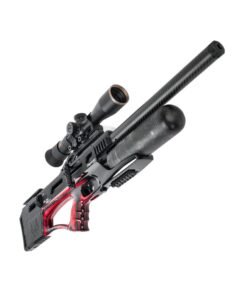
Air Rifles
Daystate Alpha Wolf Performance FAC

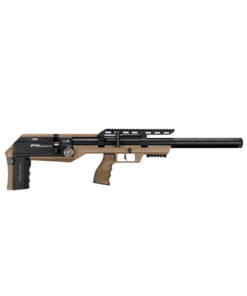
Air Rifles
FX Leopard Sniper Composite (Black or FDE)

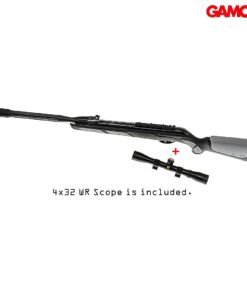
GAMO Air Rifles>
Air Rifle Gamo Viper Fusion IGT


PCP Rifles
Macavity Arms MA8 PCP Air Rifle
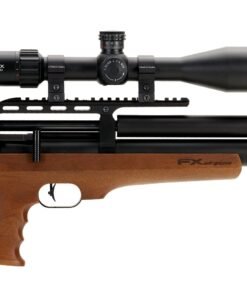

PCP Air Rifles
PCP Air Rifle FX Wildcat MKIII Sniper Walnut

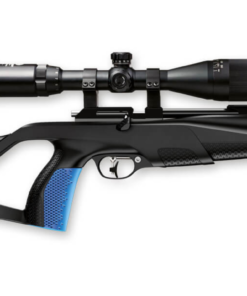
Air Rifles
Stoeger XM1

AIRGUN
FX Impact M4 Sniper
Air Rifles
Reviews
There are no reviews yet.