
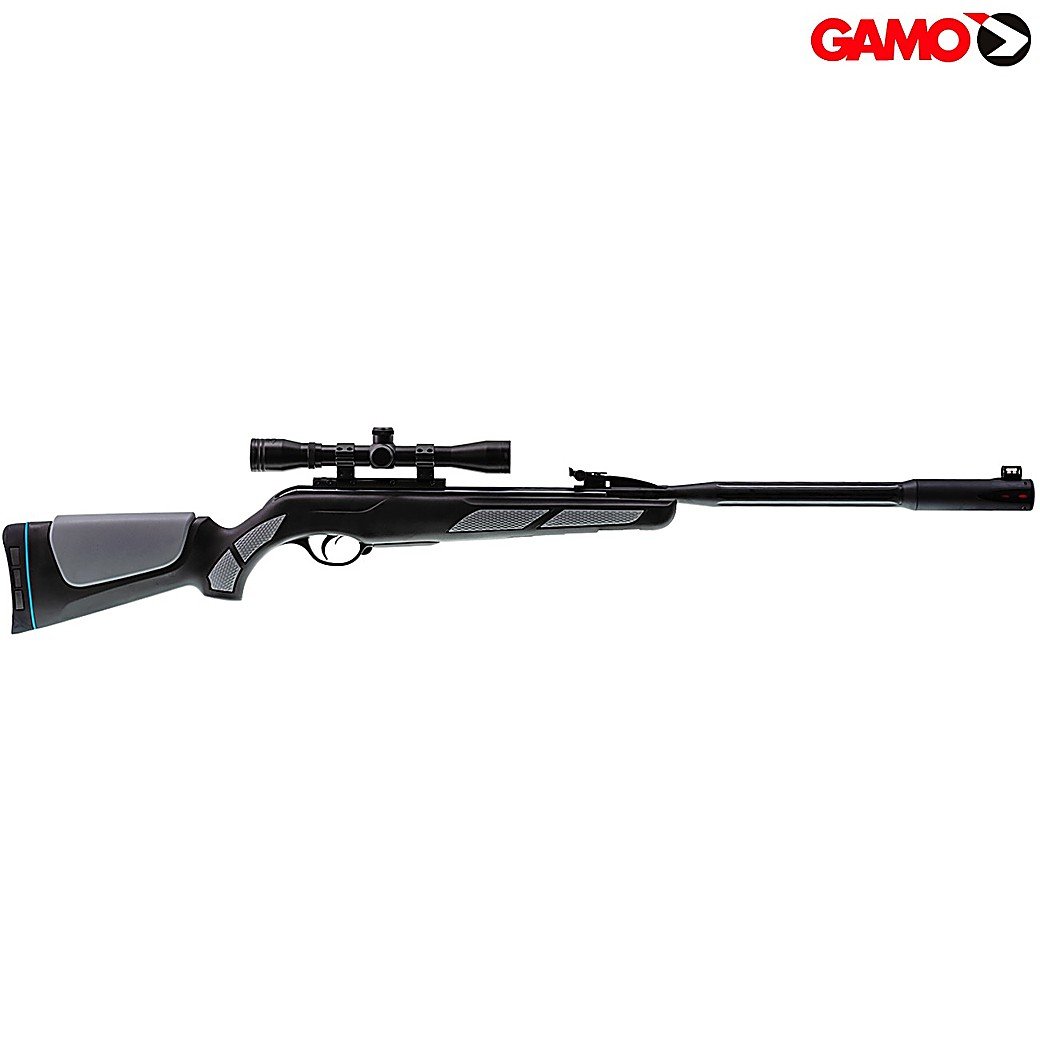

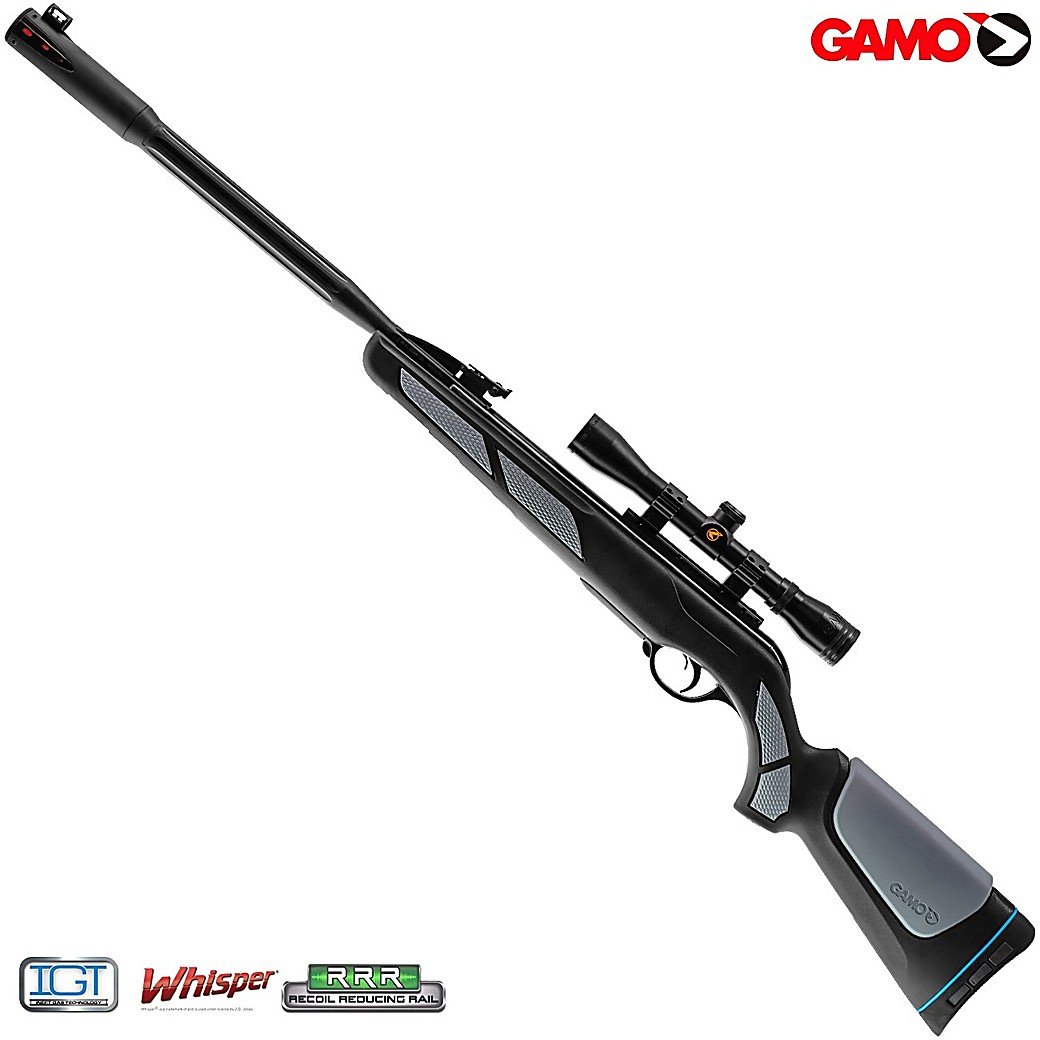



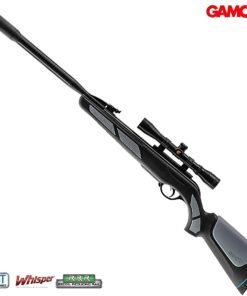


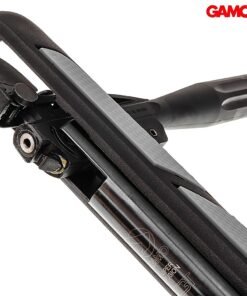
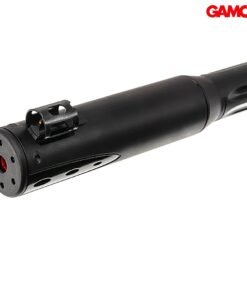
Air Rifle Gamo Viper Fusion IGT

$220.54
Introducing the cutting-edge Gamo Viper Fusion IGT air rifle
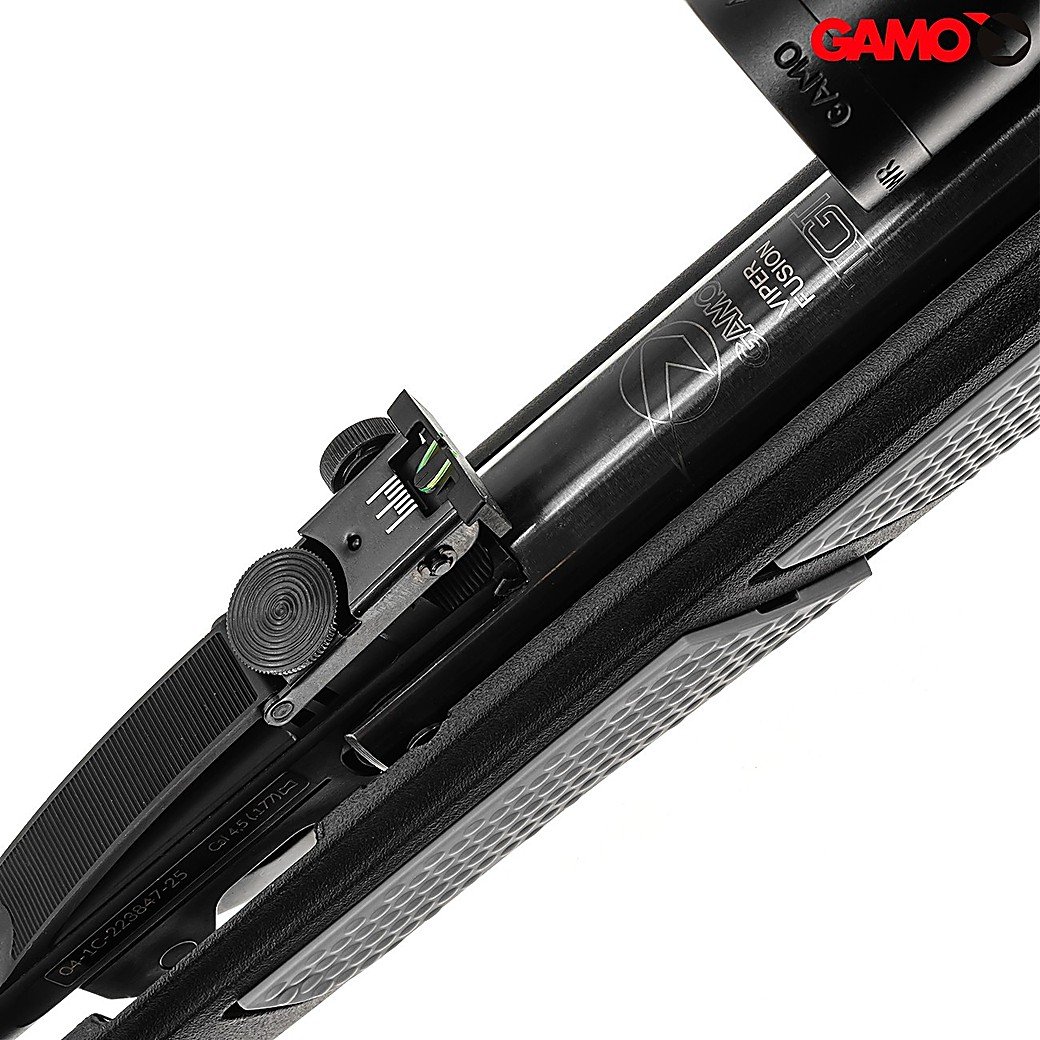
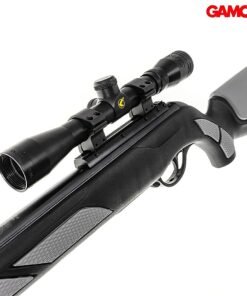
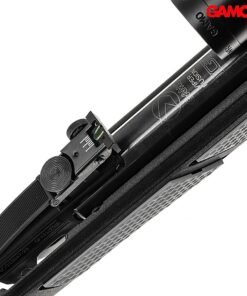
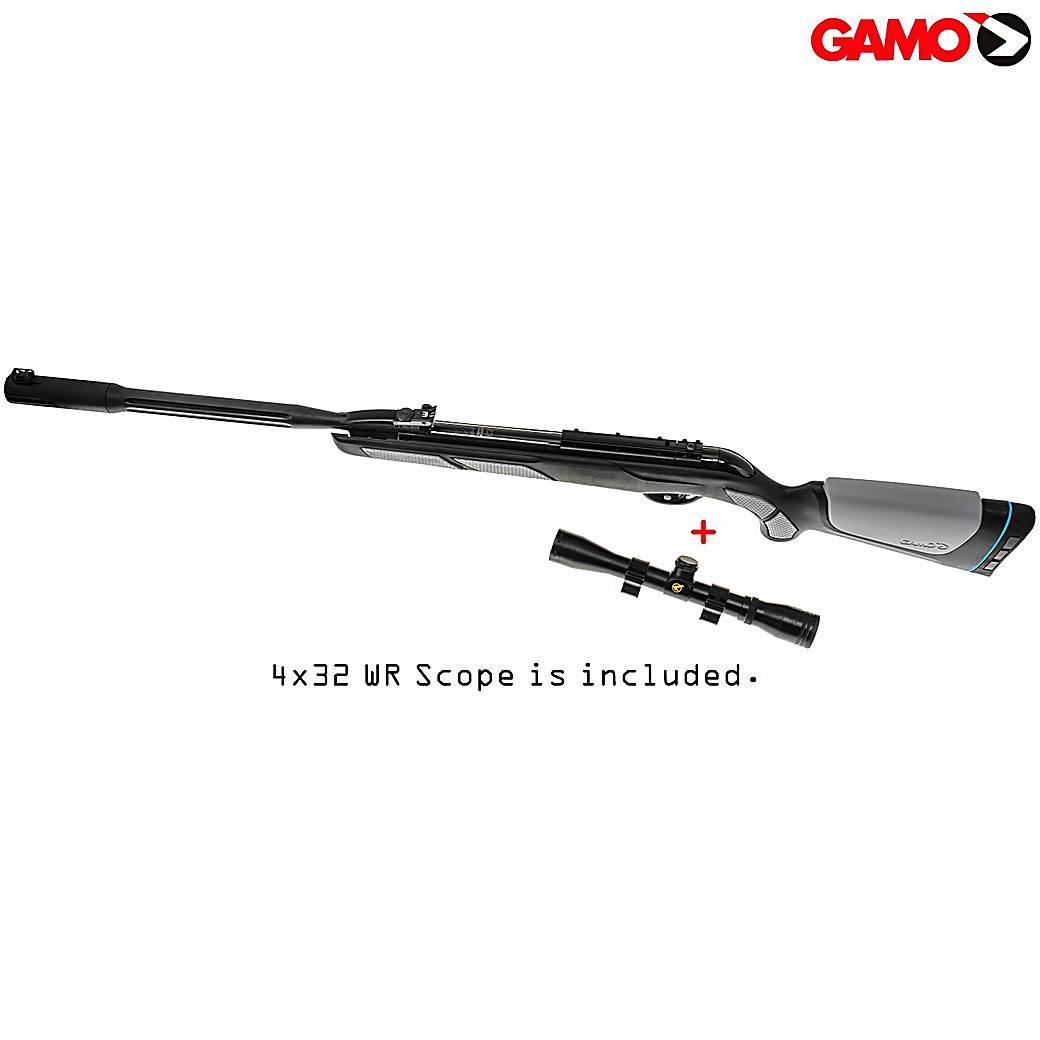
Ready to shoot! As it comes standard with a 4×32 WR scope and fixed fiber optic sights.
The Viper Fusion marks a major leap forward in Gamo’s air rifle lineup, combining advanced engineering, superior materials, and precision-focused design to deliver an exceptional shooting experience.
Now featuring Whisper Fusion IGT technology…
IGT Gas Piston System means say goodbye to traditional springs. Gamo’s Inert Gas Technology (IGT) replaces them with a gas-ram mechanism, offering smoother cocking, consistent power delivery, and dramatically reduced vibration.
Designed for both precision pest control and casual backyard shooting, it offers reliable performance with every shot and durability that stands the test of time.
Built with user safety in mind, the Viper Fusion includes an automatic cocking safety system that prevents accidental discharge, giving shooters added peace of mind during handling and use.
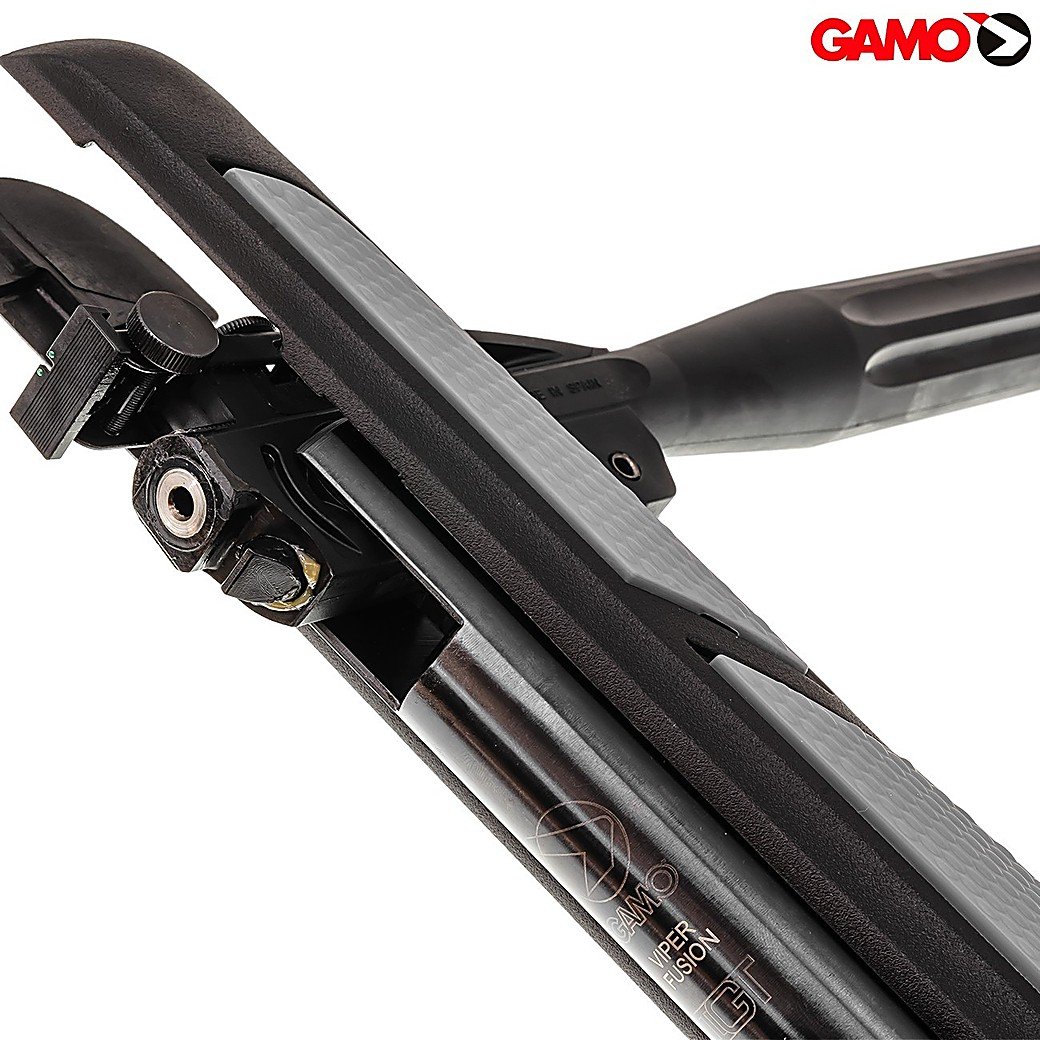
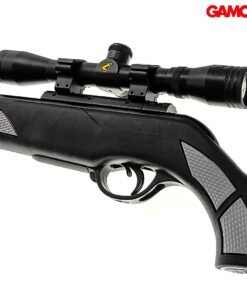
Its ambidextrous synthetic stock is crafted for all-weather resilience and features textured rubber inserts for a secure, comfortable grip, ensuring control and stability in any condition.
Lightweight and well-balanced, it’s engineered for effortless handling and extended shooting sessions.
The Gamo Viper Fusion Whisper IGT strikes an ideal harmony between power, quiet operation, and shooter comfort
OUTSTANDING FEATURES
Pre-Mounted Optics Comes equipped with a Gamo 4x32WR scope straight from the factory, giving you reliable accuracy right out of the box.
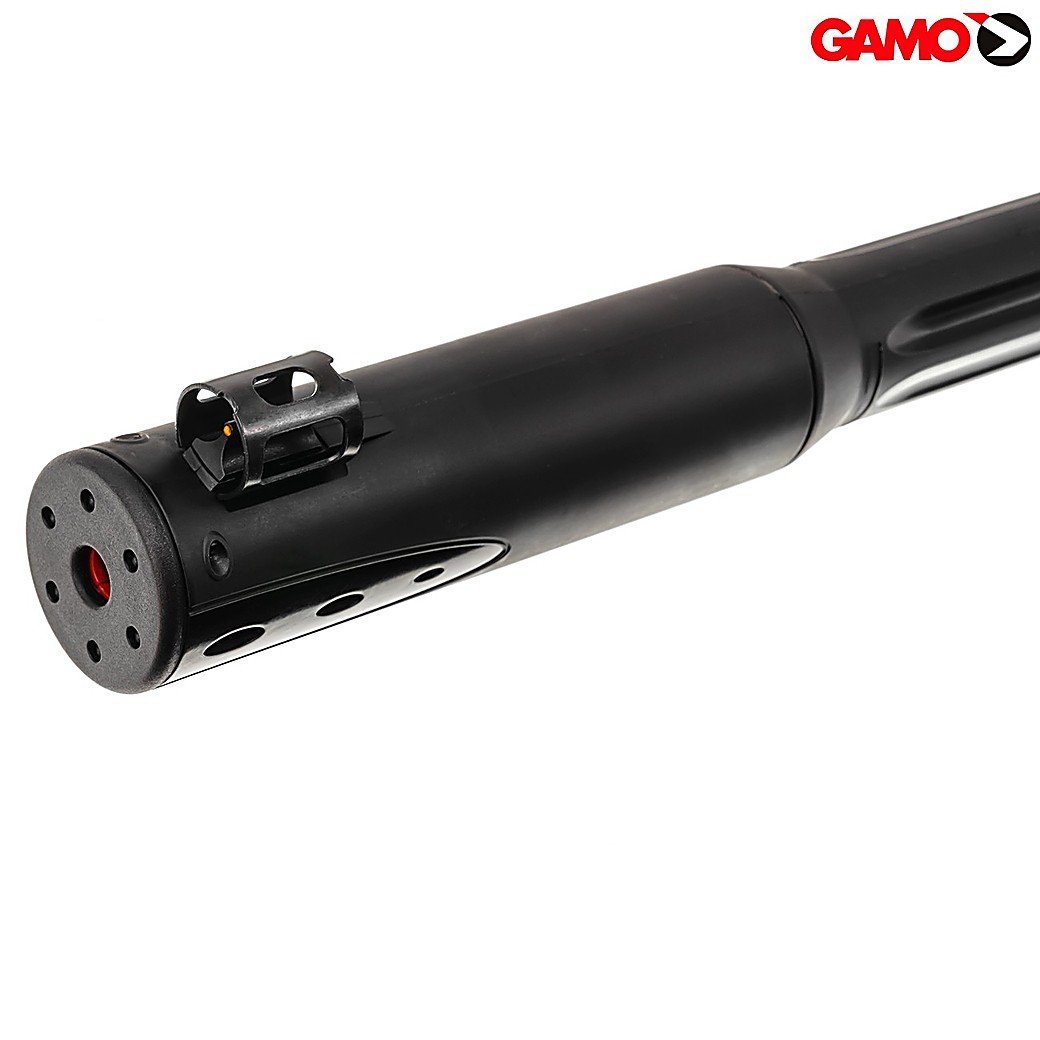
Next-generation technology: Whisper Fusion IGT sound suppression system ensures quieter shots, enhancing comfort and discretion during use.
High velocity performance: Capable of reaching speeds up to 305 m/s in 4.5 mm (.177″) caliber, the Viper Fusion delivers powerful and consistent results.
Whisper Fusion Barrel Technology: Engineered for discretion, the Whisper Fusion system is built directly into the barrel to suppress shot noise without sacrificing velocity, perfect for quiet environments and backyard shooting.
SWA Recoil Pad The Shock Wave Absorber (SWA) features a multi-pad design that effectively dampens recoil, enhancing shooting comfort and allowing for longer sessions with less fatigue.
RRR Scope Rail Gamo’s Recoil Reducing Rail (RRR) is crafted to absorb nearly all recoil shock, up to 99.9%, protecting your scope and maintaining accuracy over time, especially in high-powered setups.
Durable Synthetic Stock Designed for all-weather use, the ambidextrous synthetic stock includes rubber grip inserts for secure handling
SPECIFICATIONS
- Power system: Inert Gas Technology (IGT)
- Scope: 4×32 WR
- Front Sight: Fiber Optic
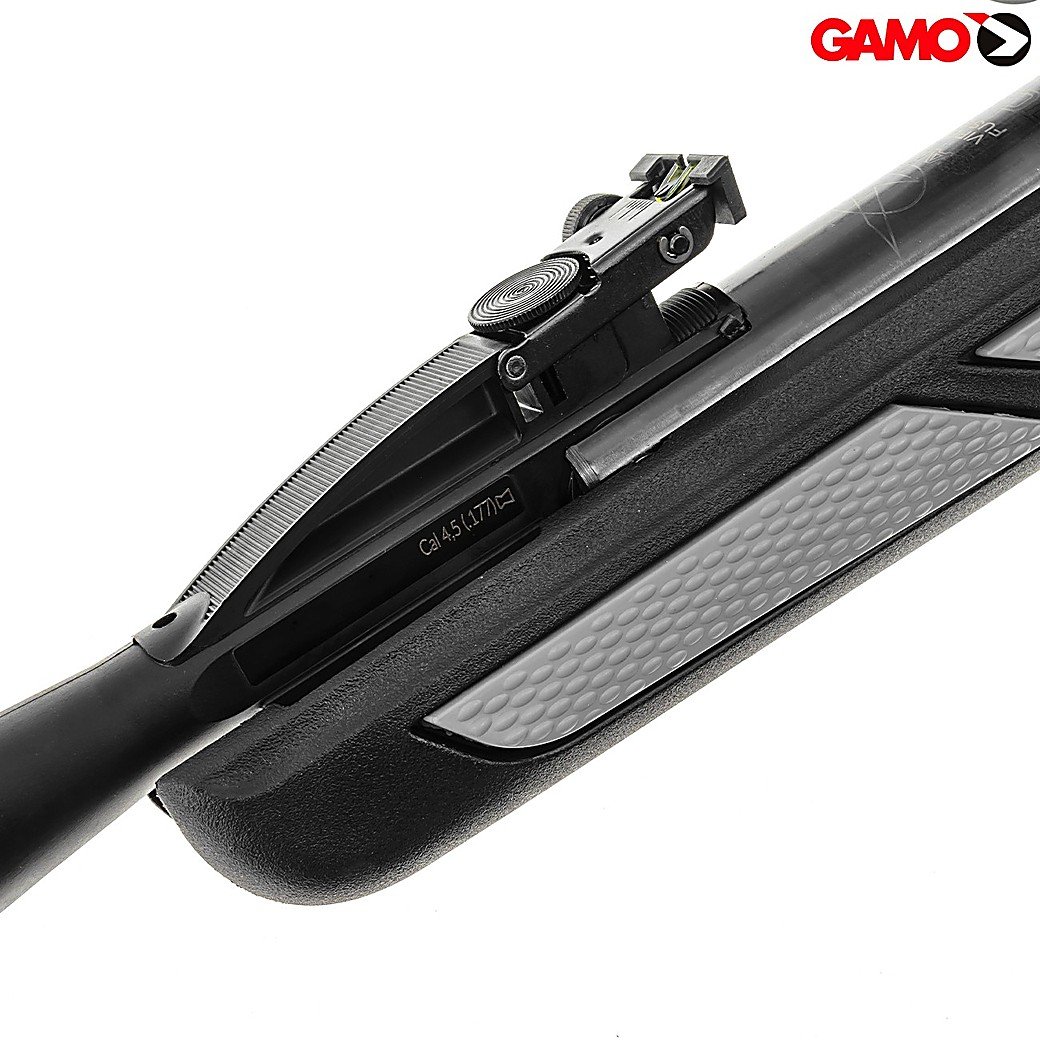
- Rear Sight: Adjustable Fiber Optic
- Velocity: 305 m/s (4.5mm / .177″) – 220 m/s (5.5mm / .22″)
- Lenght: 114 cm
- Stock: All-weather synthetic with rubber grip inserts
- Noise suppression: Whisper Fusion barrel
- Recoil management: Recoil Reduction Rail (RRR)
- Recommended use: Recreational shooting and practice
- Weight: 2.970 Kg (with scope)
Gam
Gamo’s reputation is built not only on the superior quality of its products but also on its commitment to continuous innovation.
At the heart of this vision lies the Innovation Center Gamo, a dedicated hub for technological advancement that reinforces the brand’s position as a leader in the airgun industry.
Today, Gamo stands among the world’s top suppliers of air rifles, pellets, scopes, and other high-performance shooting accessories.
Data sheet
| Caliber | 4.50mm (.177) | 5.50mm (.22) |
| Open Sight | Yes |
| Optics Included | Yes |
| Cocking System | Break barrel |
| Trigger | 2-Stage |
| Loading Mechanism | Single Shot |
| Power Source | Nitro (GAS RAM) |
| Shooting Mode | Manual |
| Shooting speed (4.5 mm) | 305 m/s |
| Shooting speed (5.5 mm) | 220 m/s |
| Mounting Rail | 9-11mm (3/8″) Dovetail |
| Ambidextrous | Yes |
| Safety | Yes – Manual |
| Stock | Standard Sporter |
| Stock Material | Synthetic |
| Stock Finish | Mate |
| Grip | Standard Texturized Grip |
| Grip Material | Synthetic |
| Grip Finish | Mate |
| Overall Lenght | 114 cm |
| Included | 4×32 WR Scope |
| Country of Manufacture | Spain |
| UPC | 793676110622 |
| Additional References | 61100295-VFIGT |
| Additional References | 793676110622 |
| Additional References | 6110029555-VFIGT |
| Additional References | 793676111131 |
Air Rifle Gamo Viper Fusion IGT – Precision IGT Break-Barrel Air Rifle
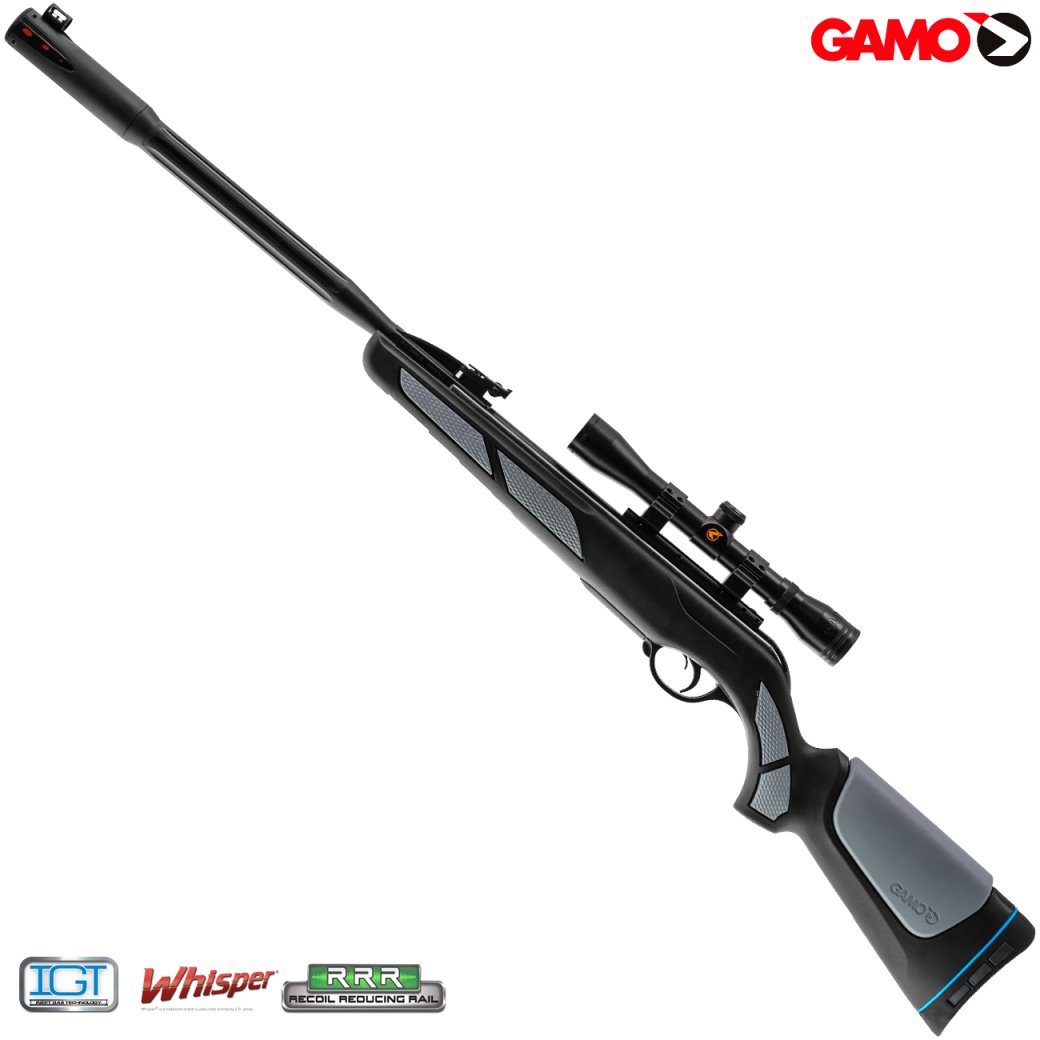
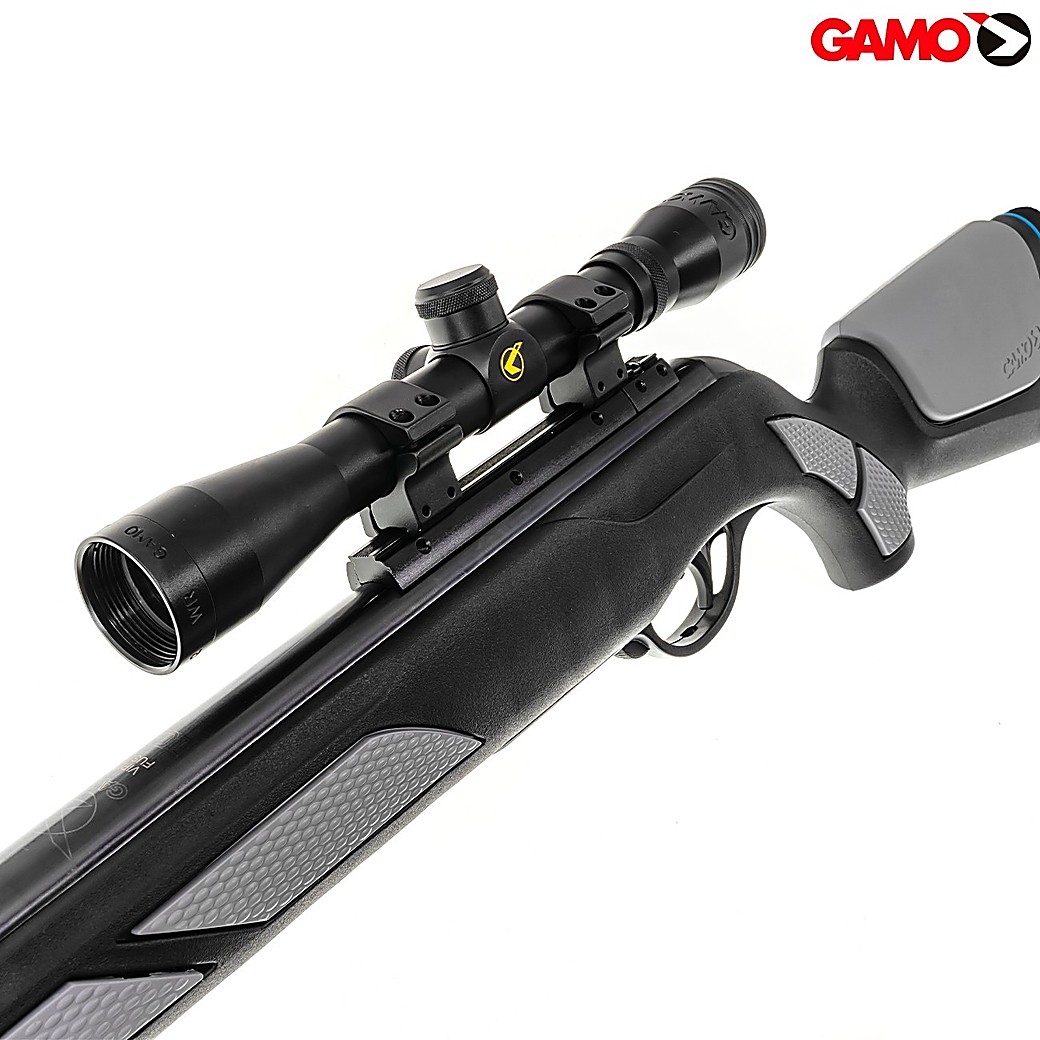
The Air Rifle Gamo Viper Fusion IGT has been designed as a modern break-barrel air rifle in which dependable performance, ergonomic handling, noise management, and straightforward operation are brought together in one carefully developed platform. Through Gamo’s IGT gas-piston technology, the traditional coiled spring arrangement has been replaced by a pneumatic cylinder system, while a synthetic stock, integrated sound-management technology, adjustable trigger system, recoil-control features, and optical equipment have been combined around the action.
For recreational target shooting and responsible sporting use, consistent behavior has been prioritized throughout the design. Rather than being built around excessive complexity, the rifle has been configured so that a familiar break-barrel format can be retained while several modern Gamo technologies can be incorporated.
Consequently, the Air Rifle Gamo Viper Fusion IGT can be considered by adult sporting shooters who value a self-contained air rifle platform. No separate compressed-air bottle, charging pump, or CO₂ cartridge is required for normal operation. Instead, energy is stored within the internal IGT system when the rifle is prepared for use.
Moreover, an ergonomic synthetic stock has been fitted so that maintenance requirements can be kept relatively modest. Soft, non-slip grey inserts have also been incorporated into the stock design to improve contact and provide a more secure feel during normal range handling.
A 4.5 mm/.177 single-shot configuration is offered in the current 19.9-joule version. Muzzle velocity has been listed at up to approximately 280 m/s, although actual velocity will naturally be affected by pellet weight, pellet construction, environmental conditions, manufacturing tolerances, and other variables.
Meanwhile, overall dimensions have been kept within a practical full-size sporting format. An overall length of approximately 98 cm has been specified, while a synthetic stock and approximately 3.8 kg total weight have been incorporated into the configuration.
For sighting, both optical and traditional aiming systems have been provided. Fiber-optic front and rear sights are fitted, while a 4×32 WR scope is supplied with the referenced package. Therefore, a user can be given more than one sighting arrangement depending on preference, local rules, intended sporting activity, and range conditions.
Above all, the Gamo Viper Fusion IGT has been created around controlled recreational shooting rather than unnecessary mechanical complication. Its combination of IGT propulsion, a synthetic sporting stock, CAT trigger technology, recoil-management features, sound moderation, and optical compatibility gives the rifle a distinctive place within the modern Gamo break-barrel range.
Air Rifle Gamo Viper Fusion IGT Overview
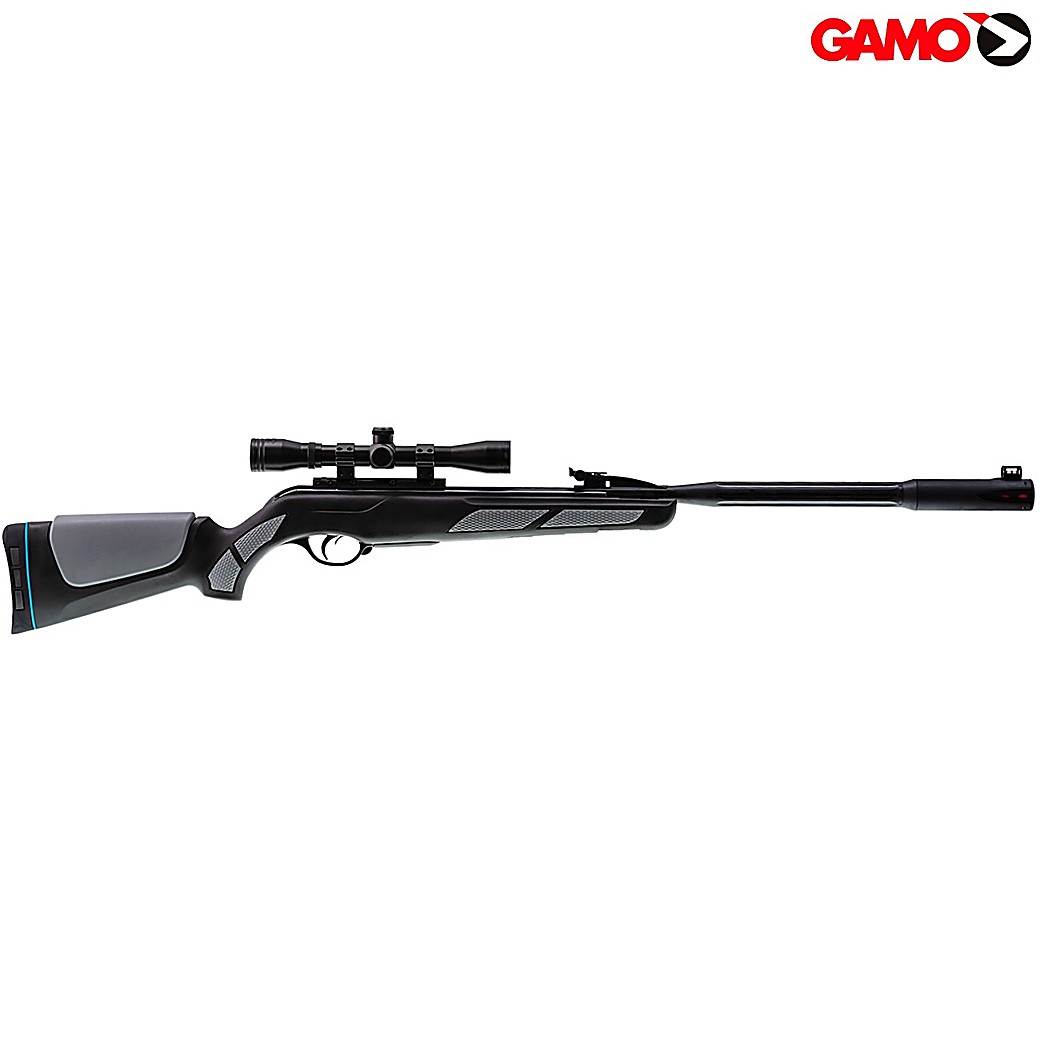
Within the break-barrel category, simplicity has traditionally been one of the format’s strongest characteristics. That principle has been maintained with the Air Rifle Gamo Viper Fusion IGT, although several newer technologies have been integrated into the design.
Instead of requiring a remotely filled air cylinder, stored gas cartridge, or external power supply, the rifle has been designed around Gamo’s internal IGT pneumatic system. As a result, the platform remains largely self-contained.
At the same time, shooting comfort has been addressed through several complementary features. A Shock Wave Absorber-style recoil pad system has been associated with this platform, while Gamo’s Recoil Reducing Rail technology has been incorporated to help isolate the optic from part of the movement produced during the firing cycle.
Additionally, the stock has been shaped with practical ergonomics in mind. A synthetic construction has been used, and textured inserts have been positioned around relevant handling areas.
Therefore, the Viper Fusion IGT should not be viewed simply as a basic gas-piston rifle. Instead, a collection of technologies has been integrated around the fundamental break-barrel architecture.
Key Air Rifle Gamo Viper Fusion IGT Features
Important product characteristics include:
- Gamo IGT gas-piston power system
- 4.5 mm/.177 pellet caliber in the referenced configuration
- Single-shot break-barrel action
- Approximately 19.9-joule rated energy
- Velocity listed at up to approximately 280 m/s
- Synthetic ergonomic stock
- Soft non-slip grey stock inserts
- Whisper Fusion sound-management system
- CAT Custom Action Trigger
- Manual safety mechanism
- Recoil Reducing Rail system
- Shock-absorbing butt-pad technology
- Fiber-optic front sight
- Fiber-optic rear sight
- 4×32 WR scope supplied with the referenced package
- Approximately 98 cm overall length
- Approximately 3.8 kg listed weight
- Modern all-weather-oriented synthetic construction
- Self-contained power system with no external air tank required for ordinary operation
- Designed primarily for recreational and precision-oriented target shooting
What Is the Air Rifle Gamo Viper Fusion IGT?
The Air Rifle Gamo Viper Fusion IGT is a single-shot break-barrel pellet rifle in which Gamo’s Inert Gas Technology has been used instead of a conventional coiled mainspring.
Energy is therefore stored through a gas-piston assembly. When the system is prepared, the compressed gas mechanism is used to drive the internal piston during the firing cycle.
Importantly, the IGT arrangement should not be confused with a PCP system. Although both technologies make use of compressed gas principles, they are operated in different ways. A PCP rifle normally contains a reservoir that must periodically be refilled through external charging equipment. By comparison, an IGT break-barrel rifle remains self-contained because the internal system is reset through the break-barrel action.
For users who prefer a traditional sporting rifle format but want newer powerplant technology, this arrangement can offer an appealing balance.
Furthermore, because a large external reservoir is not required, the overall concept remains familiar to anyone accustomed to conventional break-barrel air rifles.
Gamo IGT Technology
How the IGT System Changes the Break-Barrel Experience
IGT stands for Inert Gas Technology. Within this system, a gas-filled cylinder has been substituted for the traditional coiled steel mainspring commonly found in conventional spring-piston rifles.
Several characteristics can therefore be changed.
First, the mechanical vibration normally associated with a long metal spring can be reduced. Because a coiled mainspring is not unwinding during the shot cycle, some of the secondary vibration associated with spring-powered designs can be avoided.
Second, shot behavior can feel more controlled. Although movement is still produced by the piston system and proper technique remains important, the firing sensation can be perceived as more direct than that of some traditional spring-powered rifles.
Third, the internal powerplant is designed to provide repeatable performance throughout normal sporting use.
Therefore, the IGT system is not simply a marketing label. It represents a genuine change in how power is stored and released within the rifle.
A Self-Contained Power Source
One of the most practical characteristics of an IGT rifle is that separate charging infrastructure is not normally required.
A PCP rifle may require a compressor, hand pump, scuba cylinder, or other approved high-pressure charging source. Similarly, a CO₂ rifle depends on replaceable gas cartridges.
By contrast, the Air Rifle Gamo Viper Fusion IGT has been designed so that its internal powerplant can be prepared through its own mechanical action.
Consequently, fewer support components may be required for ordinary recreational range use.
That simplicity can be particularly valuable where portability and straightforward ownership are prioritized.
19.9-Joule Configuration
The current referenced Air Rifle Gamo Viper Fusion IGT configuration has been listed at 19.9 joules.
However, power limits and airgun classifications differ significantly between countries and jurisdictions. Therefore, local legislation should always be checked before possession, transportation, purchase, transfer, or sporting use.
The rifle’s nominal velocity has been listed at up to approximately 280 metres per second in the 4.5 mm configuration.
Nevertheless, velocity should never be interpreted as a universal fixed figure. Pellet mass, pellet geometry, bore condition, ambient temperature, seal condition, individual rifle tolerances, and test methodology can all affect measured velocity.
For that reason, rated specifications should be treated as standardized reference figures rather than guarantees that every pellet will produce exactly the same chronograph reading.
4.5 mm/.177 Pellet Configuration
The referenced Air Rifle Gamo Viper Fusion IGT is chambered for 4.5 mm/.177 pellets.
This caliber has become one of the most widely used pellet sizes for recreational target shooting. A broad selection of pellet designs is manufactured in this diameter, allowing different combinations to be tested for paper-target accuracy and consistency.
However, the most expensive pellet will not necessarily produce the smallest group in every individual barrel.
Because minor variations occur between barrels, pellet testing is generally regarded as an important part of precision airgun setup.
Consequently, grouping results rather than packaging claims should be used when determining which legally appropriate ammunition performs best in an individual rifle.
Pellet Consistency Matters
A pellet may appear to be a simple projectile, yet small manufacturing differences can influence consistency.
Skirt shape, head diameter, mass variation, surface condition, alloy composition, and overall geometry can affect how the pellet interacts with the bore.
Therefore, well-manufactured pellets of a suitable specification should be selected for responsible sporting use.
Damaged or deformed pellets should not be relied upon for precision-oriented shooting.
Single-Shot Break-Barrel Architecture
The Air Rifle Gamo Viper Fusion IGT has been configured as a single-shot break-barrel rifle.
This format has remained popular because a relatively uncomplicated mechanical layout can be maintained.
No detachable multi-shot magazine is required in the referenced configuration. Consequently, the shooter works with one pellet at a time during normal range use.
For deliberate target shooting, that slower rhythm can sometimes be beneficial because individual shots can be approached methodically.
Additionally, fewer feeding components are involved than in magazine-fed systems.
Therefore, users who appreciate mechanical simplicity may find the single-shot configuration attractive.
Whisper Fusion Technology
Sound behavior has also been addressed through Gamo’s Whisper Fusion technology.
The system has been developed to manage part of the muzzle report produced as compressed air exits the barrel. Consequently, the firing signature can be moderated relative to an otherwise similar unmoderated configuration.
However, the term “quiet” should always be interpreted realistically.
Mechanical movement is still produced by an air rifle. Furthermore, the acoustic characteristics of a shot can change significantly according to environment, pellet selection, surrounding surfaces, and shooting location.
A small enclosed structure, for example, can produce noticeably different reflected sound than an open outdoor range.
Therefore, Whisper Fusion should be regarded as an integrated sound-management feature rather than a promise of silent operation.
Integrated Design
An important advantage of an integrated system is that the rifle can be engineered as a complete package rather than having an unrelated component added later.
Balance, barrel profile, overall length, and visual proportions can therefore be considered together.
This integration contributes to the Viper Fusion IGT’s modern appearance.
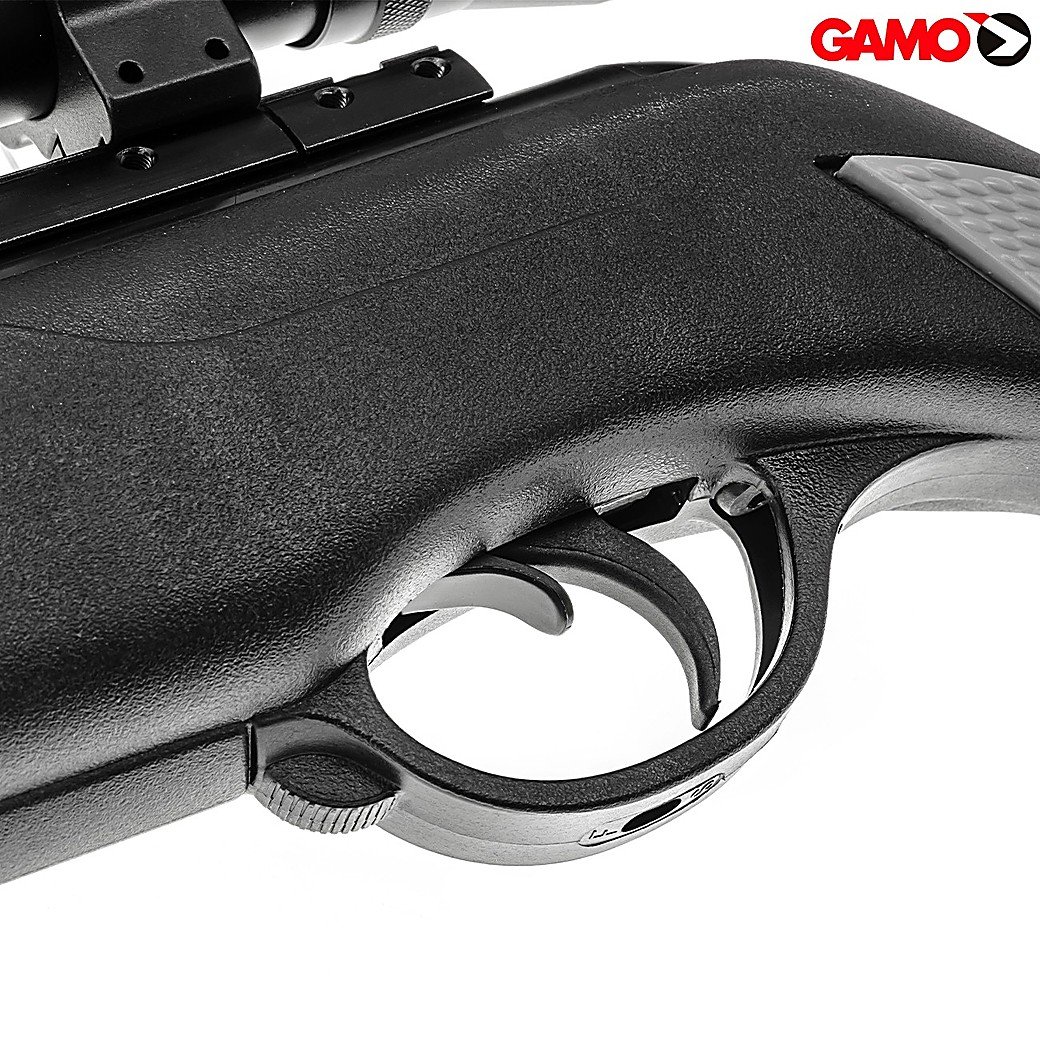
CAT Custom Action Trigger
Trigger feel has a substantial influence on how easily a shooter can maintain consistent technique.
For that reason, Gamo’s CAT – Custom Action Trigger system has been incorporated into the Viper Fusion IGT platform.
The system has been designed to provide more controlled trigger characteristics than a very basic fixed trigger assembly.
For recreational precision shooting, predictable trigger behavior is particularly useful. When an unexpected increase in resistance is encountered during the trigger cycle, unnecessary movement can be introduced into the rifle.
Conversely, when a trigger’s behavior becomes familiar, the shooting process can be repeated more consistently.
The CAT system therefore complements the rifle’s precision-oriented positioning.
Manual Safety
A manual safety mechanism has also been fitted.
Nevertheless, a mechanical safety device should always be treated as an additional safeguard rather than as a replacement for correct handling.
The rifle should always be treated as if it is capable of firing.
Likewise, the muzzle should always remain directed in a safe direction, and the trigger should remain untouched until an authorized shot is actually intended.
Recoil Reducing Rail
Break-barrel air rifles create a movement pattern that differs from that of many other sporting platforms.
Because an internal piston is accelerated and stopped during the firing cycle, movement can occur in more than one direction.
For this reason, optics installed on spring-piston and gas-piston air rifles should be suitable for the specific recoil characteristics of the platform.
Gamo’s Recoil Reducing Rail, commonly abbreviated as RRR, has been incorporated into the Viper Fusion IGT configuration to help reduce the movement transmitted to the optic.
Consequently, additional protection can be provided for the supplied scope and compatible replacement optics.
Why Scope Support Matters
An optic is expected to maintain alignment while repeated mechanical impulses are being transmitted through the rifle.
Therefore, secure mounting becomes important.
Airgun-compatible rings should be used, and manufacturer torque recommendations should be followed.
Overtightening should be avoided because excessive torque can damage mounting components or optics.
Similarly, insufficiently secured fasteners may allow movement.
A properly installed optic system therefore contributes to more consistent sporting performance.
Included 4×32 WR Scope
The referenced Air Rifle Gamo Viper Fusion IGT package is supplied with a 4×32 WR scope.
A fixed four-power optic provides a relatively uncomplicated aiming solution.
Because magnification does not need to be adjusted, one variable is removed from the sighting process.
Meanwhile, the 32 mm objective provides a practical compromise between physical size and optical usability for normal recreational target shooting.
For users who prefer traditional aiming methods, fiber-optic sights are also fitted.
Therefore, both optical and open-sight options have been provided within the package.
Fiber-Optic Sights
Fiber-optic sight elements can make the aiming reference easier to distinguish under many daylight conditions.
Light is collected by the fiber element, after which a bright reference point is presented to the shooter.
Consequently, target alignment can often be established more quickly than with basic black sights against certain backgrounds.
Nevertheless, fiber-optic sights do not eliminate the need for proper sight alignment.
Consistency remains essential.
The front and rear references should be aligned in the same relationship from shot to shot.
Ergonomic Synthetic Stock
A synthetic stock has been fitted to the Air Rifle Gamo Viper Fusion IGT.
Several practical advantages can be associated with this construction.
Unlike untreated natural timber, a synthetic stock is not affected by ordinary humidity changes in exactly the same way. Surface care is also relatively straightforward.
Furthermore, complex ergonomic shapes and textured sections can be incorporated during manufacturing.
Consequently, Gamo has been able to integrate contrasting grey gripping inserts into the Viper Fusion stock.
These inserts have been designed to provide additional traction and a softer contact surface.
Practical Handling
Comfort should not be judged solely from visual appearance.
Stock geometry affects how naturally the rifle can be supported.
Grip angle, comb height, butt-pad design, reach to the trigger, fore-end shape, and overall balance all influence handling.
With the Viper Fusion IGT, these factors have been brought together within a modern synthetic sporting profile.
Therefore, the stock plays an important functional role rather than serving as a purely decorative shell.
Shock Wave Absorber System
Gamo’s Shock Wave Absorber technology has been used within the butt-pad system on various rifles in this family.
The system has been developed to reduce the amount of movement and impact transferred through the rear of the rifle during firing.
As a result, the interface between the rifle and the shooter can be made more comfortable.
This feature is particularly relevant because gas-piston and spring-piston rifles generate a distinctive firing cycle.
Although the energy involved is very different from that of high-powered cartridge rifles, internal piston movement is still felt.
Therefore, any system that improves contact and stability can contribute to a more refined recreational shooting experience.
Weight and Dimensions
The current 19.9-joule Viper Fusion IGT configuration has been listed at approximately:
- Overall length: 98 cm
- Barrel length: approximately 52 cm in referenced catalog data
- Weight: approximately 3.8 kg
- Stock: synthetic
- Caliber: 4.5 mm/.177
- Capacity: single shot
- Energy: approximately 19.9 J
- Velocity: up to approximately 280 m/s
- Optic: 4×32 WR scope
These figures position the rifle as a full-sized sporting air rifle rather than an ultra-light compact model.
The additional mass may be appreciated by some users because a stable feel can be provided during supported recreational target shooting.
Conversely, users who prioritize extremely low weight should consider the listed 3.8 kg specification when assessing suitability.
Balance and Stability
Overall weight represents only one aspect of handling.
Weight distribution is equally important.
A rifle with most of its mass positioned far forward may feel heavier than another rifle of identical total weight with more centralized balance.
Therefore, actual handling characteristics are determined by the interaction between overall weight, barrel assembly, stock geometry, optic position, and shooter stance.
With the Air Rifle Gamo Viper Fusion IGT, the full-length configuration provides the substantial feel traditionally associated with sporting break-barrel rifles.
Designed for Recreational Precision
Precision should never be interpreted as an automatic property of equipment alone.
Instead, practical accuracy is produced through interaction between the rifle, pellet, optic or sights, environmental conditions, maintenance condition, and user technique.
The Air Rifle Gamo Viper Fusion IGT provides several features intended to support consistency.
IGT technology reduces reliance on a conventional mainspring. CAT trigger technology provides a controlled trigger interface. The RRR system helps support the optic. Fiber-optic sights and the supplied 4×32 scope provide aiming options. Meanwhile, the ergonomic stock helps create repeatable contact points.
Together, these elements establish a strong foundation for recreational target shooting.
Nevertheless, consistent results still depend on responsible practice and proper equipment setup.
A Modern Alternative to Traditional Spring Rifles
Traditional spring-piston rifles have been used successfully for decades.
Therefore, the introduction of a gas ram does not make every conventional spring rifle obsolete.
Instead, IGT technology provides a different approach.
The absence of a coiled mainspring changes the internal operating characteristics. Consequently, vibration behavior, maintenance considerations, and shot feel can differ.
Some shooters may prefer the smooth character of a well-tuned conventional spring rifle. Others may prefer the more direct response associated with gas-piston designs.
The Air Rifle Gamo Viper Fusion IGT has been created for the second group while retaining the familiar convenience of the break-barrel platform.
Air Rifle Gamo Viper Fusion IGT for Target Shooting
For paper targets and other legally approved range targets, repeatability is usually more valuable than raw velocity.
A tight group can only be produced when several variables are controlled.
The same stable position should be used. A consistent sight picture should be maintained. Suitable pellets should be selected. Trigger manipulation should remain predictable. Finally, the rifle should be supported in a way that does not introduce unnecessary movement.
Because the Viper Fusion IGT is a piston-powered rifle, technique can have a noticeable effect on point of impact.
Accordingly, methodical practice is recommended.
Range Use
A properly managed shooting range provides the ideal environment for becoming familiar with an air rifle.
Backstops, target positioning, firing directions, and access controls can be established in a controlled manner.
Additionally, range rules should always be followed.
Where eye protection is required, suitable protection should be worn. Hearing protection may also be appropriate depending on the environment and facility rules.
Most importantly, targets should only be used where pellets can be safely captured.
Responsible Sporting Use
The Air Rifle Gamo Viper Fusion IGT should be used only in lawful locations where an appropriate target area and secure backstop are available.
Shots should never be taken toward hard surfaces, water, buildings, roads, vehicles, livestock, pets, or any location in which a person could enter the projectile path.
Likewise, local restrictions concerning airgun use should be confirmed before any activity begins.
Responsible ownership involves far more than simply operating the equipment.
Transport rules, storage requirements, age restrictions, supervision requirements, and land-use regulations may also apply.
Storage Considerations
When the rifle is not being used, secure storage should be prioritized.
Unauthorized access should be prevented, particularly where children or other untrained persons are present.
Pellets should also be stored responsibly.
Where local law specifies locked storage, separation requirements, trigger-lock requirements, or other precautions, those requirements should be followed.
Additionally, the rifle should be stored in a dry environment.
Excessive moisture should be avoided because metal components can still be affected by corrosion even when a synthetic stock is fitted.
Routine Exterior Care
The synthetic stock can generally be kept clean through gentle surface care.
A soft cloth can be used to remove ordinary dust and handling marks.
For external metal components, moisture should be removed after use.
However, excessive quantities of lubricant should not be applied indiscriminately.
Airgun seals and gas-piston systems can require specific maintenance practices. Therefore, manufacturer-approved products and service recommendations should be followed.
Harsh solvents should also be avoided unless their compatibility has been confirmed.
Barrel Care
A barrel does not necessarily require aggressive cleaning after every recreational session.
Indeed, unnecessary cleaning can sometimes introduce more problems than it solves.
If accuracy remains stable, excessive bore maintenance may not be required.
When cleaning does become appropriate, airgun-safe techniques should be used.
Steel rods or abrasive tools that could damage the crown or rifling should not be introduced without proper knowledge.
Professional servicing should be considered whenever the correct procedure is uncertain.
Long-Term Reliability
Mechanical longevity is strongly influenced by how equipment is treated.
The Air Rifle Gamo Viper Fusion IGT should not be exposed unnecessarily to moisture, dirt, abrasive debris, or extreme storage conditions.
Likewise, screws and mounts should periodically be inspected according to manufacturer recommendations.
Loose components can affect both accuracy and equipment life.
Consequently, basic preventive care can preserve the rifle’s original operating characteristics.
Scope Care
The supplied 4×32 WR optic should be treated as a precision optical instrument.
Lens surfaces should not be rubbed aggressively while grit or dust is present.
Instead, loose debris should first be removed with an appropriate optical cleaning method.
Lens-safe materials should then be used when required.
Furthermore, the scope should be inspected occasionally for mounting movement.
Any shift in mounting position can produce an apparent accuracy problem even when the rifle itself is functioning normally.
Why Airgun-Specific Optics Matter
Not every conventional firearm optic is automatically suitable for every piston-powered air rifle.
The internal movement produced by a spring or gas-piston action can create bidirectional stress.
Accordingly, optics rated for suitable airgun use are generally preferred.
The Recoil Reducing Rail fitted to the Viper Fusion IGT adds another layer of support, yet compatible mounting hardware and an appropriate scope remain important.
Synthetic Stock Benefits
Wooden stocks continue to be valued for appearance and traditional craftsmanship.
Nevertheless, synthetic stocks provide several practical advantages for users who prioritize straightforward maintenance.
Moisture resistance is generally improved.
Surface scratches may also be less visually prominent depending on the material and finish.
Additionally, molded gripping textures can be incorporated efficiently.
With the Air Rifle Gamo Viper Fusion IGT, these characteristics have been combined with contrasting non-slip inserts.
As a result, a contemporary sporting appearance is produced while functional grip surfaces are retained.
Weather and Outdoor Conditions
No air rifle should be deliberately exposed to rain merely because a synthetic stock has been fitted.
The stock itself may resist moisture relatively well, but the rifle still contains metal components, optics, fasteners, seals, and other mechanisms.
Therefore, water should be removed promptly after unavoidable exposure.
The rifle should then be allowed to dry appropriately before secure storage.
Condensation should also be considered when equipment is moved rapidly between cold and warm environments.
The Importance of Consistent Technique
Air rifles powered by internal pistons can be sensitive to changes in support technique.
Consequently, consistency should be emphasized.
If the rifle is supported differently between shots, the point of impact can shift.
Likewise, inconsistent stock contact or trigger interaction can enlarge groups.
Therefore, equipment should not be blamed immediately when results vary.
Pellet choice, sight settings, optic mounting, shooter technique, environmental conditions, and mechanical condition should all be evaluated systematically.
Air Rifle Gamo Viper Fusion IGT and New Shooters
A modern break-barrel rifle can provide an understandable introduction to recreational airgun shooting when proper adult instruction and supervision are provided.
The single-shot mechanism encourages a deliberate pace.
Moreover, external charging equipment is not required.
Nevertheless, a 19.9-joule air rifle is not a toy.
It must be treated as a potentially dangerous projectile-launching device at all times.
Formal range instruction can therefore be particularly valuable for new users.
Through proper training, safe muzzle discipline, target identification, secure storage practices, and responsible range procedures can be established from the beginning.
Experienced Airgun Users
Experienced shooters may appreciate the Viper Fusion IGT for different reasons.
Instead of focusing primarily on simplicity, attention may be given to the combination of Gamo technologies integrated into the platform.
IGT propulsion, CAT trigger adjustment, RRR scope support, Whisper Fusion sound management, fiber-optic sights, and synthetic ergonomics create a package that differs significantly from older entry-level break-barrel rifles.
Therefore, the platform can also appeal to users who already understand piston-powered airguns but want a contemporary recreational configuration.
What Makes the Viper Fusion Different?
Several features distinguish the Air Rifle Gamo Viper Fusion IGT from a very basic break-barrel rifle.
First, a gas-piston system has been used.
Second, integrated Whisper Fusion technology has been included.
Third, CAT trigger technology has been fitted.
Furthermore, optical support is enhanced through the RRR rail.
A shock-management butt system contributes additional comfort.
Finally, a synthetic ergonomic stock with non-slip inserts gives the rifle a modern appearance and practical handling character.
As a result, several separate upgrades that might otherwise be sought individually have already been incorporated into one factory-designed package.
Air Rifle Gamo Viper Fusion IGT Specifications
Technical Summary
Product: Air Rifle Gamo Viper Fusion IGT
Manufacturer: Gamo
Platform: Break-barrel air rifle
Powerplant: IGT gas-piston system
Caliber: 4.5 mm/.177 in referenced version
Capacity: Single shot
Rated energy: Approximately 19.9 joules
Listed velocity: Up to approximately 280 m/s
Overall length: Approximately 98 cm
Barrel length: Approximately 52 cm in referenced catalog configuration
Weight: Approximately 3.8 kg
Stock: Synthetic
Stock details: Ergonomic profile with non-slip grey inserts
Trigger: CAT Custom Action Trigger
Safety: Manual safety
Sound system: Whisper Fusion
Optic support: Recoil Reducing Rail
Open sights: Fiber-optic front and rear sights
Included optic: 4×32 WR scope in referenced package
Primary orientation: Recreational and precision-oriented target shooting
Power source: Self-contained IGT system
External PCP charging equipment required: No
Specifications can be changed by manufacturers, importers, or regional distributors. Therefore, the exact specification of the individual rifle and package should always be confirmed before lawful acquisition or use.
Understanding the 280 m/s Velocity Rating
Velocity figures can be useful when comparing similar rifles, but they should be interpreted carefully.
The published figure of up to approximately 280 m/s represents a rated performance figure under particular testing conditions.
Different pellet masses will produce different velocities.
A lighter projectile will normally travel faster than a heavier projectile when both are fired from the same powerplant.
However, higher velocity should not automatically be equated with better accuracy.
For target shooting, a slightly slower pellet that groups consistently can be considerably more useful than a faster pellet that produces larger dispersion.
Therefore, precision testing should focus on group consistency rather than velocity alone.
Understanding the 19.9-Joule Rating
Energy provides another way of describing airgun performance.
Unlike velocity alone, energy incorporates projectile mass.
Nevertheless, a rated energy figure should still be interpreted as an approximate specification rather than an absolute result under every condition.
Furthermore, legal limits are often based on muzzle energy.
For that reason, local legislation must be checked carefully.
A configuration that can be possessed under one regulatory system may be treated differently elsewhere.
Legal and Regulatory Responsibility
Airgun legislation varies substantially across the world.
Restrictions may be based on age, muzzle energy, caliber, intended use, licensing status, property type, transport method, storage system, or other factors.
Therefore, no universal legal assumption should be made.
Before the Air Rifle Gamo Viper Fusion IGT is possessed or used, all applicable national, regional, and local requirements should be reviewed.
Where licensing or registration is required, the correct authorization must be obtained.
Where airguns are restricted entirely in a particular location, those restrictions must be respected.
Why a Backstop Is Essential
Every authorized target-shooting environment should include an appropriate pellet-catching system or backstop.
The purpose of a backstop is to contain pellets that pass through or miss the target.
Improvised surfaces can be unsafe.
Hard materials may create ricochet risks, while thin materials may fail to stop a pellet.
Therefore, a professionally designed airgun target system is preferable.
The area behind the target should also remain controlled.
Eye Protection
Protective eyewear should be considered an important part of range safety.
Even when a suitable backstop is present, fragments or unexpected ricochets can occur under poor target conditions.
Appropriate safety glasses can provide an additional layer of protection.
Range-specific requirements should always take precedence where stricter equipment standards have been established.
Air Rifle Gamo Viper Fusion IGT Ergonomics
Ergonomics can influence both comfort and repeatability.
If a rifle cannot be held comfortably, maintaining the same position for a series of target shots becomes more difficult.
The Viper Fusion stock has therefore been shaped around modern sporting use.
Textured inserts help establish hand contact, while the full-size stock provides a stable platform.
In addition, the recoil-pad arrangement creates a defined shoulder interface.
Together, these features help establish predictable contact points.
Grip Surfaces
Smooth polymer can become less secure when hands are wet or when gloves are being worn.
Consequently, additional gripping textures have been integrated into the Viper Fusion stock.
The grey inserts also provide visual contrast.
More importantly, however, they provide functional traction where hand contact occurs.
As a result, handling can feel more controlled during normal recreational use.
Trigger Reach
Trigger reach influences how naturally the shooting hand can remain positioned.
If excessive stretching is required, unnecessary hand tension may be introduced.
Conversely, an appropriate trigger position can support more relaxed control.
The CAT trigger and ergonomic stock therefore function together rather than as unrelated features.
Precision Is a System
An accurate air rifle alone does not guarantee accurate results.
Instead, the following elements interact:
- Rifle condition
- Pellet compatibility
- Scope condition
- Scope mounting
- Sight alignment
- Trigger consistency
- Support technique
- Environmental conditions
- Target quality
- Shooter concentration
- Maintenance
- Range setup
Consequently, precision should be approached systematically.
When groups unexpectedly increase in size, only one variable should ideally be changed at a time.
That method makes the cause easier to identify.
Pellet Testing for Target Accuracy
Different pellets can produce noticeably different groups from the same barrel.
Therefore, a small selection of quality .177 pellets can be evaluated at a properly controlled range.
Consistent conditions should be maintained throughout the comparison.
If several variables are changed simultaneously, meaningful conclusions become difficult.
Once a suitable pellet has been identified, batch consistency can also become relevant for demanding target work.
Scope or Open Sights?
Both systems offer advantages.
The 4×32 scope provides magnification and a defined optical aiming reference.
Fiber-optic sights provide simplicity, reduced weight, and a traditional sight picture.
Neither system is automatically superior for every user.
Instead, personal preference, eyesight, range distance, lighting, and target type should be considered.
Because both options are available on the Viper Fusion IGT, flexibility is provided.
Fixed Magnification Advantages
Variable-power scopes provide flexibility, but fixed-power scopes can offer exceptional simplicity.
With the supplied 4×32 optic, magnification remains constant.
Consequently, the apparent target size and sight picture remain predictable.
For recreational target shooting at established distances, this straightforward configuration can be advantageous.
Furthermore, fewer adjustments need to be considered during use.
Air Rifle Gamo Viper Fusion IGT Build Philosophy
The rifle’s design can be understood as a combination of three priorities: self-contained power, controlled shooting behavior, and practical ergonomics.
The IGT system addresses power generation.
The CAT trigger and RRR rail address control and consistency.
Meanwhile, the synthetic stock, grip inserts, butt pad, fiber-optic sights, and integrated sound-management system address handling and usability.
Because these features have been combined within one factory platform, the rifle presents a cohesive overall design.
Modern Styling
Visual design has also been modernized.
Instead of traditional wood and blued-steel styling, a technical synthetic appearance has been adopted.
Dark surfaces are contrasted by grey inserts, while the integrated barrel assembly gives the rifle a streamlined profile.
For users who prefer contemporary equipment, this styling may be appealing.
Nevertheless, appearance remains subjective and should always remain secondary to safety, fit, and functional suitability.
Durability Considerations
Synthetic materials are commonly chosen for sporting equipment because they can tolerate routine handling well.
However, synthetic construction should not be interpreted as indestructibility.
The stock can still be scratched or damaged.
Optics can still be knocked out of alignment.
Metal components can still corrode.
Therefore, normal protective handling remains necessary.
A properly padded case can be useful during lawful transport where permitted.
Transport
Transportation rules differ between jurisdictions.
Accordingly, the rifle should be transported only in accordance with applicable local law.
Where a locked case is required, one should be used.
Where the rifle must remain unloaded and inaccessible during transport, those requirements should be followed exactly.
Public display should also be avoided.
An air rifle can easily be mistaken for another type of firearm, which can create serious safety concerns.
Air Rifle Gamo Viper Fusion IGT Maintenance Philosophy
Routine maintenance should be conservative and manufacturer-guided.
More lubricant is not necessarily better.
Indeed, excessive or inappropriate lubricant can adversely affect certain airgun components.
Therefore, only suitable products should be applied at appropriate points.
Internal disassembly should not be undertaken casually.
Gas-piston systems contain stored-energy components and should be serviced by qualified technicians when internal work is required.
Fastener Inspection
Repeated firing cycles can occasionally influence fasteners.
Consequently, stock screws, optic mounts, and related external hardware should be inspected periodically.
However, arbitrary overtightening should be avoided.
Correct torque values should be used where provided by the manufacturer.
Thread-locking products should only be used where appropriate and compatible.
Accuracy Troubleshooting
If accuracy suddenly deteriorates, a logical sequence should be followed.
First, the optic and mounts should be inspected.
Next, obvious stock fasteners should be checked according to manufacturer guidance.
Pellet condition should then be considered.
Environmental changes should also be evaluated.
Finally, mechanical servicing may be appropriate if the issue continues.
By following a systematic process, unnecessary adjustments can often be avoided.
Why the Air Rifle Gamo Viper Fusion IGT Stands Out
The strongest characteristic of the Viper Fusion IGT is not any single specification.
Instead, value is created through the interaction of several design elements.
A self-contained IGT powerplant is provided.
An adjustable trigger system is incorporated.
Integrated sound management is included.
Recoil-related optic support is supplied.
A synthetic ergonomic stock is fitted.
Both fiber-optic sights and a 4×32 scope are provided.
Consequently, a relatively complete recreational shooting platform is created without requiring a complicated external support system.
Compared With PCP Air Rifles
PCP rifles can provide excellent consistency and very low shot-cycle disturbance.
However, compressed-air charging equipment is required.
The Viper Fusion IGT follows a different philosophy.
Rather than storing enough compressed air for multiple shots in a reservoir, its powerplant is mechanically reset for each shot.
Consequently, external charging equipment is eliminated.
For some recreational users, that simplicity may outweigh the advantages offered by a PCP system.
For others, a PCP may still be preferred.
The correct choice depends on priorities rather than on a universal ranking.
Compared With Traditional Spring-Piston Air Rifles
Traditional spring rifles and IGT rifles share the general break-barrel concept.
However, the internal powerplants differ.
A conventional spring rifle relies on a coiled steel mainspring.
The Viper Fusion IGT relies on a gas-piston mechanism.
As a result, shot sensation and vibration characteristics can differ.
Both systems can be highly effective for recreational target shooting when correctly manufactured and maintained.
Compared With CO₂ Air Rifles
CO₂ systems rely on replaceable or refillable carbon-dioxide sources.
Therefore, operating behavior can be influenced noticeably by temperature.
The Air Rifle Gamo Viper Fusion IGT does not require disposable CO₂ cartridges.
This difference can simplify supply requirements.
However, the firing cycle of an IGT break barrel is more mechanically active than that of many CO₂ designs.
Once again, the preferred system depends on the user’s priorities.
Suitable User Profile
The Air Rifle Gamo Viper Fusion IGT may be considered by responsible adult users who value:
- A self-contained break-barrel design
- Gas-piston technology
- Single-shot simplicity
- Synthetic-stock durability
- Recreational target precision
- Integrated optical support
- Fiber-optic sighting
- A supplied fixed-power scope
- Moderate maintenance requirements
- Modern sporting ergonomics
- Integrated sound management
- Gamo technology in a unified platform
However, legal eligibility should always be confirmed first.
Product Quality and Inspection
Any air rifle should be visually inspected before initial lawful use.
Damage caused during shipping or storage should be identified before operation.
The barrel assembly, stock, sights, optic, and externally accessible hardware should be checked.
Where anything appears damaged, loose, misaligned, or otherwise abnormal, the rifle should not be used until the issue has been evaluated.
This simple precaution can prevent avoidable problems.
Why Proper Setup Matters
Even a high-quality air rifle can perform poorly if its optic has been mounted incorrectly or if unsuitable pellets are being used.
Therefore, initial setup should be approached carefully.
Manufacturer documentation should be reviewed.
Scope-mounting requirements should be followed.
Safe range conditions should be established.
Only after those fundamentals have been addressed should performance conclusions be drawn.
Consistency Over Speed
Many new airgun users focus heavily on advertised velocity.
However, experienced target shooters generally place greater emphasis on consistency.
A pellet that leaves the barrel at nearly the same velocity and follows a stable trajectory shot after shot is more useful for grouping than inconsistent extreme speed.
Therefore, the Air Rifle Gamo Viper Fusion IGT should be evaluated as a complete shooting system rather than solely through its maximum velocity figure.
Controlled Shot Cycle
The IGT system has been designed to provide a controlled power stroke.
Because the traditional coiled spring is absent, spring vibration is removed from the operating cycle.
Nevertheless, piston movement remains present.
Therefore, stable technique continues to matter.
This combination provides one of the defining characteristics of modern gas-piston air rifles.
Recreational Shooting Experience
Recreational shooting can be enjoyed without competition.
For many users, the appeal lies in developing consistency, concentration, and equipment familiarity.
Single-shot air rifles can suit that approach particularly well.
Each shot is separated naturally by the operating cycle.
Consequently, a deliberate rhythm can be established.
The Air Rifle Gamo Viper Fusion IGT fits naturally into this style of recreational target use.
Training Value
When proper supervision and range procedures are provided, target airgun shooting can reinforce several useful habits.
Attention must be maintained.
Safe muzzle orientation must be preserved.
Sight alignment must be repeated.
Trigger control must remain deliberate.
Equipment must be handled responsibly.
For those reasons, formal recreational target programs frequently emphasize process rather than speed.
The single-shot Viper Fusion IGT supports that deliberate approach.
Indoor Range Considerations
Air rifles should only be used indoors where a facility has been specifically designed or safely configured for the purpose.
Wall construction alone should never be assumed to provide adequate pellet containment.
A suitable pellet trap, controlled firing lane, ventilation considerations where relevant, safe access control, and sufficient space must all be considered.
Local regulations may also prohibit discharge inside certain buildings or residential areas.
Therefore, legal suitability should be confirmed before any indoor shooting activity occurs.
Outdoor Range Considerations
Outdoor shooting requires an equally careful approach.
A safe backstop is still essential.
The area around and beyond the target must be controlled.
Public trails, neighboring property, roads, buildings, and livestock areas must never be placed at risk.
Furthermore, airgun pellets can travel farther than inexperienced users may expect.
For that reason, an open field is not automatically a safe shooting area.
Storage After Use
After an authorized session has finished, the rifle should be returned to a safe storage condition according to manufacturer guidance and applicable local law.
The exterior can then be wiped down.
Any moisture should be removed.
The optic can be checked for obvious damage.
Finally, the rifle should be placed in its designated secure storage location.
Establishing the same routine after every session reduces the chance of careless handling.
Product Presentation
From a design perspective, the Air Rifle Gamo Viper Fusion IGT presents a distinctly technical appearance.
The synthetic stock creates a contemporary silhouette.
Grey inserts break up the otherwise dark finish.
The integrated barrel system contributes visual continuity.
Meanwhile, the supplied optic completes the full sporting-rifle profile.
As a result, the rifle has been styled for users who prefer modern equipment rather than traditional wood-stock aesthetics.
Reliability Through Simplicity
Complex systems can provide significant benefits, but simplicity also has value.
The Viper Fusion IGT remains a single-shot break-barrel rifle at its core.
No removable magazine is needed.
No battery is required.
No electronic firing system has been incorporated.
No PCP cylinder needs to be externally filled.
Therefore, the basic operating architecture remains comparatively straightforward.
Air Rifle Gamo Viper Fusion IGT FAQ
What caliber is the Air Rifle Gamo Viper Fusion IGT?
The referenced Viper Fusion IGT configuration is chambered in 4.5 mm/.177 caliber.
This pellet diameter is widely used for recreational and precision-oriented target shooting.
Exact regional variants should nevertheless be confirmed because manufacturers and distributors may offer different specifications in different markets.
How powerful is the Gamo Viper Fusion IGT?
The referenced model has been rated at approximately 19.9 joules.
Because legal classifications vary significantly between locations, local rules should always be checked before possession or use.
What velocity does the Gamo Viper Fusion IGT produce?
A maximum velocity of approximately 280 m/s has been listed for the referenced 4.5 mm configuration.
Actual velocity will vary according to pellet mass, pellet design, individual rifle condition, environmental conditions, and testing methodology.
Is the Gamo Viper Fusion IGT a PCP rifle?
No.
Although gas technology is used, the Viper Fusion IGT is a gas-piston break-barrel rifle rather than a pre-charged pneumatic rifle.
A PCP stores compressed air in a refillable reservoir.
The IGT system instead uses an internal gas-piston mechanism that remains part of the rifle’s self-contained break-barrel powerplant.
What does IGT mean?
IGT means Inert Gas Technology.
A gas-piston cylinder is used instead of a traditional coiled mainspring.
As a result, the internal firing characteristics differ from those of conventional spring-powered designs.
Is an air compressor required?
No external PCP compressor is required for ordinary operation of the IGT powerplant.
This self-contained design is one of the practical differences between the Viper Fusion IGT and a PCP rifle.
Does the Gamo Viper Fusion IGT include a scope?
The referenced package is supplied with a 4×32 WR scope.
Package contents can vary by market or distributor, so the exact listing should always be checked.
Does the rifle have open sights?
Yes.
Fiber-optic front and rear sights are fitted to the referenced configuration.
Therefore, the rifle can provide a conventional sighting option in addition to its supplied optic.
What is Whisper Fusion?
Whisper Fusion is Gamo’s integrated sound-management technology.
The system has been designed to moderate part of the muzzle report.
However, the rifle should not be regarded as silent.
Mechanical noise and environmental sound reflections will still be present.
What is CAT?
CAT stands for Custom Action Trigger.
The system has been designed to give the shooter greater control over trigger characteristics than would normally be provided by a simple fixed trigger.
What is RRR?
RRR stands for Recoil Reducing Rail.
It has been designed to reduce part of the movement transmitted from the rifle to a mounted optic.
This can be particularly useful on piston-powered airguns because their firing cycles produce distinctive forces.
How much does the Air Rifle Gamo Viper Fusion IGT weigh?
The referenced configuration has been listed at approximately 3.8 kg.
Because the optic and mounting equipment may affect total ready-to-use weight, actual configured weight can differ slightly.
How long is the Gamo Viper Fusion IGT?
An overall length of approximately 98 cm has been listed.
This places the rifle within a conventional full-size sporting format.
What type of stock is used?
A synthetic stock has been fitted.
Non-slip grey inserts have also been incorporated into the stock to improve grip and provide visual contrast.
Is the Viper Fusion IGT a multi-shot air rifle?
The referenced model is a single-shot break-barrel configuration.
One pellet is used per firing cycle.
Is the Gamo Viper Fusion IGT intended for target shooting?
The platform has been positioned for recreational and precision-oriented sporting target use.
Any use must nevertheless take place only where legally permitted and where an appropriate range and secure backstop are provided.
Does the synthetic stock require special care?
Synthetic stocks generally require relatively simple surface maintenance.
However, metal components and optics still require protection against moisture, dirt, impact, and improper storage.
Can any .177 pellet be used?
Only pellets of the correct caliber and an appropriate specification should be considered.
Individual barrels can also show preferences for particular pellet designs.
Therefore, quality pellets should be tested responsibly on an approved target range when precision is being evaluated.
Does a faster pellet always produce better accuracy?
No.
Maximum velocity and best accuracy are not necessarily achieved by the same pellet.
Consistency and barrel compatibility are generally more important for precision target shooting.
Is the 4×32 scope variable?
A 4×32 scope is normally a fixed four-power optic.
This provides a straightforward sight picture without variable magnification controls.
Can the open sights still be useful if a scope is fitted?
Yes.
Some users prefer optical sights, while others prefer open sights.
The availability of both systems gives the rifle additional versatility.
Is the Viper Fusion IGT suitable for inexperienced shooters?
Any 19.9-joule air rifle should be treated as serious sporting equipment rather than as a toy.
New users should receive appropriate instruction and supervision.
Local age requirements must also be respected.
Does IGT remove all recoil?
No.
Although the gas-piston system changes the firing characteristics, internal piston movement remains present.
Consequently, a firing impulse is still produced.
Why is the Recoil Reducing Rail useful?
Piston air rifles can place unusual stress on mounted optics.
The RRR system has been designed to reduce some of that transmitted movement.
Appropriate airgun-compatible optics and mounting hardware should still be used.
How should the rifle be stored?
Secure storage should be used in accordance with local law.
Unauthorized access should be prevented.
The rifle should also be protected from excessive humidity and damaging environmental conditions.
Does Whisper Fusion make the rifle silent?
No.
The technology reduces part of the firing report, but complete silence should not be expected.
Is electricity required?
No battery or electrical power source is required for the rifle’s normal mechanical operation.
Are CO₂ cartridges required?
No.
The IGT powerplant does not depend on disposable CO₂ cartridges.
Is a hand pump required?
No PCP-style hand pump is required for the normal operation of the IGT system.
Why choose a single-shot format?
Single-shot designs provide mechanical simplicity and encourage deliberate shooting.
For recreational target work, that slower pace can help users concentrate on consistency rather than speed.
Why does pellet quality matter?
Small differences in pellet shape, weight, and manufacturing consistency can influence grouping.
Therefore, high-quality pellets of the proper caliber are normally preferred for precision-oriented target work.
Can the rifle be left in a damp garage?
Damp storage should be avoided.
Although the stock is synthetic, metal components can still corrode.
A dry, secure, legally compliant storage environment is preferable.
How often should the barrel be cleaned?
There is no universal interval that applies to every air rifle.
Over-cleaning should be avoided.
Manufacturer recommendations should be followed, and airgun-safe equipment should be used whenever cleaning is required.
Should ordinary firearm oil be placed inside the IGT system?
Internal lubricants should not be added unless they are specifically recommended for the system.
Incorrect products or excessive quantities can cause problems.
Professional service should be used when internal maintenance is required.
Can the gas-piston system be serviced at home?
Internal gas-piston work can involve stored mechanical energy and specialized procedures.
Therefore, qualified servicing is recommended rather than casual disassembly.
What should be checked if accuracy changes?
The optic, mounts, external fasteners, pellet condition, shooting technique, environmental conditions, and rifle condition should be evaluated systematically.
Only one variable should ideally be changed at a time.
Is a synthetic stock better than wood?
Neither material is universally superior.
Wood provides traditional appearance and natural character.
Synthetic materials generally provide easier environmental maintenance and allow extensive molded texturing.
The better choice depends on individual preference.
Why does the Viper Fusion IGT use grey inserts?
The inserts provide both visual contrast and additional gripping texture.
Consequently, practical handling and modern styling are combined.
Is the Gamo Viper Fusion IGT compact?
At approximately 98 cm overall length and 3.8 kg, it is better described as a full-size sporting air rifle than an ultra-compact model.
What type of shooting best suits the rifle?
Its feature set is particularly well aligned with deliberate recreational target shooting at properly controlled ranges.
Local law and facility regulations must always determine where and how it may legally be used.
Air Rifle Gamo Viper Fusion IGT – Final Overview
The Air Rifle Gamo Viper Fusion IGT represents a modern interpretation of the traditional single-shot break-barrel air rifle.
At its core, simplicity has been retained.
External compressed-air equipment is not required. Disposable CO₂ cartridges are not required. Electronic power is not required. Instead, the familiar self-contained concept of the break-barrel air rifle has been combined with contemporary gas-piston technology.
Around that foundation, several additional systems have been integrated.
Gamo’s IGT mechanism provides the internal powerplant. Whisper Fusion technology has been incorporated for sound management. The CAT trigger provides a more refined trigger interface. The Recoil Reducing Rail supports optical equipment. Fiber-optic sights provide a traditional aiming alternative. Meanwhile, the supplied 4×32 WR scope creates a practical optical package.
Ergonomics have also been considered.
A synthetic stock reduces dependence on traditional timber construction, while non-slip grey inserts provide additional grip. The stock geometry and recoil-pad system have been developed around comfortable sporting use.
Furthermore, the referenced 4.5 mm configuration combines a 19.9-joule nominal energy rating with a listed velocity of up to approximately 280 m/s.
Those numbers provide useful technical context, but they should never become the sole basis for judging an air rifle.
Precision depends on consistency.
Pellet compatibility matters. Optic installation matters. Trigger behavior matters. Stock fit matters. Maintenance matters. Most importantly, responsible user behavior matters.
For that reason, the Viper Fusion IGT is best understood as a complete recreational sporting platform rather than simply as a velocity figure.
Its strongest characteristic is the way established break-barrel simplicity has been combined with newer technology.
The operating system remains self-contained, yet a gas piston has replaced the conventional mainspring.
The rifle remains single shot, yet a modern CAT trigger has been incorporated.
A traditional sighting system remains available, yet a 4×32 optical sight is also included.
A full-size sporting profile has been retained, yet synthetic construction and contemporary grip inserts have been adopted.
Accordingly, the Air Rifle Gamo Viper Fusion IGT provides a balanced option within Gamo’s modern break-barrel lineup for legally eligible adults seeking a precision-oriented recreational air rifle for controlled sporting target environments.
Why the Air Rifle Gamo Viper Fusion IGT Has a Distinctive Position
Modern airgun design has become increasingly diverse.
PCP platforms have introduced regulated reservoirs, detachable magazines, and advanced adjustability.
CO₂ systems have continued to provide simple gas-powered operation.
Traditional spring rifles remain valued for mechanical character and independence.
Meanwhile, gas-piston rifles occupy an important space between these categories.
The Air Rifle Gamo Viper Fusion IGT demonstrates why.
A separate charging system has not been required.
A conventional spring has not been retained.
Instead, gas-piston technology has been incorporated into a self-contained break-barrel platform.
This approach allows newer internal technology to be experienced without completely abandoning the familiar architecture that has made break-barrel rifles popular for generations.
Furthermore, Gamo has not limited the modernization process to the powerplant.
Trigger behavior, sound management, optic protection, stock ergonomics, gripping surfaces, and sighting equipment have all been addressed.
Consequently, the rifle can be considered as an integrated design rather than a basic platform carrying one isolated technological feature.
Precision-Focused Construction
Although the word “precision” is widely used in airgun descriptions, meaningful precision is created through repeatability.
The same mechanical cycle must be produced consistently.
The same pellet must interact with the barrel consistently.
The optic must remain secure.
The trigger should behave predictably.
Finally, the user must reproduce a stable technique.
Several Viper Fusion IGT features have therefore been aligned with those requirements.
The CAT trigger can support predictable interaction.
The Recoil Reducing Rail can support optic stability.
The synthetic stock can help maintain a repeatable physical interface.
Meanwhile, the IGT system removes the conventional coiled mainspring from the firing cycle.
These characteristics do not eliminate the need for technique.
Instead, they provide a platform upon which good technique can be developed.
A Practical Recreational Air Rifle Platform
Practicality often depends on what equipment does not need to be carried.
With a PCP rifle, charging infrastructure usually becomes part of the ownership system.
With CO₂ equipment, cartridges become consumable supplies.
With electronically controlled platforms, batteries may need to be monitored.
The Air Rifle Gamo Viper Fusion IGT remains comparatively independent of those external systems.
As a result, preparation for a lawful range session can remain straightforward.
Suitable pellets, appropriate eye protection, targets, a secure approved backstop, and normal range equipment are still required, but no high-pressure charging station is necessary for the rifle itself.
For users who value this independence, the break-barrel IGT format can remain highly attractive.
Built Around Responsible Sporting Enjoyment
Ultimately, equipment quality cannot be separated from responsible use.
The Air Rifle Gamo Viper Fusion IGT should always be handled as serious sporting equipment.
Its muzzle should remain pointed in a safe direction.
Unauthorized access should be prevented.
Approved targets and backstops should be used.
Local regulations should be observed.
Furthermore, appropriate training should be sought whenever a user is unfamiliar with airgun handling or range procedures.
When these responsibilities are taken seriously, recreational target shooting can be approached in a controlled, disciplined, and technically rewarding manner.
Within that environment, the Air Rifle Gamo Viper Fusion IGT brings together a substantial collection of Gamo technologies in one modern, self-contained sporting platform.
Its IGT gas-piston mechanism, Whisper Fusion sound management, CAT trigger, Recoil Reducing Rail, synthetic ergonomic stock, fiber-optic sights, and supplied 4×32 optic establish a feature set that extends well beyond the essentials of a conventional entry-level break-barrel rifle.
For the responsible adult sporting user who appreciates modern engineering but still values the straightforward character of a single-shot break barrel, the Viper Fusion IGT represents an important part of Gamo’s contemporary air-rifle range.
Product Summary
Air Rifle Gamo Viper Fusion IGT
A modern 4.5 mm/.177 gas-piston break-barrel air rifle has been created around Gamo’s IGT system and combined with a synthetic ergonomic stock, Whisper Fusion sound-management technology, CAT trigger, Recoil Reducing Rail, fiber-optic sights, and a supplied 4×32 WR optic.
Approximately 19.9 joules of rated energy and a published velocity of up to approximately 280 m/s are provided in the referenced configuration.
A full-size 98 cm platform and approximately 3.8 kg listed weight give the rifle a substantial sporting profile.
Meanwhile, single-shot operation keeps the underlying mechanism straightforward.
For lawful recreational and precision-oriented target shooting, the resulting platform combines established break-barrel simplicity with several contemporary Gamo technologies.
Key specifications at a glance:
- Gamo Viper Fusion IGT platform
- 4.5 mm/.177 caliber
- Single-shot operation
- IGT gas-piston system
- Approximately 19.9 J
- Up to approximately 280 m/s rated velocity
- Approximately 98 cm overall length
- Approximately 3.8 kg weight
- Synthetic ergonomic stock
- Non-slip grey inserts
- Whisper Fusion sound-management technology
- CAT Custom Action Trigger
- Manual safety
- Recoil Reducing Rail
- Fiber-optic front and rear sights
- 4×32 WR scope in the referenced package
- Self-contained break-barrel operation
- Designed for responsible adult recreational target use
Specifications, packaging, accessories, energy ratings, and regional configurations can be changed by the manufacturer or distributor without notice. Applicable laws should always be checked before possession, transportation, transfer, storage, or use.
Air Gun Guide: Types of Air Guns, Pellet Rifles, PCP Systems, CO2 Pistols, Gas Rams, Optics, Maintenance, and Sporting Use
The air gun category includes a remarkably broad range of sporting equipment, recreational target platforms, training devices, historical replicas, and precision-oriented rifles. Although many people use expressions such as air powered gun, airgun, pellet gun, BB gun, air pistol, and air rifle interchangeably, these terms do not always describe exactly the same operating system.
Understanding air guns meaning therefore requires more than simply looking at appearance. Powerplant type, projectile design, caliber, intended activity, charging method, construction, and local regulation all affect how an airgun should be classified.
Modern airguns may use compressed air, CO2, gas-ram technology, spring-piston mechanisms, or pre-charged pneumatic systems. Consequently, two rifles that appear almost identical externally may behave very differently internally.
Meanwhile, air pistols range from simple recreational models to detailed CO2 replicas and sophisticated competition platforms. Rifles can likewise range from traditional spring-powered designs to advanced PCP systems such as the FX Impact M3, FX DRS, and other precision-oriented products.
This comprehensive guide explains common airgun terminology, different technologies, pellet and BB formats, rifle scopes, mil-dot systems, energy calculations, maintenance requirements, storage practices, and recreational target applications.
Rather than focusing on harmful use, the information has been organized around safe, lawful, responsible sporting ownership.
What Is an Airgun?
People frequently search what is an airgun, yet the answer covers several different technologies.
An airgun is generally a projectile-launching device in which compressed gas rather than burning firearm propellant provides the operating energy.
That compressed gas may be produced in several ways.
A spring-piston system compresses air mechanically during the firing cycle. A gas ram performs a similar function through a gas-filled piston. A PCP rifle stores compressed air inside a reservoir before use. Meanwhile, CO2-powered equipment uses carbon dioxide stored in a cartridge or larger container.
Therefore, the term air gun describes a broad equipment category rather than one specific mechanism.
Air Guns Meaning in Practical Terms
The simplest definition of air guns meaning is equipment that propels an appropriate projectile through compressed gas.
However, differences appear quickly once individual models are compared.
Some airguns fire pellets.
Others are designed for BBs.
Certain platforms can accommodate both projectile types, although only ammunition approved by the manufacturer should be used.
Furthermore, some designs are single shot while others use magazines.
The correct classification therefore depends on construction and operating principle.
Types of Air Guns
Several major types of air guns are commonly encountered.
These include:
- Spring-piston air rifles
- Gas-ram air rifles
- PCP air rifles
- CO2 pellet rifles
- CO2 pistols
- Pneumatic pump rifles
- BB guns
- Pellet pistols
- Match and competition airguns
- Replica air pistols
- Recreational target rifles
Each category has particular strengths and limitations.
Spring-Piston Air Guns
Spring-piston rifles remain among the most recognizable airgun designs.
When the mechanism is prepared, a spring stores mechanical energy.
During the firing cycle, that spring drives a piston forward.
The piston then compresses air behind the projectile.
Because the operating system is largely self-contained, external charging equipment is not normally required.
Gas Ram Air Guns
A gas ram uses a sealed gas-filled cylinder instead of a conventional coiled mainspring.
The overall break-barrel concept may remain similar, yet the internal mechanism behaves differently.
Gas-ram systems are often selected by users who prefer self-contained operation but want an alternative to a traditional steel spring.
PCP Air Rifles
The abbreviation PCP means pre-charged pneumatic.
Therefore, when people search PCP rifle meaning, the term refers to an air rifle that stores compressed air inside a reservoir.
Before use, that reservoir is filled through an approved high-pressure air source.
Once charged, multiple shots can usually be taken before pressure needs to be restored.
PCP systems are widely associated with modern precision-oriented air rifles.
CO2 Pellet Rifles
CO2 pellet rifles use carbon dioxide rather than mechanically compressed atmospheric air.
Depending on the model, CO2 can be supplied through small cartridges or larger containers.
Temperature can affect CO2 pressure, so environmental conditions may influence performance.
Air Pistols
Questions such as what is air pistol are also common.
An air pistol is simply a handgun-format airgun.
Its operating system may be spring powered, pneumatic, PCP, or CO2 based.
Some are intended for basic recreational target use, while others are highly specialized competition designs.
What Is a Break Barrel Pellet Gun?
Another common query is what is a break barrel pellet gun.
A break-barrel rifle uses the barrel assembly as part of the cocking mechanism.
The barrel pivots downward around a hinge.
This movement prepares the internal powerplant.
Afterward, the barrel is returned to its normal aligned position.
Because break-barrel rifles are mechanically self-contained, they remain extremely popular among recreational target shooters.
Types of Pellet Guns
The phrase types of pellet guns includes several distinct operating formats.
Common examples include:
- Break-barrel pellet rifles
- Underlever rifles
- Sidelever rifles
- PCP pellet rifles
- CO2 pellet rifles
- Multi-pump pneumatic rifles
- Single-stroke pneumatic pistols
- CO2 pellet pistols
- Competition pellet rifles
Although these products all launch pellets, their internal systems can be completely different.
Air Rifle and Air Pistol Differences
Air rifles typically feature a shoulder stock and longer barrel.
Air pistols have a handgun-style configuration.
However, overall size does not automatically determine power.
Certain large air pistols can produce substantial energy, whereas specialized competition rifles may operate at relatively modest power levels.
Therefore, specifications should always be assessed individually.
Pellet Ammunition
Airgun pellets are manufactured in numerous shapes and weights.
Common forms include:
- Wadcutter pellets
- Domed pellets
- Pointed pellets
- Hollow-point pellets
- Lightweight alloy pellets
- Match-grade pellets
Projectile choice should always follow manufacturer recommendations.
Pellet Tin
A pellet tin is simply the common container in which airgun pellets are supplied.
However, storage conditions matter.
Pellets should be protected against moisture, deformation, contamination, and crushing.
A damaged pellet can produce inconsistent performance.
Metal Pellet
The phrase metal pellet generally refers to the metallic projectiles used in pellet-firing airguns.
Lead alloys have historically been common, although lead-free alternatives are increasingly available.
Local environmental rules may influence which materials can be used at specific ranges.
Metal BB Pellets and 4.5 mm BB
Searches for metal BB pellets sometimes combine two different ammunition categories.
A pellet usually has a shaped body and skirt.
A BB is generally spherical.
A 4.5 mm BB commonly refers to a steel BB approximately .177 caliber in diameter.
However, not every .177 airgun can safely use steel BBs.
Pellet barrels and BB barrels can differ significantly.
Therefore, only ammunition explicitly approved by the manufacturer should be used.
BB Metal Bullet Terminology
The expression BB metal bullet is technically imprecise.
In airgun terminology, a BB is usually a spherical projectile rather than a conventional firearm bullet.
Similarly, metal pellet gun should not automatically be interpreted as meaning that every metallic projectile is compatible.
Correct ammunition specification matters.
Darts for BB Gun and Dart Pellet Gun
Historic and novelty airguns have occasionally been associated with reusable darts.
Terms such as darts for BB gun and dart pellet gun therefore still appear in searches.
Nevertheless, modern manufacturers generally specify particular projectile types.
Improvised ammunition should not be substituted.
Doing so can damage equipment and create unsafe behavior.
Air Powered Gun Technology
An air powered gun relies on compressed gas rather than burning propellant.
Several methods can create that pressure.
Spring-piston equipment creates pressure during each firing cycle.
PCP equipment stores compressed air beforehand.
CO2 systems store liquefied gas.
Gas-ram systems store energy through a sealed pneumatic mechanism.
Understanding those differences makes product specifications easier to interpret.
PCP Rifle Meaning
The abbreviation PCP stands for pre-charged pneumatic.
A PCP rifle meaning explanation is therefore relatively simple: compressed air is stored in a reservoir before shooting begins.
Advanced PCP rifles may incorporate regulators, pressure gauges, adjustable systems, magazines, and sophisticated valve designs.
Consequently, PCP platforms are common in precision airgun development.
FX DRS
The FX DRS belongs to a newer generation of PCP platforms where streamlined construction has been emphasized.
FX Airguns has become known for sophisticated pneumatic technology, modular configurations, and precision-oriented engineering.
Model specifications can vary according to caliber and regional configuration.
Therefore, official documentation should always be consulted for exact technical information.
FX Airguns Sverige
The phrase FX Airguns Sverige reflects the Swedish roots of FX Airguns.
The company is associated with advanced PCP designs and has developed numerous well-known platforms.
Because product ranges change regularly, current specifications should be verified directly with official manufacturer information.
FX Impact M3
The FX Impact M3 represents another advanced PCP platform.
It became widely discussed because of its adjustability, regulated pneumatic system, barrel architecture, and modular approach.
Nevertheless, advanced adjustability should be approached carefully.
Manufacturer documentation should be followed when any technical configuration is being changed.
FX Leopard .22 PCP Specs
Searches for FX Leopard .22 PCP specs usually indicate interest in specifications such as caliber, barrel configuration, magazine capacity, regulator arrangement, reservoir capacity, and overall dimensions.
Because manufacturers update product versions, exact specifications should always be verified using current documentation rather than relying on old summaries.
Cheapest PCP Airgun
The query cheapest PCP airgun often appears among buyers comparing entry-level pneumatic systems.
However, price alone should not determine suitability.
Pressure rating, serviceability, regulator consistency, warranty support, charging requirements, spare-part availability, and legal compliance should also be evaluated.
A lower initial price can become less attractive if essential charging equipment must be purchased separately.
Air Arms
Air Arms is a well-established airgun manufacturer associated with sporting and competition rifles.
The brand has produced spring-powered and PCP platforms over many years.
As with other manufacturers, exact models should be evaluated according to intended sporting activity rather than brand reputation alone.
BSA Guns England
The phrase BSA guns England refers to the long history of Birmingham Small Arms and its connection with British manufacturing.
BSA air rifles have appeared in recreational, sporting, and traditional airgun markets for decades.
Different generations vary considerably in specifications.
BSA Meteor Stock
The term BSA Meteor stock normally appears in restoration, replacement-part, or historical-product searches.
Older air rifles may require careful identification because stock dimensions and mounting arrangements can vary between production generations.
Consequently, model numbers and manufacturing dates should be checked before replacement parts are selected.
RM8
The designation RM8 is often associated with the Walther Rotex RM8 PCP rifle.
This platform has appeared in several regional variants.
Exact power levels and legal classifications vary according to market.
Therefore, local versions should not be assumed to share identical specifications.
Webley Revolver
The Webley revolver occupies an important historical place in British firearm design.
Airgun manufacturers have also produced replica-style CO2 versions inspired by historical Webley revolvers.
These replicas are recreational airguns rather than original cartridge-firing military revolvers.
Webley MKVI
The Webley MKVI is particularly recognizable because of its historical military association.
Modern airgun replicas may reproduce much of the visual form while using CO2 power and airgun ammunition.
Nevertheless, replica airguns may still be regulated because realistic appearance can influence legal classification.
Webley Guns
The term Webley guns can refer to historical firearms, air pistols, air rifles, and modern replicas.
Therefore, model-specific context is important whenever technical information is being researched.
Revolver Air Gun Pellet CO2
A revolver air gun pellet CO2 system generally uses a CO2 cartridge to power a revolver-style air pistol that fires pellets.
Some designs use removable shell-like carriers.
Others use rotary magazines.
Replica realism and mechanical construction can vary significantly.
Air Gun Pellet CO2 Revolver
The phrase air gun pellet CO2 revolver essentially describes the same category.
These products are commonly designed for recreational target shooting and replica collecting.
However, local laws concerning realistic imitation firearms may apply even when the equipment is air powered.
CO2 Pistol Replica
A CO2 pistol replica reproduces the external appearance of a firearm while using compressed carbon dioxide as its operating system.
Some replicas also include blowback mechanisms that imitate slide movement.
While this can increase realism, additional moving parts can reduce gas efficiency.
Smith and Wesson CO2 Pistol
Several Smith and Wesson CO2 pistol replicas have been manufactured under license or branding agreements.
Specifications vary widely.
Therefore, exact model identification is essential before compatible magazines, seals, cartridges, or accessories are selected.
Walther CP88 Competition
The Walther CP88 Competition is a well-known CO2 target-style air pistol.
Its design emphasizes a metal construction and extended barrel configuration.
As with other CO2 pistols, environmental temperature can affect gas pressure and shot consistency.
Umarex Legends
The Umarex Legends range includes numerous historical-style CO2 and airgun replicas.
Design inspiration can come from well-known military, sporting, and service firearms.
Although these products are airguns, realistic appearance means responsible transport and storage remain especially important.
Umarex RP5 CO2 Pellet Gun
The Umarex RP5 CO2 pellet gun represents a CO2-powered pellet platform designed for recreational shooting.
Regional availability and configuration can vary.
Therefore, current manufacturer information should be consulted before assumptions are made about caliber, energy, or accessories.
SA 10 Pistol
The SA 10 pistol designation is commonly associated with a CO2-powered Umarex air pistol.
Products in this category often combine recreational target capability with realistic styling.
Only the manufacturer-approved ammunition and gas system should be used.
Crosman 2250
The Crosman 2250 is a well-known CO2-powered airgun platform.
Because Crosman designs often attract hobbyists and enthusiasts, many aftermarket discussions exist online.
However, modifications can change reliability, safety, legality, and warranty status.
Manufacturer recommendations should therefore take priority.
Crosman Shockwave .22
The Crosman Shockwave .22 belongs to the broader category of break-barrel air rifles.
Specifications may vary by generation and regional energy limit.
Users should therefore verify model-specific information directly.
Crosman ST-1
The Crosman ST-1 represents another modern recreational airgun product.
Like many contemporary designs, styling may differ significantly from traditional wood-stock air rifles.
Nevertheless, function and legal classification remain more important than appearance.
Rifle M50
The expression rifle M50 can refer to several unrelated products.
Consequently, the exact manufacturer should always be identified before technical specifications are relied upon.
Ambiguous product names are particularly common in airgun searches.
Niksan Ozark TW
The Niksan Ozark TW belongs to the growing family of modern pneumatic airgun products associated with Turkish manufacturing.
Specifications should be checked by exact model and caliber.
Reservoir capacity, barrel length, magazine capacity, and energy can differ between versions.
AEA Airgun
AEA airgun products include multiple pneumatic designs across several calibers.
Because some AEA products operate at unusually high energy compared with conventional recreational air rifles, local laws and licensing requirements can be substantially different.
Consequently, technical data should never be separated from legal context.
AEA Challenger
The AEA Challenger name has been used across different PCP configurations.
Model identification by caliber and generation is therefore necessary.
Pressure ratings and component compatibility must always follow manufacturer documentation.
AEA Element Max
The AEA Element Max belongs to AEA’s broader PCP range.
As with other high-pressure pneumatic equipment, only approved charging procedures should be used.
Air reservoirs should never be filled beyond their rated pressure.
AEA .22
The search term AEA 22 commonly refers to .22-caliber AEA pneumatic products.
However, multiple models exist.
Therefore, a generic caliber search is insufficient for identifying specifications.
AEA 50 Caliber
The expression AEA 50 caliber refers to very large-bore pneumatic products.
Large-bore airguns can be subject to stricter regulation than ordinary recreational pellet rifles.
Their energy levels and safe handling requirements differ greatly from standard .177 target rifles.
AEA Zeus .95 Cal
The AEA Zeus 95 cal is associated with the extreme large-bore pneumatic category.
Such equipment should not be treated as an ordinary recreational pellet gun.
Legal classification, storage, range requirements, and appropriate backstop design may be substantially different.
.72 Cal Air Rifle
A .72 cal air rifle similarly belongs to the large-bore pneumatic category.
Caliber alone does not describe total energy, but these platforms generally operate in a very different performance class from standard target airguns.
AEA Megalodon .45 Cal
The phrase AEA Megalodon 45 cal refers to a large-bore airgun configuration.
Because large-bore pneumatic platforms can produce significant energy, only legally approved ranges and appropriate professional safety standards should be used.
AEA Megalodon 50 Caliber
Likewise, AEA Megalodon 50 caliber refers to another large-bore configuration.
Exact specifications should be checked through current manufacturer documentation.
AEA Harpoon
The AEA Harpoon name appears in discussions of large-caliber pneumatic equipment.
Certain variants may fall far outside ordinary pellet-rifle categories.
Therefore, legal requirements should be confirmed before possession, transport, or use.
AEA Harpoon 12 Gauge
The phrase AEA Harpoon 12 gauge should be treated cautiously because terminology involving gauge-sized pneumatic launchers may refer to equipment with unusually high projectile energy.
For safety and legal reasons, this category should only be discussed through manufacturer specifications, certified range procedures, and applicable regulation.
AA Harpoon
The search phrase AA Harpoon may be a shortened or mistaken reference to AEA Harpoon products.
Because ambiguous names can produce incorrect technical results, the exact product marking should be verified.
AEA Megalodon Air Rifle
The AEA Megalodon air rifle belongs to the large-bore PCP family.
Large-bore air rifles differ greatly from standard paper-target pellet rifles.
Appropriate facilities, legal eligibility, and professional range standards are therefore particularly important.
Air Gun Electric
An air gun electric search can refer to several different categories.
Some recreational products use electric motors or electronically controlled systems.
However, most traditional air rifles do not require electrical power.
Electronic trigger systems and digital accessories have also appeared on some advanced platforms.
Cold Air Guns
The phrase cold air guns may refer to pneumatic equipment operating without firearm combustion.
It can also appear in industrial or technical contexts.
Therefore, exact context matters before the term is interpreted.
Only Air Gun and Just Gun Searches
Search queries such as only air gun or just gun are too broad to identify a product category reliably.
A proper search should include manufacturer, model, caliber, powerplant, and intended sporting application.
This reduces confusion between airguns, replica devices, and conventional firearms.
Airgu
The shortened search term airgu is commonly an incomplete spelling of airgun.
Search engines may still return relevant results, but precise spelling improves product discovery and technical accuracy.
Luftgevær
Luftgevær is a Scandinavian term commonly referring to an air rifle.
Because international airgun websites attract users from many countries, understanding regional terminology can improve technical research.
However, local regulation may differ considerably across Scandinavia and Europe.
Gun UK
The broad phrase gun UK can refer to firearms, airguns, replicas, accessories, or legislation.
United Kingdom airgun law includes specific energy and possession rules.
Therefore, current official legal sources should be consulted rather than relying solely on commercial pages.
Ekol Blank Guns
Ekol blank guns are generally blank-firing replica products rather than ordinary airguns.
They should therefore not be confused with pellet or BB equipment.
Blank-firing devices can still be regulated and potentially dangerous.
Winchester Model 55
The term Winchester Model 55 can refer to different historical products depending on context.
Because Winchester has a long manufacturing history, model identification should include production period and product type.
Aluminium Rifle Case
An aluminium rifle case provides rigid transport protection for compatible sporting equipment.
However, case selection should consider internal dimensions, padding, locking system, local transport requirements, and moisture management.
A hard case does not replace legally compliant storage where additional security is required.
Sniper Set
The phrase sniper set is often used in marketing for scopes, toy products, airsoft equipment, or recreational airgun packages.
However, for responsible sporting use, descriptive terms such as “target rifle package” or “scope-equipped air rifle” are usually clearer.
Mil Dot Scope
A mil dot scope uses a reticle incorporating milliradian-based reference marks.
These marks can help users understand angular measurement and sight adjustment during lawful target shooting.
However, reticle design varies.
Therefore, the manufacturer’s reticle manual should be consulted.
Mil Dot
A mil dot represents an angular reference rather than a fixed physical distance.
One milliradian corresponds to approximately one unit of measurement at one thousand units of distance.
Because reticle subtensions can change depending on focal-plane design and magnification, scope-specific instructions are essential.
FPE Calculator
An FPE calculator estimates foot-pounds of energy from projectile mass and velocity.
The mathematical relationship is commonly expressed as:
FPE = velocity² × projectile weight ÷ 450240
when velocity is measured in feet per second and projectile weight is measured in grains.
This calculation can be useful for comparing chronograph data or checking compliance with sporting regulations.
Pyramyd Air Calculator
A Pyramyd Air calculator search commonly refers to online energy or ballistic calculation tools associated with airgun information.
Online calculators can simplify conversions, but their inputs must be accurate.
Incorrect pellet weight or velocity data will naturally produce incorrect results.
.45 ACP Muzzle Energy Joules
The phrase .45 ACP muzzle energy joules relates primarily to firearm ballistics rather than ordinary airgun performance.
It should therefore not be used as a direct benchmark for standard recreational pellet rifles.
Different propulsion systems and legal categories are involved.
1/2 UNF and 1 2 UNF
The terms 1/2 UNF and 1 2 UNF refer to thread specifications.
In sporting equipment, thread standards may appear on certain barrels, adapters, maintenance components, or accessories.
Thread compatibility should always be verified through manufacturer documentation.
Forcing mismatched components can damage threads and equipment.
Airgun Lubricant
Correct airgun lubricant selection matters because air rifles can contain synthetic seals, high-pressure components, and materials that react differently to ordinary petroleum products.
Manufacturer-approved lubricants should therefore be used.
Excessive lubrication can be as problematic as insufficient lubrication.
Air Gun Maintenance
Proper air gun maintenance helps preserve reliability and consistency.
Routine maintenance may include:
- Wiping external metal surfaces
- Protecting equipment from moisture
- Checking visible screws and mounts
- Inspecting optics
- Storing pellets correctly
- Following manufacturer lubrication guidance
- Using a suitable case during lawful transport
- Keeping equipment securely stored
- Arranging qualified servicing when internal work is required
Internal disassembly should not be attempted casually.
Pellet Gun Maintenance
A pellet gun should be maintained according to its specific powerplant.
PCP maintenance differs from spring-rifle maintenance.
CO2 seals have different requirements from gas-ram components.
Therefore, one universal maintenance routine should not be applied indiscriminately.
Air Rifle Scope Maintenance
Scopes should be protected against impact, moisture, and abrasive cleaning.
Loose dust should be removed gently.
Lens-safe materials should be used.
Mounting screws should be checked according to manufacturer guidance.
Moreover, airgun-compatible optics should be selected for piston-powered rifles because their recoil behavior differs from that of many firearms.
Target Shooting With Air Rifles
Target shooting with air rifles is one of the most common lawful recreational uses of airgun equipment.
A proper range should provide:
- A controlled firing direction
- An appropriate pellet trap or backstop
- Clear firing-line rules
- Eye protection requirements
- Secure target positioning
- Controlled access
- Safe equipment-handling procedures
Consistent target practice can also teach concentration, equipment care, and disciplined range behavior.
Types of Air Rifles for Target Shooting
Different types of air rifles suit different styles of target activity.
Spring-powered rifles offer self-contained simplicity.
Gas-ram rifles provide another self-contained option.
PCP rifles can offer low shot-cycle disturbance and high consistency.
CO2 rifles can provide convenient recreational operation.
Match rifles prioritize precision and specialized ergonomics.
The best category depends on legal availability, intended range use, maintenance preference, budget, and user experience.
Air Rifle for Rats and Humane Pest Management
Search phrases such as air rifle for rats, rat gun, rat killing gun, shoot rats with air rifle, shooting a rat, and rat shooting appear frequently online.
However, an airgun should not automatically be treated as a pest-control tool.
Laws governing animal welfare, pest control, discharge of airguns, landowner permission, and permissible methods vary considerably.
Where rats are a problem, exclusion, sanitation, professional pest-control services, sealed food storage, structural repairs, and approved trapping systems should generally be considered first.
A licensed pest-control professional can identify a lawful and humane solution.
Will a BB Gun Kill a Rat?
The query will a BB gun kill a rat is unsafe to answer as an instruction for harming animals.
BB guns vary greatly in energy, accuracy, construction, and projectile type.
Furthermore, attempting to shoot animals without appropriate legal authority can cause unnecessary suffering and may violate animal-welfare or weapon-discharge laws.
Professional pest-control methods should be used instead.
Will a Pellet Gun Kill a Rat?
Likewise, will a pellet gun kill a rat should not be treated as a performance-shopping question.
A pellet gun is capable of causing serious injury.
However, pest control should be approached through lawful, humane methods and local regulations rather than experimentation with projectile weapons.
Can Air Rifles Kill?
The answer to can air rifles kill is that airguns are capable of causing serious or fatal injury depending on power, projectile, distance, and circumstances.
Therefore, every airgun should be treated as a potentially dangerous weapon.
Never point one at a person.
Never assume that low noise means low risk.
Secure storage and safe muzzle direction remain essential.
Shooting a Rat
The phrase shooting a rat should be understood primarily in the context of safety and pest-management responsibility.
An untrained attempt can injure an animal without resolving the infestation.
It can also create ricochet, property-damage, and legal risks.
Professional pest-control services are generally the better solution.
Rat With a Gun
The phrase rat with a gun is often used humorously in memes, illustrations, or novelty content.
It should not be confused with legitimate pest-control or airgun terminology.
Wrist Rocket
A wrist rocket usually refers to a modern slingshot fitted with a wrist support.
It is not an airgun because no compressed gas is involved.
Instead, elastic bands provide projectile energy.
Another Name for Slingshot
An another name for slingshot search can return several regional terms.
Common alternatives include:
- Catapult
- Hand catapult
- Wrist rocket
- Sling launcher
Terminology varies by country.
Synonym for Slingshot
A common synonym for slingshot is “catapult,” particularly in British English.
However, in engineering and historical contexts, the word catapult can describe much larger mechanical launching devices.
Catapult vs Slingshot
In a catapult vs slingshot comparison, everyday language often creates regional confusion.
In American English, “slingshot” usually means a handheld Y-shaped elastic launcher.
In British English, “catapult” commonly describes the same handheld device.
Therefore, context determines meaning.
What’s the Difference Between a Slingshot and a Catapult?
When asking what’s the difference between a slingshot and a catapult, the answer depends heavily on region.
A slingshot generally refers to the handheld elastic device.
A traditional catapult may refer to a larger mechanical siege engine.
However, British speakers often call the handheld device a catapult.
Are Slingshots Illegal?
The misspelled query are slingsgots illegsl reflects a common legal question.
Slingshot laws vary by country, state, region, age, location, and intended use.
Therefore, local legal sources should be checked.
Possession may be legal in one jurisdiction while public carrying or use may be restricted.
Mossy Oak Bow
A Mossy Oak bow generally refers to archery equipment featuring Mossy Oak camouflage branding or patterns.
Archery equipment differs fundamentally from airguns because energy is stored in the bow limbs rather than compressed gas.
Separate safety and legal rules apply.
Air Rifle Versus Bow Equipment
Air rifles and bows belong to different sporting disciplines.
Target construction differs.
Range layouts differ.
Projectile capture systems differ.
Therefore, equipment from one discipline should not automatically be used with the other.
Airgun Safety Principles
Regardless of model, several principles should always be followed:
- Treat every airgun as loaded.
- Keep the muzzle pointed in a safe direction.
- Keep fingers away from the trigger until a lawful target shot is intended.
- Know what is behind the target.
- Use an appropriate pellet trap or backstop.
- Wear suitable eye protection.
- Prevent unauthorized access.
- Follow local laws.
- Store equipment securely.
- Never use an airgun to intimidate another person.
- Never fire toward roads, homes, vehicles, animals, or unknown areas.
Secure Airgun Storage
Responsible storage is essential.
An air rifle should be inaccessible to children and unauthorized users.
Where law requires a locked cabinet, case, trigger lock, or separated ammunition storage, those rules should be followed.
Humidity should also be controlled to reduce corrosion.
Aluminium Rifle Case for Storage and Transport
An aluminium rifle case can provide strong physical protection.
However, hard cases should not be assumed to satisfy every legal storage rule.
Locks, internal retention, vehicle placement, and public-transport restrictions may all matter.
Understanding Replica Airguns
Replica airguns can closely resemble conventional firearms.
Examples include historical revolvers, modern service-pistol replicas, and military-style CO2 products.
Because police officers or members of the public may not be able to identify the difference visually, replicas should remain securely cased during lawful transport.
Public display should be avoided.
Airgun Versus Firearm
Airguns typically use compressed gas.
Firearms generally use combustion from ammunition propellant.
However, legal definitions differ.
Some jurisdictions regulate powerful airguns similarly to firearms.
Therefore, propulsion method alone does not determine legal status.
Airgun Caliber
Common airgun calibers include:
- .177 / 4.5 mm
- .20 / 5.0 mm
- .22 / 5.5 mm
- .25 / 6.35 mm
- .30
- .35
- Larger specialist pneumatic calibers
Standard target-shooting equipment commonly uses .177.
Large-bore pneumatic equipment belongs to a substantially different performance category.
.177 Caliber
The 4.5 mm/.177 caliber is widely used for recreational and competition target shooting.
A large variety of pellet designs is available.
Because trajectory and energy depend on pellet weight and powerplant output, manufacturer-approved ammunition should always be selected.
.22 Caliber
The .22/5.5 mm caliber is another common airgun size.
Pellets are generally heavier than .177 versions.
However, exact suitability depends on the rifle, legal limit, and sporting activity.
Large-Bore Airguns
Large-bore pneumatic products should not be grouped casually with ordinary target air rifles.
Calibers such as .45, .50, .72, and .95 can involve vastly different energy levels.
Consequently, range infrastructure, legal status, and safety requirements may be much more stringent.
Energy Versus Velocity
Velocity describes speed.
Energy describes the ability of a moving projectile to perform work.
Because projectile weight influences energy, two pellets traveling at the same speed can have different energy values.
Therefore, both measurements should be considered when interpreting airgun specifications.
FPE Calculator and Joule Conversion
Energy may be expressed in foot-pounds or joules.
One foot-pound is approximately 1.3558 joules.
Consequently, conversion is straightforward when regulatory limits use a different unit.
However, chronograph data should be collected responsibly at a proper range.
Airgun Accuracy
Accuracy is influenced by:
- Barrel quality
- Pellet compatibility
- Crown condition
- Trigger behavior
- Scope mounting
- Sight alignment
- Powerplant consistency
- Shooter technique
- Wind
- Range distance
- Equipment maintenance
Therefore, one advertised specification cannot predict real-world group size.
Pellet Selection for Target Shooting
Rather than selecting ammunition by appearance, users should compare manufacturer-approved pellets at a controlled target range.
A consistent pellet is generally more useful than the fastest pellet.
Damaged pellets should be discarded.
Why Pellet Weight Matters
Heavier pellets accelerate differently from lighter pellets.
They may also retain momentum differently.
However, the rifle manufacturer’s recommendations should determine the acceptable weight range.
Extremely unsuitable ammunition can affect performance.
Scope Selection
A target-oriented air rifle scope should match:
- Recoil type
- Mounting rail
- Intended range
- Reticle preference
- Eye relief
- Magnification
- Weight
- Objective diameter
- Focal-plane design
Airgun-rated scopes are particularly important on spring and gas-piston rifles.
Mil-Dot Scope for Recreational Targets
A mil dot scope can provide useful angular reference points.
For casual paper-target shooting, however, users do not necessarily need to exploit every reticle feature.
A clear sight picture and secure mounting may matter more.
Fixed Versus Variable Magnification
Fixed scopes provide simplicity.
Variable scopes provide flexibility.
Neither is automatically superior.
Target size, shooting distance, rifle balance, budget, and personal preference should guide the decision.
Airgun Rail Systems
Common rail formats include dovetail rails and Picatinny-style rails.
Correct rings should be selected for the exact rail.
Improvised mounting is not recommended.
Scope Stop Systems
Powerful piston rifles can move optics on their rails.
Some systems therefore use scope stops or recoil pins.
Manufacturer mounting instructions should be followed carefully.
Airgun Lubrication
Correct lubrication depends on mechanism.
A PCP rifle may require different products from a spring rifle.
CO2 seals may require specialized treatment.
Therefore, the phrase airgun lubricant should never be interpreted as meaning that any ordinary oil is suitable.
Avoiding Excess Lubricant
Too much lubricant can migrate into areas where it does not belong.
Excess oil can attract dirt.
It can also affect seals.
Consequently, small manufacturer-approved amounts are preferable.
External Metal Care
After handling, exposed metal components can be wiped with a clean cloth.
This removes moisture and skin salts.
Long-term corrosion risk can thereby be reduced.
Synthetic Stock Care
Synthetic stocks generally require little maintenance.
A slightly damp cloth can remove surface dirt.
Aggressive solvents should be avoided unless the manufacturer confirms compatibility.
Wood Stock Care
Traditional wooden stocks require different treatment.
Prolonged moisture exposure should be avoided.
Finish-compatible care products may be appropriate.
PCP Reservoir Safety
PCP reservoirs operate under high pressure.
Only approved charging equipment should be used.
Pressure limits should never be exceeded.
Reservoirs showing damage, corrosion, or abnormal behavior should be inspected by qualified professionals.
Filling PCP Air Rifles
Charging procedures differ by model.
Therefore, the manufacturer’s exact filling instructions should be followed.
Incorrect fittings or excessive pressure can create serious hazards.
CO2 Cartridge Safety
CO2 cartridges should be kept away from excessive heat.
They should be installed only in compatible equipment.
Damaged cartridges should not be used.
Gas Ram Maintenance
Gas-ram units are sealed components.
Internal servicing should generally be performed by qualified technicians.
Unauthorized modification may affect reliability and legal compliance.
Spring-Piston Maintenance
Spring rifles contain stored mechanical energy.
Internal disassembly can therefore be hazardous.
Spring compressors and specialist knowledge may be required for servicing.
Air Rifle for Recreational Target Practice
A recreational air rifle can provide a structured target-shooting activity when used at an approved range.
Single-shot break barrels may suit users who value simplicity.
PCPs may suit users who prioritize consistency.
CO2 rifles can suit casual target sessions.
The correct format depends on individual needs and local law.
Competition Airguns
Competition air rifles are highly specialized.
They may include precision triggers, adjustable stocks, regulated pneumatic systems, match sights, and strict energy specifications.
Their design priorities differ considerably from casual recreational rifles.
Historical Replica Airguns
Historical replicas can combine collecting interest with target shooting.
Products inspired by the Webley MKVI, classic service pistols, and other historic designs are examples.
Nevertheless, collectors should still follow modern safety requirements.
Airgun Collecting
Collectors may focus on:
- Historical designs
- Manufacturer history
- Mechanical systems
- Rare production variants
- Replica accuracy
- Vintage packaging
- Competition equipment
- Regional editions
Safe storage remains essential even when a product is primarily collectible.
Understanding Product Names
Airgun model names can be confusing.
Terms such as RM8, M50, DRS, Impact M3, SA 10, and CP88 communicate little without manufacturer context.
Therefore, model and brand should always be searched together.
Regional Airgun Specifications
Manufacturers often produce different versions of the same rifle for different countries.
Power can be reduced or increased to match regulation.
Accessories can change.
Magazine capacities may differ.
Therefore, specifications from another country should not automatically be applied locally.
European Airgun Terminology
Across Europe, terminology varies significantly.
For example, luftgevær appears in Scandinavian languages.
German-speaking markets commonly use “Luftgewehr.”
British users frequently use “air rifle.”
Understanding language differences can improve product research.
UK Airgun Considerations
In the UK, airgun regulation depends partly on muzzle energy and other legal criteria.
Because legislation can change, official government or police guidance should always be checked.
Commercial descriptions alone should not be relied upon for legal advice.
Swedish Airgun Considerations
Searches such as FX Airguns Sverige often originate from users researching Swedish brands or local regulations.
Swedish legal limits and licensing rules may differ from those of neighboring countries.
Therefore, local sources remain essential.
US Airgun Considerations
United States airgun laws vary among states, counties, and municipalities.
Some locations regulate discharge even when possession is legal.
Consequently, backyard shooting should never be assumed lawful.
Safe Target Backstops
An effective backstop should safely contain the projectile.
Hard surfaces that can create ricochets should be avoided.
Target systems specifically designed for airgun use are preferable.
Indoor Target Shooting
Indoor airgun ranges require suitable pellet containment.
Ventilation, access control, wall protection, and range rules may also be required.
Ordinary household walls should not be assumed adequate.
Outdoor Target Shooting
Outdoor shooting still requires a controlled environment.
A large open area without a safe backstop is not sufficient.
The projectile path and area beyond the target must remain secure.
Protective Equipment
Eye protection is strongly recommended.
Range-specific hearing protection requirements should also be followed.
Suitable footwear and clothing can improve general range safety.
New Airgun Users
New users should begin with qualified instruction whenever possible.
Basic training should cover:
- Safe muzzle direction
- Loading and unloading
- Range commands
- Trigger discipline
- Safe storage
- Target identification
- Equipment inspection
Learning these habits early improves long-term safety.
Airgun Safety for Households
Where airguns are stored in a home, all household members should understand that the equipment is not a toy.
Unauthorized handling should be prevented through secure storage rather than verbal rules alone.
Airgun Transport
During lawful transport, an airgun should generally be unloaded, cased, and kept discreet.
Local laws determine whether locks or additional requirements apply.
Replica airguns should be treated especially carefully because their appearance can cause public alarm.
Buying Replacement Parts
Replacement components should match the exact model.
This is particularly important for:
- Seals
- Stocks
- Trigger components
- Scope mounts
- Magazines
- Fill probes
- O-rings
- Barrel assemblies
Incorrect parts can cause damage or unsafe operation.
BSA Meteor Stock Compatibility
For a BSA Meteor stock, generation-specific measurements matter.
Older rifles may have been produced across multiple design revisions.
Therefore, model markings and serial information should be checked before compatibility is assumed.
Scope Thread and Adapter Terminology
Search terms such as 1/2 UNF often appear alongside sporting equipment accessories.
However, thread size alone does not guarantee compatibility.
Thread pitch, diameter, shoulder dimensions, and manufacturer design must all match.
Airgun Spare Parts
Wear components can include seals, O-rings, magazines, and certain fasteners.
Replacement should use approved parts whenever possible.
Professional Airgun Servicing
A qualified technician should be consulted when:
- Pressure leaks persist
- Internal damage is suspected
- Gas-ram components require attention
- Trigger mechanisms malfunction
- PCP reservoirs show damage
- Safety systems do not function correctly
- Major accuracy changes cannot be explained
Attempting complex repair without proper equipment can worsen the problem.
Common Airgun Myths
Myth: All Airguns Are Toys
False.
Some airguns can cause serious injury.
Safe handling is always required.
Myth: Higher Velocity Always Means Better Accuracy
False.
Consistency and pellet compatibility are often more important.
Myth: Any .177 Projectile Fits Any .177 Airgun
False.
Pellets and steel BBs differ.
Manufacturer guidance must be followed.
Myth: Synthetic Stocks Need No Care
False.
They require less environmental maintenance than many wood stocks, but the entire rifle still requires responsible storage.
Myth: PCP Rifles Never Recoil
PCPs generally have very little mechanical movement compared with piston rifles, but movement is not always literally zero.
Myth: Sound Moderation Makes an Airgun Silent
False.
Mechanical and muzzle noise remain.
Air Gun Versus Airsoft
Airguns and airsoft equipment should not be confused.
Airsoft generally uses lightweight plastic projectiles.
Airguns usually fire metallic pellets or BBs and can operate at substantially higher energy.
Range systems and protective requirements therefore differ.
Air Gun Versus Paintball
Paintball equipment launches larger paint-filled projectiles.
Compressed gas may be used, but the equipment and sporting rules differ substantially from conventional airgun target shooting.
Air Gun Versus Slingshot
An air gun uses compressed gas.
A slingshot uses elastic bands.
Therefore, the underlying energy-storage systems are completely different.
Air Gun Versus Bow
A bow stores energy through bent limbs.
An airgun stores or generates pneumatic energy.
These are separate sporting disciplines.
Choosing a Target Airgun Category
When assessing a target airgun, consider:
- Legal eligibility
- Intended range
- Caliber
- Powerplant
- Equipment weight
- Trigger type
- Stock fit
- Optic compatibility
- Charging requirements
- Maintenance
- Warranty
- Availability of parts
- Manufacturer documentation
Focusing only on advertised velocity gives an incomplete picture.
Break Barrel Advantages
Break-barrel rifles offer:
- Self-contained power
- Mechanical simplicity
- No external air bottle requirement
- Familiar operation
- Broad availability
However, their firing cycle can be more technique-sensitive than PCP systems.
PCP Advantages
PCP rifles can offer:
- Low mechanical disturbance
- Multi-shot capability on many models
- High consistency
- Adjustable systems on advanced models
- Precision-oriented performance
However, charging equipment is required.
CO2 Advantages
CO2 equipment can provide:
- Easy cartridge-based operation
- Replica styling
- Low mechanical disturbance
- Recreational convenience
However, temperature sensitivity and cartridge consumption should be considered.
Gas-Ram Advantages
Gas-ram systems provide:
- Self-contained operation
- No traditional steel mainspring
- Distinct firing characteristics
- Straightforward break-barrel architecture
Nevertheless, proper technique remains important.
Airgun Trigger Systems
Trigger quality contributes substantially to consistency.
Competition triggers may offer extensive adjustment.
Recreational triggers usually offer fewer controls.
Any adjustment should follow the manufacturer’s manual.
Safety Mechanisms
Manual and automatic safeties provide additional protection.
However, they are mechanical devices and can fail.
Safe muzzle direction should never depend solely on a safety switch.
Magazine Systems
PCP and CO2 rifles often use rotary magazines.
Magazine capacity varies.
Compatibility should be checked carefully because visually similar magazines may not interchange.
Single-Shot Airguns
Single-shot rifles simplify feeding and encourage deliberate range practice.
For many target shooters, this slower pace can be beneficial.
Airgun Ergonomics
Stock fit affects:
- Head position
- Trigger reach
- Shoulder contact
- Balance
- Comfort
- Repeatability
Adjustable stocks can help accommodate different body dimensions.
Synthetic Versus Wooden Stocks
Synthetic stocks usually tolerate moisture well and permit molded grip textures.
Wooden stocks provide a traditional appearance and natural feel.
Neither option is universally superior.
Adjustable Cheek Pieces
Higher-end air rifles may include adjustable cheek pieces.
These allow the eye position to be aligned more consistently with the optic.
Butt Pads
Adjustable butt pads can improve shoulder positioning.
However, not every recreational rifle requires extensive adjustability.
Airgun Weight
A heavier rifle can feel stable from a supported position.
A lighter rifle can be easier to carry.
Therefore, ideal weight depends on intended use.
Barrel Length
Longer barrels do not automatically guarantee more power or accuracy.
Powerplant design and valve timing can matter more.
Barrel Quality
Consistency of bore dimensions and crown geometry influences accuracy.
However, pellet compatibility remains important.
Airgun Regulators
Many PCP rifles use regulators to provide more consistent pressure from shot to shot.
Regulator design varies.
Adjustment should only be performed according to manufacturer guidance.
Pressure Gauges
PCP gauges indicate reservoir or regulator pressure depending on design.
Users should understand exactly what each gauge measures.
High-Pressure Air Safety
Compressed air stores substantial energy.
Fill hoses, connectors, and cylinders should be inspected regularly.
Damaged components should be replaced rather than improvised.
Scope Parallax
Parallax adjustment can improve sighting consistency at different target distances.
Some scopes provide adjustable objectives or side-focus controls.
First Focal Plane and Second Focal Plane
In a first focal plane scope, reticle subtensions remain proportionally consistent as magnification changes.
In a second focal plane design, apparent reticle size remains constant.
Understanding the difference helps users interpret mil-dot references correctly.
Mil-Dot Reticle Interpretation
Because mil-dot spacing is angular, correct magnification settings matter on many second-focal-plane scopes.
Manufacturer documentation should therefore be used.
Airgun Chronographs
Chronographs measure projectile velocity.
They can help users assess consistency and regulatory compliance.
However, chronograph use should occur only in a safe range setup.
FPE and Joule Measurement
Velocity and pellet weight can be combined to estimate energy.
Energy values can then be compared with legal limits or manufacturer specifications.
Airgun Legal Compliance
An airgun owner should understand:
- Age restrictions
- Energy limits
- Licensing requirements
- Storage requirements
- Transport requirements
- Discharge restrictions
- Landowner-permission rules
- Animal-welfare laws
- Import regulations
These requirements vary dramatically by jurisdiction.
Ethical Sporting Use
Responsible airgun recreation centers on approved targets, safe ranges, secure handling, and legal compliance.
Equipment should never be used for intimidation, vandalism, reckless shooting, or cruelty.
Humane Pest Control Alternatives
For rodent problems, practical alternatives include:
- Sealing entry points
- Removing accessible food
- Professional extermination
- Approved traps
- Improved waste storage
- Building repairs
- Environmental sanitation
These methods address the cause of infestation rather than simply individual animals.
Why Professional Pest Control Is Often Better
A pest-control professional can identify nesting areas, food sources, entry routes, and appropriate legal control methods.
Consequently, long-term results are often better than unplanned attempts at direct animal control.
Airgun FAQ
What is an air gun?
An air gun is equipment that launches a projectile using compressed gas rather than conventional firearm propellant.
What is an airgun?
“Airgun” is simply the combined spelling of “air gun.”
What are the main types of air guns?
The main categories include spring-piston, gas-ram, PCP, CO2, pneumatic-pump, pellet, BB, and competition airguns.
What is an air pistol?
An air pistol is a handgun-format airgun powered by compressed air, CO2, spring-piston technology, PCP, or another approved pneumatic system.
What is a break-barrel pellet gun?
It is an air rifle whose barrel pivots as part of the cocking mechanism.
What does PCP mean?
PCP stands for pre-charged pneumatic.
What does gas ram mean?
A gas ram is a sealed pneumatic power unit used instead of a conventional steel mainspring.
Are pellets and BBs the same?
No.
Pellets are generally shaped projectiles, while BBs are usually spherical.
What is a 4.5 mm BB?
It is generally a steel spherical projectile in the .177-caliber range.
Can any BB be used in a pellet rifle?
No.
Only manufacturer-approved ammunition should be used.
What is a mil-dot scope?
It is an optic featuring milliradian-based reticle reference marks.
What does FPE mean?
FPE means foot-pounds of energy.
What is an FPE calculator?
It calculates projectile energy from velocity and projectile mass.
Do PCP rifles need charging equipment?
Yes.
They require an approved source of high-pressure air.
Do break-barrel rifles need a compressor?
No, not for ordinary operation.
Do CO2 rifles need cartridges?
Most CO2 systems require compatible CO2 cartridges or containers.
Are airguns dangerous?
Yes.
They can cause serious injury and should always be handled responsibly.
Can air rifles kill?
Certain air rifles can cause fatal injuries.
For that reason, all airguns should be treated as potentially dangerous weapons.
Is an airgun safe for children?
An airgun is not a toy.
Where youth sporting use is legal, close responsible-adult supervision and structured range instruction are essential.
What pellet is most accurate?
No universal pellet is most accurate in every rifle.
Each barrel can show different preferences.
Is .177 good for target shooting?
Yes.
.177/4.5 mm is widely used for target shooting.
What is FX DRS?
FX DRS is a modern PCP air-rifle platform manufactured by FX Airguns.
What is the FX Impact M3?
It is an advanced adjustable PCP platform produced by FX Airguns.
What does FX Airguns Sverige mean?
It refers to FX Airguns and its Swedish manufacturing identity.
What is a Webley MKVI airgun?
It is generally a CO2-powered replica inspired by the historical Webley MKVI revolver.
What is the Walther CP88 Competition?
It is a CO2-powered target-style air pistol.
What is Umarex Legends?
It is a series of replica-style airguns inspired by historical firearm designs.
What is the Crosman 2250?
It is a well-known CO2-powered airgun platform.
What is the BSA Meteor?
It is a long-running family of traditional BSA air rifles.
What is an aluminium rifle case?
It is a rigid protective transport case commonly used for sporting rifles and airguns.
What does 1/2 UNF mean?
It refers to a Unified National Fine thread specification.
What is airgun lubricant?
It is lubricant specifically suitable for airgun mechanisms and compatible materials.
Can normal motor oil be used inside an air rifle?
Manufacturer-approved products should be used instead of improvised lubricants.
How should an airgun be stored?
It should be unloaded, secured against unauthorized access, protected from moisture, and stored according to local law.
Can an airgun be carried openly in public?
Local law varies, but openly displaying realistic airguns can create serious safety concerns and should generally be avoided.
Are slingshots airguns?
No.
Slingshots use elastic energy rather than compressed gas.
Is a wrist rocket an airgun?
No.
A wrist rocket is a wrist-supported slingshot.
What is another name for a slingshot?
“Catapult” is commonly used in British English.
What is the difference between a catapult and a slingshot?
In American usage, catapult often means a larger mechanical launcher, while slingshot means a handheld elastic launcher. In British usage, catapult commonly means the handheld device.
Are slingshots illegal?
Law varies by jurisdiction.
Local regulations should be checked.
Should an airgun be used for rats?
Pest control should be handled through lawful and humane methods. Professional pest-control services, exclusion, sanitation, and approved trapping are generally preferable.
Will a BB gun kill a rat?
BB guns can cause serious injury, but using one against animals can be inhumane and unlawful. Professional pest-control methods are safer and more appropriate.
Will a pellet gun kill a rat?
Pellet guns can cause serious injury, but animal-control decisions should follow pest-control and animal-welfare laws rather than experimentation with weapons.
What should be used for rat control instead?
Exclusion, sanitation, sealed food storage, structural repairs, approved traps, and professional pest-control services are generally better options.
| CALIBER | 4.50mm (.177), 5.50mm (.22) |
|---|
Be the first to review “Air Rifle Gamo Viper Fusion IGT”
Related products

Air Rifles

Air Rifles

PCP Air Rifles
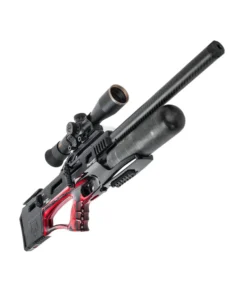
Air Rifles

PCP Air Rifles
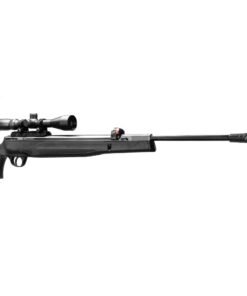
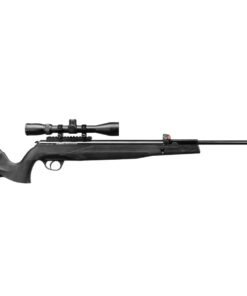
Air Rifles


Reviews
There are no reviews yet.