








Air Rifle Gamo Viper Pro 10X IGT GEN3i


$330.00
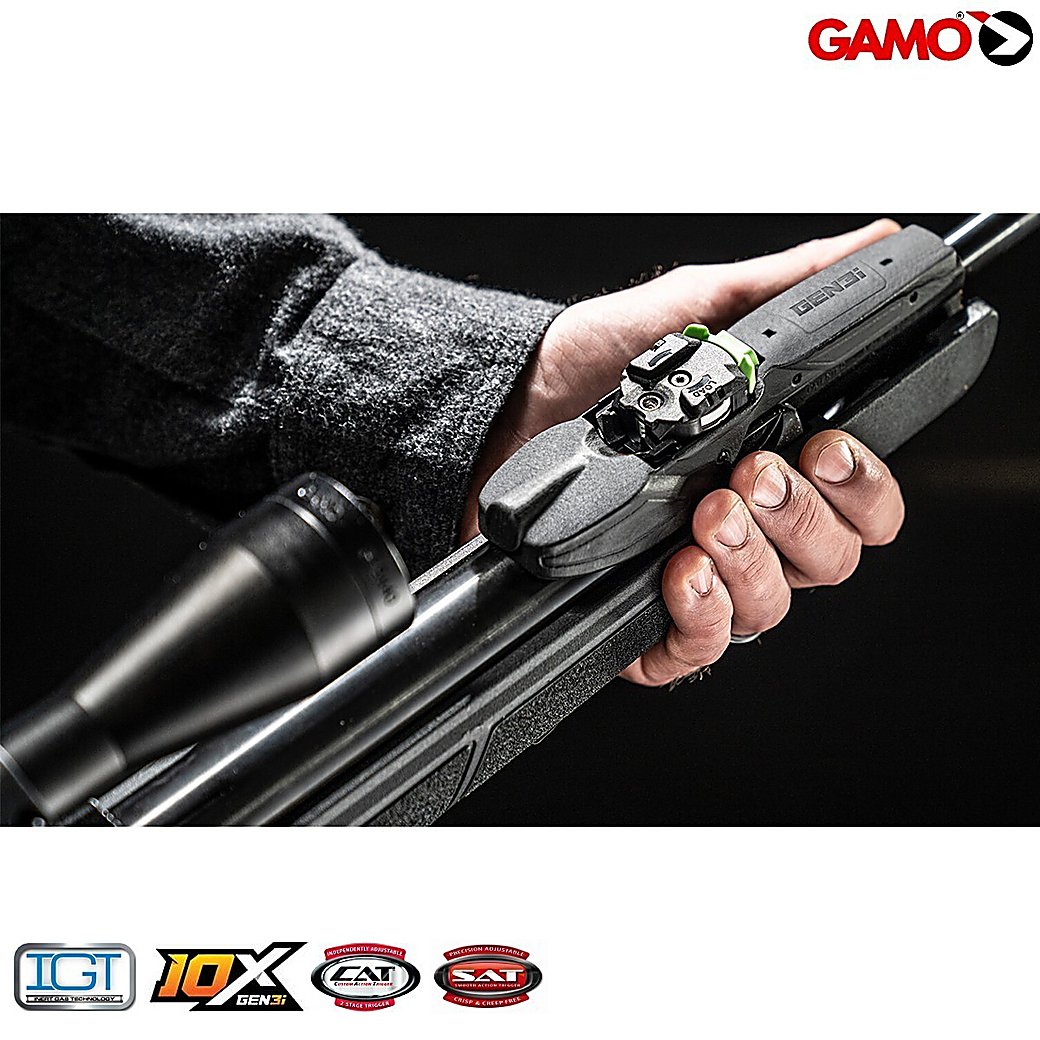
Unprecedented speed and power. Unparalleled performance. Offering smoother operation and improved accuracy for an unprecedented shooting experience, the Viper Pro 10X GEN3i includes the patent-pending 10X GEN3i Technology with our revolutionary new horizontal inertial fed magazine integration, making it lighter, more compact and low profile.
The magazine indexes using the inertial force from the recoil of the air rifle – creating a smoother and more precise breech-loading process. This air rifle features a new stock that combines a traditional hunting stock design with the automotive grade glass filled nylon materials. Forearm, grip and cheek piece are non-slip texturized.
Gamo’s new generation Gen3I IGT features the 10X system, which makes this air rifle fire ten shots with a simple opening of the barrel. With the slogan “ten shots, zero reloads”, this rifle boasts smoother operation and improved accuracy.
Features:
– Ambidextrous synthetic fibre stock.
– Grooved steel swivel barrel.
– RRR scope rail to reduce vibration and extend the life of the scope.
– Trigger system: 10x quick shot.
– CAT Trigger: Adjustable trigger in the first and second stage, smooth and precise.
– SWA recoil absorbing butt pad.
– Manual trigger safety.
– Magazine compartment integrated in the stock.
| SILENCER | Whisper Maxxim |
|---|---|
| TRIGGER | CAT |
| ACTION | Multishot 3rd Gen |
| POWERPLANT | IGT Mach 1 |
| TRIGGER LOCK | Yes |
| RAIL | RRR |
One magazine included, also sold separately as an accessory.
This air rifle includes a 4X32WR Scope
Data sheet
| Shooting speed (4.5 mm) | 305 m/s |
| Shooting speed (5.5 mm) | 220 m/s |
| Product Total Lenght | 114cm |
| Additional References | 61100211-IGT |
| Additional References | 793676104928 |
| Additional References | 6110021155-IGT |
| Additional References | 793676104935 |
Air Rifle Gamo Viper Pro 10X IGT GEN3i – Advanced Multi-Shot Break-Barrel Air Rifle Overview

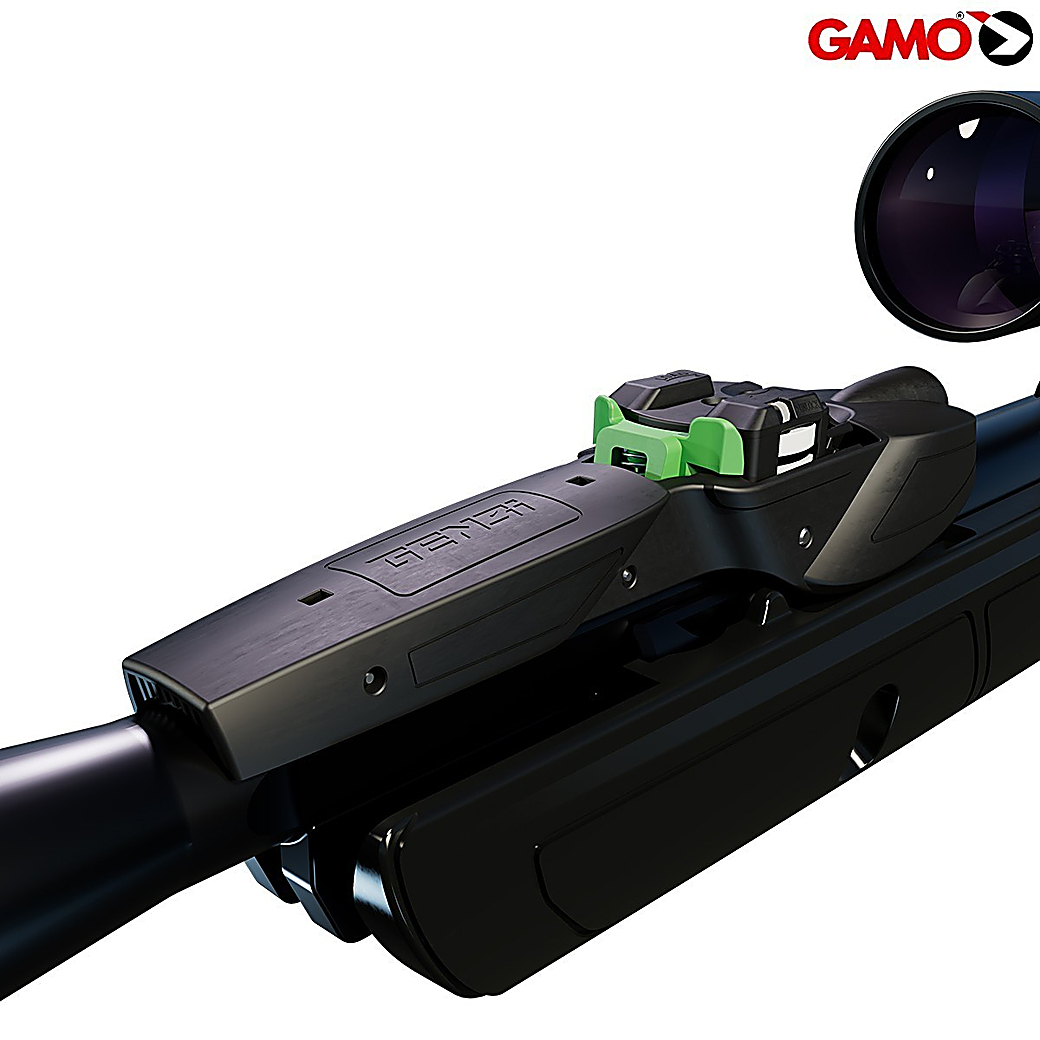
The Air Rifle Gamo Viper Pro 10X IGT GEN3i represents a modern interpretation of the traditional break-barrel air rifle platform. Rather than being built around a conventional coiled mainspring alone, the platform is supported by Gamo’s Inert Gas Technology, commonly identified as IGT. Air Rifle Gamo Viper Pro 10X IGT GEN3i
At the same time, a multi-shot magazine system has been incorporated through the company’s third-generation 10X GEN3i architecture. Consequently, several modern airgun technologies have been combined within a recognizable break-barrel format. Air Rifle Gamo Viper Pro 10X IGT GEN3i
A streamlined profile has been retained, while functionality has been expanded through the integration of the horizontal magazine system. Therefore, the rifle can be understood as part of Gamo’s continuing effort to refine the traditional break-barrel concept without replacing the simple mechanical principles that have made this type of air rifle widely recognized.
Importantly, the Gamo Viper Pro 10X IGT GEN3i should be approached as sporting equipment that requires responsible handling, secure storage, suitable supervision where necessary, and compliance with all applicable laws. Airguns must never be treated as toys. Instead, the same disciplined approach that is applied to other projectile-launching equipment should always be maintained.
For readers researching Gamo air-rifle technology, the Viper platform is particularly noteworthy because several proprietary systems have been brought together. These include the 10X GEN3i magazine architecture, IGT gas-piston power plant, CAT trigger system, Whisper Maxxim sound-moderating barrel technology, SWA recoil-pad design, and Gamo’s Recoil Reducing Rail.
According to Gamo’s current specifications, the Swarm Viper 10X GEN3i is offered in both .177 and .22 caliber configurations. The .177 version is rated by the manufacturer at velocities of up to 1,300 feet per second, while the .22 version is rated at up to 1,000 feet per second. These published figures can vary according to projectile weight, construction, environmental conditions, and other variables. The platform is also listed with a 3-9×40 optic, 10X GEN3i magazine system, Whisper Maxxim technology, IGT power system, CAT trigger, SWA recoil pad, and RRR rail.
Understanding the Air Rifle Gamo Viper Pro 10X IGT GEN3i
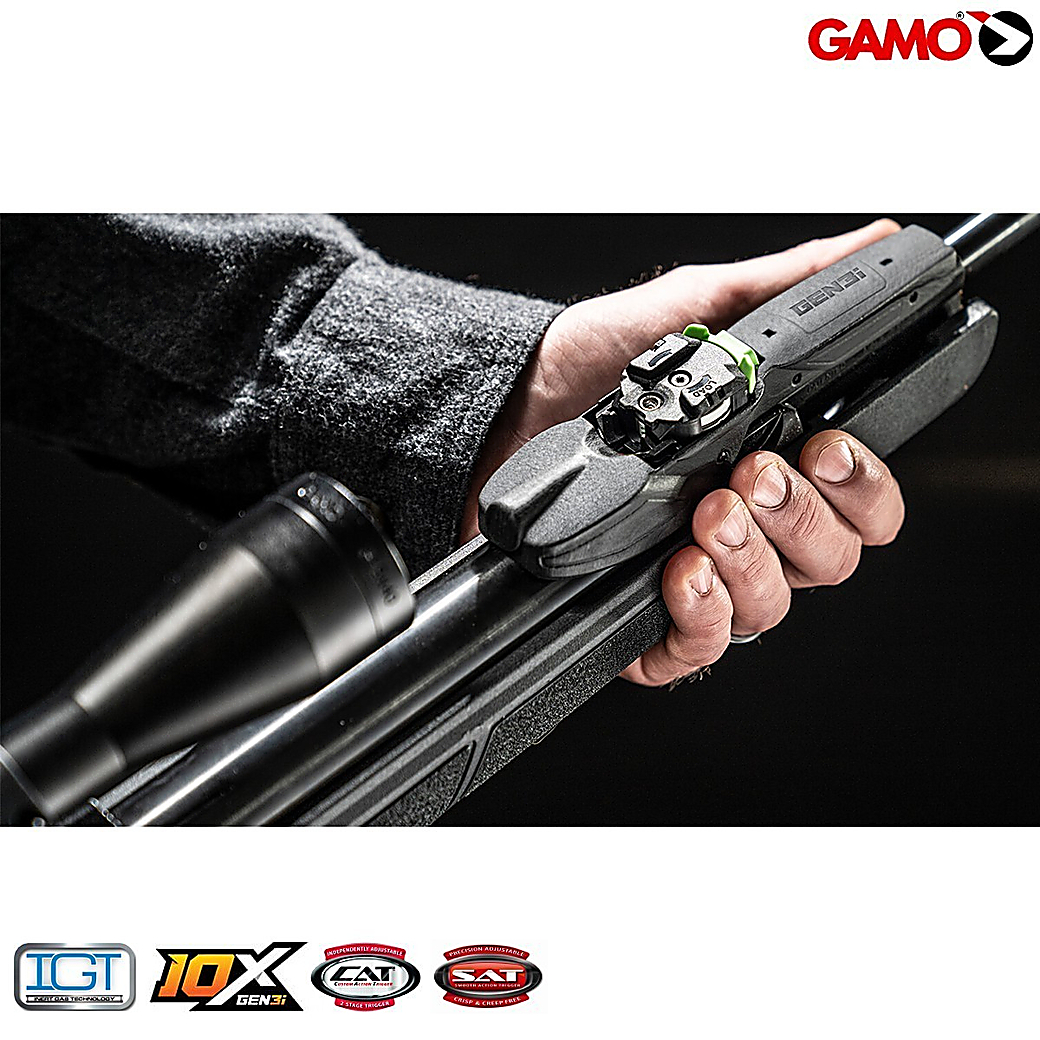
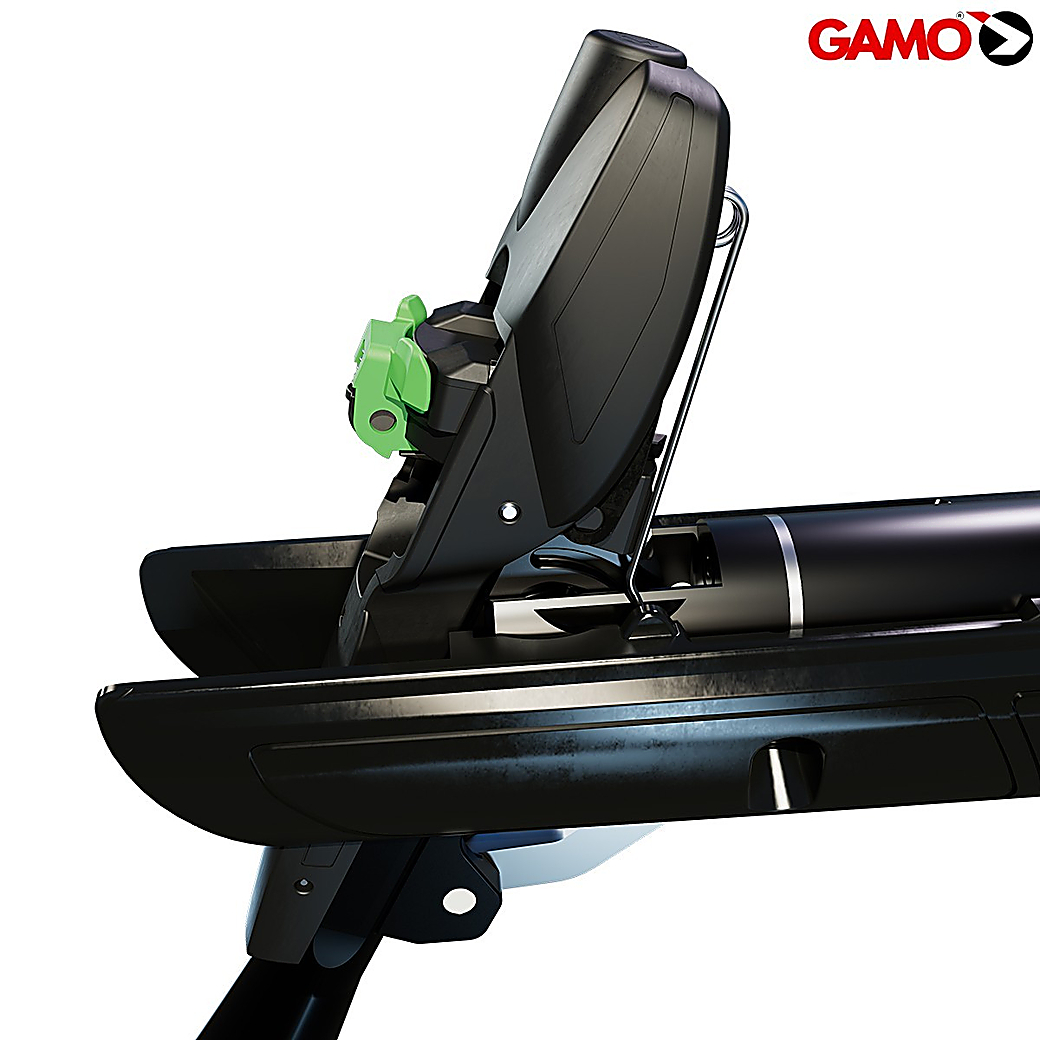
At its foundation, the Air Rifle Gamo Viper Pro 10X IGT GEN3i remains a break-barrel air rifle. However, several technologies have been added to differentiate the platform from a conventional single-shot spring-powered design.
Instead of relying entirely on the traditional steel coil spring used in many break-barrel rifles, a sealed gas cylinder is incorporated into Gamo’s IGT system. Consequently, a different power-delivery characteristic is produced.
Meanwhile, the multi-shot system has been positioned above the breech. Through Gamo’s third-generation magazine architecture, a low-profile horizontal design is provided. The manufacturer describes GEN3i as an inertia-fed system in which magazine indexing is assisted by forces created during the firing cycle.
As a result, the rifle combines technologies that address several different aspects of the shooting platform. Power delivery is addressed by IGT. Magazine integration is addressed by GEN3i. Trigger characteristics are addressed by CAT. Perceived sound is addressed by Whisper Maxxim technology. Recoil management at the shoulder is addressed by SWA, while optic mounting is supported by the Recoil Reducing Rail.
Therefore, the design should not be understood as being dependent on one headline feature. Rather, an interconnected collection of systems has been incorporated.
Key Characteristics at a Glance
For straightforward reference, the main characteristics associated with the Gamo Swarm Viper 10X GEN3i platform can be summarized as follows:
- Platform: Break-barrel pellet air rifle
- Available calibers: .177 and .22
- Magazine architecture: 10X GEN3i multi-shot system
- Power plant: Gamo IGT Inert Gas Technology
- Manufacturer-rated velocity: Up to 1,300 fps in .177 and up to 1,000 fps in .22, depending on projectile and conditions
- Noise-management technology: Whisper Maxxim
- Trigger: CAT Custom Action Trigger
- Recoil interface: SWA Shock Wave Absorber
- Optic mounting system: RRR Recoil Reducing Rail
- Listed optic: 3-9×40
- Stock configuration: Synthetic sporting stock
- Operating format: Break-barrel
- Manufacturer warranty listing: Three years for the Swarm Viper 10X GEN3i .177 and .22 models
Manufacturer specifications and warranty information should always be checked for the exact model, market, production year, and local distributor because regional configurations may differ.
Modern Break-Barrel Engineering
Break-barrel air rifles have remained familiar because their basic mechanical layout can be relatively self-contained. An external compressed-air cylinder does not normally need to be filled before routine use, while disposable CO₂ cartridges are not central to the operating system.
Nevertheless, conventional break-barrel designs have continued to evolve.
In the Gamo Viper Pro 10X IGT GEN3i, this evolution is visible in several areas. A gas piston has been substituted for the conventional coiled mainspring. In addition, magazine-fed functionality has been incorporated. Furthermore, technologies for optic mounting, trigger adjustment, recoil management, and sound reduction have been integrated.
Therefore, the modern Gamo platform illustrates how a traditional air-rifle configuration can be updated without being transformed into an entirely different power system.
Why the Break-Barrel Format Remains Relevant
A break-barrel architecture offers a self-contained power plant. Consequently, no separate high-pressure air tank is required as part of normal operation.
This characteristic can simplify storage and ownership logistics compared with systems that depend upon external charging infrastructure. However, it should not be interpreted as meaning that less responsibility is required. Safe handling, legal compliance, suitable storage, appropriate maintenance, and correct supervision remain essential.
Moreover, a break-barrel rifle possesses its own recoil characteristics. Although the recoil impulse of an air rifle differs from that of many cartridge firearms, movement is still generated by the internal power plant.
Therefore, components such as optics and mounts should be appropriate for the specific platform.
10X GEN3i Technology
One of the defining characteristics associated with the Air Rifle Gamo Viper Pro 10X IGT GEN3i is the 10X GEN3i system.
Gamo describes GEN3i as the third generation of its rapid-reload technology. A horizontal magazine arrangement has been integrated into the system, and inertia is used as part of the magazine-indexing process.
This development is significant because earlier attempts to incorporate magazine-fed functionality into break-barrel designs could add considerable height around the breech area. By contrast, a lower-profile configuration has been pursued through the newer horizontal magazine architecture.
Consequently, the rifle’s silhouette can remain comparatively streamlined.
Understanding the Horizontal Magazine Layout
Traditionally, a break-barrel pellet rifle is associated with a single pellet being positioned for each firing cycle. However, magazine-based break-barrel systems introduce an additional mechanical interface.
In the GEN3i configuration, that interface has been arranged horizontally.
Therefore, the magazine structure is distributed differently around the breech area than would be seen with a taller vertically oriented mechanism.
From an engineering perspective, packaging efficiency is important. A system that occupies excessive vertical space may interfere with sightlines, optic placement, carrying characteristics, or the overall visual balance of a rifle. Accordingly, minimizing unnecessary bulk can improve platform integration.
Inertia-Based Magazine Indexing
Gamo states that the GEN3i magazine is indexed using inertia generated during the firing cycle.
In practical mechanical terms, this means that part of the energy already produced by the rifle is used within the magazine-indexing system.
The concept demonstrates how mechanical forces generated during normal cycling can be incorporated into accessory functions.
However, the magazine should still be regarded as a precision component. Dirt, damaged projectiles, incorrect ammunition, impact damage, or inappropriate handling can interfere with the operation of any magazine system.
Therefore, manufacturer guidance should always be followed.
Gamo IGT Inert Gas Technology
The letters IGT refer to Inert Gas Technology.
Rather than using a conventional metal coil spring as the primary energy-storage component, Gamo’s IGT architecture uses a sealed gas cylinder to drive the piston. The manufacturer describes the resulting firing cycle as having less vibration than a conventional spring-powered configuration.
This distinction is important because the mechanical behavior of a power plant influences several aspects of an air rifle.
For example, vibration characteristics may influence perceived smoothness. Similarly, the way in which energy is released can affect how the rifle feels during its firing cycle.
Gas Piston Versus Traditional Coil Spring
A traditional spring-piston air rifle stores energy by compressing a steel coil spring.
By comparison, an IGT system relies on compressed gas contained within a sealed unit.
Consequently, the internal components and energy-storage characteristics differ.
A steel spring can exhibit oscillation after being released. This movement is sometimes perceived as the characteristic mechanical vibration or “spring twang” associated with certain conventional spring-powered airguns.
A gas-piston unit behaves differently because a steel coil does not need to expand and oscillate in the same manner.
Therefore, the firing sensation can feel different even when both rifles belong to the broader break-barrel category.
Consistency and Mechanical Behavior
Consistency is an important concept in any precision-oriented sporting platform.
If the mechanical cycle is repeated in a similar manner each time, fewer variables are introduced by the power system itself.
However, overall accuracy can never be attributed to the power plant alone.
Projectile selection, optic condition, environmental conditions, manufacturing tolerances, maintenance, shooter technique, support position, and many other variables can affect results.
Accordingly, manufacturer velocity ratings should not automatically be interpreted as accuracy guarantees.
.177 and .22 Caliber Configurations
The Gamo Swarm Viper 10X GEN3i is listed by Gamo in both .177 and .22 caliber versions.
These two calibers are widely recognized within sporting airgun applications, although their characteristics differ.
A .177 projectile generally possesses a smaller diameter and lower mass than a comparable .22 projectile.
Conversely, .22 pellets generally have greater diameter and mass.
Therefore, trajectory characteristics, velocity, retained energy, wind response, and projectile behavior can differ considerably.
.177 Configuration
According to Gamo’s current specifications, the .177 Swarm Viper 10X GEN3i is rated at velocities of up to 1,300 fps under the manufacturer’s test conditions.
This number represents a maximum advertised velocity rather than a fixed velocity for every pellet.
Different projectile designs produce different results.
For example, a lightweight alloy projectile can produce a different chronograph reading from a heavier lead projectile.
Temperature, atmospheric conditions, individual rifle tolerances, barrel condition, and projectile fit can also influence measured velocity.
Consequently, an advertised maximum should be treated as a manufacturer rating rather than an unconditional performance figure.
.22 Configuration
The .22 Swarm Viper 10X GEN3i is listed by Gamo at up to 1,000 fps.
Again, the exact velocity achieved is dependent on ammunition and conditions.
Because .22 pellets generally have greater mass than .177 pellets, comparisons should not be based on velocity alone.
Instead, caliber selection is normally evaluated through a broader combination of factors including projectile mass, trajectory characteristics, intended lawful sporting application, available range facilities, and local regulations.
Whisper Maxxim Sound-Management Technology
The Air Rifle Gamo Viper Pro 10X IGT GEN3i incorporates Gamo’s Whisper Maxxim technology according to the manufacturer’s current specification table.
Sound-management systems are intended to influence the report generated at the muzzle.
However, they do not make an air rifle silent.
Several sources of sound exist during the operation of a break-barrel air rifle. Mechanical components move internally, compressed air is released, the projectile travels through the barrel, and an impact occurs at the target or backstop.
Therefore, the overall sound experienced by a user cannot be attributed exclusively to muzzle output.
Understanding Airgun Sound
Environmental surroundings can dramatically influence perceived sound.
A rifle discharged in an enclosed area can appear considerably louder than the same equipment used within an appropriate outdoor sporting facility.
Hard surfaces can reflect sound.
Meanwhile, open spaces allow acoustic energy to disperse differently.
Projectile velocity can also influence the sound signature.
Consequently, hearing protection and range rules should be considered according to the environment, local requirements, and manufacturer recommendations.
CAT Custom Action Trigger
Gamo’s CAT, or Custom Action Trigger, is another technology incorporated into the Swarm Viper 10X GEN3i.
The system has been designed as an adjustable two-stage trigger architecture. According to Gamo, first-stage and second-stage characteristics can be adjusted independently within the system’s intended range.
Trigger feel can influence how consistently a sporting rifle is handled.
Nevertheless, any adjustment should remain within manufacturer specifications.
A trigger assembly is a safety-critical mechanical system. Therefore, unauthorized modification, removal of safety mechanisms, excessive adjustment, or improvised alterations should be avoided.
Why Two-Stage Trigger Design Matters
A two-stage trigger generally divides movement into two recognizable phases.
The first stage provides initial travel.
The second stage provides the final portion of travel before release.
This architecture can provide a more defined sense of trigger progression.
However, preferences differ between users.
For this reason, adjustability has been incorporated into many sporting trigger systems.
Importantly, adjustment should never be confused with modification beyond the manufacturer’s specifications.
Safe function must always take priority.
SWA Shock Wave Absorber Recoil Pad
The Swarm Viper 10X GEN3i is also listed with Gamo’s SWA, or Shock Wave Absorber, recoil-pad system.
A recoil pad provides an interface between the rifle stock and the shoulder.
Consequently, its shape and material can influence comfort and stability.
In an air rifle, recoil characteristics are generated primarily by internal mechanical movement rather than by the combustion cycle found in cartridge firearms.
Even so, movement can still be noticeable.
Therefore, a properly designed stock and recoil pad can contribute to a more controlled physical interface.
Stock Contact and Stability
Stable contact between the shooter and the rifle is generally desirable in sporting marksmanship.
However, spring-piston and gas-piston air rifles can respond differently to excessive gripping pressure.
For this reason, disciplined and repeatable handling is typically emphasized during supervised target practice.
Regardless of technique, the muzzle must always remain pointed in a safe direction and the trigger must remain untouched until appropriate conditions for lawful target shooting have been established.
RRR Recoil Reducing Rail
Optic mounting deserves particular attention on break-barrel rifles.
Unlike some low-recoil pneumatic platforms, spring-piston and gas-piston air rifles can produce complex movement during the firing cycle.
Therefore, optics used on these rifles should be designed to tolerate appropriate recoil characteristics.
Gamo’s specification for the Swarm Viper includes its RRR, or Recoil Reducing Rail, system.
The rail is intended to provide a mounting interface between the receiver and optic while managing part of the mechanical forces transmitted during firing.
Why Air-Rifle Optic Compatibility Matters
An optic should never be assumed to be suitable merely because it physically fits a rail.
Internal erector assemblies, lenses, adjustment mechanisms, mounts, and reticles can be exposed to repeated mechanical stress.
Consequently, optics specifically rated for the relevant airgun platform should be used.
Mounting screws should also be inspected periodically according to manufacturer recommendations.
However, excessive tightening should be avoided because threads, mounts, rails, or optic tubes may be damaged.
3-9×40 Scope Configuration
Gamo currently lists the Swarm Viper 10X GEN3i with a 3-9×40 scope configuration.
The designation describes two primary characteristics.
First, the magnification range extends from approximately three times to nine times.
Second, the objective lens is nominally 40 millimeters in diameter.
Variable magnification provides different viewing options for suitable sporting target applications.
Lower magnification generally provides a wider apparent field of view, while higher magnification makes the target appear larger.
However, increased magnification also makes movement appear more pronounced.
Therefore, maximum magnification is not automatically the most appropriate setting for every situation.
Optical Clarity and Practical Expectations
Optical performance depends on more than magnification.
Lens quality, coatings, internal construction, eye relief, focus, reticle design, lighting, atmospheric conditions, and mechanical alignment can all influence image quality.
Accordingly, users should avoid judging an optic solely by its magnification specification.
Furthermore, no optic replaces safe target identification.
A projectile must never be released toward a target unless the intended target and the area beyond it have been positively identified as safe and lawful.
Synthetic Stock Construction
The Gamo Viper platform is built around a synthetic stock.
Synthetic materials are widely used in modern sporting equipment because dimensional stability and resistance to ordinary environmental exposure can be achieved without the same moisture response associated with unfinished natural wood.
However, synthetic does not mean indestructible.
Heat, aggressive chemicals, impact, excessive ultraviolet exposure, and improper storage can still damage components.
Therefore, sensible storage practices remain necessary.
Everyday Care of Synthetic Surfaces
Routine external care can generally be kept straightforward.
Dust and loose debris should be removed using non-abrasive materials.
Strong solvents should not be applied unless they have specifically been approved by the manufacturer for the relevant surface.
Likewise, abrasive compounds should be avoided.
If the rifle has been exposed to moisture, external surfaces should be dried before long-term storage.
Nevertheless, internal disassembly should not be performed casually.
A gas-piston air rifle contains components that can remain under substantial stored mechanical pressure.
Accordingly, internal servicing should be left to qualified personnel where recommended.
Ergonomics of the Gamo Viper Platform
Ergonomics refer to the relationship between equipment and the person using it.
Stock geometry, grip position, cheek contact, trigger reach, overall length, balance, surface texture, and recoil-pad design all contribute to this relationship.
The Air Rifle Gamo Viper Pro 10X IGT GEN3i has been designed around a modern synthetic sporting stock.
Consequently, visual styling and functional geometry have been combined.
However, suitability remains individual.
A rifle that feels appropriately proportioned for one adult may not provide the same fit for another person.
Therefore, responsible selection and supervised handling should take physical dimensions into account.
Balance and Handling
Balance influences how sporting equipment feels when supported.
A front-heavy rifle may demand more effort from the supporting arm.
Conversely, excessive rearward weight can create a different handling characteristic.
Accessories can also modify balance.
For example, an optic and mounts add mass above the receiver.
Therefore, the complete assembled system may feel different from an unconfigured rifle.
The Role of Barrel Construction
The barrel represents one of the critical mechanical components of any pellet rifle.
Inside the barrel, rifling is generally used to impart rotational stability to the projectile.
This spin assists aerodynamic stability during flight.
However, barrel quality alone does not determine accuracy.
Projectile consistency, crown condition, breech alignment, power-plant consistency, optic stability, environmental conditions, and shooter technique all contribute.
Consequently, accuracy should be understood as the result of an entire system rather than a single component.
Pellet Fit and Barrel Compatibility
Pellets are manufactured in numerous weights, shapes, alloys, and dimensional tolerances.
As a result, different projectiles can behave differently in the same barrel.
A pellet that performs consistently in one rifle may not necessarily produce identical results in another rifle of the same nominal caliber.
Therefore, manufacturer-approved ammunition should be used and any testing should be conducted only in a suitable lawful target environment.
Damaged, deformed, contaminated, or incorrect-caliber projectiles should never be used.
Understanding Manufacturer Velocity Ratings
Velocity figures are often among the first specifications noticed when an air rifle is being researched.
Nevertheless, velocity should be interpreted carefully.
Gamo lists up to 1,300 fps for the .177 Swarm Viper and up to 1,000 fps for the .22 model.
The phrase “up to” is particularly important.
Maximum advertised velocity may be obtained using specific lightweight projectiles under controlled test conditions.
Consequently, a heavier projectile will generally travel at a different velocity.
Velocity Is Not the Same as Accuracy
A faster projectile is not automatically more accurate.
Accuracy requires consistency.
Furthermore, the relationship between projectile design and barrel characteristics can have a significant influence.
Extremely high velocity can also alter aerodynamic behavior depending on the projectile.
Therefore, velocity should be considered as only one specification within a much larger performance picture.
Velocity Is Not the Same as Energy
Velocity describes speed.
Energy incorporates both speed and projectile mass.
Consequently, two pellets traveling at different speeds can possess energy characteristics that cannot be determined from velocity alone.
For this reason, meaningful comparisons require complete projectile data rather than headline velocity figures.
What Makes GEN3i Different From a Conventional Single-Shot Break Barrel?
A conventional single-shot break-barrel rifle generally requires a projectile to be individually introduced during each loading cycle.
By contrast, the GEN3i architecture incorporates a magazine.
Therefore, multiple projectiles can be carried within the magazine system while the break-barrel mechanism remains fundamental to the rifle.
The distinction demonstrates how mechanical convenience has been integrated into a traditional power platform.
Nevertheless, the presence of a magazine does not remove the requirement for deliberate safety procedures.
An air rifle should always be treated as though it may be loaded until its condition has been personally and safely verified according to manufacturer guidance.
Mechanical Simplicity and Added Technology
The Gamo Viper Pro 10X IGT GEN3i occupies an interesting position within air-rifle design.
On one hand, a break-barrel platform remains mechanically self-contained.
On the other hand, additional systems have been integrated around the basic architecture.
Consequently, the rifle includes considerably more engineering than a basic single-shot spring rifle.
However, those additional features should not be confused with unnecessary complexity.
Each major system addresses a particular design goal.
IGT addresses power delivery.
GEN3i addresses magazine integration.
CAT addresses trigger characteristics.
Whisper Maxxim addresses sound management.
SWA addresses the shoulder interface.
RRR addresses optic mounting and recoil transmission.
Therefore, the platform can be evaluated as an integrated system rather than as a collection of unrelated features.
Responsible Sporting Use
Air rifles are used internationally for a variety of lawful sporting and recreational disciplines.
Nevertheless, regulations differ widely between countries, states, provinces, regions, municipalities, and shooting facilities.
Some jurisdictions classify particular air rifles according to caliber, projectile energy, velocity, intended use, or other criteria.
Consequently, assumptions should never be made about legal status.
Before an air rifle is possessed, transported, stored, transferred, or used, applicable regulations should be independently confirmed with the relevant authorities.
Target Shooting Environments
Suitable target shooting requires considerably more than an available target.
A secure backstop must be provided.
The surrounding area must also be controlled.
Furthermore, the complete flight path and area beyond the target must be understood.
Hard surfaces that may cause ricochets should be avoided.
Likewise, casual shooting in gardens, public land, woodland, or residential areas should never be assumed to be lawful or safe.
A properly managed range remains the preferred environment where available.
The Importance of Safe Backstops
A pellet can retain enough energy to cause serious injury or property damage after passing through or missing an intended target.
Therefore, a suitable backstop is essential.
The backstop must be designed specifically for the projectile type and energy involved.
Improvised objects should not automatically be assumed to be adequate.
Thin wood, household furniture, walls, fencing, sheet metal, glass, trees, and other casual surfaces can allow penetration or ricochet.
Consequently, purpose-designed range equipment should be preferred.
Eye Protection and Range Discipline
Appropriate eye protection should be worn during target activities.
This protection is especially important because fragments, ricochets, damaged pellets, or debris can travel unpredictably.
Observers should also be positioned safely.
Furthermore, anyone entering the shooting environment should understand the range rules.
Distractions should be minimized.
Alcohol and intoxicating substances should never be associated with handling an air rifle.
Safe direction, target identification, trigger discipline, and secure control of the rifle should be maintained consistently.
Storage Responsibilities
Secure storage represents a fundamental part of responsible air-rifle ownership.
The rifle should be kept inaccessible to unauthorized people, particularly children.
Local laws may establish specific storage requirements.
Therefore, those requirements must be followed.
Even where legislation does not prescribe a particular storage method, locked storage should be strongly considered.
A secure cabinet or other appropriate locking solution can reduce unauthorized access.
Ammunition and magazines may also need to be stored separately depending on local regulations and circumstances.
Long-Term Storage Environment
Humidity can affect metal components.
Therefore, prolonged exposure to damp conditions should be avoided.
Extremely high heat should also be avoided, particularly because seals, lubricants, polymers, and optic components may be affected.
The rifle should not be left unsecured inside a vehicle.
Likewise, an air rifle should never be displayed where unauthorized individuals could easily access it.
Before storage, the equipment should be placed in the condition specified by the manufacturer.
Transportation Considerations
Transport requirements vary considerably by jurisdiction.
A rifle that can legally be transported in one region may be subject to additional restrictions elsewhere.
Consequently, applicable legislation should always be reviewed before travel.
Generally, equipment should be secured within a suitable case and should not be unnecessarily accessible during transportation.
Public display should be avoided.
Moreover, transportation across regional or national borders can introduce additional legal requirements.
Therefore, legal status should be verified before any journey is undertaken.
Cleaning the Exterior
Routine exterior cleaning can help protect the rifle from dust, moisture, fingerprints, and environmental residue.
A soft, dry cloth is generally suitable for basic surface care.
However, only products compatible with the relevant finishes should be used.
Excessive lubricant should not be applied.
Furthermore, oil should not be introduced into areas where the manufacturer does not specify lubrication.
A gas-piston air rifle should not be treated as though every moving component requires frequent oiling.
Over-lubrication can attract debris and may create other problems.
Consequently, the manufacturer’s maintenance schedule should remain the primary reference.
Barrel Maintenance
Barrel maintenance should be approached conservatively.
Unlike cartridge firearms, air rifles do not experience conventional powder combustion residue.
Therefore, aggressive cleaning after every session is generally unnecessary unless specifically recommended.
If accuracy changes unexpectedly, several possible causes should be investigated before assuming that the bore requires aggressive cleaning.
Optic mounting, projectile quality, mechanical fasteners, environmental conditions, and other factors should also be considered.
Any cleaning method should be compatible with an airgun barrel.
Improvised metal rods or abrasive tools can damage rifling or the crown.
Magazine Care
The GEN3i magazine represents a precision mechanical component.
Consequently, it should be protected from impact, excessive dirt, incompatible lubricants, and deformation.
Debris can interfere with moving components.
Likewise, damaged projectiles can affect feeding.
The magazine should not be modified.
If resistance, unusual indexing, or damage is observed, use should be stopped until the component has been inspected according to manufacturer recommendations.
Forcing a malfunctioning mechanism can increase damage.
Caring for the Optic
A riflescope contains both optical and mechanical components.
Therefore, it should be handled carefully.
Lens surfaces should first be cleared of loose particles before wiping.
Otherwise, abrasive grit may scratch optical coatings.
A blower or suitable lens-cleaning tool can be useful for removing loose debris.
Afterward, purpose-designed lens materials can be used when necessary.
Household glass cleaners should not automatically be applied because certain chemicals may affect coatings.
Protective caps can also reduce contamination during storage.
Inspecting Mounts and Fasteners
Break-barrel air rifles generate repeated mechanical movement.
Consequently, fasteners should be inspected periodically in accordance with manufacturer instructions.
An optic that gradually shifts may cause apparent changes in point of impact.
Likewise, loose stock fasteners can affect consistency.
However, indiscriminate tightening should be avoided.
Over-torquing can damage threads, mounts, rails, stock components, or scope tubes.
Therefore, manufacturer-specified torque values should be followed where provided.
Understanding Recoil in Gas-Piston Air Rifles
Air-rifle recoil is sometimes underestimated.
A gas-piston break barrel does not produce recoil in precisely the same way as a conventional firearm.
Instead, significant internal masses move during the firing cycle.
Consequently, the rifle and mounted accessories experience acceleration forces.
This mechanical behavior explains why airgun-compatible optics and mounts are important.
It also explains why repeatable support technique can influence target consistency.
Nevertheless, safe target handling remains more important than attempting to optimize performance.
Trigger Safety
The trigger should never be touched merely because the rifle appears to be unloaded.
Mechanical devices can fail.
Therefore, muzzle direction must remain safe regardless of the condition of the safety mechanism.
The trigger should only be contacted when the rifle is being used in an authorized shooting environment and the appropriate firing decision has already been made.
Similarly, the safety should be understood as a supplementary mechanical device rather than a replacement for disciplined handling.
Airgun Safety Is Not Optional
The term “air rifle” can sometimes create a misleading impression of harmlessness.
However, modern pellet rifles can launch projectiles at substantial velocities.
Serious injury can occur.
Property can be damaged.
Consequently, the Air Rifle Gamo Viper Pro 10X IGT GEN3i must always be treated as potentially dangerous equipment.
Children should never have unsupervised access.
Furthermore, inexperienced users should receive appropriate instruction before handling any airgun.
Materials and Environmental Resistance
Synthetic stocks have become widespread because they offer practical durability.
Unlike natural wood, polymer-based materials do not absorb environmental moisture in the same manner.
Consequently, dimensional stability can be easier to maintain under changing conditions.
However, sunlight, extreme heat, solvents, impact, and long-term neglect can still degrade synthetic components.
Therefore, sensible maintenance remains required.
The rifle should not be stored against heaters, inside extremely hot vehicles, or in persistently damp spaces.
Appearance and Contemporary Styling
Modern Gamo air rifles typically adopt an angular synthetic design language.
Functional surfaces are incorporated into the stock, while sculpted contours contribute to both handling and visual identity.
Consequently, the Viper platform differs aesthetically from traditional wood-stock sporting rifles.
The synthetic construction also creates a relatively consistent appearance over time because no natural grain variation is involved.
Nevertheless, cosmetic appearance should remain secondary to safe mechanical condition.
Damage around the stock, trigger area, barrel assembly, rail, or magazine mechanism should be evaluated before continued use.
The Importance of Manufacturer Documentation
Product descriptions provide useful summaries.
However, they do not replace the official manual.
The manual contains model-specific safety information, operating limitations, approved maintenance procedures, diagrams, warnings, and warranty conditions.
Therefore, it should be read completely before handling the rifle.
If documentation is missing, the appropriate manual should be obtained from the manufacturer or authorized support source.
Guesswork should never be substituted for official safety guidance.
Warranty Information
Gamo currently lists a three-year warranty for both the .177 and .22 Swarm Viper 10X GEN3i configurations on its U.S. warranty information page.
However, warranty terms can differ according to jurisdiction, distributor, date of manufacture, and specific product configuration.
Therefore, local documentation should be checked.
Unauthorized modification may also affect warranty coverage.
Consequently, internal components should not be altered without appropriate manufacturer authorization.
Understanding the 10-Shot Concept
The 10X designation refers to the multi-shot magazine architecture associated with this generation of Gamo air rifles.
The magazine carries multiple pellets, while the break-barrel power system remains mechanically central to the platform.
Accordingly, “multi-shot” in this context should not be confused with a self-loading firearm mechanism.
Each firing cycle remains dependent on the break-barrel action.
This distinction is useful when comparing airgun technologies.
PCP, CO₂, spring-piston, gas-piston, and other platforms can all support different loading systems while using fundamentally different power plants.
Gas Piston and Temperature Considerations
Environmental temperature can influence materials, seals, lubricants, optics, and projectile behavior.
However, the precise effect varies according to the system.
A sealed gas-piston unit behaves differently from both a conventional coil spring and a CO₂-powered system.
Nevertheless, extreme temperature conditions should generally be avoided.
Equipment that has been stored in very cold or hot surroundings should be allowed to stabilize appropriately before inspection or sporting use.
Condensation should also be considered when cold equipment is brought into a warm humid environment.
Weather and Outdoor Care
If the rifle is exposed to light rain or moisture during legitimate outdoor sporting activity, it should not simply be placed into long-term storage while wet.
External surfaces should be dried.
The optic should also be inspected.
Furthermore, the case itself should be checked because storing a dry rifle inside a damp foam-lined case can still expose metal components to prolonged moisture.
Therefore, both equipment and storage materials should be kept appropriately dry.
Scope Magnification Explained
A 3-9x variable optic allows the apparent target size to be changed across the listed magnification range.
At approximately 3x, a wider field of view is generally available.
At approximately 9x, the target appears larger but the apparent field becomes narrower.
Movement is also magnified.
Consequently, higher magnification is not inherently superior.
Suitable settings depend upon range rules, target distance, stability, lighting, and individual preference.
Objective Lens Size Explained
The “40” in a 3-9×40 scope generally refers to a nominal 40 mm objective lens diameter.
Objective size can influence light collection and physical dimensions.
Nevertheless, brightness cannot be predicted from objective size alone.
Optical coatings, glass quality, internal transmission, exit pupil, magnification, and environmental light also matter.
Therefore, numerical specifications should always be considered in context.
Eye Relief and Safe Viewing
Correct eye relief allows the full image to be observed without placing the eye unnecessarily close to the optic.
Although an air rifle typically produces less rearward recoil than many centerfire firearms, movement is still present.
Consequently, adequate eye relief remains important.
The optic should also be positioned so that an unnatural neck position is not required.
However, mounting changes should be completed only in accordance with appropriate manufacturer guidance.
Mechanical Inspection Before Use
Before any lawful sporting session, the equipment should be inspected for obvious damage.
Cracked components, loose optics, damaged magazines, obstructed barrels, abnormal noises, or unusual resistance should never be ignored.
If a fault is suspected, use should stop.
Furthermore, attempting to compensate for a mechanical problem by applying additional force can worsen the issue.
A qualified technician or manufacturer-approved service provider should be consulted when necessary.
Never Rely on Appearance Alone
An air rifle may appear unloaded while a projectile remains present.
Therefore, appearance alone should never be relied upon.
Similarly, removal of a magazine does not automatically establish that every part of a projectile path is clear.
The exact verification procedure should be taken from the manufacturer’s instructions.
Regardless of verification status, the muzzle should continue to be controlled safely.
Air Rifle Gamo Viper Pro 10X IGT GEN3i and Target Accuracy
Accuracy is frequently discussed in relation to premium sporting air rifles.
However, realistic evaluation requires an understanding of multiple interacting variables.
A stable barrel assembly is required.
A consistent power plant is required.
An appropriate projectile is required.
A secure optic and mount are required.
Environmental conditions also matter.
Finally, human consistency has a substantial influence.
Therefore, claims that one isolated feature automatically guarantees accuracy should be treated cautiously.
Mechanical Consistency
Mechanical consistency refers to how similarly the rifle completes each operating cycle.
The gas-piston architecture is intended to create a repeatable energy-release process.
Likewise, projectile seating must remain consistent.
However, manufacturing tolerances always exist.
Consequently, chronograph and grouping results can vary from one individual rifle to another.
Projectile Consistency
Pellets can vary in weight and geometry.
Premium manufacturing processes may reduce variation, but no mass-produced projectile is perfectly identical.
Damage can introduce further inconsistency.
Therefore, pellets should be stored carefully so that skirts and heads are not crushed.
Environmental Variables
Wind represents an important external variable.
Even relatively light wind can influence lightweight airgun projectiles.
Temperature and air density can also affect trajectories.
Consequently, results obtained on one day should not automatically be expected to duplicate themselves under different conditions.
Why Repeatability Matters More Than Headline Numbers
High velocity attracts attention because it can be summarized with a single number.
However, repeatability is often more meaningful when evaluating sporting equipment.
If the complete system behaves consistently, meaningful adjustments and observations can be made.
If results change unpredictably, identifying a cause becomes more difficult.
Therefore, sophisticated airgun evaluation considers groups, consistency, projectile compatibility, mechanical condition, and environmental variables rather than velocity alone.
Understanding the Role of the Shooter
Even highly engineered equipment remains dependent on the person handling it.
Grip pressure, shoulder contact, head position, breathing, trigger control, support position, and follow-through can all introduce variation.
Consequently, supervised training is valuable.
However, performance coaching should always be secondary to safety instruction.
A shooter who understands safe handling but is still developing precision is preferable to someone pursuing accuracy without disciplined safety behavior.
Suitable Experience Levels
The Gamo Viper platform incorporates modern features, but those features do not automatically make it suitable for every person.
Physical ability, maturity, legal age, supervision, knowledge, and experience should all be considered.
A relatively powerful air rifle may not be an appropriate first introduction for every beginner.
Therefore, qualified instruction and controlled range conditions can be particularly valuable for new users.
The Role of Supervision
Where minors are legally permitted to participate in airgun sports, competent adult supervision should be continuous.
The supervising adult should understand the equipment and relevant laws.
Simply being physically present is not sufficient.
Clear range commands, controlled ammunition access, safe muzzle direction, and immediate intervention capability should be maintained.
Local age restrictions must also be observed.
Legal Classification Can Vary
Airgun legislation is not globally uniform.
In some countries, certain air rifles may be purchased and possessed under comparatively straightforward rules.
Elsewhere, licensing, registration, energy restrictions, age limits, transportation conditions, or storage requirements may apply.
Furthermore, municipal ordinances can prohibit discharge even when possession is lawful.
Consequently, internet descriptions cannot determine legality for an individual user.
Authoritative local information should always be consulted.
Responsible Ownership and Community Considerations
Legal permission does not eliminate the need for consideration toward neighbors and the broader community.
Noise, visible handling, insecure transportation, and inappropriate shooting locations can create concern.
Therefore, sporting equipment should be transported discreetly and responsibly.
Public areas should not be used casually.
Likewise, an air rifle should not be displayed in ways that could reasonably cause alarm.
What IGT Changes in the Shooting Cycle
When a conventional spring is released, it expands and drives the piston.
Additional oscillation can then occur.
By contrast, the IGT gas cylinder releases stored energy without a long steel coil undergoing the same oscillatory behavior.
Consequently, the sensation can differ.
Gamo promotes this architecture as providing reduced vibration compared with a traditional spring system.
Nevertheless, movement remains present.
Therefore, the rifle should not be described as recoil-free.
Benefits of an Integrated Design Philosophy
Each proprietary system incorporated into the Viper serves a particular role.
When these systems are engineered together, compatibility can be considered during the original design process.
For example, the RRR rail has been developed around the recoil characteristics of the rifle platform.
Likewise, the GEN3i magazine has been designed around the break-barrel geometry.
Therefore, integration can provide advantages over attaching unrelated aftermarket systems.
However, maintenance and component compatibility should still be verified carefully.
Replacement Parts and Compatibility
Model names can be similar across different generations of air rifles.
Consequently, parts should never be ordered solely because a product name appears similar.
Model number, caliber, generation, serial information, and manufacturer part numbers should be checked.
A GEN2 component should not automatically be assumed to fit a GEN3i model.
Likewise, magazines designed for another caliber are not interchangeable simply because their exterior appearance is similar.
Manufacturer documentation remains the correct reference.
Serial Numbers and Record Keeping
Keeping an accurate record of the rifle’s serial number can be useful for warranty support, insurance, service documentation, and lawful ownership records.
However, serial numbers should not be unnecessarily published online.
Documentation should be stored securely.
Receipts and warranty records may also be retained where appropriate.
If local registration requirements apply, they should be followed.
Avoiding Unauthorized Modification
Air rifles are sometimes modified in attempts to change power, trigger characteristics, sound, or other performance parameters.
Such modifications may be unsafe or unlawful.
They can also invalidate warranties.
Consequently, the Air Rifle Gamo Viper Pro 10X IGT GEN3i should be kept within its manufacturer-approved configuration unless work is being performed by an appropriately qualified and authorized technician.
Safety systems should never be disabled.
Why Internal Gas-Piston Service Is Different
A gas-piston assembly contains stored energy.
Therefore, internal disassembly should not be approached as ordinary household maintenance.
Specialized tooling and knowledge may be required.
Incorrect disassembly can expose the person performing the work to sudden movement of components.
Consequently, major internal servicing should be referred to competent professionals.
Protecting the Muzzle and Crown
The barrel crown influences the final release of the projectile from the bore.
Damage can potentially affect consistency.
Therefore, the muzzle should be protected from impact.
Tools should not be inserted carelessly.
Likewise, the rifle should not be rested directly on its muzzle.
A minor-looking impact can sometimes produce more meaningful mechanical consequences than cosmetic appearance suggests.
Avoiding Barrel Obstructions
The bore must remain unobstructed.
Foreign objects, cleaning materials, damaged projectiles, excess debris, or other obstructions can create dangerous conditions.
If an obstruction is suspected, the rifle should not be fired.
Instead, it should be made safe according to manufacturer instructions and inspected appropriately.
Attempting to clear an obstruction by firing another projectile is unsafe.
Pellet Quality and Storage
Pellets should be kept clean and dry.
Loose storage with tools or heavy objects can deform them.
Similarly, exposure to contamination may affect consistency.
Original tins or purpose-designed containers provide better protection.
Different calibers should also be kept clearly separated to reduce the possibility of incorrect ammunition being selected.
Never Substitute Improvised Projectiles
Only ammunition specifically approved for the rifle should be used.
Improvised projectiles can damage the barrel, magazine, breech, seals, or internal components.
They may also behave unpredictably after leaving the muzzle.
Consequently, darts, foreign objects, incorrect pellets, damaged ammunition, or homemade projectiles should never be substituted.
Noise Reduction Does Not Equal Silence
The term Whisper Maxxim describes Gamo’s noise-management technology.
However, no responsible description should imply complete silence.
Mechanical movement remains audible.
Projectile impact remains audible.
The surrounding environment also influences sound.
Consequently, local discharge restrictions still apply regardless of sound-reduction technology.
Neighbors and bystanders must also be considered.
Why Safe Handling Must Continue After Shooting
A sporting session does not end when the final target has been used.
The rifle must still be made safe, inspected, transported, and stored correctly.
Remaining ammunition should be secured.
Targets and debris should be collected.
The range area should also be left in a safe condition.
Therefore, post-session procedures are part of responsible airgun ownership rather than an optional afterthought.
Comparing Gas-Piston and PCP Platforms Conceptually
A gas-piston break barrel and a pre-charged pneumatic rifle operate using fundamentally different architectures.
A PCP rifle stores compressed air in a reservoir.
By contrast, a gas-piston break barrel stores energy within its internal piston system for each operating cycle.
Consequently, the supporting equipment and handling characteristics differ.
PCP platforms may require pumps, compressors, cylinders, or other charging equipment.
Gas-piston break barrels generally remain more self-contained.
However, neither design should automatically be considered universally superior.
Comparing Gas-Piston and CO₂ Platforms
CO₂-powered airguns use carbon dioxide stored in replaceable or refillable containers depending on the design.
Their operating characteristics are influenced significantly by temperature because CO₂ vapor pressure changes with temperature.
The Gamo IGT system is fundamentally different because it is not powered by disposable CO₂ cartridges.
Therefore, the two technologies should not be grouped together simply because both involve gas.
Their internal functions, maintenance considerations, and performance characteristics differ.
Comparing IGT With Conventional Spring-Piston Systems
Both conventional spring-piston rifles and IGT rifles are commonly encountered in break-barrel form.
The principal difference concerns the component used to store and release energy.
A steel spring is used in one.
A sealed gas strut is used in the other.
Consequently, vibration, mechanical feel, and internal component behavior can differ.
However, both remain powerful sporting devices requiring identical levels of safety responsibility.
Understanding Product Naming
The phrase Air Rifle Gamo Viper Pro 10X IGT GEN3i combines several descriptive elements that are often encountered in online searches.
“Gamo” identifies the manufacturer.
“Viper” identifies the product family.
“10X” refers to the multi-shot magazine architecture.
“IGT” identifies Inert Gas Technology.
“GEN3i” identifies the third-generation inertia-based magazine design.
Understanding these terms can make product research more precise.
Gamo’s Broader 10X GEN3i Platform
The GEN3i magazine concept is not restricted to one Viper model.
Gamo has incorporated GEN3i technology into several Swarm-series rifles.
This wider use demonstrates that the system represents a broader platform technology rather than a one-off accessory.
Nevertheless, specifications differ among the rifles.
Therefore, performance figures from another Gamo GEN3i rifle should not automatically be attributed to the Viper.
Swarm Viper Versus Swarm Magnum Pro
Gamo’s current catalog distinguishes the Swarm Viper from the Swarm Magnum Pro.
The Viper uses standard IGT technology, while the Magnum Pro is listed with the more powerful IGT Mach 1 system.
Noise-management systems also differ, with Whisper Maxxim listed for the Viper and Whisper Fusion listed for the Magnum Pro.
Consequently, specifications from the Magnum Pro should not be copied into a Viper listing.
Accurate model identification is essential.
Current Gamo Viper Specifications
According to Gamo’s 2026 air-rifle specification table, the Swarm Viper .177 is identified by item number 6110021154 and is rated at up to 1,300 fps.
The .22 version is identified as item number 611002115554 and is rated at up to 1,000 fps.
Both versions are listed with a 3-9×40 optic, 10X GEN3i multi-shot system, Whisper Maxxim noise reduction, IGT power system, CAT trigger, SWA recoil pad, and RRR rail.
These details should be verified against the exact physical product and regional packaging because manufacturer specifications can be revised.
Dimensions and Physical Characteristics
Earlier Gamo catalog specifications have listed the Swarm Viper 10X GEN3i with a relatively lightweight synthetic configuration.
Nevertheless, dimensional specifications can change between production runs, regional packages, and catalog years.
Therefore, current manufacturer documentation for the specific SKU should be consulted when exact measurements are required.
This approach is preferable to copying dimensions from an older retailer listing that may refer to another generation.
Why Accurate Specifications Matter
Incorrect product specifications create several problems.
They can mislead readers.
They can also create improper expectations about compatibility.
Furthermore, incorrect caliber or magazine information can present safety risks.
Therefore, technical product content should prioritize manufacturer-confirmed information rather than keyword density alone.
For SEO purposes, factual authority is more valuable than repetitive claims.
SEO Relevance of Detailed Product Information
A high-quality product information page should answer the questions readers are genuinely researching.
Therefore, sections addressing technology, caliber, power plant, magazine architecture, trigger system, scope, maintenance, safety, warranty, and terminology can be more useful than repeatedly inserting the same keyphrase.
Search engines increasingly evaluate contextual relevance rather than simple keyword repetition.
Consequently, natural semantic coverage should be maintained.
The exact phrase Air Rifle Gamo Viper Pro 10X IGT GEN3i can be used selectively while related terminology is distributed naturally throughout the page.
Semantic Topics Associated With the Gamo Viper
Relevant informational topics include Gamo IGT technology, GEN3i magazine design, 10X air-rifle magazine systems, break-barrel air rifles, gas-piston technology, Whisper Maxxim, CAT triggers, SWA recoil pads, RRR scope rails, .177 air rifles, .22 air rifles, variable scopes, pellet rifles, synthetic stocks, airgun maintenance, air-rifle storage, and responsible sporting use.
When these topics are explained substantively, topical authority is strengthened.
However, phrases should not be inserted merely for search manipulation.
Readability and accuracy remain more important.
Maintaining Readability in Long-Form SEO Content
Long-form product content can become repetitive if every paragraph begins with the product name.
Therefore, sentence structure should be varied.
Transitions can also be used to connect concepts.
For example, “however,” “therefore,” “consequently,” “meanwhile,” “furthermore,” “in addition,” “by contrast,” and “accordingly” can establish relationships between ideas.
Nevertheless, transition words should not be inserted artificially into every sentence.
Natural readability should remain the priority.
Passive Voice and Technical Writing
Passive voice can be useful in technical descriptions when attention should be placed on a component or process rather than on the person performing an action.
For example, “a gas cylinder is used” emphasizes the mechanism.
Likewise, “the magazine is indexed through inertia” emphasizes system behavior.
However, excessive passive voice can make writing difficult to read.
Therefore, a balance should be maintained even when a heavily technical style is desired.
Frequently Asked Questions About the Air Rifle Gamo Viper Pro 10X IGT GEN3i
What is the Gamo Viper Pro 10X IGT GEN3i?
The Gamo Viper 10X GEN3i is a multi-shot break-barrel pellet air rifle that incorporates Gamo’s IGT gas-piston power system and third-generation 10X magazine technology. Several additional Gamo systems are also incorporated, including Whisper Maxxim, CAT, SWA, and the Recoil Reducing Rail.
Is the Gamo Viper 10X GEN3i a PCP air rifle?
No. The platform is based on a break-barrel gas-piston architecture rather than a pre-charged pneumatic reservoir.
Therefore, a separate high-pressure air cylinder is not used as the rifle’s primary power reservoir.
What does IGT mean?
IGT means Inert Gas Technology.
A sealed gas cylinder is used instead of a traditional steel coil mainspring.
Consequently, the internal firing behavior differs from a conventional spring-powered rifle.
What does GEN3i mean?
GEN3i identifies the third generation of Gamo’s magazine technology.
According to Gamo, the system uses a horizontal magazine and inertia-assisted indexing.
How many pellets does the 10X system hold?
The 10X designation relates to a multi-shot magazine system designed around a ten-pellet capacity on the Swarm Viper platform.
Magazine capacity and compatibility should always be confirmed for the exact model and caliber.
Is the Air Rifle Gamo Viper Pro 10X IGT GEN3i available in .177 caliber?
Yes.
Gamo currently lists a .177 Swarm Viper 10X GEN3i configuration.
Is it available in .22 caliber?
Yes.
A .22 configuration is also listed by Gamo.
What velocity is listed for the .177 version?
Gamo lists the .177 Swarm Viper at up to 1,300 fps.
Actual velocity depends on projectile weight, construction, environmental conditions, and individual rifle characteristics.
What velocity is listed for the .22 version?
Gamo lists the .22 Swarm Viper at up to 1,000 fps.
Again, this figure represents an advertised maximum rather than a guaranteed velocity with every pellet.
Does the Gamo Viper use a steel mainspring?
The IGT version uses Gamo’s gas-piston system instead of a traditional coiled steel mainspring as its principal power component.
Does it include a scope?
Gamo’s current specification table lists the Swarm Viper with a 3-9×40 optic.
Regional packages can differ, so exact box contents should always be confirmed.
What does 3-9×40 mean?
The first two numbers describe the approximate magnification range from 3x to 9x.
The final number describes the nominal 40 mm objective-lens diameter.
What is Whisper Maxxim?
Whisper Maxxim is Gamo’s sound-management technology used on the Swarm Viper platform.
It is intended to reduce part of the muzzle report but does not make the rifle silent.
What is the CAT trigger?
CAT stands for Custom Action Trigger.
Gamo describes it as a two-stage trigger system in which first- and second-stage characteristics can be adjusted within the manufacturer’s intended parameters.
What is SWA?
SWA stands for Shock Wave Absorber.
The technology is incorporated into the recoil-pad area to manage the interface between the stock and shoulder.
What is RRR?
RRR means Recoil Reducing Rail.
The rail is intended to provide an optic-mounting interface while reducing part of the forces transmitted to the mounted scope.
Can any riflescope be used?
Optics should be appropriate for the recoil characteristics of the specific air-rifle platform.
A scope should not be assumed to be suitable merely because its mount fits the rail.
Is the GEN3i magazine vertical?
Gamo describes the GEN3i design as using horizontal magazine integration.
This layout contributes to the system’s comparatively low-profile appearance.
Does the magazine automatically fire ten pellets?
No.
The multi-shot magazine should not be confused with automatic firing.
The rifle remains a break-barrel platform and each firing cycle requires the corresponding mechanical action.
Is an air rifle safe for children?
A modern air rifle can cause serious injury.
Therefore, it should never be treated as a toy.
Where local law allows youth participation, appropriate adult supervision, range controls, instruction, and secure storage are essential.
Does the safety make the rifle completely safe?
No mechanical safety device can replace proper handling.
The muzzle must always be controlled and the trigger must remain untouched until legitimate shooting conditions have been established.
Should an air rifle be stored loaded?
The manufacturer’s storage instructions should be followed.
In general, sporting equipment should be placed in the safe storage condition prescribed by its manufacturer and secured against unauthorized access.
Can the rifle be left in a vehicle?
Long-term or unattended vehicle storage should be avoided.
Local transport laws must also be followed.
Extreme temperatures, theft risk, and unauthorized access make vehicles unsuitable as routine storage environments.
Does synthetic stock construction eliminate maintenance?
No.
Synthetic materials can resist ordinary environmental changes effectively, but they can still be damaged by heat, impact, solvents, ultraviolet exposure, and neglect.
Should the barrel be cleaned after every use?
Aggressive bore cleaning after every session is generally not required unless specified by the manufacturer.
Manufacturer instructions should determine the appropriate maintenance schedule.
Can ordinary firearm lubricant be used everywhere?
No.
Lubricants should only be applied where and when approved by the air-rifle manufacturer.
Incorrect products or excessive lubrication can cause mechanical problems.
Can the gas piston be serviced at home?
Major internal gas-piston servicing should normally be left to qualified personnel.
Stored mechanical energy can make incorrect disassembly hazardous.
Why can two identical rifles perform slightly differently?
Manufacturing tolerances, projectile fit, barrel characteristics, optic setup, environmental conditions, and human technique can introduce differences.
Consequently, small variation between individual examples is normal in mechanical equipment.
Does higher velocity guarantee better accuracy?
No.
Velocity represents projectile speed.
Accuracy depends on the behavior of the complete system, including projectile consistency, barrel characteristics, optic stability, power-plant consistency, environmental conditions, and shooter technique.
Does a heavier pellet always perform better?
Not necessarily.
Projectile compatibility varies between rifles.
Only manufacturer-approved ammunition should be evaluated, and testing should be performed in a lawful, controlled range environment.
What type of pellet should be used?
The correct caliber and manufacturer-approved pellet type should be selected according to the official manual.
Incorrect-caliber, damaged, improvised, or unsuitable projectiles should never be used.
Can darts or BBs be used in the barrel?
Only projectiles specifically approved by the manufacturer should be used.
Foreign objects or incompatible ammunition can damage the equipment and create dangerous projectile behavior.
Is the Gamo Viper completely silent because of Whisper Maxxim?
No.
Sound-management technology can reduce part of the report, but mechanical movement and projectile impact continue to create sound.
Does the Gamo Viper require a compressor?
The IGT break-barrel system does not operate from a PCP-style external high-pressure reservoir.
Therefore, a compressor is not part of the rifle’s basic power architecture.
Does it use CO₂ cartridges?
No.
IGT is a sealed gas-piston power system and should not be confused with a replaceable CO₂ cartridge system.
What makes the Gamo Viper different from a basic break-barrel rifle?
Several additional technologies have been incorporated.
These include GEN3i magazine integration, IGT gas-piston power, Whisper Maxxim sound management, CAT trigger technology, SWA recoil management, and the RRR optic rail.
What is the manufacturer-listed warranty?
Gamo currently lists a three-year warranty for both the .177 and .22 Swarm Viper 10X GEN3i models in its U.S. warranty information. Warranty conditions may differ by market.
Technical Summary of the Gamo Viper 10X GEN3i
The Air Rifle Gamo Viper Pro 10X IGT GEN3i can ultimately be understood as an updated break-barrel sporting air rifle built around several proprietary Gamo systems.
Its IGT power plant replaces the conventional coiled mainspring with a sealed gas-piston architecture.
Meanwhile, its GEN3i magazine introduces horizontal multi-shot integration.
Furthermore, Whisper Maxxim technology has been incorporated for sound management.
A CAT two-stage trigger is provided for manufacturer-approved adjustment.
Likewise, the SWA recoil pad contributes to the physical interface with the stock.
Finally, the RRR system provides a specialized mounting interface for the optic.
These technologies have been combined rather than operating as isolated marketing features.
Consequently, the Viper demonstrates how an established mechanical platform can be modernized through incremental engineering.
Air Rifle Gamo Viper Pro 10X IGT GEN3i: Final Overview
For readers researching contemporary Gamo break-barrel technology, the Air Rifle Gamo Viper Pro 10X IGT GEN3i provides an informative example of how modern magazine integration, gas-piston engineering, adjustable trigger architecture, sound management, recoil control, and optic support can be brought together within one platform.
The heart of the system remains Gamo’s IGT gas piston.
Accordingly, the mechanical experience differs from a traditional steel-spring rifle.
At the same time, the 10X GEN3i architecture introduces a horizontal inertia-fed magazine concept that distinguishes the system from a traditional single-shot break barrel.
Meanwhile, the CAT trigger provides a configurable two-stage design within manufacturer parameters.
Whisper Maxxim technology is used to influence the rifle’s sound signature.
The SWA recoil pad is incorporated at the stock interface.
Likewise, Gamo’s Recoil Reducing Rail supports optic mounting while addressing some of the mechanical forces produced during the firing cycle.
Available .177 and .22 configurations provide two established pellet calibers.
According to Gamo’s current specifications, advertised maximum velocities reach up to 1,300 fps for the .177 version and up to 1,000 fps for the .22 version, depending on projectile and conditions.
However, velocity should never be treated as the sole measure of a sporting air rifle.
Mechanical consistency, projectile compatibility, ergonomics, optic stability, appropriate maintenance, safe storage, legal compliance, and responsible handling are equally important considerations.
Above all, the Gamo Viper must be treated as serious projectile-launching equipment.
It should never be handled casually.
Secure storage should be maintained.
Manufacturer instructions should be followed.
Appropriate eye protection and suitable range facilities should be used.
Local regulations should be verified.
Furthermore, inexperienced users should receive qualified instruction and supervision.
When these responsibilities are understood, the engineering behind the Gamo Viper 10X IGT GEN3i can be examined within its proper context: a modern, multi-system interpretation of the familiar break-barrel sporting air-rifle platform.
SEO Product Information Conclusion
The Air Rifle Gamo Viper Pro 10X IGT GEN3i brings together several technologies that define Gamo’s current generation of break-barrel air rifles. Instead of depending on a conventional coil spring, an IGT gas-piston system has been incorporated. In addition, a low-profile GEN3i magazine architecture has been integrated. Furthermore, the CAT trigger, Whisper Maxxim system, SWA recoil pad, RRR rail, synthetic stock, and variable optic configuration contribute to the overall design.
Consequently, the model can be researched from several perspectives: power-plant engineering, magazine technology, trigger architecture, recoil management, optic mounting, synthetic-stock construction, caliber selection, maintenance, and safe sporting use.
For that reason, understanding the terminology behind the rifle is more useful than relying solely on headline performance figures.
IGT identifies the gas-piston architecture.
GEN3i identifies the newer inertia-based magazine system.
10X identifies the multi-shot magazine format.
CAT refers to the Custom Action Trigger.
SWA identifies the Shock Wave Absorber.
RRR refers to the Recoil Reducing Rail.
Whisper Maxxim identifies the sound-management technology incorporated into the platform.
Together, these systems describe the engineering identity of the Gamo Viper more accurately than any one specification alone.
Ultimately, the Air Rifle Gamo Viper Pro 10X IGT GEN3i should be viewed as a technologically updated break-barrel pellet rifle intended for lawful sporting environments where responsible airgun handling is practiced. Its features demonstrate the direction in which contemporary break-barrel engineering has developed: greater system integration, lower-profile magazine architecture, gas-piston power, adaptable ergonomics, specialized optic mounting, and increasingly refined mechanical interfaces.
At the same time, technology cannot replace responsibility.
Safe direction must always be maintained.
Unauthorized access must be prevented.
The correct ammunition must be used.
The manufacturer’s manual must be followed.
Local regulations must be respected.
Appropriate range facilities and backstops must be selected.
Furthermore, mechanical problems should be handled by qualified personnel rather than through improvised modification.
With those principles maintained, the technical characteristics of the Gamo Viper 10X GEN3i can be understood clearly, accurately, and responsibly.
Air Gun Guide: Types of Air Guns, Pellet Rifles, PCP Systems, CO₂ Platforms and Airgun Technology
An air gun is a projectile-launching platform powered by compressed air, gas, a spring-piston mechanism, or another non-combustion power source. Although the phrase air guns meaning is sometimes searched by people who are new to the subject, the term broadly includes air rifles, air pistols, PCP rifles, CO₂-powered platforms, gas-ram rifles, spring-piston systems, and certain BB guns.
Consequently, an air powered gun should not be treated as a toy. Modern airguns can produce substantial projectile velocity and energy. Therefore, secure storage, responsible handling, suitable eye protection, controlled range conditions, and compliance with local law remain essential.
What Is an Airgun?
The question what is an airgun can be answered by looking at its power source.
Unlike a conventional firearm, an airgun does not normally rely on burning propellant to launch a projectile. Instead, energy is provided mechanically or pneumatically.
Several common designs are encountered:
- Spring-piston air rifles
- Gas-ram or gas-piston air rifles
- PCP, or pre-charged pneumatic rifles
- CO₂ pellet rifles
- Multi-pump pneumatic airguns
- Single-stroke pneumatic systems
- BB airguns
- Pellet pistols
- Replica CO₂ pistols
Therefore, when people search types of air guns, type of air gun, or types of air rifles, they are usually comparing these underlying power systems.
What Is a Break Barrel Pellet Gun?
The question what is a break barrel pellet gun refers to one of the most familiar air-rifle formats.
In a break-barrel rifle, the barrel is hinged at the breech. The barrel is moved downward to compress a spring or gas piston and expose the breech for loading.
Afterward, the barrel is returned to its firing position.
This design is valued for being self-contained because no external air bottle or CO₂ cartridge is required for basic operation.
Gas Ram Air Rifles
A gas ram replaces the traditional steel mainspring with a sealed gas strut.
Accordingly, the firing cycle can feel different from that of a conventional spring-powered rifle.
Gas-ram systems are sometimes associated with reduced spring vibration because a long coiled mainspring does not oscillate in the same manner after release.
However, recoil and internal movement are still present.
PCP Rifle Meaning
The phrase PCP rifle meaning refers to pre-charged pneumatic.
A PCP air rifle stores compressed air inside a high-pressure reservoir.
Consequently, multiple shots can generally be produced before the reservoir requires refilling.
Brands such as Air Arms, FX Airguns Sverige, and other manufacturers have become well known for PCP air-rifle development.
Models such as the FX DRS, FX Impact M3, and various other FX platforms are commonly discussed within sporting airgun communities.
However, specifications vary considerably between models, calibers, markets, and power settings.
CO₂ Pellet Rifles and Pistols
CO₂ pellet rifles and CO₂ pistols use compressed carbon dioxide as their power source.
The gas is normally stored in removable cartridges or another manufacturer-approved container.
Common search terms such as revolver air gun pellet CO2, air gun pellet CO2 revolver, CO2 pistol replica, Smith and Wesson CO2 pistol, Walther CP88 Competition, and Umarex RP5 CO2 pellet gun all relate to this general category.
Because CO₂ pressure is temperature-sensitive, performance can vary in different weather conditions.
Consequently, CO₂ systems behave differently from spring-piston, gas-ram, and PCP airguns.
Air Pistol Basics
The question what is air pistol generally refers to a handgun-format airgun powered by compressed air, CO₂, spring action, or another non-combustion system.
Air pistols may be designed for:
- Target shooting
- Training
- Recreational plinking
- Competition
- Collecting
- Replica-style sporting use
Examples of historically popular or widely discussed designs include the Webley revolver, Webley MKVI, SA 10 pistol, and various Umarex Legends replica platforms.
Types of Pellet Guns
Searches for types of pellet guns usually refer to the same major power-system categories used by air rifles.
These include:
Spring-Piston Pellet Guns
A coiled steel spring is compressed and then released to drive a piston.
Gas-Ram Pellet Guns
A sealed gas strut is used instead of a steel spring.
PCP Pellet Guns
Compressed air is stored in a high-pressure cylinder.
CO₂ Pellet Guns
Carbon dioxide is used as the propellant.
Pneumatic Pellet Guns
Air is compressed manually through one or several pumping strokes.
Each system has different maintenance requirements, recoil characteristics, operating costs, and handling characteristics.
BB Guns and Metal BB Pellets
A BB gun typically fires spherical projectiles rather than diabolo-shaped pellets.
Terms such as metal BB pellets, 4.5 mm BB, BB metal bullet, and metal pellet gun are often used casually online, although technically BBs and pellets are different projectile types.
A standard steel BB is usually spherical.
By contrast, an airgun pellet normally has a waisted profile with a head and skirt.
Only ammunition approved by the manufacturer should be used because incompatible projectiles can damage the barrel or feeding mechanism.
Pellet Tin Storage
A pellet tin is commonly used to protect airgun pellets during storage and transport.
Pellets can be damaged by crushing, moisture, dirt, or careless handling.
Therefore, they should be stored in a dry container and separated by caliber.
Deformed ammunition should not be used.
Air Gun Maintenance
Proper air gun maintenance can help preserve safe mechanical operation.
Exterior surfaces should be kept clean and dry.
Likewise, optics, mounting hardware, seals, stocks, and magazines should be inspected periodically.
However, internal air-rifle mechanisms can contain substantial stored energy.
Consequently, internal disassembly should normally be left to qualified personnel.
Airgun Lubricant
An airgun lubricant should be selected specifically for the component and power system involved.
Not every lubricant is suitable for every air rifle.
Petroleum-based oils, excessive grease, or incompatible chemicals can damage seals or create unwanted effects in high-pressure areas.
Therefore, manufacturer instructions should always be followed.
Aluminium Rifle Case
An aluminium rifle case may be used to protect sporting equipment from impact during lawful transport or storage.
A suitable case should provide adequate internal support while preventing uncontrolled movement.
However, a case is not automatically a substitute for secure locked storage.
Local transportation and storage laws should always be checked.
Mil Dot Scope
A mil dot reticle uses angular reference markings.
Accordingly, a mil dot scope can be used to estimate angular corrections and target dimensions when the user understands the reticle system.
The markings are based on milliradians.
Nevertheless, they should not be confused with fixed distance values because their relationship to distance depends on target size and optic configuration.
FPE Calculator
An FPE calculator is used to estimate projectile energy in foot-pounds.
The calculation uses projectile weight and velocity.
Likewise, tools such as a Pyramyd Air calculator may be used for educational ballistic comparisons.
However, chronograph results and projectile weight must be accurate if meaningful energy figures are required.
Airgun Calibers
Air rifles are manufactured in many calibers.
Common sporting calibers include:
- .177 / 4.5 mm
- .20
- .22
- .25
- .30
- Larger specialist calibers
Larger platforms, including certain AEA models, are sometimes discussed online under terms such as AEA 22, AEA 50 caliber, AEA Zeus 95 cal, AEA Megalodon 45 cal, AEA Megalodon 50 caliber, AEA Element Max, and AEA Challenger.
These large-caliber systems differ substantially from ordinary recreational pellet rifles and may be subject to stricter legal controls.
Airgun Brands and Historic Names
Several manufacturers have become closely associated with airgun history and modern airgun development.
Webley
Searches for Webley guns, Webley revolver, and Webley MKVI often relate to both historic firearm designs and modern airgun replicas.
BSA
Terms such as BSA guns England, BSA Meteor stock, and other BSA rifle references relate to a long-established British shooting-sports manufacturer.
Crosman
Search terms including Crossman 2250, Crosman Shockwave .22, and Crosman ST-1 generally refer to different generations and categories of airgun products.
Umarex
Umarex Legends is widely associated with replica-style airguns.
Other Umarex products span recreational, sporting, and training categories.
FX Airguns
FX has become closely associated with modern PCP air-rifle engineering.
Search terms such as FX DRS, FX Impact M3, FX Airguns Sverige, and FX Leopard .22 PCP specs generally relate to high-pressure pneumatic rifle technology.
Air Arms
Air Arms is another well-established manufacturer associated with sporting PCP and spring-powered air rifles.
Airgun Terminology and Common Search Phrases
Airgun terminology varies considerably between countries.
For example, luftgevær is used in Scandinavian languages to refer to an air rifle.
Likewise, informal phrases such as pillet gun, airgu, only air gun, and just gun frequently appear in online searches even though they are not precise technical terms.
For accurate research, the exact model name, caliber, power system, and manufacturer should always be identified.
Slingshot and Catapult Terminology
The phrase another name for slingshot can include terms such as catapult in some regional varieties of English.
Similarly, synonym for slingshot may vary according to location.
The question what’s the difference between a slingshot and a catapult also depends on regional terminology.
In American English, a slingshot generally refers to a handheld Y-shaped elastic launcher.
In British English, “catapult” can sometimes refer to the same handheld device.
However, historically, a catapult can also refer to a much larger mechanical siege engine.
Local laws should be checked because questions such as are slingshots illegal cannot be answered universally.
Wrist Rocket
A wrist rocket is a common term associated with certain wrist-braced slingshots.
Although these devices differ mechanically from airguns, they are often grouped with recreational projectile equipment in online searches.
They should still be handled responsibly and used only where legally permitted.
Dart Pellet Gun and Darts for BB Gun
Terms such as dart pellet gun and darts for BB gun appear frequently online.
However, ammunition should never be improvised.
Only projectiles explicitly approved for the specific manufacturer and model should be used.
Using incompatible darts, BBs, pellets, or homemade objects can damage the barrel and create unpredictable projectile behavior.
1/2 UNF and 1 2 UNF
The terms 1/2 UNF and 1 2 UNF refer to a thread standard frequently encountered in mechanical and sporting equipment.
In airgun contexts, thread specifications may relate to compatible manufacturer-approved components.
However, compatibility should never be assumed from thread size alone.
Component fit, legal restrictions, pressure rating, model compatibility, and manufacturer guidance must also be considered.
Winchester Model 55
The term Winchester Model 55 can refer to different products depending on historical context.
Therefore, the exact product category and production era should be identified before technical specifications are relied upon.
This illustrates why precise model identification is important when researching airguns and related sporting equipment.
Rifle M50 and RM8
Terms such as rifle M50 and RM8 can refer to different products depending on manufacturer and market.
Consequently, model numbers should always be paired with the manufacturer name before technical conclusions are drawn.
Target Shooting With Air Rifles
Target shooting with air rifles is one of the most established sporting uses for airguns.
Suitable target shooting requires:
- A controlled range
- A proper backstop
- Clear firing lines
- Eye protection
- Safe muzzle discipline
- Appropriate supervision
- Compliance with local law
Targets should only be used where pellets can be safely contained.
Pest-Control Questions
Searches such as shooting a rat, rat shooting, rat gun, rat killing gun, air rifle for rats, shoot rats with air rifle, will a BB gun kill a rat, will a pellet gun kill a rat, and can air rifles kill often arise from pest-control questions.
However, animal-control laws differ significantly.
In addition, humane treatment standards, projectile suitability, local discharge laws, property boundaries, and safe backstops must all be considered.
Therefore, professional pest-control services or locally approved non-projectile control methods should be considered where practical.
An airgun should never be used casually against wildlife or animals.
Cold Air Guns
The phrase cold air guns may refer informally to airguns used in low temperatures or may be confused with compressed-air tools.
Environmental temperature can affect certain airgun systems.
CO₂ platforms are particularly sensitive to temperature because pressure changes as temperature changes.
PCP, spring, and gas-ram systems behave differently.
Air Gun Electric
The phrase air gun electric can refer to several unrelated technologies, including electrically powered recreational launchers or powered air tools.
Therefore, the intended category should be identified before specifications are compared.
CO₂ Cannon Wedding
A CO₂ cannon wedding device is generally an event or entertainment product designed to launch confetti or similar lightweight material.
It should not be confused with a pellet or BB airgun.
Different safety rules and regulations apply.
Replica Air Pistols
Replica-style air pistols can closely resemble conventional firearms.
Consequently, additional care is required during transport and public handling.
Even where ownership is lawful, openly displaying a realistic replica can cause alarm or trigger a law-enforcement response.
Therefore, transportation should be discreet and compliant with local rules.
Airgun Cases and Safe Transport
A hard case, including an aluminium rifle case, can protect an air rifle during lawful transportation.
However, secure storage remains distinct from simple protective packaging.
The case should be closed and locked where required.
Furthermore, airguns should not be left unattended in vehicles.
Final Air Gun Overview
The modern air gun category includes far more than one mechanism.
Spring-piston rifles, gas ram systems, PCP rifles, CO₂ pellet rifles, BB guns, replica pistols, and multi-pump pneumatics all operate differently.
Accordingly, terms such as air guns meaning, types of air guns, types of pellet guns, PCP rifle meaning, what is an airgun, what is air pistol, and what is a break barrel pellet gun should be understood through the underlying technology rather than through appearance alone.
Brands such as FX, Webley, Crosman, Umarex, BSA, and Air Arms have produced a broad range of products across these categories.
Likewise, accessories such as a mil dot scope, pellet tin, airgun lubricant, and aluminium rifle case serve different roles in sporting airgun ownership.
Nevertheless, safety remains the central consideration.
Airguns can cause serious injury and property damage.
Therefore, secure storage, proper supervision, correct ammunition, manufacturer-approved maintenance, legal compliance, suitable target environments, and responsible transportation should always be maintained.
For anyone researching airgun technology, the most useful approach is to compare power systems, calibers, operating principles, maintenance requirements, and applicable law rather than relying solely on velocity claims or informal search terminology.
| CALIBER | 4.50mm (.177), 5.50mm (.22) |
|---|
Be the first to review “Air Rifle Gamo Viper Pro 10X IGT GEN3i”
Related products




FROM TARGET SPORTS

Air Rifles


AIR GUN RIFLES




Umarex Air Rifles
WESTERN AIRGUNS
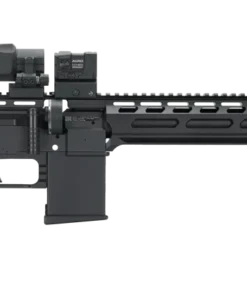

PCP Air Rifles
Reviews
There are no reviews yet.